Innovative Art Foundations Curriculum: Case Portraits - Jodi Kushins, The Ohio State University
Khám phá giáo trình mỹ thuật đột phá: chân dung trường hợp. Nâng cao kỹ năng sáng tạo và tư duy phản biện qua phương pháp học tập mới.
Art Education
Luan An
Luận án tiến sĩ
Năm xuất bản
Số trang
216
Thời gian đọc
33 phút
Lượt xem
1
Lượt tải
0
Phí lưu trữ
50 Point
Tổng quan nhanh
- Chủ đề:
- Thách Thức Nền Tảng Giáo Dục Mỹ Thuật Truyền Thống
- Số trang:
- 216 trang
- Trường:
- The Ohio State University
- Chuyên ngành:
- Art Education
- Tác giả:
- Jodi Kushins
- Năm:
- 2007
Tóm tắt nội dung luận án
I.Thách Thức Nền Tảng Giáo Dục Mỹ Thuật Truyền Thống
Cuối thế kỷ 20, nhiều trường nghệ thuật độc lập và khoa nghệ thuật trong các trường đại học lớn yêu cầu sinh viên hoàn thành một loạt các khóa học giới thiệu. Những khóa học này thường được gọi là "nền tảng" (foundations). Chúng được coi là những viên gạch cơ bản cho mọi hoạt động nghệ thuật. Bất kể định hướng tương lai của sinh viên trong nghệ thuật tạo hình hay ứng dụng, trong phương tiện xúc giác hay kỹ thuật số, họ đều phải bắt đầu với những kiến thức cơ bản này. Chuỗi khóa học nền tảng tiêu chuẩn thường xoay quanh vẽ, lý thuyết màu sắc và các khái niệm thiết kế 2 chiều, 3 chiều. Chương trình này ưu tiên các khái niệm hình thức và trình độ kỹ thuật.
Đầu thế kỷ 21, các mục tiêu và định hướng của chương trình nền tảng truyền thống đang bị thách thức mạnh mẽ. Một số nhà giáo dục cho rằng sinh viên mới bắt đầu vẫn cần thành thạo một ngôn ngữ thị giác cơ bản, được định nghĩa bởi các yếu tố và nguyên tắc thiết kế nghệ thuật. Tuy nhiên, những người khác lại nhìn vào sự đa dạng của các thực hành, mục đích và bối cảnh sáng tạo nghệ thuật trong thế kỷ 21. Họ đặt câu hỏi liệu việc định nghĩa một bộ kỹ năng và khái niệm cơ bản chung có khả thi hoặc đáng mong muốn hay không. Các mô hình giáo dục mới xuất hiện. Sự đổi mới này hướng đến việc tích hợp các phương pháp sư phạm phê phán và thực hành nghệ thuật đương đại.
1.1. Mục Tiêu Khóa Học Nền Tảng Ban Đầu
Các khóa học nền tảng ban đầu tập trung vào việc xây dựng khối kiến thức cơ bản. Sinh viên được học vẽ, lý thuyết màu sắc, và các nguyên tắc thiết kế. Mục tiêu là phát triển năng lực kỹ thuật. Chương trình chú trọng vào các yếu tố hình thức. Điều này đảm bảo một nền tảng vững chắc cho mọi sinh viên. Nó chuẩn bị cho họ những kỹ năng thiết yếu trong nhiều lĩnh vực nghệ thuật. Việc dạy các kỹ năng nghệ thuật cơ bản là trọng tâm chính.
1.2. Hạn Chế Của Chương Trình Cũ
Chương trình truyền thống gặp phải nhiều hạn chế trong bối cảnh nghệ thuật hiện đại. Sự tập trung vào chủ nghĩa hình thức và kỹ thuật có thể bỏ qua sự đa dạng của các thực hành nghệ thuật đương đại. Nó hạn chế khả năng khám phá các phương pháp mới. Các nhà phê bình đặt câu hỏi về khả năng chương trình này đáp ứng nhu cầu của một thế giới nghệ thuật đa nguyên. Sự thiếu linh hoạt có thể cản trở sự phát triển tư duy sáng tạo. Nó không thể phản ánh đầy đủ sự phức tạp của nghệ thuật đương đại.
II.Thiết Kế Chương Trình Nền Tảng Nghệ Thuật Đổi Mới
Giữa bối cảnh đa nguyên và tư duy phê phán của thế giới nghệ thuật đương đại, các chương trình nền tảng thay thế bắt đầu xuất hiện. Luận án "Brave New Basics: Case Portraits of Innovation in Introductory Undergraduate Studio Art Foundations Curriculum" mô tả hai chương trình tiên phong. Các chương trình này phản ánh sự phát triển trong nghệ thuật hậu hiện đại và các lý thuyết sư phạm phê phán. Chúng cung cấp các mô hình có giá trị cho việc xem xét, bắt tay vào và phê bình cải cách chương trình nghệ thuật giới thiệu cấp đại học. Các chương trình đổi mới này tập trung vào việc tích hợp các quan điểm mới. Chúng vượt ra ngoài khuôn khổ truyền thống, thúc đẩy art education innovation. Điều này giúp sinh viên phát triển tư duy phản biện. Foundations art curriculum design hiện đại chú trọng vào sự đa dạng của các thực hành nghệ thuật. Nó khuyến khích sinh viên khám phá các phương tiện và khái niệm mới mẻ. Việc này cũng hỗ trợ visual literacy development toàn diện hơn. Các chiến lược học tập sáng tạo được áp dụng để tăng cường trải nghiệm học tập. Mục tiêu là trang bị cho sinh viên những kỹ năng cần thiết để thích ứng với thế giới nghệ thuật luôn thay đổi.
2.1. Nhu Cầu Thiết Kế Chương Trình Mới
Thế giới nghệ thuật thay đổi nhanh chóng, đòi hỏi chương trình giáo dục phải thích nghi. Foundations art curriculum design mới cần phản ánh sự đa dạng của thực hành nghệ thuật hiện đại. Nó cần vượt qua những giới hạn của chủ nghĩa hình thức truyền thống. Mục tiêu là nuôi dưỡng khả năng thích ứng và tư duy phản biện ở sinh viên. Art education innovation trở nên cần thiết để chuẩn bị cho sinh viên một tương lai năng động.
2.2. Đặc Điểm Chương Trình Đổi Mới
Các chương trình art education innovation mới thường tích hợp lý thuyết nghệ thuật hậu hiện đại và sư phạm phê phán. Chúng thúc đẩy experiential art education, nơi sinh viên học thông qua thực hành và khám phá. Chương trình khuyến khích tư duy đa chiều và giải quyết vấn đề sáng tạo. Việc này giúp sinh viên phát triển một nền tảng vững chắc nhưng linh hoạt. Creative art learning strategies được ưu tiên để tối đa hóa sự tham gia của sinh viên.
2.3. Lợi Ích Của Mô Hình Thay Thế
Mô hình chương trình thay thế mang lại nhiều lợi ích. Chúng giúp sinh viên phát triển kỹ năng tư duy phản biện và khả năng thích nghi. Visual literacy development được nâng cao thông qua các dự án đa dạng. Sinh viên có cơ hội xây dựng student art portfolio development mạnh mẽ hơn. Các mô hình này chuẩn bị tốt hơn cho sinh viên trước những thách thức của thế giới nghệ thuật đương đại. Nó cũng tạo ra những nghệ sĩ có khả năng đổi mới.
III.Vận Dụng Sư Phạm Nghệ Thuật Đương Đại Hiệu Quả
Nghiên cứu mô tả các khóa học giới thiệu tại Đại học Carnegie Mellon và Trường Học viện Nghệ thuật Chicago. Khảo sát diễn ra trong năm học 2006-2007. Việc kiểm tra các tài liệu của trường, quan sát lớp học và phỏng vấn giảng viên, sinh viên được thực hiện. Phương pháp nghiên cứu chân dung của Lawrence-Lightfoot (1983) hướng dẫn các quan sát và phân tích dữ liệu. Sau đó là việc xây dựng các tường thuật theo ngữ cảnh để mô tả các chương trình nền tảng phi truyền thống này. Các trường hợp này thể hiện cách contemporary art pedagogy được áp dụng. Chúng tích hợp các phương pháp học tập lấy sinh viên làm trung tâm. Experiential art education là một phần cốt lõi. Sinh viên được khuyến khích tham gia vào các dự án thực tế. Điều này giúp họ phát triển kỹ năng và hiểu biết sâu sắc hơn. Việc này cũng hỗ trợ visual literacy development thông qua các trải nghiệm trực tiếp. Mục tiêu là tạo ra một môi trường học tập năng động và sáng tạo. Sinh viên có thể tự do khám phá và thử nghiệm các ý tưởng mới.
3.1. Các Nghiên Cứu Điển Hình Cụ Thể
Nghiên cứu tập trung vào Đại học Carnegie Mellon và Học viện Nghệ thuật Chicago. Hai trường này đi tiên phong trong art education innovation. Các chương trình của họ cung cấp cái nhìn sâu sắc về contemporary art pedagogy hiệu quả. Những ví dụ này cho thấy cách các trường nghệ thuật hiện đại đang định hình lại giáo dục. Sinh viên được tiếp cận với các phương pháp giảng dạy tiên tiến. Art school curriculum models mới được hình thành từ các thực tiễn này.
3.2. Phương Pháp Giảng Dạy Đổi Mới
Các chương trình này áp dụng creative art learning strategies. Chúng nhấn mạnh experiential art education. Sinh viên tham gia vào các dự án thách thức, khuyến khích tư duy phê phán. Việc học không chỉ dừng lại ở kỹ thuật. Nó còn mở rộng sang lý thuyết và bối cảnh nghệ thuật. Mục tiêu là tạo ra những nghệ sĩ có tư duy độc lập và khả năng đổi mới. Phương pháp này giúp phát triển visual literacy development một cách toàn diện.
3.3. Tương Tác Giảng Viên và Sinh Viên
Các cuộc phỏng vấn với giảng viên và sinh viên cung cấp cái nhìn sâu sắc. Chúng tiết lộ mức độ tương tác và sự hỗ trợ trong môi trường học tập. Giảng viên đóng vai trò là người hướng dẫn, thúc đẩy sự khám phá. Sinh viên tham gia tích cực vào quá trình học tập. Mối quan hệ này là yếu tố quan trọng trong việc thúc đẩy art education innovation. Nó cũng góp phần vào sự thành công của student art portfolio development.
IV.Đánh Giá Đổi Mới Chương Trình Nghệ Thuật Học Đường
Nghiên cứu sử dụng phương pháp chân dung để thu thập và phân tích dữ liệu. Phương pháp này giúp xây dựng các câu chuyện chi tiết về các chương trình nền tảng phi truyền thống. Mục tiêu chính là cung cấp các mô hình để xem xét cho những ai đang suy ngẫm, bắt tay vào hoặc phê bình cải cách chương trình nghệ thuật studio giới thiệu cấp đại học. Việc art program evaluation là rất quan trọng để xác định hiệu quả của các chương trình đổi mới. Nó giúp định hướng cho art education innovation trong tương lai. Nghiên cứu này đóng góp vào sự hiểu biết về art school curriculum models tiên tiến. Nó cung cấp bằng chứng và ví dụ cụ thể về cách các trường có thể thích nghi. Điều này đảm bảo rằng giáo dục nghệ thuật vẫn phù hợp và có ý nghĩa. Kết quả nghiên cứu có thể được sử dụng để phát triển các chiến lược teaching fundamental art skills mới. Đồng thời nó tích hợp contemporary art pedagogy một cách hiệu quả.
4.1. Phương Pháp Luận Đánh Giá
Nghiên cứu áp dụng phương pháp chân dung của Lawrence-Lightfoot. Nó bao gồm việc xem xét tài liệu, quan sát lớp học, và phỏng vấn. Phương pháp này cho phép thu thập dữ liệu phong phú, theo ngữ cảnh. Nó cung cấp cái nhìn sâu sắc về các chương trình art education innovation. Art program evaluation theo cách này giúp hiểu rõ hơn về tác động thực tế của các đổi mới.
4.2. Mục Đích Của Việc Đánh Giá
Mục đích chính là cung cấp các mô hình thực tiễn cho cải cách chương trình. Nó giúp các nhà giáo dục và quản lý art school curriculum models hình dung các khả năng. Đánh giá này hỗ trợ việc ra quyết định sáng suốt. Nó thúc đẩy art education innovation và cải thiện chất lượng giảng dạy. Kết quả là tạo ra một nền tảng vững chắc cho teaching fundamental art skills trong bối cảnh hiện đại.
4.3. Đề Xuất Cho Cải Cách Chương Trình
Nghiên cứu cung cấp các khuyến nghị cụ thể. Các đề xuất này nhằm thúc đẩy foundations art curriculum design linh hoạt hơn. Chúng khuyến khích tích hợp contemporary art pedagogy và experiential art education. Việc này giúp chuẩn bị tốt hơn cho sinh viên. Nó cũng góp phần vào visual literacy development và student art portfolio development mạnh mẽ. Cải cách chương trình có thể tạo ra thế hệ nghệ sĩ đổi mới.
V.Phát Triển Năng Lực Thị Giác Sáng Tạo Nghệ Thuật
Chương trình đổi mới không chỉ truyền đạt kỹ năng cơ bản. Nó còn đặt nặng việc phát triển toàn diện năng lực thị giác và tư duy sáng tạo của sinh viên. Bằng cách tích hợp các lý thuyết nghệ thuật hậu hiện đại và sư phạm phê phán, sinh viên được khuyến khích suy nghĩ vượt ra ngoài các quy tắc truyền thống. Họ học cách phân tích, diễn giải và tạo ra nghệ thuật trong bối cảnh đương đại. Điều này giúp nâng cao visual literacy development, cho phép sinh viên hiểu và giao tiếp hiệu quả qua hình ảnh. Các creative art learning strategies như dự án liên ngành, làm việc nhóm và khám phá độc lập được ưu tiên. Điều này nhằm nuôi dưỡng sự đổi mới và tính độc đáo trong thực hành nghệ thuật của mỗi cá nhân. Việc xây dựng một student art portfolio development mạnh mẽ không chỉ là về kỹ năng mà còn về khả năng thể hiện ý tưởng và quan điểm cá nhân một cách có chiều sâu. Các chương trình này trang bị cho sinh viên không chỉ công cụ để làm nghệ thuật. Nó còn cung cấp khuôn khổ tư duy để trở thành những nhà sáng tạo có ảnh hưởng trong tương lai. Sự tập trung vào experiential art education cho phép sinh viên áp dụng lý thuyết vào thực hành. Họ phát triển các kỹ năng quan trọng thông qua kinh nghiệm trực tiếp. Điều này tạo nên sự khác biệt so với các phương pháp teaching fundamental art skills truyền thống.
5.1. Tăng Cường Kỹ Năng Phân Tích Thị Giác
Các chương trình đổi mới tập trung vào visual literacy development. Sinh viên học cách đọc và diễn giải các hình ảnh. Họ phân tích cấu trúc, ý nghĩa và bối cảnh của tác phẩm nghệ thuật. Kỹ năng này vượt ra ngoài nhận diện màu sắc hay hình dạng. Nó bao gồm khả năng hiểu các thông điệp phức tạp. Sinh viên trở thành những nhà quan sát sắc bén hơn. Họ phát triển khả năng tư duy phê phán qua hình ảnh.
5.2. Khuyến Khích Tư Duy Độc Lập và Sáng Tạo
Creative art learning strategies là trọng tâm của giáo dục mới. Sinh viên được khuyến khích đặt câu hỏi và thử nghiệm. Họ phát triển giải pháp độc đáo cho các vấn đề nghệ thuật. Việc này nuôi dưỡng tư duy sáng tạo và khả năng giải quyết vấn đề. Các chương trình này vượt xa teaching fundamental art skills. Nó hướng tới việc tạo ra những nghệ sĩ có khả năng đổi mới. Mục tiêu là phát triển tiềm năng cá nhân của mỗi sinh viên.
5.3. Phát Triển Hồ Sơ Nghệ Thuật Chuyên Nghiệp
Chương trình hỗ trợ student art portfolio development. Sinh viên được hướng dẫn để tạo ra một bộ sưu tập tác phẩm chất lượng cao. Hồ sơ này không chỉ thể hiện kỹ năng. Nó còn phản ánh ý tưởng và quá trình tư duy. Một portfolio mạnh mẽ là chìa khóa cho sự nghiệp nghệ thuật. Nó giúp sinh viên chuẩn bị cho các bước tiếp theo. Đó có thể là trường sau đại học hoặc nghề nghiệp chuyên nghiệp.
Tải xuống file đầy đủ để xem toàn bộ nội dung
Tải đầy đủ (216 trang)Trích đoạn nội dung luận án
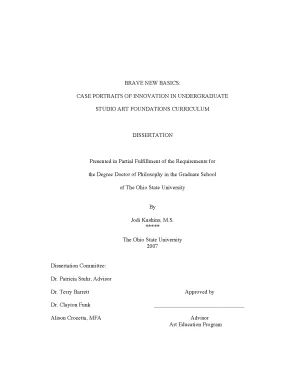
Tải xuống để đọc toàn bộBRAVE NEW BASICS: CASE PORTRAITS OF INNOVATION IN UNDERGRADUATE STUDIO ART FOUNDATIONS CURRICULUM DISSERTATION Presented in Partial Fulfillment of the Requirements for the Degree Doctor of Philosophy in the Graduate School of The Ohio State University By Jodi Kushins, M. ***** The Ohio State University 2007 Dissertation Committee: Dr. Patricia Stuhr, Advisor Dr. Terry Barrett Approved by Dr.
Clayton Funk ________________________________ Alison Crocetta, MFA Advisor Art Education Program ABSTRACT By the end of the 20th century, many independent schools of art and art departments embedded in comprehensive universities required undergraduate students to complete a series of introductory courses commonly referred to as foundations. Interpreted literally, these foundations were perceived as the basic building blocks for all artistic practice. Regardless of a student’s future studies in fine or applied art forms, in tactile or digital media, she was required to start out with these fundamentals. Organized around drawing, color theory, and concepts in 2- and 3-dimensional design, the standard foundations sequence prioritized formalist concepts and technical proficiency.
At the dawn of the 21st century, the goals and objectives of traditional foundations are actively being challenged. While some argue that beginning students still need to become fluent in a fundamental visual language defined by the elements of art and principles of design, others look at the diversity of practices, purposes, and contexts for making art in the early 21st century and wonder if it is possible or desirable to define a single set of commonly employed, fundamental skills and concepts. Amidst the pluralism and criticality of the contemporary art world, alternative foundations curricula have begun to emerge. Brave New Basics: Case Portraits of Innovation in Introductory Undergraduate Studio Art Foundations Curriculum describes two programs that reflect developments in ii postmodern artmaking and theories of critical pedagogy.
This report is the result of my examination of introductory courses at Carnegie Mellon University and The School of the Art Institute of Chicago over the course of the 2006-2007 academic year. On my visits, I reviewed institutional documents, observed classes, and spoke with faculty and students. I used Lawrence-Lightfoot’s (1983) portraiture methodology to guide my observations, analysis of data, and eventual construction of contextualized narratives to describe these non-traditional foundations programs. I hope that my descriptions of these programs will provide those contemplating, embarking upon, and critiquing undergraduate introductory studio art curricular reform with models to consider.
iii Dedicated to my grandparents. Sam, Sylvia, Paul, & Sarah whose lives served as lessons that with hard work, a little of love, and a lot of chutzpah you can do anything. iv ACKNOWLEDGMENTS Though it’s been said many times in many ways, this dissertation would not have been possible without the support of the following folks: My fellow students, my professors, and the staff in the Department of Art Education at The Ohio State University past and present. Special thanks to Pat Stuhr, Terry Barrett, Kenneth and Sylvia Marantz, Clayton Funk, Alison Crocetta, Holly Longfellow, Savenda Fulton, Kirsten Thomas, and Melanie Buffington; Members of Foundations in Art Theory and Education (FATE) for encouragement and attention most doctoral students only dream of; Faculty and students at Carnegie Mellon University and The School of the Art Institute of Chicago.
Special thanks to Jim Elniski & Lowry Burgess for ongoing support and recognition; Amy Brook Snider for being my mentor and my friend; Mom and Dad, Stephen and Rebecca, my extended family and long-time friends who feel like family, for reminding me how to talk often and deeply about issues, for loving and worrying about me, and for asking when I’d be done with this project; Dan, George, and Rosa for pleasant distractions; My friends in The Salo(o)n—one good thing that came out of the 2004 election cycle—for support, inspiration, and commiseration. We are the future of academia. v Let’s never forgot what we learned in our interdisciplinary network. Special thanks to Vogel & Sons for your warmth and companionship and the Salo(o)nistas for the feminist discourse; My new comrades in ComFest University who provided me space and opportunity to keeping learning and to put knowledge I gained through this project to work in my own community; Joe at the gym for being that stranger who repeatedly asked, with genuine interest, how things were going and shared his own stories of survival; Avi for getting me into this in the first place; You, for taking the time to read and complete this text.
vi VITA May 2, 1975…………………………………Born – New York, United States 2001…………………………………………M. Art & Design Education, Pratt Institute (Brooklyn, NY) 2000-2003………………………………….Art Educator Tolland High School (Tolland, CT) 2003 – present………………………………Graduate Teaching Assistant, The Ohio State University PUBLICATIONS Research Publications 1. With Kevin Tavin & Jim Elniski. “Shaking the foundations of post- secondary art(ist) education.
Book review of Rethinking curriculum in art by Marilyn G. Stewart and Sydney R. Studies in Art Education, 48 (3). “Recognizing Artists as Public Intellectuals: A Pedagogical Imperative.edu/culturework/culturework34.
“Learning From Our Learning Spaces. “Making Meaning from Murals.” Visions: Connecticut’s Professional Art Education Magazine 13 (1). “Making the BEST of it.” Visions: Connecticut’s Professional Art Education Magazine 12, no. FIELDS OF STUDY Art Education Critical Pedagogy Contemporary Art viii TABLE OF CONTENTS Page Abstract……………………………………………………………………………………ii Dedication…………………………………………………………………………….ix List of Figures.
INTRODUCTION Why Study Innovations in Undergraduate Studio Art Foundations?…….2 Statement of the Issue…………………………………………………….6 Statement of Purpose…………………………………………………….9 Significance of the Study……………………………………………….14 Overview of Research Design……………………………………….15 Limitations of the Study………………………………………………….16 Conclusion: Overview of Chapters……………………. CONCEPTUAL RESEARCH CONTEXT Framing Portraits of Innovative Undergraduate Studio Art Foundation Curricula……………………………….19 Postmodernism: A Revitalized Context for Creation and Curriculum….30 Critical Pedagogy: A Call for Radical Revisions ……………………….31 Rethinking Relationships Between School and Society…………33 Whose Knowledge is School Knowledge?…………………….34 Cultivating Critical Consciousness………………………………37 Towards 21st century Art Foundations: Enacting a Dynamic and Critical Praxis …….38 Thinking Thematically Across Media….……………41 Connecting Studio Practice and Art Interpretation………………45 Introducing Digital Technology……………………………….46 ix Collaborating in Context…………………………………………49 Attending to Identity Politics…………………………………….52 Conclusion: Embracing Postmodernism…………. RESEARCH METHODOLOGY On Becoming a Qualitative Researcher………………………………….55 Methodological Issue Interlude: Researcher Predilections and Theoretical Sensitivity………………….57 Methodology #1: Descriptive Case Study……………………………….59 Methodological Issue Interlude: Credibility as Transferability….62 Methodological Issue Interlude: Participant Reciprocity and Institutional Support…………………………………………….70 Student Focus Groups……………………………………………75 Methodological Issue Interlude: Credibility through Triangulation…….80 Identifying Themes………………………………………………81 Constant Comparative Analysis……………………………….83 Methodological Issue Interlude: Credibility through Member Checks……………………………………………………………84 Conclusion: Portraiture in Progress…. CASE PORTRAIT #1: CARNEGIE MELLON UNIVERSITY Contemporary Curriculum in Context Pittsburgh, PA: The Town Andrew Carnegie Built…………….86 Instructional Interlude……………………………………86 Carnegie Mellon University: A Comprehensive Academic Environment…………………………………………………….88 Educating Students, Benefiting Society….92 Instructional Interlude……………………………………94 The College of Fine Arts: Respecting Tradition, Encouraging Innovation……………………………………………………….95 Considering Current Curriculum……………………………………….98 Foundation Media Studios: Multi-media Impressions………………….101 Concept Studio: Conceptualizing Artmaking………………………….106 Conceptual Change Agents…………………………………….109 x Media and Concept: Two Sides of the Same Coin …………….111 Conclusion: Making Complexity Coherent…………………………………….
CASE PORTRAIT #2: THE SCHOOL OF THE ART INSTITUTE OF CHICAGO Contemporary Curriculum in Context Learning in The Loop……………….117 A Wealth of Resources……………………………….120 Institutional Interdisciplinary Initiative……………….………121 Catalysts of Change Mark-making in the 21sts century…………………………….124 Inspiring Leadership……………………………………………125 Instructional Interlude……….129 Considering Current Curriculum Research Studio: Generating Inspiration ………………………130 Instructional Interlude……….134 Core Studio Practice: Aiming for Interdisciplinary Introductions…….135 Structuring Inter-disciplinary Objectives……………………….144 Core or Cram……………………………………………………145 Conclusion: Living with Questions……………………………………. CONCLUSIONS, IMPLICATIONS, AND RECOMMENDATIONS Compare & Share………………………………………………….……149 Brave New Basics: A Rough Sketch………………………………….150 Art is always about something…………………………….…151 Context is critical………………………………………….153 Utrecht® is not the only place to buy art supplies….155 Question authority and own your vision……………………….157 Play well with others……………………………………………159 Implications for Postsecondary Art Education…………………………160 Focus on Foundations …………………………………………161 Promote Pedagogy…………………….163 Enact relationships between theory and artmaking….165 Facilitate critiques, don’t just schedule them.……168 Don’t abandon learning by making…………….175 History in the Making………………………………………….175 xi Beginners and Masters …………………………………………176 Impacts of Innovation………………………………………….201 xii LIST OF FIGURES Figure Page 4.1 Distribution of introductory courses required in the first and second years of the BFA program at Carnegie Mellon University………………………………….1 Comparison of credit hour distributions in The School of the Art Institute of Chicago’s First Year Program in the 2004-2005 and 2006-2007 academic years…………………………………………………………………………….2 The flow of students through Surface, Space, Time, and Concluding rotations in Core Studio Practice, one of two courses that comprise the First Year Program at The School of the Art Institute of Chicago ……………………….140 xiii CHAPTER 1 INTRODUCTION Why Study Innovations in Undergraduate Studio Art Foundations? College students interested in studying art in the United States at the beginning of the twenty-first century, have a wide range of institutions to choose from. Various independent colleges of art and design, land grant and research universities, liberal arts and community colleges, and distance learning initiatives offer programs in art. In each case, the overarching contexts, missions, and organizing structures of these institutions influence what counts as art and art education.
In some schools, curricular content is oriented towards production and interpretation of fine art while others emphasize preparation for work in commercial art worlds. Despite these differences, however, most undergraduate visual art programs require students to complete some set of introductory courses commonly referred to as foundations. The architectural metaphor inherent in the term foundations is intentional. Such courses are designed to introduce basic skills and concepts as a support structure on which students can build advanced artistic practices.
As one instructor matter-of-factly proclaimed: “Foundations are called that because that's what they are: basic training for the eye and hand” (Bannard, 2005, ¶25). By the late 20th century, such training typically included beginning courses in drawing, color theory, and 2- and 3-dimensional design 1 (Betz, 2003; Dockery & Quinn, 2007; Kaprow, 1964). Assuming what is basic is also universal, beginning art students are often required to complete the same set of foundation courses regardless of their prior knowledge and experience, their desire to create fine or applied art forms, or their interests in analog or digital media. While one might interpret “training for the eye and hand” as more than biological or technical attunement, for those preparing art students to “imagine themselves as citizens within the world – not only the art world” (Becker, 1995/2000, p.
239) these objectives may seem limited and vague. Where, for example, does knowledge of historical and social context or cultural traditions fit into the traditional foundations curriculum? When are questions about the nature and purpose of art, artistic commitment, and professional responsibility introduced? I designed and conducted Brave New Basics: Case Portraits of Innovation in Undergraduate Studio Art Foundations Curriculum to explore alternative foundations curricula that might offer students more comprehensive preparation for life and work as contemporary artists. Background Most seem to agree that “[e]very student now pursuing a ‘foundation course’ at an art school has the Bauhaus to thank for it” (Whitford, 1984, p. Johannes Itten, a Swiss artist and educator, created the first rationale and curriculum for the introductory Vorkurs course at the well-known, but relatively short-lived, Bauhaus school of art and architecture in Germany (1919-1933).
His goals and objectives were based largely on his training as an elementary school teacher and follower of an Eastern theological tradition called Mazdaznan. As an elementary educator, Itten was trained in theories of constructive play popularized by Friedrich Froebel. As a spiritual man, he strove to 2 uncover and manipulate the essential nature and communicative power of materials and processes. “As a teacher he believed that everyone was innately creative and that Mazdaznan could provide the key to unlock their natural artistic talent,” (Whitford, 1984, p.
Bauhaus students and supporters welcomed Itten’s celebration of individually variable solutions. They did so, however, in relation to the newly established, democratic Weimar Republic (Goldstein, 1996). “Whether or not students chose to subordinate their art to a manifest social role, they were not to think of themselves as divorced from society but as integral to it” (Rogal, 1998, p. Vorkurs has been translated alternately as preliminary or basic.
While these concepts are not mutually exclusive, they are also not purely synonymous. In the case of Vokurs, preliminary would imply something that came before and led to something else whereas basic would have referred to some essential content and experience. Similarly, foundations are alternately referred to as introductory or core courses and curricula.
Nội dung được bảo vệ bản quyền — Tải xuống đầy đủ
Trích dẫn luận án này
Jodi Kushins (2007). Innovative Art Foundations Curriculum: Case Portraits [Luận án tiến sĩ, The Ohio State University]. LuanAn.net. https://luanan.net/my-thuat/innovative-art-foundations-curriculum-case-portraits
Câu hỏi thường gặp
Luận án "Innovative Art Foundations Curriculum: Case Portraits" nghiên cứu về vấn đề gì?
Khám phá giáo trình mỹ thuật đột phá: chân dung trường hợp. Nâng cao kỹ năng sáng tạo và tư duy phản biện qua phương pháp học tập mới.
Luận án "Innovative Art Foundations Curriculum: Case Portraits" được bảo vệ tại trường nào?
Luận án này được bảo vệ tại The Ohio State University. Năm bảo vệ: 2007.
Luận án "Innovative Art Foundations Curriculum: Case Portraits" thuộc chuyên ngành gì?
Luận án "Innovative Art Foundations Curriculum: Case Portraits" thuộc chuyên ngành Art Education. Danh mục: Mỹ Thuật.
Luận án "Innovative Art Foundations Curriculum: Case Portraits" có bao nhiêu trang?
Luận án "Innovative Art Foundations Curriculum: Case Portraits" có 216 trang. Bạn có thể xem trước một phần tài liệu ngay trên trang web trước khi tải về.
Cách tải luận án "Innovative Art Foundations Curriculum: Case Portraits" về máy như thế nào?
Để tải luận án về máy, bạn nhấn nút "Tải xuống ngay" trên trang này, sau đó hoàn tất thanh toán phí lưu trữ. File sẽ được tải xuống ngay sau khi thanh toán thành công. Hỗ trợ qua Zalo: 0559 297 239.