Vai trò của vốn trí tuệ và năng lực động trong đổi mới công ty - Luận án Tiến sĩ
Khám phá vai trò thiết yếu của vốn trí tuệ trong thúc đẩy đổi mới, tạo lợi thế cạnh tranh bền vững cho doanh nghiệp.
Georgia Institute of Technology
Luan An
Luận án tiến sĩ
Năm xuất bản
Số trang
191
Thời gian đọc
29 phút
Lượt xem
0
Lượt tải
0
Phí lưu trữ
50 Point
Tổng quan nhanh
- Chủ đề:
- 1. Vốn trí tuệ là gì và vai trò trong đổi mới sáng tạo công ty
- Số trang:
- 191 trang
- Trường:
- Georgia Institute of Technology
- Chuyên ngành:
- Management
- Tác giả:
- Andrew M. Hess
- Năm:
- 2008
Tóm tắt nội dung luận án
I. Vốn trí tuệ là gì và vai trò trong đổi mới sáng tạo công ty
Vốn trí tuệ là yếu tố quyết định sự phát triển của doanh nghiệp. Câu hỏi vốn trí tuệ là gì được nhiều nhà quản trị đặt ra. Đó là tổng hợp tri thức và kỹ năng của tổ chức. Tài sản này không hiện hữu trên bảng cân đối kế toán. Nhưng nó tạo ra giá trị lớn cho công ty. Vai trò của vốn trí tuệ trong đổi mới công ty rất quan trọng. Phần này trình bày khái niệm và vai trò cốt lõi. Nghiên cứu chỉ ra rằng doanh nghiệp có vốn trí tuệ tốt sẽ đổi mới nhanh hơn. Năng lực đổi mới doanh nghiệp phụ thuộc trực tiếp vào chất lượng tri thức. Do đó, hiểu đúng vốn trí tuệ là bước đầu tiên của chiến lược phát triển.
1.1. Định nghĩa vốn trí tuệ trong doanh nghiệp
Vốn trí tuệ là gì? Đó là tài sản vô hình của doanh nghiệp. Tài sản này bao gồm kiến thức, kinh nghiệm và kỹ năng của nhân viên. Nó cũng gồm quy trình, hệ thống và mối quan hệ. Vốn trí tuệ khác biệt với tài sản hữu hình. Máy móc và nhà xưởng có thể mua được. Vốn trí tuệ khó sao chép hơn nhiều. Các nghiên cứu xem vốn trí tuệ là nguồn lực chiến lược. Nó giúp doanh nghiệp tạo ra giá trị dài hạn. Các công ty dược phẩm tiêu biểu đầu tư mạnh vào vốn trí tuệ. Họ xây dựng đội ngũ khoa học và hệ thống nghiên cứu. Vốn trí tuệ trở thành trung tâm của mọi chiến lược phát triển.
1.2. Vai trò vốn trí tuệ trong đổi mới công ty
Vốn trí tuệ thúc đẩy đổi mới sáng tạo trong công ty. Các cá nhân tài năng tạo ra ý tưởng mới. Họ phát minh và đăng ký bằng sáng chế. Doanh nghiệp kết hợp tri thức cá nhân thành năng lực chung. Quá trình này hình thành năng lực đổi mới doanh nghiệp. Luận án nghiên cứu ba cấp độ ảnh hưởng. Đó là cấp độ cá nhân, doanh nghiệp và mạng lưới. Vốn trí tuệ kết nối các cấp độ này. Sự kết nối tạo ra dòng tri thức liên tục. Kết quả là đổi mới liên tục và bền vững. Vốn trí tuệ đóng vai trò chất xúc tác cho toàn bộ quá trình.
II. Các thành phần vốn trí tuệ trong doanh nghiệp hiện đại
Các thành phần vốn trí tuệ tạo nên giá trị tổng thể của công ty. Ba thành phần chính được nhắc đến nhiều nhất. Đó là vốn con người, vốn cấu trúc và vốn quan hệ. Mỗi thành phần có vai trò riêng biệt. Chúng tương tác và bổ sung cho nhau. Doanh nghiệp cần phát triển đồng bộ cả ba thành phần. Thiếu một thành phần sẽ làm giảm hiệu quả chung. Hiểu rõ cấu trúc này giúp nhà quản trị đầu tư đúng chỗ.
2.1. Vốn con người trong doanh nghiệp
Vốn con người trong doanh nghiệp là nền tảng quan trọng nhất. Đó là kiến thức và kỹ năng của từng nhân viên. Thành phần này gồm trình độ học vấn, kinh nghiệm và sáng tạo. Các nhà khoa học và kỹ sư là nguồn vốn quý giá. Nghiên cứu về ngành dược cho thấy rõ điều này. Các tác giả bài báo và nhà phát minh tạo ra giá trị lớn. Họ đóng góp trực tiếp vào hoạt động đổi mới. Doanh nghiệp cần thu hút và giữ chân nhân tài. Vốn con người khó bắt chước và khó thay thế. Điều này tạo ra lợi thế cạnh tranh bền vững.
2.2. Vốn cấu trúc và vốn quan hệ
Vốn cấu trúc và vốn quan hệ hỗ trợ vốn con người. Vốn cấu trúc gồm quy trình và hệ thống nội bộ. Thành phần này bao gồm cơ sở dữ liệu và quy trình làm việc. Văn hóa tổ chức cũng thuộc vốn cấu trúc. Vốn cấu trúc giúp lưu giữ tri thức của tổ chức. Vốn quan hệ gồm mối quan hệ với đối tác bên ngoài. Nó bao gồm khách hàng, nhà cung cấp và viện nghiên cứu. Liên minh chiến lược là hình thức vốn quan hệ điển hình. Hai thành phần này giúp khai thác tri thức hiệu quả. Chúng chuyển tri thức cá nhân thành tài sản chung của công ty.
III. Quản trị tri thức nâng cao năng lực đổi mới doanh nghiệp
Quản trị tri thức là quy trình tổ chức và khai thác tri thức. Doanh nghiệp cần biến tri thức cá nhân thành tri thức tập thể. Quy trình này bao gồm tạo lập, lưu trữ và chia sẻ tri thức. Quản trị tri thức tốt giúp nâng cao năng lực đổi mới doanh nghiệp. Nó giảm thiểu sự phụ thuộc vào một vài cá nhân. Hệ thống quản trị hiệu quả duy trì tri thức khi nhân sự thay đổi.
3.1. Quy trình quản trị tri thức hiệu quả
Quy trình quản trị tri thức có nhiều giai đoạn. Giai đoạn đầu là tạo lập tri thức mới. Doanh nghiệp khuyến khích nghiên cứu và thử nghiệm. Giai đoạn tiếp theo là lưu trữ tri thức. Cơ sở dữ liệu và hệ thống quản lý tài liệu hỗ trợ điều này. Giai đoạn cuối là chia sẻ tri thức. Họp nhóm, đào tạo và luân chuyển nhân sự giúp lan tỏa tri thức. Quy trình rõ ràng giúp doanh nghiệp học hỏi nhanh hơn. Nó tạo nền tảng cho việc xây dựng năng lực động.
3.2. Năng lực đổi mới doanh nghiệp từ vốn trí tuệ
Năng lực đổi mới doanh nghiệp hình thành từ vốn trí tuệ. Cá nhân cung cấp ý tưởng và chuyên môn sâu. Vốn cấu trúc cung cấp quy trình hiện thực hóa ý tưởng. Vốn quan hệ mở ra nguồn tri thức bên ngoài. Sự kết hợp này tạo ra năng lực động. Năng lực động giúp doanh nghiệp thích nghi với thay đổi. Trong ngành công nghệ sinh học, điều này đặc biệt quan trọng. Các công ty có năng lực đổi mới tốt sẽ phát triển vượt trội. Họ phản ứng nhanh với cơ hội thị trường mới.
IV. Tài sản trí tuệ và tài sản vô hình tạo giá trị công ty
Tài sản trí tuệ và tài sản vô hình tạo nên phần lớn giá trị công ty. Tài sản trí tuệ gồm bằng sáng chế, bản quyền và nhãn hiệu. Tài sản vô hình rộng hơn, gồm cả danh tiếng và tri thức. Các ngành công nghệ cao có tỷ lệ tài sản vô hình lớn. Việc quản lý tốt các tài sản này quyết định thành công.
4.1. Tài sản trí tuệ trong chiến lược kinh doanh
Tài sản trí tuệ là công cụ cạnh tranh quan trọng. Bằng sáng chế bảo vệ phát minh khỏi bị sao chép. Doanh nghiệp dược phẩm sử dụng bằng sáng chế hiệu quả. Số lượng bằng sáng chế phản ánh năng lực nghiên cứu. Chiến lược tài sản trí tuệ gắn với chiến lược đổi mới. Doanh nghiệp cần xây dựng danh mục bằng sáng chế hợp lý. Điều này tạo rào cản cho đối thủ cạnh tranh. Các nhà phát minh giỏi là nguồn gốc của tài sản trí tuệ.
4.2. Tài sản vô hình và hiệu quả đổi mới
Tài sản vô hình vượt ra ngoài tài sản trí tuệ pháp lý. Nó gồm văn hóa học hỏi và danh tiếng thương hiệu. Các tài sản này tác động đến hiệu quả đổi mới. Nghiên cứu đo lường qua công bố khoa học và bằng sáng chế. Các công ty xuất bản nhiều bài báo thường đổi mới tốt hơn. Tài sản vô hình khó định giá nhưng tạo giá trị lâu dài. Nhà đầu tư ngày càng chú trọng đến tài sản vô hình. Đây là xu hướng quan trọng trong nền kinh tế tri thức.
V. Vốn trí tuệ tạo lợi thế cạnh tranh bền vững cho công ty
Lợi thế cạnh tranh bền vững xuất phát từ nguồn lực khó sao chép. Vốn trí tuệ đáp ứng tiêu chí này. Tri thức nằm trong con người và quy trình tổ chức. Đối thủ khó bắt chước toàn bộ hệ thống này. Vốn trí tuệ tạo nên lợi thế dài hạn cho công ty.
5.1. Lợi thế cạnh tranh bền vững từ tri thức
Lợi thế cạnh tranh bền vững đến từ tri thức độc đáo. Tri thức tích lũy qua thời gian và kinh nghiệm. Mỗi công ty có quỹ tri thức riêng biệt. Sự riêng biệt này tạo ra lợi thế khó sao chép. Các đối thủ khó tái tạo lịch sử phát triển của công ty. Do đó, vốn trí tuệ tạo ra giá trị bền vững. Doanh nghiệp cần liên tục đầu tư vào tri thức. Đầu tư vào nghiên cứu và phát triển là ví dụ điển hình. Vốn con người trong doanh nghiệp là nguồn lợi thế chính.
5.2. Các cấp độ ảnh hưởng trong xây dựng năng lực
Xây dựng năng lực chịu ảnh hưởng từ nhiều cấp độ. Cấp độ cá nhân gồm các nhà khoa học tài năng. Cấp độ doanh nghiệp gồm chiến lược và quy trình. Cấp độ mạng lưới gồm quan hệ đối tác bên ngoài. Ba cấp độ này tương tác chặt chẽ với nhau. Nghiên cứu phân tích cả ba cấp độ cùng lúc. Kết quả cho thấy sự tương tác tạo nên sức mạnh. Doanh nghiệp cần phát triển năng lực ở mọi cấp độ. Sự kết hợp hài hòa đảm bảo đổi mới liên tục.
VI. Đổi mới sáng tạo trong công ty nhờ vốn trí tuệ hiệu quả
Đổi mới sáng tạo trong công ty phụ thuộc vào vốn trí tuệ. Các doanh nghiệp khai thác vốn trí tuệ theo nhiều cách. Một số tập trung nghiên cứu nội bộ. Một số khác mua lại công ty hoặc liên minh đối tác. Chiến lược kết hợp mang lại kết quả tốt nhất. Phần này trình bày cơ chế đổi mới hiệu quả.
6.1. Cơ chế đổi mới sáng tạo nội bộ
Đổi mới nội bộ dựa vào năng lực nghiên cứu của công ty. Chi tiêu cho nghiên cứu và phát triển là nền tảng. Đội ngũ khoa học tạo ra phát minh mới. Cơ chế khuyến khích giúp nhân viên sáng tạo. Các quy trình chuẩn hóa giúp thương mại hóa ý tưởng. Tuy nhiên, đổi mới nội bộ cần nhiều thời gian. Doanh nghiệp cần kết hợp với nguồn tri thức bên ngoài. Sự kết hợp này tăng tốc quá trình đổi mới.
6.2. Liên minh chiến lược và đổi mới mở
Liên minh chiến lược mở rộng nguồn tri thức của công ty. Hợp tác với đại học và viện nghiên cứu mang lại tri thức mới. Các công ty dược liên minh với công ty công nghệ sinh học. Mô hình này được gọi là đổi mới mở. Cân bằng khai thác và thăm dò tri thức là thách thức. Vốn trí tuệ hỗ trợ doanh nghiệp cân bằng hai hoạt động này. Kết quả là hiệu suất đổi mới được cải thiện đáng kể. Vốn cấu trúc và vốn quan hệ đóng vai trò then chốt.
Tải xuống file đầy đủ để xem toàn bộ nội dung
Tải đầy đủ (191 trang)Trích đoạn nội dung luận án
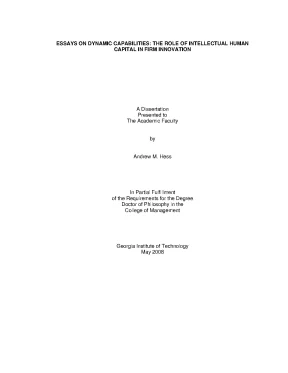
Tải xuống để đọc toàn bộESSAYS ON DYNAMIC CAPABILITIES: THE ROLE OF INTELLECTUAL HUMAN CAPITAL IN FIRM INNOVATION A Dissertation Presented to The Academic Faculty by Andrew M. Hess In Partial Fulfillment of the Requirements for the Degree Doctor of Philosophy in the College of Management Georgia Institute of Technology May 2008 ESSAYS ON DYNAMIC CAPABILITIES: THE ROLE OF INTELLECTUAL HUMAN CAPITAL IN FIRM INNOVATION Approved by: Frank T. Rothaermel, Committee Chair College of Management Georgia Institute of Technology Matt Higgins College of Management Georgia Institute of Technology Jeongsik Lee College of Management Georgia Institute of Technology Luis Martins College of Management Georgia Institute of Technology John Walsh School of Public Policy Georgia Institute of Technology DATE APPROVED: MARCH 4, 2008 ii ACKNOWLEDGEMENTS I am a Kauffman Dissertation Fellow, and gratefully acknowledge the financial support for this research. In addition, I acknowledge the support of the National Science Foundation (NSF SES 0545544).
I gratefully acknowledge the helpful comments and suggestions from my dissertation committee: Frank T. Rothaermel, Matthew Higgins, Luis Martins, John Walsh, Jay Lee, as well as participants from numerous conferences and seminars, including those held at University of Virginia, Harvard Business School, University of Wisconsin-Madison, Boston College, Georgia Institute of Technology, and Vanderbilt University. In addition, Chapters 2-4 were developed in collaboration with my dissertation supervisor Frank T. A revised version of Chapter 3 was published as “Building dynamic capabilities: Innovation driven by individual-, firm-, and network-level effects.
Organization Science (2007), Vol.” iii TABLE OF CONTENTS ACKNOWLEDGEMENTS…………………………………………………………………… iii LIST OF TABLES……………………………………………………………………………….v LIST OF FIGURES………………………………………………………………………………vi SUMMARY……………………………………………………………………………….vii CHAPTER 1: INTRODUCTION…………………………………………………….7 CHAPTER 2: A SYSTEM OF DYNAMIC CAPABILITY FORMATION………….2 Processes, Paths, and Positions……………………………………………….3 Obstacles to Dynamic Capability Formation……………………………………13 2.4 Individuals as Building Blocks of Dynamic Capabilities……………………….5 Building Dynamic Capabilities……………………………………………………33 2.6 The Model in Action at Merck….…………………………………………………50 CHAPTER 3: INNOVATING WITHIN A NEW TECHNOLOGICAL PARADIGM: THE ROLE OF INDIVIDUAL, FIRM, AND NETWORK-LEVEL EFFECTS IN BUILDING CAPABILITIES ………………………………………………………………56 3.2 Theory and Hypotheses Development………………………………………….108 CHAPTER 3 APPENDIX ……………………………………………………………117 CHAPTER 4: AMBIDEXTERITY AND INNOVATIVE PERFORMANCE: THE ROLE OF INTELLECTUAL HUMAN CAPITAL AND STRATEGIC ALLIANCES……………………………………………………123 4.2 Theory and Hypotheses Development……………………………………….180 iv LIST OF TABLES Table 3.1 Descriptive Statistics and Bivariate Correlation Matrix………………….1 Summary of Model Parameters…………………………………………….2 Additional Model Controls………………………………………………….3 Descriptive Statistics and Correlations…………………………………….7 Incidence Rate Ratios……………………………………………………….1 Comparison of ‘Stars in Pharmaceutical and Biotechnology Firms…….182 v LIST OF FIGURES Figure 1.1 A System of Dynamic Capability Formation…………………………….2 Distribution of Pharmaceutical Firms’ Authors and Inventors by Scientific Publications and Patents in Biotechnology………………….3 Scientific Journal Publications by Pharmaceutical Firms’ Authors……….1 Biotechnology Patents Filed By and Assigned To Pharmaceutical Companies, 1975-2002……………………………………………………….2 Total Annual Publications in Biotech by Pharmaceutical Firms,1979-2004…………………………………………………………….3 Distribution of Journal Publications in Biotechnology by Pharmaceutical Firms, 1973 -2004…………………….4 Distribution of Total Publications…………………………………………….5 Distribution of Total Citations……………………………………………….1 Dynamic Capability Antecedents Within and Across Exploration and Exploitation……………………………………………………………….135 vi SUMMARY This dissertation attempts to contribute to our understanding of the antecedents to dynamic capability formation by exploring the interaction between the internal and external mechanisms firms employ to develop these capabilities. Each of the three chapters highlights the importance of not only considering the heterogeneity of a firm’s intellectual capital but also the interaction between this resource and the other mechanisms firms can utilize; including spending on research and development, undertaking acquisitions, and forming strategic alliances. Chapter 1 of the dissertation serves to introduce and synthesize the major themes and contributions of my dissertation. In Chapter 2, I develop a multi-level framework of dynamic capabilities formation.
By analyzing the role individuals play in a firm’s ongoing innovation efforts, I illustrate not only the process through which dynamic capabilities are formed but also how they relate to a firm’s strategy-making process. In particular, I suggest that there are three stages in the process of dynamic capabilities formation, through which the firm identifies, acquires, codifies, and eventually commercializes new knowledge. My analysis highlights the role key employees play in moderating the effectiveness of the developed capabilities and the role average employees play in mediating their existence. In Chapter 3 of my dissertation I turn to empirically examine, more generally, the importance of not only considering the heterogeneity of the intellectual human capital, developed in chapter 2, but also the other mechanisms firms employ to access and assimilate knowledge that resides outside of the firm.
Following the dynamic capabilities perspective, I suggest that antecedents to innovation can be found at the individual, firm, and network level. Accordingly, I advance a set of hypotheses to assess the effect of vii individual, firm, and network-level antecedents on innovation output. I then investigate whether a firm’s antecedents to innovation lie across different levels. To accomplish this, I propose two competing hypotheses.
I juxtapose the propositions that the individual, firm, and network-level antecedents to innovation are substitutes versus complements. The forth chapter of my dissertation examines several of the interesting findings of Chapter 3 in more detail, through the lens of a specific dynamic capability, ambidexterity. To this end, I develop and empirically test a contingency framework of ambidexterity across exploration and exploitation activities. While an exploration- exploitation lens has been applied to strategic alliances based on their strategic motivation, I propose that it can also be applied to a firm’s intellectual human capital based on a bifurcation of “star” versus “staff scientists.” Following a dynamic capabilities perspective, I suggest that antecedents to building these capabilities within the same activity (either indented for exploration or exploitation) compensate for one another, and thus are substitutes.
Conversely, I hypothesize that different dynamic capability antecedents across exploration or exploitation activities positively reinforcing one another, and thus are complements. To empirically investigate the relationship between different antecedents to dynamic capabilities, I focus on the pharmaceutical firms’ adaptation to biotechnology over a 30-year time period, 1974-2003. In general, I find support for the notion that building capabilities within the same activity compensate for on another, while ambidexterity across exploration and exploitation enhances a firm’s innovative performance. Finally, my dissertation concludes with Chapter 5, which again summarizes the major themes and contributions of my dissertation.
In addition, I offer some limitations of the current study as well as areas of interest for future consideration. The data utilized in the dissertation is an unusually comprehensive and detailed panel dataset that documents the innovation attempts of global pharmaceutical companies within the new biotechnology paradigm over a 23-year time period. In viii general, my extensive data collection process has produced fine-grained, longitudinal data on over 3,100 alliances, 3,500 new drug introductions, 36,000 biotechnology patents that have been cited 80,000 times, 147,000 non-biotechnology patents, 171,000 publishing scientists, 672,000 journal publications, and 9.9 million journal citations. ix CHAPTER 1 INTRODUCTION The recent extension of the resource-based view into dynamic markets provides a new perspective for analyzing how firms develop new capabilities to cope with shifting markets (Teece, Pisano, & Sheun, 1997).
This research reveals that a firm’s ability to ‘integrate, build, and reconfigure internal and external competencies to address rapidly changing environments’ lies at the center of its ability to learn and innovate and thus realize potential competitive advantages (Teece et al. Thus, these ‘dynamic capabilities’ facilitate not only the ability of an organization to recognize a potential technological paradigm shift but also to adapt to it through innovation (Cohen & Levinthal, 1990; Hill & Rothaermel, 2003; Teece et al. An important issue that has preoccupied researchers and practitioners is where the locus of such knowledge, or ‘Shumpeterian’ capital, resides. The purpose of this dissertation is to shed light on this issue, by investigating the nature of the mechanisms firms employ to develop dynamic capabilities.
The key aspect of this construct is that it extends the resource-based view (“RBV”) of the firm beyond consideration of simple resource existence, to the more complex issues associated with resource emergence. Thus, while the RBV focuses on how organizations select between appropriate resources, dynamic capabilities emphasizes resource development and renewal. While this difference presents organizational researchers with unique opportunities to better understand resource emergence, it also presents significant theoretical and methodological challenges that have resulted in many questioning the efficacy of the construct. Although the construct of dynamic capabilities has its origins in the RBV, its focus on emergence requires that researchers move beyond the simple selection models associated with the RBV.
1 Research that utilizes this ‘RBV lens’, by investigating an organization’s choice between appropriate dynamic capabilities, is inevitably plagued by endogeneity. In this dissertation I suggest that while consideration of selection is important, of import is not the choice between capabilities, but rather the choice between the different mechanisms that organizations employ to develop and change these capabilities. This distinction is important because it allows for the analysis of the emergent properties of dynamic capabilities. By considering the relationship between these choices I hope to both refine as well as extend our understanding of the construct of dynamic capabilities.
Research investigating this issue has revealed that the relevant knowledge for innovation can be located either be developed internally or accessed from external network connections. The choice between internal and external technological sourcing is particularly relevant when the firm is attempting to adapt to a new technological paradigm, because of the significant investment required to develop or acquire knowledge that is new to the firm. Specifically, firms wishing to innovate in a new technological paradigm use their internal human capital asset base to develop key firm- level researching capabilities and thereby increase the efficiency of its external networking efforts. This five-chapter dissertation contributes to our understanding of the antecedents to dynamic capability formation by exploring this interaction between the internal and external mechanisms firms employ to develop these capabilities.
Each of the chapters highlights the importance of not only considering the heterogeneity of a firm’s intellectual capital but also the interaction between this resource and the other mechanisms firm’s can utilize, including spending on research and development, undertaking acquisitions, and forming strategic alliances. A major contribution of my dissertation is that it illustrates the need to incorporate the individual level of analysis when investigating the antecedents of dynamic capabilities. This need is best revealed by shifting the focus of analysis temporarily 2 away from the concrete investigation of firm activity to the abstract analysis of how the dynamic capabilities construct is positioned within the literature. As mentioned above, to date the construct of dynamic capabilities has been conceptualized as an extension of the resource-based view of the firm (RBV) (Eisenhardt & Martin, 2000; Teece et al.
Central to RBV is the notion that resources are heterogeneously distributed among organizations (Barney, 1991). Additionally, researchers have theorized that the possession of certain valuable, rare, inimitable, and non-substitutable resources can allow a firm to achieve a competitive advantage. The theoretical focus of RBV researchers, therefore, has traditionally been at the resource level (Barney, 2001; Teece et al. In contrast, conceptual research on dynamic capabilities has primarily focused at the process or routine level of analysis.
Of concern is that these firm processes and routines are themselves a collective action, representing combinations of firm resources (Nelson & Winter, 1982). To specify a theory solely at the collective or group level, as it is been presented in the conceptual work on dynamic capabilities to date, researchers have implicitly assumed that the individual members of the group are sufficiently similar with respect to the construct in question. Such uni-level analysis makes two key assumptions: (1) that significant variance exists at the focal level of analysis, while other levels of analysis are assumed to be homogeneous, and (2) that the focal level of analysis is more or less independent from other levels of analysis (Felin & Foss, 2005; Felin & Hesterly, 2007). As such, heterogeneity among individual group members is not taken into consideration, because a single value or characteristic is considered sufficient to describe the group (Klein, Dansereau, & Hall, 1994).
By investigating routines such as R&D, alliance formation, or search processes solely at the process or collective level of analysis, dynamic capabilities researchers are inherently making the assumption that the resources that comprise these processes must be more or less homogeneous (Felin & 3 Foss, 2005).
Nội dung được bảo vệ bản quyền — Tải xuống đầy đủ
Trích dẫn luận án này
Andrew M. Hess (2008). Vai trò của vốn trí tuệ trong đổi mới công ty [Luận án tiến sĩ, Georgia Institute of Technology]. LuanAn.net. https://luanan.net/quan-tri-kinh-doanh/quan-tri-chien-luoc/vai-tro-cua-von-tri-thuc-trong-doi-moi-cong-ty
Câu hỏi thường gặp
Luận án "Vai trò của vốn trí tuệ trong đổi mới công ty" nghiên cứu về vấn đề gì?
Khám phá vai trò thiết yếu của vốn trí tuệ trong thúc đẩy đổi mới, tạo lợi thế cạnh tranh bền vững cho doanh nghiệp.
Luận án "Vai trò của vốn trí tuệ trong đổi mới công ty" được bảo vệ tại trường nào?
Luận án này được bảo vệ tại Georgia Institute of Technology. Năm bảo vệ: 2008.
Luận án "Vai trò của vốn trí tuệ trong đổi mới công ty" thuộc chuyên ngành gì?
Luận án "Vai trò của vốn trí tuệ trong đổi mới công ty" thuộc chuyên ngành Management. Danh mục: Quản Trị Chiến Lược.
Luận án "Vai trò của vốn trí tuệ trong đổi mới công ty" có bao nhiêu trang?
Luận án "Vai trò của vốn trí tuệ trong đổi mới công ty" có 191 trang. Bạn có thể xem trước một phần tài liệu ngay trên trang web trước khi tải về.
Cách tải luận án "Vai trò của vốn trí tuệ trong đổi mới công ty" về máy như thế nào?
Để tải luận án về máy, bạn nhấn nút "Tải xuống ngay" trên trang này, sau đó hoàn tất thanh toán phí lưu trữ. File sẽ được tải xuống ngay sau khi thanh toán thành công. Hỗ trợ qua Zalo: 0559 297 239.