Representing Phronesis: Supporting Instructional Leadership Practice in Schools - Richard R. Halverson
Luận văn phân tích vai trò của phronesis trong lãnh đạo giáo dục, đề xuất phương pháp ứng dụng phronesis trong thực hành lãnh đạo giáo dục hiệu quả.
Northwestern University
Education and Social Policy – Learning Sciences
Luan An
Luận án tiến sĩ
Năm xuất bản
Số trang
331
Thời gian đọc
50 phút
Lượt xem
0
Lượt tải
0
Phí lưu trữ
60 Point
Tổng quan nhanh
- Chủ đề:
- Phronesis: Unlocking Practical Wisdom in School Leadership
- Số trang:
- 331 trang
- Trường:
- Northwestern University
- Chuyên ngành:
- Education and Social Policy – Learning Sciences
- Tác giả:
- Richard R. Halverson
- Năm:
- 2002
Tóm tắt nội dung luận án
I.Phronesis Unlocking Practical Wisdom in School Leadership
This study introduces the Aristotelian concept of phronesis as a vital framework. It organizes understanding how successful instructional leadership's practical wisdom is accessed, documented, and communicated. Phronesis offers a powerful idea for school leaders. It guides how their effective practices are shared. This communication often involves innovative multimedia learning technologies. The goal is to make the sophisticated practical wisdom of school leadership accessible. This benefits aspiring and current leaders. The concept addresses educational ethics by providing a guide for moral judgment in daily school operations. It moves beyond abstract theories. It grounds leadership in real-world contexts. Tacit knowledge, often held by experienced leaders, becomes explicit through this lens. Understanding phronesis helps bridge the gap between theoretical knowledge and applied leadership in schools. It underpins effective leadership decision-making crucial for school improvement.
1.1. Defining Phronesis as Practical Wisdom
Phronesis, or practical wisdom, is central to effective leadership. It involves making sound judgments in specific situations. This wisdom is not merely theoretical knowledge. It is knowing how to act appropriately and ethically. This concept is distinct from technical skill or scientific knowledge. It requires experience and discernment. Leaders with phronesis demonstrate excellent moral judgment. They navigate complex challenges thoughtfully. This allows for adaptive and responsive leadership.
1.2. Phronesis in Educational Ethics and Leadership
Phronesis offers a guide for ethical leadership. It emphasizes the moral dimension of leadership decision-making. School leaders face many dilemmas. These require more than rules or guidelines. They demand situated judgment. Phronesis helps leaders make context-sensitive choices. These choices promote student well-being and school improvement. It fosters a culture of integrity and responsibility. This framework supports reflective practice. It enhances leaders' capacity for ethical action.
1.3. Communicating Tacit Knowledge for Improvement
A key challenge involves sharing tacit knowledge. This knowledge is often intuitive. Experienced leaders possess it. Phronesis provides a way to document this implicit wisdom. It transforms it into communicable forms. This process supports school improvement initiatives. It helps new leaders develop their own practical wisdom. Effective communication strategies are explored. These strategies make complex leadership practices explicit. They foster continuous learning.
II.Researching Situated Judgment through Narrative Practice
Research methods are designed to capture situated judgment. This is crucial for understanding leadership. Phronesis informs these methods. It emphasizes narratives of practice. These narratives relay how strategies, goals, constraints, affordances, and resources unfold. They detail the enactment of leadership work. Locally designed artifacts serve as touchstones. Researchers use them to access and communicate practical wisdom. This approach moves beyond abstract data collection. It roots findings in real-world contexts. Reflective practice is embedded in this methodology. It highlights the dynamic nature of leadership decision-making. The research seeks to document the tacit knowledge present in daily operations. This makes the complexities of ethical leadership visible.
2.1. Narratives Accessing Moral Judgment
Narratives of practice are fundamental. They capture the nuances of moral judgment. These stories provide rich context. They show how leaders make difficult decisions. The narratives detail the 'how' and 'why.' They illustrate situated judgment in action. This method allows researchers to understand complex situations. It reveals the ethical considerations inherent in leadership. This helps document practical wisdom.
2.2. Artifact Based Communication of Wisdom
Locally designed artifacts are central to this research. They act as concrete representations of practice. These artifacts could be program documents or meeting agendas. They anchor narratives of leadership. They provide tangible evidence of practical wisdom. Their use helps researchers access and communicate this wisdom. This makes tacit knowledge explicit. It supports deeper understanding of school improvement efforts.
2.3. Design Cycle Analysis for Practical Insight
A Design Cycle Analysis Model organizes collected data. This model structures observations, interviews, and artifacts. It transforms raw information into structured narratives. These narratives are artifact-based. This analytical approach reveals patterns of leadership decision-making. It extracts practical insights. The model is key to making complex leadership practices understandable. It supports reflective practice for practitioners.
III.Adams School Case Documenting School Improvement
The research includes a specific case study. It focuses on Adams School, a Chicago Public elementary school. This school demonstrated a sustained record of improved student achievement. Both internal and external observers attribute this success to outstanding ethical leadership. A research team spent three years at Adams School. They gathered observations, conducted interviews, and collected artifacts. The aim was to document the school's practical wisdom. This detailed examination provides concrete examples. It shows how situated judgment translates into tangible school improvement. The case illuminates effective leadership decision-making in a real-world setting. It offers a rich dataset for understanding applied educational ethics.
3.1. Outstanding Leadership for Student Achievement
Adams School's success is a testament to its leadership. Their practices led to consistent student achievement gains. This outstanding performance is widely recognized. It exemplifies how practical wisdom drives results. The leadership team's moral judgment guided strategic actions. This fostered a positive learning environment. The case provides a model for other schools seeking school improvement.
3.2. Key Programs Breakfast Club and Assessment
Three narratives of practice are organized around artifacts. These include a professional development program called "Breakfast Club." Another is a formative assessment program, "Five-Week Assessment." These programs showcase specific leadership interventions. They illustrate how tacit knowledge is institutionalized. The "Breakfast Club" narrative was further developed. It became a multimedia representation. This highlights reflective practice in action.
3.3. School Improvement Planning Process Insights
The third narrative focuses on a school-improvement planning process (SIP). This process outlines strategic initiatives. It demonstrates leadership decision-making in action. The SIP artifact reveals how goals are set and achieved. It shows resource allocation. This practical example contributes to understanding situated judgment. It provides insights into sustainable school improvement.
IV.Accessible Leadership Wisdom for Educational Ethics
The study aims to make complex leadership practices accessible. It serves interested practitioners. The conceptual framework and methods offer principled research methods. These methods transform intricate realities into understandable forms. One narrative, "Breakfast Club," was crucial. It became the basis for a multimedia narrative of practice. This technological approach bridges the gap. It connects academic research with practical application. User testing validated the representation. This ensures fidelity and verisimilitude. The goal is to provide resources that enhance educational ethics. They support leadership decision-making with real-world examples. This facilitates reflective practice among leaders. It ultimately fosters greater school improvement.
4.1. Multimedia Narratives for Leadership Decision Making
Multimedia narratives represent leadership practices. They offer dynamic learning tools. The "Breakfast Club" case study uses this format. It provides rich context for leadership decision-making. This approach makes practical wisdom engaging. It allows practitioners to immerse themselves. They observe situated judgment unfolding. This format enhances learning and application.
4.2. User Testing for Fidelity and Verisimilitude
The multimedia case was rigorously user-tested. Adams leaders provided feedback. Practitioners from diverse school settings also participated. This testing ensured the representation's accuracy. It confirmed its realism. The fidelity and verisimilitude are critical. They guarantee the usefulness of the practical wisdom conveyed. This validation step enhances the tool's credibility. It supports confident reflective practice.
4.3. Principled Research Methods for Complex Practices
The research contributes to developing principled methods. These methods make complex practices understandable. They move beyond simplistic models. They embrace the nuances of ethical leadership. This approach values the "particulars of practice." It provides a robust framework. It helps researchers gather and disseminate tacit knowledge. This benefits the field of educational ethics.
V.Bridging Theory and Practice in Leadership Development
This research emphasizes bridging the gap between theory and practice. It advocates for attention to the particulars of practice. This is primary work for researchers. It is not an obstacle to overcome. The phronesis resides in these specific details. The study contributes to developing principled research methods. These methods make complex practices accessible. They support reflective practice in ethical leadership. The findings point toward fruitful ways. Researchers can deepen their understanding of situated judgment. The goal is to move beyond mere epistemic generalizations. It provides actionable insights for school improvement. This approach fosters a deeper understanding of virtue ethics in educational settings.
5.1. Moving Beyond Epistemic Generalizations
Traditional research often seeks broad generalizations. This study argues for a different focus. It prioritizes the specific details of practice. Phronesis is found within these particulars. This shift avoids oversimplification. It provides richer insights into leadership decision-making. It acknowledges the uniqueness of each leadership context.
5.2. Emphasizing Particulars for Reflective Practice
The research highlights the importance of particulars. These specific instances inform reflective practice. Leaders learn by examining concrete scenarios. These scenarios demonstrate practical wisdom in action. This approach encourages deep learning. It moves beyond abstract principles. It helps leaders develop their situated judgment.
5.3. Fostering Virtue Ethics in Educational Leaders
The study implicitly supports virtue ethics. It emphasizes the character and judgment of leaders. Phronesis is a central intellectual virtue. Cultivating it leads to ethical leadership. This research provides tools and frameworks. They help foster this virtue. This strengthens the moral foundation of educational ethics. It contributes to school improvement through exemplary leadership.
Mục lục chi tiết luận án
Tải xuống file đầy đủ để xem toàn bộ nội dung
Tải đầy đủ (331 trang)Trích đoạn nội dung luận án
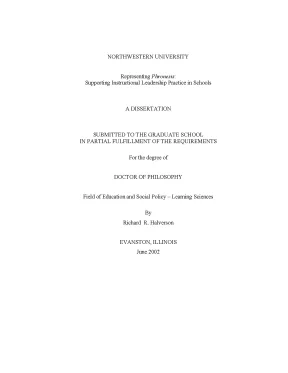
Tải xuống để đọc toàn bộNORTHWESTERN UNIVERSITY Representing Phronesis: Supporting Instructional Leadership Practice in Schools A DISSERTATION SUBMITTED TO THE GRADUATE SCHOOL IN PARTIAL FULFILLMENT OF THE REQUIREMENTS For the degree of DOCTOR OF PHILOSOPHY Field of Education and Social Policy – Learning Sciences By Richard R. Halverson EVANSTON, ILLINOIS June 2002 Copyright by Richard R. Halverson 2002 All Rights Reserved ABSTRACT Sharing the practical wisdom of successful instructional leadership should be a key component of learning to be a school leader. The Aristotelian concept of phronesis provides a powerful organizing idea for understanding how we can access, document and communicate the wisdom of school leadership practice.
This dissertation explores how phronesis can serve as guide for communicating the successful practices of school leadership through the development of innovative multimedia learning technologies. As the basis for a research method, phronesis is best expressed through narratives of practice that relay how strategies, goals, constraints, affordances and resources unfold in the enactment of leadership work. This dissertation argues that locally designed artifacts provide touchstones for researchers to access and communicate the wisdom of leadership practice. The research described here focuses on the case of Adams School, a Chicago Public elementary school whose sustained record of improved student achievement has been attributed, both within and outside the school, to outstanding leadership practice.
Over the course of three years, a research team gathered observations, interviews and artifacts at Adams to document their practical wisdom. I present a Design Cycle Analysis Model to show how these data were organized into artifact- based narratives of practice. The data analysis section describes three narratives of practice organized around locally-designed artifacts: • a professional development program (Breakfast Club); • a formative assessment program (Five-Week Assessment); • and a school-improvement planning process (SIP). One of the narratives, Breakfast Club, was used as the basis for constructing a multimedia narrative of practice.
The Breakfast Club case is then user-tested with Adams leaders and with interested practitioners from a variety of school settings to determine the fidelity and verisimilitude of the representation. i The conceptual framework and the methods discussed here contribute toward the development of principled research methods to make complex practices accessible to interested practitioners. Hopefully, this research will point toward fruitful ways for researchers to attend to the particulars of practice as their primary work, instead of as obstacles that must be overcome on the way to epistemic generalizations about practice. The phronesis is, after all, in the particulars.
ii DEDICATION Practical wisdom, the central topic of this dissertation, has influenced my philosophical interests for as long as I remember. As I began to study philosophy as an undergraduate at Marquette University, I had the good fortune to learn from men such as James Robb, Walter Stohrer, and Michael Boylan, that philosophy was a matter of not only thinking well, but also of living well. In my graduate studies in philosophy, I turned from contemporary thinkers to reexamine the works of Plato and Aristotle. My guide and mentor in my graduate work, Reginald Allen, showed us the difference between the study of philosophy and of antiquity by bringing out what William James would call the “live options” implicit in the ethics and metaphysics of the Greeks.
Reg’s low-key elicitation of the drama inherent in the Platonic dialogues, the live options not well-addressed by the modern and post-modern metaphysical presuppositions, led me to understand how new questions can be sparked by very old answers. I wish to thank my colleagues and friends, Barbara Preslin, Paula Etheridge, Joe Sowinski and Kathy Woytych at Seton Academy in South Holland Illinois, where I learned to teach and had the extraordinary opportunity to work with educators and leaders of the heart. In particular, I would like to thank Roberta Felker for taking a chance on a philosophy student with no teaching experience to teach in her school, for her encouragement to put my ideals to the test, and for her example of how a real leader lives and leads. I remain very grateful for the opportunity to return to graduate school in mid-career.
The Learning Sciences program at Northwestern University provided the ideal blend of challenging ideas, practical opportunities to do real work in real schools, and invigorating conversations with professors and peers. In particular, I wish to acknowledge three of my professors at Northwestern. Louis Gomez proved an advisor in the true sense, providing opportunities and constraints that iii challenged me to elaborate our ideas through practical application. I will always consider our give-and-take about course planning, research design and educational philosophy as the gold standard for an advisor relationship.
James Spillane offered the opportunity to develop a research program together, from the ground up, and provided me my first chance to publish and present my work. Allan Collins encouraged me to pursue my instincts in my thinking and my writing. I also wish to thank Northwestern University and the National Science Foundation for their generous support throughout of my graduate career. I am particularly grateful to the Spencer Foundation for supporting my graduate career through Research Training Grants and through a Dissertation Year Fellowship that allowed me the time and space to complete my writing.
I would also like to acknowledge several of my friends and colleagues. Matt Brown, Joyce Ma, Lisa Bouillion, Franci Steinmuller and Beth van Es came into the Learning Sciences program with me and I am grateful for their support and their friendship. Greg Shrader’s work as a mentor and trail-blazer in developing the Living Curriculum project helped me to see what a multimedia system of practice might look like in real life. Don Sorsa is a good, critical friend and bolstered my confidence with his “racquetball” game.
Baylen Linnekin’s work on the user testing process helped make sense of how we can test verisimilitude. I would like to thank John Diamond, Jennifer Zoltners, Lauren Banks, Elisa Mandell, Michelle Green and Robb Lindgren for their work in helping to think through and engage in the field work discussed here. Barbara Watkins, Mary Rogers, Tom Ziencina, Geralynn Wilson, Rhonda Allen, Ben Southworth, LouEllen Finn and Melovee Williamson helped me to understand the challenges and rewards of teaching in Chicago Public Schools. Steve Sewall and Dick Baran helped to keep me sane and semi-sober during my writing.
My parents, Roger and Pat Halverson, always encouraged us that we could be anything we wanted to be, and their love made it possible for us to take iv advantage of the opportunities that came our way. I would like to thank my brothers Ron and Rob Halverson for their support, love and conversation in helping me through my graduate study. The wonder and spontaneity of my children Nick and Katja Halverson remain my inspiration. Finally, Erica Rosenfeld has not only read and helped me to refine all my writing, but has changed my life with her charm, her insight and her warmth.
v TABLE OF CONTENTS Abstract .iii Table of Contents. vi List of Tables. xi List of Figures.1 Why leadership practice?.1 Chapter 1: Understanding Phronesis .2 Chapter 2: Accessing Phronesis.3 Chapter 3: Representing Phronesis .4 Chapter 4: Sharing Phronesis.1 Aristotle and Phronesis .1 Plato and the Philosopher King .2 Odysseus and Metis .3 Phronesis as a Bridge between Episteme and Metis.4 Phronesis : Praxis :: Techne : Poeisis .5 Experience and the Good .1 Phronesis and Casuistry.2 Phronesis and Apprenticeship.3 Phronesis and Reflective Practice .4 Phronesis and Practical Argument .3 Phronesis and Leadership.1 Distributed Cognition and Leadership.1 Communities as Individuals Writ Large .5 The Distributed Leadership Framework .4 Phronesis and Expertise .1 Phronesis and Problem-solving .2 Phronesis and Experience.3 The Expertise of School Leadership.1 Design: Opening a Window on Practice.2 Narrative Reconstruction and Analysis .3 Artifacts as a Window into Practice: DCAM .4 Multimedia Case Design.1 Case Design and the Living Curriculum.5 Research Site Selection .1 Research Site: Adams School .6 Data Collection and Representation. 122 vii 3 Documenting Phronesis .3 Building Professional Community: the Breakfast Club .1 Breakfast Club: Problem-Setting.2 Breakfast Club: Problem-solving .3 Iterations of Breakfast Club: Consequent Artifacts.4 Standardized Testing: the Five-Week Assessment .1 What is the Five-Week Assessment? How does it work?.2 Five-Week Assessment: Problem-setting .3 Five-Week Assessment: Problem-solving .4 Five-Week Assessment: Iterations .1 Language-Arts Committee .2 Administrative Modeling of Instructional Practices .5 Site-Based Planning: the School Improvement Plan.1 What is the School Improvement Plan?.2 The SIP Artifact Itself.3 SIP Problem-setting .4 SIP Problem-solving .1 SIP Problem-Solving Process: Pre-service 1999.2 SIP Problem-Solving Process: Fall-Winter 1999 .3 SIP Design Process: Spring 2000 .1 Language Arts SIP meeting .2 Math SIP meeting.4 Using Standardized Test Scores to Assess SIP Priorities .3 Tentative Action Plan.2 LCSL: The Design of Multimedia Narratives of Practice .1 Internal Audience: Adams Leaders .1 Breakfast Club as a condition for subsequent development.2 Breakfast Club as an occasion for reflection on practice.1 (How) Was the video relevant to the case presentation? .2 What does this program remind you of in your school? .3 Would Breakfast Club work in your school? .1 Redesign issue 1: Integrating video into presentation.2 Redesign issue 2: Balancing linear and non-linear narrative path.3 Redesign issue 3: Situating Breakfast Club in LCSL context.4 Redesign issue 4: Representing the process vs.
261 5 Reflection on Phronesis.1 Phronesis and episteme in research.2 Characteristics of practical wisdom .1 Problem-setting, or apperception.3 Patterns in problem–solving.3 Phronesis, metis and the higher good .3 An epistemology of phronesis?.4 Applications of phronesis research. 312 x LIST OF TABLES Table 1 Trade-offs in using collaborative design opportunities. 122 Table 2 Contrast between narrative and paradigmatic reasoning. 125 Table 3 Adams Artifacts.
132 Table 4 Sample Five-Week Assessment Schedule. 203 Table 5 Summary of Adams 1999-2001 SIP Section 3 Budget. 245 Table 6 Comparing results of Adams1999-2000 to 1998-99 ISAT. 272 Table 7 Parallel ISAT discussions.
208 Table 8 Question hierarchy for LCSL Ask System. 294 xi LIST OF FIGURES Figure 1 Activity Theory Model. 79 Figure 2 Design-Cycle Analysis Model (DCAM). 136 Figure 3 Application of Design-Cycle Analysis Model (DCAM).
140 Figure 4 Adams ITBS % students at/above national norms. 155 Figure 5 Adams IGAP % students at/above national norms. 157 Figure 6 Original Design-Cycle Analysis Model (DCAM). 164 Figure 7 Breakfast Club DCAM.
181 Figure 8 Five-Week Assessment DCAM. 200 Figure 9 School Improvement Plan DCAM. 296 Figure 11 Place of district-level administrators in instructional leadership. 340 Figure 13 Situating the Breakfast Club in a wider LC context.
343 Figure 14 Narrowing the Problem-Space. 371 xii REPRESENTING PHRONESIS: DOCUMENTING THE PRACTICAL WISDOM OF SCHOOL LEADERSHIP 0.0 Introduction1 Successful work practices, in management, administration and teaching, are often inaccessible to researchers. We can recognize good practice when we see it, we can evaluate the outcomes of practices, and we can study the conditions of successful practices. But the practices themselves remain inaccessible to study.
Practice is a complex phenomenon with at least three different aspects that cone together in human activity. First, practice refers to the day-to-day activity in which people routinely engage. Second, practice retains its ordinary sense in the repetition of actions to increase proficiency. And third, the regularities of practice can emerge into chunked traditions of behavior that are passed down as legitimate cultural or organizational packages of behavior.
Researchers have focused on each of these elements of practice: Taylor’s (1911; 1998) early and Mintzberg’s more 1 This work draws upon and extends the research of two funded projects: 1) the Living Curriculum project (PIs Louis Gomez, Daniel Edelson and James Spillane: NSF Grant # 9720423) an NSF funded effort to develop web-based multimedia systems to share the practice of project-based science teaching with the education community; and 2) the Distributed Leadership project (PI James Spillane: NSF Grant #9819252 ) an NSF and Spencer Foundation funded effort to examine how leadership practices are socially and situationally distributed in urban elementary schools around math and literacy instruction.
Nội dung được bảo vệ bản quyền — Tải xuống đầy đủ
Trích dẫn luận án này
Richard R. Halverson (2002). Representing Phronesis in Instructional Leadership Practice [Luận án tiến sĩ, Northwestern University]. LuanAn.net. https://luanan.net/quan-ly-giao-duc/representing-phronesis-in-instructional-leadership-practice
Câu hỏi thường gặp
Luận án "Representing Phronesis in Instructional Leadership Practice" nghiên cứu về vấn đề gì?
Luận văn phân tích vai trò của phronesis trong lãnh đạo giáo dục, đề xuất phương pháp ứng dụng phronesis trong thực hành lãnh đạo giáo dục hiệu quả.
Luận án "Representing Phronesis in Instructional Leadership Practice" được bảo vệ tại trường nào?
Luận án này được bảo vệ tại Northwestern University. Năm bảo vệ: 2002.
Luận án "Representing Phronesis in Instructional Leadership Practice" thuộc chuyên ngành gì?
Luận án "Representing Phronesis in Instructional Leadership Practice" thuộc chuyên ngành Education and Social Policy – Learning Sciences. Danh mục: Quản Lý Giáo Dục.
Luận án "Representing Phronesis in Instructional Leadership Practice" có bao nhiêu trang?
Luận án "Representing Phronesis in Instructional Leadership Practice" có 331 trang. Bạn có thể xem trước một phần tài liệu ngay trên trang web trước khi tải về.
Cách tải luận án "Representing Phronesis in Instructional Leadership Practice" về máy như thế nào?
Để tải luận án về máy, bạn nhấn nút "Tải xuống ngay" trên trang này, sau đó hoàn tất thanh toán phí lưu trữ. File sẽ được tải xuống ngay sau khi thanh toán thành công. Hỗ trợ qua Zalo: 0559 297 239.