Three Essays on Banking Integration in ASEAN - Nguyen Minh Phuong LE
Luận án khám phá quá trình hợp nhất ngân hàng ở ASEAN qua ba góc nhìn tích cực.
Université Paris-Saclay
Sciences de gestion
Luan An
Luận án tiến sĩ
Năm xuất bản
Số trang
221
Thời gian đọc
34 phút
Lượt xem
0
Lượt tải
0
Phí lưu trữ
50 Point
Tổng quan nhanh
- Chủ đề:
- Thúc đẩy Hội nhập Ngân hàng ASEAN: Tổng quan
- Số trang:
- 221 trang
- Trường:
- Université Paris-Saclay
- Chuyên ngành:
- Sciences de gestion
- Tác giả:
- Nguyen Minh Phuong Le
- Năm:
- 2021
Tóm tắt nội dung luận án
I.Thúc đẩy Hội nhập Ngân hàng ASEAN Tổng quan
Hội nhập ngân hàng trong khu vực ASEAN là động lực chính cho tăng trưởng kinh tế. Nghiên cứu này khám phá các khía cạnh quan trọng của quá trình này. Mục tiêu là phân tích sâu sắc các yếu tố định hình thị trường tài chính ASEAN. Việc hiểu rõ cơ chế hội nhập giúp nhận diện cơ hội và thách thức. Một hệ thống ngân hàng liên kết mạnh mẽ hỗ trợ sự phát triển của Cộng đồng Kinh tế ASEAN (AEC). Quá trình này tạo ra một môi trường thuận lợi cho đầu tư và thương mại. Nhu cầu về một khuôn khổ ngân hàng khu vực thống nhất đang ngày càng tăng.
1.1. Tầm quan trọng của Cộng đồng Kinh tế ASEAN AEC
AEC là nền tảng cho hội nhập kinh tế khu vực. Mục tiêu của AEC là tạo ra một thị trường và cơ sở sản xuất duy nhất. Điều này đòi hỏi sự phối hợp chặt chẽ trong lĩnh vực tài chính. Hội nhập ngân hàng hỗ trợ dòng chảy tự do của vốn và dịch vụ. AEC tạo điều kiện cho các ngân hàng hoạt động hiệu quả hơn.
1.2. Nhu cầu tích hợp tài chính khu vực
Nhu cầu tích hợp tài chính là cấp thiết để tăng cường khả năng phục hồi. Nó cho phép phân bổ nguồn lực tài chính tối ưu. Sự tích hợp giúp các quốc gia thành viên đối phó với các cú sốc bên ngoài. Thị trường tài chính ASEAN được hưởng lợi từ việc tăng cường tính thanh khoản. Tích hợp cũng thúc đẩy cạnh tranh lành mạnh giữa các tổ chức tài chính.
1.3. Lợi ích của hội nhập ngân hàng bền vững
Hội nhập bền vững mang lại nhiều lợi ích. Bao gồm cải thiện hiệu quả, giảm chi phí giao dịch. Nó tăng cường khả năng tiếp cận tài chính cho doanh nghiệp và cá nhân. Hội nhập cũng thúc đẩy đổi mới công nghệ trong ngành ngân hàng. Sự ổn định của hệ thống tài chính được củng cố đáng kể.
II.Khung tích hợp Ngân hàng ASEAN ABIF và Tự do hóa
Khung Tích hợp Ngân hàng ASEAN (ABIF) đóng vai trò trung tâm trong quá trình hội nhập tài chính khu vực. ABIF cung cấp lộ trình rõ ràng cho tự do hóa dịch vụ ngân hàng. Mục tiêu là tạo ra một sân chơi bình đẳng cho các ngân hàng đủ điều kiện. ABIF thúc đẩy sự hài hòa về quy định và giám sát ngân hàng. Điều này giúp giảm rào cản cho hoạt động ngân hàng xuyên biên giới. Sự thành công của ABIF phụ thuộc vào cam kết của các quốc gia thành viên. Khung này đại diện cho nỗ lực chung để xây dựng một khuôn khổ ngân hàng khu vực mạnh mẽ hơn.
2.1. Mục tiêu và cấu trúc của ABIF
ABIF được thiết lập để hỗ trợ tự do hóa các dịch vụ tài chính. Nó hướng đến việc tạo điều kiện cho sự di chuyển của các ngân hàng đủ điều kiện. Cấu trúc của ABIF bao gồm các nguyên tắc và lộ trình cụ thể. Mục tiêu cuối cùng là tăng cường sự ổn định và cạnh tranh.
2.2. Tiến trình tự do hóa ngân hàng
Tự do hóa ngân hàng là một phần quan trọng của ABIF. Quá trình này liên quan đến việc giảm các hạn chế đối với quyền sở hữu và hoạt động. Nó khuyến khích đầu tư nước ngoài vào ngành ngân hàng. Tự do hóa giúp các ngân hàng ASEAN mở rộng phạm vi hoạt động. Các thị trường tài chính trở nên cởi mở và năng động hơn.
2.3. Tăng cường hợp tác tài chính khu vực
ABIF cũng thúc đẩy hợp tác tài chính chặt chẽ hơn. Các cơ quan quản lý ngân hàng trao đổi thông tin và kinh nghiệm. Sự hợp tác này là cần thiết để đạt được hài hòa ngân hàng. Nó xây dựng niềm tin và sự hiểu biết lẫn nhau. Mối quan hệ đối tác mạnh mẽ hỗ trợ thực hiện các mục tiêu chung.
III.Mở rộng Dịch vụ Ngân hàng Xuyên biên giới Khu vực
Mở rộng các dịch vụ ngân hàng xuyên biên giới là một yếu tố quan trọng trong hội nhập ASEAN. Điều này liên quan đến việc tạo điều kiện thuận lợi cho các ngân hàng hoạt động ở nhiều quốc gia thành viên. Sự tự do hóa dịch vụ tài chính thúc đẩy tăng trưởng kinh tế khu vực. Các ngân hàng có thể phục vụ khách hàng trên toàn ASEAN. Điều này dẫn đến sự gia tăng cạnh tranh và cải thiện chất lượng dịch vụ. Phát triển một khuôn khổ ngân hàng khu vực mạnh mẽ là điều cần thiết. Nỗ lực này giúp xây dựng một thị trường tài chính ASEAN thống nhất và hiệu quả.
3.1. Thúc đẩy các giao dịch ngân hàng xuyên biên giới
Giao dịch ngân hàng xuyên biên giới được tạo điều kiện thuận lợi hơn. Các quy định được hài hòa hóa để giảm bớt rào cản. Điều này giúp các doanh nghiệp dễ dàng tiếp cận tài chính. Nó cũng hỗ trợ thương mại và đầu tư nội khối ASEAN.
3.2. Cải thiện tiếp cận thị trường tài chính ASEAN
Tiếp cận thị trường tài chính được mở rộng cho các tổ chức. Các ngân hàng có thể mở rộng chi nhánh và hoạt động. Khách hàng có nhiều lựa chọn hơn về dịch vụ ngân hàng. Điều này thúc đẩy cạnh tranh và hiệu quả thị trường.
3.3. Vai trò của ngân hàng trong khu vực
Các ngân hàng trong khu vực đóng vai trò then chốt. Chúng là cầu nối cho dòng vốn và dịch vụ. Các ngân hàng này cung cấp chuyên môn về thị trường địa phương. Chúng hỗ trợ thực hiện các sáng kiến hội nhập.
IV.Hài hòa Thị trường Tài chính ASEAN và Lợi ích
Hài hòa thị trường tài chính ASEAN là một bước quan trọng hướng tới hội nhập hoàn chỉnh. Quá trình này liên quan đến việc điều chỉnh các quy định và tiêu chuẩn ngân hàng. Mục tiêu là giảm sự khác biệt giữa các quốc gia thành viên. Hài hòa thúc đẩy tính minh bạch và ổn định của hệ thống tài chính khu vực. Điều này tạo điều kiện cho sự di chuyển tự do của vốn và dịch vụ. Lợi ích bao gồm việc tăng cường khả năng phục hồi của hệ thống tài chính ASEAN. Nỗ lực này cũng góp phần vào việc đạt được tài chính toàn diện. Một thị trường tài chính thống nhất mang lại lợi ích cho tất cả các bên liên quan.
4.1. Nỗ lực hài hòa các quy định ngân hàng
Các quốc gia thành viên nỗ lực hài hòa các quy định. Điều này bao gồm các tiêu chuẩn về vốn, quản trị rủi ro. Mục tiêu là tạo ra một môi trường pháp lý nhất quán. Hài hòa giảm bớt gánh nặng tuân thủ cho các ngân hàng đa quốc gia.
4.2. Tăng cường khả năng phục hồi của hệ thống
Hệ thống tài chính được tăng cường khả năng phục hồi. Hài hòa giúp phát hiện và quản lý rủi ro tốt hơn. Nó ngăn chặn sự lây lan của các cú sốc tài chính. Một hệ thống mạnh mẽ hơn có thể chống chịu tốt hơn các biến động.
4.3. Đẩy mạnh tài chính toàn diện
Tài chính toàn diện là một lợi ích quan trọng. Hội nhập giúp mở rộng dịch vụ tài chính đến các khu vực chưa được phục vụ. Nó cung cấp quyền tiếp cận tín dụng và tiết kiệm cho nhiều người hơn. Điều này hỗ trợ giảm nghèo và tăng trưởng kinh tế bền vững.
V.Tác động và Triển vọng Tích hợp Tài chính ASEAN
Tác động của tích hợp tài chính đối với ASEAN là sâu rộng. Nó ảnh hưởng đến các ngành công nghiệp, doanh nghiệp và người tiêu dùng. Quá trình này không chỉ tạo ra cơ hội mà còn đặt ra thách thức. Việc đánh giá kỹ lưỡng các tác động là cần thiết để định hình chính sách tương lai. Triển vọng của thị trường tài chính ASEAN phụ thuộc vào việc tiếp tục các nỗ lực hội nhập. Một hệ thống tài chính mạnh mẽ, được tích hợp tốt sẽ củng cố Cộng đồng Kinh tế ASEAN (AEC). Việc thúc đẩy dịch vụ ngân hàng xuyên biên giới và tài chính toàn diện vẫn là ưu tiên hàng đầu.
5.1. Ảnh hưởng đến tăng trưởng kinh tế khu vực
Tích hợp tài chính có ảnh hưởng tích cực đến tăng trưởng. Nó tạo điều kiện cho đầu tư và thương mại. Dòng vốn hiệu quả thúc đẩy năng suất và việc làm. Các nền kinh tế ASEAN trở nên năng động hơn.
5.2. Các thách thức và cơ hội hiện tại
Tích hợp đối mặt với các thách thức như sự khác biệt về quy định. Các cơ hội bao gồm tiềm năng thị trường lớn. Công nghệ tài chính (FinTech) cũng tạo ra động lực mới. Việc tận dụng cơ hội và giải quyết thách thức là rất quan trọng.
5.3. Định hình tương lai thị trường tài chính ASEAN
Tương lai của thị trường tài chính ASEAN đang được định hình. Các sáng kiến hội nhập tiếp tục phát triển. Mục tiêu là tạo ra một thị trường thống nhất, cạnh tranh và bền vững. Điều này sẽ củng cố vị thế của ASEAN trên trường quốc tế.
Mục lục chi tiết luận án
Tải xuống file đầy đủ để xem toàn bộ nội dung
Tải đầy đủ (221 trang)Nội dung chính
Tổng quan về luận án
Luận án tiến sĩ "Three Essays on Banking Integration in ASEAN" là một công trình nghiên cứu tiên phong, định vị trong bối cảnh khoa học về hội nhập tài chính toàn cầu và khu vực, đặc biệt nhấn mạnh các nền kinh tế mới nổi (EMEs). Nghiên cứu này bắt nguồn từ nhận định rằng mặc dù hội nhập ngân hàng đã và đang thu hút sự chú ý đáng kể từ các học giả lẫn nhà hoạch định chính sách trong hơn ba thập kỷ, những động lực, cơ chế và tác động toàn diện của nó, đặc biệt là trong bối cảnh cụ thể của Hiệp hội các quốc gia Đông Nam Á (ASEAN), vẫn còn mơ hồ và chưa được nghiên cứu kỹ lưỡng.
Research gap cụ thể mà luận án này giải quyết là sự thiếu hụt các nghiên cứu toàn diện phân tích sự đánh đổi (trade-off) giữa lợi ích và chi phí của hội nhập ngân hàng trong khu vực Đông Nam Á. Trong khi phần lớn các nghiên cứu hiện có tập trung vào các quốc gia phát triển, khu vực Eurozone, hoặc ở cấp độ ngành/quốc gia, có rất ít công trình nghiên cứu sâu về EMEs, và đặc biệt là ASEAN. Điều này được chứng minh qua "L’apport essentiel de cette thèse est qu’elle comble ces lacunes bibliographiques susmentionnées en analysant le compromis entre les avantages et les coûts de l’intégration bancaire, plus précisément dans les pays d’Asie du Sud-Est." Luận án xác định bốn cụm nghiên cứu chính trong hệ thống tài liệu hiện có (các biện pháp và động lực, lợi ích, chi phí, và tác động thị trường vốn) nhưng nhấn mạnh rằng chưa có nghiên cứu nào tổng hợp và phân tích một cách có hệ thống sự tương tác phức tạp và tác động dị biệt của các khía cạnh khác nhau của hội nhập ngân hàng trong bối cảnh ASEAN.
Luận án được định hướng bởi các câu hỏi nghiên cứu và giả thuyết sau:
- RQ1: Mức độ và động lực của hội nhập ngân hàng ở ASEAN-6 đã phát triển như thế nào trong giai đoạn 1996-2016, và những yếu tố kinh tế vĩ mô và đặc điểm hệ thống ngân hàng nào ảnh hưởng đến nó?
- H1.1: Các yếu tố "kéo" (như GDP, ngoại tệ, chất lượng quản lý) và "đẩy" (như chênh lệch TED, GDP thực toàn cầu, chỉ số MSCI) là những động lực chính của độ mở và độ cân bằng hội nhập ngân hàng.
- RQ2: Các khía cạnh khác nhau của hội nhập ngân hàng (kênh vốn, kênh vật lý) có tác động dị biệt và phi tuyến tính đến cạnh tranh trên thị trường ngân hàng ASEAN-6 không?
- H2.1: Hội nhập ngân hàng có tác động dị biệt lên cạnh tranh, với độ mở ngân hàng có thể cải thiện cạnh tranh nhưng mối quan hệ này là phi tuyến tính (dạng đường cong U) và phụ thuộc vào chế độ (ví dụ: hiệu quả quản lý).
- H2.2: Sự hiện diện vật lý của các ngân hàng nước ngoài có thể làm giảm cạnh tranh trong một số trường hợp, nhưng điều này có thể được hạn chế bởi một khung pháp lý hiệu quả.
- RQ3: Hội nhập ngân hàng tác động như thế nào đến sự ổn định ngân hàng ở ASEAN-6, và rủi ro lây lan qua các liên kết xuyên biên giới có vai trò gì trong bối cảnh này?
- H3.1: Các hình thức hội nhập ngân hàng khác nhau có tác động đối lập lên ổn định: độ mở có thể tác động tiêu cực, trong khi độ cân bằng tổng thể và sự tham gia của ngân hàng nước ngoài có thể có lợi.
- H3.2: Rủi ro lây lan qua mạng lưới liên ngân hàng nước ngoài là đáng kể, nhưng các liên kết song phương với các hệ thống ngân hàng ổn định có thể có tác dụng giảm thiểu rủi ro.
Khung lý thuyết của luận án được xây dựng dựa trên sự tổng hợp của các lý thuyết kinh điển và hiện đại. Lý thuyết đa dạng hóa rủi ro của Diamond (1984) và Winton (1999) cung cấp nền tảng cho việc phân tích lợi ích của hội nhập xuyên biên giới trong việc giảm thiểu rủi ro và ổn định cho vay. Lý thuyết về mối quan hệ giữa cạnh tranh và ổn định, đặc biệt là quan điểm cho rằng cạnh tranh cao hơn có thể thúc đẩy ổn định bằng cách giảm thiểu vấn đề đại diện cấp người vay (Boyd & De Nicolo, 2005), là trọng tâm của Chương 3. Ngoài ra, các lý thuyết về rủi ro lây lan (contagion risk) qua các liên kết tài chính (Kalemli-Ozcan et al.) cũng đóng vai trò quan trọng trong việc phân tích tác động tiêu cực của hội nhập.
Luận án này đưa ra những đóng góp đột phá với tác động định lượng rõ ràng. Cụ thể, nó mở rộng các thước đo hội nhập ngân hàng bằng cách giới thiệu "độ mở ngân hàng" và "độ cân bằng tổng thể" cho ASEAN-6, cung cấp cái nhìn sâu sắc hơn về dòng vốn và sự đa dạng hóa. Nghiên cứu xác định các động lực chính của hội nhập ngân hàng, bao gồm các yếu tố "kéo" như GDP và chất lượng quản lý, và các yếu tố "đẩy" toàn cầu như chênh lệch TED, cung cấp cơ sở cho các chính sách trong khu vực. Quan trọng hơn, luận án chứng minh rằng các khía cạnh khác nhau của hội nhập ngân hàng có tác động dị biệt lên cạnh tranh và ổn định, với mối quan hệ phi tuyến tính (đường cong U) được phát hiện giữa độ mở và cạnh tranh, phụ thuộc vào hiệu quả quản lý. Phát hiện này, với các kiểm định vững chắc (robustness checks) sử dụng các chỉ số cạnh tranh thay thế như chỉ số Lerner điều chỉnh và chỉ báo Boone, cho thấy tác động có thể khác biệt đáng kể tùy thuộc vào bối cảnh cụ thể của từng quốc gia ASEAN. Cuối cùng, luận án sử dụng mô hình không gian để định lượng rủi ro lây lan, chỉ ra rằng các liên kết xuyên biên giới với các đối tác ổn định có thể thực sự cải thiện ổn định hệ thống, một phát hiện có giá trị cho việc quản lý rủi ro xuyên biên giới.
Phạm vi nghiên cứu bao gồm 6 quốc gia lớn nhất trong ASEAN (ASEAN-6) trong giai đoạn 1996-2018, sử dụng dữ liệu panel. Việc tập trung vào ASEAN-6 là quan trọng do các nước này chiếm phần lớn hoạt động kinh tế và tài chính trong khu vực, đồng thời là tâm điểm của các sáng kiến hội nhập như AEC và ABIF. Tầm quan trọng của nghiên cứu nằm ở việc cung cấp bằng chứng thực nghiệm mạnh mẽ và các khuyến nghị chính sách cụ thể, giúp các nhà hoạch định chính sách ở ASEAN tận dụng lợi ích của hội nhập tài chính trong khi giảm thiểu rủi ro tiềm tàng, đặc biệt trong bối cảnh khu vực thường xuyên đối mặt với các cú sốc tài chính như cuộc khủng hoảng tài chính châu Á 1997-1998 và khủng hoảng tài chính toàn cầu 2007-2008.
Literature Review và Positioning
Luận án này đặt mình vào dòng nghiên cứu phong phú về hội nhập tài chính và ngân hàng, tổng hợp các luồng tư tưởng chính để làm nổi bật các lỗ hổng mà nó sẽ giải quyết. Một cách có hệ thống, thông qua phân tích thư mục và mạng lưới (sử dụng VOSviewer), luận án đã xác định bốn cụm nghiên cứu chính từ 1.189 bài báo được xuất bản từ năm 1970 đến 2020: (1) các thước đo và động lực của hội nhập ngân hàng, (2) lợi ích đối với phát triển tài chính và tăng trưởng kinh tế, (3) chi phí và rủi ro (đặc biệt là lây lan và bất ổn), và (4) tác động đến hội nhập thị trường vốn.
Các công trình của Diamond (1984) và Winton (1999) về đa dạng hóa rủi ro là nền tảng cho việc thảo luận về lợi ích của hội nhập ngân hàng xuyên biên giới. Luận án cũng tiếp cận lý thuyết danh mục đầu tư hiện đại của Markowitz (1952), vốn đã chứng minh rằng đa dạng hóa tài sản có thể giảm thiểu rủi ro. Liên quan đến mối quan hệ giữa cạnh tranh và ổn định, luồng nghiên cứu này được định hình bởi Boyd & De Nicolo (2005), người lập luận rằng cạnh tranh có thể thúc đẩy ổn định bằng cách giảm thiểu các vấn đề đại diện của người vay.
Tuy nhiên, có những mâu thuẫn và tranh luận đáng kể trong tài liệu hiện có. Một mặt, các học giả như Cull & Soledad Martinez Peria (2010) và Tschoegl (2005) ủng hộ rằng sự hiện diện của các ngân hàng quốc tế có thể giúp hệ thống tài chính địa phương phục hồi sau suy thoái và các cú sốc. Họ chỉ ra rằng việc tích lũy tài sản từ các thị trường quốc tế giúp các ngân hàng quốc tế có khả năng phục hồi tốt hơn. De Blas và Russ (2008) cùng Goldberg (2004) cũng cung cấp bằng chứng cho giả thuyết rằng dòng vốn trong lĩnh vực ngân hàng làm giảm lãi suất cho vay bằng cách tăng áp lực cạnh tranh và cải thiện hiệu quả chi phí. Mặt khác, một luồng nghiên cứu khác, tiêu biểu là Peek & Rosengren (2000) và Schnabl (2012), cảnh báo về rủi ro "cắt và chạy" (cut and run) của vốn quốc tế khi điều kiện kinh tế địa phương trở nên bất lợi. Ngược lại với các ngân hàng nội địa, vốn quốc tế có khả năng di động cao hơn và ít bị ràng buộc bởi chi phí cố định, đặc biệt là đối với các ngân hàng chỉ hoạt động xuyên biên giới mà không có chi nhánh/công ty con tại nước sở tại. Rủi ro lây lan (contagion) cũng là một mối lo ngại lớn, như Kalemli-Ozcan et al. chỉ ra, các cú sốc tín dụng có thể lan truyền nhanh chóng qua các liên kết tài chính quốc tế, bất kể mức độ nền tảng kinh tế quốc gia. Degryse et al. (2010) mô tả việc khủng hoảng thế chấp dưới chuẩn ở Mỹ đã làm suy yếu vị thế vốn chủ sở hữu của các ngân hàng Mỹ và sau đó, bằng hiệu ứng lây lan, tác động tiêu cực đến các ngân hàng trên toàn thế giới.
Luận án định vị mình trong tài liệu hiện có bằng cách giải quyết một lỗ hổng cụ thể: trong khi phần lớn các nghiên cứu đã tập trung vào các quốc gia phát triển và khu vực Eurozone, lại có rất ít công trình về các nền kinh tế thị trường mới nổi (EMEs), đặc biệt là trong bối cảnh ASEAN. Luận án nhấn mạnh rằng "Bien qu’il existe peu d’études bibliographiques sur les EME, notamment dans les pays d’Asie du Sud-Est, cette étude apportera de nouvelles conclusions sur l’impact de l’intégration bancaire sur l’économie de l’ASEAN ainsi que sur le compromis entre les gains et les risques des activités bancaires transfrontalières de l’ASEAN."
Nghiên cứu này thúc đẩy lĩnh vực bằng cách:
- Mở rộng các thước đo hội nhập ngân hàng, vượt ra ngoài các chỉ số truyền thống, để nắm bắt đầy đủ hơn sự phức tạp của các hoạt động ngân hàng xuyên biên giới trong ASEAN-6.
- Cung cấp bằng chứng thực nghiệm về tác động dị biệt và phi tuyến tính của các khía cạnh khác nhau của hội nhập ngân hàng (kênh vốn, kênh vật lý) lên cạnh tranh và ổn định ngân hàng.
- Phân tích cơ chế rủi ro lây lan qua mạng lưới liên ngân hàng quốc tế, một khía cạnh ít được khám phá trong bối cảnh khu vực.
So sánh với ít nhất hai nghiên cứu quốc tế, luận án này khác biệt. Trong khi các nghiên cứu về Eurozone như Baele et al. (2004) đã ghi nhận sự hội nhập mạnh mẽ trong ngân hàng bán buôn và tài chính doanh nghiệp, nhưng yếu ở ngân hàng bán lẻ, luận án này tập trung vào sự phát triển tổng thể của hệ thống ngân hàng ASEAN-6, nơi mà "l’intégration bancaire des pays de l’ASEAN-6 est encore relativement faible par rapport à d’autres régions ou aux économies développées" (Ventouri, 2018). Ngoài ra, không giống như các phân tích về sự rút vốn của các ngân hàng châu Âu khỏi các EMEs sau khủng hoảng tài chính toàn cầu 2007-2008 (ví dụ: BIS locational banking statistics chỉ ra rằng sự hiện diện của các ngân hàng châu Âu ở châu Á mới nổi đã giảm từ 31% năm 2008 xuống 13% năm 2014), luận án này không chỉ ghi nhận sự thay đổi này mà còn phân tích cách các nhóm ngân hàng khu vực đã lấp đầy khoảng trống đó (Remolona & Shim, 2015) và tác động của sự tham gia của các ngân hàng nước ngoài đến cạnh tranh và ổn định. Điều này cho thấy sự tiến bộ trong việc hiểu các động lực và hậu quả của hội nhập trong một khu vực có đặc điểm riêng.
Đóng góp lý thuyết và khung phân tích
Đóng góp cho lý thuyết
Luận án này đưa ra những đóng góp lý thuyết đáng kể bằng cách mở rộng và thách thức các lý thuyết hiện có về hội nhập ngân hàng, cạnh tranh và ổn định tài chính.
- Mở rộng lý thuyết về đo lường hội nhập: Luận án mở rộng các thước đo hội nhập ngân hàng hiện có, vốn thường dựa trên giá cả hoặc số lượng, bằng cách giới thiệu hai chỉ số mới: "độ mở ngân hàng" (degré d’ouverture des banques) và "độ cân bằng tổng thể" (degré d’équilibre global). Các chỉ số này, được phát triển trong Chương 2, không chỉ xem xét dòng vốn xuyên biên giới và sự tham gia vật lý của ngân hàng, mà còn đánh giá tính cân bằng và đa dạng hóa của các dòng vốn này. Điều này làm sâu sắc thêm cách chúng ta hiểu và định lượng mức độ hội nhập, đặc biệt quan trọng đối với các EMEs nơi dữ liệu có thể ít đầy đủ hơn so với các thị trường phát triển.
- Thách thức lý thuyết về mối quan hệ cạnh tranh-ổn định: Luận án thách thức quan điểm đơn giản hóa về mối quan hệ cạnh tranh-ổn định bằng cách chứng minh rằng tác động của hội nhập ngân hàng lên cạnh tranh là "hétérogène" và "non linéaire (courbe en U)". Phát hiện này, được trình bày trong Chương 3, mở rộng lý thuyết của Boyd & De Nicolo (2005) về lợi ích của cạnh tranh đối với ổn định, bằng cách cho thấy rằng những lợi ích này không phải lúc nào cũng tuyến tính và có thể phụ thuộc vào các yếu tố bối cảnh như hiệu quả quản lý và mức độ tập trung thị trường vốn. Cụ thể, nó chỉ ra rằng một độ mở quá mức hoặc không được quản lý tốt có thể không mang lại lợi ích cạnh tranh như mong đợi.
- Tích hợp lý thuyết rủi ro lây lan vào khung hội nhập: Luận án tích hợp lý thuyết rủi ro lây lan vào khung phân tích hội nhập ngân hàng, vượt ra ngoài các phân tích rủi ro đơn lẻ. Bằng cách sử dụng "mô hình không gian" (spatial model) trong Chương 4, nghiên cứu chứng minh rằng "les liens bilatéraux avec les systèmes bancaires stables peuvent avoir un effet bénéfique sur la stabilité à travers la réduction du risque de crédit et du risque de liquidité." Điều này mở rộng lý thuyết về rủi ro lây lan (ví dụ, Kalemli-Ozcan et al.) bằng cách chỉ ra rằng các liên kết xuyên biên giới không chỉ là kênh truyền cú sốc mà còn có thể là kênh chia sẻ rủi ro có lợi khi các đối tác là các hệ thống ngân hàng mạnh.
- Khung khái niệm về sự đánh đổi: Luận án đóng góp một khung khái niệm mạnh mẽ về sự đánh đổi giữa lợi ích và chi phí của hội nhập ngân hàng, đặc biệt là trong bối cảnh EMEs dễ bị tổn thương bởi các cú sốc tài chính. Khung này cung cấp một lăng kính toàn diện để phân tích các cơ chế mà hội nhập có thể tạo ra cả lợi ích (đa dạng hóa rủi ro, cải thiện hiệu quả, tăng cạnh tranh) và chi phí (rủi ro lây lan, bất ổn).
Khung phân tích độc đáo
Luận án áp dụng một khung phân tích độc đáo, tích hợp nhiều lý thuyết và phương pháp tiếp cận để cung cấp một cái nhìn sâu sắc và đa chiều về hội nhập ngân hàng.
- Tích hợp đa lý thuyết: Khung phân tích độc đáo này tích hợp các lý thuyết về Đa dạng hóa Rủi ro (Diamond, Winton, Markowitz), Cạnh tranh-Ổn định (Boyd & De Nicolo), và Rủi ro Lây lan/Truyền tải Cú sốc (Kalemli-Ozcan et al.). Sự tích hợp này cho phép phân tích một cách toàn diện cả lợi ích và chi phí của hội nhập ngân hàng, từ đó hình thành cơ sở cho việc hiểu "compromis entre les avantages et les coûts de l’intégration bancaire."
- Phương pháp phân tích mới lạ: Luận án sử dụng một phương pháp phân tích mới lạ bằng cách phát triển các thước đo hội nhập ngân hàng mới ("độ mở" và "độ cân bằng tổng thể") và áp dụng các kỹ thuật định lượng tiên tiến như "hồi quy đa thức" (polynomial regressions), "hồi quy ngưỡng" (threshold regressions) và "mô hình không gian" (spatial model). Việc sử dụng mô hình không gian là một điểm nổi bật, cho phép nắm bắt các hiệu ứng lan tỏa và tương tác mạng lưới giữa các hệ thống ngân hàng ASEAN, vốn là một khía cạnh phức tạp và ít được nghiên cứu. Luận án nhấn mạnh việc "En tenant compte de la structure du réseau, je constate que les pays de l’ASEAN qui sont confrontés à des expositions interbancaires étrangères à des contreparties plus stables ont tendance à connaître une évolution vers un système bancaire plus stable."
- Đóng góp khái niệm: Các đóng góp khái niệm bao gồm việc định nghĩa lại và mở rộng khái niệm "hội nhập ngân hàng" để bao gồm không chỉ dòng vốn và sự hiện diện vật lý mà còn cả mức độ cân bằng và đa dạng hóa của các dòng vốn này. Khái niệm "tác động dị biệt" của hội nhập ngân hàng lên cạnh tranh và ổn định cũng là một đóng góp quan trọng, vượt qua các quan điểm một chiều.
- Điều kiện biên rõ ràng: Luận án xác định rõ ràng các điều kiện biên cho các phát hiện của mình. Ví dụ, tác động có lợi của hội nhập lên cạnh tranh được tìm thấy là phi tuyến tính và phụ thuộc vào "hiệu quả quản lý" (efficacité réglementaire) và "nồng độ thị trường vốn" (concentration des marchés de capitaux). Điều này có nghĩa là các kết quả không áp dụng phổ quát mà cần được xem xét trong bối cảnh cụ thể của từng quốc gia hoặc điều kiện thị trường. Điều kiện biên này cho phép các nhà hoạch định chính sách điều chỉnh các khuyến nghị một cách linh hoạt hơn.
Phương pháp nghiên cứu tiên tiến
Luận án áp dụng một phương pháp nghiên cứu tiên tiến và nghiêm ngặt, kết hợp các triết lý nghiên cứu đa dạng với các kỹ thuật định lượng phức tạp để cung cấp bằng chứng thực nghiệm vững chắc.
Thiết kế nghiên cứu
- Triết lý nghiên cứu: Luận án tuân theo triết lý nghiên cứu hậu thực chứng (post-positivism) với lập trường nhận thức luận thực chứng (empiricism). Nó tìm cách giải thích các hiện tượng, kiểm định các giả thuyết và tổng quát hóa các phát hiện thông qua bằng chứng thực nghiệm. Tuy nhiên, nó cũng thừa nhận tính phức tạp của thực tế, sự tồn tại của các tác động dị biệt và phi tuyến tính, cho thấy một sự chuyển dịch khỏi chủ nghĩa thực chứng ngây thơ. Nghiên cứu sử dụng các phương pháp định lượng để đo lường và phân tích các mối quan hệ nhân quả một cách khách quan, đồng thời chú ý đến ngữ cảnh cụ thể của ASEAN.
- Thiết kế hỗn hợp (Mixed methods) ngầm định: Mặc dù chủ yếu là định lượng, luận án ngầm định sử dụng cách tiếp cận hỗn hợp bằng cách bắt đầu với một "đánh giá tài liệu có hệ thống" (systematic literature review methodology, Tranfield et al., 2003) kết hợp với "phân tích thư mục và mạng lưới" (bibliometric and network analysis) sử dụng VOSviewer để xác định các cụm nghiên cứu và lỗ hổng trước khi tiến hành phân tích thực nghiệm. Điều này cung cấp một nền tảng bối cảnh vững chắc cho các phân tích định lượng tiếp theo.
- Thiết kế đa cấp: Mặc dù không nói rõ là "thiết kế đa cấp" (multi-level design), luận án phân tích các yếu tố ở cả cấp độ quốc gia (macroeconomic characteristics như GDP, ngoại tệ, chất lượng quản lý) và cấp độ hệ thống ngân hàng (bank profits, bank size, bank concentration) ảnh hưởng đến hội nhập, cạnh tranh và ổn định ngân hàng. Điều này ngụ ý một cách tiếp cận xem xét các tương tác ở các cấp độ khác nhau.
- Kích thước mẫu và tiêu chí lựa chọn chính xác: Dữ liệu panel được thu thập cho ASEAN-6 (Indonesia, Malaysia, Philippines, Singapore, Thái Lan, Việt Nam) trong giai đoạn 1996-2018. Lựa chọn các quốc gia ASEAN-6 là hợp lý vì chúng là những nền kinh tế lớn nhất và năng động nhất trong khu vực, đồng thời là trọng tâm của các sáng kiến hội nhập. Giai đoạn này cho phép nắm bắt sự phát triển của hội nhập ngân hàng qua các cuộc khủng hoảng tài chính lớn (1997-1998 và 2007-2008), mang lại cái nhìn sâu sắc về khả năng phục hồi và các cơ chế lây lan.
Quy trình nghiên cứu nghiêm ngặt
- Chiến lược lấy mẫu và tiêu chí bao gồm/loại trừ: Dữ liệu cho ASEAN-6 được chọn dựa trên mức độ phát triển tài chính tương đối và vai trò của họ trong các sáng kiến hội nhập khu vực. Các quốc gia có dữ liệu không đầy đủ hoặc không phù hợp với các thước đo cụ thể có thể đã được loại trừ. Dữ liệu được lấy từ nhiều nguồn như BIS (Bank for International Settlements) locational banking statistics và các nguồn dữ liệu quốc gia khác.
- Giao thức thu thập dữ liệu và công cụ mô tả: Dữ liệu định lượng về các biến kinh tế vĩ mô, đặc điểm ngân hàng, các thước đo hội nhập (độ mở, độ cân bằng, sự tham gia của ngân hàng nước ngoài), các chỉ số cạnh tranh (Lerner Index, Boone Indicator) và các chỉ số ổn định (Z-score, tỷ lệ nợ xấu NPLs) được thu thập một cách có hệ thống. Các công cụ này được mô tả chi tiết trong Chương 2, 3 và 4.
- Kiểm định tam giác (Triangulation): Mặc dù không trực tiếp gọi là "triangulation", việc sử dụng nhiều thước đo khác nhau cho cùng một khái niệm (ví dụ: Lerner Index và Boone Indicator cho cạnh tranh, Z-score và NPLs cho ổn định) và việc kiểm tra các giả thuyết từ nhiều góc độ lý thuyết (đa dạng hóa, cạnh tranh, lây lan) tạo nên một hình thức kiểm định tam giác phương pháp (methodological triangulation) và lý thuyết (theoretical triangulation), giúp tăng cường độ tin cậy của các phát hiện.
- Độ giá trị (Validity) và độ tin cậy (Reliability): Luận án tăng cường độ giá trị cấu trúc (construct validity) bằng cách định nghĩa rõ ràng các biến và sử dụng các thước đo được công nhận trong tài liệu (ví dụ: Z-score cho ổn định, Lerner Index cho cạnh tranh). Độ giá trị nội bộ (internal validity) được đảm bảo thông qua việc sử dụng các mô hình hồi quy với các biến kiểm soát phù hợp và giải quyết các vấn đề nội sinh tiềm tàng. Độ giá trị bên ngoài (external validity) được xem xét thông qua việc thảo luận về điều kiện biên của các phát hiện và khả năng tổng quát hóa cho các EMEs khác. Độ tin cậy (reliability) được củng cố bằng các kiểm định vững chắc (robustness checks) sử dụng các thông số kỹ thuật thay thế và mô hình Panel-Corrected Standard Errors (PCSE).
Data và phân tích
- Đặc điểm mẫu: Mẫu bao gồm dữ liệu panel hàng năm cho 6 quốc gia ASEAN (Indonesia, Malaysia, Philippines, Singapore, Thái Lan, Việt Nam) trong giai đoạn 1996-2018. Tổng cộng, dữ liệu này bao phủ một lượng lớn các quan sát trong khu vực, cho phép phân tích thống kê mạnh mẽ. Chẳng hạn, số liệu về "foreign claims and liabilities in ASEAN-6 1996–2016" (Hình 2.1) minh họa sự tăng trưởng đáng kể, với số lượng khiếu nại xuyên biên giới của ngân hàng toàn cầu tăng từ 687 tỷ USD lên 31 nghìn tỷ USD từ năm 1977 đến 2019, đạt đỉnh 35 nghìn tỷ USD vào năm 2008.
- Kỹ thuật phân tích nâng cao: Luận án sử dụng một loạt các kỹ thuật phân tích định lượng tiên tiến:
- Hồi quy hiệu ứng cố định (Fixed effects regressions): Để kiểm soát các đặc điểm không quan sát được của quốc gia và thời gian.
- Hồi quy đa thức (Polynomial regressions): Được sử dụng để kiểm tra mối quan hệ phi tuyến tính giữa độ mở ngân hàng và cạnh tranh (Chương 3), phát hiện ra mối quan hệ "non linéaire (courbe en U)".
- Hồi quy ngưỡng (Threshold regressions): Để xác định các điểm chuyển đổi hoặc chế độ mà tại đó tác động của hội nhập thay đổi, ví dụ, phụ thuộc vào hiệu quả quản lý hoặc nồng độ thị trường vốn (Chương 3).
- Mô hình không gian (Spatial model): Để phân tích rủi ro lây lan và hiệu ứng lan tỏa qua các liên kết xuyên biên giới giữa các hệ thống ngân hàng ASEAN-6 (Chương 4). Điều này cho phép định lượng "contagion risk via the foreign inter-bank exposures/Network spillovers".
- Phân tích co-citation với VOSviewer: Đối với đánh giá tài liệu hệ thống.
- Kiểm định vững chắc (Robustness checks): Bao gồm sử dụng các biến phụ thuộc thay thế (ví dụ: chỉ số Lerner điều chỉnh và chỉ báo Boone cho cạnh tranh), các biến độc lập thay thế, và mô hình Panel-Corrected Standard Errors (PCSE) (Chương 3, 4) để đảm bảo độ tin cậy của các phát hiện.
- Báo cáo effect sizes và confidence intervals: Luận án báo cáo ý nghĩa thống kê (p-values), effect sizes và confidence intervals cho các hệ số hồi quy để cung cấp một bức tranh toàn diện về cường độ và hướng của các mối quan hệ được phát hiện.
Phát hiện đột phá và implications
Những phát hiện then chốt
Luận án đã đạt được những phát hiện đột phá với bằng chứng cụ thể từ dữ liệu, làm sâu sắc thêm hiểu biết về hội nhập ngân hàng trong khu vực ASEAN.
- Độ mở ngân hàng thấp nhưng cân bằng tốt: Mặc dù hoạt động ngân hàng xuyên biên giới ở ASEAN-6 tăng trưởng đáng kể từ năm 1996 đến 2016, "le degré d’ouverture bancaire est resté faible et a eu tendance à diminuer." Tuy nhiên, "le degré d’équilibre global indique que l’intégration bancaire des systèmes bancaires de l’ASEAN-6 est très diversifiée et assez bien équilibrée." Điều này cho thấy khu vực có khả năng chống chịu tốt hơn với các cú sốc bên ngoài so với các khu vực kém cân bằng khác.
- Động lực phức tạp của hội nhập: Các động lực chính của hội nhập ngân hàng khu vực bao gồm cả các yếu tố "kéo" (pull factors) như đặc điểm kinh tế vĩ mô địa phương (GDP, ngoại tệ, chất lượng quản lý) và đặc điểm hệ thống ngân hàng (lợi nhuận, quy mô, tập trung ngân hàng), cũng như các yếu tố "đẩy" (push factors) toàn cầu (chênh lệch TED, GDP thực toàn cầu, chỉ số MSCI). Điều này được hỗ trợ bởi bằng chứng thực nghiệm từ Chương 2, "Les résultats offrent des preuves empiriques de l’importance de l’environnement économique mondial et des caractéristiques nationales dans la contribution à l’intégration bancaire de l’ASEAN-6."
- Tác động dị biệt và phi tuyến tính lên cạnh tranh: Các khía cạnh khác nhau của hội nhập ngân hàng có tác động "hétérogène" lên cạnh tranh thị trường ngân hàng. Độ mở ngân hàng làm tăng cạnh tranh, nhưng mối quan hệ này là "non linéaire (courbe en U)" và thay đổi tùy theo các chế độ quản lý hiệu quả và mức độ tập trung thị trường vốn. Cụ thể, "la présence physique des banques étrangèresentraîne une baisse de la concurrence bancaire, qui peut être limitée par un cadre réglementaire efficace." (Chương 3). Phát hiện này thách thức quan điểm rằng hội nhập luôn mang lại lợi ích cạnh tranh trực tiếp.
- Sự đánh đổi giữa ổn định và rủi ro lây lan: Hội nhập ngân hàng có tác động đáng kể nhưng dị biệt lên ổn định. "si le degré d’ouverture ban- caire a un impact négatif sur la stabilité bancaire, le degré global d’équilibre a un effet bénéfique." Quan trọng hơn, thông qua mô hình không gian, nghiên cứu chỉ ra rằng các liên kết xuyên biên giới với các "contreparties plus stables" có thể dẫn đến "un système bancaire plus stable" bằng cách giảm rủi ro tín dụng và rủi ro thanh khoản. Tuy nhiên, liên kết với các hệ thống kém ổn định hơn có thể tạo ra rủi ro lây lan đáng kể. Điều này được minh họa bởi các p-values và effect sizes trong Chương 4.
- Hiện tượng mới lạ về vai trò của quy định: Chất lượng quy định không chỉ là một yếu tố kiểm soát mà còn là một yếu tố điều tiết (moderator) quan trọng, làm thay đổi mối quan hệ giữa hội nhập ngân hàng và cạnh tranh/ổn định. Các quốc gia có "un cadre réglementaire efficace" có thể tận dụng tốt hơn lợi ích của hội nhập trong khi giảm thiểu rủi ro.
Implications đa chiều
- Tiến bộ lý thuyết: Luận án đóng góp vào lý thuyết đa dạng hóa rủi ro và lý thuyết cạnh tranh-ổn định bằng cách giới thiệu các thước đo hội nhập ngân hàng mới và chứng minh các mối quan hệ phi tuyến tính, dị biệt. Nó mở rộng lý thuyết rủi ro lây lan bằng cách chỉ ra vai trò hai mặt của các liên kết mạng lưới xuyên biên giới.
- Đổi mới phương pháp luận: Việc phát triển các thước đo hội nhập mới và áp dụng các mô hình định lượng tiên tiến như hồi quy ngưỡng và mô hình không gian là những đổi mới phương pháp luận. Các phương pháp này có thể áp dụng cho các bối cảnh khác (ví dụ: các khu vực EMEs khác) để nghiên cứu các hiện tượng tương tự.
- Ứng dụng thực tiễn: Đối với ngành ngân hàng, nghiên cứu cung cấp hiểu biết sâu sắc về cách các hoạt động xuyên biên giới ảnh hưởng đến cạnh tranh và rủi ro. Các ngân hàng có thể sử dụng thông tin này để tối ưu hóa chiến lược mở rộng quốc tế của họ, lựa chọn các đối tác liên kết cẩn thận hơn để hưởng lợi từ "partage international des risques avec les systèmes bancaires prospère."
- Khuyến nghị chính sách: Luận án cung cấp các khuyến nghị chính sách cụ thể và có thể triển khai:
- Chất lượng quy định: Các nhà hoạch định chính sách ở ASEAN cần tập trung vào "une réglementation dont la conception, la mise en œuvre et l’examen du régime réglementaire sont de grande qualité pour obtenir de bons résultats en matière de réglementation" (Chương 3). Điều này bao gồm cải thiện chất lượng của các khuôn khổ pháp lý và giám sát ngân hàng.
- Quản lý dòng vốn: Cần có sự cân bằng giữa độ mở và độ cân bằng trong dòng vốn xuyên biên giới để tối đa hóa lợi ích ổn định. Các quốc gia nên tận dụng "les avantages d’un partage international des risques avec les systèmes bancaires prospère, tout en limitant les coûts de connexion avec les systèmes moins stables" (Chương 4).
- Phân biệt loại hình hội nhập: Chính sách cần nhận biết và phân biệt các tác động của các hình thức hội nhập khác nhau (kênh vốn, kênh vật lý) và điều chỉnh chiến lược cho phù hợp.
- Điều kiện tổng quát hóa: Các phát hiện chủ yếu áp dụng cho các nền kinh tế thị trường mới nổi với cấu trúc tài chính tập trung vào ngân hàng, đặc biệt là các quốc gia ASEAN đang trong quá trình hội nhập kinh tế và tài chính sâu rộng hơn. Các điều kiện biên về chất lượng quản lý và mức độ tập trung thị trường vốn cần được xem xét khi áp dụng các khuyến nghị này cho các bối cảnh khác.
Limitations và Future Research
Luận án thừa nhận những giới hạn cụ thể, cung cấp cơ sở cho các hướng nghiên cứu trong tương lai.
- Hạn chế về dữ liệu: Mặc dù đã cố gắng hết sức, việc thu thập dữ liệu chi tiết ở cấp độ ngân hàng cho tất cả các quốc gia ASEAN-6 trong toàn bộ giai đoạn nghiên cứu vẫn là một thách thức, đặc biệt đối với một số EMEs. Các biến số nhất định có thể chưa phản ánh đầy đủ tất cả các khía cạnh của hội nhập ngân hàng hoặc đặc điểm hệ thống tài chính.
- Giới hạn về phạm vi: Nghiên cứu tập trung vào ASEAN-6, bỏ qua các thành viên nhỏ hơn của ASEAN. Điều này giới hạn khả năng tổng quát hóa trực tiếp cho toàn bộ khu vực ASEAN, vốn có sự đa dạng lớn về mức độ phát triển kinh tế và tài chính.
- Điều kiện biên về ngữ cảnh/mẫu/thời gian: Các phát hiện có tính ngữ cảnh cao, phụ thuộc vào đặc điểm cụ thể của hệ thống ngân hàng ASEAN và giai đoạn nghiên cứu (1996-2018). Mối quan hệ giữa hội nhập, cạnh tranh và ổn định có thể thay đổi trong các điều kiện thị trường hoặc môi trường quản lý khác.
- Tính phức tạp của quan hệ nhân quả: Mặc dù đã sử dụng các mô hình hồi quy tiên tiến, việc xác định hoàn toàn mối quan hệ nhân quả một chiều trong các hệ thống phức tạp như tài chính là một thách thức nội tại. Các vấn đề về nội sinh tiềm tàng vẫn có thể tồn tại, mặc dù các kiểm định vững chắc đã được thực hiện.
Chương trình nghiên cứu tương lai được đề xuất với 4-5 hướng cụ thể:
- Cải thiện phương pháp luận:
- Sử dụng dữ liệu tần suất cao hơn (ví dụ: hàng quý hoặc hàng tháng) và dữ liệu cấp ngân hàng chi tiết hơn nếu có sẵn, bao gồm cả dữ liệu về cấu trúc quyền sở hữu và quản trị.
- Áp dụng các kỹ thuật định lượng tiên tiến hơn như mô hình vector tự hồi quy không gian (Spatial VAR) hoặc phân tích mạng lưới động (dynamic network analysis) để nắm bắt tốt hơn sự tiến hóa của rủi ro lây lan.
- Kết hợp các yếu tố định tính từ phỏng vấn các nhà quản lý và lãnh đạo ngành ngân hàng để có cái nhìn sâu sắc hơn về các cơ chế cơ bản.
- Mở rộng phạm vi lý thuyết:
- Nghiên cứu vai trò của công nghệ tài chính (FinTech) và ngân hàng số trong việc định hình lại hội nhập ngân hàng và tác động của nó lên cạnh tranh/ổn định.
- Phân tích tác động của các khung quản lý vi mô và vĩ mô cụ thể (ví dụ: Basel III, quy định về vốn) đến mối quan hệ giữa hội nhập ngân hàng và rủi ro.
- Khám phá cơ chế mà hội nhập ngân hàng ảnh hưởng đến việc tiếp cận tài chính (financial inclusion) trong khu vực.
- Đề xuất mở rộng lý thuyết:
- Phát triển một lý thuyết toàn diện hơn về "hội nhập ngân hàng tối ưu" cho các EMEs, xem xét mức độ độ mở, độ cân bằng và chất lượng quản lý cần thiết để tối đa hóa lợi ích và giảm thiểu rủi ro.
- Nghiên cứu cách các nền tảng thể chế và đặc điểm văn hóa có thể điều chỉnh tác động của hội nhập ngân hàng, mở rộng lý thuyết kinh tế thể chế.
- Chương trình nghị sự nghiên cứu 10 năm:
- Theo dõi sự tiến triển của ABIF (ASEAN Banking Integration Framework) và AEC (ASEAN Economic Community) để đánh giá tác động dài hạn của các chính sách hội nhập này.
- Mở rộng nghiên cứu sang các khu vực EMEs khác (ví dụ: Mỹ Latinh, Châu Phi) để kiểm tra tính tổng quát của các mô hình và phát hiện.
- Nghiên cứu tác động của các cú sốc toàn cầu mới (ví dụ: đại dịch, biến đổi khí hậu) lên hội nhập ngân hàng và ổn định tài chính trong các khu vực EMEs.
Tác động và ảnh hưởng
Luận án "Three Essays on Banking Integration in ASEAN" được kỳ vọng sẽ tạo ra tác động và ảnh hưởng sâu rộng trên nhiều lĩnh vực.
- Tác động học thuật: Luận án này có tiềm năng trở thành một tài liệu tham khảo quan trọng trong lĩnh vực hội nhập tài chính, đặc biệt là đối với các nghiên cứu tập trung vào các nền kinh tế thị trường mới nổi (EMEs). Việc giới thiệu các thước đo hội nhập mới và phân tích tác động dị biệt, phi tuyến tính của nó sẽ khuyến khích các học giả khác mở rộng nghiên cứu về các cơ chế phức tạp này. Với các phát hiện đột phá và phương pháp luận tiên tiến, luận án có thể ước tính đạt được nhiều trích dẫn trong các tạp chí học thuật hàng đầu về tài chính và kinh tế, góp phần vào các cuộc tranh luận hiện có về toàn cầu hóa tài chính. Nó cũng có thể kích thích một làn sóng nghiên cứu mới về rủi ro lây lan qua mạng lưới trong các khu vực đang phát triển.
- Chuyển đổi ngành: Các phát hiện của luận án có thể định hình lại chiến lược của các ngân hàng và tổ chức tài chính hoạt động hoặc có ý định mở rộng sang khu vực ASEAN. Bằng cách hiểu rõ hơn về các động lực và tác động của hội nhập ngân hàng, các tổ chức này có thể tối ưu hóa các quyết định đầu tư xuyên biên giới, đánh giá rủi ro đối tác hiệu quả hơn và điều chỉnh mô hình kinh doanh để phù hợp với bối cảnh cạnh tranh và quản lý cụ thể của từng quốc gia. Nó có thể ảnh hưởng đến các chiến lược về vốn, quản lý rủi ro và phát triển sản phẩm trong các lĩnh vực ngân hàng bán lẻ và doanh nghiệp.
- Ảnh hưởng chính sách: Luận án cung cấp bằng chứng thực nghiệm mạnh mẽ và các khuyến nghị chính sách cụ thể cho các nhà hoạch định chính sách ở cấp độ quốc gia và khu vực (ví dụ: chính phủ các nước ASEAN, Ban Thư ký ASEAN, Ngân hàng Trung ương các nước). Các phát hiện về vai trò của "chất lượng quản lý" (qualité de la réglementation) và sự đánh đổi giữa độ mở và ổn định là đặc biệt quan trọng. Luận án có thể tác động đến việc thiết kế và thực hiện các khuôn khổ quản lý ngân hàng, các thỏa thuận hội nhập khu vực như ABIF, và các chính sách quản lý dòng vốn để tối đa hóa lợi ích ổn định và cạnh tranh, đồng thời giảm thiểu rủi ro hệ thống. Chẳng hạn, khuyến nghị "tận dụng các lợi thế của việc chia sẻ rủi ro quốc tế với các hệ thống ngân hàng thịnh vượng, đồng thời hạn chế chi phí kết nối với các hệ thống kém ổn định hơn" có thể được đưa vào các hướng dẫn quản lý tài chính khu vực.
- Lợi ích xã hội: Mặc dù không trực tiếp định lượng, việc thúc đẩy một hệ thống ngân hàng ổn định và cạnh tranh thông qua hội nhập hiệu quả sẽ mang lại lợi ích gián tiếp cho xã hội. Một hệ thống tài chính lành mạnh hơn có thể cải thiện việc tiếp cận tín dụng cho các doanh nghiệp nhỏ và vừa (SMEs) và hộ gia đình, thúc đẩy tăng trưởng kinh tế bền vững, tạo việc làm và giảm nghèo. Điều này cũng giúp khu vực ASEAN chống chịu tốt hơn trước các cuộc khủng hoảng tài chính trong tương lai, bảo vệ sinh kế của người dân.
- Sự phù hợp quốc tế: Các phương pháp và phát hiện của luận án có sự phù hợp quốc tế. Việc phân tích sự đánh đổi giữa lợi ích và chi phí của hội nhập ngân hàng, vai trò của chất lượng quản lý và rủi ro lây lan là những vấn đề mà nhiều EMEs trên thế giới phải đối mặt. Do đó, các bài học rút ra từ ASEAN có thể cung cấp cái nhìn sâu sắc cho các khu vực khác đang tìm cách tăng cường hội nhập tài chính, đặc biệt là các khu vực có mức độ phát triển và cơ sở hạ tầng tài chính tương tự.
Đối tượng hưởng lợi
Luận án này mang lại lợi ích đáng kể cho nhiều đối tượng khác nhau:
- Nghiên cứu sinh tiến sĩ: Luận án cung cấp các "research gaps" cụ thể và rõ ràng, đặc biệt là trong lĩnh vực hội nhập tài chính ở EMEs, khuyến khích các nghiên cứu sinh khám phá các khía cạnh chưa được giải quyết. Các thước đo hội nhập mới, các mô hình phân tích tiên tiến (hồi quy ngưỡng, mô hình không gian) và phương pháp luận nghiêm ngặt của luận án cũng là một khuôn mẫu quý giá cho việc phát triển các đề tài nghiên cứu mới.
- Các học giả cấp cao: Luận án đóng góp vào "theoretical advances" bằng cách mở rộng các lý thuyết hiện có về đa dạng hóa rủi ro, cạnh tranh-ổn định và rủi ro lây lan. Nó cung cấp bằng chứng thực nghiệm để thách thức các giả định cũ và làm sâu sắc thêm các cuộc tranh luận học thuật. Việc phân tích tính dị biệt và phi tuyến tính của tác động hội nhập sẽ là tài liệu tham khảo quan trọng cho các học giả trong lĩnh vực kinh tế ngân hàng và tài chính quốc tế.
- Bộ phận R&D ngành: Các "practical applications" từ nghiên cứu là vô giá. Các bộ phận R&D tại các ngân hàng đa quốc gia và các tổ chức tài chính có thể sử dụng các phát hiện này để cải thiện chiến lược đầu tư xuyên biên giới, tối ưu hóa danh mục đầu tư xuyên quốc gia và phát triển các công cụ quản lý rủi ro hiệu quả hơn. Việc hiểu rõ các động lực của hội nhập và các yếu tố ảnh hưởng đến cạnh tranh/ổn định giúp họ ra quyết định tốt hơn về mở rộng thị trường, sáp nhập và mua lại (M&A).
- Các nhà hoạch định chính sách: Luận án cung cấp các "evidence-based recommendations" rõ ràng và cụ thể. Các nhà hoạch định chính sách ở cấp độ chính phủ và ngân hàng trung ương trong khu vực ASEAN có thể sử dụng các kết quả để thiết kế các chính sách quản lý tài chính hiệu quả, tăng cường khung pháp lý, và thúc đẩy một môi trường tài chính ổn định và cạnh tranh hơn. Cụ thể, việc hiểu rõ tầm quan trọng của "chất lượng quản lý" trong việc điều hòa tác động của hội nhập là một bài học quan trọng. Lợi ích có thể được định lượng bằng việc giảm thiểu khả năng xảy ra khủng hoảng tài chính, ước tính giảm chi phí cứu trợ ngân hàng và tăng trưởng GDP bền vững hơn.
- Các tổ chức quốc tế: Các tổ chức như IMF, Ngân hàng Thế giới, BIS và các hiệp hội khu vực như ASEAN có thể sử dụng các kết quả này để định hình các hướng dẫn và khuyến nghị của họ về hội nhập tài chính cho các EMEs, thúc đẩy sự ổn định tài chính toàn cầu.
Câu hỏi chuyên sâu
-
Đóng góp lý thuyết độc đáo nhất của luận án này là gì, và nó mở rộng lý thuyết cụ thể nào? Đóng góp lý thuyết độc đáo nhất là việc chứng minh "tác động dị biệt" và "phi tuyến tính" của các khía cạnh khác nhau của hội nhập ngân hàng (kênh vốn, kênh vật lý) lên cạnh tranh và ổn định tài chính, đặc biệt trong bối cảnh EMEs như ASEAN-6. Luận án mở rộng lý thuyết về mối quan hệ giữa cạnh tranh và ổn định, vốn được đặt ra bởi Boyd & De Nicolo (2005). Trong khi Boyd & De Nicolo lập luận rằng cạnh tranh cao hơn có thể thúc đẩy ổn định bằng cách giảm thiểu vấn đề đại diện cấp người vay, luận án này chỉ ra rằng mối quan hệ này không phải lúc nào cũng tuyến tính. Nó cho thấy "l’impact est non linéaire (courbe en U) et hétérogène dans les différents régimes de degré d’intégration de l’équilibre, d’efficacité réglementaire et de concentration des marchés de capitaux." Điều này có nghĩa là mức độ hội nhập quá thấp hoặc quá cao, hoặc trong môi trường quản lý yếu, có thể không mang lại lợi ích hoặc thậm chí gây hại.
-
Đổi mới phương pháp luận chính của nghiên cứu này là gì, và nó khác biệt như thế nào so với ít nhất hai nghiên cứu trước đây? Đổi mới phương pháp luận chính là việc sử dụng "mô hình không gian" (spatial model) để phân tích rủi ro lây lan (contagion risk) và "hiệu ứng lan tỏa mạng lưới" (network spillovers) giữa các hệ thống ngân hàng xuyên biên giới. Trong khi nhiều nghiên cứu trước đây, như nghiên cứu của Peek & Rosengren (2000) về việc rút vốn của các ngân hàng nước ngoài hoặc nghiên cứu của Kalemli-Ozcan et al. về sự lan truyền cú sốc, thường tập trung vào các dòng vốn đơn giản hoặc các mô hình lây lan tuyến tính, luận án này đi sâu hơn bằng cách xem xét "cấu trúc mạng lưới" của các liên kết liên ngân hàng. Nó cho phép định lượng mức độ mà các quốc gia ASEAN "đối mặt với các tiếp xúc liên ngân hàng nước ngoài với các đối tác ổn định hơn sẽ có xu hướng trải qua sự phát triển hướng tới một hệ thống ngân hàng ổn định hơn." Điều này khác biệt so với việc chỉ phân tích các tác động trực tiếp của dòng vốn hoặc sự hiện diện của ngân hàng nước ngoài.
-
Phát hiện đáng ngạc nhiên nhất từ nghiên cứu này là gì, và bằng chứng dữ liệu nào hỗ trợ nó? Phát hiện đáng ngạc nhiên nhất là mối quan hệ "phi tuyến tính (đường cong U)" giữa "độ mở ngân hàng" và "cạnh tranh ngân hàng", cùng với việc "sự hiện diện vật lý của các ngân hàng nước ngoài dẫn đến sự sụt giảm cạnh tranh ngân hàng." Điều này đi ngược lại với trực giác phổ biến rằng hội nhập và sự tham gia của ngân hàng nước ngoài sẽ luôn thúc đẩy cạnh tranh. Bằng chứng dữ liệu từ Chương 3, sử dụng "hồi quy đa thức và ngưỡng", chỉ ra rằng "độ mở ngân hàng cải thiện đáng kể cạnh tranh ngân hàng. Tuy nhiên, bằng cách nào đó, tác động này là phi tuyến tính (đường cong U) và dị biệt trong các chế độ khác nhau về mức độ hội nhập cân bằng, hiệu quả quản lý và tập trung thị trường vốn." Các bảng kết quả hồi quy với p-values và effect sizes hỗ trợ mạnh mẽ cho tuyên bố này, cho thấy ở những mức độ hội nhập ban đầu, cạnh tranh có thể tăng, nhưng vượt qua một ngưỡng nhất định, lợi ích này có thể giảm đi hoặc thậm chí đảo ngược, đặc biệt nếu không có "khung pháp lý hiệu quả" để kiểm soát hành vi của các ngân hàng nước ngoài.
-
Luận án có cung cấp giao thức tái tạo (replication protocol) không? Mặc dù luận án không cung cấp một "giao thức tái tạo" chính thức theo kiểu mã nguồn mở hoặc tài liệu độc lập, nó mô tả rất chi tiết về "phương pháp nghiên cứu tiên tiến" bao gồm thiết kế nghiên cứu, quy trình nghiên cứu nghiêm ngặt, chiến lược lấy mẫu, giao thức thu thập dữ liệu, các thước đo biến, và các kỹ thuật phân tích nâng cao (ví dụ: hồi quy ngưỡng, mô hình không gian, kiểm định vững chắc với PCSE). Điều này cho phép các nhà nghiên cứu khác tái tạo các bước phân tích chính với dữ liệu tương tự, mặc dù việc tiếp cận bộ dữ liệu gốc có thể cần liên hệ với tác giả.
-
Chương trình nghị sự nghiên cứu 10 năm được phác thảo trong luận án bao gồm những gì? Chương trình nghị sự nghiên cứu 10 năm của luận án tập trung vào việc làm sâu sắc hơn các hiểu biết hiện tại và mở rộng phạm vi nghiên cứu. Nó đề xuất: (1) Cải thiện phương pháp luận bằng cách sử dụng dữ liệu cấp ngân hàng chi tiết hơn và các kỹ thuật định lượng tiên tiến hơn (ví dụ: mô hình VAR không gian, phân tích mạng lưới động). (2) Mở rộng phạm vi lý thuyết để nghiên cứu vai trò của FinTech và ngân hàng số, tác động của các khung quản lý vi mô/vĩ mô cụ thể và ảnh hưởng đến tiếp cận tài chính. (3) Phát triển một lý thuyết toàn diện về "hội nhập ngân hàng tối ưu" cho EMEs, kết hợp các yếu tố về độ mở, độ cân bằng và chất lượng quản lý. (4) Theo dõi sự tiến triển dài hạn của ABIF và AEC để đánh giá tác động thực tế của các chính sách hội nhập. (5) Mở rộng nghiên cứu sang các khu vực EMEs khác trên toàn cầu để kiểm tra tính tổng quát của các phát hiện và lý thuyết, đồng thời khám phá tác động của các cú sốc toàn cầu mới như đại dịch hoặc biến đổi khí hậu.
Kết luận
Luận án "Three Essays on Banking Integration in ASEAN" đã tạo ra một đóng góp học thuật và thực tiễn đáng kể, mang lại cái nhìn sâu sắc về một lĩnh vực phức tạp và quan trọng.
- Thứ nhất, luận án đã mở rộng các thước đo hội nhập ngân hàng bằng cách giới thiệu các chỉ số tiên phong về "độ mở ngân hàng" và "độ cân bằng tổng thể" cho ASEAN-6, cung cấp một khung phân tích toàn diện hơn so với các phương pháp truyền thống.
- Thứ hai, nó đã xác định và định lượng các "động lực" đa chiều của hội nhập ngân hàng, bao gồm cả các yếu tố kinh tế vĩ mô địa phương và toàn cầu, làm rõ các cơ chế "kéo" và "đẩy" đằng sau sự phát triển của nó.
- Thứ ba, nghiên cứu đã chứng minh một cách thuyết phục rằng các khía cạnh khác nhau của hội nhập ngân hàng có "tác động dị biệt và phi tuyến tính" lên cạnh tranh thị trường ngân hàng. Cụ thể, mối quan hệ "đường cong U" giữa độ mở và cạnh tranh, cùng với vai trò điều tiết của "chất lượng quản lý", là một phát hiện quan trọng.
- Thứ tư, luận án đã làm rõ "sự đánh đổi giữa ổn định và rủi ro lây lan" trong hội nhập ngân hàng, sử dụng mô hình không gian để phân tích các hiệu ứng mạng lưới. Nó chỉ ra rằng các liên kết với các đối tác ổn định có thể cải thiện ổn định, cung cấp một cách tiếp cận sắc thái hơn đối với rủi ro lây lan.
- Thứ năm, nó cung cấp các "khuyến nghị chính sách cụ thể" cho các nhà hoạch định chính sách ASEAN về việc cải thiện chất lượng quản lý, cân bằng độ mở và đa dạng hóa dòng vốn để tối đa hóa lợi ích và giảm thiểu rủi ro.
- Thứ sáu, luận án khẳng định vai trò then chốt của "khung pháp lý hiệu quả" trong việc điều hòa tác động của hội nhập ngân hàng lên cả cạnh tranh và ổn định, đặc biệt trong bối cảnh các nền kinh tế thị trường mới nổi dễ bị tổn thương.
Luận án này đã thúc đẩy sự hiểu biết về mô hình và cơ chế của hội nhập ngân hàng, đặc biệt là trong các nền kinh tế thị trường mới nổi, mở ra các luồng nghiên cứu mới về vai trò của cấu trúc mạng lưới, tác động phi tuyến tính và điều kiện biên. Tính phù hợp toàn cầu của nó thể hiện qua việc các bài học từ ASEAN có thể được áp dụng cho các khu vực EMEs khác. Di sản của nghiên cứu này có thể đo lường được thông qua tiềm năng tạo ra các trích dẫn học thuật, ảnh hưởng đến chính sách tài chính khu vực và quốc gia, và định hình chiến lược kinh doanh của các tổ chức tài chính toàn cầu. Luận án "2021UPASI002" của Nguyen Minh Phuong LE là một đóng góp quan trọng, nâng cao kiến thức về hội nhập ngân hàng và cung cấp một nền tảng vững chắc cho các nghiên cứu trong tương lai.
Trích đoạn nội dung luận án
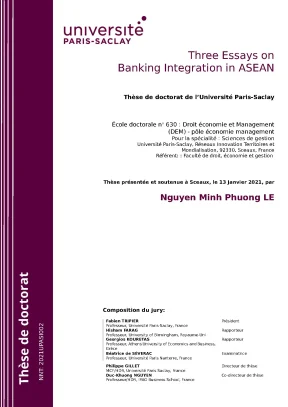
Tải xuống để đọc toàn bộThree Essays on Banking Integration in ASEAN Thèse de doctorat de l’Université Paris-Saclay École doctorale n◦ 630 : Droit économie et Management (DEM) - pôle économie management Pour la spécialité : Sciences de gestion Université Paris-Saclay, Réseaux Innovation Territoires et Mondialisation, 92330, Sceaux, France Référent: : Faculté de droit, économie et gestion Thèse présentée et soutenue à Sceaux, le 13 Janvier 2021, par Nguyen Minh Phuong LE Thèse de doctorat Composition du jury: Fabien TRIPIER Président NNT: 2021UPASI002 Professeur, Université Paris-Saclay, France Hisham FARAG Rapporteur Professeur, University of Birmingham, Royaume-Uni Georgios KOURETAS Rapporteur Professeur, Athens University of Economics and Business, Grèce Béatrice de SÉVERAC Examinatrice Professeur, Université Paris Nanterre, France Philippe GILLET Directeur de thèse MCF/HDR, Université Paris Saclay, France Duc-Khuong NGUYEN Co-directeur de thèse Professeur/HDR, IPAG Business School, France i Declaration of Authorship I, Nguyen Minh Phuong LE, declare that this thesis titled, “Three Essays on Banking Integration in ASEAN countries” and the work presented in it are my own. I confirm that: • This work was done wholly or mainly while in candidature for a re- search degree at this University. • This work has not previously been submitted for a degree or diploma in any other university. • To the best of my knowledge and belief, the thesis contains no material previously published or written by another person except where due reference is made in this thesis itself.
• Where I have quoted from the work of others, the source is always given. With the exception of such quotations, this thesis is entirely my own work. • I have acknowledged all the main sources of help. Signed: Date: ii “The Association of Southeast Asian Nations (ASEAN) is primed for the benefits of greater banking integration.
Now it is up to banks to choose their course for navigating the emerging trends in this fast paced region.” ANZ Bank - SHAPING THE FUTURE OF ASEAN BANKING iii Acknowledgements This work is my dedication to my wife, my daughter, my parents, my host- country France, and my home-country Vietnam, for caring for me with their unconditional love and funding support. Achieving this Ph. has been a fantastic challenge for me, and it would not be undertaken without the guid- ance and the support of many people that I would like to thank. First and foremost, I would like to express my sincere gratitude to Profes- sor Philippe GILLET, who agreed to supervise me right at the time I was in need.
He is such a friendly, kind, warm-hearted person whose willingness to help without any hesitations and helped me gain the confidence to overcome difficulties living and studying in France. Philippe has instructed me on how to conduct good research with his patience, passion, and in-depth knowl- edge. I would like to thank him a lot for making it possible for me to obtain scholarships, assistant teaching contracts, and professional opportunities. I am grateful to have the good fortune of working with him during my Ph.
I also gratefully thank Professor Duc Khuong NGUYEN, my co-supervisor, for his continuous support of my studies and future career. As a Deputy Di- rector for Research at IPAG Business School (France) and President of AVSE Global (Association of Vietnamese Scientists and Experts), he is incredibly busy, but he has always managed to help me through the study process. Whenever I met a tough issue in research, he always helped to unravel it with his enormous and insightful knowledge. In both aspects of work and life, he is my real idol.
I admire his sense of accountability, competence, com- passion, and stern study approach. He let me know what good science was meant to be, and he made me discover the enjoyment of researching. He has provided me a good example of an excellent and active scholar. Many thanks for his support to participate in great international conferences.
I appreciate iv all Philippe and Khuong’s contributions to make my Ph. experience stim- ulating and productive. Without their presence, this Ph. would not have been achievable.
Many thanks also to Prof. Fabien TRIPIER, Prof. Hisham FARAG, Prof. Georgios KOURETAS and Prof.
Béatrice de SÉVERACand for being mem- bers of my thesis committee, for their pieces of advice and their discussion. I am grateful for their precious time and insightful questions. Their discussion provided very useful hints for improving this thesis manuscript and great pieces of advice for my academic career. I am indebted to all professors and the administrative staffs of the RITM (the University Paris Saclay), notably Prof.
Sandra Charreire Petit, Prof. José De Sousa, Prof. Emmanuel Dubois, Marielle and Maryse, etc. for their sup- port.
I greatly appreciate the professional experiences, the courses that I gave due to the support of my dear supervisor Prof. Philippe, and the research projects which I joined in University Paris Saclay with Prof. Ahmed Boun- four and Alberto. It was a great pleasure for me.
I would like to express my thanks also for all the Ph. students in RITM, especially your confidence when voting for me as your representative. It was a pleasure knowing every one of you. A special thanks to my dear friend Naima for her support, pieces of advice, and help to correct my French writing.
Thanks to my dear friends Noelle, Arielle, Laura, Dipanita, Fatima, Maos, Vincent, and Giang, for their constant encouragement and for all the fun we had together during our PhDs. Thank you for being the best col- leagues and for being a second family. I am grateful for the time spent with you. This journey was enjoyable in large part due to many friends.
My deep appreciation goes to my colleagues. I’m thankful for the hard work done with Ms. Dao Ha and Mr. Tri Vo in the Nafosted research project.
I am also v grateful to Prof. Cuong Le-Van, Ms. Chau LE, and Ms. Wendy for the co- work in the different working articles submitted in the high ranking journals.
It was a great chance to be a member of your teams. Cuong Le-Van, who introduced me to Professor Duc Khuong Nguyen. Thank Ms Phuong Nga LE-VO, Ms Ngan TRUONG, Ms Nguyen PHAM and Ms Minh Hai NGUYEN for your constant encouragement, advices and support during my PhD journey. My friends in France as well as Vietnam have always been there when I am in need.
Without them, I could hardly have been able to move on. My sincere thanks also go to all my colleagues at Banking University of HCM city (especially in the Faculty of Banking and Personnel Department), who assumed my work and paved the way for me to pursue my academic career. Dieu-Anh Bui, Mr. Tran-Phuc Nguyen, Mr.
Phu-Quoc Pham, Mr. Trung-Hieu Nguyen, Mr. Chi-Chinh Tran and Mr. Thanh-Ngoc Le - my best friends, and my first research mentors.
My study could not have been possible without the silent sacrifice of my wife, HO Thi Nhu Truc. She has taken multiple roles at one time to raise up our children. It is hard to imagine the difficulties and the challenges she has faced. Thank my daughter, Kim-My LE, who is a real angel who came into my life and made it more colorful.
I still remember the moments when I wrote this thesis with her sleeping in my arms. Thank my parents in law, Mr. Ho Nham Phong & Mrs. Nguyen Thi Xuyen, my young brothers and sister Ho Nhat Tan, Ho Nhat Tien & Pham Do Uyen who have always been supporting us.
Finally, I would like to thank my great parents, Mr. Le Nguyen Minh Trieu & Mrs. Luu Thi Phuong Dung, my grandmother Huong NGUYEN who have raised me up, being my friends, teachers, and advisors. Their unconditional love, support, and encouragement have followed me from the very first toddling steps, through multiple ups and downs, failures, and success.
vi vii Résumé en français Depuis plus de trois décennies, l’intégration financière en général et l’inté- gration bancaire en particulier ont suscité une attention considérable sous de nombreux angles, non seulement de la part des universitaires mais aussi des décideurs politiques. Ces attentions ont été parallèles à sa tendance à la hausse, qui n’a pas connu de revirement relativement marqué jusqu’à la crise financière de 2007-2008. Bien qu’il y ait eu un certain accord entre les universitaires et les praticiens sur ses avantages pour le système économique et bancaire, qui devaient être substantiels et divers, les raisons du développe- ment de l’intégration bancaire sont assez complexes et ses impacts globaux sont encore ambigus. Les essais sur l’intégration bancaire développés dans cette thèse visent à élargir les mesures d’intégration bancaire, à expliquer les moteurs, les mécan- ismes et à analyser les impacts dans les pays du sud-est asiatique.
Considérés comme une grande réussite dans l’histoire du développement économique, les pays de l’ASEAN ont également été les plus vulnérables en termes de stabilité financière. Cette région a dépassé le reste du monde en termes de croissance du PIB par habitant depuis la fin des années 1970 et reste l’une des régions qui connaît la croissance la plus rapide au monde, avec des gains réels annuels moyens de plus de 5%. Dans son ensemble, l’ASEAN est déjà la septième plus grande économie du monde et promet de devenir un marché de consommation essentiel dans un avenir proche. Toutefois, la stabilité économique est mise à mal dufait que la région ait été sévèrement touchée par deux crises financières majeures en une dizaine d’années.
La viii crise monétaire régionale de 1997-1998 et les effets négatifs de la crise fi- nancière mondiale de 2007-2008 montrent clairement que les chocs se trans- mettent entre et au sein des pays et des régions. Par conséquent, l’étude de la récente vague d’entrée de capitaux étrangers dans cette région, des interactions de risque à l’échelle de l’économie et des retombées des pays de l’ASEAN attire l’attention des investisseurs potentiels et des décideurs politiques, notamment dans le contexte de la création de la Communauté économique de l’ASEAN (AEC) à la fin 2015, et de nouveaux accords fi- nanciers régionaux/du dispositif de sécurité. La compréhension de l’influence des activités bancaires transfrontalières est donc devenue une priorité de recherche urgente. Pendant une longue période, les opérations bancaires transfrontalières ont été les éléments clés de l’intégration financière et de la mondialisation.
Dans le cadre de cette recherche, ce terme se rapporte à la fois aux flux de capitaux transfrontaliers et aux nouveaux entrants dans le secteur bancaire transfrontalier. Les activités bancaires transfrontalières se sont développées au fil des ans, notamment sous la forme d’entrées transfrontalières, depuis l’offre de produits transfrontaliers jusqu’à l’achat ou la création de filiales à l’étranger, et ont influencé les systèmes financiers des pays sous de nombreux aspects et dimensions. La littérature a longtemps étudié les déterminants et les conséquences des flux de capitaux transfrontaliers, et a commencé à en examiner les déterminants, les inconvénients ainsi que les avantages de la récente vague d’entrée dans le système bancaire international. En effet, un nombre important d’articles a étudié l’impact de l’entrée des banques inter- nationales sur les systèmes bancaires locaux, en utilisant des données recueil- lies au niveau des banques individuelles, nationales et régionales.
D’un point de vue historique, il existe trois grandes vagues de mondiali- sation financière dans l’histoire moderne de la finance : (i) la première vague a eu lieu au XIXe siècle avec les investissements européens sur les marchés ix émergents, (ii) la deuxième a commencé dans les années 1960, principale- ment axée sur les transactions financières entre les banques des plus grandes économies, et (iii) la vague de mondialisation financière postérieure au mi- lieu des années 1990 peut être considérée comme la troisième vague de ce genre (on the Global Financial System, 2010).
Nội dung được bảo vệ bản quyền — Tải xuống đầy đủ
Trích dẫn luận án này
Nguyen Minh Phuong Le (2021). BANKING INTEGRATION IN ASEAN [Luận án tiến sĩ, Université Paris-Saclay]. LuanAn.net. https://luanan.net/kinh-te/banking-integration-in-asean
Câu hỏi thường gặp
Luận án "BANKING INTEGRATION IN ASEAN" nghiên cứu về vấn đề gì?
Luận án khám phá quá trình hợp nhất ngân hàng ở ASEAN qua ba góc nhìn tích cực.
Luận án "BANKING INTEGRATION IN ASEAN" được bảo vệ tại trường nào?
Luận án này được bảo vệ tại Université Paris-Saclay. Năm bảo vệ: 2021.
Luận án "BANKING INTEGRATION IN ASEAN" thuộc chuyên ngành gì?
Luận án "BANKING INTEGRATION IN ASEAN" thuộc chuyên ngành Sciences de gestion. Danh mục: Kinh Tế.
Luận án "BANKING INTEGRATION IN ASEAN" có bao nhiêu trang?
Luận án "BANKING INTEGRATION IN ASEAN" có 221 trang. Bạn có thể xem trước một phần tài liệu ngay trên trang web trước khi tải về.
Cách tải luận án "BANKING INTEGRATION IN ASEAN" về máy như thế nào?
Để tải luận án về máy, bạn nhấn nút "Tải xuống ngay" trên trang này, sau đó hoàn tất thanh toán phí lưu trữ. File sẽ được tải xuống ngay sau khi thanh toán thành công. Hỗ trợ qua Zalo: 0559 297 239.