Latino Ethnic Identity Formation in San Francisco Bay Area, 1968-1974 - Lori Rhodes
Nghiên cứu quá trình hình thành bản sắc sắc tộc Latino tại Vùng Vịnh San Francisco, khám phá các yếu tố ảnh hưởng và biểu hiện đa dạng.
Năm xuất bản
Số trang
189
Thời gian đọc
29 phút
Lượt xem
0
Lượt tải
0
Phí lưu trữ
50 Point
Tổng quan nhanh
- Chủ đề:
- Hình Thành Bản sắc Dân tộc Latino: Vùng Vịnh (1968-1974)
- Số trang:
- 189 trang
- Trường:
- stanford university
- Chuyên ngành:
- Education
- Tác giả:
- Lori Rhodes
- Năm:
- 2010
Tóm tắt nội dung luận án
I.Hình Thành Bản sắc Dân tộc Latino Vùng Vịnh 1968 1974
Giai đoạn 1968-1974 chứng kiến sự hình thành bản sắc dân tộc Latino phức tạp tại Khu vực Vịnh San Francisco. Nhiều thanh niên Latino và Chicano đã phát triển các bản sắc đa dạng, linh hoạt. Những bản sắc này bị ảnh hưởng sâu sắc bởi trải nghiệm tại trường học và các tổ chức cộng đồng. Các cuộc gặp gỡ với người lớn trong khu phố cũng đóng vai trò quan trọng. Đây là thời kỳ chính trị căng thẳng, thúc đẩy sự tự nhận thức về dân tộc. Quá trình phát triển bản sắc này không đơn giản. Nó bao gồm nhiều tầng lớp khác nhau, phản ánh sự đa dạng của cộng đồng. Nghiên cứu này phân tích cách thức bản sắc Latino Bay Area được định hình. Nó xem xét các yếu tố bên trong và bên ngoài tác động đến quá trình này. Sự hiểu biết về thời kỳ này rất quan trọng để nắm bắt ethnic identity development hiện tại.
1.1. Bối cảnh Chính trị và Xã hội Khu vực San Francisco
Bầu không khí chính trị những năm 1960 và 1970 tại Vịnh San Francisco rất sôi động. Điều này ảnh hưởng trực tiếp đến sự phát triển bản sắc dân tộc Latino. Các phong trào xã hội lớn đã tạo ra bối cảnh cho sự tự nhận diện. Thanh niên Latino phải đối mặt với nhiều thách thức và cơ hội. Những bối cảnh này giúp hình thành bản sắc Hispanic identity formation San Francisco. Các sự kiện chính trị địa phương và quốc gia đều góp phần vào quá trình này.
1.2. Các yếu tố tác động đến Bản sắc Thanh niên Latino
Nhiều yếu tố đã tác động đến sự hình thành bản sắc thanh niên Latino. Hệ thống trường học đóng vai trò trung tâm. Các tổ chức cộng đồng cung cấp không gian cho sự phát triển bản sắc. Sự tương tác với người lớn trong khu vực lân cận cũng rất quan trọng. Những yếu tố này tạo ra một bức tranh phức tạp về ethnic identity development. Bản sắc không chỉ là một khái niệm cố định. Nó là một quá trình liên tục thay đổi, được định hình bởi môi trường sống và xã hội.
II.Yếu tố Định hình Bản sắc Latino tại San Francisco
Các cấu trúc thể chế đã có tác động đáng kể đến việc định hình bản sắc Latino tại San Francisco. Hệ thống giáo dục đóng vai trò chủ chốt. Đồng thời, nhiều phát triển quan trọng trong cộng đồng cũng ảnh hưởng sâu sắc. Những yếu tố này bao gồm Phong trào Quyền lực Đen (Black Power Movement). Cuộc đình công của Công nhân Nông trại Thống nhất (United Farm Workers) cũng rất quan trọng. Các vụ kiện về giáo dục song ngữ đã thay đổi cục diện. Chương trình xe buýt để hòa nhập (busing programs for integration) cũng có ảnh hưởng. Tất cả những điều này đã định hình cách thanh niên Latino tạo dựng bản sắc dân tộc. Các bản sắc này có thể là panethnic, pan-minority, hoặc thậm chí là bản sắc da trắng. Quá trình acculturation process Latinos diễn ra mạnh mẽ trong bối cảnh này, tạo ra sự đa dạng trong cách tự nhận diện.
2.1. Ảnh hưởng của Hệ thống Giáo dục và Cộng đồng
Hệ thống giáo dục đã tạo ra khuôn khổ cho trải nghiệm của thanh niên Latino. Trường học là nơi các bản sắc được thử thách và củng cố. Các tổ chức cộng đồng cung cấp sự hỗ trợ và định hướng. Những tương tác này giúp hình thành sự hiểu biết về bản sắc dân tộc. Sự tương tác giữa cá nhân và thể chế là rất phức tạp. Nó tạo ra những bản sắc đa dạng và linh hoạt. Môi trường trường học thường là nơi đầu tiên thanh niên đối mặt với các vấn đề về ethnic identity development.
2.2. Phong trào Xã hội và Thay đổi Chính sách Giáo dục
Các phong trào xã hội những năm 1960-1970 ảnh hưởng lớn đến chính sách giáo dục. Phong trào Quyền lực Đen đã truyền cảm hứng. Các cuộc đình công của UFW nâng cao nhận thức về quyền lợi. Những nỗ lực này đã dẫn đến thay đổi chính sách giáo dục. Ví dụ, các vụ kiện về giáo dục song ngữ là một bước tiến quan trọng. Chương trình xe buýt cũng ảnh hưởng đến sự hòa nhập. Những sự kiện này tác động đến cultural retention Bay Area. Chúng cũng tạo ra sự khác biệt về generational identity differences. Các phong trào này tạo động lực cho sự thay đổi xã hội và giáo dục.
III.Đa Dạng Bản sắc Latino Phân tích Trải nghiệm Vùng Vịnh
Nghiên cứu này làm rõ sự phức tạp của bản sắc dân tộc Latino. Nó không coi cộng đồng Latino là một khối thống nhất. Thay vào đó, bản sắc được coi là đa lớp và tình huống. Bản sắc thay đổi tùy thuộc vào ngữ cảnh cụ thể. Việc so sánh dân số Latino đa dạng ở San Francisco với dân số chủ yếu là người Mỹ gốc Mexico ở East Bay là rất quan trọng. Sự đối lập này làm nổi bật những phức tạp. Nó cho thấy cách bản sắc được hình thành. Thành phần dân tộc và chủng tộc đa dạng của Vùng Vịnh minh họa điều này. Một bản sắc Latino không thể luôn được bao hàm dưới thuật ngữ "Latino" hoặc "Chicano" rộng lớn. Những thuật ngữ này thường che giấu sự khác biệt về bản sắc và trải nghiệm cá nhân, nhóm. Điều này khẳng định không có một Latino identity Bay Area duy nhất, mà là một phổ rộng các bản sắc.
3.1. So sánh Dân số Latino tại San Francisco và East Bay
San Francisco có một cộng đồng Latino rất đa dạng về nguồn gốc, bao gồm nhiều quốc gia Trung và Nam Mỹ. Ngược lại, East Bay lại chủ yếu là người Mỹ gốc Mexico. Sự so sánh này cho thấy sự khác biệt rõ rệt trong trải nghiệm. Ví dụ, Mexican-American identity San Francisco có thể khác với Central American identity Oakland. Sự đa dạng này tạo ra nhiều con đường hình thành bản sắc. Nó cũng thể hiện sự phức tạp của immigrant identity formation và quá trình hòa nhập của các nhóm khác nhau.
3.2. Bản sắc Đa lớp và Tình huống của Người Latino
Bản sắc của người Latino thường là đa lớp và phụ thuộc vào tình huống. Một cá nhân có thể có nhiều bản sắc cùng lúc. Những bản sắc này có thể bao gồm dân tộc, panethnic, pan-minority, hoặc thậm chí là bản sắc da trắng. Sự giao thoa của các yếu tố này tạo nên một bản sắc linh hoạt. Biculturalism Latino youth là một ví dụ điển hình. Thanh niên thường phải điều hướng giữa hai nền văn hóa, tạo ra một bản sắc động và thích nghi. Bản sắc này có thể thay đổi tùy thuộc vào môi trường và đối tượng giao tiếp.
IV.Quy trình Đồng hóa Tiếp biến Văn hóa Latino Vùng Vịnh
Quá trình hình thành bản sắc Latino liên quan đến sự chồng chéo của đồng hóa, tiếp biến văn hóa và duy trì văn hóa. Thanh niên Latino không chỉ bị ảnh hưởng bởi các thể chế. Họ còn ảnh hưởng đến chúng. Các cá nhân thường thiết lập nhiều hơn một bản sắc. Điều này xảy ra thông qua các quy trình liên tục này. Nghiên cứu sâu hơn về acculturation process Latinos là cần thiết. Nó giúp hiểu cách các nhóm duy trì bản sắc văn hóa của mình. Đồng thời, họ cũng tích hợp vào xã hội rộng lớn hơn. Sự cân bằng giữa việc tiếp thu văn hóa mới và giữ gìn văn hóa gốc là một thách thức. Nó cũng là một nguồn sức mạnh cho cộng đồng. Sự hiểu biết này làm rõ ethnic identity development trong bối cảnh đa văn hóa.
4.1. Sự giao thoa của Đồng hóa và Bảo tồn Văn hóa
Đồng hóa là quá trình hòa nhập hoàn toàn vào văn hóa chủ đạo. Tiếp biến văn hóa là sự điều chỉnh giữa hai hoặc nhiều nền văn hóa. Duy trì văn hóa là việc bảo tồn các giá trị, phong tục truyền thống. Những quy trình này không diễn ra độc lập. Chúng thường chồng chéo và tương tác. Điều này tạo ra một sự đa dạng trong ethnic identity development. Sự lựa chọn hoặc sự bắt buộc của những quy trình này định hình bản sắc. Sự căng thẳng giữa việc hòa nhập và giữ gìn di sản là một đặc điểm nổi bật.
4.2. Vai trò của Thanh niên trong Hệ thống Giáo dục
Thanh niên có vai trò tích cực trong hệ thống giáo dục. Họ không chỉ là người tiếp nhận kiến thức. Họ còn là tác nhân thay đổi. Học sinh ảnh hưởng đến các thể chế thông qua hành động và tiếng nói của mình. Các thể chế cũng tác động trở lại học sinh. Mối quan hệ tương hỗ này rất quan trọng. Nó định hình bản sắc cá nhân và tập thể. Việc hiểu rõ vai trò này giúp lý giải generational identity differences. Nó cũng làm rõ cultural retention Bay Area, nơi thanh niên đóng vai trò cầu nối giữa các thế hệ.
V.Hệ thống Giáo dục và Thách thức Cộng đồng Latino
Nghiên cứu này mở rộng ra ngoài khu vực Vịnh San Francisco. Nó xem xét các lực lượng lớn hơn định hình giáo dục công lập trong các cộng đồng Latino. Các hoạt động của học sinh bên trong và bên ngoài trường học được phân tích. Các hành động của nhóm giáo viên, phụ huynh và sinh viên đại học Latino cũng được kiểm tra. Họ đã thách thức hệ thống giáo dục hiện có. Mục tiêu là tạo ra sự thay đổi tích cực. Các vấn đề như nhập cư, cấu trúc của "Latinidad" và sự hình thành bản sắc thanh niên là trọng tâm. Điều này mang lại sự hiểu biết đầy đủ hơn về trải nghiệm của sinh viên Latino. Nó đặc biệt liên quan đến giao điểm với hệ thống giáo dục Hoa Kỳ. Sự hiểu biết này rất quan trọng để hỗ trợ Hispanic identity formation San Francisco và các khu vực khác.
5.1. Các hoạt động của Học sinh và Cộng đồng
Học sinh đã tham gia vào nhiều hoạt động để thể hiện bản sắc. Bên trong trường học, họ hình thành các câu lạc bộ. Bên ngoài trường, họ tham gia các phong trào xã hội. Các nhóm giáo viên, phụ huynh cũng đóng vai trò tích cực. Họ đã đấu tranh cho quyền lợi giáo dục. Các sinh viên đại học Latino đã tổ chức các cuộc biểu tình. Những hành động này thách thức các chính sách giáo dục bất công. Chúng góp phần vào ethnic identity development và sự nhận thức về bản sắc cộng đồng.
5.2. Định hình Giáo dục Công lập trong Cộng đồng Latino
Các yếu tố vĩ mô như nhập cư định hình giáo dục công lập. Việc xây dựng khái niệm "Latinidad" cũng rất quan trọng. Nó ảnh hưởng đến cách người Latino được nhìn nhận. Sự hình thành bản sắc thanh niên là một quá trình liên tục. Những lực lượng này ảnh hưởng đến trải nghiệm của học sinh Latino. Chúng làm nổi bật sự cần thiết của các hệ thống giáo dục nhạy cảm văn hóa. Điều này hỗ trợ cultural retention Bay Area và biculturalism Latino youth. Giáo dục công lập đóng vai trò then chốt trong việc định hình tương lai của cộng đồng Latino.
Tải xuống file đầy đủ để xem toàn bộ nội dung
Tải đầy đủ (189 trang)Trích đoạn nội dung luận án
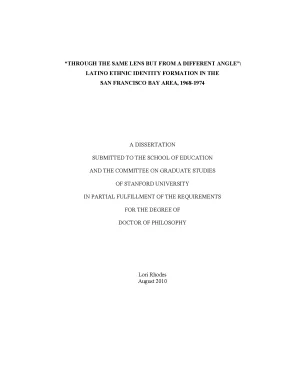
Tải xuống để đọc toàn bộ“THROUGH THE SAME LENS BUT FROM A DIFFERENT ANGLE”: LATINO ETHNIC IDENTITY FORMATION IN THE SAN FRANCISCO BAY AREA, 1968-1974 A DISSERTATION SUBMITTED TO THE SCHOOL OF EDUCATION AND THE COMMITTEE ON GRADUATE STUDIES OF STANFORD UNIVERSITY IN PARTIAL FULFILLMENT OF THE REQUIREMENTS FOR THE DEGREE OF DOCTOR OF PHILOSOPHY Lori Rhodes August 2010 © 2010 by Lori Jan Rhodes. All Rights Reserved. Re-distributed by Stanford University under license with the author. This work is licensed under a Creative Commons Attribution- Noncommercial 3.0 United States License.org/licenses/by-nc/3.0/us/ This dissertation is online at: http://purl.edu/fw049px3596 ii I certify that I have read this dissertation and that, in my opinion, it is fully adequate in scope and quality as a dissertation for the degree of Doctor of Philosophy.
David Labaree, Primary Adviser I certify that I have read this dissertation and that, in my opinion, it is fully adequate in scope and quality as a dissertation for the degree of Doctor of Philosophy. Albert Camarillo I certify that I have read this dissertation and that, in my opinion, it is fully adequate in scope and quality as a dissertation for the degree of Doctor of Philosophy. Leah Gordon I certify that I have read this dissertation and that, in my opinion, it is fully adequate in scope and quality as a dissertation for the degree of Doctor of Philosophy. Joy Williamson Approved for the Stanford University Committee on Graduate Studies.
Gumport, Vice Provost Graduate Education This signature page was generated electronically upon submission of this dissertation in electronic format. An original signed hard copy of the signature page is on file in University Archives. iii ABSTRACT In the politically charged atmosphere of the 1960s and 1970s in the Bay Area of northern California, many Latino and Chicano youth formed multiple and fluid identities influenced by their experiences in schools and community organizations and encounters with adults in their neighborhoods. Throughout this process, institutional structures within the educational system as well as significant developments within the community, including the Black Power Movement, striking United Farm Workers, lawsuits over bilingual education, and busing programs for integration, affected how youth forged ethnic, panethnic, pan-minority, and white identities.
This study examines ethnic identity formation for immigrant and native-born school-age youth as well as adults and college-age students by drawing comparisons between the diverse Latino population in San Francisco and the predominantly Mexican-American population in the East Bay. This contrast highlights the complexities within the story of Latino ethnic identity formation and how this identity is often layered and situational depending on the context. The diverse ethnic and racial make-up of the Bay Area illustrates why a Latino identity cannot always be encompassed under the enormous umbrella of “Latino” or even “Chicano,” as these terms mask differences in identity and experiences for individuals and groups. On one level, this study considers Bay Area Latinos and Chicanos not as a monolith but as individuals with multiple identities who interacted with one another and various outside groups.
More broadly, this study illuminates our understanding of the overall experience of immigrant and native-born youth in iv education and how students both influence and are influenced by institutions and adults, often establishing more than one identity through the overlapping processes of assimilation, acculturation, and cultural maintenance. Ultimately, by examining student activities inside and outside the schools as well as the actions taken by groups of Latino teachers, parents, and college-age students to challenge the educational system, this dissertation extends out from the Bay Area in that it engages the broader forces that shape public schooling in Latino communities, such as immigration, the construction of Latinidad, and youth identity formation, in turn illuminating a more complete understanding of Latino students’ experiences as they intersect with educational systems in the United States. v ACKNOWLEDGEMENTS During my time at Stanford, I had the good fortune to work with outstanding scholars and mentors. First, I would like to thank Joy Williamson-Lott and David Labaree for providing helpful and necessary support throughout this process.
Their insight was critical to my writing, and their critiques were always delivered in a thoughtful and positive manner. I was also very fortunate to have worked with Al Camarillo. The idea for this dissertation first formed in a class taught by Professor Camarillo, and he continued to support me throughout my graduate school career. Leah Gordon also provided me with helpful advice and insight as she filled in on my reading committee.
I thank each of these professors for their invaluable feedback and guidance. Over the years, I also had the chance to work closely with David Tyack and Larry Cuban, two of the great scholars in our field. Their mentoring and encouragement is much appreciated. Sean Reardon and Mike Kirst also provided me with opportunities to conduct research in different fields of education.
I am very thankful for having worked with both of them. In terms of my own growth, I benefited tremendously from these experiences and relationships. I was incredibly lucky to enter Stanford the year I did. The entering class of 2003— “The Aughts”—was truly a special group of people.
I was living bi-coastally with my husband at the time, which would have been even more difficult without the friends I found in my cohort. To my history of education buddy, Mike Dunson, congratulations—we did it! To each of you, I know I made lifelong friends, and for that I am very grateful. Most importantly, I thank my husband Rich. Without his love, support, patience, and editing skills, this dissertation would not have been completed.
Most of our marriage has been spent with me in graduate school, but it’s now over, and we can get on with our lives. vi TABLE OF CONTENTS Introduction………………………………………………………………………… 1 Chapter 1…………………………………………………………………………… 6 Background and Theoretical Framework Chapter 2…………………………………………………………………………… 33 Latinos Unidos, Third World, or Americans?: Latino Identity Formation in San Francisco Chapter 3…………………………………………………………………………… 74 “Get up from under your cactus”: Latino and Chicano Identity Formation in the East Bay Chapter 4…………………………………………………………………………… 112 “We must learn to live together”: Latino and Chicano Adult Identity Formation Conclusion…………………………………………………………………………. 173 vii INTRODUCTION Before I entered graduate school, I taught for six years in public schools in an area of Los Angeles undergoing significant demographic changes in its racial and ethnic make-up. In the 1980s, the population in south Los Angeles was almost 75 percent African American and 25 percent Mexican American.
By my first year of teaching in 1994, those figures had reversed. Over the next five years, an influx of Central American students contributed to an even greater change in the ethnic make-up of the schools. The curriculum, however, did not reflect these shifts in the population, and despite the increasing diversity within the Latino population, African American heritage month, Mexican Independence Day, and Cinco de Mayo were the primary cultural celebrations observed by the school. Considering these limited acknowledgements of diversity and repeated requests from parents to expand the scope of the celebrations, I began to think about how schools can better recognize differences within the racial and ethnic identity of their student bodies as well as what impact a diverse student population may have on the ways in which youth form their own identities.
I also considered how my students’ interactions outside the schools affected their identity formation. My second year of teaching, the El Salvadoran soccer federation offered free tickets to a game between the national teams of the United States and El Salvador, and I took three of my students to the match. None of them had ever been to a live sporting event, and they were thrilled to see the action up close. Early in the match, the United States scored, and my students were very excited, jumping up and 1 down and cheering for the U.
Unfortunately, every time the children cheered, a group of El Salvadoran men sitting behind us yelled at them to root for El Salvador, calling them traitors for not doing so. One of my students was very feisty, and he yelled back that he was cheering for his team, America, because that’s where he was born. My other two students were a bit more reserved, and the taunting bothered them, particularly the Mexican-American child, as he also felt he was cheering for the team he wanted to win, since one of Mexico’s many soccer rivals is El Salvador. As a non-Hispanic white raised in the suburban northeast, I did not have any experience with diversity within the Latino population.
I knew that the experiences and identities of European whites were not to be conflated, because where I’m from no one would consider the backgrounds and cultures of the Irish, Jewish, Italian, etc., to be the same. Yet, here I was, living in southern California, and all Latinos were expected to celebrate Cinco de Mayo and cheer for a Spanish-speaking soccer team over the United States. After viewing first-hand the confusion and fissures curriculum and external pressures can produce in terms of the creation and expression of ethnic identity for youth, I decided to pursue the study of the transmission of cultural and ethnic identity for Latino youth and how students relate to their communities and schools. In choosing to conduct an historical analysis, I chose to examine the heterogeneous Latino population of the Bay Area in the 1960s and 1970s and its enormous internal and external pressures on youth in terms of identity formation.
I believed the shifting demographics and ensuing identity politics of the Bay Area Latino population to be a harbinger of what many urban areas are experiencing today 2 and will continue to look to address in the years ahead as immigration from Latin America remains steady. An analysis of Latino and Chicano ethnic identity formation in the Bay Area in the 1960s and 1970s offers a fresh perspective in that the larger community was racially and ethnically diverse and in turn greatly influenced many students’ formation and assertion of their own multiple identities. Such a case study demonstrates how groups of Latino youth in a diverse community assert themselves through activism, school politics, and participation in school and community programs as well as how youth identity and culture are formed and maintained within the schools and through school system directives. In expanding the emphasis beyond Mexican-American and Chicano students and broadening the analysis to include youth of Latin American descent in the Bay Area, this study contributes to the literature examining the complicated nature of identity and how this manifests in student activism and participation.
Schools as compulsory institutions of attendance offer an ideal setting to look at this identity formation in that this is where the interests of students, teachers, parents, and local leaders intersect, compelling youth to make choices in terms of how they view themselves and how they view their larger communities. The diversity within the population and exposure to other racial and ethnic groups differentiates this particular Latino and Chicano population from others in the west and southwest and directly contributes to the formation of unique and multilayered identities as Latinos, Chicanos, people of color, whites, or a version of some or all of these identifiers, in addition to youth establishing themselves as active participants in the struggle for educational equality and civil rights. In examining the creation of 3 multiple identities in the Bay Area during the 1960s and 1970s, this study is organized into four chapters. In Chapter One I provide an exploration of the literature in order to provide a comprehensive framework and context for the study.
In order to construct the larger context of the era, background information on the Bay Area and social movements are also included. In Chapter Two I focus on youth ethnic identity formation in San Francisco, specifically looking at the Mission District where the highest concentration of Latinos in the city lived, representing over twenty Latin American countries.
Nội dung được bảo vệ bản quyền — Tải xuống đầy đủ
Trích dẫn luận án này
Lori Rhodes (2010). Latino Ethnic Identity Formation in San Francisco Bay Area [Luận án tiến sĩ, Stanford University]. LuanAn.net. https://luanan.net/tam-ly-hoc/tam-ly-hoc-xa-hoi/latino-ethnic-identity-formation-in-san-francisco-bay-area
Câu hỏi thường gặp
Luận án "Latino Ethnic Identity Formation in San Francisco Bay Area" nghiên cứu về vấn đề gì?
Nghiên cứu quá trình hình thành bản sắc sắc tộc Latino tại Vùng Vịnh San Francisco, khám phá các yếu tố ảnh hưởng và biểu hiện đa dạng.
Luận án "Latino Ethnic Identity Formation in San Francisco Bay Area" được bảo vệ tại trường nào?
Luận án này được bảo vệ tại Stanford University. Năm bảo vệ: 2010.
Luận án "Latino Ethnic Identity Formation in San Francisco Bay Area" thuộc chuyên ngành gì?
Luận án "Latino Ethnic Identity Formation in San Francisco Bay Area" thuộc chuyên ngành Education. Danh mục: Tâm Lý Học Xã Hội.
Luận án "Latino Ethnic Identity Formation in San Francisco Bay Area" có bao nhiêu trang?
Luận án "Latino Ethnic Identity Formation in San Francisco Bay Area" có 189 trang. Bạn có thể xem trước một phần tài liệu ngay trên trang web trước khi tải về.
Cách tải luận án "Latino Ethnic Identity Formation in San Francisco Bay Area" về máy như thế nào?
Để tải luận án về máy, bạn nhấn nút "Tải xuống ngay" trên trang này, sau đó hoàn tất thanh toán phí lưu trữ. File sẽ được tải xuống ngay sau khi thanh toán thành công. Hỗ trợ qua Zalo: 0559 297 239.