Stretching the circle first generation college students navigate
Stretching the Circle: Hành trình của sinh viên đại học thế hệ đầu tiên. Khám phá câu chuyện, thách thức và cơ hội trên con đường học vấn.
Higher Postsecondary Education
Luan An
Luận án tiến sĩ
Năm xuất bản
Số trang
280
Thời gian đọc
42 phút
Lượt xem
0
Lượt tải
0
Phí lưu trữ
50 Point
Tổng quan nhanh
- Chủ đề:
- Hành trình sinh viên thế hệ đầu tiên: Thách thức
- Số trang:
- 280 trang
- Trường:
- Syracuse University
- Chuyên ngành:
- Higher Postsecondary Education
- Tác giả:
- Nicole Zervas Adsitt
- Năm:
- 2017
Tóm tắt nội dung luận án
I.Hành trình sinh viên thế hệ đầu tiên Thách thức
Nghiên cứu khám phá hành trình giáo dục của sinh viên thế hệ đầu tiên. Các sinh viên đối mặt nhiều khó khăn khi chuyển tiếp vào đại học tư thục. Sự thiếu quen thuộc với môi trường học thuật là một rào cản. Điều này tạo ra college transition challenges đáng kể. Sinh viên phải điều hướng các quy tắc xã hội, học thuật mới. Quá trình hòa nhập đòi hỏi nhiều nỗ lực cá nhân. Những kinh nghiệm này định hình trải nghiệm ban đầu của họ. Tài liệu ghi lại những thách thức này một cách chi tiết. Sinh viên thế hệ đầu tiên thường xuyên đối mặt bất bình đẳng cấu trúc. Những yếu tố như chủng tộc, giai cấp và giới tính giao thoa. Tình trạng kinh tế xã hội ảnh hưởng sâu sắc đến trải nghiệm. Các vấn đề này tạo ra rào cản bổ sung cho higher education access. Sinh viên phải quản lý các vấn đề liên quan đến giai cấp và chủng tộc. Họ cũng phải đối phó với những microaggressions. Điều này đòi hỏi công việc cảm xúc đáng kể. Nghiên cứu làm rõ cách họ điều hướng những bất công này. Nỗ lực này là trọng tâm của hành trình giáo dục.
1.1. Khó khăn chuyển tiếp và hòa nhập đại học.
Sinh viên thế hệ đầu tiên gặp phải rào cản đáng kể. Quá trình chuyển tiếp vào môi trường đại học tư thục phức tạp. Sự thiếu hiểu biết về hệ thống học thuật gây ra nhiều khó khăn. Các college transition challenges rất đa dạng. Sinh viên cần thích nghi với văn hóa campus mới. Họ phải học cách điều hướng các kỳ vọng học thuật. Điều này yêu cầu khả năng tự điều chỉnh cao. Nghiên cứu ghi nhận những áp lực ban đầu này.
1.2. Đối mặt bất bình đẳng cấu trúc và xã hội.
Sinh viên thế hệ đầu tiên thường xuyên chạm trán bất bình đẳng cấu trúc. Chủng tộc, giai cấp, giới tính và tình trạng kinh tế xã hội (SES) giao thoa. Các yếu tố này tạo ra những rào cản độc đáo. Việc tiếp cận higher education access bị ảnh hưởng. Sinh viên phải quản lý các vấn đề liên quan đến giai cấp và chủng tộc. Họ cũng phải đối phó với microaggressions. Điều này đòi hỏi sức chịu đựng cảm xúc đáng kể. Nghiên cứu phân tích cách họ ứng phó với các thách thức này.
II.Khám phá vốn văn hóa sinh viên thế hệ đầu tiên
Sinh viên thế hệ đầu tiên tận dụng các nguồn lực quan trọng. Gia đình và cộng đồng cung cấp hỗ trợ thiết yếu. Những nguồn lực này giúp họ điều hướng bất bình đẳng cấu trúc. Đây là một dạng cultural capital độc đáo. Nó giúp họ vượt qua rào cản trong giáo dục đại học. Sinh viên sử dụng kinh nghiệm sống và tri thức từ gia đình. Điều này củng cố khả năng phục hồi của họ. Nghiên cứu nhấn mạnh vai trò của campus community building không chính thức. Sinh viên thế hệ đầu tiên thường phải di chuyển giữa các cộng đồng. Họ liên tục vượt qua các 'ranh giới và lề' khác nhau. Điều này bao gồm môi trường gia đình và môi trường đại học. Họ phải thích nghi với các quy tắc và kỳ vọng khác nhau. Khả năng này là một phần quan trọng của belonging for first-gen sinh viên. Tài liệu phân tích loại vốn văn hóa mà họ sử dụng. Nó giúp họ điều hướng môi trường học thuật. Mô hình này làm nổi bật sức mạnh nội tại của sinh viên.
2.1. Nguồn lực gia đình và cộng đồng hỗ trợ.
Các gia đình và cộng đồng cung cấp vốn văn hóa độc đáo. Sinh viên thế hệ đầu tiên sử dụng chúng để thành công. Nguồn lực này giúp họ vượt qua khó khăn tài chính. Nó cũng hỗ trợ điều hướng các hệ thống mới. Nghiên cứu nhấn mạnh tầm quan trọng của các mạng lưới không chính thức. Đây là một hình thức campus community building. Các mối quan hệ này củng cố ý thức thuộc về. Chúng giúp sinh viên cảm thấy được hỗ trợ.
2.2. Vượt qua ranh giới cộng đồng giáo dục.
Sinh viên thế hệ đầu tiên thường xuyên phải điều hướng giữa các môi trường khác nhau. Họ vượt qua ranh giới giữa cuộc sống gia đình và đại học. Điều này đòi hỏi sự linh hoạt và khả năng thích ứng cao. Nghiên cứu xem xét cultural capital mà họ rút ra. Vốn này giúp họ điều hướng các thiết lập học thuật. Khả năng này thúc đẩy cảm giác belonging for first-gen sinh viên. Họ học cách kết nối các thế giới khác nhau một cách hiệu quả.
III.Hỗ trợ sinh viên thế hệ đầu tiên thành công đại học
Việc thúc đẩy first-generation student success là mục tiêu chính. Các chương trình hỗ trợ sinh viên đóng vai trò thiết yếu. Chúng cung cấp các nguồn lực cần thiết cho học tập. Tài liệu này gợi ý các student support programs hiệu quả. Sinh viên cần tiếp cận các academic resources for first-gen đặc biệt. Điều này bao gồm tư vấn, gia sư và hỗ trợ học thuật. Những nguồn lực này giúp họ thích nghi và phát triển. Việc cải thiện trải nghiệm giáo dục là ưu tiên hàng đầu. Cố vấn là yếu tố then chốt cho sự thành công. Mentorship for first-generation students cung cấp sự hướng dẫn. Cố vấn giúp sinh viên điều hướng con đường học vấn. Nó cũng hỗ trợ phát triển kỹ năng xã hội. Xây dựng campus community building vững mạnh là quan trọng. Cảm giác thuộc về thúc đẩy sự duy trì và phát triển. Nghiên cứu chỉ ra các yếu tố đóng góp vào thành công. Việc này cải thiện kinh nghiệm giáo dục tổng thể.
3.1. Chương trình hỗ trợ và nguồn lực học thuật.
Các trường đại học cần thiết kế student support programs chuyên biệt. Các chương trình này thúc đẩy first-generation student success. Chúng phải cung cấp academic resources for first-gen hiệu quả. Điều này bao gồm hỗ trợ học thuật, tư vấn nghề nghiệp. Việc hướng dẫn về financial aid navigation là rất quan trọng. Các nguồn lực này giúp sinh viên điều hướng môi trường học thuật phức tạp. Nó tạo ra một nền tảng vững chắc cho sự phát triển của họ.
3.2. Vai trò cố vấn và xây dựng cộng đồng.
Mentorship for first-generation students là một công cụ mạnh mẽ. Cố vấn cung cấp hướng dẫn, hỗ trợ tinh thần. Họ giúp sinh viên phát triển mạng lưới chuyên nghiệp. Việc xây dựng campus community building mạnh mẽ cũng rất cần thiết. Nó giúp sinh viên cảm thấy được kết nối và thuộc về. Các hoạt động cộng đồng tăng cường cảm giác gắn kết. Môi trường hỗ trợ này đóng góp đáng kể vào thành công lâu dài của sinh viên.
IV.Ảnh hưởng của bản sắc và bối cảnh sinh viên
Nghiên cứu sử dụng khuôn khổ giao thoa để phân tích trải nghiệm. Tình trạng sinh viên thế hệ đầu tiên không tồn tại độc lập. Nó giao thoa phức tạp với chủng tộc, giai cấp và giới tính. Tình trạng kinh tế xã hội cũng là một yếu tố quan trọng. Các yếu tố này tạo ra những thách thức độc đáo. Sinh viên phải điều hướng các định kiến và kỳ vọng. Việc hiểu rõ sự giao thoa này là cần thiết. Nó giúp nâng cao higher education access cho mọi người. Sinh viên thế hệ đầu tiên thường thực hiện công việc cảm xúc đáng kể. Họ phải quản lý căng thẳng và áp lực. Điều này liên quan đến việc đại diện cho gia đình và cộng đồng. Cảm giác trách nhiệm đôi khi rất nặng nề. Việc này ảnh hưởng đến belonging for first-gen sinh viên. Nghiên cứu làm sáng tỏ các khía cạnh vô hình này. Tài liệu nhấn mạnh tầm quan trọng của sự hỗ trợ tâm lý. Điều này giúp sinh viên duy trì sức khỏe tinh thần.
4.1. Giao thoa chủng tộc giai cấp giới tính.
Trải nghiệm của sinh viên thế hệ đầu tiên là đa diện. Chúng bị ảnh hưởng bởi sự giao thoa của chủng tộc, giai cấp và giới tính. Tình trạng kinh tế xã hội (SES) cũng đóng vai trò quan trọng. Các yếu tố này tạo ra những thách thức riêng biệt. Nghiên cứu sử dụng lý thuyết giao thoa để phân tích. Việc này giúp hiểu rõ hơn về rào cản đối với higher education access. Các trường đại học cần nhận diện sự phức tạp này.
4.2. Khía cạnh cảm xúc của trải nghiệm sinh viên.
Sinh viên thế hệ đầu tiên thường thực hiện công việc cảm xúc lớn. Họ phải đối phó với áp lực và căng thẳng nội tại. Việc mang theo hy vọng của gia đình và cộng đồng là một gánh nặng. Điều này ảnh hưởng đến cảm giác belonging for first-gen sinh viên. Nghiên cứu làm nổi bật tầm quan trọng của hỗ trợ tâm lý. Các chương trình tư vấn cần được tăng cường. Điều này đảm bảo sức khỏe tinh thần của sinh viên.
V.Nâng cao công bằng giáo dục đại học cho sinh viên
Luận văn mở rộng mô hình Vốn Văn hóa Cộng đồng. Nó bao gồm trải nghiệm của sinh viên thế hệ đầu tiên. Khái niệm microaggressions cũng được tích hợp. Điều này giúp phản ánh cách chủng tộc và giai cấp giao thoa. Sự hiểu biết sâu sắc hơn về cultural capital là cần thiết. Điều này góp phần vào công việc học thuật về sinh viên thế hệ đầu tiên. Nó làm sâu sắc thêm cuộc đối thoại trong giáo dục đại học. Nghiên cứu cung cấp các hàm ý thực tiễn quan trọng. Chúng có thể cải thiện trải nghiệm giáo dục của sinh viên. Việc này thúc đẩy educational equity trong giáo dục đại học. Các chính sách có thể được thiết kế hiệu quả hơn. Chúng nhằm mục tiêu hỗ trợ sinh viên thế hệ đầu tiên. Các yếu tố đóng góp vào thành công của sinh viên được xác định. Điều này dẫn đến các biện pháp can thiệp có mục tiêu. Việc tạo ra một môi trường bao trùm là mục tiêu cuối cùng.
5.1. Mở rộng mô hình vốn văn hóa cộng đồng.
Nghiên cứu này mở rộng Mô hình Vốn Văn hóa Cộng đồng. Nó bao gồm những trải nghiệm độc đáo của sinh viên thế hệ đầu tiên. Khái niệm microaggressions cũng được thêm vào. Điều này giúp phản ánh rõ hơn sự giao thoa giữa chủng tộc và giai cấp. Việc này cung cấp cái nhìn sâu sắc hơn về cultural capital. Nó làm phong phú thêm cuộc đối thoại về first-generation student success. Đây là đóng góp quan trọng cho học thuật.
5.2. Hàm ý thực tiễn cho chính sách giáo dục.
Luận văn đưa ra các hàm ý thực tiễn cho chính sách giáo dục. Những đề xuất này nhằm cải thiện trải nghiệm sinh viên thế hệ đầu tiên. Chúng góp phần thúc đẩy educational equity. Các trường đại học cần xem xét những yếu tố thành công. Điều này dẫn đến việc xây dựng student support programs hiệu quả hơn. Mục tiêu là tạo ra một môi trường bao trùm và hỗ trợ. Điều này đảm bảo cơ hội cho tất cả sinh viên.
Mục lục chi tiết luận án
Tải xuống file đầy đủ để xem toàn bộ nội dung
Tải đầy đủ (280 trang)Trích đoạn nội dung luận án
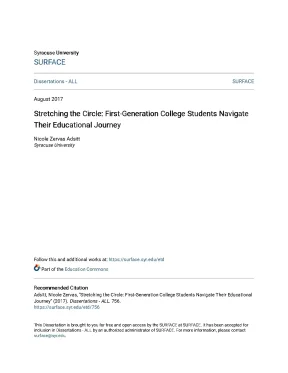
Tải xuống để đọc toàn bộSyracuse University SURFACE Dissertations - ALL SURFACE August 2017 Stretching the Circle: First-Generation College Students Navigate Their Educational Journey Nicole Zervas Adsitt Syracuse University Follow this and additional works at: https://surface.edu/etd Part of the Education Commons Recommended Citation Adsitt, Nicole Zervas, "Stretching the Circle: First-Generation College Students Navigate Their Educational Journey" (2017).edu/etd/756 This Dissertation is brought to you for free and open access by the SURFACE at SURFACE. It has been accepted for inclusion in Dissertations - ALL by an authorized administrator of SURFACE. For more information, please contact surface@syr. Abstract This dissertation is a qualitative study that explores how first-generation college students experienced their educational journey in a private four-year institution of higher education.
Using data from in depth interviews with 19 first generation college students from three private four year institutions, this study looked at how participants made sense of race, class, gender, and Socioeconomic Status (SES) as it intersects with their first-generation status as part of their lived experience within a private educational setting. It also examined how first- generation students traversed the borders and margins of different communities as they pursue higher education and the kinds of cultural capital first-generation students drew upon to help them as they navigated the academic setting. I utilized intersectionality, cultural capital, and the Community Cultural Wealth Model as frameworks to analyze the educational experiences of first-generation college students (Bourdieu, 1977; Crenshaw, 1991; Yosso, 2005). This study reveals the challenges participants faced in their journey to college and upon their arrival.
My work documents the ways that students utilized family and community resources to navigate structural inequalities as they pursued higher education, and how they confronted and managed issues of class and race upon their arrival, and the ways that informants took on the emotional work of being first generation college students. This dissertation expands on the Community Cultural Wealth model to include first- generation college students, as well as the notion of microaggressions, to better reflect complex ways that race and class intersect for many first-generation college students. This study adds to the growing body of scholarly work on first-generation students and furthers the dialogue in higher education related to first-generation college students and how to promote their college success, particularly in private four-year institutions. By identifying what factors contributed to the success of the students in this study, this dissertation provides practical implications that may improve the educational experiences of first generation college students and in turn, promote educational equity.
STRETCHING THE CIRCLE: FIRST-GENERATION COLLEGE STUDENTS NAVIGATE THEIR EDUCATIONAL JOURNEY by Nicole Zervas Adsitt B., Nazareth College of Rochester, 1997 M., Syracuse University, 1999 Dissertation Submitted in partial fulfillment of the requirements for the degree of Doctor of Philosophy in Higher Postsecondary Education Syracuse University August 2017 Copyright © Nicole Z. Adsitt 2017 All Rights Reserved Acknowledgements Out of all the writing I have done over the course of this dissertation, this section brings me the most joy, as it allows me to express the gratitude that I have carried in my heart for the last ten (or more) years on this journey. First, I must thank the 19 participants who graciously allowed me into their lives. They are the biggest reason I never gave up when this process got hard, because I knew that their stories needed to be heard by a larger audience.
I am incredibly thankful for their time, their willingness to open up to me, and the many lessons they taught me about research and life. In many cases, I have been fortunate enough to continue to celebrate their successes beyond this study. To my parents, who instilled a love of learning and the value of education for my entire life, thank you. To my father, who never settled for anything less than my best, and pushed me to continue to “do better” at every turn.
To my mother, for taking me to the library and showing me the joy of books, and for being my perpetual cheerleader. Thank you from the bottom of my heart. To Mike, my husband, best friend and partner in life, who has provided more support in this process than I ever thought possible. You have encouraged me and kept me grounded from the time I mentioned pursuing this dream to the moment I write this.
You have given me the space and time to do this work, and pushed me when I thought it was impossible to see this dream through. I am so grateful for your love and support and beyond thankful to have you in my life. I have been fortunate enough to have the mentorship of my dissertation chair, Cathy for from the moment I walked through the doors of the higher education program 20 years ago to the present day. You believed in me when I am certain I did not believe in myself, and you provided endless support and encouragement every step of the way.
Your thoughtful and honest feedback has pushed me to do better work and I have learned so much from you and the process. You have seen me through graduate school in its entirety, along with a wedding, two houses, many jobs, and two children. You have given me so much of your time and energy in this process as well as sharing your wisdom. Your mentorship and guidance over the years is immeasurable, as is my gratitude for it.
I have also been privileged to have two other wonderful committee members who continue to be instrumental to my process. Dawn and Anne, I am so grateful for your time, wisdom and insights. You have certainly strengthened my work with your thoughtful feedback and critiques. I would be remiss if I did not mention my former committee member, Sari, who is no longer with us.
She was instrumental to this dissertation, and her guidance in the early stages of my work was critical. She pushed me to find my voice and I am so appreciative of the many lessons she provided in and out of the classroom. Without a doubt, I am fortunate to have such a brilliant, accomplished and supportive committee. Thank you for your commitment to issues of social justice and equity in theory and practice and for all you have taught me.
To my cousin Tony, who is more like my brother, and who paved the way for me. You always took an interest in my education and your love of learning was contagious. I still have no idea v how you can make a math problem a fun challenge, but you do, and it is what makes you an amazing teacher. You took me on one of my first college tours; you gave me loads of advice, and like a sister, I only took some of it.
Regardless, you set an example with your own path that taught me the value of perseverance and hard work. I am thankful for your friendship and for your example. To Julie, who has become like my big sister, thank you also for your love and support. I cannot forget Mary, Jennie, and Sara—thanks for always reminding me of importance of family and for making me laugh.
I was fortunate to have the support of the rest of my family, and there are so many--thank you all for always being there for me in so many ways. For my writing group, who have long since finished this process, Rachel, Carrie, Wendy, Maria, and Leah, thanks for your friendship and support along the way. I will never forget our times at Panera, trying to make sense of our work and the process. I could not have made it through without all of you.
Thanks for your continued friendship. To Sarah, my dear friend and work sister. You have taught me so much about the process of writing, and I can’t thank you enough for all the practical wisdom as well as the deep and profound guidance you willingly provided. Thank you for always listening.
Finally, to Jeff for your incredible support as I finished this process. You have made it possible for me to get through this last leg and your support and leadership are greatly appreciated. Likewise, to all of my colleagues over the years, and there are too many to name, who supported me. In particular, I want to recognize my “Cayuga family”, who have helped me find my place and my feet professionally.
Thank you for being there for me through this process. This dissertation is dedicated to my daughters, Hannah and Lily. vi TABLE OF CONTENTS Chapter 1: INTRODUCTION……………………………………………………………….……1 Changing Landscape of Higher Education………….2 Statement of the Problem…………………………………………………………………8 Purpose of the Study…………………………………………………………………….……11 Role of Researcher……………………………………………………….14 Overview of Methods………………………………………………………….20 Significance of Study…………………………………………….27 Key Terms and Definitions…………………………….………………………………31 Overview of Chapters……………………………………………………………………32 Chapter 2: LITERATURE REVIEW…………………………………………….34 Path to College………………………………………………………………………….35 Pre-college Characteristics………………….36 Family Involvement in the College Choice Process……….39 Pre-college Outreach Programs…………………………………………………40 Enrollment and College Choice…………………………………………………45 Impact of College……………………………………………………………………….52 Academic and Social Integration……………………………………………….54 Educational Pioneers……………………………………………………………59 Literature Focused on Recommendations for Practice…………………………64 Theoretical Frameworks…………………………………………………………………67 Intersectionality………………………………………………………………….67 Cultural and Social Capital and Community Cultural Wealth………………….73 Chapter 3: METHODS AND PROCEDURES…………….97 Chapter 4: HOW FIRST-GENERATION STUDENTS NAVIGATED THE EDUCATIONAL PIPELINE……………………………………………………………………………………….99 Structural Inequalities Limit Opportunities………………………………………….99 Lack of Physical Resources Impacts Learning.100 Under-resourced Schools Do Not Prepare Students for College…………….104 Standard English is Privileged.……108 Little or Bad Advice About the College Application Process……….116 viii Navigating Away From Underresourced Schools.126 Chapter 5: A DIFFERENT WORLD: CAMPUS CLIMATE AND COUNTERSPACES….129 Outsiders in the Academy………………………………………………………….130 Administrative and Academic Offices………………………………….171 Chapter 6: NEGOTIATING COMMUNITY RELATIONSHIPS IN WHILE IN COLLEGE.173 Family Responsibilities Continue in College…………………………………………175 Financial Responsibility. ………………………………………………………175 Emotional Responsibility………………………………………………………180 Negotiating Emotional Distance………………………………………………………184 Translating Experiences……………………………………………………….195 Doing Them Proud……………………………………………………………195 Going Back………………………………………….200 Chapter 7: CONCLUSIONS AND IMPLICATIONS…………………………………………202 Summary of Findings………………………………………………………………….203 Importance of Study……………………………………………………………………207 ix Limitations…………………………………………………………………………….214 Implications for Practice and Recommendations………………………………………217 Recommendations to Increase Access………………………………………….217 Recommendations for Higher Education………………………………………221 Concluding Thoughts…………………………………………………………….238 x 1 Chapter One: INTRODUCTION I started at [local community college]…and everyone there was just great.
They really helped, wanted to see all their students succeed…with the support of them I did really well…and that’s pretty much how I manage to find myself here. I’d never dreamed of being able to come to someplace like Northeast financially…Once I started college…it actually inspired some of my family. I mean and that’s [college] something that no one else in my family has ever done, so I mean it’s huge for me. (Jim, student at Northeast University) Jim described his family as being below the poverty line while he was growing up.
He half-jokingly added that, “They were not even close to middle class.” His parents never attended college and they moved around quite a bit when he was younger. Jim eventually dropped out of high school and decided to start working. He was able to make a relatively good salary, but quickly realized the physical demands of the work would catch up with him. He pursued community college in a small rural town, where he said if you aren’t a good student, “there is nothing to do except get in trouble.” Jim is like many first-generation college students who decide to start their education at a community college.
In fact, working class youth and those from families with low educational levels have been found to be overrepresented in the lowest tier of higher education (Karen, 1991). It is also well documented that students, particularly low-income or first-generation, who enter community colleges are at greater risk for attrition and often transfer at lower rates (Engle & Tinto, 2008; Mullen, 2010; Provasnik & Planty, 2008; Warburton, Bugarin, & Nunez, 2001). Not surprisingly, Jim talked about how he always felt attendance at Northeast was out of his reach. This dissertation explores how Jim and 18 other first-generation college students experienced their educational journey in a private four-year institution of higher education.
In 2 this qualitative study, I examine the educational path and lived experiences of these first- generation college students through semi-structured, in-depth interviews (Bogdan & Biklen, 2007; Rubin & Rubin, 2005).
Nội dung được bảo vệ bản quyền — Tải xuống đầy đủ
Trích dẫn luận án này
Nicole Zervas Adsitt (2017). Stretching the circle first generation college students navi [Luận án tiến sĩ, Syracuse University]. LuanAn.net. https://luanan.net/giao-duc-hoc/stretching-the-circle-first-generation-college-students-navigate
Câu hỏi thường gặp
Luận án "Stretching the circle first generation college students navi" nghiên cứu về vấn đề gì?
Stretching the Circle: Hành trình của sinh viên đại học thế hệ đầu tiên. Khám phá câu chuyện, thách thức và cơ hội trên con đường học vấn.
Luận án "Stretching the circle first generation college students navi" được bảo vệ tại trường nào?
Luận án này được bảo vệ tại Syracuse University. Năm bảo vệ: 2017.
Luận án "Stretching the circle first generation college students navi" thuộc chuyên ngành gì?
Luận án "Stretching the circle first generation college students navi" thuộc chuyên ngành Higher Postsecondary Education. Danh mục: Giáo Dục Học.
Luận án "Stretching the circle first generation college students navi" có bao nhiêu trang?
Luận án "Stretching the circle first generation college students navi" có 280 trang. Bạn có thể xem trước một phần tài liệu ngay trên trang web trước khi tải về.
Cách tải luận án "Stretching the circle first generation college students navi" về máy như thế nào?
Để tải luận án về máy, bạn nhấn nút "Tải xuống ngay" trên trang này, sau đó hoàn tất thanh toán phí lưu trữ. File sẽ được tải xuống ngay sau khi thanh toán thành công. Hỗ trợ qua Zalo: 0559 297 239.