Hướng dẫn & Cẩm nang Luận án Luận văn 2016 của Trường Sau đại học - Morgan State
"Luận văn và luận án hướng dẫn 2016: Công cụ hỗ trợ viết luận văn và luận án hiệu quả, bao gồm hướng dẫn viết, mẫu đề cương và tài liệu tham khảo."
Morgan State University
Sau đại học (Graduate Studies)
Luan An
Hướng dẫn luận văn và luận án
Năm xuất bản
Số trang
55
Thời gian đọc
9 phút
Lượt xem
0
Lượt tải
0
Phí lưu trữ
40 Point
Tổng quan nhanh
- Chủ đề:
- Hướng dẫn tổng quan Luận án & Luận văn MSU
- Số trang:
- 55 trang
- Trường:
- Morgan State University
- Chuyên ngành:
- Sau đại học (Graduate Studies)
- Tác giả:
- Dr. Mark Garrison
- Năm:
- 2016
Tóm tắt nội dung luận án
I.Hướng dẫn tổng quan Luận án Luận văn MSU
Morgan State University công bố cẩm nang hỗ trợ sinh viên sau đại học. Tài liệu này cung cấp hướng dẫn tối thiểu cho việc chuẩn bị luận án Tiến sĩ và luận văn Thạc sĩ. Cẩm nang chứa thông tin hữu ích cho điều phối viên, giảng viên và các thành viên hội đồng. Trường kỳ vọng tất cả nghiên cứu học thuật đều có ý nghĩa giáo dục và phương pháp luận vững chắc. Luận án Tiến sĩ là yêu cầu bắt buộc cho tất cả các bằng cấp Tiến sĩ. Luận văn Thạc sĩ thường được yêu cầu cho các chương trình Thạc sĩ Khoa học Xã hội và một số chương trình Thạc sĩ Khoa học. Sinh viên cần tham khảo danh mục của Trường và cố vấn chương trình để xác định yêu cầu cụ thể của mình. Cẩm nang đảm bảo sự nhất quán và chất lượng trong tất cả các công trình nghiên cứu được nộp. Việc tuân thủ các tiêu chuẩn là điều cần thiết cho sự thành công học thuật.
1.1. Tiêu chuẩn và kỳ vọng của Trường
Cẩm nang luận án/luận văn cung cấp các tiêu chuẩn tối thiểu cho sinh viên sau đại học. Mục tiêu là hỗ trợ sinh viên trong quá trình nghiên cứu và viết. Các yêu cầu về luận án Tiến sĩ tập trung vào nghiên cứu gốc và khả năng giao tiếp khoa học. Sinh viên phải bảo vệ công trình của mình. Đối với luận văn Thạc sĩ, các yêu cầu cũng nhấn mạnh nghiên cứu có giá trị. Các chương trình khác nhau có thể có yêu cầu khác nhau. Sinh viên nên xác nhận yêu cầu luận văn với cố vấn chương trình.
1.2. Trách nhiệm sinh viên và Hội đồng
Sinh viên sau đại học chịu trách nhiệm cao nhất trong việc tuân thủ các quy định. Họ cần đảm bảo chất lượng nghiên cứu học thuật và bản thảo. Chủ tịch và thành viên ủy ban giám sát, cung cấp phản hồi. Văn phòng Sau đại học chịu trách nhiệm về các quy định định dạng và quy trình nộp. Mối quan hệ hợp tác giữa sinh viên, cố vấn và trường học rất quan trọng. Sự hiểu biết chung về các kỳ vọng đảm bảo quá trình hoàn thành luận án/luận văn diễn ra suôn sẻ.
1.3. Đăng ký bản quyền nghiên cứu học thuật
Sinh viên có thể đăng ký bản quyền cho luận án Tiến sĩ hoặc luận văn Thạc sĩ. Việc đăng ký bản quyền bảo vệ quyền sở hữu trí tuệ của người viết. Quy trình này thường được thực hiện thông qua UMI. Có các khoản phí liên quan đến việc đăng ký bản quyền và xuất bản. Sinh viên nên xem xét lựa chọn này để bảo vệ công trình nghiên cứu. Việc này là một phần quan trọng trong quy trình nộp và công bố.
II.Đạo đức nghiên cứu Liêm chính học thuật cần thiết
Morgan State University đặt ra kỳ vọng cao về đạo đức nghiên cứu và liêm chính học thuật. Cẩm nang giải thích chính sách của Trường về sai phạm nghiên cứu học thuật, bao gồm làm giả, ngụy tạo và đạo văn. Sinh viên phải hiểu rõ các định nghĩa và hậu quả của hành vi sai trái. Mục tiêu là duy trì một môi trường học thuật trung thực và đáng tin cậy. Các quy định này nhằm bảo vệ uy tín của Trường và giá trị của các công trình nghiên cứu. Việc tuân thủ đạo đức nghiên cứu là trách nhiệm của mỗi sinh viên sau đại học. Điều này củng cố tính toàn vẹn của tất cả các luận án Tiến sĩ và luận văn Thạc sĩ.
2.1. Chính sách về sai phạm nghiên cứu học thuật
Chính sách liên bang về sai phạm nghiên cứu được áp dụng. Sai phạm bao gồm ba hành vi chính: làm giả, ngụy tạo và đạo văn. Làm giả là việc tạo ra dữ liệu hoặc kết quả không có thật. Ngụy tạo là thay đổi hoặc bỏ qua dữ liệu, làm cho nghiên cứu không được thể hiện chính xác. Đạo văn là việc chiếm đoạt ý tưởng, quy trình, kết quả hoặc từ ngữ của người khác mà không ghi công đầy đủ. Các hành vi này vi phạm nghiêm trọng nguyên tắc đạo đức nghiên cứu. Trường áp dụng các biện pháp kỷ luật nghiêm khắc.
2.2. Định nghĩa và hình phạt cho đạo văn
Đạo văn được định nghĩa rộng rãi là việc sử dụng tài liệu của người khác mà không ghi công. Điều này bao gồm sao chép nguyên văn, diễn giải sai hoặc sử dụng cấu trúc câu. Mọi hình thức đạo văn đều bị cấm. Sinh viên phải học cách trích dẫn và tham khảo đúng cách. Các hình phạt cho đạo văn có thể rất nghiêm trọng, từ điểm kém đến khai trừ khỏi Trường. Việc hiểu rõ và tuân thủ các quy tắc này là bắt buộc. Đảm bảo tính gốc của tất cả các công trình nghiên cứu học thuật.
III.Chuẩn bị bản thảo Luận án Luận văn hoàn chỉnh
Quá trình chuẩn bị bản thảo luận án Tiến sĩ hoặc luận văn Thạc sĩ đòi hỏi sự tỉ mỉ. Cẩm nang cung cấp các hướng dẫn chi tiết trước khi sinh viên bắt đầu viết. Điều này bao gồm việc xem xét các tài liệu tham khảo trước đây và xác minh nguồn thông tin. Sinh viên phải lựa chọn cẩm nang định dạng phù hợp với ngành học của mình. Việc xin phép sử dụng tài liệu có bản quyền và liên quan đến đối tượng con người là bắt buộc. Các bước chuẩn bị này đảm bảo tính hợp lệ, đạo đức và chất lượng của nghiên cứu học thuật. Việc lập kế hoạch cẩn thận giúp quá trình viết diễn ra hiệu quả hơn, giảm thiểu các lỗi có thể xảy ra.
3.1. Hướng dẫn trước khi soạn thảo bản thảo
Sinh viên cần tuân thủ hướng dẫn cụ thể của chương trình học. Xem xét các luận án và luận văn đã nộp trước đây giúp định hình kỳ vọng. Việc đánh giá tính hợp lệ của nguồn Internet rất quan trọng. Sinh viên phải chọn một cẩm nang định dạng phù hợp (ví dụ: APA, MLA). Cẩm nang này sẽ định hướng phong cách viết và trích dẫn. Phương pháp nghiên cứu cần được thiết lập vững chắc trước khi bắt đầu.
3.2. Yêu cầu định dạng và bố cục
Các yêu cầu về định dạng bao gồm font chữ, kích thước và lề trang. Cần tránh các lỗi định dạng như 'widows' và 'orphans'. Cẩm nang cung cấp các mẫu và ví dụ về bố cục trang. Điều này bao gồm các phần như mục lục, danh sách bảng/hình. Việc tuân thủ nghiêm ngặt các yêu cầu định dạng là cần thiết cho quá trình xét duyệt của Văn phòng Sau đại học. Một bản thảo được định dạng tốt thể hiện sự chuyên nghiệp.
3.3. Sử dụng tài liệu có bản quyền và đối tượng nghiên cứu
Sinh viên phải xin phép bằng văn bản khi sử dụng tài liệu có bản quyền. Điều này đảm bảo tuân thủ luật sở hữu trí tuệ. Đối với nghiên cứu liên quan đến đối tượng con người, cần sự chấp thuận từ Ban Duyệt Nghiên cứu Thể chế (IRB). Việc này đảm bảo đạo đức nghiên cứu và bảo vệ người tham gia. Lưu trữ tất cả các giấy phép và tài liệu chấp thuận. Đây là bước quan trọng để tránh các vấn đề pháp lý và đạo đức.
IV.Quy định định dạng Trích dẫn tham khảo chuẩn
Việc tuân thủ các quy định định dạng và trích dẫn là yếu tố then chốt của bất kỳ công trình nghiên cứu học thuật nào. Morgan State University nhấn mạnh sự cần thiết của việc chọn và áp dụng một cẩm nang định dạng phù hợp. Cẩm nang hướng dẫn chi tiết về font chữ, lề, khoảng cách và cấu trúc các yếu tố trong bản thảo. Các quy tắc về trích dẫn và tham khảo phải được áp dụng nhất quán để tránh đạo văn và tôn trọng công trình của người khác. Sự chính xác trong định dạng không chỉ thể hiện tính chuyên nghiệp mà còn tạo điều kiện thuận lợi cho quá trình xem xét và phê duyệt luận án Tiến sĩ hoặc luận văn Thạc sĩ. Đây là một phần quan trọng trong việc đảm bảo chất lượng tổng thể của nghiên cứu.
4.1. Chọn cẩm nang định dạng và phong cách trích dẫn
Sinh viên phải chọn một cẩm nang định dạng chuẩn phù hợp với ngành học. Các phong cách phổ biến bao gồm APA, MLA, Chicago. Mỗi cẩm nang cung cấp quy tắc chi tiết về cấu trúc bản thảo. Nó cũng hướng dẫn cách trích dẫn trong văn bản và lập danh mục tham khảo. Việc lựa chọn và tuân thủ một phong cách nhất quán là điều bắt buộc. Điều này giúp đảm bảo tính học thuật và dễ đọc của tài liệu.
4.2. Yêu cầu về font lề và các yếu tố chính
Cẩm nang quy định rõ ràng về font chữ và kích thước sử dụng trong luận án/luận văn. Các lề trang cũng phải tuân thủ các tiêu chuẩn cụ thể. Khoảng cách dòng và các phần phụ lục cũng được hướng dẫn chi tiết. Các yếu tố như bảng mục lục, danh sách bảng và hình vẽ cần được định dạng chính xác. Việc sử dụng các mẫu được cung cấp giúp đảm bảo sự nhất quán. Điều này rất quan trọng để bản thảo đáp ứng các tiêu chuẩn của Văn phòng Sau đại học.
4.3. Các yếu tố đầu và cuối bản thảo
Phần đầu của bản thảo bao gồm trang tiêu đề, trang phê duyệt, trang tóm tắt. Mục lục, danh sách bảng, danh sách hình minh họa cũng được đặt ở đây. Phần cuối bản thảo bao gồm danh mục tài liệu tham khảo hoặc thư mục. Các tài liệu của Ban Duyệt Nghiên cứu Thể chế (IRB) cũng cần được đính kèm. Sự sắp xếp đúng đắn của các yếu tố này là bắt buộc. Chúng tạo nên cấu trúc hoàn chỉnh và chuyên nghiệp của tài liệu nghiên cứu học thuật.
V.Quy trình nộp Bảo vệ Luận văn Thạc sĩ Tiến sĩ
Quy trình nộp luận án Tiến sĩ và luận văn Thạc sĩ là bước cuối cùng và quan trọng. Sinh viên cần nắm rõ thời hạn và các yêu cầu trước khi nộp. Bản thảo phải được kiểm tra kỹ lưỡng để đảm bảo không có lỗi định dạng hay lỗi chính tả. Trường khuyến khích sử dụng các dịch vụ hiệu đính chuyên nghiệp. Quá trình nộp điện tử qua UMI ETD cần được thực hiện cẩn thận. Việc chuẩn bị kỹ lưỡng và tuân thủ các bước nộp giúp tránh các sai sót phổ biến. Điều này đảm bảo công trình nghiên cứu học thuật được chấp nhận. Văn phòng Sau đại học sẽ xem xét cuối cùng trước khi bảo vệ luận văn/luận án.
5.1. Thời điểm và các bước chuẩn bị nộp luận văn
Sinh viên cần xác định thời điểm nộp luận án/luận văn theo lịch của Trường. Trước khi nộp, bản thảo phải được xem xét kỹ lưỡng. Đảm bảo tài liệu không có lỗi chính tả, ngữ pháp hoặc định dạng. Cân nhắc nhận hỗ trợ hiệu đính hoặc biên tập. Bản thảo phải được ủy ban đánh giá và chấp thuận. Tất cả các chỉnh sửa cuối cùng cần được hoàn tất trước thời hạn nộp chính thức.
5.2. Quy trình nộp điện tử chính thức
Việc nộp luận án/luận văn thường được thực hiện điện tử. Sinh viên sẽ sử dụng hệ thống như UMI ETD để 'ký gửi' bản thảo. Cần tạo một tài khoản và tải lên các tệp tài liệu. Đảm bảo tất cả các biểu mẫu và giấy tờ bổ sung được đính kèm chính xác. Kiểm tra kỹ lưỡng các bước tải lên để tránh lỗi. Văn phòng Sau đại học sẽ tiến hành xem xét bản nộp điện tử. Việc này là một bước quan trọng để tiến tới bảo vệ luận văn/luận án.
5.3. Tránh lỗi phổ biến khi nộp bản thảo
Nhiều lỗi thường gặp có thể xảy ra trong quá trình chuẩn bị và nộp. Các lỗi định dạng, như thiết lập tab và khoảng cách không chính xác. Sử dụng sai các loại dấu gạch ngang (dấu nối, dấu gạch ngang dài). Lỗi về dấu câu, đặc biệt là dấu phẩy và dấu chấm. Phụ lục của cẩm nang liệt kê các vấn đề thường gặp. Sinh viên cần xem xét kỹ lưỡng các lỗi này. Việc sửa chữa giúp quá trình xét duyệt của Văn phòng Sau đại học diễn ra suôn sẻ hơn.
Mục lục chi tiết luận án
Tải xuống file đầy đủ để xem toàn bộ nội dung
Tải đầy đủ (55 trang)Trích đoạn nội dung luận án
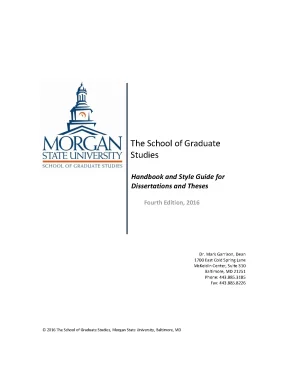
Tải xuống để đọc toàn bộThe School of Graduate Studies Handbook and Style Guide for Dissertations and Theses Fourth Edition, 2016 Dr. Mark Garrison, Dean 1700 East Cold Spring Lane McKeldin Center, Suite 310 Baltimore, MD 21251 Phone: 443.8226 © 2016 The School of Graduate Studies, Morgan State University, Baltimore, MD Table of Contents Chapter 1: University Expectations for Preparing a Dissertation or Thesis. 1 Standards for the Dissertation. 1 Standards for the Thesis.
2 Author of the Dissertation or Thesis. 3 Graduate Students’ Responsibilities. 3 Committee Chairpersons’ and Committee Members’ Responsibilities. 3 School of Graduate Studies’ Responsibilities.
4 Shared Understanding of the Dissertation or Thesis. 5 Registering the Copyright. 6 Chapter 2: University Expectations for Academic Conduct and Ethical Research. 7 Federal Policy on Research Misconduct.
7 Definitions and Penalties of Academic Dishonesty and Plagiarism. 9 Chapter 3: Before Preparing the Manuscript. 10 Follow Specific Program Guidelines. 10 Review Past Copies of Dissertations/Theses.
10 Determine the Validity and Authority of Research Taken from the Internet. 11 Choose the Appropriate Style Manual. 11 Secure Written Permission for Use of Copyrighted Material. 11 Secure Written Permission for use of Human Subjects.
12 Obtain Editorial, Proofreading, or Typing Assistance. 13 Obtain Electronic Storage Devices. 13 Chapter 4: Preparing the Dissertation or Thesis Draft. 14 Font Style/Size.
15 Widows and Orphans. 16 FRONT MATTER REQUIREMENTS. 18 Table of Contents. 18 List of Tables/List of Figures.
19 List of Illustrations. 19 List of Abbreviations. 20 END (BACK) MATTER REQUIREMENTS. 20 References or Bibliography.
20 Institutional Review Board (IRB) Documents. 21 Chapter 5: Templates and Models of Formal Elements. 22 Chapter 6: Submitting the Dissertation or Thesis to the School of Graduate Studies. 32 When to Submit.
32 Before Submitting the Dissertation or Thesis. 33 Error Free Document. 33 Upon Submitting the Dissertation or Thesis. 33 The Submission Process.
33 The “Deposit” and the Steps for Electronic Submission. 34 Chapter 7: Common Mistakes in Preparing Dissertations and Theses. 37 Setting Tabs and Spacing. 38 Types of Dashes.
38 Three-Em-Dash. 40 Commas and Periods and Quotation Marks. 40 Appendix A: Research Misconduct. 41 Appendix B: Helpful Bibliographies.
45 Bibliography: Style Manuals. 45 Bibliography: “How-to” Write a Dissertation/Thesis. 46 Appendix C: Common Problems to Avoid. 49 Appendix D: Common Errors Requiring Correction.
50 Table of Figures Figure 1: UMI Advanced Search Function. 10 Figure 2: Required Page Layout for Dissertations and Theses. 23 Figure 3: Abstract Template. 24 Figure 4: Model Abstract Page.
25 Figure 5: Required Title Page Template. 26 Figure 6: Title Page Model. 27 Figure 7: Required Approval Page Template. 28 Figure 8: Sample Approval Page for Physical Manuscript or Submission for ETD.
29 Figure 9: Table of Contents Model. 30 Figure 10: Chapter 1 Sample Page. 31 Figure 11: Fees for Copyrighting and Publishing. 35 iii Chapter 1: University Expectations for Preparing a Dissertation or Thesis Introduction The School of Graduate Studies publishes the Handbook and Style Guide for Dissertations and Theses (Handbook) in order to assist the graduate student in the preparation of a doctoral dissertation or master’s thesis.
To provide minimum guidelines common to all disciplines, this Handbook includes specific format requirements for the School of Graduate Studies. Information in the Handbook should also be helpful to graduate coordinators, faculty, advisors, committee chairpersons, and committee members for understanding standards and requirements for writing dissertations and theses. The School of Graduate Studies expects that all dissertations and theses will consist of research that is educationally significant and methodologically sound. At Morgan State University, dissertations are required for the award of all doctoral degrees.
Currently, most candidates for Master of Arts degrees must prepare theses. Theses may also be required of candidates seeking Master of Science degrees as well as candidates from a number of specialized Master’s degrees. Please consult the current School of Graduate Studies Catalog and meet with the program graduate advisor to determine whether a program requires a thesis. Standards for the Dissertation The preparation of a dissertation functions primarily as a way to help the doctoral student understand research methodology and to acquire the scholarly abilities to advance knowledge and understanding within a academic discipline.
Chief among the research skills is the ability to communicate orally and in writing with colleagues and others about ones chosen subject matter. At Morgan, all candidates for doctoral degrees (PhD, DEng, DrPH, and EdD) are required to conduct original research and prepare and defend a dissertation. Students are encouraged to review dissertation or other research requirements with faculty advisors and the graduate coordinators of respective degree programs. All doctoral dissertations must meet several important standards.
For a dissertation to be accepted by the School of Graduate Studies, it must: Demonstrate thorough knowledge of prior scholarship, including qualitative or quantitative research relating to the dissertation topic; Reveal ability to analyze, critique, interpret, and integrate information from prior scholarship into hypotheses or research questions sufficient to form the basis of a dissertation; Reflect use of appropriate research methodology, including current data collection techniques and appropriate data analysis tools including the use of proper statistical applications and other software applications; 1 School of Graduate Studies Dissertation and Thesis Handbook Display findings in a sequential and logical manner, and when needed, through the use of appropriate tables, graphs, or other methods of presenting quantitative or qualitative data; Include a coherent discussion of the relationships among the prior scholarship, the hypotheses or research question(s), the findings and data, and the meaning of the results; and Reflect a mastery of grammar, punctuation, sentence construction, paragraph formation, and style consistent with requirements outlined and approved in this Handbook. The School of Graduate Studies reserves the right not to accept dissertations that fail to meet these standards. The general expectation is that the dissertation committee provides assurance that these standards are met and indicates so with the signatures of the members being published in the dissertation. Standards for the Thesis The purpose of the thesis is to help the master’s student acquire the research, methodological, and communication skills necessary for discussing and potentially contributing to knowledge and understanding within academic disciplines.
In order to be accepted by the School of Graduate Studies, the thesis must: Demonstrate knowledge of prior scholarship relating to the thesis topic; Reveal ability to analyze, critique, and integrate information into hypotheses or research questions sufficient to form the basis for a thesis; Reflect use of appropriate research methodology that will result in reliable findings; Present findings in a manner appropriate for displaying quantitative or qualitative data; Include a coherent discussion of findings and the meaning of the results; and Reflect a mastery of grammar, punctuation, sentence construction, paragraph formation, citations, and style consistent with published research in an academic discipline. The School of Graduate Studies reserves the right not to accept theses that fail to meet these standards. The general expectation is that the thesis committee provides assurance that these standards are met and indicates so with the signatures of the members being published in the thesis. 2 School of Graduate Studies Dissertation and Thesis Handbook Author of the Dissertation or Thesis The student is the author of the doctoral dissertation or master’s thesis and, therefore, is ultimately responsible for ensuring that its production reflects the highest professional quality in content, style, and grammatical exactness.
In addition to this, the preparation, as well as the evaluation, of dissertations and theses represents a joint enterprise involving the graduate student, the dissertation or thesis chairperson, other members of the dissertation or thesis committee, and Dean of the School of Graduate Studies. All dissertations and theses are to be written in English. Graduate Students’ Responsibilities Although one should expect assistance from the committee chair and committee members, the student is held solely responsible for meeting the standards, citation style, format, and overall quality expected of dissertations and theses. Responsibilities include, but are not necessarily limited to, the following: Choosing a dissertation or thesis topic that represents one’s own original research; Consulting regularly with committee chairpersons and committee members to review progress on the development of chapters in the dissertation or thesis; Developing and organizing the subject matter to reflect with clarity the content and analysis of arguments and any proposed hypotheses; Assuring that the quality of data, of the evidence, and of the logical reasoning presented is consistent with theories, principles, and methodologies of the discipline; Assuring that the format, composition, text, layout, and appearance of illustrations and bibliography are of the highest professional quality; Certifying the accuracy of references and citations; Securing copyrights for the dissertation or thesis through UMI/ProQuest during the submission process; Securing appropriate permission to reproduce copyrighted material in the thesis or dissertation; and Meeting all deadlines set by the School of Graduate Studies for the submission of dissertations and theses.
Committee Chairpersons’ and Committee Members’ Responsibilities The committee chair in particular and the other committee members in general are responsible for guiding and advising the student in researching scholarly literature, using of appropriate research methodologies, analyzing data, and reporting findings for the 3 School of Graduate Studies Dissertation and Thesis Handbook dissertation or thesis. The committee chairperson and committee members are expected to provide fair and ongoing evaluation of written drafts according to the standards of the discipline and the standards necessary to satisfy degree requirements. The responsibilities of the committee chairs and committee members include, but are not necessarily limited to, the following: Reviewing the candidate’s transcript to verify the status of eligibility to write the dissertation or thesis; Approving topic(s) and methodology for the dissertation or thesis; Reading and offering constructive criticism on drafts of the dissertation or thesis related to the quality of data and evidence, reasoning, editorial and linguistic quality, and references and citations; Guiding and advising the candidate’s work in reference to its organization and content; Evaluating the dissertation or thesis based on the requirements of the degree for which one is a candidate; Helping prepare the manuscript for scholarly publication; Reviewing the research and the manuscript for concerns related to academic integrity and providing evidence that such a review has occurred; Assisting the candidate in meeting the deadlines as established by the School of Graduate Studies for the oral defense and in submitting the dissertation or thesis to the School of Graduate Studies. In its evaluation of the dissertation or thesis, the committee may assign the following assessments: Passed (no corrections needed).
School of Graduate Studies’ Responsibilities The Dean of the School of Graduate Studies is responsible for certifying that the standards for the preparation of dissertations or theses have been met. Although the review of dissertations and theses by the Dean or the Dean’s designee centers primarily on conformity to the elements of style as outlined in this Handbook, the Dean is also concerned with the quality of the content and analysis reflected in the dissertation or 4 School of Graduate Studies Dissertation and Thesis Handbook thesis. Only after certification by the Dean are dissertations or theses accepted.
Nội dung được bảo vệ bản quyền — Tải xuống đầy đủ
Trích dẫn luận án này
Dr. Mark Garrison (2016). Hướng dẫn Luận án & Luận văn 2016 - Morgan State University [Luận án tiến sĩ, Morgan State University]. LuanAn.net. https://luanan.net/giao-duc-hoc/huong-dan-luan-an-luan-van-2016-morgan-state-university
Câu hỏi thường gặp
Luận án "Hướng dẫn Luận án & Luận văn 2016 - Morgan State University" nghiên cứu về vấn đề gì?
"Luận văn và luận án hướng dẫn 2016: Công cụ hỗ trợ viết luận văn và luận án hiệu quả, bao gồm hướng dẫn viết, mẫu đề cương và tài liệu tham khảo."
Luận án "Hướng dẫn Luận án & Luận văn 2016 - Morgan State University" được bảo vệ tại trường nào?
Luận án này được bảo vệ tại Morgan State University. Năm bảo vệ: 2016.
Luận án "Hướng dẫn Luận án & Luận văn 2016 - Morgan State University" thuộc chuyên ngành gì?
Luận án "Hướng dẫn Luận án & Luận văn 2016 - Morgan State University" thuộc chuyên ngành Sau đại học (Graduate Studies). Danh mục: Giáo Dục Học.
Luận án "Hướng dẫn Luận án & Luận văn 2016 - Morgan State University" có bao nhiêu trang?
Luận án "Hướng dẫn Luận án & Luận văn 2016 - Morgan State University" có 55 trang. Bạn có thể xem trước một phần tài liệu ngay trên trang web trước khi tải về.
Cách tải luận án "Hướng dẫn Luận án & Luận văn 2016 - Morgan State University" về máy như thế nào?
Để tải luận án về máy, bạn nhấn nút "Tải xuống ngay" trên trang này, sau đó hoàn tất thanh toán phí lưu trữ. File sẽ được tải xuống ngay sau khi thanh toán thành công. Hỗ trợ qua Zalo: 0559 297 239.