Final thesis sylvia theuri march
Luận văn tốt nghiệp của Sylvia Theuri, tháng 3.
The University of Salford
Art and Design Education
Luan An
Luận án tiến sĩ
Năm xuất bản
Số trang
355
Thời gian đọc
54 phút
Lượt xem
0
Lượt tải
0
Phí lưu trữ
60 Point
Tổng quan nhanh
- Chủ đề:
- Tổng quan luận văn: Sinh viên gốc Phi & nghệ thuật
- Số trang:
- 355 trang
- Trường:
- The University of Salford
- Chuyên ngành:
- Art and Design Education
- Tác giả:
- Sylvia Theuri
- Năm:
- 2016
Tóm tắt nội dung luận án
I.Tổng quan luận văn Sinh viên gốc Phi nghệ thuật
Luận văn tốt nghiệp này khám phá hành trình của sinh viên gốc Phi trong không gian giáo dục nghệ thuật và thiết kế đại học. Nghiên cứu tập trung vào các câu chuyện cá nhân. Mục tiêu chính là làm sáng tỏ những trải nghiệm, rào cản, và chiến lược hỗ trợ. Đây là một nghiên cứu học thuật quan trọng. Luận án cung cấp cái nhìn sâu sắc về một nhóm sinh viên đặc biệt. Tóm tắt luận văn này sẽ trình bày các khía cạnh chính. Nghiên cứu này đặt trong bối cảnh lịch sử và văn hóa cụ thể. Bối cảnh này ảnh hưởng đến cộng đồng người da đen gốc Phi tại Anh. Nó xem xét các chiến lược đa dạng văn hóa hiện có trong ngành nghệ thuật và thiết kế. Việc hiểu rõ những yếu tố này là cần thiết. Nó giúp cải thiện sự tham gia và thành công của sinh viên. Luận văn là một phần yêu cầu để lấy bằng tiến sĩ.
1.1. Mục tiêu Phạm vi nghiên cứu học thuật
Nghiên cứu học thuật này có mục tiêu rõ ràng. Nó nhằm tìm hiểu hành trình của sinh viên da đen gốc Phi vào giáo dục nghệ thuật và thiết kế bậc đại học. Phạm vi nghiên cứu bao gồm việc xác định các yếu tố ảnh hưởng. Các yếu tố này bao gồm rào cản và chiến lược hỗ trợ. Luận văn cũng định nghĩa các thuật ngữ chính. Điều này đảm bảo sự rõ ràng trong nghiên cứu. Mục tiêu khác là cung cấp một cái nhìn toàn diện. Cái nhìn này về những trải nghiệm của sinh viên. Đây là một đóng góp quan trọng cho các cuộc thảo luận hiện có. Luận án cung cấp dữ liệu định tính. Dữ liệu này giúp hiểu sâu hơn về vấn đề. Các câu hỏi nghiên cứu cụ thể đã được đặt ra. Chúng định hướng cho toàn bộ quá trình nghiên cứu.
1.2. Bối cảnh lịch sử văn hóa tác động
Luận án xem xét bối cảnh lịch sử, văn hóa và xã hội. Những yếu tố này ảnh hưởng đến cộng đồng người da đen gốc Phi tại Vương quốc Anh. Chúng định hình sự tương tác của cộng đồng với giáo dục nghệ thuật. Lịch sử phân biệt đối xử và định kiến xã hội được thảo luận. Điều này giải thích những thách thức cụ thể mà sinh viên phải đối mặt. Các chiến lược đa dạng văn hóa trong lĩnh vực nghệ thuật và thiết kế cũng được phân tích. Luận văn cũng đề cập đến cách nghệ thuật và cộng đồng người da đen tương tác. Nó xem xét quan điểm nghệ thuật và thiết kế từ góc độ châu Phi. Những yếu tố này cung cấp một nền tảng vững chắc. Chúng giúp hiểu sâu hơn về dữ liệu được thu thập. Việc nghiên cứu bối cảnh này là cốt lõi. Nó giúp giải thích những trải nghiệm của sinh viên.
II.Đề tài nghiên cứu Thách thức sinh viên nghệ thuật
Đề tài nghiên cứu này tập trung vào sự tham gia và trải nghiệm của sinh viên da đen gốc Phi trong giáo dục nghệ thuật và thiết kế bậc đại học. Đây là một khía cạnh quan trọng của việc viết luận văn. Luận án xem xét các tỷ lệ và mô hình tham gia. Nó phân tích các yếu tố ảnh hưởng đến lựa chọn ngành học của sinh viên. Nghiên cứu cũng đi sâu vào quá trình phỏng vấn và nhập học. Việc bảo vệ luận văn sẽ dựa trên những phân tích này. Các trải nghiệm cá nhân của sinh viên là trọng tâm. Kết quả đầu ra và thành tích cũng được đánh giá. Các chiến lược mở rộng cơ hội tham gia trong lĩnh vực nghệ thuật và thiết kế được kiểm tra. Luận văn cung cấp cái nhìn phê phán. Nó về những thách thức hiện tại và tiềm năng cải thiện. Đề tài nghiên cứu có liên quan trực tiếp đến công bằng xã hội. Nó liên quan đến sự đại diện trong giáo dục đại học.
2.1. Đánh giá sự tham gia giáo dục nghệ thuật
Luận văn đánh giá tỷ lệ và mô hình tham gia của sinh viên da đen gốc Phi. Sự tham gia này diễn ra trong giáo dục đại học nói chung và nghệ thuật, thiết kế nói riêng. Dữ liệu thống kê được phân tích. Dữ liệu này cho thấy xu hướng và khoảng trống hiện có. Các yếu tố ảnh hưởng đến lựa chọn của sinh viên được kiểm tra. Những yếu tố này bao gồm áp lực gia đình, kỳ vọng xã hội, và nhận thức về giá trị của ngành nghệ thuật. Quá trình tuyển sinh và phỏng vấn cũng được xem xét kỹ lưỡng. Điều này bao gồm những ảnh hưởng của chúng đến cơ hội của sinh viên. Việc hiểu rõ những điều này là cần thiết. Nó giúp xây dựng các chiến lược hỗ trợ hiệu quả hơn. Luận án làm nổi bật những điểm cần cải thiện. Nó trong việc thu hút và giữ chân sinh viên.
2.2. Trải nghiệm sinh viên kết quả đạt được
Nghiên cứu mô tả sâu sắc trải nghiệm của sinh viên da đen gốc Phi. Trải nghiệm này diễn ra trong không gian giáo dục nghệ thuật và thiết kế bậc đại học. Luận văn ghi lại những câu chuyện cá nhân. Những câu chuyện này làm nổi bật cả thách thức và thành công. Các yếu tố ảnh hưởng đến trải nghiệm của sinh viên bao gồm: chương trình giảng dạy, sự hỗ trợ từ giảng viên và môi trường xã hội. Kết quả đầu ra và thành tích của sinh viên cũng được đánh giá. Điều này bao gồm tỷ lệ tốt nghiệp và thành công trong sự nghiệp sau này. Luận án xem xét các chiến lược mở rộng cơ hội tham gia. Các chiến lược này nhằm cải thiện môi trường học tập. Mục tiêu là đảm bảo rằng sinh viên có thể phát triển hết tiềm năng của mình. Việc phân tích này là quan trọng. Nó giúp tạo ra môi trường giáo dục công bằng và hỗ trợ hơn.
III.Phương pháp nghiên cứu định tính về giáo dục
Luận án này sử dụng phương pháp nghiên cứu định tính. Phương pháp này tập trung vào việc thấu hiểu trải nghiệm cá nhân. Đây là một phần quan trọng của nghiên cứu khoa học. Thiết kế nghiên cứu được giải thích chi tiết. Nó làm rõ lý do chọn phương pháp này. Luận văn sử dụng phương pháp điều tra tường thuật. Phương pháp này giúp thu thập các câu chuyện sống động từ người tham gia. Phương pháp nghiên cứu này phù hợp để khám phá các khía cạnh chủ quan. Nó phù hợp để hiểu sâu hơn về tiếng nói bị gạt ra ngoài lề. Quá trình thu thập và phân tích dữ liệu được trình bày rõ ràng. Điều này bao gồm cách tiếp cận người tham gia và kỹ thuật phân tích. Luận án nhấn mạnh vị trí của nhà nghiên cứu trong quá trình này. Đây là một đặc điểm của nghiên cứu định tính. Cấu trúc luận văn được xây dựng để hỗ trợ phương pháp này. Nó đảm bảo tính minh bạch và độ tin cậy. Nghiên cứu cũng thảo luận về các giới hạn phương pháp luận.
3.1. Thiết kế nghiên cứu câu hỏi trọng tâm
Luận án áp dụng thiết kế nghiên cứu định tính. Thiết kế này tập trung vào việc hiểu sâu sắc các trải nghiệm. Nó đặc biệt nhấn mạnh tiếng nói của những người bị gạt ra ngoài lề. Các câu hỏi nghiên cứu trọng tâm được đặt ra. Chúng hướng đến việc khám phá ý nghĩa và diễn giải. Quan điểm bản thể luận và nhận thức luận được thảo luận. Điều này cung cấp nền tảng triết học cho nghiên cứu. Việc lựa chọn thiết kế định tính dựa trên mong muốn. Nó là để nắm bắt sự phức tạp của trải nghiệm con người. Nó không chỉ là các số liệu thống kê. Thiết kế này cho phép nhà nghiên cứu tương tác trực tiếp. Nó tương tác với người tham gia. Điều này tạo ra một sự hiểu biết phong phú hơn. Nghiên cứu khoa học cần sự cẩn trọng này. Nó đảm bảo tính xác thực và đáng tin cậy.
3.2. Áp dụng phương pháp điều tra tường thuật
Luận văn sử dụng phương pháp điều tra tường thuật. Phương pháp này là một công cụ mạnh mẽ để thu thập các câu chuyện cá nhân. Nó giúp hiểu hành trình của sinh viên. Quá trình tiếp cận và tuyển dụng người tham gia được mô tả. Điều này bao gồm các bước đảm bảo đạo đức nghiên cứu. Các cuộc phỏng vấn là phương tiện chính để thu thập dữ liệu. Người tham gia được khuyến khích chia sẻ những câu chuyện của họ. Cách tiếp cận phân tích tường thuật được trình bày chi tiết. Nó bao gồm phân tích đối thoại và trình diễn. Các kỹ thuật nâng cao chất lượng phân tích được thảo luận. Uy tín của nhà nghiên cứu cũng được xem xét. Điều này tăng cường tính xác thực của nghiên cứu. Phương pháp này cho phép khám phá sâu sắc. Nó khám phá các khía cạnh chủ quan của trải nghiệm giáo dục. Cấu trúc luận văn phản ánh sự lựa chọn phương pháp này.
IV.Phân tích kết quả Rào cản hỗ trợ giáo dục
Phần này của luận án trình bày các phát hiện chính. Các phát hiện liên quan đến những rào cản và chiến lược hỗ trợ. Đây là một phần quan trọng của tóm tắt luận văn. Nó tập trung vào những thách thức mà sinh viên da đen gốc Phi phải đối mặt. Nó cũng tập trung vào các cách họ vượt qua chúng. Rào cản được phân tích từ góc độ cá nhân và gia đình. Các chiến lược hỗ trợ cũng được xem xét tương tự. Nghiên cứu khoa học này cung cấp bằng chứng thực nghiệm. Bằng chứng về những vấn đề trong hệ thống giáo dục. Nó cũng cung cấp giải pháp tiềm năng. Kết quả được trình bày rõ ràng. Bằng cách sử dụng các bảng biểu và minh họa. Luận án tổng hợp các phát hiện. Nó đưa ra kết luận về sự phù hợp của các chiến lược hiện có. Đây là một đóng góp quan trọng. Nó cho việc hiểu và cải thiện giáo dục nghệ thuật.
4.1. Những rào cản cản trở tham gia trải nghiệm
Luận án xác định nhiều rào cản cản trở sự tham gia. Những rào cản này ảnh hưởng đến trải nghiệm của sinh viên da đen gốc Phi. Một rào cản lớn là quan điểm. Quan điểm cho rằng nghệ thuật và thiết kế không phải là một phần của văn hóa châu Phi. Vị thế thấp được gán cho các hoạt động nghệ thuật cũng là một vấn đề. Không gian nghệ thuật thường bị coi là 'không gian trắng'. Điều này tạo ra cảm giác xa lạ. Sự thiếu hụt các cuộc thảo luận và tiếp xúc với nghệ thuật trong gia đình cũng được ghi nhận. Những điều này góp phần vào việc hạn chế cơ hội. Khác biệt trong quan điểm giữa cha mẹ và con cái cũng là một rào cản. Nội dung chương trình giảng dạy mang tính Eurocentric. Điều này cũng làm giảm sự liên quan đến sinh viên gốc Phi. Thiếu sự hỗ trợ từ giáo viên nghệ thuật cũng là một yếu tố tiêu cực. Những rào cản này có tác động đáng kể. Chúng ảnh hưởng đến hành trình giáo dục của sinh viên.
4.2. Chiến lược hỗ trợ tham gia định hướng ngành
Nghiên cứu cũng làm nổi bật các chiến lược hỗ trợ. Các chiến lược này giúp sinh viên vượt qua rào cản. Chúng giúp họ định hướng trong giáo dục nghệ thuật. Khát vọng cá nhân, sự kháng cự và tự hiệu quả là những yếu tố quan trọng. Chúng giúp sinh viên vượt qua các rào cản dựa trên gia đình và thể chế. Sự hỗ trợ và khuyến khích từ cha mẹ đóng vai trò cốt lõi. 'Giáo dục tại gia' đã truyền đạt khát vọng. Nó cung cấp sự hỗ trợ tích cực. Các hoạt động nghệ thuật tại nhà cũng tạo ra một môi trường thuận lợi. Kiến thức cá nhân và gia đình về các lộ trình vào giáo dục nghệ thuật cũng rất quan trọng. Sự hỗ trợ từ giáo viên nghệ thuật và gia sư là yếu tố then chốt. Việc tham gia vào các chương trình 'Mở rộng cơ hội tham gia' cũng mang lại lợi ích. Giáo dục nghệ thuật đa dạng từ góc độ châu Phi cũng được xem xét. Những chiến lược này cho thấy khả năng vượt khó. Chúng cũng cho thấy sự kiên trì của sinh viên.
V.Cấu trúc luận án Đóng góp cho nghiên cứu học thuật
Cấu trúc luận án này được thiết kế chặt chẽ. Nó nhằm trình bày một cách khoa học các phát hiện và phân tích. Luận văn tổng kết những phát hiện chính. Nó đưa ra các kết luận cuối cùng của nghiên cứu. Phần này của luận án tốt nghiệp cũng thảo luận về những đóng góp của nghiên cứu. Nó đóng góp vào các tài liệu hiện có. Đồng thời, nó đề xuất các hàm ý thực tiễn và lý thuyết. Việc bảo vệ luận văn sẽ dựa trên những kết quả này. Nghiên cứu học thuật này cung cấp một cái nhìn mới mẻ. Nó về trải nghiệm của sinh viên da đen gốc Phi. Nó cũng cung cấp cơ sở để phát triển các chính sách và chương trình hỗ trợ hiệu quả hơn. Luận án khẳng định tính độc đáo của đề tài nghiên cứu. Nó cũng khẳng định tác động tiềm năng của nó. Đây là một đóng góp có giá trị. Nó cho lĩnh vực giáo dục nghệ thuật và nghiên cứu đa văn hóa.
5.1. Tổng kết những phát hiện chính của luận án
Luận án tổng kết các phát hiện chính. Các phát hiện này liên quan đến những rào cản và chiến lược hỗ trợ. Chúng ảnh hưởng đến sinh viên da đen gốc Phi trong giáo dục nghệ thuật và thiết kế bậc đại học. Các phát hiện cho thấy sự phức tạp của trải nghiệm. Chúng nhấn mạnh tầm quan trọng của bối cảnh văn hóa và xã hội. Luận văn tổng hợp các yếu tố cá nhân, gia đình và thể chế. Các yếu tố này định hình hành trình của sinh viên. Nó khẳng định rằng nghệ thuật thường không được coi trọng. Nó cũng khẳng định sự hiện diện của thiên vị chủng tộc trong không gian nghệ thuật. Tuy nhiên, nó cũng cho thấy sức mạnh của sự kiên cường cá nhân. Nó cho thấy tầm quan trọng của sự hỗ trợ từ cộng đồng. Tổng kết này củng cố các lập luận chính. Nó cung cấp một cái nhìn tổng thể về kết quả nghiên cứu. Đây là một phần thiết yếu của luận án để trình bày các kết quả một cách mạch lạc.
5.2. Đóng góp hàm ý cho nghiên cứu học thuật
Nghiên cứu này đóng góp đáng kể cho tài liệu hiện có. Nó đặc biệt trong lĩnh vực giáo dục nghệ thuật và nghiên cứu về chủng tộc. Luận án cung cấp tiếng nói cho một nhóm sinh viên thường bị bỏ qua. Nó làm sâu sắc thêm sự hiểu biết về các rào cản có hệ thống. Đồng thời, nó làm nổi bật các chiến lược vượt qua khó khăn. Các hàm ý thực tiễn được đề xuất. Chúng bao gồm việc cải thiện chương trình giảng dạy. Chúng cũng bao gồm việc tăng cường hỗ trợ cho sinh viên. Nó đề xuất thúc đẩy sự đa dạng trong các tổ chức nghệ thuật. Các hàm ý lý thuyết cũng được thảo luận. Chúng liên quan đến lý thuyết tái sản xuất văn hóa và lý thuyết chủng tộc phê phán. Luận án mở ra hướng nghiên cứu mới. Nó cho việc khám phá các khía cạnh khác của trải nghiệm sinh viên. Đóng góp này làm phong phú nghiên cứu học thuật. Nó cung cấp cơ sở để tạo ra thay đổi tích cực. Việc bảo vệ luận văn sẽ nhấn mạnh những đóng góp này.
Mục lục chi tiết luận án
Tải xuống file đầy đủ để xem toàn bộ nội dung
Tải đầy đủ (355 trang)Trích đoạn nội dung luận án
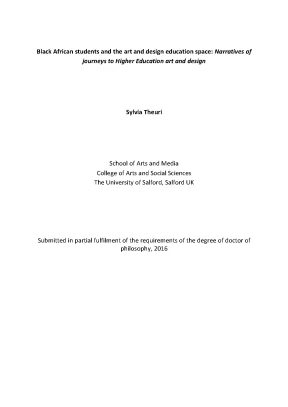
Tải xuống để đọc toàn bộBlack African students and the art and design education space: Narratives of journeys to Higher Education art and design Sylvia Theuri School of Arts and Media College of Arts and Social Sciences The University of Salford, Salford UK Submitted in partial fulfilment of the requirements of the degree of doctor of philosophy, 2016 Table of Contents LIST OF TABLES AND ILLUSTRATIONS .1 Rationale for study .4 Outline of thesis .5 Definition of key terms.2 Historical, cultural and contextual circumstances affecting Black African communities in Britain 12 2.3 Engagement and Participation in art and design .1 Cultural diversity strategies in the art and design sector in the UK .2 Art and Black communities.3 Filling ‘gaps-between worlds’ .4 Art and design; an African Perspective .4 Black African Student participation in and experience of Higher Education .1 Rates and patterns of participation .2 Factors affecting student choice .3 Output and Attainment (outcomes) .5 Black African Student participation in and experience of Higher Education art and design 46 2.1 Rates and patterns of participation .2 Factors affecting student choice .3 Interview and admissions process.4 Student experiences of HE art and design .5 Output and attainment (outcomes) .6 Art and design Widening Participation strategies .7 Conclusion to Literature review .2 Theory of cultural reproduction .3 Critical Race Theory.4 Culture as understood within a theory of Multiculturalism .6 A Post-Black theory .7 Conclusion to Theoretical Frameworks. 82 4 METHODS AND METHODOLOGY .2 Research background, aims and research questions .3 Epistemological and ontological positions .4 Why a Qualitative Research Design? .1 Focused on understanding experiences and amplifying marginalised voices .2 Emphasis on subjectivity and the researcher’s place in the research .5 What is Narrative inquiry? .6 Utilising a narrative inquiry methodology .1 Personal journey: ‘I felt as though I did not belong’.2 Accessing the field .3 Recruiting Interview participants .6 Approach to participants .10 Analytical approach – narrative analysis .3 Dialogical/Performative Analysis .1 Thinking through the presentation of narratives .2 Analysis and presentation of data – the process undertaken .3 Techniques for enhancing the quality of analysis .4 The credibility of the researcher .13 Methodological limitations of the study .2 Journey as a metaphor .4 An undeviating journey .5 An arduous journey .6 Conclusion to participants’ narratives. 147 6 IMPEDING BARRIERS TO PARTICIPATION IN AND EXPERIENCES OF HE ART AND DESIGN .2 Master Narrative: art and design is not seen as part of the African culture (individual and familial) .1 Low status afforded to art and design practices and art and design education .2 The art and design space as a ‘white’ space .3 Limited engagement, discussion and viewing of art and design work (individual and familial) 163 6.1 Art and design not seen as a viable option given societal inequalities (familial) .2 Differing outlooks on life between parent and child (individual and familial) .1 Eurocentric nature of the art and design curriculum .2 Lack of support, advice and encouragement from art and design teachers and tutors 195 6. 204 7 STRATEGIES WHICH HAVE FACILITATED PARTICIPATION IN AND NAVIGATION WITHIN HE ART AND DESIGN.2 Overcoming barriers through Individual Aspiration, Resistance and Self-efficacy .1 Overcoming familial based barriers.2 Overcoming Institutional based barriers .3 Parental Support and Encouragement to pursue an art and design education (familial) .1 Pedagogies of the home - instilling aspirations and providing positive support .2 Pedagogies of the home - art and design practices in the home.4 Individual and familial knowledge and understanding of routes into HE art and design .1 Support and encouragement from art and design teachers and tutors .2 Participating in ‘Widening Participation’ .3 Diverse art and design education .6 Art and design from an African perspective (individual and familial).1 Barriers impeding participation in and experiences of HE art and design .2 Strategies facilitating participation in and navigation within HE art and design .3 Suitability of advice and strategies for participation and progression in HE art and design 275 8.4 Contribution to previous literature.
284 vi LIST OF TABLES AND ILLUSTRATIONS Table 1: Barriers experienced by participants……………………………………………………………………………….151 Table 2: Facilitating strategies experienced by participants……………………………………………………………209 APPENDICES 1 Participant Demographics……………………………………………………………………………………………………….306 3 Sample Interview Guides…………………………………………………………………………………………………….307-315 4 Black African Student HE participation Statistics and Pie Chart…………………………………………….316-317 5 Participant Narratives …………………………………………………………………………………………………………………318 6 Toyin Analysis…………………………………………………………………………………………………………………………….345-347 vii ACKNOWLEDGMENTS I am thankful to God for guiding me, giving me the confidence and strength, and helping me to conclude my PhD studies. To Him are the thanks and the glory. I dedicate this work to my husband Eustus Theuri whose love, support and continuous encouragement kept me going even during the hardest of times. I also dedicate this work to my mother Dr Mary Andhoga who has always inspired me to aim for the best and has always seen my potential and abilities even when I could not.
I would like to express my sincerest and deepest thanks and immense gratitude to Dr Jacques Rangasamy my main supervisor who believed in my research from the very beginning and whose constant support and critical guidance helped me to progress even when I thought it was impossible. I would also like to wholeheartedly thank my co- supervisor Dr Gaynor Bagnall for her guidance, suggestions and valuable and constructive feedback on this thesis. I am exceptionally grateful to all the participants who willingly and unsparingly gave of their time, their perspectives and their perceptions and who made this research possible. Finally I extend my thanks all my dear friends and family who supported me and encouraged me throughout this PhD journey.
I am truly blessed to have you all in my life. viii ABSTRACT This qualitative research, with a narrative inquiry approach, focuses on the Black African sector of our community and explores how Black African students access, enter and progress through HE Art and Design and what facilitates this progress. It also questions what limiting barriers are visible in the art and design educational journeys of the participants in the study and to what extent these barriers have had an impact on the participants’ educational journeys. As a result, this study has included both students and graduates who studied art and design at Higher Education (HE) as well those who considered studying art and design at HE but chose not to.
Within this research I will define ‘Black African’ as all those who would situate their heritage as being sub-Saharan African as opposed to Caribbean. This study has analysed a range of narratives given by 14 participants of Black African heritage in regards to their experiences of access and entry to and progression in HE Art and Design. This is a small scale research project in which the focus is on depth of understanding and the production of rich data with thick descriptions. This research does not look to generalise to all Black African students, but to provide theoretical insight into the experiences of a small group of this population Research on Black and Minority Ethnic (BME) HE art and design students overall and specifically Black African HE art and design students in the UK in terms of access, entry, progression, and overall HE experience is currently lacking in the field (Okon 2005), therefore this specific group is considered in order to bring it out of its anonymity within the field of HE Art and Design.
1 1 INTRODUCTION This thesis is focused on understanding Black African students’ participation in and experiences of HE art and design. Currently there is existing research looking at participation in and experiences of HE art and design for Black, Asian and Minority Ethnic (BAME) students collectively, but none looking specifically at Black African students. The research has looked at this specific group as opposed to the wider BAME communities in order to bring it out of its anonymity within the field of Higher Education (HE) art and design. I would argue that this group deserves a more focused investigation than is generally offered to them, one that is sensitive to their cultural conditioning as well as their aspirations.
This study is a qualitative investigation into the educational experiences of a selected group of Black African art and design students and graduates (described throughout as students), who studied in a range of institutions across England. A total of 14 participants were interviewed and within this sample; 10 participants studied art and design up to Higher Education (HE), 2 participants studied art and design up to post-16, and 2 participants studied art and design up to GCSE (please see appendix 1 for participant demographics). All participants had experienced studying art and design in the UK in at least one of three levels of education; secondary, tertiary or HE (at HE the focus was on undergraduate level not postgraduate level).This research is a focused interpretation of participant voices and the experiences of unique individuals. There are limited generalisations to draw from this study; however there are recommendations that deserve consideration and interpretation.
My personal motivation for undertaking the research comes partly from having studied art and design at GCSE and A Level, and then completed an art and design foundation course and a degree in History of Art. It comes partly from having completed a PGCE in art and design and taught art and design at secondary school level for two years. I am therefore a Black African woman who has received an art and design education (my educational journey is discussed further on pg 100), and who has educated others in art and design. I was therefore very interested in hearing the educational experiences of Black African art and design students.
In my art and design teaching journey I have seen and experienced the 2 challenges of working towards creating a more inclusive and diverse art and design educational experience for students. I recall during my PGCE year attempting to incorporate art and design from a diverse range of cultures into schemes of work. On the PGCE course we were encouraged and trained to challenge the pattern of largely ‘dead white males’ that were consistently taught in many art and design classrooms. One training school I was placed in appeared, on the surface, to be open to this, however in practice it proved much more difficult to deliver.
This school had schemes of work that were predominantly Eurocentric in focus and the teachers were largely uncomfortable at the changes and interventions I wanted to make, preferring instead to continue to use their existing resources. This made it very difficult for me as a trainee teacher to include art and design from other cultures outside of the West, and instead I found myself consistently teaching only Western art and design to classes which had large numbers of BAME students. Despite wanting to challenge a Eurocentric curriculum I found myself adding to the educational experiences that these students could talk about, where their cultures were not recognised in the art and design classroom. At the start of this research process, I anticipated that I would recruit research participants predominantly through emailing educational institutions (specifically art and design course leaders and subject tutors, student unions and Afro-Caribbean societies).
I hoped to gain a large enough number of responses from at least one institution in order to do a case study. It was deemed practical and sensible to access my research sample from the universities where Black African art and design students were most likely to be studying (Bhopal 2010b). Therefore in the first instance when searching for participants, several HEIs which had been identified through HESA statistics as having large numbers of Black African art and design students consistently since 2006i, were selected, contacted and asked to forward my research call for participants to their current students and alumni. However using this strategy revealed barriers to my research; in particular a refusal of access to potential participants.
Nội dung được bảo vệ bản quyền — Tải xuống đầy đủ
Trích dẫn luận án này
Sylvia Theuri (2016). Final thesis sylvia theuri march [Luận án tiến sĩ, The University of Salford]. LuanAn.net. https://luanan.net/giao-duc-hoc/final-thesis-sylvia-theuri-march
Câu hỏi thường gặp
Luận án "Final thesis sylvia theuri march" nghiên cứu về vấn đề gì?
Luận văn tốt nghiệp của Sylvia Theuri, tháng 3.
Luận án "Final thesis sylvia theuri march" được bảo vệ tại trường nào?
Luận án này được bảo vệ tại The University of Salford. Năm bảo vệ: 2016.
Luận án "Final thesis sylvia theuri march" thuộc chuyên ngành gì?
Luận án "Final thesis sylvia theuri march" thuộc chuyên ngành Art and Design Education. Danh mục: Giáo Dục Học.
Luận án "Final thesis sylvia theuri march" có bao nhiêu trang?
Luận án "Final thesis sylvia theuri march" có 355 trang. Bạn có thể xem trước một phần tài liệu ngay trên trang web trước khi tải về.
Cách tải luận án "Final thesis sylvia theuri march" về máy như thế nào?
Để tải luận án về máy, bạn nhấn nút "Tải xuống ngay" trên trang này, sau đó hoàn tất thanh toán phí lưu trữ. File sẽ được tải xuống ngay sau khi thanh toán thành công. Hỗ trợ qua Zalo: 0559 297 239.