Dissertation manual revised 10 26 2011 12pt
Sổ tay luận văn (phiên bản sửa đổi 26/10/2011, font chữ 12pt) cung cấp hướng dẫn chi tiết cho việc hoàn thành luận văn của bạn một cách chuyên nghiệp.
Columbia Seminary and School of Ministries
Doctor of Ministry
Luan An
Sổ tay hướng dẫn luận án
Năm xuất bản
Số trang
76
Thời gian đọc
12 phút
Lượt xem
0
Lượt tải
0
Phí lưu trữ
40 Point
Tổng quan nhanh
- Chủ đề:
- 1. Hướng dẫn luận văn: Khám phá nghiên cứu tiến sĩ D.Min
- Số trang:
- 76 trang
- Trường:
- Columbia Seminary and School of Ministries
- Chuyên ngành:
- Doctor of Ministry
- Tác giả:
- Luan An
- Năm:
- 2011
Tóm tắt nội dung luận án
I. Hướng dẫn luận văn Khám phá nghiên cứu tiến sĩ D
Luận án tiến sĩ D.Min là một phần quan trọng của chương trình học. Giai đoạn này thường gây lo lắng cho nhiều sinh viên. Tuy nhiên, đây cũng là công việc đòi hỏi cao nhất, mang lại nhiều phần thưởng nhất. Thiết kế, nghiên cứu, viết luận án giúp phát triển hiểu biết, kỹ năng, kỷ luật mới. Nghiên cứu là yếu tố thiết yếu cho các nghiên cứu cấp tiến sĩ. Nó cần thiết cho hiệu quả mục vụ cấp tiến sĩ. Phần này giới thiệu vai trò nghiên cứu trong chương trình D.Min. Đây là một hướng dẫn luận văn toàn diện.
1.1. Luận án D.Min Mục tiêu và ý nghĩa
Bằng tiến sĩ là phần thưởng học thuật cao nhất. Các nghiên cứu tiến sĩ có hai hình thức: tiến sĩ nghiên cứu và tiến sĩ chuyên nghiệp. Tiến sĩ nghiên cứu phát triển kỹ năng nghiên cứu của học giả. Mục tiêu là thúc đẩy tri thức thuần túy. Bằng Th.D. hoặc Ph.D. thường được cấp cho loại này. Tiến sĩ D.Min là tiến sĩ chuyên nghiệp. Nó tập trung vào nghiên cứu ứng dụng. Mục đích là nâng cao thực hành nghề nghiệp. Nó tăng cường hiệu quả trong mục vụ. Chương trình D.Min có tỷ lệ sinh viên hoàn thành luận án cao.
1.2. Bản chất nghiên cứu D.Min Tiếp cận học thuật
Nghiên cứu D.Min khác với nghiên cứu Ph.D. Nghiên cứu tiến sĩ Ph.D. thường tập trung vào lý thuyết. Nghiên cứu D.Min tập trung vào ứng dụng thực tế. Nó giải quyết các vấn đề trong mục vụ. Các tiếp cận nghiên cứu bao gồm định lượng, định tính và hỗn hợp. Nghiên cứu định lượng sử dụng dữ liệu số. Nghiên cứu định tính khám phá ý nghĩa, kinh nghiệm. Phương pháp hỗn hợp kết hợp cả hai. Việc lựa chọn phương pháp phù hợp là rất quan trọng.
1.3. Các loại thiết kế nghiên cứu Lựa chọn phù hợp
Nhiều loại thiết kế nghiên cứu có sẵn. Nghiên cứu thư mục phân tích tài liệu hiện có. Nghiên cứu mô tả mô tả một hiện tượng. Nghiên cứu đánh giá đo lường hiệu quả. Nghiên cứu thử nghiệm kiểm tra giả thuyết. Đánh giá nghiên cứu đòi hỏi sự cẩn trọng. Nghiên cứu phải có tính hợp lệ và độ tin cậy. Dữ liệu phải được thu thập một cách có hệ thống. Phân tích phải khách quan. Đây là những nền tảng để viết một cẩm nang luận án chất lượng.
II. Cấu trúc luận văn Kế hoạch D
Việc cấu trúc luận án tiến sĩ D.Min cần theo một kế hoạch rõ ràng. Một cấu trúc luận văn tốt đảm bảo tính logic, mạch lạc. Nó giúp người đọc dễ dàng theo dõi lập luận. Phần này mô tả cách tiếp cận năm chương tiêu chuẩn. Nó cũng thảo luận về các đặc điểm của một chủ đề nghiên cứu hiệu quả. Việc lựa chọn chủ đề phù hợp là bước khởi đầu quan trọng. Nó định hình toàn bộ quá trình viết luận văn. Luận án cần có một nền tảng vững chắc.
2.1. Cấu trúc luận án năm chương Tổng quan đề cương
Luận án thường có năm chương. Chương Một giới thiệu nghiên cứu. Nó nêu bật vấn đề, mục tiêu, câu hỏi nghiên cứu. Chương Hai tổng quan tài liệu liên quan. Nó xác định khoảng trống trong nghiên cứu hiện có. Chương Ba mô tả phương pháp luận. Nó giải thích cách thu thập, phân tích dữ liệu. Chương Bốn trình bày kết quả nghiên cứu. Chương Năm đưa ra kết luận, khuyến nghị. Cấu trúc này cung cấp một khuôn khổ. Nó giúp tổ chức công việc nghiên cứu hiệu quả.
2.2. Chủ đề nghiên cứu tốt Tiêu chí lựa chọn phù hợp
Một chủ đề nghiên cứu tốt có nhiều đặc điểm. Chủ đề phải có tính khả thi, phù hợp với chương trình D.Min. Nó cần có ý nghĩa thực tế, liên quan đến mục vụ. Chủ đề phải dựa trên nghiên cứu tiền lệ. Nó nên giải quyết các 'điều chưa biết thực nghiệm' hoặc câu hỏi nghiên cứu cụ thể. Tránh các chủ đề quá rộng hoặc quá hẹp. Chủ đề cần đủ mới mẻ. Nó phải đóng góp vào lĩnh vực kiến thức. Việc xác định câu hỏi nghiên cứu rõ ràng là then chốt.
2.3. Phương pháp luận báo cáo Hướng dẫn cơ bản
Phần phương pháp luận trình bày thiết kế nghiên cứu. Nó mô tả các công cụ, quy trình thu thập dữ liệu. Phần này giải thích cách phân tích dữ liệu. Báo cáo kết quả nghiên cứu cần rõ ràng, khách quan. Trình bày dữ liệu phải có hệ thống. Cuối cùng, kết luận và khuyến nghị được rút ra. Kết luận trả lời các câu hỏi nghiên cứu. Khuyến nghị đề xuất hành động tiếp theo. Phần này tổng kết đóng góp của luận án.
III. Phương pháp nghiên cứu Chọn lựa thu thập dữ liệu D
Việc lựa chọn phương pháp nghiên cứu phù hợp rất quan trọng. Nó quyết định cách thu thập, phân tích dữ liệu. Chương này trình bày các phương pháp phổ biến. Từ nghiên cứu thư mục đến nghiên cứu tình huống. Mỗi phương pháp có những điểm mạnh, điểm yếu riêng. Hiểu rõ chúng giúp đảm bảo tính hợp lệ của kết quả. Nó cũng giúp nâng cao chất lượng luận án. Quyết định phương pháp phải phù hợp với câu hỏi nghiên cứu. Đây là một cẩm nang luận án thiết yếu cho người làm nghiên cứu.
3.1. Các phương pháp nghiên cứu chính Từ thư mục đến dân tộc học
Nghiên cứu thư mục phân tích tài liệu hiện có. Nó tổng hợp, đánh giá kiến thức đã có. Nghiên cứu dân tộc học tập trung vào văn hóa, nhóm người. Nó quan sát, phỏng vấn, thu thập dữ liệu trong môi trường tự nhiên. Lý thuyết nền (Grounded Theory) phát triển lý thuyết từ dữ liệu. Nó không bắt đầu bằng giả thuyết có sẵn. Các phương pháp này cung cấp cái nhìn sâu sắc. Chúng giúp xây dựng hiểu biết mới.
3.2. Nghiên cứu khảo sát Thiết kế chọn mẫu và triển khai
Nghiên cứu khảo sát thu thập dữ liệu từ nhiều đối tượng. Việc chọn mẫu phải cẩn thận. Các phương pháp chọn mẫu bao gồm lấy mẫu ngẫu nhiên, hệ thống, phân tầng, thuận tiện. Thiết kế công cụ khảo sát là rất quan trọng. Có thể sử dụng công cụ tiêu chuẩn hoặc tự thiết kế. Các mục khảo sát phải rõ ràng, không mơ hồ. Tỷ lệ phản hồi ảnh hưởng đến tính đại diện. Cần cung cấp mẹo để thiết kế khảo sát hiệu quả.
3.3. Nghiên cứu tình huống đánh giá Phương pháp ứng dụng
Nghiên cứu tình huống tập trung vào một trường hợp cụ thể. Nó cung cấp sự hiểu biết sâu sắc về một hiện tượng. Nó thường sử dụng nhiều nguồn dữ liệu. Nghiên cứu đánh giá đo lường hiệu quả của một chương trình hoặc can thiệp. Nó đánh giá liệu mục tiêu có đạt được không. Các phương pháp này đều có tính ứng dụng cao. Chúng giúp giải quyết các vấn đề thực tế trong mục vụ.
IV. Phân tích dữ liệu Kỹ thuật giải mã kết quả luận án
Phân tích dữ liệu là giai đoạn quan trọng của nghiên cứu. Nó biến dữ liệu thô thành thông tin có ý nghĩa. Chương này trình bày các kỹ thuật phân tích. Nó bao gồm dữ liệu định tính và định lượng. Kỹ năng phân tích tốt giúp giải mã kết quả luận án. Nó đảm bảo các phát hiện có giá trị. Việc trình bày kết quả phải rõ ràng, chính xác. Đây là bước then chốt trong quá trình nghiên cứu học thuật. Cần áp dụng phương pháp phù hợp.
4.1. Phân tích dữ liệu định tính Kỹ thuật nội dung
Dữ liệu định tính thường là văn bản, ghi chú phỏng vấn. Phân tích nội dung là một kỹ thuật phổ biến. Nó xác định các chủ đề, mẫu hình trong dữ liệu. Phương pháp so sánh liên tục cũng được sử dụng. Nó liên tục so sánh các phần dữ liệu. Mục đích là phát triển các khái niệm, danh mục. Phân tích dữ liệu định tính đòi hỏi sự chú ý tỉ mỉ. Nó giúp khám phá ý nghĩa sâu sắc.
4.2. Thống kê dữ liệu định lượng Khái niệm cơ bản
Phân tích thống kê xử lý dữ liệu số. Các khái niệm cơ bản bao gồm quần thể, mẫu, biến số. Biến số có thể là định danh, thứ tự, khoảng, tỷ lệ. Các loại phân phối dữ liệu cũng quan trọng. Hiểu các khái niệm này là nền tảng. Nó giúp lựa chọn phương pháp phân tích phù hợp. Phân tích định lượng cung cấp bằng chứng có thể đo lường. Đây là một phần thiết yếu của phương pháp nghiên cứu.
4.3. Thống kê mô tả báo cáo Trình bày hiệu quả
Thống kê mô tả tóm tắt đặc điểm dữ liệu. Các phép đo xu hướng trung tâm bao gồm trung bình, trung vị, mode. Các phép đo biến thiên bao gồm phạm vi, độ lệch chuẩn. Điểm chuẩn và tương quan cũng được sử dụng. Báo cáo dữ liệu thống kê cần rõ ràng. Sử dụng bảng, biểu đồ, đồ thị giúp trình bày trực quan. Chúng làm cho dữ liệu dễ hiểu hơn. Trình bày hiệu quả giúp truyền đạt kết quả nghiên cứu.
V. Quy trình nộp luận văn Từ đề xuất đến hoàn thiện D
Quy trình hoàn thành và nộp luận án D.Min bao gồm nhiều bước. Nó bắt đầu từ việc phát triển đề xuất. Sau đó là bảo vệ, chỉnh sửa, cuối cùng là nộp bản cuối cùng. Mỗi bước đều cần sự chuẩn bị cẩn thận. Sự hợp tác với giám đốc hướng dẫn là chìa khóa thành công. Việc tuân thủ yêu cầu nộp bài rất quan trọng. Điều này đảm bảo quá trình diễn ra suôn sẻ. Đây là một cẩm nang luận án chỉ dẫn từng bước.
5.1. Đề xuất luận án Hợp tác với giám đốc hướng dẫn
Giám đốc hướng dẫn đóng vai trò quan trọng. Họ cung cấp hướng dẫn, phản hồi. Đề xuất luận án trình bày kế hoạch nghiên cứu. Nó bao gồm chủ đề, câu hỏi, phương pháp. Đề xuất cần được bảo vệ trước một ủy ban. Việc bảo vệ đề xuất là một bước phê duyệt quan trọng. Nó xác nhận tính khả thi của dự án. Chuẩn bị kỹ lưỡng cho buổi bảo vệ đề xuất.
5.2. Bảo vệ luận án Chuẩn bị và thực hiện
Bảo vệ luận án là buổi đánh giá cuối cùng. Sinh viên trình bày nghiên cứu, trả lời câu hỏi. Buổi bảo vệ thể hiện khả năng nghiên cứu độc lập. Cần chuẩn bị kỹ lưỡng cho buổi này. Hiểu rõ nội dung luận án là điều cần thiết. Thực hành trình bày, trả lời câu hỏi giúp tự tin hơn. Ủy ban đánh giá chất lượng toàn bộ công trình.
5.3. Nộp luận án đã duyệt Hoàn tất thủ tục chính thức
Sau khi luận án được duyệt, cần hoàn tất thủ tục. Luận án phải được định dạng chính xác. Các biểu mẫu cần thiết phải được nộp đầy đủ. Chúng bao gồm thỏa thuận phân phối vi phim, danh sách kiểm tra thư viện. Kiểm tra kỹ lưỡng danh sách các yêu cầu nộp bài. Việc hoàn tất thủ tục đảm bảo luận án được lưu trữ. Nó cũng đảm bảo bằng cấp được cấp. Đây là bước cuối cùng trong hành trình học thuật.
VI. Định dạng đạo văn Hướng dẫn viết trích dẫn chuẩn D
Việc tuân thủ các nguyên tắc viết, định dạng là tối quan trọng. Nó đảm bảo tính chuyên nghiệp, học thuật cho luận án. Chương này cung cấp hướng dẫn định dạng và các khuyến nghị về phong cách. Nó cũng nhấn mạnh các cân nhắc đạo đức. Đặc biệt là khi nghiên cứu trên đối tượng con người. Việc viết luận văn phải tuân thủ nghiêm ngặt các quy tắc. Điều này bao gồm cả phong cách trích dẫn để tránh đạo văn. Cần xem xét các phụ lục để biết chi tiết.
6.1. Nghiên cứu trên đối tượng con người Đạo đức học
Nghiên cứu liên quan đến đối tượng con người có các yêu cầu đặc biệt. Phải có sự đồng ý có hiểu biết (Informed Consent). Điều này bảo vệ quyền và phúc lợi của người tham gia. Cần tuân thủ các nguyên tắc đạo đức. Ủy ban xem xét thể chế (IRB) phê duyệt các giao thức. Đảm bảo tính bảo mật và ẩn danh. Tuân thủ đạo đức nghiên cứu là bắt buộc. Nó đảm bảo tính toàn vẹn của dự án.
6.2. Hướng dẫn phong cách kỹ thuật Chuẩn bị bản thảo
Luận án cần tuân thủ các hướng dẫn về phong cách. Bao gồm việc sử dụng ngôn ngữ, cấu trúc câu. Các hướng dẫn kỹ thuật đề cập đến lề, phông chữ, giãn dòng. Sách 'A Manual for Writers' của Kate Turabian là tài liệu tham khảo chính. Nó cung cấp các tiêu chuẩn thống nhất. Tuân thủ giúp luận án trông chuyên nghiệp. Nó cũng giúp dễ đọc và dễ đánh giá. Đây là một phần quan trọng của việc viết luận văn.
6.3. Trích dẫn định dạng Tuân thủ quy tắc Turabian
Việc trích dẫn chính xác là bắt buộc. Nó tránh đạo văn và tôn trọng nguồn gốc ý tưởng. Quy tắc Turabian cung cấp hướng dẫn chi tiết. Nó bao gồm cách ghi chú, danh mục tham khảo. Định dạng và phân trang trong MS Word 2010 cũng được hướng dẫn. Các trang mẫu trong phụ lục minh họa cách trình bày. Bao gồm trang bìa, trang phê duyệt, mục lục. Hiểu và áp dụng Turabian là thiết yếu cho mọi luận án.
Tải xuống file đầy đủ để xem toàn bộ nội dung
Tải đầy đủ (76 trang)Trích đoạn nội dung luận án
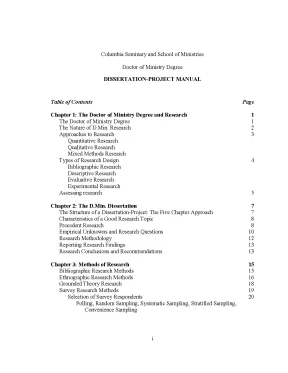
Tải xuống để đọc toàn bộColumbia Seminary and School of Ministries Doctor of Ministry Degree DISSERTATION-PROJECT MANUAL Table of Contents Page Chapter 1: The Doctor of Ministry Degree and Research 1 The Doctor of Ministry Degree 1 The Nature of D. Research 2 Approaches to Research 3 Quantitative Research Qualitative Research Mixed Methods Research Types of Research Design 4 Bibliographic Research Descriptive Research Evaluative Research Experimental Research Assessing research 5 Chapter 2: The D. Dissertation 7 The Structure of a Dissertation-Project: The Five Chapter Approach 7 Characteristics of a Good Research Topic 8 Precedent Research 8 Empirical Unknowns and Research Questions 10 Research Methodology 12 Reporting Research Findings 13 Research Conclusions and Recommendations 13 Chapter 3: Methods of Research 15 Bibliographic Research Methods 15 Ethnographic Research Methods 16 Grounded Theory Research 18 Survey Research Methods 19 Selection of Survey Respondents 20 Polling, Random Sampling, Systematic Sampling, Stratified Sampling, Convenience Sampling i ii Design of the Survey Instrument 21 Standardized Instruments, Researcher Designed Instruments, Types of Survey Items Sample Rate of Response 22 Presentation of the Survey Instrument, Tips for Designing a Survey Instrument Case Study Research Methods 24 Evaluative Research Methods 25 Chapter 4: Analysis of Research Data 26 Analysis of Verbal Data 26 Content Analysis, Constant Comparison Statistical Analysis of Numeric Data 27 Basic Concepts in Statistics 27 Populations, Samples, and Variables, Types of Measurements, Types of Distributions Descriptive Statistics 29 Measures of Central Tendency, Measures of Variability, Standard Scores, Correlation Reporting Statistical Data 31 The Use of Tables, Charts, and Graphs Chapter 5: From Proposal to Dissertation 32 Working with a Dissertation Director 32 The Dissertation-Project Proposal 33 The Proposal Defense 34 The Dissertation Oral Review 35 Submitting the Approved Dissertation 36 Chapter 6: Guidelines for Dissertation Writing 38 Research on Human Subjects 38 Stylistic Guidelines 39 Technical Guidelines 40 Appendices A. Basic Outline for a Dissertation-Project Proposal 43 B.
Basic Outline for a Dissertation-Project 45 C. Notes on Kate Turabian’s A Manual for Writers of Research Papers, Theses, and Dissertations, Seventh Edition 47 D. Turabian Formatting and Pagination in MS Word 2010 49 E. Sample Pages 51 Sample Title Sample Approval Sample Table of Contents iii Sample Version Statement Sample First Page of a Chapter or Appendix Sample Page with Three Levels of Headings and a Content Footnote Sample First Page of a Reference List F.
Sample Survey Instrument Items, Their Use, and Analysis 59 Sample Instrument Items The Use and Analysis of Survey Instrument Items Analyzing Verbal Data Analyzing Numeric Data G. Informed Consent Form for Research on Human Subjects 68 H. Final Edit Checklist 69 I. Forms to Be Submitted with the Approved Dissertation 70 Microfilm Distribution Agreement for TREN Library Checklist—Binding Order Chapter 1: THE DOCTOR OF MINISTRY DEGREE AND RESEARCH So, you’ve begun to think about the dissertation-project that is part of your Doctor of Ministry studies.
The dissertation phase of the program typically generates the most anxiety among D. students and it is true that across D. programs nationally, a majority of students who fail to complete their degree are A.—All But Dissertation. You should know, however, that CIU’s D.
program has a much higher than average percentage of students who complete their dissertation and receive their degree. You also should know that the dissertation phase of the D. probably will be both the most demanding and the most rewarding work encountered in your academic career. In designing, researching, and writing a dissertation, you will develop understandings, skills, and disciplines previously unattained.
Research is essential to doctoral studies and to doctoral levels of effectiveness in ministry. This chapter provides a basic introduction to the role of research in the D. program at CIU. The Doctor Of Ministry Degree The doctoral degree is the highest academic award granted by Western colleges and universities.
Doctoral studies take two forms, the research doctorate and the profes- sional doctorate. The research doctorate is designed to develop the research skills of the scholar, whether the discipline field is philosophy, history, or one of the sciences. The focus of the research doctorate is the advancement of knowledge, thus the degree is awarded for “pure” or academic research. The degree typically awarded by universities offering research doctorates is the Doctor of Philosophy (Ph.
A research doctorate in theology leads to the Th. Doctoral recognition in professional fields may pursue “pure” research interests and lead to a Ph. degree, or may focus on applied research designed to enhance the practice of the profession. Doctoral programs focused on applied research—i., profes- sional doctorates—may lead to the Juris Doctor (J.), Doctor of Education (Ed.D), Doctor of Business Administration (D.), or another degree appropriate to the professional discipline.
While the Doctor of Theology (Th.) has a long and well-established history, the Doctor of Ministry (D.) was first awarded in 1964 and was first recognized by the Association of Theological Schools in the United States and Canada (ATS) in 1970. As a professional doctorate, the focus of D. study and research is the practice of ministry. Due to its brief history, more variation currently exists among D.
programs than among Th. 1 2 It is important to note that the distinction between research and professional doctoral programs is the focus of study and research, rather than their rigor. The standard of doctoral education is the same, whether the focus is “pure” research—i., research primarily of academic interest—or applied research. The Nature Of D.
Research It is helpful to bear in mind that research is disciplined inquiry. Both aspects of this definition are important. Research is first and foremost inquiry; it always involves asking and answering questions. This bears important implications for those seeking to identify a research topic.
It means, for instance, that a topic framed in the form "To prove that.," or "To show that.," is not appropriate as research. Valid topics, by contrast, may be framed "To learn what.," "To observe how. A reliable way to test the appropriateness of a prospective research topic is to express it in interrogative form. The interrogative form clearly belies the intent of the topic, whether to inquire or to build a case for a previously espoused position.
Topics intent on inquiry may constitute valid research projects; those with other intents never will. As inquiry, research is disciplined by logical and empirical consistency. The rigor of any research design is tested logically. The logic of well designed research forms a seamless whole, from the statement of the problem, through the methods employed, to the conclusions derived.
When a research design lacks logical rigor, the research is vulnerable to alternative explanations (i., "rival hypotheses") which detract from--and may destroy--the usefulness of findings and conclusions. The researcher is responsible to design the research with such care that rival hypotheses are precluded, or are incorporated into the research design. Since Doctor of Ministry education focuses the practice of ministry, it is appro- priate that this program of study should culminate in the dissertation-project. The dissertation-project is so named because it combines a dual focus on research and minis- try practice.
dissertation-project will engage the student in research directly applied to the student's present or prospective ministry. Students who emphasize the term "project" in conceptualizing their task, often submit proposals which describe valid and worthwhile endeavors, but fail to qualify as research. Typical of this group would be a proposal to develop a curriculum, plan a preaching schedule, or develop a church planting strategy for a specific community. What these projects lack is field (or ministry) involvement.
Each constitutes one element of an appropriate dissertation-project exercise, but must be expanded to include specific engagement in ministry. The curriculum must be field tested with a sample population; the preaching schedule must be implemented and evaluated on the basis of pre-estab- lished criteria; the church planting strategy must be grounded in an ethnographic study of the target community. 3 The dissertation-project submitted will be a carefully written document with a text at least 125 and no more than 200 pages in length. The document will describe the nature of the problem explored, the methodology employed, the research findings, and the conclusions reached.
The dissertation-project will reflect careful scholarship, including perceptive observation and incisive critique, grounded in a thorough acquaintance with the primary and cognate discipline fields. Yet the dissertation-project is more than a formal research paper, just as the Doctor of Ministry program is different from studies toward a research doctorate. As doctor of ministry education seeks to focus theological reflection on the practice of ministry, so the dissertation-project brings theological reflection to bear on the findings of research for the enhancement of ministry practice. The student, therefore, will not offer detached analysis of a sterile, academic issue, but will deal carefully and reflec- tively with matters vitally relevant to the practice of ministry.
At CIU, the dissertation- project is expected to demonstrate how biblical theology illuminates and critiques ministry practice. Since biblically illuminated research always has significance beyond the local context of the researcher, the dissertation-project will include implications and recommendations for other ministry settings. Approaches To Research Formal research, from the Enlightenment through the mid-20th century was guided by Modernist values and assumptions. Reality is stable and is measurable, observation can be pursued with detachment, and truth is rational and is discernable through disciplined observation and reason.
This led to an approach to research which seeks to express reality as numbers which can be analyzed statistically. Appropriately, this approach is known as Quantitative Research. In quantitative research, data are numerical, analysis is statistical, and methods are objective. Replicability is an important aspect of research design since findings are verified when replicated by other researchers.
Most scientific advances are the fruit of quantitative research and quantitative assump- tions continue to dominate research in the natural sciences. With increasing attention to human issues in the social sciences and the rise of the post-modern critique of Modernist assumptions, an alternative approach to research was proposed. The variable nature of human relationships and social structures, as well as divergent views of truth and morals led to abandonment of absolutist understandings of reality central to the Modernist project and to quantitative research. Constructionist epistemologies precluded any assumption of an unbiased observer.
From numerical precision, attention was redirected to qualities present in the environment, in human interactions, and in individual constructions of “truth” and “reality.” It also is appropriate that this approach is known as Qualitative Research. In qualitative research, natural settings are respected, processes and relationships, not only quantifiable variables, are of interest, data are verbal, analysis employs interpretative methods, and findings typically 4 are not replicable. Qualitative research assumptions and methods are widely embraced within the social sciences. Research in ministry rarely is purely either quantitative or qualitative; most research in ministry employs a Mixed Methods Approach.
This name is misleading, however, since the differences between quantitative and qualitative research are less methodological than philosophical. It is no more necessary to embrace the naturalistic assumptions often associated with quantitative research than to subscribe to the epistemo- logical relativism that underlies much current qualitative research. Truth and reality are grounded in the person of God himself. The world God created can be objectively observed, as evidenced by the concurrence of multiple observers.
Yet, humans and human society hold value that extends beyond the natural specifically because God created men and women in his own image. Research is possible and profitable because the universe God created is rationally structured; attention to social contexts and human choices is appropriate because of the imago dei. It should be noted, furthermore, that very few research methods are solely quantitative or qualitative, grounded theory re- search being the principal exception. Types Of Research Design In order to pursue research in ministry effectively, it is useful to discriminate various types, or genre, of research design.
Recognizing the design of research appropri- ate to a project affords guidance in the selection of research methods. It is helpful to discriminate four discrete types of research design.
Nội dung được bảo vệ bản quyền — Tải xuống đầy đủ
Trích dẫn luận án này
Dissertation manual revised 10 26 2011 12pt (2011) [Luận án tiến sĩ, Columbia Seminary and School of Ministries]. LuanAn.net. https://luanan.net/giao-duc-hoc/dissertation-manual-revised-10-26-2011-12pt
Câu hỏi thường gặp
Luận án "Dissertation manual revised 10 26 2011 12pt" nghiên cứu về vấn đề gì?
Sổ tay luận văn (phiên bản sửa đổi 26/10/2011, font chữ 12pt) cung cấp hướng dẫn chi tiết cho việc hoàn thành luận văn của bạn một cách chuyên nghiệp.
Luận án "Dissertation manual revised 10 26 2011 12pt" được bảo vệ tại trường nào?
Luận án này được bảo vệ tại Columbia Seminary and School of Ministries. Năm bảo vệ: 2011.
Luận án "Dissertation manual revised 10 26 2011 12pt" thuộc chuyên ngành gì?
Luận án "Dissertation manual revised 10 26 2011 12pt" thuộc chuyên ngành Doctor of Ministry. Danh mục: Giáo Dục Học.
Luận án "Dissertation manual revised 10 26 2011 12pt" có bao nhiêu trang?
Luận án "Dissertation manual revised 10 26 2011 12pt" có 76 trang. Bạn có thể xem trước một phần tài liệu ngay trên trang web trước khi tải về.
Cách tải luận án "Dissertation manual revised 10 26 2011 12pt" về máy như thế nào?
Để tải luận án về máy, bạn nhấn nút "Tải xuống ngay" trên trang này, sau đó hoàn tất thanh toán phí lưu trữ. File sẽ được tải xuống ngay sau khi thanh toán thành công. Hỗ trợ qua Zalo: 0559 297 239.