Hội nghị ENDURE 2019: Trao đổi và nâng cao đa dạng trong nghiên cứu khoa học thần kinh
10/10/2019: Kết quả cuối cùng của giải đua Enduro 2019. Xem diễn biến và người chiến thắng chung cuộc.
Neuroscience (Thần kinh học)
Luan An
Tài liệu hội nghị / Kỷ yếu tóm tắt nghiên cứu (Meeting Program & Trainee Research Abstracts)
Năm xuất bản
Số trang
108
Thời gian đọc
17 phút
Lượt xem
0
Lượt tải
0
Phí lưu trữ
40 Point
Tổng quan nhanh
- Chủ đề:
- Neuroscience Diversity: Program Goals & Accessibility Standards
- Số trang:
- 108 trang
- Chuyên ngành:
- Neuroscience (Thần kinh học)
- Tác giả:
- Dr. Michelle Jones-London
- Năm:
- 2019
Tóm tắt nội dung luận án
I.Neuroscience Diversity Program Goals Accessibility Standards
The NIH Blueprint for Neuroscience Research drives the "Enhancing Neuroscience Diversity through Undergraduate Research Education Experiences (ENDURE)" initiative. This program champions diversity within the critical field of neuroscience. It actively seeks to cultivate interest and expand opportunities for individuals historically underrepresented in neurosciences. This demographic includes various racial and ethnic groups, individuals living with disabilities, and those from economically disadvantaged backgrounds. A core objective involves providing robust undergraduate-level training. This prepares students for successful entry into and completion of neuroscience Ph.D. degree programs. ENDURE achieves this through strategic partnerships. Research-intensive institutions collaborate directly with academic institutions boasting substantial enrollment from diverse neuroscience majors. The program encompasses a wide array of activities designed to deepen student interest and involvement. These include immersive research experiences, foundational and advanced neuroscience coursework, engaging seminars, and interactive journal clubs. Ensuring the successful and equitable delivery of this program, especially for all diverse participants, mandates a steadfast adherence to robust "Digital Accessibility Standards." This commitment ensures that vital program information, resources, and communication channels are fully accessible, eliminating barriers for every potential and current trainee. This holistic approach underpins the program's enduring success and broad impact.
1.1. Expanding Opportunities for Underrepresented Groups
The ENDURE program plays a pivotal role in creating pathways. It provides essential training to undergraduate students. The primary goal is to ready these students for advanced degrees. Specifically, it aims for successful entry and completion of Ph.D. degree programs in neuroscience. The initiative has seen consistent support and growth since its inception. Five ENDURE awards were initially granted in Fiscal Year 2010. This expanded to six awards in Fiscal Year 2015, and again in Fiscal Year 2019. This pattern demonstrates a sustained commitment from the NIH Blueprint Institutes. The program's scope explicitly includes individuals with disabilities. Their full and active participation is a fundamental aspect of the program's diversity mission. To achieve this, all program materials, ranging from initial application forms and informational brochures to detailed meeting agendas and research abstracts, must be universally accessible. This ensures that every prospective and current participant, regardless of ability, can fully engage with and benefit from the program. This unwavering commitment to accessibility directly supports and reinforces the broader diversity goals of the ENDURE initiative, fostering an inclusive environment where all talent can flourish.
1.2. Ensuring Inclusive Access with Digital Standards
Achieving true inclusivity within a federally funded program like ENDURE requires strict adherence to specific regulatory guidelines. "Section 508 Compliance" is not merely a recommendation; it is a mandatory standard for federal agencies and their partners. All digital resources and online platforms associated with the ENDURE program must scrupulously meet these "Digital Accessibility Standards." This includes the program's website, online application portals, virtual meeting platforms, and any shared educational materials. This adherence guarantees equal access for all participants, particularly those with specific "Disability Access Requirements." Information concerning ENDURE, details about its various training sites, and the entire application process must be fully navigable and usable by assistive technologies, such as screen readers or voice-activated software. The implementation of robust accessibility features removes significant barriers. It ensures that students with diverse needs can fully engage with, apply to, and participate in the program without encountering technological obstacles. This strategic commitment to digital accessibility transforms the program into a truly equitable and welcoming environment, reinforcing its foundational mission of enhancing neuroscience diversity.
II.ENDURE Annual Meeting Collaboration Compliance Audit
The ENDURE initiative convenes an annual meeting. This event is a critical component of the program's structure. It brings together BP-ENDURE program directors and participating students. The primary purpose involves discussing best practices. It also provides a vital forum for student scientific and academic enhancing activities. This annual gathering strengthens the neuroscience community. It fosters connections among participants. Furthermore, it creates essential linkages. Collaboration opportunities arise with existing diversity programs, like the Neuroscience Scholars Program. It also connects with undergraduate initiatives, such as Faculty for Undergraduate Neuroscience, already established within the Society for Neuroscience. Students enhance their professional networks significantly. This includes peer mentoring from diverse graduate students. They also connect with T32 program directors. The organizing committee, comprising NIH experts, ensures the meeting's success. To uphold the inclusive spirit of ENDURE, all meeting materials, presentations, and interactive platforms must undergo a thorough "Accessibility Audit." This proactive step verifies "Regulatory Conformance" with established guidelines. It ensures that every participant, especially those with "Disability Access Requirements," can fully engage and benefit from the rich content and networking opportunities presented.
2.1. Fostering Best Practices for Diverse Neuroscience
The annual ENDURE meeting serves as a cornerstone for program development. Program directors share successful strategies and innovative approaches. This exchange ensures continuous improvement across all BP-ENDURE sites. The forum empowers students. They present their research, engage in academic discussions, and gain valuable insights. This experience is crucial for their scientific and career growth. Networking opportunities are extensive. Students connect with peers, mentors, and program leaders. These interactions build a strong, supportive community. The meeting also facilitates collaboration. It links ENDURE with broader diversity initiatives. This synergy amplifies the impact of efforts to diversify neuroscience. These collaborations include established programs within the Society for Neuroscience. The ultimate goal is to create a more inclusive and robust neuroscience workforce. This collaborative environment ensures the program stays at the forefront of diversity enhancement.
2.2. Meeting Regulatory Conformance for Participant Access
Ensuring equitable access for all participants remains a top priority for the ENDURE annual meeting. Adherence to "Regulatory Conformance" is paramount. This includes strict compliance with "Section 508 Compliance" standards for all digital and print materials. Agendas, speaker biographies, presentation slides, and any shared resources must be designed with universal accessibility in mind. Before the meeting, a comprehensive "Accessibility Audit" is performed. This audit scrutinizes all platforms and documents. It identifies and rectifies potential barriers. The goal is to accommodate attendees with various "Disability Access Requirements." This includes providing accessible formats, ensuring compatibility with assistive technologies, and offering reasonable accommodations. By diligently applying these "Digital Accessibility Standards," the ENDURE meeting guarantees that every participant, regardless of their individual needs, can fully engage in scientific discourse, professional networking, and academic enrichment. This commitment reflects ENDURE's core values of diversity and inclusion at every level of its operation.
III.Funding Opportunities Accessibility and 2019 Regulations
The NIH Blueprint for Neuroscience Research maintains its commitment to diversity. It plans to reissue a critical Funding Opportunity Announcement (FOA). This FOA is for its research education program focused on neuroscience undergraduates. The Notice Number is NOT-NS-20-009. Key dates indicate an estimated publication date of October 10, 2019. The first estimated application due date is February 19, 2020. This reissuance signifies continued support for the ENDURE mission. The primary objective of this funding opportunity is clear. It aims to significantly increase the number of undergraduate participants from diverse groups. These individuals are targeted for successful entry and completion of Ph.D. degree programs in the neurosciences. To achieve this, the initiative supports the development of collaborative research education partnerships. These partnerships are crucial for increasing participants’ awareness and interest. All aspects of this reissued FOA, from its announcement to the application submission process, must strictly conform to current "Government IT Accessibility" requirements and the "2019 Accessibility Regulations." This ensures an equitable and inclusive application pathway for every eligible candidate.
3.1. Reissuing FOA for Diverse Neuroscience Researchers
The intent to re-issue the Funding Opportunity Announcement (FOA) for NIH Blueprint Program for Enhancing Neuroscience Diversity is a significant development. This announcement, R25 Clinical Trial Not Allowed, underscores NIH's dedication. It specifically targets neuroscience-focused undergraduates. The "Notice of Intent to Publish" was released on September 16, 2019. This gives prospective applicants ample time to prepare. The FOA aims to cultivate a new generation of neuroscience leaders. Its primary goal is to boost the representation of diverse groups in Ph.D. programs. Collaborative research education partnerships are central to this strategy. These partnerships increase awareness and stimulate interest among undergraduates. The continued funding ensures the ENDURE program's vital work progresses. This sustained investment is critical for building a more inclusive and representative neuroscience community.
3.2. Prioritizing Government IT Accessibility for Applications
The reissuance of this crucial FOA demands complete adherence to modern accessibility standards. "Government IT Accessibility" mandates that all digital platforms and documents are usable by everyone. This includes individuals with disabilities. The application portal, guidelines, and supplementary materials for the FOA must comply with "2019 Accessibility Regulations." These regulations ensure federal information and communication technology is accessible. A "VPAT" (Voluntary Product Accessibility Template) may be requested from institutions applying for funding. This document demonstrates their products and services meet accessibility standards. Such diligence ensures a level playing field. It prevents any technological barrier from hindering diverse candidates. This commitment to accessibility in the application process directly supports the ENDURE program's mission of enhancing neuroscience diversity, guaranteeing that talent is recognized regardless of accessibility needs.
IV.Trainee Development WCAG Mentoring Certification
The ENDURE program offers comprehensive support for its trainees. It extends beyond research experiences and coursework. It encompasses a holistic approach to professional development. The document outlines various program sites. These include BP-ENDURE at Hunter and NYU, and BRIDGE TO THE PH. Each site provides unique opportunities. Trainees actively participate in research. Their abstracts are a key component of the meeting. These abstracts showcase their scientific contributions. Mentoring resources are robust. Professional organizations offer further pathways for growth. The ultimate goal is successful entry into and completion of Ph.D. programs. Students also gain valuable networking experience. This includes interactions with other ENDURE participants and graduate program recruitment fair participants. To ensure all these valuable resources are equitably available, rigorous "WCAG" (Web Content Accessibility Guidelines) conformance is critical. This applies to all digital platforms, from abstract submission portals to online mentoring guides. Achieving "Accessibility Certification" for these resources underscores the program's dedication to inclusive support for all trainees.
4.1. Showcasing Research and Building Networks
ENDURE trainees engage in significant research. The meeting features their research abstracts prominently. This provides a platform for showcasing their scientific achievements. Program sites like NEUROID (Neuroscience Research Opportunities to Increase Diversity) and TSU-NERVE (Tennessee State University – Neuroscience Education and Research Vanderbilt Experience) exemplify this commitment. These experiences are fundamental to their professional growth. The graduate program recruitment fair is another key feature. It connects students with numerous Ph.D. programs. This is a vital step in their academic journey. SFN (Society for Neuroscience) activities further enhance networking. Students receive peer mentoring from diverse graduate students. They also interact with T32 program directors. These connections are invaluable. They broaden career perspectives and provide critical support networks. Ensuring accessibility for these networking platforms and research dissemination tools is essential for broad participation.
4.2. Enhancing Resources Through Accessibility Conformance
The diverse array of resources provided by ENDURE demands "WCAG" conformance. This ensures all mentoring materials, professional organization information, and trainee outcome data are universally accessible. WCAG, the internationally recognized standard for web accessibility, guides the design of digital content. Compliance facilitates access for individuals using assistive technologies. It directly addresses "Disability Access Requirements." The goal is for every trainee to effortlessly access career guidance, networking opportunities, and program updates. Furthermore, achieving "Accessibility Certification" for ENDURE's digital ecosystem would validate its commitment. This certification demonstrates that the program not only talks about inclusion but actively implements it. It reassures participants that their diverse needs are considered at every stage. This dedication to accessibility strengthens the overall impact and reach of the ENDURE program, creating a truly inclusive learning and professional development environment for all.
Mục lục chi tiết luận án
Tải xuống file đầy đủ để xem toàn bộ nội dung
Tải đầy đủ (108 trang)Trích đoạn nội dung luận án
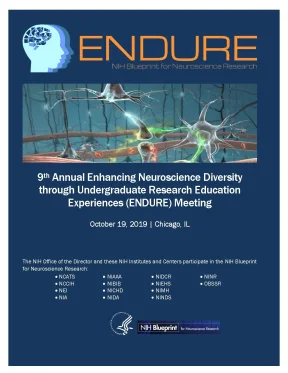
Tải xuống để đọc toàn bộ9th Annual Enhancing Neuroscience Diversity through Undergraduate Research Education Experiences (ENDURE) Meeting October 19, 2019 | Chicago, IL The NIH Office of the Director and these NIH Institutes and Centers participate in the NIH Blueprint for Neuroscience Research: • NCATS • NIAAA • NIDCR • NINR • NCCIH • NIBIB • NIEHS • OBSSR • NEI • NICHD • NIMH • NIA • NIDA • NINDS TABLE OF CONTENTS ENDURE PROGRAM AND MEETING GOALS. 2 NOTICE OF INTENT TO RE-ISSUE BP-ENDURE FOA. 3 ENDURE MEETING AGENDA. 4 NIH BLUEPRINT WELCOME AND SPEAKER BIOGRAPHIES.
5 ENDURE PROGRAM INFORMATION AND TRAINEE RESEARCH ABSTRACTS • BP-ENDURE AT HUNTER AND NYU. 8 • BP-ENDURE AT ST. LOUIS: A NEUROSCIENCE PIPELINE. 23 • BRAiN: BUILDING RESEARCH ACHIEVEMENT IN NEUROSCIENCE.
41 • BRIDGE TO THE PH. 48 • ENHANCING NEUROSCIENCE DIVERSITY WITH TENNESSEE STATE UNIVERSITY – NEUROSCIENCE EDUCATION AND RESEARCH VANDERBILT EXPERIENCE (TSU-NERVE). 57 • NEUROSCIENCE RESEARCH OPPORTUNITIES TO INCREASE DIVERSITY (NEUROID). 62 GRADUATE PROGRAM RECRUITMENT FAIR PARTICIPANT INFORMATION.
78 MEETING PARTICIPANT LIST. 94 SFN ACTIVITIES FOR ENDURE STUDENTS. 99 MENTORING RESOURCES AND PROFESSIONAL ORGANIZATIONS. 102 ENDURE TRAINEE OUTCOMES.
105 ENDURE PROGRAM GOALS The NIH Blueprint for Neuroscience Research initiative, "Enhancing Neuroscience Diversity through Undergraduate Research Education Experiences (ENDURE)," aims to raise interest and opportunities in neuroscience research for individuals who are typically underrepresented in the neurosciences. The goal is to provide such individuals with training at the undergraduate level, so that they are prepared to enter and successfully complete neuroscience Ph. ENDURE provides undergraduate training through partnerships between research-intensive institutions and institutions with a substantial enrollment of neuroscience majors from diverse groups. This includes individuals from underrepresented racial and ethnic groups; individuals with disabilities; and individuals from economically disadvantaged backgrounds.
ENDURE undergraduate training programs support a range of activities to increase student interest and involvement in the neurosciences, including research experiences, core and advanced neuroscience courses, seminars, and journal clubs. In FY10, five ENDURE awards were granted. In FY15, six ENDURE awards were granted. In FY19, six ENDURE awards were granted.
ENDURE MEETING GOALS As issued, the most recent RFA (RFA-NS-19-007) cites “it is a goal of this initiative that the NIH Blueprint Institutes will convene an annual meeting that will bring together BP-ENDURE program directors and participating students.” The purpose of the meeting will be to discuss best practices and provide a forum for student scientific and academic enhancing activities. An additional goal and outcome for this annual meeting is to provide linkage and opportunity for collaboration with existing diversity (example: Neuroscience Scholars Program) and undergraduate (example: Faculty for Undergraduate Neuroscience) programs already at Society for Neuroscience. The students will enhance their networks with other ENDURE participants, peer mentoring from diverse graduate students, and T32 program directors. ORGANIZING COMMITTEE Dr.
Michelle Jones-London (NIH/NINDS) Dr. Mark Chavez (NIH/NIMH) Dr. Marguerite Matthews (NIH/NINDS) Andrew Nawrot (NIH/NIMH) Dr. Lauren Ullrich (NIH/NINDS) Jonelle Duke (The Bizzell Group) For further information about ENDURE and its training sites: https://neuroscienceblueprint.gov/endure-undergraduate-education Visit and like the ENDURE Facebook page: An ENDUREing Network – www.ENDURE Follow NINDS Office of Programs to Enhance Neuroscience Workforce Diversity on Twitter @NINDSDiversity The ENDURE FOA will be re-issued! Applications will be due February 19, 2020 2 Notice of Intent to Publish a Funding Opportunity Announcement for NIH Blueprint Program for Enhancing Neuroscience Diversity through Undergraduate Research Education Experiences (R25 Clinical Trial Not Allowed) Notice Number: NOT-NS-20-009 Key Dates Release Date: September 16, 2019 Estimated Publication Date of Funding Opportunity Announcement: October 10, 2019 First Estimated Application Due Date: February 19, 2020 Earliest Estimated Award Date: September 01, 2020 Earliest Estimated Start Date: December 01, 2020 Purpose The National Institutes of Health (NIH) Blueprint for Neuroscience Research intends to reissue a Funding Opportunity Announcement (FOA) for receipt of new and renewal applications for its research education program for neuroscience focused undergraduates.
The overall objective of this funding opportunity will be to increase the number of undergraduate participants from diverse groups who successfully enter and complete Ph. degree programs in the neurosciences. To accomplish this goal, this initiative would support the development of collaborative research education partnerships to increase participants’ awareness and interest in the neurosciences, develop participants’ scientific knowledge and research skills that would allow them to progress and transition to more advanced neuroscience related research education and training activities, and establish working networks within existing Ph. degree granting and NIH-supported predoctoral T32 neuroscience programs.
This Notice is being provided to allow potential applicants sufficient time to develop meaningful collaborations and responsive projects. The FOA is expected to be published late November 2019 with an expected application due date in February 2020. This FOA will utilize the R25 activity code. Research Initiative Details The overarching objective of this funding opportunity is to encourage individuals from diverse backgrounds, including those from groups underrepresented in the biomedical, behavioral, and clinical research workforce, to pursue further studies or careers in neuroscience research.
To achieve this goal, the initiative will support two- year neuroscience research education programs comprised of year-round authentic neuroscience research experiences, research and career development, and establishment of professional networks, implemented through collaborative partnerships integrated across different educational institution types. The future FOA is expected to continue the overarching objective of the 2019 NIH Blueprint R25 FOA: RFA-NS- 19-007. Inquiries Please direct all inquiries to: Michelle D. Jones-London, Ph.
National Institute of Neurological Disorders and Stroke (NINDS) jonesmiche@mail.gov 3 Enhancing Neuroscience Diversity through Undergraduate Research Education Experiences (ENDURE) 9th Annual Meeting Hyatt Regency McCormick Place, Regency Ballrooms AB October 19, 2019 7:00 – 7:30 am Registration 7:30 – 7:40 am ENDURE Meeting Goals and Introduction Dr. Michelle Jones-London, Chief, Office of Programs to Enhance Neuroscience Workforce Diversity (OPEN), National Institute of Neurological Disorders and Stroke (NINDS) 7:40 – 8:05 am NIH Blueprint Welcome and Scientific Presentation Dr. David Shurtleff, Deputy Director, National Center for Complementary and Integrative Health (NCCIH) Q&A 8:05 – 9:45 am Panel on “Pathways and Perspectives on Being a Researcher” Chair and Panel Introductions: Dr. Ashlee Van't Veer, Office of Research Training and Career Development, Division of Neuroscience and Basic Behavioral Science, National Institute of Mental Health (NIMH) A discussion framed by several specific questions: What a graduate student should expect both of the school and themselves? How to identify a good mentor? Why a career in neuroscience research is fulfilling? How do I prepare for and navigate some of the challenges of graduate school? Each accomplished researcher on the panel will share their research background and answer questions relevant to their experiences, including early lessons from graduate school, being an underrepresented neuroscientist, and pursuing a research career.
Singleton – 2012-2014 ENDURE Alum, 2018 D-SPAN Scholar and Ph. Candidate at Georgetown University ❖ Dr. Ishmail Abdus-Saboor – Mitchell J. Blutt Presidential Assistant Professor of Biology at the University of Pennsylvania ❖ Dr.
Daniel Colón-Ramos – Associate Professor of Neuroscience and Cell Biology at Yale University School of Medicine 9:45 – 11:30 am Graduate Program Recruitment and Networking Fair Institutions with a strong record of neuroscience training and interested in recruiting for predoctoral research programs. 4 NIH BLUEPRINT FOR NEUROSCIENCE RESEARCH The NIH Blueprint for Neuroscience Research, known as "Blueprint", is a collaborative framework that includes the NIH Office of the Director and 14 NIH Institutes and Centers that support research on the nervous system. By pooling resources and expertise, Blueprint identifies cross-cutting areas of research, and confronts challenges too large for any single Institute or Center. This year’s NIH Blueprint welcome is presented by Dr.
David Shurtleff, NCCIH David Shurtleff, Ph. Deputy Director, National Center for Complementary and Integrative Health (NCCIH) David Shurtleff, Ph., is Deputy Director of the National Center for Complementary and Integrative Health (NCCIH), performing a wide range of activities aimed toward directing, and implementing a program of research that builds a scientific evidence base about complementary and integrative health approaches that advances fundamental knowledge, and informs decision making by the public, by health care professionals, and by health policymakers. Shurtleff’s 24-year career at the National Institutes of Health (NIH) has focused on providing leadership and fostering an extensive research portfolio in the basic behavioral and neurosciences—cognitive studies, behavioral economics, decision theory —and a broad spectrum of research that has contributed to cutting-edge research related to drug abuse, addiction, and complementary and integrative health care. Shurtleff began his NIH career in 1995 at the National Institute on Drug Abuse (NIDA).
From 2001 to 2010, he served as the Director of the Division of Basic Neuroscience and Behavioral Research at NIDA. From January 2011 to June 2013, he served as the Acting Deputy Director of NIDA. Before coming to NIH, Dr. Shurtleff was a research psychologist at the Naval Medical Research Institute (NMRI), where he conducted research related to cognitive performance, and environmental stress.
Prior to joining NMRI, he was a research fellow at the Walter Reed Army Institute of Research. He has received various honors and awards including several NIH Director’s Awards. One of these awards recognized his outstanding contributions to the 2014 President’s BRAIN Initiative. 5 PANEL SPEAKERS Each accomplished researcher will share their research background and answer general questions from their respective lens including early lessons from graduate school, being a diverse scientist, and the big picture view of a research career.
Candidate, Interdisciplinary Program of Neuroscience Georgetown University Kaela S. Singleton is a Ph. candidate in the Interdisciplinary Program of Neuroscience at Georgetown University (GU). She is interested in how neurons gain unique identity and function during development.
Her thesis research addresses this by utilizing multiple species and molecular techniques to investigate how transcription factor function changes throughout neural development and between mammalian and non- mammalian models. Born in Texas and raised in Grayson, Georgia, Kaela earned a B. in Neuroscience and Classical History & Culture from Agnes Scott College where she earned the BP-ENDURE fellowship. She conducted research at Emory, Georgia State, and Vanderbilt University investigating how disruption in cellular and molecular programs lead to various neurological disorders including stroke, Autism Spectrum Disorders, and Rett Syndrome.
To date, Kaela has won spots on two GU T32s in integrative neuroscience and neural injury to further her research endeavors. She is a current D-SPAN Scholar, and co-authored and published five scientific manuscripts and six abstracts. She has presented her research at ten national conferences and continues to be active in the neuroscience community through teaching and outreach. She believes that the formation of a professional identity is similar to the formation of a neuron’s identity, where both processes are driven by intrinsic and extrinsic factors that interact to create a mature and unique individual.
Her goal is to aide in the development of students’ professional identities while continuing to investigate the factors essential to a neuronal identity. Ishmail Abdus-Saboor, Ph. Blutt Presidential Assistant Professor of Biology University of Pennsylvania Dr. Ishmail Abdus-Saboor was born and raised in Philadelphia and received his bachelor’s degree in Animal Science from North Carolina A&T University in 2006, having completed internships in research labs in academia and industry, as well as a veterinary clinic and a farm.
He earned his Ph. in Cell and Molecular Biology in 2012 with Meera Sundaram at the University of Pennsylvania studying signal transduction pathways during development of the roundworm C. thesis work was supported by an NIH/NIGMS Genetics Training Grant and recognized with the Tom Kadesch Prize in Genetic Research. He completed postdoctoral training with Benjamin Shykind at Weill Cornell Medical College studying monoallelic gene expression of olfactory receptors and Wenqin Luo at the University of Pennsylvania studying neural circuit mechanisms for somatosensation.
As a postdoctoral fellow his research was supported by an NIH/NIGMS K12 IRACDA fellowship, NIH/NIDCR K99, Burroughs Wellcome Fund Postdoctoral Enrichment Fellowship (PDEP), and recognized with the Mitchell Max Award in Pain Research from the NIH. Ishmail opened his lab in July of 2018 as the Mitchell J. Blutt and Margo Krody Blutt Presidential Assistant Professor of Biology at the University of Pennsylvania.
Nội dung được bảo vệ bản quyền — Tải xuống đầy đủ
Trích dẫn luận án này
Dr. Michelle Jones-London, Dr. Mark Chavez, Dr. Marguerite Matthews, Andrew Nawrot, Dr. Lauren Ullrich, Jonelle Duke (2019). Hội nghị ENDURE 2019: Nâng cao đa dạng khoa học thần kinh [Luận án tiến sĩ]. LuanAn.net. https://luanan.net/giao-duc-hoc/1-2019-endure-final-10-10-2019-508c
Câu hỏi thường gặp
Luận án "Hội nghị ENDURE 2019: Nâng cao đa dạng khoa học thần kinh" nghiên cứu về vấn đề gì?
10/10/2019: Kết quả cuối cùng của giải đua Enduro 2019. Xem diễn biến và người chiến thắng chung cuộc.
Luận án "Hội nghị ENDURE 2019: Nâng cao đa dạng khoa học thần kinh" thuộc chuyên ngành gì?
Luận án "Hội nghị ENDURE 2019: Nâng cao đa dạng khoa học thần kinh" thuộc chuyên ngành Neuroscience (Thần kinh học). Danh mục: Giáo Dục Học.
Luận án "Hội nghị ENDURE 2019: Nâng cao đa dạng khoa học thần kinh" có bao nhiêu trang?
Luận án "Hội nghị ENDURE 2019: Nâng cao đa dạng khoa học thần kinh" có 108 trang. Bạn có thể xem trước một phần tài liệu ngay trên trang web trước khi tải về.
Cách tải luận án "Hội nghị ENDURE 2019: Nâng cao đa dạng khoa học thần kinh" về máy như thế nào?
Để tải luận án về máy, bạn nhấn nút "Tải xuống ngay" trên trang này, sau đó hoàn tất thanh toán phí lưu trữ. File sẽ được tải xuống ngay sau khi thanh toán thành công. Hỗ trợ qua Zalo: 0559 297 239.