Phenomenological case study implicit bias miller 11 20 2019 final
Nghiên cứu định tính về thiên vị ngầm, trường hợp Miller, 11/20/2019. Khám phá sâu sắc trải nghiệm và nhận thức.
Miami University
Luan An
Luận án tiến sĩ
Năm xuất bản
Số trang
296
Thời gian đọc
45 phút
Lượt xem
1
Lượt tải
0
Phí lưu trữ
50 Point
Tổng quan nhanh
- Chủ đề:
- Exploring Educators' Implicit Bias: A Phenomenological Study
- Số trang:
- 296 trang
- Trường:
- Miami University
- Chuyên ngành:
- Educational Leadership
- Tác giả:
- Kurtz Karlmichael Miller
- Năm:
- 2019
Tóm tắt nội dung luận án
I.Exploring Educators Implicit Bias A Phenomenological Study
This section introduces a critical qualitative inquiry into educators’ understandings of implicit bias. It highlights the urgent need for a deeper comprehension of how unconscious biases reinforce systemic racism within public education, particularly concerning African-American students. Traditional educational approaches often prioritize data-driven decisions and value-free improvement processes. However, these methods frequently overlook the crucial aspect of altering teachers’ inherent biases. The study addresses a significant gap in existing literature. It investigates the specific barriers teachers encounter when realizing they harbor implicit biases. This phenomenological case study delves into the lived experience of educators. It provides an analysis of their perceptions and personal stories. Understanding these narratives is vital for developing effective strategies to address and mitigate cognitive bias in educational settings. The research aims to contribute valuable insights into the complex nature of social perception within diverse school environments.
1.1. The Essence of Unconscious Bias in Education
The study focuses on the essence of awareness of implicit bias. It explores how educators come to recognize their own unconscious leanings. These biases significantly impact interactions with students, shaping educational outcomes. A greater understanding of these phenomena supports dismantling racist processes. The study emphasizes the human element in recognizing and confronting deeply ingrained prejudices.
1.2. Researching Educator Stories of Bias Awareness
The primary research question guides this qualitative case study: "What are the stories of educators who have come to the realization they possess implicit bias toward African-American students?" Researchers interviewed three teachers from a diverse suburban high school. These interviews aimed to detail their personal journeys toward recognizing implicit bias. The study utilized biographical storytelling to uncover these profound lived experiences.
II.Phenomenological Research Methodology for Bias Awareness
This research employs a phenomenological case study approach. This research methodology allows for an in-depth exploration of individual experiences. It moves beyond quantitative data to understand the subjective realities of participants. The study aims to uncover the "essence" of realizing implicit bias. Such an approach is crucial for addressing complex issues like unconscious bias in education. It provides rich, narrative data, offering nuanced perspectives often missed by other methods. This methodology emphasizes subjective interpretation and personal meaning-making. It aligns perfectly with the goal of understanding internal processes of awareness. The study’s design contributes to the broader field of qualitative inquiry. It demonstrates how personal narratives illuminate systemic challenges.
2.1. Case Study Design and Participant Selection
Three educators from Northfield High School participated. This school is near a "hypersegregated" Midwestern city, providing a unique context. Participants were selected based on their expressed interest and understanding of implicit bias. Initial interviews explored their educational pasts, presents, and imagined futures without implicit bias. A follow-up interview further gauged their understanding through open-ended questions about relevant readings.
2.2. Uncovering Lived Experiences Through Qualitative Inquiry
The study utilized methods like "currere" for autobiographical storytelling. This method facilitates deep reflection on personal experiences. It helps participants articulate their journeys of coming to terms with implicit bias. This qualitative inquiry provides vignettes of educators' realizations. These personal stories are vital for understanding the complex emotional and cognitive processes involved in bias awareness.
III.Barriers to Realization Challenges in Recognizing Implicit Bias
The study revealed significant barriers preventing full realization of implicit bias, particularly among White participants. These obstacles are deeply rooted in existing knowledge gaps and societal frameworks. Recognizing personal unconscious bias proves challenging for many. These findings highlight the complexity of self-perception and social perception. It underscores the need for targeted interventions to overcome these barriers. The research provides crucial insights into the psychological and social factors that impede bias mitigation efforts. Understanding these impediments is the first step toward creating more equitable educational environments. This section details the specific elements hindering genuine self-awareness.
3.1. White Participants Struggles with Implicit Bias Recognition
Two White participants in the study faced considerable difficulty acknowledging their implicit biases. One participant completely denied having any bias. The other cautiously sidestepped direct questions, even while accepting other tenets of racism. This contrasts sharply with the single African-American participant. This individual readily admitted their believed biases, offering a different perspective on self-awareness.
3.2. Systemic and Cognitive Obstacles to Bias Awareness
Identified barriers include a lack of knowledge about bias itself, adherence to a colorblind ideology, and an ignorance of the Black experience in America. Structural isolation from African-Americans also plays a role. Views of "reverse discrimination" further complicate the recognition process. These factors collectively create a formidable resistance to acknowledging personal cognitive bias.
IV.Insights on Unconscious Bias Implications for Education
This study offers valuable insights for enhancing educators' understanding of implicit bias. It clarifies the challenges involved in recognizing and addressing unconscious bias within educational contexts. The findings suggest a need for more focused training and development programs. These programs must directly confront the identified barriers to awareness. By shedding light on the lived experience of educators, the research provides a foundation for more effective bias mitigation strategies. This knowledge is crucial for creating more equitable and inclusive learning environments for all students, particularly African-Americans. The implications extend beyond individual awareness, suggesting broader systemic changes.
4.1. Enhancing Educator Understanding of Implicit Bias
The research highlights the critical need for educators to gain a deeper understanding of implicit bias. It is not enough to acknowledge racism as a societal issue. Educators must also grapple with their own unconscious contributions to discriminatory processes and systems. The study emphasizes the importance of moving beyond superficial recognition towards a genuine realization of personal biases.
4.2. Fostering Greater Awareness for Bias Mitigation Strategies
The study's detailed narratives and analysis of barriers provide a roadmap for future interventions. Educational institutions can utilize these insights to design programs that specifically address colorblind ideologies, expand knowledge of diverse experiences, and bridge structural isolation. Fostering greater awareness is a prerequisite for developing effective strategies to mitigate the impact of cognitive bias on student outcomes.
Tải xuống file đầy đủ để xem toàn bộ nội dung
Tải đầy đủ (296 trang)Trích đoạn nội dung luận án
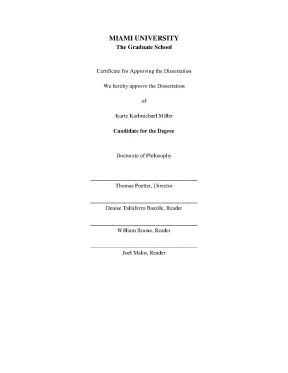
Tải xuống để đọc toàn bộMIAMI UNIVERSITY The Graduate School Certificate for Approving the Dissertation We hereby approve the Dissertation of Kurtz Karlmichael Miller Candidate for the Degree Doctorate of Philosophy ______________________________________ Thomas Poetter, Director ______________________________________ Denise Taliaferro Baszile, Reader ______________________________________ William Boone, Reader ______________________________________ Joel Malin, Reader ABSTRACT THE ESSENCE OF AWARENESS OF IMPLICIT BIAS: A PHENOMENOLOGICAL CASE STUDY OF EDUCATORS’ STORIES OF COMING TO THE REALIZATION THEY POSSESS IMPLICIT BIAS by Kurtz K. Miller Teachers need a greater understanding of implicit (unconscious) bias and how these phenomena reinforce and support racist processes and systems. The current public education landscape in parts of the United States focuses too much attention upon data- based decision-making, integrated comprehensive systems, collaborative work in teacher teams, and so-called value-free improvement processes meant to enact system-wide changes in teaching. Unfortunately, there is not enough emphasis being placed upon altering teachers’ implicit biases about African-American students.
More research is needed to better understand the barriers teachers face in coming to the realization they harbor implicit bias toward African-Americans. This study offers an analysis of educators' perceptions and understandings of implicit (unconscious) bias by detailing their stories of how they came to the realization they possessed bias toward African- American students. My research question was “What are the stories of educators who have come to the realization they possess implicit bias toward African-American students?” The title is somewhat of a misnomer because coming to the full realization of possessing implicit bias toward African-American students is quite difficult for Whites to attain. Three teachers in a diverse suburban school called Northfield High School — adjacent to a “hypersegregated,” Midwestern city — were interviewed with the aim of understanding how they came to the realization they had implicit bias.
The three participants answered questions in advance of being accepted into the study to demonstrate they had an interest in studying and an understanding of implicit bias. An initial interview was conducted to understand teachers’ educational pasts, presents, and imagined futures without implicit bias. A follow-up interview gauged teachers’ understandings of implicit bias on the basis of open-ended questions about readings. The findings indicated White participants possessed significant barriers preventing them from coming to the full realization they harbored implicit bias.
Barriers often prevent Whites from realizing personal biases. The barriers include the lack of knowledge of bias, a colorblind ideology, an ignorance of the Black experience in America, structural isolation from African-Americans, and views of so-called reverse discrimination. The single African-American participant readily admitted her believed biases while the two White participants either completely denied having implicit bias or cautiously sidestepped the questions while accepting other tenets of racism. This study may add valuable insights to the literature on implicit (unconscious) bias about how Whites come to the realization they harbor implicit bias toward African-American students through vignettes as well as autobiographical storytelling through the “method of currere.” THE ESSENCE OF AWARENESS OF IMPLICIT BIAS: A PHENOMENOLOGICAL CASE STUDY OF EDUCATORS’ STORIES OF COMING TO THE REALIZATION THEY POSSESS IMPLICIT BIAS A DISSERTATION Presented to the Faculty of Miami University in partial fulfillment of the requirements for the degree of Doctorate of Philosophy Department of Educational Leadership by Kurtz Karlmichael Miller The Graduate School Miami University Oxford, Ohio 2019 Dissertation Director: Thomas Poetter © Kurtz Karlmichael Miller 2019 TABLE OF CONTENTS List of Figures .12 Chapter II Literature Review…………………………………………………………….23 Section A, Race in Public Education .23 Section B, Racism in Public Education .49 Section C, Implicit Bias .68 Section D, Gaps in the Literature .84 Chapter III Research Methodology and Methods .94 Chapter IV Description of the Phenomenological Case Study .140 Chapter V Case Subject One (“Susie,” the Music Teacher) .154 Chapter VI Case Subject Two (“Donna,” the English Teacher) .175 Chapter VII Case Subject Three (“Chuck,” the Special Education Teacher) .197 Chapter VIII Research Findings ……………………………………….219 Chapter IX Discussions and an Imagined Future for Public Education……………….232 Chapter X Personal Concluding Thoughts…………………………………………….240 Chapter XI Epilogue……………………………………………………………………250 References………………………………………………………………………………252 Appendix A.
Miami Institutional Research Board (IRB) Approval Notification. Research Study Opportunity Flyer. Research Study Opportunity Application………………………………. Research Consent Form…………………………………….
Expected Themes Before Collecting the Data……………………………285 Appendix F. Preliminary Themes for Participant #1…………………………………. Preliminary Themes for Participant #2…………………………………. Preliminary Themes for Participant #3………………………………….
Selected Readings Given to Each Participant at Interview #1……………289 Appendix J. Participant #2 Questions…………………………………………………291 Appendix L. Participant #3 Questions…………………………………………………292 Appendix M. General Questions from the Readings for All Participants…………….
Thank you Card Written to Participant #1………………………………294 v LIST OF FIGURES Figure 1. List of the Five Articles. “Coding” and Theming of “Ignorance”. “Coding” and Theming of “Relationships,” “Honesty,” Racism,” and “Defense Mechanism”.
Pre-Identified Themes. Seven (Primary) Codes and Accompanying Themes. The Method of “Currere” .134 vi DEDICATION I am dedicating this dissertation study to my three year old son Jacob Israel Kurtz Miller. Jacob’s mother and I have tried to instill the importance of learning and reading into Jacob’s life.
This dissertation study is a testament of what dedication, hard work, and a lot of reading can help to accomplish. Jacob, please remember the sky is the limit when it comes to learning. vii ACKNOWLEDGMENTS First and foremost, I would like to thank my Lord and Savior Jesus Christ for placing me in life situations where I have been able to grow as a Follower as well as learn to be an advocate for anti-racist and social justice agendas. Without supreme guidance I never would have come to the realization of my own implicit biases and White privilege.
Next, I am exceptionally grateful for my advisor’s encouragement, patience, and persistence in supporting me throughout the curriculum, culture, and leadership doctoral program. Tom Poetter has been an incredible person throughout this personal journey. Tom has always been highly motivated to help graduate students write better and publish multiple manuscripts. I have been very appreciated of the opportunities Tom has provided.
Also, I am very grateful for my comprehensive examination committee members Tom Poetter, Denise Taliaferro Baszile, Andrew Saultz, Kate Rousmaniere, and William Boone. In particular, Denise Taliaferro Baszile and Tom Poetter were instrumental in helping me to refocus my dissertation study upon the topic of teachers’ understandings of implicit bias. Without guidance and detailed suggestions my dissertation study would have taken a sharp turn to an unknown destination. William Pinar, Tetsuo Aoki Professor in Curriculum Studies at the University of British Columbia, deserves a very special acknowledgement.
Bill was gracious enough to meet me face-to-face in the spring of 2013 to discuss the intersection of Science, Technology, Engineering, and Mathematics (STEM) and curriculum studies. After accepting a professional development position on the JOIES Resolution in Victoria, British Columbia, I decided to contact Bill to see if he was available to meet for a conversation. During a dinner discussion, Bill asked me how STEM could serve as a system of oppression. This interaction with Bill has served as an impetus to question the fundamentals of STEM and the education-industrial complex in the United States.
Additionally, I would like to thank William H. Schubert for visiting our curriculum studies class at Miami University. Discussions with Bill Schubert were helpful in terms of understanding the broader context of curriculum studies. David Lawrence, Sharon Goins, and Timothy Vaughn of Dayton Public Schools have been incredible supporters of my scholarly pursuits at Miami University.
Also, I truly appreciate the support of my present employer who helped me to acquire the necessary permissions to conduct this study. Finally, I would like to thank my loving wife and family for providing me with the necessary time to complete my studies at Miami University. viii The Essence of Awareness of Implicit Bias: A Phenomenological Case Study of Educators’ Stories of Coming to the Realization They Possess Implicit Bias Kurtz K. Miller Chapter 0: Prologue “But the Lord said to Samuel, ‘Do not consider his appearance or his height, for I have rejected him.
The Lord does not look at the things people look at. People look at the outward appearance, but the Lord looks at the heart [emphasis added].” –I Samuel 16:7 (NIV) “The second is this: ‘Love your neighbor as yourself.’ There is no commandment greater than these [emphasis added].” –James 2:1 (NIV) “After this I looked, and there before me was a great multitude that no one could count, from every nation, tribe, and language, standing before the throne and before the Lamb. They were wearing white robes and were holding palm branches in their hands [emphasis added].” –Revelation 7:9 (NIV) The Department of Educational Leadership (EDL) at Miami University – Oxford (Ohio) houses three professors who have experience/training in divinity and/or theology. Professor Michael Dantley, who serves as the Dean of the College of Education, is an active Bishop at Christ Emmanuel Christian Fellowship in Walnut Hills, Ohio; Professor Michael Evans holds a Masters of Divinity (M.) from Harvard University; and Professor Thomas Poetter, who is my doctoral advisor, holds a Masters of Divinity 9 (M.) from Princeton University.
Why is there such a concentration of professors of EDL who have training in divinity and/or theology? To be honest, I do not know the answer! However, I think this observation is certainly noteworthy. Within an interpretive discourse, perhaps I may venture to suggest these three men have come to the realization that high-quality administration, teaching, and learning requires deeply-connected religious and spiritual grounding. Good administrators and teachers must be morally and spiritually grounded to ensure they are always making the right decisions for all students. The journey described in this dissertation was not the result of me studying divinity and/or theology and applying these types of principles to address social justice issues in public education; however, the findings in this study have pointed me back to the teachings of Jesus Christ.
The research on implicit bias has caused me to ask the question, “How should I treat my neighbors as well as my students?” Further, I have questioned, “How should my love of God inform my classroom teaching for all students?” Of course, I have always been aware that “I should love my neighbor as myself” (Matthew 22:35–40), but I have not always considered how my unconscious attitudes, stereotypes reinforced in my childhood, and/or my poor heart conditions (my spiritual heart, not my physical heart) have unknowingly influenced my instructional choices, curriculum decision-making, and/or classroom instruction. Much like academically-trained theologians may use religious and spiritual knowledge to inform decision-making in public education, I argue that social science research can potentially point scholars back to the truths in the Scriptures. Perhaps this is uncanny thinking in progressive education today, since we arguably live in what some view as a “post-Christian culture” (Boyd, 1972, p. 286), but my dissertation study has 10 certainly caused me to come full circle back to questions those in the faith community may be more likely to ask.
This dissertation study on implicit bias, although secular in nature in terms of its methods and methodologies, has pointed me back to the teachings that I am compelled to follow to “Love my neighbor as myself” (Matthew 22:35–40). According to one of my pastors, racism in American and the many issues linked to this simply go back to the story of the “Good Samaritan” (Luke 10:30–37) where Christians are required to treat neighbors well (Analytic Memo Entry, 9 February 2018). So, who are our neighbors? I invite readers to review the story of the “Good Samaritan” in Luke 10:30-37 before and after going through this manuscript. Then, I have posed the open question, which is ready for discussion and interpretation, “Based upon the stories in this qualitative study, who are our neighbors?” 11 Chapter I: Introduction Chapter one is an introduction to this study on implicit bias.
The first section will detail the story about how I confronted my White privilege over a time period of over 20 years.
Nội dung được bảo vệ bản quyền — Tải xuống đầy đủ
Trích dẫn luận án này
Kurtz Karlmichael Miller (2019). Phenomenological case study implicit bias miller 11 20 2019 [Luận án tiến sĩ, Miami University]. LuanAn.net. https://luanan.net/tam-ly-hoc/tam-ly-hoc-xa-hoi/phenomenological-case-study-implicit-bias-miller-11-20-2019-final
Câu hỏi thường gặp
Luận án "Phenomenological case study implicit bias miller 11 20 2019" nghiên cứu về vấn đề gì?
Nghiên cứu định tính về thiên vị ngầm, trường hợp Miller, 11/20/2019. Khám phá sâu sắc trải nghiệm và nhận thức.
Luận án "Phenomenological case study implicit bias miller 11 20 2019" được bảo vệ tại trường nào?
Luận án này được bảo vệ tại Miami University. Năm bảo vệ: 2019.
Luận án "Phenomenological case study implicit bias miller 11 20 2019" thuộc chuyên ngành gì?
Luận án "Phenomenological case study implicit bias miller 11 20 2019" thuộc chuyên ngành Educational Leadership. Danh mục: Tâm Lý Học Xã Hội.
Luận án "Phenomenological case study implicit bias miller 11 20 2019" có bao nhiêu trang?
Luận án "Phenomenological case study implicit bias miller 11 20 2019" có 296 trang. Bạn có thể xem trước một phần tài liệu ngay trên trang web trước khi tải về.
Cách tải luận án "Phenomenological case study implicit bias miller 11 20 2019" về máy như thế nào?
Để tải luận án về máy, bạn nhấn nút "Tải xuống ngay" trên trang này, sau đó hoàn tất thanh toán phí lưu trữ. File sẽ được tải xuống ngay sau khi thanh toán thành công. Hỗ trợ qua Zalo: 0559 297 239.