Phát triển Vốn Nhân lực: Yếu tố Thiếu sót trong Mô hình Aerotropolis? (Luận án John Roosevelt Hubbard)
Khám phá chiến lược phát triển vốn nhân lực hiệu quả cho mô hình Aerotropolis. Nâng cao năng lực cạnh tranh và đổi mới sáng tạo.
Human Capital Development
Luan An
Luận án tiến sĩ
Năm xuất bản
Số trang
195
Thời gian đọc
30 phút
Lượt xem
0
Lượt tải
0
Phí lưu trữ
50 Point
Tổng quan nhanh
- Chủ đề:
- 1. Vai trò Vốn Nhân lực Aerotropolis trong Phát triển Kinh tế
- Số trang:
- 195 trang
- Trường:
- The University of Southern Mississippi
- Chuyên ngành:
- Human Capital Development
- Tác giả:
- John Roosevelt Hubbard
- Năm:
- 2017
Tóm tắt nội dung luận án
I. Vai trò Vốn Nhân lực Aerotropolis trong Phát triển Kinh tế
Sự phát triển của vận tải hàng không đã thay đổi thương mại toàn cầu. Nó biến đổi từ phương thức truyền thống đường bộ và đường thủy. Mô hình aerotropolis ra đời, tập trung xây dựng hạ tầng quanh sân bay. Nhiều nhà hoạch định chính sách nhanh chóng nhận ra lợi ích kinh tế. Tuy nhiên, yếu tố phát triển vốn nhân lực thường bị bỏ qua. Điều này gây ra nghi vấn về sự bền vững của mô hình. Câu hỏi đặt ra: phát triển vốn nhân lực có phải là thành phần còn thiếu không?
1.1. Bối cảnh Lịch sử Giao thông Sân bay
Vận tải đường bộ và đường thủy là phương thức giao thương chính đến đầu thế kỷ 20. Vận tải hàng không nổi lên như một phương pháp mới, nhanh hơn. Sự cạnh tranh toàn cầu thế kỷ 21 đẩy mạnh vai trò của hàng không. Nhiều nhà hoạch định chính sách nhận thấy tiềm năng kinh tế. Họ lập kế hoạch phát triển hạ tầng xung quanh sân bay. Mô hình aerotropolis hình thành. Phát triển nguồn nhân lực hàng không bị bỏ qua trong nhiều kế hoạch. Điều này đặt ra vấn đề về sự thành công thực sự.
1.2. Nghi vấn về Thiếu hụt Vốn Nhân lực
Nghiên cứu tập trung vào câu hỏi trọng tâm: phát triển vốn nhân lực có phải là thành phần còn thiếu của chiến lược phát triển kinh tế aerotropolis không? Câu hỏi này rất quan trọng. Nó định hình cách tiếp cận các khu kinh tế sân bay. Việc phát triển nguồn nhân lực hàng không đòi hỏi chiến lược toàn diện. Từ giáo dục nghề nghiệp hàng không đến quản lý tài năng sân bay. Thiếu sót yếu tố này có thể làm giảm tiềm năng tăng trưởng. Nghiên cứu tìm kiếm mối quan hệ này để giải đáp thắc mắc.
II. Nghiên cứu Đánh giá Tác động Đào tạo Kỹ năng Sân bay
Một nghiên cứu định lượng đã được tiến hành. Mục tiêu là xác định mối quan hệ giữa phát triển vốn nhân lực và hiệu suất sân bay. 35 sân bay mô hình aerotropolis tại Mỹ được khảo sát. Kết quả chỉ ra rằng đào tạo không có tác động trực tiếp. Nó không ảnh hưởng đến thành công kinh tế. Đây là một phát hiện bất ngờ. Nó thách thức các giả định truyền thống về tầm quan trọng của đào tạo.
2.1. Phương pháp Thực hiện Nghiên cứu
Nghiên cứu sử dụng phương pháp định lượng, giải thích, bán thực nghiệm. Nó khảo sát 35 sân bay mô hình aerotropolis ở Mỹ. Mục đích là xác định mối quan hệ giữa phát triển vốn nhân lực và hiệu suất sân bay. Dữ liệu thu thập để đánh giá thành công kinh tế. Các chỉ số bao gồm tổng sản phẩm khu vực (GRP), việc làm và thu nhập bình quân đầu người. Các chương trình đào tạo được phân loại theo mã CIP. Phương pháp này đảm bảo tính khách quan. Chính sách lao động khu kinh tế sân bay cũng được xem xét gián tiếp.
2.2. Kết quả Đánh giá Đào tạo Hiệu suất
Nghiên cứu xác nhận sân bay là động lực phát triển kinh tế. Tuy nhiên, kết quả về đào tạo bất ngờ. Đào tạo (dựa trên 9 loại CIP) không ảnh hưởng đến thành công của cộng đồng sân bay. Không có mối liên hệ giữa phát triển vốn nhân lực và hoạt động hành khách hay hàng hóa. Đây là một phát hiện quan trọng. Nó thách thức các giả định về đào tạo kỹ năng logistics. Nó cũng đặt câu hỏi về vai trò trực tiếp của quản lý tài năng sân bay. Ảnh hưởng của giáo dục nghề nghiệp hàng không đến kinh tế trực tiếp cần được xem xét lại.
III. Động lực Thành công Kinh tế Hành khách Kết nối Hàng không
Nghiên cứu xác định hoạt động hành khách là động lực chính của thành công kinh tế. Sự kết nối giữa các sân bay cũng đóng vai trò quan trọng. Điều này thúc đẩy cả hoạt động hành khách và hàng hóa. Phát hiện này khác biệt với quan điểm truyền thống. Nó nhấn mạnh tầm quan trọng của lưu lượng di chuyển. Điều này định hình lại các chiến lược phát triển.
3.1. Hành khách là Yếu tố then chốt
Nghiên cứu chỉ ra hoạt động hành khách là động lực chính. Nó thúc đẩy thành công kinh tế cộng đồng sân bay. Lưu lượng hành khách tạo ra doanh thu trực tiếp. Nó cũng kích thích các ngành dịch vụ liên quan. Các cơ sở kinh doanh quanh sân bay hưởng lợi trực tiếp. Điều này bao gồm nhà hàng, khách sạn và dịch vụ vận chuyển. Tập trung vào thu hút hành khách mang lại hiệu quả rõ rệt. Các chiến lược thu hút nhân tài quốc tế có thể cần xem xét lại mức độ ảnh hưởng trực tiếp.
3.2. Vai trò Kết nối Liên sân bay
Sự kết nối giữa các sân bay là yếu tố quan trọng. Nó thúc đẩy hoạt động hành khách và hàng hóa. Sự kết nối này quan trọng hơn 'talent pipeline'. Hoạt động hàng hóa ít quan trọng hơn hoạt động hành khách. Điều này trái với ý kiến của John Kasarda. Ông cho rằng chúng có vai trò ngang nhau. Việc đầu tư vào mạng lưới kết nối là cần thiết. Điều này định hướng lại chiến lược phát triển khu kinh tế sân bay. Tuyển dụng nhân sự aerotropolis cần tập trung vào các vị trí hỗ trợ trực tiếp hoạt động này.
IV. Quan điểm về Phát triển Bền vững Vốn Nhân lực Aerotropolis
Mặc dù nghiên cứu không tìm thấy tác động trực tiếp của đào tạo. Tuy nhiên, phát triển bền vững vốn nhân lực vẫn rất quan trọng. Nó cần cho thành công lâu dài của aerotropolis. Các chiến lược cần định hướng lại. Tập trung vào việc tạo môi trường làm việc hấp dẫn. Nâng cao năng lực cạnh tranh nhân sự là yếu tố then chốt. Điều này đảm bảo sự phát triển vững chắc. Không chỉ dựa vào các chỉ số kinh tế ngắn hạn.
4.1. Tầm quan trọng của Chiến lược Nhân sự Bền vững
Phát triển bền vững vốn nhân lực vẫn là yếu tố thiết yếu. Nó cần cho thành công lâu dài của aerotropolis. Mặc dù kết quả nghiên cứu không tìm thấy tác động trực tiếp. Các chiến lược thu hút nhân tài quốc tế cần được xem xét lại. Tập trung vào việc tạo ra môi trường làm việc hấp dẫn hơn. Nâng cao năng lực cạnh tranh nhân sự là chìa khóa. Điều này đảm bảo sự phát triển vững chắc. Nó không chỉ phụ thuộc vào các chỉ số kinh tế ngắn hạn. Cần có tầm nhìn dài hạn cho nguồn nhân lực.
4.2. Hướng đi cho Chính sách Lao động Kỹ năng Số
Chính sách lao động khu kinh tế sân bay cần được xem xét cẩn thận. Nó phải hỗ trợ các hoạt động cốt lõi, đặc biệt là hoạt động hành khách. Phát triển kỹ năng số cho aerotropolis là điều cần thiết. Công nghệ phát triển nhanh chóng. Kỹ năng số giúp vận hành sân bay hiệu quả hơn. Nó cũng hỗ trợ các dịch vụ liên quan. Đào tạo cần tập trung vào kỹ năng thực tế. Điều này khác với đào tạo chung chung. Quản lý tài năng sân bay cần tiếp cận chiến lược hơn. Điều này đảm bảo sự phù hợp với nhu cầu thị trường.
Tải xuống file đầy đủ để xem toàn bộ nội dung
Tải đầy đủ (195 trang)Trích đoạn nội dung luận án
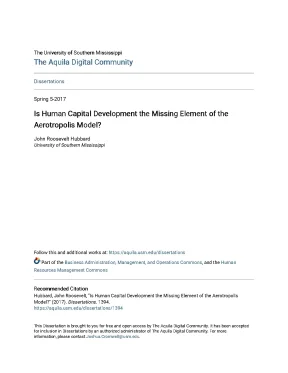
Tải xuống để đọc toàn bộThe University of Southern Mississippi The Aquila Digital Community Dissertations Spring 5-2017 Is Human Capital Development the Missing Element of the Aerotropolis Model? John Roosevelt Hubbard University of Southern Mississippi Follow this and additional works at: https://aquila.edu/dissertations Part of the Business Administration, Management, and Operations Commons, and the Human Resources Management Commons Recommended Citation Hubbard, John Roosevelt, "Is Human Capital Development the Missing Element of the Aerotropolis Model?" (2017).edu/dissertations/1394 This Dissertation is brought to you for free and open access by The Aquila Digital Community. It has been accepted for inclusion in Dissertations by an authorized administrator of The Aquila Digital Community. For more information, please contact Joshua. IS HUMAN CAPITAL DEVELOPMENT THE MISSING COMPONENT OF THE AEROTROPOLIS MODEL? by John Roosevelt Hubbard A Dissertation Submitted to the Graduate School and the Department of Human Capital Development at The University of Southern Mississippi in Partial Fulfillment of the Requirements for the Degree of Doctor of Philosophy Approved: ________________________________________________ Dr.
Miller, Committee Chair Associate Professor, Economic Development, Tourism, Sports Management ________________________________________________ Dr. Quincy Brown, Committee Member Assistant Professor, Human Capital Development ________________________________________________ Dr. Gaudet, Committee Member Professor, Human Capital Development ________________________________________________ Dr. Lunsford, Committee Member Assistant Professor, Human Capital Development ________________________________________________ Dr.
Gaudet, Committee Member Chair, Department of Human Capital Development ________________________________________________ Dr. Coats Dean of the Graduate School May 2017 COPYRIGHT BY John Roosevelt Hubbard 2017 Published by the Graduate School ABSTRACT IS HUMAN CAPITAL DEVELOPMENT THE MISSING COMPONENT OF THE AEROTROPOLIS MODEL? by John Roosevelt Hubbard May 2017 Until the early 20th century, transportation by land or water served as the primary methods of trade. As competition in the global marketplace increased in the 21st-century air transportation emerged as a new and faster method of trade. Convinced of the economic benefits of air transportation, many policymakers of airport communities were quick to make plans for growth such as building infrastructure around the airport.
This aerotropolis model often ignored the human capital development required for success. Central to this study is this question: Is human capital development the missing component of the aerotropolis model economic development strategy? The researcher examined all 35 U. airports based on the aerotropolis model to determine the relationship between human capital development on aerotropolis model success. The purpose of this quantitative, explanatory, quasi-experimental study was to determine the relationship between human capital development and the aerotropolis model airport performance and success.
This study validated previous research that airports are important drivers of economic development. However, the study findings revealed that training (the nine Classification of Instructional Programs used to identify aerotropolis model education and training program categories in the study) had no effect on the success (measured as gross regional product, employment, and per capita income) of the airport community. ii Additionally, there was not relationship between human capital development and passenger and cargo activity. The study indicated the primary driver of economic success in the airport community is passenger activity.
The inter-connectivity of the airport with other airports drives passenger activity and cargo activity, not talent pipeline. Cargo activity at the aerotropolis model airport is less vital to the economic success of the airport community than passenger activity. This finding is contrary to John Kasarda’s opinion that cargo activity is equally important to the aerotropolis model as cargo activity. iii ACKNOWLEDGMENTS There is an old African proverb, later made popular by former first lady Hillary Clinton, which stated, “It takes a village to raise a child.” In my case, “the child” is this dissertation, and the “village” is the many family, friends, and advisors who offered their encouragement, patience, knowledge, and time to help me complete this journey.
I will be forever grateful that this journey brought people into my life who I now consider my friends. I will always be indebted to Dr. Barbara Kee who spent countless hours keeping me focused and offering me words of wisdom. Many thanks to Dr.
Chris Nelson, Dr. John Davis, and Dr. Subhro Mitra for their advice and assistance as well. I am so appreciative to Dr.
Flint Brent, Clark Magee, and Teresa Hanger, who besides my bride, have probably read this dissertation more times than anyone else but me. Lynda Thornton from ACU: Thank you for believing in me and giving me hope. To my USM cohorts Stephen Ellis, Charles Childress, Will Burge, Tonya Moore, Deano Harrison, and Courtney Taylor: Thanks for allowing me to email, text and call you at all hours. Stephen, I especially appreciate your advice and friendship and allowing me to bounce ideas off you.
You took me under your wing (or perhaps, I grabbed it) during my first class in the HCD program. The HCD faculty and staff is AWESOME. I certainly appreciated the encouragement from Dr. Heather Annulis, Dr.
Patti Phillips, and Dr. Robin Johnson, thanks for keeping me on track. Suzy Robinson, I love you! Thank you for being you! iv To my dissertation committee members, Dr. Cyndi Gaudet, Dr.
Quincy Brown, and Dr. Dale Lunsford: Thank you for reviewing and commenting on my dissertation. It has been such an honor to work with you. I am so grateful to each of you! Dr.
Miller: Thank you for agreeing to be my committee chair. I appreciate all the long hours and time you spent reviewing this dissertation when you could have been doing other things. I valued your guidance through this lengthy process. I appreciated all of your comments and suggestions.
This dissertation is better than it could have ever been because of your input. v DEDICATION Dedicated to my bride Marian, children Mariah, Alex, and Darah, son in law Jaime, grandchildren Jonah and Judah, in-laws Matthew and Takako, and to the memory of my Mom, Jessie Mae Mariah Worde and Dad, Dolphus Albert Hubbard. In his book, The Myth of Sisyphus and Other Essays, Albert Camus states, “The meaning of life is the most urgent of questions.” Assuming our life expectancy is 80 years, 3/4ths of my life on earth is gone. Like Qoheleth, I too can look back at my life and say everything I have experienced has been meaningless: I have endured the death of my parents, lost several jobs, been unemployed for over a year and been through a divorce.
I have been blessed with many worthwhile things as well: I found my awesome bride, I have three beautiful children, a great son in law, and two amazing grandchildren. I have paid off the mortgage to my house; I have a fantastic job and, live a debt free life and after years of work, completed this dissertation. However, through it all, I have realized that the only possession God wants me to have is the one that is permanent, that is, a relationship with Him. What matters most is that I put my trust in Him.
My parents had it right – they understood what Jesus was talking about all along: Live a life not focused on earthly things which are fleeting, but rather focus on things above because in heaven is where real treasures lasting an eternity are stored. Marian, Mariah and Jamie, Alex and Darah, and Jonah and Judah: Always remember that is never too late to accomplish your goals. My prayer for you, “Trust God in every decision you make, give more to others; strive for excellence but be content with what you have, always treat people fairly, embrace the good times and the bad times, remembering that God is in control.” Learn how to die and you will learn how to live. vi To my dear bride, Marian: This is OUR achievement.
Thank you for your sacrifice, support, and encouragement as we completed another step in our journey together. I love you with all my heart, and I am so thankful that you are beside me. I look forward to the next chapter in our life. Ready to turn the page?.
vii TABLE OF CONTENTS ABSTRACT. vi LIST OF TABLES. xv LIST OF ILLUSTRATIONS. xvii LIST OF ABBREVIATIONS.
xviii CHAPTER I – INTRODUCTION. 1 Background of the Study. 3 Statement of the Problem. 8 Purpose of the Study.
11 Significance of the Study. 14 Delimitations of the Study. 15 Definition of Terms. 19 CHAPTER II – LITERATURE REVIEW.
21 Literature Search and Research Tools used in the Literature Review. 21 The Role of Community Leaders and Policymakers in Economic Growth. 22 viii The Role of Transportation and Trade in Urbanization. 25 Human Capital Development, Transportation, and Urban Development.
26 The First Wave of Transportation Development. 27 The Second Wave of Transportation Development. 28 The Third Wave of Transportation Development. 29 The Fourth Wave of Transportation Development.
30 The Fifth Wave of Transportation Development. 31 Airport-Based Economic Development: The Aerotropolis Model. 33 The Influence of Passenger Traffic and Cargo on Economic Development. 34 The Airport City and Aerotropolis.
36 Characteristics of Successful Aerotropolis Model Airports. 37 Critique of the Aerotropolis Model. 40 How Human Capital Development Fits in with Aerotropolis Model. 44 Human Capital Development.
44 Measuring Human Capital Development. 46 The Cost-Based Approach. 47 The Income-Based approach. 48 The Education-Based approach.
49 Alternative Methods to Measure Human Capital Development. 51 ix Measuring Talent Pipeline and Regional Growth. 52 Theories Guiding this Study. 53 Theory of Transportation.
53 Human Capital Theory. 54 Key Attributes Identified in this Study. 55 Aerotropolis Model Airport Performance Construct. 56 Human Capital Development Construct.
56 Regional Economy and Aerotropolis Model Success Constructs. 57 Gross Regional Product. 59 Per Capita Income. 61 CHAPTER III – RESEARCH DESIGN AND METHODOLOGY.
64 Population and Sample. 66 x Approval to Use Databases. 67 Institutional Review Board. 68 Dataset Name Conversion to IBM SPSS.
68 Reliability and Validity. 71 Variables and Latent Constructs. 74 Research Objective One. 75 Research Objective Two.
77 Research Objective Three. 79 Research Objective Four. 81 About Regression Analysis. 85 CHAPTER IV – RESULTS.
86 Data Collection Results. 87 Organization of Data Analysis. 88 Research Objective One. 88 Results for Research Objective One.
90 xi Research Objective Two. 92 Results for Research Objective Two. 94 Descriptive Statistics for Research Objectives Three and Four. 96 Research Objective Three.
97 Results for Research Objective Three. 106 Research Objective Four. 107 Results for Research Objective Four. 107 CHAPTER V – FINDINGS, CONCLUSIONS & RECOMMENDATIONS.
110 Summary of the Study. 111 Aerotropolis Model Performance and Airport Community Success. 114 Talent Pipeline and Airport Community Success. 116 Talent Pipeline and Aerotropolis Model Performance.
118 Implications of Study Limitations. 120 Suggestions for Future Research. 122 APPENDIX A – Aerotropolis Model Statistics. 124 APPENDIX B – Aerotropolis Model Statistics.
126 APPENDIX C – Aerotropolis Model Statistics. 127 APPENDIX D – Aerotropolis Model Statistics. 128 APPENDIX E – Aerotropolis Model Statistics. 135 APPENDIX F – Airport Model Statistics.
137 APPENDIX G – Airport Model Statistics. 139 APPENDIX H – Airport Model Statistics. Public Domain & Copyright Notice. 143 APPENDIX J – Approval to use Illustration by John Kasarda.
144 APPENDIX K – Approvals to use Illustration by Oliver Wyman. 145 xiii APPENDIX L – Approval to use Illustration by Jean-Paul Rodrigue. 146 APPENDIX M – Approval to use Illustration by other Georgia Institute of Technology 147 APPENDIX N – Approval to use Illustration by Kung-Jeng Wang & Wan-Chung Hong. 148 APPENDIX O – Approval to use DKShifflet Data.
150 xiv LIST OF TABLES Table 1 Summary of the Economic Impact of Air Transportation, 2000-2012. 4 Table 2 Airports Based on the Aerotropolis Model in the United States. 6 Table 3 Commercial Service Airport Governance Distribution .
Nội dung được bảo vệ bản quyền — Tải xuống đầy đủ
Trích dẫn luận án này
John Roosevelt Hubbard (2017). Phát triển Vốn Nhân lực trong Mô hình Aerotropolis [Luận án tiến sĩ, The University of Southern Mississippi]. LuanAn.net. https://luanan.net/quan-tri-kinh-doanh/quan-tri-nguon-nhan-luc/phat-trien-von-nhan-luc-aerotropolis
Câu hỏi thường gặp
Luận án "Phát triển Vốn Nhân lực trong Mô hình Aerotropolis" nghiên cứu về vấn đề gì?
Khám phá chiến lược phát triển vốn nhân lực hiệu quả cho mô hình Aerotropolis. Nâng cao năng lực cạnh tranh và đổi mới sáng tạo.
Luận án "Phát triển Vốn Nhân lực trong Mô hình Aerotropolis" được bảo vệ tại trường nào?
Luận án này được bảo vệ tại The University of Southern Mississippi. Năm bảo vệ: 2017.
Luận án "Phát triển Vốn Nhân lực trong Mô hình Aerotropolis" thuộc chuyên ngành gì?
Luận án "Phát triển Vốn Nhân lực trong Mô hình Aerotropolis" thuộc chuyên ngành Human Capital Development. Danh mục: Quản Trị Nguồn Nhân Lực.
Luận án "Phát triển Vốn Nhân lực trong Mô hình Aerotropolis" có bao nhiêu trang?
Luận án "Phát triển Vốn Nhân lực trong Mô hình Aerotropolis" có 195 trang. Bạn có thể xem trước một phần tài liệu ngay trên trang web trước khi tải về.
Cách tải luận án "Phát triển Vốn Nhân lực trong Mô hình Aerotropolis" về máy như thế nào?
Để tải luận án về máy, bạn nhấn nút "Tải xuống ngay" trên trang này, sau đó hoàn tất thanh toán phí lưu trữ. File sẽ được tải xuống ngay sau khi thanh toán thành công. Hỗ trợ qua Zalo: 0559 297 239.