Nghiên cứu về Tác động của Học viện Nghệ thuật đối với Học sinh Trung học Phổ thông
Tác động của Học viện Nghệ thuật đến học sinh THPT giúp phát triển kỹ năng sáng tạo và tư duy độc lập.
Rowan University
Luan An
Luận án tiến sĩ
Năm xuất bản
Số trang
237
Thời gian đọc
36 phút
Lượt xem
0
Lượt tải
0
Phí lưu trữ
50 Point
Tổng quan nhanh
- Chủ đề:
- 1. Tác động Học viện Nghệ thuật đến Học sinh THPT
- Số trang:
- 237 trang
- Trường:
- Rowan University
- Chuyên ngành:
- Educational Leadership
- Tác giả:
- Nigel Sangster
- Năm:
- 2012
Tóm tắt nội dung luận án
I. Tác động Học viện Nghệ thuật đến Học sinh THPT
Một nghiên cứu chuyên sâu đã khám phá tác động của học viện nghệ thuật đối với học sinh trung học phổ thông. Nghiên cứu này khẳng định giá trị cốt lõi của giáo dục nghệ thuật. Nghệ thuật không chỉ là những hoạt động giải trí. Chúng đóng vai trò thiết yếu trong quá trình giáo dục toàn diện. Dữ liệu thu thập từ nhiều nguồn đã chứng minh điều này. Có nhiều lợi ích giáo dục nghệ thuật rõ ràng khi học sinh tham gia học viện. Những lợi ích này ảnh hưởng tích cực đến nhiều khía cạnh trong cuộc sống học đường và cá nhân của học sinh. Nghiên cứu sử dụng cả phương pháp định lượng và định tính. Điều này giúp đảm bảo tính khách quan và đáng tin cậy. Phỏng vấn học sinh, khảo sát và quan sát được tiến hành. Kết quả cho thấy học viện nghệ thuật mang lại sự phát triển vượt trội. Các tác động bao gồm cải thiện thái độ học tập và kỹ năng sống. Đây là minh chứng cho tầm quan trọng của việc tích hợp nghệ thuật vào chương trình giáo dục.
1.1. Lợi ích giáo dục nghệ thuật toàn diện
Học viện nghệ thuật cung cấp một nền tảng giáo dục độc đáo. Nền tảng này vượt ra ngoài các môn học truyền thống. Học sinh tiếp cận với nhiều loại hình nghệ thuật khác nhau. Điều này bao gồm âm nhạc, mỹ thuật, sân khấu và khiêu vũ. Sự tiếp xúc đa dạng này nuôi dưỡng sự hiểu biết sâu sắc về văn hóa. Nó cũng phát triển các kỹ năng sống quan trọng. Lợi ích giáo dục nghệ thuật không chỉ giới hạn trong lĩnh vực sáng tạo. Chúng còn ảnh hưởng đến khả năng giải quyết vấn đề. Học sinh học cách hợp tác và giao tiếp hiệu quả. Chương trình giảng dạy được thiết kế để tích hợp học thuật và nghệ thuật. Điều này tạo ra một trải nghiệm học tập phong phú và toàn diện. Học sinh phát triển tư duy phản biện. Họ cũng nâng cao năng lực cảm thụ thẩm mỹ.
1.2. Nâng cao nhận thức về tầm quan trọng của nghệ thuật
Nghiên cứu nhấn mạnh rằng nghệ thuật không phải là yếu tố phụ. Chúng là thành phần cốt lõi của giáo dục. Học viện nghệ thuật đóng vai trò quan trọng trong việc nâng cao nhận thức này. Cộng đồng nhà trường và phụ huynh hiểu rõ hơn về giá trị của nghệ thuật. Sự tham gia vào các hoạt động nghệ thuật giúp học sinh nhận ra tiềm năng của bản thân. Học sinh nhìn nhận nghệ thuật như một con đường sự nghiệp khả thi. Việc này phá vỡ định kiến về nghệ thuật. Nghệ thuật được coi trọng như bất kỳ lĩnh vực học thuật nào khác. Điều này tạo ra một môi trường khuyến khích sự khám phá. Học sinh được tự do thể hiện tài năng. Tầm quan trọng của nghệ thuật được củng cố thông qua thành công của học sinh. Họ đạt được kết quả tốt cả trong học tập và nghệ thuật.
II. Phát triển Kỹ năng Sáng tạo và Năng khiếu Nghệ thuật
Học viện nghệ thuật là môi trường lý tưởng để phát triển năng khiếu nghệ thuật. Học sinh có cơ hội khám phá và trau dồi tài năng tiềm ẩn. Các chương trình chuyên sâu giúp học sinh nắm vững các kỹ thuật nghệ thuật. Quá trình này không chỉ rèn luyện kỹ năng thực hành. Nó còn kích thích kỹ năng sáng tạo ở mức độ cao. Môi trường học tập này khuyến khích sự thử nghiệm. Học sinh được tự do thể hiện ý tưởng độc đáo. Việc này rất quan trọng cho sự phát triển cá nhân. Khả năng tư duy phản biện cũng được cải thiện. Học sinh học cách đánh giá tác phẩm của mình và của người khác. Sự tự tin và thể hiện bản thân được nâng cao đáng kể. Học sinh trình bày ý tưởng một cách mạnh dạn hơn. Họ không ngại khác biệt. Đây là những kỹ năng mềm cho học sinh cấp 3 cần thiết cho mọi lĩnh vực trong cuộc sống. Học viện cung cấp các buổi biểu diễn và triển lãm. Những sự kiện này tạo cơ hội cho học sinh tỏa sáng. Chúng giúp học sinh cảm nhận được giá trị của thành quả lao động nghệ thuật.
2.1. Khơi dậy và phát triển năng khiếu nghệ thuật
Học viện nghệ thuật cung cấp một lộ trình rõ ràng để phát triển năng khiếu nghệ thuật. Học sinh được tiếp cận với các giáo viên giàu kinh nghiệm. Họ là những nghệ sĩ thực thụ. Chương trình học tập cá nhân hóa được thiết kế. Điều này giúp mỗi học sinh phát huy tối đa tiềm năng. Các lớp học chuyên biệt và xưởng thực hành là nền tảng. Chúng giúp học sinh mài giũa kỹ năng. Học sinh học cách biến ý tưởng thành tác phẩm nghệ thuật cụ thể. Sự hỗ trợ từ cộng đồng nghệ thuật rất lớn. Học sinh được truyền cảm hứng từ bạn bè và thầy cô. Môi trường này nuôi dưỡng sự đam mê. Nó thúc đẩy học sinh không ngừng học hỏi và cải thiện bản thân. Việc khám phá các loại hình nghệ thuật khác nhau mở rộng tầm nhìn. Điều này giúp học sinh tìm thấy lĩnh vực phù hợp nhất với mình.
2.2. Hình thành kỹ năng sáng tạo và tư duy phản biện
Kỹ năng sáng tạo là trọng tâm của giáo dục nghệ thuật. Học sinh được khuyến khích suy nghĩ vượt ra ngoài khuôn khổ. Họ học cách tìm kiếm các giải pháp độc đáo cho vấn đề. Các dự án nghệ thuật thường đòi hỏi sự đổi mới. Học sinh phải tự mình đưa ra ý tưởng. Việc này rèn luyện tư duy phản biện. Họ phải phân tích, đánh giá và cải tiến tác phẩm. Quá trình này không chỉ áp dụng trong nghệ thuật. Nó còn hữu ích trong các môn học khác. Học sinh phát triển khả năng nhìn nhận vấn đề từ nhiều góc độ. Họ cũng học cách chấp nhận rủi ro trong sáng tạo. Sự tự do thử nghiệm là chìa khóa. Điều này giúp hình thành một tư duy linh hoạt và đổi mới. Kỹ năng này rất quý giá trong thế giới hiện đại.
2.3. Tăng cường sự tự tin và thể hiện bản thân
Sự tự tin và thể hiện bản thân là những lợi ích quan trọng. Học sinh được khuyến khích bộc lộ cảm xúc và suy nghĩ. Họ làm điều này thông qua tác phẩm nghệ thuật. Việc trình diễn hoặc trưng bày tác phẩm giúp học sinh vượt qua sự e ngại. Họ nhận được phản hồi từ khán giả và đồng nghiệp. Điều này củng cố lòng tự trọng. Học sinh học cách đứng trước đám đông. Họ trình bày ý tưởng một cách rõ ràng và thuyết phục. Kỹ năng giao tiếp được cải thiện đáng kể. Việc này giúp học sinh tự tin hơn trong mọi lĩnh vực. Họ không còn sợ hãi việc đưa ra ý kiến. Môi trường học tập hỗ trợ fosters sự chấp nhận. Học sinh cảm thấy an toàn khi là chính mình. Điều này thúc đẩy một tinh thần học tập tích cực.
III. Nâng cao Thành tích Học tập và Định hướng Nghề nghiệp
Sự tham gia vào học viện nghệ thuật có tác động tích cực đến thành tích học tập. Nghiên cứu đã chỉ ra mối liên hệ giữa nghệ thuật và thành công học thuật. Học sinh có thái độ học tập tích cực hơn. Các kỹ năng phát triển trong nghệ thuật, như kỷ luật và kiên trì, được áp dụng vào các môn học khác. Việc này dẫn đến kết quả học tập tốt hơn. Học viện nghệ thuật cũng đóng vai trò quan trọng trong định hướng nghề nghiệp nghệ thuật. Học sinh được tiếp xúc với nhiều lựa chọn nghề nghiệp trong lĩnh vực sáng tạo. Họ nhận được sự cố vấn từ các chuyên gia. Điều này giúp họ xây dựng hồ sơ dự tuyển đại học ấn tượng. Một hồ sơ mạnh mẽ với kinh nghiệm nghệ thuật độc đáo sẽ nổi bật. Nó mang lại lợi thế cạnh tranh cho các ứng viên. Các trường đại học đánh giá cao sự đa dạng và khả năng sáng tạo của học sinh. Học viện nghệ thuật chuẩn bị cho học sinh một tương lai rạng rỡ.
3.1. Cải thiện thái độ học tập và hiệu suất học thuật
Học sinh tham gia học viện nghệ thuật thường thể hiện thái độ học tập tốt hơn. Họ có động lực cao hơn trong việc học. Các hoạt động nghệ thuật rèn luyện tính kỷ luật và sự tập trung. Những phẩm chất này được chuyển giao sang các môn học khác. Học sinh học cách quản lý thời gian hiệu quả. Họ cũng phát triển kỹ năng giải quyết vấn đề. Điều này giúp cải thiện hiệu suất học thuật tổng thể. Sự sáng tạo trong nghệ thuật kích thích tư duy đổi mới. Nó giúp học sinh tiếp cận bài học một cách mới mẻ. Lợi ích giáo dục nghệ thuật không chỉ dừng lại ở điểm số. Nó còn tạo ra một tình yêu học hỏi suốt đời. Học sinh cảm thấy hứng thú hơn với việc đến trường mỗi ngày. Điều này làm giảm tỷ lệ bỏ học. Nó cũng tăng cường sự gắn kết với nhà trường.
3.2. Hỗ trợ định hướng nghề nghiệp nghệ thuật
Học viện nghệ thuật cung cấp lộ trình rõ ràng cho định hướng nghề nghiệp nghệ thuật. Học sinh được làm quen với các chuyên ngành khác nhau. Điều này bao gồm thiết kế đồ họa, biểu diễn, giảng dạy nghệ thuật và quản lý văn hóa. Các buổi hội thảo và gặp gỡ với chuyên gia được tổ chức thường xuyên. Học sinh có cơ hội tìm hiểu về các con đường sự nghiệp thực tế. Họ nhận được lời khuyên cá nhân từ các cố vấn. Điều này giúp họ đưa ra quyết định sáng suốt về tương lai. Chương trình giảng dạy được thiết kế để chuẩn bị cho học sinh vào các trường cao đẳng và đại học nghệ thuật. Nó cũng chuẩn bị cho họ tham gia vào lực lượng lao động sáng tạo. Việc này đảm bảo rằng học sinh có đủ kỹ năng và kiến thức cần thiết.
3.3. Xây dựng hồ sơ dự tuyển đại học ấn tượng
Kinh nghiệm từ học viện nghệ thuật là một điểm cộng lớn. Nó giúp xây dựng hồ sơ dự tuyển đại học nổi bật. Học sinh có thể thể hiện sự đa tài và đam mê của mình. Các dự án nghệ thuật, giải thưởng và buổi biểu diễn được đưa vào hồ sơ. Điều này cho thấy sự cam kết và kỹ năng chuyên biệt. Nhiều trường đại học tìm kiếm những ứng viên toàn diện. Họ không chỉ giỏi học thuật. Học sinh với nền tảng nghệ thuật mạnh mẽ thường được đánh giá cao. Họ có tư duy sáng tạo và khả năng thích ứng tốt. Việc này mang lại lợi thế cạnh tranh đáng kể. Học viện nghệ thuật cung cấp hướng dẫn về việc chuẩn bị portfolio. Họ cũng hỗ trợ trong quá trình nộp đơn. Điều này giúp học sinh đạt được ước mơ vào các trường đại học hàng đầu.
IV. Môi trường Học tập Sáng tạo và Hỗ trợ Tâm lý
Học viện nghệ thuật tạo ra một môi trường học tập sáng tạo độc đáo. Nơi đây khuyến khích sự khám phá và thử nghiệm. Học sinh cảm thấy an toàn để thể hiện bản thân. Môi trường này rất khác biệt so với các trường học truyền thống. Nó tập trung vào sự hợp tác và tôn trọng lẫn nhau. Việc này tạo điều kiện thuận lợi cho sự phát triển cá nhân. Học viện cũng đóng vai trò quan trọng trong việc giải tỏa căng thẳng học đường. Các hoạt động nghệ thuật mang lại sự thư giãn và niềm vui. Chúng giúp học sinh cân bằng cuộc sống. Học sinh có thể thoát khỏi áp lực thi cử và kỳ vọng. Việc này cải thiện sức khỏe tinh thần. Ngoài ra, học viện nghệ thuật còn phát triển nhiều kỹ năng mềm cho học sinh cấp 3. Những kỹ năng này bao gồm làm việc nhóm, giao tiếp và khả năng lãnh đạo. Chúng rất cần thiết cho thành công trong tương lai. Môi trường hỗ trợ này giúp học sinh phát triển toàn diện.
4.1. Cung cấp môi trường học tập sáng tạo độc đáo
Môi trường học tập sáng tạo tại học viện nghệ thuật là nguồn cảm hứng. Học sinh được bao quanh bởi những người cùng chí hướng. Họ chia sẻ niềm đam mê nghệ thuật. Không gian học tập được thiết kế để kích thích sự sáng tạo. Các phòng studio, phòng nhạc và sân khấu hiện đại có sẵn. Học sinh có thể tự do thử nghiệm với các chất liệu và kỹ thuật khác nhau. Việc này khuyến khích tư duy mở và linh hoạt. Nó cũng giúp học sinh học hỏi từ nhau. Môi trường hợp tác fosters sự tôn trọng đối với sự đa dạng. Học sinh học cách đánh giá cao những góc nhìn khác nhau. Điều này tạo ra một cộng đồng hỗ trợ mạnh mẽ. Học sinh cảm thấy thuộc về một nơi mà tài năng của họ được trân trọng. Việc này rất quan trọng cho sự phát triển cá nhân.
4.2. Giải tỏa căng thẳng học đường hiệu quả
Nghệ thuật là một công cụ mạnh mẽ để giải tỏa căng thẳng học đường. Học sinh thường đối mặt với áp lực học tập và xã hội. Tham gia vào các hoạt động nghệ thuật giúp họ thư giãn. Việc này giúp giảm lo âu và cải thiện tâm trạng. Sáng tạo nghệ thuật cung cấp một lối thoát lành mạnh. Học sinh có thể bộc lộ cảm xúc thông qua tác phẩm. Điều này giúp họ xử lý những khó khăn. Âm nhạc, hội họa hoặc khiêu vũ đều có tác dụng trị liệu. Chúng giúp học sinh tìm thấy sự bình yên và cân bằng. Việc này không chỉ tốt cho sức khỏe tinh thần. Nó còn giúp học sinh quay lại với việc học với tinh thần sảng khoái hơn. Học sinh học cách quản lý cảm xúc. Họ cũng phát triển khả năng phục hồi sau những thách thức.
4.3. Phát triển kỹ năng mềm quan trọng
Học viện nghệ thuật là nơi lý tưởng để phát triển kỹ năng mềm cho học sinh cấp 3. Học sinh tham gia vào các dự án nhóm. Họ học cách làm việc cùng nhau để đạt được mục tiêu chung. Kỹ năng giao tiếp được cải thiện thông qua biểu diễn và thuyết trình. Họ học cách lắng nghe và đưa ra phản hồi. Khả năng lãnh đạo cũng được rèn luyện. Học sinh có thể đảm nhận vai trò chỉ đạo trong các dự án. Quản lý thời gian và giải quyết vấn đề là những kỹ năng khác. Chúng được phát triển thông qua việc hoàn thành các nhiệm vụ nghệ thuật phức tạp. Những kỹ năng này không chỉ quan trọng trong nghệ thuật. Chúng rất cần thiết cho mọi ngành nghề. Học viện nghệ thuật chuẩn bị cho học sinh một tương lai thành công. Họ có cả tài năng và kỹ năng cần thiết.
Mục lục chi tiết luận án
Tải xuống file đầy đủ để xem toàn bộ nội dung
Tải đầy đủ (237 trang)Trích đoạn nội dung luận án
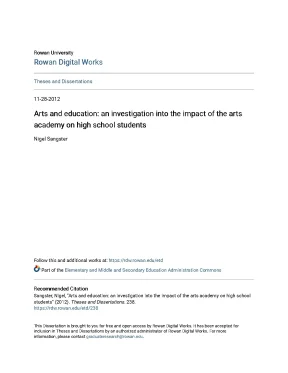
Tải xuống để đọc toàn bộRowan University Rowan Digital Works Theses and Dissertations 11-28-2012 Arts and education: an investigation into the impact of the arts academy on high school students Nigel Sangster Follow this and additional works at: https://rdw.edu/etd Part of the Elementary and Middle and Secondary Education Administration Commons Recommended Citation Sangster, Nigel, "Arts and education: an investigation into the impact of the arts academy on high school students" (2012). Theses and Dissertations.edu/etd/238 This Dissertation is brought to you for free and open access by Rowan Digital Works. It has been accepted for inclusion in Theses and Dissertations by an authorized administrator of Rowan Digital Works. For more information, please contact graduateresearch@rowan.
ARTS AND EDUCATION: AN INVESTIGATION INTO THE IMPACT OF THE ARTS ACADEMY ON HIGH SCHOOL STUDENTS by Nigel Sangster A Dissertation Submitted to the Department of Educational Leadership College of Education In partial fulfillment of the requirements For the degree of Doctor of Education at Rowan University March 2012 Dissertation Chair: James Coaxum, III, Ph. © 2012 Nigel Sangster Dedication To My Deceased Parents Harold Sangster & Volda Sangster And My Deceased Surrogate Mother Nestor Dick I deeply appreciate the sacrifices that my parents made to get me started on my educational journey. Without their investment in education, and the belief in me, leaving my homeland of Trinidad & Tobago would not have been realized. I dedicate homage to my surrogate mother to whom my parents had passed the torch and who has remained as the beacon that encouraged me to continue chasing after my dreams.
Acknowledgments This journey coming to an end is like the final act of an opera in which the music and the singers crescendo in contrapuntal harmony bringing the opera to a momentous and glorious finish. I give tribute and homage to both of my deceased parents, Harold and Volda Sangster, whose teachings formed the foundation of my present existence. I thank my daughter Nyeka ―Missy‖ Sangster, who is the ―apple of my eyes‖ for being patient as I shared my time between her and the doctoral program. To my sister Joy, I salute you for doing what big sisters do and that is, give encouragement and support.
To my brothers Roger and Leighton, I am gracious to you for being the pillars of support in times of uncertainty. I will be forever beholden to my very special friends and family, Dr. Deniese Cooper, Dr. Ruthie Cummings Hypolite, Dr.
Shelton Nicholls, Dr., and Gail Blache, who provided words of assurance and wisdom from the nascent stages of my journey to its completion. I would like to extend sincere gratitude to Dr. James Coaxum, my dissertation Chair, for his insightfulness, expediency, and unwavering support as I navigated my way through this journey. I also acknowledge my committee members, Dr.
Robert Campbell and Dr. Mark Raivetz, who provided me with plaudits that undergirded my confidence. I would be remiss without special recognition to Dr. Joanne Manning, who at the interview for acceptance to the doctoral program saw potential in me.
Finally, I would like to thank the teachers, administrators, parents, and students of Cooper Ruth Performing and Fine Arts School (pseudonym) who accommodated me and iv supported the mission of the research project. A special mention to Debra Boone and James Lemon of the same institution; I am eternally appreciative. v Abstract Nigel Sangster ARTS AND EDUCATION: AN INVESTIGATION INTO THE IMPACT OF THE ARTS ACADEMY ON HIGH SCHOOL STUDENTS 2011/2012 James Coaxum, III, Ph. Doctorate in Educational Leadership The broad topical area of my research study involved an investigation of the impact of the arts academy on the students of Cooper Ruth Performing and Fine Arts Middle-High School (pseudonym), using both quantitative and qualitative approaches.
Being a proponent of the arts, one of the premises of my research was to bring about a greater sense of awareness in my school and school district, that the arts were not ―frills‖ in the educational processes of children (Perrin, 1994). Focus was given to various strands of the arts disciplines in my efforts to substantiate the significance of the overarching question of the research project. My methodological approaches revealed findings that supported the hypothesis. The data collection instruments comprised: survey questionnaire, student interviews, and observations to support the impact of the high school arts academy on the students it served.
Triangulation was utilized in an attempt to produce a study that was valid, reliable, and free of biases. In the findings analysis, a plethora of data from the various sources suggested that there were educational benefits to students being instructed in an arts academy. Moreover, there were data which favorably suggested that participation in a high school vi arts academy can influence the attitudes of students relative to their academics and the arts. The findings also suggested that participation in an arts academy engaged students in the arts.
The collected interview data also suggested that students have identified occasions in which the transference of concepts and applications of strategies were possible between the arts and academic disciplines. Research participants demonstrated that their confidence levels and self-discipline improved considerably and will continue to improve as they progressed through their artistic and academic endeavors. The research participants revealed that parental involvement was of great significance for their sustainability in the arts academy of Cooper Ruth Performing and Fine Arts School. There was the demonstration that student engagement has a powerful influence on their involvement in the arts academy.
The high levels of student engagement provided the vehicle for theatre arts students, for example, to tap into their critical thinking skill sets. The findings were authenticated by extant literature that supported the arts academy. vii Table of Contents Abstract. vi List of Tables.
xiii Chapter 1: Introduction .1 The Research Problem .1 The Importance of Arts Education .3 Impetus/Purpose of the Study .10 Significance of the Study .14 Chapter 2: Literature Review .17 Evolution of Arts Education .18 Towards National Standards for Arts Education .22 Research Conducted in the Arts .25 Eight models of the arts .25 Visual arts studies .28 Moving Towards Arts Integration and Interdisciplinary Approaches .30 The arts and academic integration .32 Approaches to enhancing arts education and successful collaborations .34 Linking the Arts to School Choice.36 The Framework of Arts Magnet Schools .38 viii Table of Contents (Continued) Arts magnet schools .40 Studies of Arts Magnet Schools .43 Benefits of Collaborative Arts Magnet Experiences .51 Chapter 3: Methodological Approach .55 Quantitative Design – Phase I .59 Cross-tabulation analysis .59 Chi-square statistic .60 Qualitative Design – Phase II .62 Focus group interviews .64 Qualitative Design – Phase III .66 Non-participation observations .67 Artifacts and documents .69 ix Table of Contents (Continued) Setting of the Research Vicinage .70 Cooper Ruth Performing and Fine Arts School .74 Chapter 4: Analysis of Demographic Information and Contingency Table Results .77 Summary of Data .84 Analysis of the Impact of the Arts on High School Students at Cooper Ruth Performing and Fine Arts.86 Relationship between student involvement in the arts and overall educational performance .87 Relationship between participation in the arts and student attitudes towards academics and the arts .89 Relationship between gender in specific arts disciplines and student academic performance .93 Relationship between participation in the arts and student engagement in the arts .96 Relationship between participation in the high school arts program and student pursuit of careers in the arts .97 Discussion Section: Quantitative Findings .104 x Table of Contents (Continued) Chapter 5: Qualitative Findings – Analysis of Interviews and Observations .106 Relationship Between Student Involvement in the Arts and Their Overall Educational and Academic Performance .108 Rudiments taught in the arts and educational development.108 Influence of the Arts on Student Academic Performance .113 Influence of the Arts on Critical Thinking Skills.122 Relationship Between Participation in the Arts and Student Engagement in the Arts .129 High levels of student engagement opportunities in the arts .129 Classroom environment promoting learning .138 Relationship Between Participation in the Arts and Student Attitudes Towards Academics and the Arts .143 Impact of the arts on student attitudes and behavior.143 Relationship Between Participation in High School Arts Program and Student Pursuit of Careers in the Arts .150 Impact of the arts on future aspirations.150 Non-arts careers inspired by the arts .154 Relationship Between Parent Involvement in the Arts and Student Educational Performance .157 Parents‘ influence on their children‘s educational performance.158 Discussion Section: Qualitative Findings .173 xi Table of Contents (Continued) Chapter 6: Summary, Reflection, and Conclusion.178 Implications for the Research .178 Implications for Future Research .182 Limitations of the Study.184 Validity and Reliability of the Study .186 Subjectivity and Generalizability.187 Strengths of the Study .188 Reflection of Leadership .202 Appendix A: Student Survey Questionnaire .210 Appendix B: Student Interview Questionnaire .215 Appendix C: Mission Statement of Cooper Ruth Performing and Fine Arts .217 Appendix D: Scene from Guys and Dolls.218 Appendix E: Participants are Minors .219 Appendix F: Student Writing Sample: ―BET Experience‖.220 Appendix G: Student Writing Sample: ―Things Learned in Vocal Music Class‖ .221 Appendix H: Student Writing Sample: ―Lift Every Voice and Sing‖ .222 Appendix I: Art Technique: Dot and Dip .223 xii List of Tables Table Page Table 1 High School Distribution of Arts Disciplines by Gender & Ethnicity .79 Table 2 High School Distribution of Performing & Fine Arts Disciplines .80 Table 3 A High School Distribution of Arts Disciplines by Gender & Ethnicity .81 Table 4 High School Educational Performance by Ethnicity & Gender .82 Table 5 High School Students‘ Distribution of GPA Scores by Educational Attainment of Parents .84 Table 6 Hours Spent on Arts Related Community Events & GPA .88 Table 7 Chi-Square Analysis .88 Table 8 Influences of Performing and Fine Arts on Students‘ Attitudes .90 Table 9 Hours Spent on Arts Related Projects and Attitudinal Variables .91 Table 10 Grade Point Average Scores in Arts Disciplines and Gender .94 Table 11 Chi-Square Tests – What is your gender? .95 Table 12 Student Participation and Engagement in the Arts .97 Table 13 Study after Graduation and Hours Spent on Arts Related Assignments .98 Table 14 Chi-Square Analysis .99 Table 15 Study after Graduation and Hours Spent on Arts Related Community Events.100 xiii Chapter 1 Introduction The Research Problem Arts education has become part of the national vision of what all students should know and be capable of doing. For instance, national standards for student achievement have been developed in the arts in a process that was similar to the standards developed for mathematics, language arts, science, history, and other subject areas (U. Department of Education, 2008a). According to the United States Department of Education (2008a) the arts are basic because they impart meaning on the world through movement, sound, color, and gesture – nonverbal techniques of communication essential to understanding.
The arts are basic in a solely educational sense because they are crucial to education reform since they are used as vehicles for providing meaning to learning. They are an important vehicle for learning the skills so prized by reformers in both education and business communities. These skills include problem solving, higher-order thinking, flexibility, persistence, and cooperation (U. Department of Education, 2008a, p.
Students throughout their lives will draw from artistic experiences, such as music, dance, theatre, and visual arts to become part of the human heritage of creativity. Although schools may have been established as performing and fine arts institutions, of which the academic disciplines are of critical importance for students‘ fulfillment of the requirements for high school graduation, the arts seem trite in the eyes of some skeptics, and in so doing are viewed as fluff (Rabkin & Redmond, 2006). The arts provide students with the impetus for exploring, interpreting, and reacting to a world 1 that can at times appear to be cruel, distant, and complicated (Nathan, 2008). Additionally, as stated by Nathan, the arts help individuals to create scenarios that go beyond their own realities, providing pathways to unexplored possibilities in their lives.
Nội dung được bảo vệ bản quyền — Tải xuống đầy đủ
Trích dẫn luận án này
Nigel Sangster (2012). Tác động của Học viện Nghệ thuật đến Học sinh THPT [Luận án tiến sĩ, Rowan University]. LuanAn.net. https://luanan.net/nghe-thuat/tac-dong-hoc-vien-nghe-thuat-hoc-sinh-thpt
Câu hỏi thường gặp
Luận án "Tác động của Học viện Nghệ thuật đến Học sinh THPT" nghiên cứu về vấn đề gì?
Tác động của Học viện Nghệ thuật đến học sinh THPT giúp phát triển kỹ năng sáng tạo và tư duy độc lập.
Luận án "Tác động của Học viện Nghệ thuật đến Học sinh THPT" được bảo vệ tại trường nào?
Luận án này được bảo vệ tại Rowan University. Năm bảo vệ: 2012.
Luận án "Tác động của Học viện Nghệ thuật đến Học sinh THPT" thuộc chuyên ngành gì?
Luận án "Tác động của Học viện Nghệ thuật đến Học sinh THPT" thuộc chuyên ngành Educational Leadership. Danh mục: Nghệ Thuật.
Luận án "Tác động của Học viện Nghệ thuật đến Học sinh THPT" có bao nhiêu trang?
Luận án "Tác động của Học viện Nghệ thuật đến Học sinh THPT" có 237 trang. Bạn có thể xem trước một phần tài liệu ngay trên trang web trước khi tải về.
Cách tải luận án "Tác động của Học viện Nghệ thuật đến Học sinh THPT" về máy như thế nào?
Để tải luận án về máy, bạn nhấn nút "Tải xuống ngay" trên trang này, sau đó hoàn tất thanh toán phí lưu trữ. File sẽ được tải xuống ngay sau khi thanh toán thành công. Hỗ trợ qua Zalo: 0559 297 239.