Luận án: Thỏa ước lao động tập thể - So sánh hệ thống luật lao động Thụy Điển & Việt Nam
Luận án: So sánh thỏa ước lao động tập thể hệ thống luật lao động Thụy Điển & Việt Nam. Nghiên cứu chuyên sâu.
Hanoi Law University
International and Comparative Law
Luan An
Doctoral Dissertation of Law
Năm xuất bản
Số trang
326
Thời gian đọc
49 phút
Lượt xem
0
Lượt tải
0
Phí lưu trữ
60 Point
Tổng quan nhanh
- Chủ đề:
- Thỏa ước lao động: so sánh hệ thống Thụy Điển, Việt Nam
- Số trang:
- 326 trang
- Trường:
- Hanoi Law University
- Chuyên ngành:
- International and Comparative Law
- Tác giả:
- Hoang Thi Minh
- Năm:
- 2011
Tóm tắt nội dung luận án
I.Thỏa ước lao động so sánh hệ thống Thụy Điển Việt Nam
Tài liệu này cung cấp cái nhìn tổng quan về thỏa ước lao động tập thể. Nghiên cứu so sánh hệ thống pháp luật lao động Thụy Điển và Việt Nam. Phân tích chi tiết khái niệm, bản chất và vai trò của thỏa ước tập thể. Điều này giúp hiểu rõ tầm quan trọng của các thỏa thuận này trên thị trường lao động. Thỏa ước tập thể đóng vai trò cốt lõi trong việc điều chỉnh quan hệ lao động. Tài liệu nhấn mạnh sự khác biệt và tương đồng trong cách thức các quốc gia tiếp cận vấn đề này. Điều này bao gồm khung pháp lý, quy trình thương lượng và hiệu lực của thỏa ước. Mục tiêu là làm sáng tỏ những thách thức và cơ hội. Các hệ thống pháp luật khác nhau định hình thực tiễn thỏa ước lao động. Từ đó, rút ra bài học kinh nghiệm cho sự phát triển của pháp luật lao động. Việc này đặc biệt quan trọng trong bối cảnh hội nhập quốc tế.
1.1. Khái niệm và vai trò thỏa ước tập thể
Thỏa ước lao động tập thể là công cụ pháp lý quan trọng. Nó thiết lập các điều kiện làm việc, quyền lợi người lao động. Nó được ký kết giữa người sử dụng lao động hoặc tổ chức của họ và tổ chức đại diện người lao động. Vai trò của thỏa ước tập thể bao gồm ổn định quan hệ lao động. Nó còn bảo vệ quyền lợi chính đáng của cả hai bên. Thỏa ước là nền tảng cho sự phát triển bền vững của doanh nghiệp. Nó cũng là công cụ thúc đẩy đối thoại xã hội. Khái niệm này được phân tích sâu sắc. Nó bao gồm phạm vi áp dụng, các điều khoản bắt buộc và tùy nghi. Sự hiểu biết về khái niệm này là rất cần thiết. Nó giúp vận dụng hiệu quả trong thực tiễn. Tài liệu cũng đề cập đến các tiêu chuẩn quốc tế về thỏa ước lao động.
1.2. Khung pháp lý thỏa ước tại Việt Nam
Tại Việt Nam, Bộ luật Lao động Việt Nam quy định về thỏa ước tập thể. Các quy định bao gồm trình tự, thủ tục ký kết, nội dung và hiệu lực. Tổng Liên đoàn Lao động Việt Nam (TLĐLĐVN) đóng vai trò trung tâm. Tổ chức này đại diện cho người lao động trong quá trình thương lượng. Khung pháp lý Việt Nam đang trong quá trình hoàn thiện. Mục tiêu là phù hợp hơn với thực tiễn thị trường. Nó cũng cần đáp ứng các cam kết quốc tế. Tài liệu phân tích những điểm mạnh và hạn chế của khung pháp lý hiện hành. Các vấn đề như quyền công đoàn, khả năng thực thi thỏa ước được xem xét. Việc tuân thủ pháp luật lao động là yếu tố then chốt. Nó đảm bảo quyền và lợi ích hợp pháp của các bên.
1.3. Đặc điểm thỏa ước trong hệ thống Thụy Điển
Hệ thống thỏa ước lao động Thụy Điển nổi bật với truyền thống lâu đời. Nó dựa trên sự tự chủ của các bên xã hội. Mô hình Saltsjöbaden là nền tảng của hệ thống này. Các thỏa ước tập thể ở Thụy Điển thường có phạm vi rộng. Chúng bao gồm nhiều lĩnh vực từ tiền lương đến an sinh xã hội Thụy Điển. Liên minh doanh nghiệp Thụy Điển và các công đoàn có vai trò quyết định. Chính phủ ít can thiệp trực tiếp vào quá trình thương lượng. Tài liệu khám phá cơ chế hoạt động của hệ thống này. Nó làm rõ cách các bên đạt được sự đồng thuận. Sự tin cậy và trách nhiệm là yếu tố cốt lõi. Đây là đặc điểm nổi bật của mô hình quan hệ lao động Thụy Điển. Kinh nghiệm Thụy Điển cung cấp nhiều bài học quý giá.
II.Quan hệ lao động Mô hình đối thoại xã hội
Phần này tập trung vào các mô hình quan hệ lao động khác nhau. Nó đặc biệt nhấn mạnh tầm quan trọng của đối thoại xã hội. Nghiên cứu sâu về mô hình Saltsjöbaden của Thụy Điển. Nó được xem là hình mẫu của sự hợp tác giữa các bên xã hội. So sánh với thực trạng đối thoại xã hội tại Việt Nam. Phân tích các yếu tố ảnh hưởng đến sự thành công của đối thoại. Bao gồm văn hóa doanh nghiệp, chính sách lao động, và năng lực của các bên. Mục tiêu là tìm kiếm các giải pháp thúc đẩy đối thoại hiệu quả. Đối thoại xã hội là chìa khóa để giải quyết tranh chấp. Nó cũng là con đường để xây dựng quan hệ lao động hài hòa. Một môi trường làm việc ổn định mang lại lợi ích cho tất cả. Nó thúc đẩy tăng trưởng kinh tế bền vững.
2.1. Mô hình Saltsjöbaden và ảnh hưởng
Mô hình Saltsjöbaden là một thỏa thuận lịch sử. Nó được ký kết năm 1938 tại Thụy Điển. Thỏa thuận này đặt nền móng cho quan hệ lao động hiện đại của Thụy Điển. Nó thiết lập các nguyên tắc về quyền thương lượng tập thể. Nó cũng quy định về giải quyết tranh chấp lao động. Mô hình này nhấn mạnh sự tự chủ của các đối tác xã hội. Chính phủ có vai trò hạn chế. Ảnh hưởng của Saltsjöbaden rất sâu rộng. Nó tạo ra một nền văn hóa hợp tác, tin cậy. Mô hình này đã giúp Thụy Điển tránh được nhiều cuộc đình công. Nó đảm bảo sự ổn định và phát triển kinh tế. Các bên cùng chia sẻ trách nhiệm trong quản lý thị trường lao động. Mô hình này là một minh chứng sống động cho đối thoại xã hội hiệu quả.
2.2. Đối thoại xã hội trong quan hệ lao động
Đối thoại xã hội là quá trình trao đổi thông tin, tham vấn. Nó là sự thương lượng giữa chính phủ, người sử dụng lao động và người lao động. Mục tiêu là đạt được sự đồng thuận về chính sách lao động. Nó giúp giải quyết các vấn đề liên quan đến quan hệ lao động. Tại Việt Nam, đối thoại xã hội đang được khuyến khích phát triển. Vai trò của Tổng Liên đoàn Lao động Việt Nam là rất quan trọng. Các diễn đàn đối thoại cấp quốc gia, ngành, doanh nghiệp cần được tăng cường. Hiệu quả của đối thoại xã hội phụ thuộc vào nhiều yếu tố. Đó là sự thiện chí, năng lực của các bên, và khung pháp lý hỗ trợ. Đối thoại giúp giảm thiểu xung đột. Nó xây dựng niềm tin và sự hiểu biết lẫn nhau. Điều này rất cần thiết cho một thị trường lao động phát triển.
2.3. Các bên trong quan hệ lao động tập thể
Các bên chính trong quan hệ lao động tập thể bao gồm người lao động và công đoàn của họ. Bên kia là người sử dụng lao động hoặc các liên minh doanh nghiệp. Tại Thụy Điển, Liên minh doanh nghiệp Thụy Điển (Svenskt Näringsliv) là một đối tác mạnh. Họ đại diện cho quyền lợi của doanh nghiệp. Ở Việt Nam, Tổng Liên đoàn Lao động Việt Nam (TLĐLĐVN) đại diện cho người lao động. Các bên này có vai trò then chốt trong thương lượng tập thể. Họ đàm phán các thỏa ước lao động tập thể. Họ cũng tham gia vào việc xây dựng chính sách lao động. Sự cân bằng quyền lực giữa các bên là cần thiết. Điều này đảm bảo tính công bằng và hiệu quả của các thỏa thuận. Tài liệu phân tích chức năng, nhiệm vụ của từng bên. Nó xem xét tương tác của họ trong các hệ thống pháp luật khác nhau.
III.Pháp luật lao động Việt Nam Quyền công đoàn
Phần này đi sâu vào Bộ luật Lao động Việt Nam. Nó phân tích các quy định liên quan đến thỏa ước lao động tập thể và quyền công đoàn. Luật pháp Việt Nam có những điểm đặc thù. Nó cần được hiểu rõ để áp dụng hiệu quả. Nghiên cứu tập trung vào vai trò của Tổng Liên đoàn Lao động Việt Nam (TLĐLĐVN). Tổ chức này là đại diện hợp pháp của người lao động. Các quyền công đoàn như quyền thành lập, gia nhập, hoạt động, và quyền thương lượng được xem xét. Tài liệu đánh giá mức độ thực thi các quyền này trong thực tiễn. Nó cũng chỉ ra những thách thức trong việc bảo vệ quyền lợi người lao động. Sự phát triển của pháp luật lao động cần đi đôi với thực tiễn thị trường. Điều này nhằm đảm bảo công bằng xã hội và ổn định lao động.
3.1. Bộ luật Lao động Việt Nam và sửa đổi
Bộ luật Lao động Việt Nam là văn bản pháp luật quan trọng nhất. Nó điều chỉnh quan hệ lao động. Các phiên bản sửa đổi gần đây đã cập nhật nhiều quy định. Mục tiêu là phù hợp với kinh tế thị trường. Nó cũng hướng tới các tiêu chuẩn lao động quốc tế. Tài liệu phân tích các điều khoản liên quan đến thương lượng tập thể. Nó xem xét thỏa ước lao động tập thể, quyền đình công, và giải quyết tranh chấp. Những sửa đổi này ảnh hưởng đến việc thực hiện chính sách lao động. Nó tác động đến quyền và nghĩa vụ của người lao động và người sử dụng lao động. Hiểu rõ các quy định này là rất cần thiết. Nó giúp các bên tuân thủ luật pháp và bảo vệ lợi ích của mình.
3.2. Vai trò của Tổng Liên đoàn Lao động Việt Nam
Tổng Liên đoàn Lao động Việt Nam (TLĐLĐVN) là tổ chức chính trị - xã hội. Tổ chức này đại diện cho quyền và lợi ích hợp pháp của người lao động Việt Nam. TLĐLĐVN có vai trò quan trọng trong việc tham gia xây dựng pháp luật. Tổ chức này còn thực hiện chức năng giám sát việc thi hành luật. Nó tham gia vào quá trình thương lượng tập thể. TLĐLĐVN cũng tổ chức các hoạt động bảo vệ quyền công đoàn. Nghiên cứu đánh giá hiệu quả hoạt động của TLĐLĐVN. Nó chỉ ra những thành tựu và thách thức. Tổ chức này cần tiếp tục đổi mới để thích ứng với bối cảnh mới. Việc này nhằm nâng cao năng lực đại diện và bảo vệ quyền lợi đoàn viên.
3.3. Quyền công đoàn và thực thi quyền lợi
Quyền công đoàn là tập hợp các quyền cơ bản của người lao động. Bao gồm quyền thành lập, gia nhập công đoàn. Nó còn có quyền hoạt động công đoàn. Quyền thương lượng tập thể là một trong những quyền cốt lõi. Tài liệu phân tích các quy định về quyền công đoàn ở Việt Nam. Nó so sánh với các tiêu chuẩn quốc tế. Thực trạng thực thi quyền công đoàn vẫn còn nhiều thách thức. Điều này liên quan đến nhận thức, năng lực và môi trường pháp lý. Việc đảm bảo quyền công đoàn được thực thi đầy đủ là rất quan trọng. Nó giúp cân bằng quan hệ lao động. Nó thúc đẩy sự phát triển dân chủ tại nơi làm việc.
IV.Hệ thống an sinh xã hội Thụy Điển chính sách
Hệ thống an sinh xã hội Thụy Điển là một trong những hệ thống toàn diện nhất thế giới. Nó cung cấp sự bảo vệ rộng rãi cho người dân. Phần này khám phá cấu trúc và các nguyên tắc hoạt động của hệ thống này. Nó cũng phân tích chính sách lao động của Thụy Điển. Các chính sách này nhằm đảm bảo việc làm, bình đẳng giới và phát triển bền vững. So sánh với các chính sách tương tự ở Việt Nam. Tài liệu đánh giá hiệu quả của các chính sách này trong việc nâng cao chất lượng cuộc sống. Nó xem xét việc giảm thiểu rủi ro xã hội. Kinh nghiệm Thụy Điển cung cấp những bài học giá trị. Nó có thể được áp dụng để cải thiện hệ thống an sinh xã hội tại Việt Nam. Nó cũng góp phần vào việc xây dựng một thị trường lao động công bằng và hiệu quả.
4.1. Chính sách lao động và an sinh Thụy Điển
Chính sách lao động của Thụy Điển tập trung vào ba trụ cột. Đó là việc làm toàn dụng, thị trường lao động linh hoạt nhưng an toàn (flexicurity), và chính sách an sinh xã hội mạnh mẽ. Hệ thống an sinh xã hội Thụy Điển bao gồm bảo hiểm y tế, trợ cấp thất nghiệp, lương hưu, và các phúc lợi gia đình. Những chính sách này được thiết kế để hỗ trợ người lao động trong mọi giai đoạn cuộc đời. Chúng đảm bảo một mức sống ổn định. Nó giúp giảm bất bình đẳng. Tài liệu phân tích các thành phần chính của hệ thống này. Nó khám phá cách chúng tương tác để tạo ra một mạng lưới an toàn xã hội toàn diện. Chính sách này được xây dựng trên cơ sở đối thoại xã hội rộng rãi.
4.2. Bảo vệ người lao động so sánh tiếp cận
Việc bảo vệ người lao động được tiếp cận khác nhau giữa Thụy Điển và Việt Nam. Thụy Điển ưu tiên sự tự chủ của các bên xã hội thông qua thỏa ước tập thể. Việc này tạo ra các tiêu chuẩn cao hơn mức quy định của pháp luật. Việt Nam lại có xu hướng dựa vào quy định của Bộ luật Lao động Việt Nam. Nhà nước có vai trò chủ đạo hơn. Tài liệu so sánh các biện pháp bảo vệ người lao động. Bao gồm an toàn vệ sinh lao động, thời giờ làm việc, và tiền lương tối thiểu. Nó chỉ ra những ưu điểm và hạn chế của mỗi phương pháp. Mục tiêu là tìm kiếm các thực tiễn tốt nhất. Điều này nhằm nâng cao mức độ bảo vệ người lao động trong cả hai quốc gia.
4.3. Các yếu tố thúc đẩy phát triển bền vững
Phát triển bền vững trong quan hệ lao động đòi hỏi nhiều yếu tố. Bao gồm đối thoại xã hội hiệu quả, khung pháp lý vững chắc, và quyền công đoàn được tôn trọng. Tại Thụy Điển, mô hình Saltsjöbaden đã tạo ra sự ổn định. Nó là nền tảng cho sự phát triển kinh tế bền vững. Ở Việt Nam, việc hoàn thiện Bộ luật Lao động Việt Nam và nâng cao năng lực của Tổng Liên đoàn Lao động Việt Nam là rất quan trọng. Các chính sách lao động cần khuyến khích sự tham gia của các bên. Nó phải hướng tới sự hài hòa lợi ích. Tài liệu phân tích vai trò của an sinh xã hội Thụy Điển. Nó chỉ ra tầm quan trọng của các chính sách lao động công bằng. Việc này nhằm đạt được mục tiêu phát triển bền vững.
V.Thương lượng tập thể TLĐLĐVN Liên minh DN
Thương lượng tập thể là một quá trình cốt lõi trong quan hệ lao động. Phần này phân tích cơ chế thương lượng tập thể ở cả Thụy Điển và Việt Nam. Nó đi sâu vào vai trò của các tổ chức đại diện. Tại Việt Nam, Tổng Liên đoàn Lao động Việt Nam (TLĐLĐVN) đóng vai trò chính. Ở Thụy Điển, các liên minh doanh nghiệp Thụy Điển và công đoàn hoạt động độc lập và hiệu quả. Tài liệu đánh giá các thách thức và cơ hội. Những yếu tố này ảnh hưởng đến khả năng thương lượng và ký kết thỏa ước. Mục tiêu là tìm ra các giải pháp để tăng cường đối thoại xã hội. Việc này thúc đẩy một môi trường thương lượng công bằng hơn. Điều này mang lại lợi ích cho cả người lao động và người sử dụng lao động. Hiệu quả của thương lượng tập thể quyết định chất lượng quan hệ lao động.
5.1. Cơ chế thương lượng tập thể tại Việt Nam
Cơ chế thương lượng tập thể tại Việt Nam đang phát triển. Nó được quy định trong Bộ luật Lao động Việt Nam. Trình tự và thủ tục thương lượng được xác định rõ. Tuy nhiên, việc thực thi vẫn còn nhiều hạn chế. Năng lực thương lượng của công đoàn cơ sở cần được nâng cao. Vai trò của Tổng Liên đoàn Lao động Việt Nam (TLĐLĐVN) là định hướng và hỗ trợ. Các vấn đề thường được thương lượng bao gồm tiền lương, thời giờ làm việc, điều kiện làm việc. Tài liệu phân tích các rào cản hiện tại. Điều này nhằm đạt được thương lượng tập thể hiệu quả. Bao gồm sự thiếu kinh nghiệm, sự can thiệp của các bên ngoài, và thiếu thông tin. Các đề xuất cải thiện được đưa ra. Điều này nhằm thúc đẩy quá trình thương lượng. Việc này giúp đạt được thỏa ước có chất lượng.
5.2. Sự tham gia của Liên minh doanh nghiệp Thụy Điển
Tại Thụy Điển, các liên minh doanh nghiệp có vai trò cực kỳ quan trọng. Họ là đối tác chính trong thương lượng tập thể. Liên minh doanh nghiệp Thụy Điển (Svenskt Näringsliv) đại diện cho hàng ngàn doanh nghiệp. Họ tham gia vào các cuộc đàm phán ở cấp ngành và cấp quốc gia. Sự tham gia của họ dựa trên nguyên tắc tự do hiệp hội. Nó dựa trên sự tin cậy lẫn nhau với công đoàn. Họ đóng góp vào việc hình thành chính sách lao động. Họ cũng đảm bảo sự linh hoạt cho doanh nghiệp. Tài liệu phân tích cách các liên minh này tổ chức. Nó xem xét cách họ hoạt động để đạt được các thỏa thuận bền vững. Kinh nghiệm này có thể cung cấp cái nhìn sâu sắc. Nó giúp các tổ chức doanh nghiệp Việt Nam trong quá trình phát triển.
5.3. Thách thức và cơ hội đối thoại xã hội
Đối thoại xã hội mang lại nhiều cơ hội. Nó giúp giải quyết các vấn đề lao động, xây dựng lòng tin. Tuy nhiên, nó cũng đối mặt với nhiều thách thức. Ở Việt Nam, các thách thức bao gồm sự thiếu hiểu biết. Nó còn có sự hạn chế về năng lực của các bên tham gia. Thách thức khác là sự khác biệt về quyền lợi. Tại Thụy Điển, thách thức có thể là duy trì sự cân bằng quyền lực. Nó còn là thích ứng với các thay đổi kinh tế toàn cầu. Tài liệu đề xuất các giải pháp. Nó nhằm vượt qua những rào cản này. Việc tăng cường đào tạo, xây dựng lòng tin, và phát triển khung pháp lý. Các giải pháp này là cần thiết để thúc đẩy đối thoại xã hội hiệu quả. Điều này góp phần vào sự phát triển bền vững của thị trường lao động.
Mục lục chi tiết luận án
Tải xuống file đầy đủ để xem toàn bộ nội dung
Tải đầy đủ (326 trang)Nội dung chính
Chào bạn, là chuyên gia viết content SEO với 10 năm kinh nghiệm trong lĩnh vực học thuật, tôi đã phân tích tài liệu của bạn về "Thỏa ước lao động tập thể: Nghiên cứu so sánh hệ thống pháp luật lao động Thụy Điển và Việt Nam" và sẽ xây dựng nội dung SEO chi tiết theo yêu cầu.
Tổng quan nghiên cứu
Trong bối cảnh hội nhập kinh tế quốc tế sâu rộng và sự biến đổi không ngừng của thị trường lao động, việc xây dựng một hệ thống quan hệ lao động hài hòa, ổn định là yếu tố then chốt cho sự phát triển bền vững của mỗi quốc gia. Thỏa ước lao động tập thể (TƯLĐTT) đóng vai trò trung tâm trong việc cân bằng lợi ích giữa người lao động và người sử dụng lao động, đồng thời bổ trợ hiệu quả cho hệ thống pháp luật lao động quốc gia. Tại Việt Nam, mặc dù TƯLĐTT đã được pháp luật quy định, việc áp dụng trên thực tế vẫn còn yếu kém, mang nặng tính hình thức và chưa phát huy hết tiềm năng vốn có. Điều này dẫn đến tình trạng tranh chấp lao động gia tăng, điều kiện làm việc chưa được cải thiện đáng kể.
Trước thực trạng này, việc nghiên cứu kinh nghiệm quốc tế, đặc biệt từ các quốc gia có hệ thống quan hệ lao động phát triển cao như Thụy Điển, trở nên cấp thiết. Thụy Điển nổi bật với mô hình tự điều chỉnh hiệu quả, nơi TƯLĐTT phát triển mạnh mẽ và đóng góp không nhỏ vào sự ổn định thị trường lao động và tăng trưởng kinh tế bền vững.
Nghiên cứu này ra đời nhằm lấp đầy khoảng trống kiến thức về TƯLĐTT tại Việt Nam thông qua lăng kính so sánh quốc tế. Tài liệu đi sâu phân tích cơ sở lý luận, thực trạng áp dụng TƯLĐTT ở cả Thụy Điển và Việt Nam, đồng thời chỉ ra những vấn đề cốt lõi và đề xuất các giải pháp khả thi. Mục tiêu là nâng cao nhận thức về tầm quan trọng của TƯLĐTT, cải thiện khung pháp lý và chất lượng thực thi tại Việt Nam, góp phần xây dựng một thị trường lao động lành mạnh và năng động.
Nội dung chi tiết
Bối cảnh và Cơ sở Lý thuyết của Thỏa ước Lao động Tập thể
Quan hệ lao động luôn tồn tại sự mất cân bằng về quyền lực giữa người lao động cá nhân và người sử dụng lao động. Người lao động thường ở vị thế yếu hơn do nhu cầu việc làm và kinh tế, khiến họ khó đạt được các điều khoản làm việc công bằng khi đàm phán riêng lẻ. Chính sự mất cân bằng này đã thúc đẩy hình thành các tổ chức đại diện người lao động, điển hình là công đoàn, để tăng cường sức mạnh tập thể và bảo vệ quyền lợi. Từ đó, đàm phán tập thể và TƯLĐTT ra đời như một công cụ thiết yếu để cân bằng lợi ích, ổn định thị trường lao động.
TƯLĐTT, về cơ bản, là một thỏa thuận bằng văn bản giữa người sử dụng lao động (hoặc hiệp hội người sử dụng lao động) và tổ chức đại diện người lao động (công đoàn hoặc đại diện hợp pháp khác) về các điều kiện làm việc và các vấn đề liên quan đến quan hệ lao động. Tài liệu này làm rõ hai bản chất cốt lõi của TƯLĐTT: thứ nhất, bản chất "hợp đồng" thể hiện ở tính tự nguyện, sự tự quyết định và thỏa thuận song phương; thứ hai, bản chất "quy phạm pháp luật" thể hiện ở tính ràng buộc pháp lý, phạm vi áp dụng rộng rãi và khả năng điều chỉnh các quan hệ lao động tập thể. TƯLĐTT không chỉ là một cam kết giữa các bên mà còn là một "luật nhỏ" trong nội bộ doanh nghiệp hoặc ngành nghề.
Bên cạnh đó, nghiên cứu cũng phân tích mối quan hệ phức tạp giữa TƯLĐTT và các công cụ điều chỉnh thị trường lao động khác. Cụ thể, tài liệu xem xét sự tương tác giữa TƯLĐTT với luật lao động quốc tế (thông qua các công ước ILO), luật lao động quốc gia (khung pháp lý và nguyên tắc ưu tiên), hợp đồng lao động cá nhân (TƯLĐTT tạo tiền đề và khung cho hợp đồng cá nhân), nội quy lao động (TƯLĐTT có vai trò định hướng), thỏa thuận công việc (work agreements, phổ biến ở các nước như Đức, bổ sung cho TƯLĐTT), và tập quán doanh nghiệp. Việc hiểu rõ những mối quan hệ này là chìa khóa để xây dựng một hệ thống pháp luật lao động toàn diện và hiệu quả. Các nghiên cứu trước đây về TƯLĐTT ở Việt Nam thường chỉ giới hạn ở mức độ khái niệm, đặc điểm hoặc thực trạng áp dụng cục bộ, chưa đi sâu vào phân tích so sánh hay đề xuất giải pháp toàn diện. Điều này đặt nền móng cho đóng góp của nghiên cứu hiện tại.
Phương pháp Nghiên cứu và Giải pháp Đề xuất
Để thực hiện các nhiệm vụ nghiên cứu phức tạp này, tài liệu đã áp dụng một phương pháp luận đa chiều, kết hợp nhiều công cụ phân tích khác nhau. Phương pháp nghiên cứu chủ đạo là nghiên cứu so sánh, tập trung vào hai hệ thống pháp luật lao động khác biệt rõ rệt: Thụy Điển – một mô hình phát triển cao, tự điều chỉnh và Việt Nam – một quốc gia đang phát triển với nhiều thách thức trong việc thực thi TƯLĐTT. Cách tiếp cận này cho phép nhận diện những điểm tương đồng, khác biệt, từ đó rút ra bài học kinh nghiệm quý báu cho Việt Nam.
Quy trình nghiên cứu được triển khai một cách có hệ thống, bắt đầu từ việc xem xét các vấn đề lý luận cơ bản về TƯLĐTT để xây dựng một khung lý thuyết vững chắc. Tiếp theo, nghiên cứu đi sâu vào các tiêu chuẩn lao động quốc tế liên quan đến TƯLĐTT và lịch sử phát triển của công cụ này cùng với pháp luật liên quan ở cả Thụy Điển và Việt Nam. Giai đoạn trọng tâm là phân tích và đánh giá thực trạng pháp luật và thực tiễn áp dụng TƯLĐTT ở hai quốc gia, từ quy trình đàm phán, ký kết, thực hiện đến giải quyết tranh chấp. Cuối cùng, dựa trên kết quả phân tích so sánh và đánh giá thực trạng, nghiên cứu đề xuất các giải pháp cụ thể nhằm hoàn thiện hệ thống pháp luật TƯLĐTT, nâng cao nhận thức của các bên và cải thiện hiệu quả thực thi tại Việt Nam.
Các công cụ nghiên cứu được sử dụng bao gồm:
- Phương pháp biện chứng và duy vật lịch sử: Đặt TƯLĐTT trong bối cảnh phát triển kinh tế-xã hội, xem xét các mối liên hệ nhân quả và sự vận động, phát triển không ngừng.
- Phương pháp so sánh: Phân tích sự khác biệt và tương đồng giữa hệ thống Thụy Điển và Việt Nam để học hỏi kinh nghiệm.
- Phương pháp phân tích và tổng hợp: Mổ xẻ các khái niệm, vấn đề pháp lý và thực tiễn để hiểu sâu sắc, sau đó tổng hợp lại thành các kết luận và đề xuất.
- Phương pháp mô tả: Trình bày dữ liệu thống kê, quy trình pháp lý và thực trạng một cách khách quan.
- Phương pháp dự đoán: Đưa ra các dự báo về xu hướng phát triển thị trường lao động Việt Nam và kết quả tiềm năng khi áp dụng các khuyến nghị. Nghiên cứu cũng sử dụng đa dạng nguồn tài liệu, từ văn bản pháp luật, án lệ, tài liệu học thuật tiếng Anh và tiếng Việt, báo cáo của ILO, Eurofound, đến các công trình nghiên cứu chuyên sâu về quan hệ lao động.
Kết quả Nghiên cứu và Hàm ý Thực tiễn
Nghiên cứu đã chỉ ra một cách rõ ràng thực trạng TƯLĐTT tại Việt Nam còn nhiều hạn chế. Tỷ lệ doanh nghiệp có TƯLĐTT còn thấp, đặc biệt trong khu vực ngoài nhà nước và có vốn đầu tư nước ngoài. Hầu hết các TƯLĐTT được ký kết có giá trị hạn chế, mang tính hình thức, chỉ lặp lại các quy định tối thiểu của luật lao động, với ít điều khoản có lợi hơn cho người lao động. Tình trạng này bắt nguồn từ nhiều nguyên nhân gốc rễ: nhận thức chưa đầy đủ về vai trò của TƯLĐTT, những bất cập trong hệ thống pháp luật (chưa rõ ràng, chưa đầy đủ), vai trò còn yếu kém của công đoàn (do hạn chế về luật pháp và cơ chế phát triển), và sự thiếu hiệu quả của các cơ chế thực thi. Hậu quả là số lượng tranh chấp lao động và đình công gia tăng đáng kể, điều kiện làm việc của người lao động còn nhiều khó khăn.
Ngược lại, Thụy Điển cung cấp một bức tranh hoàn toàn khác. Với hệ thống TƯLĐTT phát triển ở mức độ cao, mang tính tập trung và tự điều chỉnh, thị trường lao động Thụy Điển đạt được sự ổn định đáng kể mà không cần sự can thiệp sâu của nhà nước. Các TƯLĐTT ở Thụy Điển không chỉ là công cụ điều chỉnh chi tiết các điều kiện làm việc mà còn là động lực thúc đẩy năng suất và phát triển kinh tế bền vững trong nhiều thập kỷ. Thành công này đến từ các yếu tố: công đoàn và hiệp hội người sử dụng lao động mạnh mẽ, độc lập; khung pháp lý hỗ trợ mạnh mẽ quyền đàm phán và tự do liên kết; và văn hóa đối thoại xã hội sâu sắc.
Từ những phân tích so sánh này, nghiên cứu rút ra những hàm ý thực tiễn quan trọng cho Việt Nam. Mô hình Thụy Điển cho thấy tầm quan trọng của việc trao quyền thực sự cho các đối tác xã hội (công đoàn và người sử dụng lao động) để họ có thể tự điều chỉnh quan hệ lao động. Để cải thiện tình hình, Việt Nam cần:
- Tăng cường vai trò và năng lực của công đoàn: Thông qua việc cải thiện cơ cấu tổ chức, nguồn nhân lực, điều kiện kinh tế và bảo vệ cán bộ công đoàn khỏi các hành vi chống công đoàn.
- Hoàn thiện pháp luật về TƯLĐTT: Khắc phục những điểm chưa rõ ràng, chưa đầy đủ, tạo điều kiện thuận lợi hơn cho quá trình đàm phán, ký kết và thực thi.
- Nâng cao nhận thức: Tuyên truyền về tầm quan trọng của TƯLĐTT cho cả người lao động, người sử dụng lao động và các cơ quan quản lý nhà nước.
- Cải thiện cơ chế thực thi và giải quyết tranh chấp: Đảm bảo TƯLĐTT được tuân thủ nghiêm túc và các tranh chấp được giải quyết hiệu quả. Những đề xuất này hướng tới việc tạo ra một môi trường pháp lý và thực tiễn thuận lợi hơn, giúp TƯLĐTT phát huy tối đa vai trò, đóng góp vào sự hài hòa và tiến bộ của quan hệ lao động tại Việt Nam.
Ai nên đọc tài liệu này?
Tài liệu "Thỏa ước lao động tập thể: Nghiên cứu so sánh hệ thống pháp luật lao động Thụy Điển và Việt Nam" là một nguồn tài nguyên quý giá và cần thiết cho nhiều đối tượng:
- Các nhà làm luật và hoạch định chính sách: Những người chịu trách nhiệm xây dựng, sửa đổi và hoàn thiện hệ thống pháp luật lao động, đặc biệt là các quy định về TƯLĐTT tại Việt Nam. Nghiên cứu cung cấp cái nhìn sâu sắc về những vấn đề hiện hữu và đề xuất các giải pháp cải cách dựa trên kinh nghiệm quốc tế.
- Cán bộ công đoàn và hiệp hội người sử dụng lao động: Những người trực tiếp tham gia vào quá trình đàm phán, ký kết và thực thi TƯLĐTT. Tài liệu giúp họ hiểu rõ hơn về quyền, nghĩa vụ, chiến lược đàm phán hiệu quả và cách thức tăng cường vai trò đại diện.
- Các nhà quản lý nhân sự (HR) tại doanh nghiệp: Đặc biệt là những doanh nghiệp đang hoạt động trong môi trường hội nhập hoặc muốn xây dựng quan hệ lao động hài hòa, bền vững. Nghiên cứu cung cấp kiến thức về cách áp dụng TƯLĐTT để quản lý lao động hiệu quả và phòng ngừa tranh chấp.
- Giảng viên, nghiên cứu sinh, sinh viên các ngành luật, quan hệ lao động, quản trị nhân lực: Tài liệu là nguồn tham khảo học thuật chất lượng cao, cung cấp cái nhìn toàn diện về TƯLĐTT từ lý luận đến thực tiễn, có giá trị trong việc giảng dạy, nghiên cứu và làm luận văn.
Để tiếp thu tốt nhất nội dung tài liệu, độc giả nên có kiến thức nền tảng về pháp luật lao động Việt Nam, các khái niệm cơ bản về quan hệ lao động và kinh tế thị trường.
Lợi ích cụ thể:
- Cho nhà làm luật: Định hình chính sách hiệu quả, phù hợp với xu thế quốc tế.
- Cho công đoàn/hiệp hội: Nâng cao năng lực đàm phán, bảo vệ quyền lợi.
- Cho quản lý doanh nghiệp: Xây dựng môi trường làm việc ổn định, tăng năng suất.
- Cho học giả: Nguồn tư liệu nghiên cứu chuyên sâu, mở rộng góc nhìn so sánh.
Câu hỏi thường gặp
-
Thỏa ước lao động tập thể (TƯLĐTT) là gì và tại sao nó quan trọng? TƯLĐTT là văn bản thỏa thuận giữa tập thể người lao động (thường thông qua công đoàn) và người sử dụng lao động về các điều kiện làm việc, quyền và nghĩa vụ của các bên. Nó quan trọng vì giúp cân bằng quyền lực giữa các bên, bảo vệ quyền lợi người lao động, ổn định quan hệ lao động, và là công cụ linh hoạt để cụ thể hóa luật pháp, thúc đẩy năng suất và phát triển bền vững cho doanh nghiệp.
-
TƯLĐTT ở Việt Nam có thể được cải thiện như thế nào? Cải thiện TƯLĐTT tại Việt Nam đòi hỏi nhiều giải pháp đồng bộ. Cần tăng cường vai trò và năng lực của công đoàn, hoàn thiện khung pháp lý về đàm phán và ký kết TƯLĐTT, nâng cao nhận thức của cả người lao động và người sử dụng lao động về tầm quan trọng của nó. Bên cạnh đó, việc cải thiện cơ chế thực thi và giám sát TƯLĐTT cũng là yếu tố then chốt để đảm bảo các thỏa thuận được tuân thủ nghiêm túc.
-
Tại sao mô hình Thụy Điển được xem là hình mẫu cho TƯLĐTT? Mô hình Thụy Điển là hình mẫu vì nó dựa trên nguyên tắc "tự điều chỉnh" mạnh mẽ của các đối tác xã hội. Công đoàn và hiệp hội người sử dụng lao động ở Thụy Điển rất độc lập, có năng lực đàm phán cao và chủ động điều chỉnh quan hệ lao động thông qua TƯLĐTT. Nhà nước chỉ đóng vai trò hỗ trợ, tạo khung pháp lý mà không can thiệp sâu, giúp TƯLĐTT trở thành công cụ linh hoạt, hiệu quả, đóng góp lớn vào sự ổn định và phát triển kinh tế lâu dài.
-
Khi nào doanh nghiệp nên ưu tiên phát triển TƯLĐTT? Doanh nghiệp nên ưu tiên phát triển TƯLĐTT ngay từ khi bắt đầu hoạt động, đặc biệt trong bối cảnh thị trường lao động cạnh tranh và hội nhập quốc tế. TƯLĐTT không chỉ là tuân thủ pháp luật mà còn là khoản đầu tư chiến lược giúp xây dựng lòng tin, giảm thiểu tranh chấp, tăng cường sự gắn kết và năng suất lao động. Khi đối mặt với các thách thức về quan hệ lao động hoặc muốn nâng cao hình ảnh trách nhiệm xã hội, TƯLĐTT càng trở nên cấp thiết.
-
Vai trò của Công đoàn trong TƯLĐTT ở Việt Nam là gì? Công đoàn ở Việt Nam có vai trò đại diện cho tập thể người lao động trong đàm phán, ký kết và giám sát thực hiện TƯLĐTT. Tuy nhiên, nghiên cứu chỉ ra rằng vai trò này còn hạn chế do nhiều nguyên nhân như cơ cấu tổ chức, năng lực cán bộ, nguồn lực và tính độc lập. Để TƯLĐTT thực sự hiệu quả, công đoàn cần được tăng cường năng lực đại diện, đàm phán, và bảo vệ quyền lợi một cách chủ động, độc lập hơn.
Kết luận
Nghiên cứu "Thỏa ước lao động tập thể: Nghiên cứu so sánh hệ thống pháp luật lao động Thụy Điển và Việt Nam" đã cung cấp một cái nhìn toàn diện và sâu sắc về vai trò, bản chất, và thực trạng của TƯLĐTT.
Những điểm chính cần rút ra:
- TƯLĐTT là công cụ không thể thiếu để cân bằng quyền lực, ổn định quan hệ lao động và thúc đẩy phát triển bền vững trong nền kinh tế thị trường.
- Việt Nam đang đối mặt với nhiều thách thức trong việc phát triển TƯLĐTT, dẫn đến các vấn đề như tranh chấp lao động và điều kiện làm việc chưa được cải thiện.
- Mô hình tự điều chỉnh của Thụy Điển cung cấp những bài học quý giá về cách xây dựng một hệ thống TƯLĐTT hiệu quả, với công đoàn mạnh và sự can thiệp nhà nước tối thiểu.
- Nghiên cứu đề xuất các giải pháp cụ thể nhằm hoàn thiện khung pháp lý, nâng cao năng lực công đoàn và nhận thức của các bên tại Việt Nam.
- Việc áp dụng TƯLĐTT chất lượng là yếu tố quan trọng để Việt Nam hội nhập thành công và phát triển thị trường lao động lành mạnh.
Hướng phát triển tiếp theo của nghiên cứu có thể tập trung vào việc theo dõi hiệu quả của các giải pháp được đề xuất, nghiên cứu chuyên sâu hơn về cơ chế giải quyết tranh chấp lao động trong bối cảnh TƯLĐTT, hoặc mở rộng so sánh với các mô hình ở các quốc gia đang phát triển khác.
Chúng tôi khuyến khích các nhà hoạch định chính sách, đối tác xã hội và giới học thuật cùng tham khảo tài liệu này để đóng góp vào việc cải thiện TƯLĐTT, tạo dựng một môi trường lao động công bằng và bền vững hơn tại Việt Nam. Hãy khám phá toàn bộ luận án để hiểu rõ hơn về những phân tích và khuyến nghị chi tiết.
Trích đoạn nội dung luận án
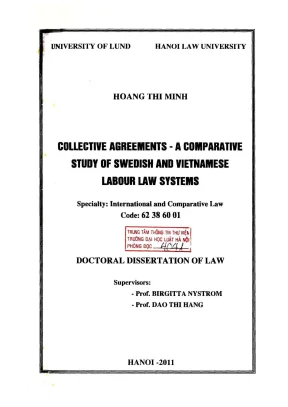
Tải xuống để đọc toàn bộHOANG THI MINH COLLECTIVE AGREEMENTS - A COMPARATIVE STUDY OF SWEDISH AND VIETNAMESE LABOUR LAW SYSTEMS Specialty: International and Comparative Law Code: 62 38 60 01 TRUNG TAM THONG TIN THU VIER TRUONG ĐẠI HỌC LUAT HÀ NỘI PHÒNG BỌC__ “2⁄4 f DOCTORAL DISSERTATION OF LAW Supervisors: - Prof. BIRGITTA NYSTROM - Prof. DAO THI HANG HANOI -2011 Acknowledgement My study is the result of a process to which many people contributed. First, I am greatly indebted to my Swedish supervisor, Prof.
Birgitta Nystrom, for her dedicated guidance, advice, and support. As her student since 2002, I have constantly benefited from her expertise. I was so fortunate to have the opportunity of learning from her not only legal knowledge, but also the way to work professionally. This study would not have existed or completed if she had not given me her precious guidance.
I did not understand that collective agreements are so important to a labour market until I started digging deeper in the subject. To help me develop my study and reach the necessary understandings, she spent a great deal of time reading my manuscript, commenting on and discussing its content. She made herself constantly available to me, encouraged me so much and inspired me to work on my subject from its beginnings to the final stages of the study. I would also like to express my deepest gratitude to my Vietnamese supervisor, Prof.
Dao Thi Hang, whose suggestion and guidance contributed greatly to my work. Being her colleague at Hanoi Law University, I could meet her regularly and discuss various matters in the field of labour laws, receive her encouragement and helpful information about our labour market. She gave me insightful comments. She was always available for any discussion regarding my thesis and gave me her full support in any activities related to the research, thus creating favourable conditions for me.
I would like to express my sincere gratitude to Prof. Christina Moell and Asst. Bengt Lundell who always supervised and gave all the Vietnamese students their wholehearted support and helped us handle any difficulties during the course of our studies. After seminars held to assess my progress towards the completion of this study, I also received many thoughtful, objective and constructive comments, advice and suggestions from members of the examinationypanel.
I would like to specially thank Asst. Bengt Lundell, Prof. Per Ole Traskman, Prof. Michael Bogdan, Dr.
Nguyen Kim Phung, Prof. Nguyen Viet Ty and Prof. Nguyen Huu Chi. Their opinions helped very much in developing and improving my thesis.
I am indebted to many professors and colleagues in Lund University, Suffolk University Law School, Max Planck Institute and Swedish National Mediation Office. I am especially grateful to Prof. Reinhold Fahlbeck, Prof. Hans-Heinrich Vogel, Prof.
Holger Knudsen, Prof. Daeubler Wolfgang, Prof. Lars Goran Malmberg, Prof. Hans Henrik Lidgard, Asst.
Mulder Johann, Dr. Mia Ronnmar, Niklas Selberg and Mr. Kurt Eriksson, for their kind support, instruction, helpful materials, valuable advice, explanations of legislative systems and their encouragement. Also, I would like to take this opportunity of sincerely thanking the librarians, assistants and staff for providing me the most favorable study facilities and technical support.
Also, I am indebted to my colleagues in the Ha Noi Law University, especially in the Labour Law Section who supported me by undertaking additional teaching duties, providing me with the precious gift of time off to do the research. I would also like to thank the institutions concerned including the Ministry of Labour - War Invalids and Social Affairs, the ILO Office in Hanoi, the Vietnam General Confederation of Labour, and the Vietnamese Supreme Court as well as the research centers and businesses in Vietnam for providing relevant information and data for the thesis. I would like to give my warmest thank to Prof. Pham Huu Nghi, Prof.
Pham Cong Tru, Dr. Luu Binh Nhuong, Dr. Do Ngan Binh and Mr. Nguyen Viet Thung, Mr.
Dao Van Thu for materials and interesting discussions or opinions regarding specific issues relating to my study. My gratitude and appreciation go to my dear friend, Harry Larsen Rice, for his great help in my study of English and the search for materials. He made his help available by way of explanations of Latin phrases, English idioms and special expressions in documents that I was dealing with as well as translating short texts in French/German when necessary. He also gave me encouragement and valuable advice on how to handle difficulties during the research process.
I would like to thank the Sida, for financing my research as part of the project "Strengthening of Legal Education in Vietnam". I owe my deep gratitude to the Project Management Board and those who helped organize our studies and offered adequate conditions enabling us to complete our research tasks. My special thanks belong to Asst. Bengt Lundell, Dr.
Nguyen Quoc Hoan, Dr. Nguyen Van Quang, Ms. Cu Thuy Trang and Ms Nguyen Thu Thuy. I am also grateful to Philip Horowitz, who helped me proof read the whole text and suggested many corrections and improvements.
Finally, I wish to express my deepest gratitude to my parents and my son for their unlimited support and love. I had most favourable conditions for work; I was fully energized by having them beside me. I would very much appreciate receiving any further constructive opinions and comments on this study. I can be reached at minhminhdh!@yahoo.
Minh Thi Hoang TABLE OF CONTENT Chapter 1: Introducfion. Research tasks, delimitation and definitions. Methods and materiaÌS.15 3c 11 cv vn ng nrưn 8 I9 -u oi. 16 Chapter 2: Some basic issues on collective agreements.
Concept of collective agreemenfS. ---- 5-5 ĂSs+sx s2 sesseesee 17 2. Interrelation between collective agreements and other legal instruments regulating the labour market. Collective agreements and international labour law.
Collective agreements and national labour law. Collective agreements and individual labour relations law. Collective agreements and collective labour relations law. Collective agreements and individual contracts.
Collective agreements and work rules. Collective agreements and work agreements. Collective agreements and company practices. Features of collective agreemennfS.
Nature of collective agreemens. The “Contract” nafure. The “legal Morm” nafure. -- - - -- -- << tt ng HH HH ngà 38 2.
Role of collective agreeMentS. Implementing labour legislation. Balancing social partners’ interests, stabilizing labour relations. Creating equally competitive environment for enterprises.
Consolidating discipline at work and supporting production. Forms of collective agreement. HH HH HH HH HT TH 46 D2, COREA POTION s.secgrsnieosnecesstoseese-exaBesessexesdBnEsoaaoHi ao iscla408- 55 xSkos518BseE0a6550146s. Tacit-COMSENE FOF 0.
The content of collective agreemenfs. ETTPÏOVTTIETIE SEGUITẨY s¡cuueonioinaaeoennridodisnionoDaaidaosEENEGRHD. Working time and leave.- --- --- -- 2à Tà HH“ ng nưkp 52 2. WAGES ANG EMU ALON ssiincanisccicarscenrarsconxseaancanvonanennanoreneamasnnernnnmneasennaans 53 2.
Occupational safety and health. Social security and Welfare. Cooperation and communication between the trade union and the MANAGEME MM.7; Resolution Of CONT Gs: seeeeeseeeeenernarrorentdinrioigrrisodiirtroliibssgiosituiieraostgginorsixsgt 58 2. Clauses of Application scope and effect of collective agreement.
Legal effect of collective agreemenfS. Binding or not binding2. --- -- s4 HH Hi HH nh.-- - --- ---- SL HH H HH HH HH HH HH Hư 67 2. Conflicting collective agreemens.
Duration of collective agreemenfs. Classification of collective agreemenfs. International collective agreemens. Global collective agreermenfS.
-- --- ---«+- se sex cv. vn HT re 85 2. Regional collective agreermenifS. National collective agreemenIs.
Intersectoral collective agree@MenNt. Industry-wide collective agreement. Company-level collective agreement. Recognition of collective bargaining agents.
Conditions for collective bargaining and status of collective agreement development in some major market economies. Collective agreement legislation-an overview. International labour ÌaW. vn ng nghe 125 3.
Primary issues of international labour law. Concept of international labour ÌW. The rise of international labour ÌaW. The purposes of international labour lawWS.
International framework for collective agreements. Glebe Ine iS ecg rere 128 IV S. Regtorial Tia[Turri6niE. Main regulation of international labour law in the collective agreement 20s] san co 288D.
ngggy angg0tgagSiEN5300030010003058182N596955700811G10ĐSP.NHIHRDXRGIIRSGNETADEUENI-NMEHEDIEM/GUAIGD0-G01000T00002300 138 3. The influence of international labour law on the Swedish and Vietnamese sysSftems. - - -- LH HH HH HH ng HH ng Hư 143 3. The influence of international labour law on the Swedish system.
The influence of international labour law on Vietnamese system. Collective agreement legislation and collective agreement development in Sweden and Vietnam. Collective agreement legislation and the development of the collective agreement in SwWede. Collective agreement legislation and collective agreement development in Vietnam.
ccc sceeeessesseeesenssessseeseeeseasenseneeseeeseeeneeeeeeeers 160 Chapter 4: Current regulation on collective agreements in Sweden and Vietnam. Conclusion of collective agreemenfS. Parties to collective agreemens. EffylDWse: SỈ saeseneesensninuodinraniitnddiltgtittrdipstsi0ENESNVSISGHESRHtiptSNsgtitisgNISGGISSDSSNGSIEGEES 169 $.
Trade tHnböni th SĐT cacaueoaronrseeriidEoinitdaursdeavodggig01640854395/440955488A0567-ESGS. Trade WOR 1 VÏBEHHÍNoiiasndsnennsrsratnrsiiadtkekkgESECSLEM0110/2409NH/. The Swedish erHDÏO@T.-- -< ĂĂ St HH KH HH HH HH. The Vietnamese €IIDÏO€FF.-- 5-2 s5 5n HH HH HH HH nh 190 1.
Making a Pema seuoeesnnverrnnsensirronnorrnnotddruoibnnornlionitidtgnDgKDASnSGTEO2AA0000/80 00159 192 Ä.- --- - ---- <2 TH TH TH TH TH KH TH 203 4. Signing a collective agreement. Registering collective agreemenIS. na seuss gà5nnhĩngtha bung Gousuaci3a40IG01nu8NĐR103000157M850100417308 206 4.
Authorities responsible for collective agreement registration. Procedure of registration.-- ---- ---- - SH HH HH ri 210 4. Implementation of collective agreemenfs. Termination of collective agreemens.
Invalid Collective agreerneniÌS. Legal grounds for invalidating collective agreements. Authorities who can declare a collective agreement to be invalid. Legal consequences of invalid collective agreements.
Disputes concerning collective agreemenfs. TRUSS OF HÌSBHES neeeseeensneenennrornnnnnnnieontonnrtitgrtrtttttiag0g1000050000000500330089001008. Dispute settlement bodies.-- ccc ĐÀ SH ren E29/E) 4. Dispute settlement bodies in Sweden.
Dispute settlement bodies in Vietnam.-- -----ccc sec Hrkereeeree 231 4. Dispute settlement procedure. Dispute settlement procedure in Sweden. Dispute settlement procedure In Vietnam.
Violations relating to collective agreemens. Concept of violations relating to collective agreements. Forms of violations and treaftment. - --- ---ccc se, 243 Chapter 5.
Promoting collective agreement development in 5. Creating fundamental conditions for trade union development. Strengthening Vietnamese trade union system. The necessity of trade union innovation.
Specific actions needed to enhance the trade union’s role. Strengthening the primary organization. Improving the personnel of the plant-level trade unions .2 Activating and tightening the links between trade unions at different levels. Clearly stating trade union rights and responsibilities in law and adding II ,Ao-.
Protecting trade union officials from anti-union treatment. Strengthening trade union’s economic condifions. Rebalancing the trade union CoSt SÍTICÍHF€. Enriching trade union HHỚS.Ô <5 HH gen eae: 5.
The issue of payment for staff of primary HHHOTIS. Organizing both sides for collective bargaining. Improving the law relating to collective agreements. Expanding bargaining actors on the employee side.
Using strikes in supporting collective agreement conclusion. Collective agreement registration, a mandatory procedure affirming the legitimacy of the agreement before application. Dealing with clauses which are incompatible with labour law provisions but appear well suited to the specific situations of the ETHIIETIDTISEEBseeaeendienoaenrengrorosoiooresreosStngsrsgBBfnuaausoiiusaesgslBfBWiarasrosltoasgpviififaswnnastss. Duration of collective agreemenfs.
Applying collective agreements in the event of the reorganization of AM UNdertaking. Amendment of collective agreements. Expiry of collective agreemens. Sector-level collective agreements, a new development.
The trade union’s representative role in setting labour disputes. Industrial peace obligation and iiability for the illegal strikes. Completing the mechanism relating to the settlement of labour PGiSPUute 2c ÔÔÔÔ. Reinforcing labour law implementation.
Overcoming some other difficulties confronting collective agreement GevelopMent. Lack of awareness of collective agreements and trade unions. Lack of knowledge of labour law. Lack of experiences and skills needed for collective bargaining.
Lack of resources and Competence.ccccccceeseeescecsecsseseceseeseeneeeees 297 Related publicafions. - --- -- LG ng ng nên 302 References and appendix .
Nội dung được bảo vệ bản quyền — Tải xuống đầy đủ
Trích dẫn luận án này
Hoang Thi Minh (2011). Thỏa ước lao động tập thể: Thụy Điển & Việt Nam [Luận án tiến sĩ, Hanoi Law University]. LuanAn.net. https://luanan.net/luat-hoc/thoa-uoc-lao-dong-tap-the-thuy-dien-viet-nam
Câu hỏi thường gặp
Luận án "Thỏa ước lao động tập thể: Thụy Điển & Việt Nam" nghiên cứu về vấn đề gì?
Luận án: So sánh thỏa ước lao động tập thể hệ thống luật lao động Thụy Điển & Việt Nam. Nghiên cứu chuyên sâu.
Luận án "Thỏa ước lao động tập thể: Thụy Điển & Việt Nam" được bảo vệ tại trường nào?
Luận án này được bảo vệ tại Hanoi Law University. Năm bảo vệ: 2011.
Luận án "Thỏa ước lao động tập thể: Thụy Điển & Việt Nam" thuộc chuyên ngành gì?
Luận án "Thỏa ước lao động tập thể: Thụy Điển & Việt Nam" thuộc chuyên ngành International and Comparative Law. Danh mục: Luật Học.
Luận án "Thỏa ước lao động tập thể: Thụy Điển & Việt Nam" có bao nhiêu trang?
Luận án "Thỏa ước lao động tập thể: Thụy Điển & Việt Nam" có 326 trang. Bạn có thể xem trước một phần tài liệu ngay trên trang web trước khi tải về.
Cách tải luận án "Thỏa ước lao động tập thể: Thụy Điển & Việt Nam" về máy như thế nào?
Để tải luận án về máy, bạn nhấn nút "Tải xuống ngay" trên trang này, sau đó hoàn tất thanh toán phí lưu trữ. File sẽ được tải xuống ngay sau khi thanh toán thành công. Hỗ trợ qua Zalo: 0559 297 239.