Luận án: Nhà nước, Tư nhân và Nghệ thuật Hiện đại Nam Mỹ 1940-1943 - Olga Ulloa-Herrera
Khám phá nghệ thuật hiện đại Nam Mỹ thời kỳ 1940-1943: Vai trò của nhà nước và tư nhân. Phân tích xu hướng, tác phẩm tiêu biểu.
Cultural Studies
Luan An
Luận án tiến sĩ
Năm xuất bản
Số trang
469
Thời gian đọc
1 giờ 11 phút
Lượt xem
0
Lượt tải
0
Phí lưu trữ
60 Point
Tổng quan nhanh
- Chủ đề:
- Chính sách văn hóa Nam Mỹ: Vai trò nhà nước & nghệ thuật
- Số trang:
- 469 trang
- Trường:
- George Mason University
- Chuyên ngành:
- Cultural Studies
- Tác giả:
- Olga Ulloa-Herrera
- Năm:
- 2014
Tóm tắt nội dung luận án
I.Chính sách văn hóa Nam Mỹ Vai trò nhà nước nghệ thuật
Các chính phủ Nam Mỹ tích cực định hình cảnh quan văn hóa giai đoạn 1940-1943. Chính sách văn hóa Nam Mỹ trở thành công cụ quan trọng. Chúng giúp kiến tạo bản sắc dân tộc và quảng bá hình ảnh quốc tế. Nhà nước tài trợ cho nghệ thuật, hỗ trợ các nghệ sĩ và tổ chức. Giai đoạn này chứng kiến sự can thiệp gia tăng của chính phủ vào sản xuất và phổ biến nghệ thuật. Nhà nước thường định hướng chủ đề và phong cách nghệ thuật, gắn chúng với lợi ích quốc gia.
1.1. Tài trợ nhà nước cho nghệ thuật Các chương trình
Chính phủ các nước Nam Mỹ thiết lập nhiều chương trình tài trợ. Các dự án nghệ thuật được hỗ trợ. Mục đích là quảng bá văn hóa quốc gia. Học bổng và giải thưởng khuyến khích nghệ sĩ. Điều này tạo ra một hệ thống hỗ trợ đáng kể. Nó góp phần vào sự phát triển của nghệ thuật hiện đại.
1.2. Mục tiêu chính sách Xây dựng bản sắc dân tộc
Chính sách văn hóa Nam Mỹ tập trung vào việc xây dựng bản sắc dân tộc. Nghệ thuật được sử dụng để định hình ý thức quốc gia. Các tác phẩm thường thể hiện lịch sử, truyền thống và các giá trị địa phương. Mục tiêu là đoàn kết dân tộc. Nó cũng khẳng định sự độc đáo của khu vực.
1.3. Quan hệ ngoại giao Nghệ thuật và ảnh hưởng quốc tế
Nghệ thuật cũng phục vụ mục tiêu ngoại giao. Các cuộc triển lãm quốc tế được tổ chức. Chúng giúp củng cố quan hệ với các quốc gia khác. Đặc biệt là với Hoa Kỳ trong bối cảnh Thế chiến II. Nghệ thuật đóng vai trò cầu nối văn hóa quan trọng.
II.Thị trường nghệ thuật tư nhân Mỹ Latinh phát triển
Khu vực tư nhân đóng vai trò thiết yếu. Nó bổ sung cho tài trợ nhà nước. Các cá nhân và tập đoàn đầu tư vào nghệ thuật. Họ tạo ra một thị trường sôi động. Điều này giúp nghệ sĩ có thêm nguồn lực sáng tạo. Thị trường tư nhân cũng thúc đẩy sự đa dạng nghệ thuật. Các phòng trưng bày nghệ thuật độc lập xuất hiện nhiều hơn. Hoạt động sưu tập nghệ thuật Nam Mỹ phát triển mạnh mẽ.
2.1. Nguồn tài trợ tư nhân Cá nhân và doanh nghiệp
Nhiều nhà hảo tâm tư nhân hỗ trợ các nghệ sĩ. Các doanh nghiệp cũng tham gia tài trợ. Họ đầu tư vào việc mua tác phẩm. Việc này giúp nghệ sĩ có thu nhập ổn định. Nó khuyến khích sự nghiệp nghệ thuật bền vững.
2.2. Sự trỗi dậy của phòng trưng bày độc lập
Phòng trưng bày nghệ thuật độc lập mở ra không gian mới. Chúng trưng bày các tác phẩm tiên phong. Đây là nơi các nghệ sĩ trẻ thể hiện tài năng. Chúng tạo ra môi trường cạnh tranh. Nó góp phần vào sự phát triển của Chủ nghĩa Hiện đại Nam Mỹ.
2.3. Đầu tư vào nghệ thuật Khuyến khích sáng tạo
Đầu tư tư nhân khuyến khích sáng tạo không ngừng. Nghệ sĩ có tự do hơn về chủ đề và phong cách. Thị trường tư nhân chấp nhận rủi ro. Điều này cho phép thử nghiệm các hình thức nghệ thuật mới. Nó mở rộng ranh giới của nghệ thuật hiện đại.
III.Chủ nghĩa Hiện đại Nam Mỹ Phong trào ảnh hưởng
Chủ nghĩa Hiện đại Nam Mỹ bùng nổ trong giai đoạn này. Các phong trào nghệ thuật mới xuất hiện mạnh mẽ. Chúng phản ánh sâu sắc xã hội và chính trị khu vực. Nghệ sĩ tìm kiếm tiếng nói riêng, độc đáo. Họ hòa trộn ảnh hưởng châu Âu với văn hóa địa phương. Nghệ thuật Trừu tượng Mỹ Latinh và Chủ nghĩa Siêu thực Nam Mỹ đặc biệt nổi bật. Chủ nghĩa Hiện thực Xã hội ở Mỹ Latinh cũng có sức ảnh hưởng lớn, mang thông điệp xã hội sâu sắc.
3.1. Nghệ thuật Trừu tượng Mỹ Latinh Đặc điểm
Nghệ thuật Trừu tượng bắt đầu định hình rõ ràng. Nó khám phá hình khối, màu sắc và cấu trúc. Nghệ sĩ tách rời khỏi hiện thực. Họ tìm kiếm sự biểu cảm thuần túy. Phong cách này mang đến cái nhìn mới về thế giới.
3.2. Chủ nghĩa Siêu thực Nam Mỹ Diễn giải địa phương
Chủ nghĩa Siêu thực thu hút nhiều nghệ sĩ. Nó được diễn giải theo cách riêng biệt. Các yếu tố văn hóa bản địa và thần thoại được kết hợp. Giấc mơ và tiềm thức trở thành chủ đề chính. Nó tạo ra một phiên bản siêu thực độc đáo.
3.3. Chủ nghĩa Hiện thực Xã hội Thông điệp chính trị
Chủ nghĩa Hiện thực Xã hội ở Mỹ Latinh phản ánh thực trạng xã hội. Tác phẩm mang thông điệp chính trị mạnh mẽ. Chúng thường phê phán bất công và đấu tranh giai cấp. Nghệ sĩ muốn tạo ra thay đổi thông qua nghệ thuật. Đây là tiếng nói của người dân.
IV.Kiểm duyệt nghệ thuật 1940 1943 Nhà nước xã hội
Giai đoạn 1940-1943 chứng kiến kiểm duyệt nghệ thuật đáng kể. Chính phủ áp dụng các biện pháp kiểm soát chặt chẽ. Họ muốn định hướng nội dung nghệ thuật theo ý mình. Mục đích là duy trì ổn định xã hội. Đặc biệt trong bối cảnh chiến tranh thế giới đầy biến động. Các tác phẩm bị coi là "phản động" hoặc "thù địch" bị cấm. Kiểm duyệt ảnh hưởng sâu sắc đến tự do sáng tạo.
4.1. Các hình thức kiểm duyệt Áp lực chính trị
Kiểm duyệt diễn ra dưới nhiều hình thức. Có thể là cấm triển lãm công khai. Hoặc rút tài trợ từ các nghệ sĩ. Áp lực chính trị ảnh hưởng trực tiếp đến tự do sáng tạo. Nó giới hạn phạm vi biểu đạt nghệ thuật.
4.2. Phản ứng của giới nghệ sĩ Đấu tranh và thích nghi
Nghệ sĩ phản ứng khác nhau trước kiểm duyệt. Một số công khai chống đối, thể hiện quan điểm. Một số khác tìm cách thích nghi. Họ sử dụng ẩn dụ và biểu tượng để tránh kiểm duyệt. Điều này tạo ra chiều sâu mới trong tác phẩm.
4.3. Ảnh hưởng đến sáng tạo Giới hạn và hướng đi mới
Kiểm duyệt tạo ra giới hạn rõ ràng. Nó buộc nghệ sĩ phải tìm hướng đi mới và phương pháp khác. Một số tác phẩm trở nên trừu tượng hơn. Họ mã hóa thông điệp vào nghệ thuật một cách tinh vi. Nó vô tình thúc đẩy sự sáng tạo gián tiếp.
V.Sưu tập nghệ thuật Nam Mỹ Phòng trưng bày độc lập
Sự phát triển của sưu tập cá nhân rất quan trọng. Nó thúc đẩy sự đa dạng của thị trường nghệ thuật. Các phòng trưng bày nghệ thuật độc lập đóng vai trò trung tâm. Chúng là cầu nối giữa nghệ sĩ và công chúng. Các nhà sưu tập thường tìm kiếm những tác phẩm mới, táo bạo. Việc này khuyến khích sự đổi mới trong nghệ thuật. Nó tạo ra một hệ sinh thái nghệ thuật năng động.
5.1. Vai trò của người sưu tập tư nhân
Người sưu tập tư nhân hỗ trợ tài chính cho nghệ sĩ. Họ cũng góp phần bảo tồn di sản nghệ thuật quý giá. Sưu tập của họ thường trở thành nền tảng cho các bảo tàng tương lai. Họ là những người có tầm nhìn xa.
5.2. Sự phát triển của các phòng trưng bày độc lập
Các phòng trưng bày này là không gian thử nghiệm quan trọng. Chúng không bị ràng buộc bởi chính sách nhà nước. Đây là nơi các nghệ sĩ trẻ có thể ra mắt công chúng. Chúng tạo ra môi trường cạnh tranh lành mạnh. Nó thúc đẩy sự đổi mới.
5.3. Tạo dựng không gian mới cho nghệ thuật
Phòng trưng bày độc lập và nhà sưu tập tạo không gian mở. Nghệ thuật hiện đại tìm được chỗ đứng vững chắc. Điều này thúc đẩy đối thoại văn hóa đa chiều. Nó cũng giúp nâng cao giá trị nghệ thuật khu vực trên trường quốc tế.
Tải xuống file đầy đủ để xem toàn bộ nội dung
Tải đầy đủ (469 trang)Trích đoạn nội dung luận án
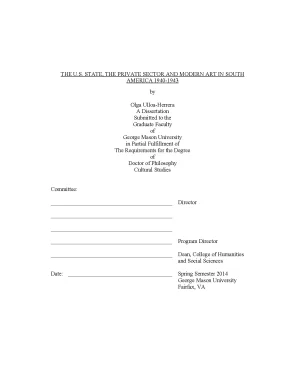
Tải xuống để đọc toàn bộSTATE, THE PRIVATE SECTOR AND MODERN ART IN SOUTH AMERICA 1940-1943 by Olga Ulloa-Herrera A Dissertation Submitted to the Graduate Faculty of George Mason University in Partial Fulfillment of The Requirements for the Degree of Doctor of Philosophy Cultural Studies Committee: ___________________________________________ Director ___________________________________________ ___________________________________________ ___________________________________________ Program Director ___________________________________________ Dean, College of Humanities and Social Sciences Date: _____________________________________ Spring Semester 2014 George Mason University Fairfax, VA The U. State, the Private Sector and Modern Art in South America 1940-1943 A Dissertation submitted in partial fulfillment of the requirements for the degree of Doctor of Philosophy at George Mason University by Olga Ulloa-Herrera Master of Arts Louisiana State University, 1989 Director: Michele Greet, Associate Professor Cultural Studies Spring Semester 2014 George Mason University Fairfax, VA Copyright 2014 Olga Ulloa-Herrera All Rights Reserved ii DEDICATION This is dedicated to Carlos Herrera, Carlos A. Herrera, and Max Herrera with love and thanks for making life such an exhilarating adventure; and to María de los Angeles Torres with gratitude and appreciation. iii ACKNOWLEDGEMENTS I would like to express the deepest appreciation to my committee chair Dr.
Michele Greet and to my committee members Dr. Paul Smith and Dr. Ellen Wiley Todd whose help, support, and encouragement made this project possible. I have greatly benefited from their guidance as a student and as a researcher.
I also would like to acknowledge Dr. Roger Lancaster, director of the Cultural Studies Program at George Mason University and Michelle Carr for their assistance throughout the years. It would not have been possible to write this dissertation without the help, kindness and support of people around me, to only some of whom it is possible to mention here. Thanks to my peers and now colleagues for their friendship, help, comments, especially Rachel Delgado, Randa Kayyali, Pawin Malaiwong, Pia Møller, Katy Razzano, Tara Sheoran, Cecilia “Lia” Uy-‐Tioco, Victoria Watts, Fan Yang, and Nuh Yilmaz.
Much gratitude goes to Ludy Grandas for her unfailing moral support, advice, intellectual generosity and friendship. Special thanks to my professors Amal Amireh, the late Peter Brunette, Dina Copelman, Jean-‐ Paul Dumont, and Alison Landsberg. Along the way I have received the support from various colleagues. I am most grateful to Alejandro Anreus, Gilbert Cardenas, Melissa Carrillo, Eduardo Díaz, María Gaztambide, Jon Goldman, Tracy Grimm, Melissa Kroning, Jose Limón, Andrés Navia, Adriana Ospina, Mari Carmen Ramírez, Will Rochin, Victor Sorell, Ranald Woodaman, and Tomas Ybarra-‐Frausto.
My most sincere thanks to Maria de los Angeles Torres who has made many things possible including the completion of this project and to my cheering colleagues Luz Acosta and Cristina Correa. As an archival project, I am indebted to the staff of the Rockefeller Archive Center in particular Amy Fitch, the staff of the Nettie Lee Benson Latin American Collection at the University of Texas at Austin, the staff of the University of Chicago Special Collections Research Center, the staff at the OAS Columbus Memorial Library and Stella Villagrán, the staff of the Museum of Modern Art Archive, the staff of the National Archives at College Park and Adriana Ospina at the OAS Art Museum of the Americas Archives. I would like to thank my family for their endless love and support. I want to note the late Samuel D.
Eaton for making so many things possible for my family and me iv and for introducing me to the “Western Hemisphere Idea.” Above all I thank my husband Carlos and my sons Carlos and Roberto. Words cannot express how grateful I am for your love, support, inspiration and encouragement at every step of the way. And to Max who structured my writing days and made sure (for his very own selfish reasons) that I took breaks and exercise. v TABLE OF CONTENTS Page List of Abbreviations.
1 The Rebuilding of a U. Modern Industrial State and the Developing of a U. 37 Nineteen Thirty-Three: A New Modern Industrial Capitalist U. 38 Nineteen Thirty-Three: A Modern U.
44 Nineteen Thirty-Three: The U. State and Modern Art. 50 Nineteen Thirty-Three: The Global Stage and Modern Art. 55 Art and the State: Democracy.
58 A New State Narrative: Modern Art, Democracy, Museums and American Industry. 78 Towards a Definition of a Modern U. 89 Modern Art as a Strategy and Tool of National Defense: The Office for Coordination of Commercial and Cultural Relations between the American Republics and the Office of the Coordinator OF Inter-‐American Affairs, 1940-‐1943. 99 The OCCCRBAR Art Section and Modern Art in South America.
165 Commercial and Cultural Networks: South American Modern Art in the United States and the Field of Latin American Art. 264 The Art of Defense, The Defense of Art: Lincoln Kirstein and The Art Acquisition Trip to South America, 1942. 324 Modern Art: Cultural Flows and Networks. 438 vii LIST OF ABBREVIATIONS Civil Works Administration.
CWA Elektricitäts-‐Gesellschaft Aktiengesellschaft. AEG Federal Emergency Relief Administration. FERA Foreign Direct Investment. FDI Franklin Delano Roosevelt .FDR International Business Machines Corporation.
IBM Multinational Corporations.MNCs The Museum of Modern Art .MoMA National Archives and Records Administration. NARA Office of Inter-‐American Affairs .OIAA Office of Strategic Services. OSS Office for Coordination of Commercial and Cultural Relations between the American Republics.OCCCRBAR Office of the Coordinator of Inter-American Affairs. CI-AA Office of War Information.OWI Organization of American States .OAS Pan American-‐Grace Company Airlines .Panagra Pan American Union.PAU Public Works of Art Project.
PWAP Sociedad Colombo-Alemana de Transporte Aéreo .SCADTA United Nations Educational, Scientific and Cultural Organization .UNESCO United States Information Agency. USIA United States of America. Works Progress Administration.WPA Works Progress Administration Federal Art Project. WPA/FAP World War One.WWI World War Two.
WWII viii ABSTRACT THE U. STATE, THE PRIVATE SECTOR AND MODERN ART IN SOUTH AMERICA 1940-1943 Olga Ulloa-Herrera, Ph. George Mason University, 2014 Dissertation Director: Dr. Michele Greet This dissertation examines the role of modern art as a strategic tool of national defense during an unprecedented moment in U.
history in which the U. State and the private sector converged to develop an economic and cultural war preparedness program in South America. By taking modern art as a cultural object, this project studies the intersections of modernity, capitalism, power relations and culture by looking at the activities of the Art Section of the Office for Coordination of Commercial and Cultural Relations between the American Republics (OCCCRBAR) and its successor the Office of the Coordinator of Inter-‐American Affairs (CI-‐AA). The dissertation argues that the defense interventions of the United States in South America at this particular moment—with shifts in diplomacy, power, hegemony, and world order—laid out the foundation for a regionalization and industrial modernist infrastructure.
As such, these interventions established early cultural flows and networks of commerce, transportation, communication for an American ideology, ix cultural industries and visual culture later to be fully realized with the expansion of the Americanization of culture in contemporary globalization. x INTRODUCTION All too often the ‘Good Neighbor’ Policy is thought of as wholly a governmental program —Kenneth Holland1 The early 1940s witnessed an increased intra-‐cultural activity in the Western Hemisphere. Between 1940 and 1943 the United States engaged in a concerted and deliberate cultural defense effort to export what would become identified in later years as quintessential American values of democracy, modernization, progress and a meritocratic new American Dream way of life of economic prosperity and consumerism2 to countries in South America. Struggling to come out of an economic crisis of world proportions, these countries were now facing a new 1 Kenneth Holland, Director, Division of Science and Education, Office of the Coordinator of Inter-‐ American Affairs (CI-‐AA), to Mr.
Del Pozo on behalf of U. Vice President Henry A. NARA, Office of Inter-‐American Affairs, General Records, Central Files; Record Group 229, Box 365, Folder: Arts; National Archives at College Park, College Park, MD. 2The original term of the “American Dream” was defined and formulated by James Truslow Adams in 1931 during the Great Depression in the epilogue of The Epic of America, reflecting the economic and social conditions of the moment.
Adams perceived it to be "that dream of a land in which life should be better and richer and fuller for everyone, with opportunity for each according to ability or achievement. It is a difficult dream for the European upper classes to interpret adequately, and too many of us ourselves have grown weary and mistrustful of it. It is not a dream of motor cars and high wages merely, but a dream of social order in which each man and each woman shall be able to attain to the fullest stature of which they are innately capable, and be recognized by others for what they are, regardless of the fortuitous circumstances of birth or position." James Truslow Adams, The Epic of America, Boston: Little, Brown, and company, 1931, 214-‐215. As an evolving dream, however, in the context of the 1939-‐1940 the “American Dream” had naturally gone forward responding to improved economic and social conditions.
The new aspirations for the future reflected in the 1939 New York World Fair (Chapter 1), was a changed “American Dream” of a capitalist consumerist middle class, economic prosperity and a higher standard of living. 1 imminent threat of an expanding totalitarian ideology in a fast escalating European and soon to be global conflict. In this dissertation I critically examine the role of modern art as a strategic tool of national defense during an unprecedented moment in U. history in which the U.
private sector and the U. State converged for the first time in developing an economic and cultural defense program. Financed with state funds from the Military and Naval Appropriation Acts of 1941 and 1942 the program served as a new U. national security strategy and tool to carry out a U.
cultural and commercial penetration in South America during 1940-‐1943. I look at the circumstances and conditions by which interest on the part of the U. State and the U. private sector in modern art in South America during the early 1940s came into being.
Rather than from a diplomatic cultural foreign relations perspective, I explore the interest and intersections of art, culture, and commerce from an strategic and emergency point of view of national security and defense under conditions of war that sought to change dominant cultural values and cultural dynamics and patterns in a South America regional societal structure seen at the moment at high risk of being infiltrated and dominated by German, Italian, and Spanish totalitarian ideology and governance. In taking modern art as a cultural object, this project is guided by the overarching question of how modern art became a strategic tool for the U. State and the U. private sector during August 1940 to June 1943 in South America.
In looking at its production, identity, representation, regulation and consumption it 2 seeks to answer a set of sub-‐questions as follows: what was the role of modern art within a frame of economic and cultural relations under conditions of U. national security and defense?
Nội dung được bảo vệ bản quyền — Tải xuống đầy đủ
Trích dẫn luận án này
Olga Ulloa-Herrera (2014). Nhà nước, Tư nhân và Nghệ thuật Hiện đại Nam Mỹ (1940-1943) [Luận án tiến sĩ, George Mason University]. LuanAn.net. https://luanan.net/lich-su/nha-nuoc-tu-nhan-va-nghe-thuat-hien-dai-nam-my-1940-1943
Câu hỏi thường gặp
Luận án "Nhà nước, Tư nhân và Nghệ thuật Hiện đại Nam Mỹ (1940-1943)" nghiên cứu về vấn đề gì?
Khám phá nghệ thuật hiện đại Nam Mỹ thời kỳ 1940-1943: Vai trò của nhà nước và tư nhân. Phân tích xu hướng, tác phẩm tiêu biểu.
Luận án "Nhà nước, Tư nhân và Nghệ thuật Hiện đại Nam Mỹ (1940-1943)" được bảo vệ tại trường nào?
Luận án này được bảo vệ tại George Mason University. Năm bảo vệ: 2014.
Luận án "Nhà nước, Tư nhân và Nghệ thuật Hiện đại Nam Mỹ (1940-1943)" thuộc chuyên ngành gì?
Luận án "Nhà nước, Tư nhân và Nghệ thuật Hiện đại Nam Mỹ (1940-1943)" thuộc chuyên ngành Cultural Studies. Danh mục: Lịch Sử.
Luận án "Nhà nước, Tư nhân và Nghệ thuật Hiện đại Nam Mỹ (1940-1943)" có bao nhiêu trang?
Luận án "Nhà nước, Tư nhân và Nghệ thuật Hiện đại Nam Mỹ (1940-1943)" có 469 trang. Bạn có thể xem trước một phần tài liệu ngay trên trang web trước khi tải về.
Cách tải luận án "Nhà nước, Tư nhân và Nghệ thuật Hiện đại Nam Mỹ (1940-1943)" về máy như thế nào?
Để tải luận án về máy, bạn nhấn nút "Tải xuống ngay" trên trang này, sau đó hoàn tất thanh toán phí lưu trữ. File sẽ được tải xuống ngay sau khi thanh toán thành công. Hỗ trợ qua Zalo: 0559 297 239.