Luận án thương奴 và nông dân trong sự mở rộng Nam: Chiến lược kinh doanh, mạng lưới kinh doanh và di cư Tây trong thế giới Đại Tây Dương, 1787-1859
Nghiên cứu về vị thế, vai trò của tầng lớp nô lệ và nông dân trong quá trình mở rộng lãnh thổ về phương Nam của Việt Nam thế kỷ XVII-XVIII.
Năm xuất bản
Số trang
426
Thời gian đọc
1 giờ 4 phút
Lượt xem
0
Lượt tải
0
Phí lưu trữ
60 Point
Tổng quan nhanh
- Chủ đề:
- 1. Kinh tế nô lệ miền Nam và chiến lược kinh doanh
- Số trang:
- 426 trang
- Trường:
- University of North Carolina at Chapel Hill
- Chuyên ngành:
- History
- Tác giả:
- Tomoko Yagyu
- Năm:
- 2006
Tóm tắt nội dung luận án
I. Kinh tế nô lệ miền Nam và chiến lược kinh doanh
Nghiên cứu phân tích tác động kinh tế của buôn bán nô lệ nội địa. Hoạt động này diễn ra trong bối cảnh Đại Tây Dương rộng lớn. Buôn bán nô lệ được nhìn nhận như một ngành kinh doanh tinh vi. Thương nhân nô lệ là những doanh nhân có tính đầu cơ. Họ có khả năng đưa ra quyết định hợp lý. Quyết định này dựa trên tín hiệu thị trường hàng hóa toàn cầu. Họ tận dụng các biến động tài chính. Đa số các chủ đồn điền miền Nam tham gia vào hoạt động buôn bán nô lệ. Họ phụ thuộc vào nó để cân bằng an ninh tài chính. Chủ đồn điền đánh giá nô lệ bằng tiền mặt. Họ đưa ra các quyết định chiến lược về mua bán tài sản. Mục tiêu là tăng năng suất tổng thể của đồn điền về lâu dài. Thương nhân nô lệ học hỏi kỹ năng kinh doanh. Cách học tương tự như các thương gia khác. Họ sử dụng các hình thức lựa chọn tài chính mới. Mục đích tối đa hóa lợi nhuận. Họ tận dụng cuộc cách mạng thị trường. Cuộc cách mạng này liên quan đến vận tải và truyền thông. Giống như các doanh nhân miền Bắc cùng thời.
1.1. Thương nhân nô lệ Doanh nhân đầu tư tài chính
Thương nhân nô lệ là những doanh nhân đầu cơ. Họ không chỉ là những người môi giới đơn thuần. Họ phát triển các kỹ năng kinh doanh phức tạp. Kỹ năng này bao gồm quản lý rủi ro và đầu tư. Họ sử dụng các công cụ tài chính mới. Mục tiêu là tối đa hóa lợi nhuận. Thị trường nô lệ mang lại cơ hội lớn. Các thương nhân có khả năng nắm bắt thị trường. Họ biết cách di chuyển vốn một cách linh hoạt. Họ làm việc trong một môi trường kinh tế năng động. Điều này giúp họ tích lũy tài sản.
1.2. Chủ đồn điền Quản lý tài sản nô lệ hiệu quả
Các chủ đồn điền miền Nam coi nô lệ là tài sản. Họ xem xét giá trị tiền mặt của từng cá nhân. Quyết định mua bán nô lệ mang tính chiến lược. Mục tiêu là tăng cường hiệu quả sản xuất. Kinh tế đồn điền phụ thuộc vào việc này. Việc luân chuyển lao động cưỡng bức giúp tối ưu hóa nguồn lực. Các chủ đồn điền tìm cách cân bằng tài chính. Việc mua bán nô lệ giúp họ duy trì dòng tiền. Nó cũng giúp họ mở rộng quy mô hoạt động. Đây là một phần quan trọng trong quản lý tài sản.
1.3. Thị trường nô lệ Mở rộng cơ hội kinh doanh
Buôn bán nô lệ tạo ra một thị trường sôi động. Thị trường này mở rộng khắp miền Nam. Các thương nhân tận dụng mạng lưới giao thông. Họ sử dụng các phương tiện truyền thông mới. Điều này giúp họ kết nối với các khu vực khác. Họ có thể đưa nô lệ đến những nơi có nhu cầu cao. Việc này tạo ra cơ hội kinh doanh lớn. Nó thúc đẩy sự di chuyển của nô lệ. Đây là một phần không thể thiếu của kinh tế miền Nam.
II. Mở rộng lãnh thổ phía Tây và Vương quốc Bông
Buôn bán nô lệ đóng vai trò trung tâm. Nó định đoạt số phận của miền Nam. Ngành kinh doanh này tạo ra một miền Nam thống nhất. Sự thống nhất này dưới ý thức hệ ủng hộ chế độ nô lệ. Buôn bán nô lệ khuyến khích mở rộng lãnh thổ phía Tây. Mục đích là để bảo tồn chế độ nô lệ. Trong thời kỳ mở rộng phía Tây và bùng nổ bông, một số thương nhân nô lệ tích lũy được khối tài sản lớn. Họ tìm kiếm cơ hội để có được địa vị xã hội cao hơn. Họ cũng tìm kiếm sự ổn định tài chính. Các kỹ năng và mạng lưới từ kinh doanh nô lệ. Những yếu tố này cho phép thương nhân có được khả năng quản lý. Họ cũng có được tinh thần kinh doanh liên quan đến chủ nghĩa tư bản toàn cầu.
2.1. Di cư nô lệ Động lực phát triển đồn điền
Di cư nô lệ là một quá trình cưỡng bức. Nó là động lực chính cho sự phát triển của miền Nam. Các đồn điền mới ở phía Tây cần lao động. Nô lệ được chuyển đến những vùng đất mới. Điều này giúp mở rộng sản xuất bông. Vương quốc Bông phát triển mạnh mẽ. Nô lệ đóng vai trò thiết yếu. Họ cung cấp nguồn lao động cho kinh tế đồn điền. Việc di chuyển nô lệ diễn ra thường xuyên. Nó đáp ứng nhu cầu của các chủ đồn điền mới.
2.2. Sự trỗi dậy Đồn điền bông và lao động cưỡng bức
Sự bùng nổ của cây bông thúc đẩy nhu cầu về nô lệ. Đồn điền bông trở thành trung tâm kinh tế. Nô lệ là xương sống của hệ thống này. Lao động cưỡng bức đảm bảo năng suất cao. Các chủ đồn điền thu lợi lớn từ bông. Sự giàu có này củng cố chế độ nô lệ. Nó làm sâu sắc thêm sự phụ thuộc vào lao động nô lệ. Điều này tạo ra một vòng tuần hoàn. Sản xuất bông và lao động nô lệ gắn chặt với nhau.
2.3. Hợp nhất miền Nam Ý thức hệ ủng hộ chế độ nô lệ
Buôn bán nô lệ không chỉ là kinh tế. Nó còn có tác động xã hội và chính trị. Nó tạo ra một ý thức hệ thống nhất. Ý thức hệ này ủng hộ chế độ nô lệ. Các bang miền Nam trở nên đoàn kết. Họ đoàn kết trong việc bảo vệ "tài sản" của mình. Điều này củng cố Xã hội tiền Nội chiến. Các luật nô lệ được thực thi nghiêm ngặt. Mục tiêu là duy trì trật tự xã hội. Điều này củng cố vị thế của chủ đồn điền.
III. Chiến lược kinh doanh và mạng lưới thương nhân nô lệ
Thương nhân nô lệ phát triển khả năng nhận thức. Họ có kiến thức về các mạng lưới thương mại. Các mạng lưới này vượt ra ngoài miền Nam. Họ hoạt động với tư duy mở rộng. Tư duy này giúp họ thích nghi với nền kinh tế toàn cầu. Nền kinh tế này ngày càng hội nhập trong đầu thế kỷ 19. Họ không chỉ là những người buôn bán đơn thuần. Họ là những người có tầm nhìn. Họ nhìn thấy các cơ hội kinh doanh rộng lớn. Điều này tương tự như các doanh nhân hiện đại. Họ xây dựng mối quan hệ kinh doanh. Mối quan hệ này rất quan trọng. Nó giúp họ thành công trong ngành buôn bán nô lệ.
3.1. Kỹ năng quản lý Từ buôn bán đến kinh doanh toàn cầu
Kinh doanh nô lệ đòi hỏi kỹ năng quản lý cao. Các thương nhân phải tổ chức vận chuyển. Họ phải quản lý tài chính và con người. Những kỹ năng này có thể áp dụng rộng rãi. Chúng giúp thương nhân thành công trong các lĩnh vực khác. Ví dụ như quản lý đồn điền bông. Điều này cho thấy khả năng thích ứng của họ. Họ không chỉ bán nô lệ. Họ còn vận hành một doanh nghiệp phức tạp. Doanh nghiệp này có tính chất quốc tế.
3.2. Mạng lưới tài chính Ứng dụng công nghệ mới
Thương nhân nô lệ tận dụng cuộc cách mạng thị trường. Họ sử dụng các phương pháp vận tải mới. Họ áp dụng các phương pháp truyền thông cải tiến. Điều này giúp họ mở rộng mạng lưới kinh doanh. Họ giao dịch với các ngân hàng và nhà đầu tư. Họ sử dụng các tùy chọn tài chính mới. Mục tiêu là tối đa hóa lợi nhuận. Sự đổi mới này phản ánh một xu hướng lớn. Nó cho thấy sự phát triển của chủ nghĩa tư bản.
3.3. Tích lũy tài sản Nâng cao địa vị xã hội
Một số thương nhân nô lệ tích lũy được tài sản khổng lồ. Họ sử dụng số tài sản này để mua đất đai. Họ cũng mua nô lệ và trở thành chủ đồn điền. Ví dụ như Rice C. Ballard. Ông chuyển từ thương nhân nô lệ ở Virginia. Sau đó ông trở thành chủ đồn điền bông ở phía Tây. Việc này giúp họ nâng cao địa vị xã hội. Họ trở thành một phần của tầng lớp tinh hoa. Đây là một con đường phổ biến. Nó dẫn đến sự giàu có và quyền lực.
IV. Ảnh hưởng của thương nhân nô lệ đến xã hội tiền Nội chiến
Nghiên cứu này làm sáng tỏ vai trò quan trọng của thương nhân nô lệ. Họ không chỉ là những người buôn bán. Họ là những người định hình xã hội miền Nam. Họ thúc đẩy mở rộng lãnh thổ. Họ góp phần củng cố ý thức hệ ủng hộ chế độ nô lệ. Khả năng kinh doanh của họ giúp kết nối miền Nam. Miền Nam được kết nối với nền kinh tế toàn cầu. Họ mang theo tinh thần kinh doanh. Tinh thần này phù hợp với chủ nghĩa tư bản mới nổi. Sự chuyển đổi của họ từ thương nhân sang chủ đồn điền. Điều này cho thấy sự linh hoạt và quyền lực. Quyền lực này được tích lũy từ ngành buôn bán nô lệ.
4.1. Chuyển đổi vai trò Từ thương nhân đến chủ đồn điền
Câu chuyện của Rice C. Ballard là một ví dụ điển hình. Ông khởi nghiệp là một thương nhân nô lệ. Sau đó ông chuyển sang làm chủ đồn điền bông. Việc này chứng minh khả năng chuyển đổi. Nó cũng chứng minh sự linh hoạt của giới kinh doanh. Kỹ năng từ buôn bán nô lệ được áp dụng. Kỹ năng này giúp quản lý một đồn điền lớn. Sự thay đổi này cũng mang lại địa vị xã hội mới. Nó thể hiện con đường thăng tiến điển hình.
4.2. Kiến thức thị trường Vượt ra ngoài ranh giới miền Nam
Thương nhân nô lệ có kiến thức rộng lớn về thị trường. Họ không chỉ hiểu thị trường nô lệ. Họ còn hiểu các thị trường hàng hóa khác. Họ biết về giá cả và cung cầu. Kiến thức này giúp họ đưa ra quyết định tốt hơn. Họ có thể dự đoán xu hướng kinh tế. Điều này vượt ra ngoài ranh giới địa lý. Nó cho thấy một tư duy kinh doanh toàn diện.
4.3. Chế độ nô lệ miền Nam Vận mệnh gắn liền với giao thương
Buôn bán nô lệ là huyết mạch của miền Nam. Nó không chỉ cung cấp lao động. Nó còn kết nối các khu vực. Nó thúc đẩy tăng trưởng kinh tế. Vận mệnh của chế độ nô lệ miền Nam. Vận mệnh này gắn liền với sự thành công của ngành buôn bán. Đây là một ngành kinh doanh phức tạp. Nó có tác động sâu sắc đến lịch sử. Nó định hình xã hội tiền Nội chiến. Các luật nô lệ được tạo ra để bảo vệ nó.
Tải xuống file đầy đủ để xem toàn bộ nội dung
Tải đầy đủ (426 trang)Trích đoạn nội dung luận án
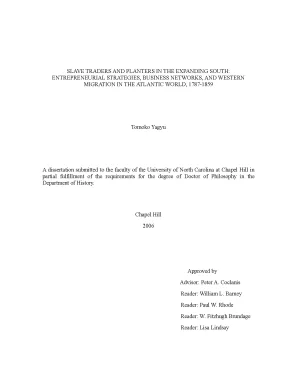
Tải xuống để đọc toàn bộSLAVE TRADERS AND PLANTERS IN THE EXPANDING SOUTH: ENTREPRENEURIAL STRATEGIES, BUSINESS NETWORKS, AND WESTERN MIGRATION IN THE ATLANTIC WORLD, 1787-1859 Tomoko Yagyu A dissertation submitted to the faculty of the University of North Carolina at Chapel Hill in partial fulfillment of the requirements for the degree of Doctor of Philosophy in the Department of History. Chapel Hill 2006 Approved by Advisor: Peter A. Coclanis Reader: William L. Barney Reader: Paul W.
Fitzhugh Brundage Reader: Lisa Lindsay © 2006 Tomoko Yagyu ALL RIGHTS RESERVED ii ABSTRACT Tomoko Yagyu: Slave Traders and Planters in the Expanding South: Entrepreneurial Strategies, Business Networks, and Western Migration in the Atlantic World, 1787-1859 (Under the direction of Peter A. Coclanis) This study attempts to analyze the economic effects of the domestic slave trade and the slave traders on the American South in a broader Atlantic context. In so doing, it interprets the trade as a sophisticated business and traders as speculative, entrepreneurial businessmen. The majority of southern planters were involved in the slave trade and relied on it to balance their financial security.
They evaluated their slaves in cash terms, and made strategic decisions regarding buying and selling their property to enhance the overall productivity of their plantations in the long run. Slave traders acquired business skills in the same manner as did merchants in other trades, utilizing new forms of financial options in order to maximize their profit and taking advantage of the market revolution in transportation and communication methods in the same ways that contemporary northern entrepreneurs did. They were capable of making rational moves according to the signals of global commodity markets and financial movements. The slave trade eventually played a central role in determining the fate of the South, as a business that created a unified South under proslavery ideology and encouraged western migration to preserve the institution of slavery.
In a time of western expansion and the cotton boom, some slave traders were able to accumulate great wealth from the slave-trading business and sought opportunities to acquire higher social status and financial stability. Through the case of Rice C. Ballard, who was able to make the transition from a slave trader in Virginia to a cotton planter in the West, this dissertation will show that skills and networks established from the slave-trading business enabled the traders iii to acquire managerial abilities and the ethos associated with nascent global capitalism. They were able to develop awareness and knowledge of commercial networks beyond the South and operated with an expansive mindset to adapt to the increasingly integrated global economy of the early nineteenth century.
iv To Masaru and Teruyo Yagyu, and Akihiko Yagyu v ACKNOWLEDGEMENTS My interest in U. history and particularly in the South originated during the 5 years of my childhood spent in Charlotte, North Carolina. So returning to the same state a decade and a half later to pursue a graduate degree was truly a blessing, and even felt like a homecoming long overdue. The University of North Carolina was the perfect place to satisfy my interests in both southern history and economic history, with its long tradition and distinguished scholars in both fields.
I felt extremely fortunate to be a part of such distinguished academia. Various grants and fellowships funded the archival research necessary for the completion of this work. The Fulbright Grant from the Japan-U. Educational Commission allowed me to join the circle of Japanese scholars of the past and the present who went to America to pursue their scholarly goals.
The Waddell and Mowry fellowships from the Department of History at UNC helped me conduct research in the area and in Virginia. Mellon Fellowship from the Virginia Historical Society funded my summer research of 2003 in Richmond. In 2004, the Gilder Lerhman Fellowship from the Gilder Lehrman Institute of American History allowed me to make research trips to the archives in New York, and Alfred D. Chandler Travel Fellowship from the Graduate School of Business Administration at Harvard University supported my stay in Boston.
I started my training in U. economic history as an undergraduate economics major at Keio University, in Tokyo, under the guidance of Professor Yasuo Okada. His admiration of American economic expansion and the Great West along the lines of Frederick Jackson Turner, and his devotion to research inherited from his mentor Paul W. Gates, were both inspiring and invigorating.
I will always be grateful and proud that I began my apprenticeship under Professor Okada. vi At UNC, I had the privilege to seek advice from leading historians in the course of completing this dissertation. I am extremely grateful to Professor William Barney, Professor Fitz Brundage, Professor Lisa Lindsay, and Professor Harry Watson for their advices. I was fortunate to meet Professor Paul Rhode in the economics department literally the first day I was on UNC campus in the summer of 2000.
His intellect kept me reminded of my respect and admiration to economics and economists, and I truly appreciate his advices in trying to extract the economic aspects of my research. Many colleagues in the department provided me with support and good criticism toward my work over the years. I would like to thank especially Pam Lach, Barbara Hahn, Michael Allsep, Gerardo Gurza-Lavalle, and Philipp Stelzel for being comrades as well as good friends to talk out our anxieties. Maki Takahashi and Tomomi Kaneko took on that role outside of the department, and I thank them for their support.
I met Lynn Jerath as a classmate in Charlotte more than 20 years ago, and we have kept in touch ever since. She and her entire family always welcomed me like one of their own, and I thank her for the lasting friendship and kind support. I would also like to thank Ai Kato, Yuki Tanabe, and Setsuko Fukuzawa for cheering me up from Japan for all these years. Most of all, I am deeply indebted to my advisor, Professor Peter Coclanis, without whom I would not have made it through.
His limitless breadth of knowledge in global economic and business history has broadened my research interests beyond the U. to the Atlantic, and to the world. He helped me through my struggling coursework years and guided my interests to take shape into scholarly work. I was blessed to be under his intellect throughout the years and touched by his personal warmth.
There is no one I admire more as a scholar and to have him as mentor was by far the best thing that happened in my graduate career. Finally, my family had the patience to put up with my long years of graduate studies abroad, and they were in my mind every step of the way. My brother Akihiko in Tokyo usually kept up with the results of the UNC basketball team earlier and more precisely than I did. As busy as he is in the world of finance, he understood and supported my passion, and I vii counted on his advice on various occasions.
Discussing with him about everything from pop culture to current world affairs gave me considerable comfort, and I thank him for being so reliable. My mother must have always been frustrated and worried that her daughter was so far away, and the fact that my life has become so different from hers probably made it even harder. But she always gave me mental support and encouragement, which I truly appreciated throughout the years. My father is never easily impressed, and I have not found a way to make him proud.
For him, who has successfully climbed to the top of the corporate ladder of the company he had worked for nearly forty years, my achievements would never come close to what he has accomplished. In fact, not being able to impress him was one major factor that has driven me to pursue higher goals. I hope he knows that I have been trying, and will keep trying to impress him, and this dissertation is a result of such attempt. viii TABLE OF CONTENTS Page LIST OF TABLES………………………………………………………………………….xii LIST OF FIGURES……………………………………………………………………….
xiv Chapter Introduction……………………………………………………………………………………1 1 Early Development of Virginia Economy in Atlantic Context to 1815…………….14 Population and Labor ………………………………………………………17 The Early Atlantic Slave Trade to Virginia ………………………………. 24 The Tobacco Trade and Mercantilism ….………………………………… 33 Growth of Grain Production and the Revolutionary War…………………. 53 Structural Change in British Financial System……………………………. 62 2 Virginia’s Ordeal: Domestic Slave Trade and Urban Markets…………………….
64 Estimating the Numbers…………………………………………………… 77 Slave Traders’ Identities and their Professional Activities………………… 81 Buying, Selling and Finance: Inside the Slave Trading Business…………. 97 The Development of Richmond and Alexandria…………………………. 111 3 A Slave Trader in the East: Rice C. Ballard and his Early ix Business Relations …………………………………………………….139 Ballard, Franklin, and their Beginnings……………….139 The Relation among Franklin, Armfield, and Ballard………………………150 Commanding Sales: Instructions and Guidance from the West to the East…152 In Relation with Crops…………………………………………………….
161 Getting Around the Law in the West………………………………………. 165 Avoiding Risks Financially………………………………………………… 176 Avoiding Risks and Securing the Slaves…………………………………… 194 To Become a Planter………………………………………………………. 205 4 From a Trader to a Planter: Transition, the West and the Turmoil, 1836-1840 ……………………………………………………………. 209 The View of the West for Virginians………………………………….
211 The Impact of the Panic of 1837……………………………….………… 235 Laying Out his “Garden of Eden”: Ballard in Mississippi, 1837-1840…… 245 5 In the World of Cotton: Plantation Management and the Marketing of a Global Commodity…………………………………………………. 260 The Settlement of Mississippi and Louisiana……………………………… 266 Ballard’s New Business Network and the Cotton Factors: Agents of Interregional and International Trade…. 277 The Plantation Empire of Ballard and Boyd: Speculation, Production, and Management………………296 Cotton Trade on the Political Front: Conventions, Texas, and the Compromise……………. 325 Slave Trading in the West and the Debate on Paternalism………….333 A Planter-Capitalist-Entrepreneur………………………………………….
351 x Epilogue Virginia, the Cotton South, and the Internal Slave Trade in Global Perspectives on the Eve of the Civil War……………….………… 374 xi LIST OF TABLES Table Page 1. Estimated Population of the Chesapeake Colonies…………………………………. Sex Ratios for Adult Immigrants to the Chesapeake………. Length of Contract of Indentured Servant from Bristol and London to America, 1654-1686……………………………………………………………….
Age of Indentured Servants from London and Liverpool to the Chesapeake, 1635-1707………………………………………………………………………………. Black Population Growth in Virginia, 1700-1800……. Slave Ships and Slaves Cleared in London, Bristol, and Liverpool………. Origins of Virginia Africans, 1710s-1770s……………….
Estimated Black Population of Virginia, 1740-1830…………………. Estimated Number of African Importation, 1700-1779, Virginia and South Carolina……………………………………………………………. Estimated Number of Africans Imported in Virginia, 1700-1775, By the Source of Slaves (Africa and West Indies)……………………………………. Estimated Population of Richmond, Virginia, 1790-1850.
Tobacco Inspection in Richmond, Virginia, 1840-1860………………………………. Estimated Population of Alexandria, 1790-1860………. Identifiable Slave Shipments by the Concern of Franklin & Armfield……………. Ballard’s Shipment Numbers from Slave Lists………………………………….
State Laws to Restrict Slave Importation (selected states)………………………. Slaves and Slaveholders, Mississippi and Louisiana, 1860………………. Cotton Production by Individual States (in millions of pounds), Percentage, and Relative Rank, 1821-1859…………. Production of Cane Sugar in the Principle Sugar Producing States and Percentage, 1850 and 1860……………………………………………………….
Sugar Production in Louisiana…………………………………………………. Cotton Exports to Great Britain from U. Magnolia Slaves, January 1838…………………………………………………. List of Overseers on Ballard and Boyd’s Plantation……………………………….
Value Per Acre of Farms and Buildings, 1850 and 1860…………. Elk Plantation Slaves, 1847……………………………………………………………307 5. Recapitulation of Magnolia Planting, 1845… …………………………. Monthly Picking Records (Magnolia, Laurell Hill, Elcho)………………….
Clothing for Magnolia Slaves, 1849……………………. Cotton Production by Areas Worldwide, 1791-1860………………. Insurance on Slaves Traded by Rutherford…………………………………………. 342 xiii LIST OF FIGURES Figure Page 1.
Great Britain Tobacco Reexport, England and Scotland, 1708-1775…………………. Great Britain Tobacco Imports, England and Scotland, 1708-1775………. Tobacco Imports at British Ports, 1721-1773…………………………………………. Slave Prices in New Orleans, 1820-1862………………………………….
Percentage of Cotton Export in U. Cotton Price at Liverpool, 1800-1859………………. Cotton Price at New York, 1790-1859……….………………………………………287 xiv Introduction In May 1842, Rice C. Ballard, a cotton planter in Mississippi purchased a total of 44 slaves at a commissioner’s sale at the southern district court of the state, which had been advertised for sale earlier that month.
Nội dung được bảo vệ bản quyền — Tải xuống đầy đủ
Trích dẫn luận án này
Tomoko Yagyu (2006). Nghiên cứu thương奴 và nông dân trong sự mở rộng Nam [Luận án tiến sĩ, University of North Carolina at Chapel Hill]. LuanAn.net. https://luanan.net/lich-su/nghien-cuu-thuong-nu-va-nong-dan-o-nam
Câu hỏi thường gặp
Luận án "Nghiên cứu thương奴 và nông dân trong sự mở rộng Nam" nghiên cứu về vấn đề gì?
Nghiên cứu về vị thế, vai trò của tầng lớp nô lệ và nông dân trong quá trình mở rộng lãnh thổ về phương Nam của Việt Nam thế kỷ XVII-XVIII.
Luận án "Nghiên cứu thương奴 và nông dân trong sự mở rộng Nam" được bảo vệ tại trường nào?
Luận án này được bảo vệ tại University of North Carolina at Chapel Hill. Năm bảo vệ: 2006.
Luận án "Nghiên cứu thương奴 và nông dân trong sự mở rộng Nam" thuộc chuyên ngành gì?
Luận án "Nghiên cứu thương奴 và nông dân trong sự mở rộng Nam" thuộc chuyên ngành History. Danh mục: Lịch Sử.
Luận án "Nghiên cứu thương奴 và nông dân trong sự mở rộng Nam" có bao nhiêu trang?
Luận án "Nghiên cứu thương奴 và nông dân trong sự mở rộng Nam" có 426 trang. Bạn có thể xem trước một phần tài liệu ngay trên trang web trước khi tải về.
Cách tải luận án "Nghiên cứu thương奴 và nông dân trong sự mở rộng Nam" về máy như thế nào?
Để tải luận án về máy, bạn nhấn nút "Tải xuống ngay" trên trang này, sau đó hoàn tất thanh toán phí lưu trữ. File sẽ được tải xuống ngay sau khi thanh toán thành công. Hỗ trợ qua Zalo: 0559 297 239.