Post dissertation final submit version
Hoàn thiện luận văn cuối cùng: bản nộp chính thức sau chỉnh sửa. Đảm bảo mọi yêu cầu về định dạng và nội dung được đáp ứng trước khi nộp.
Information and Library Science
Luan An
Luận án tiến sĩ
Năm xuất bản
Số trang
384
Thời gian đọc
58 phút
Lượt xem
0
Lượt tải
0
Phí lưu trữ
60 Point
Tổng quan nhanh
- Chủ đề:
- Khám phá Luận án: Quản lý Nghệ thuật Kỹ thuật số Đương đại
- Số trang:
- 384 trang
- Trường:
- University of North Carolina at Chapel Hill
- Chuyên ngành:
- Information and Library Science
- Tác giả:
- Colin Post
- Năm:
- 2020
Tóm tắt nội dung luận án
I.Khám phá Luận án Quản lý Nghệ thuật Kỹ thuật số Đương đại
Luận án "NETWORKED ALTERNATIVES: DIGITAL CURATION AND ARTISTIC PRODUCTION ON ARTIST-RUN PLATFORMS" khám phá các phương thức nghệ sĩ tương tác với công nghệ kỹ thuật số. Nghiên cứu sâu về cách họ chăm sóc tác phẩm nghệ thuật. Luận án bao gồm các tài liệu liên quan từ studio và kho lưu trữ cá nhân. Đây là một tài liệu quan trọng cho bất kỳ ai quan tâm đến quản lý số trong nghệ thuật. Luận án cũng cung cấp một ví dụ thực tế về việc hoàn thành luận án tiến sĩ thành công. Tài liệu này tuân thủ đầy đủ các yêu cầu nộp luận án cao học. Quy trình nộp luận án đã được thực hiện cẩn thận. Đây là một đóng góp học thuật có giá trị.
1.1. Định nghĩa Thay thế Mạng lưới trong Thực hành Nghệ thuật
Luận án định nghĩa "thay thế mạng lưới" là không gian trưng bày nghệ thuật. Những không gian này hoạt động bên ngoài các bảo tàng và phòng trưng bày thương mại. Chúng bao gồm các nền tảng trực tuyến và không gian phòng trưng bày lai ghép. Các thay thế mạng lưới được đặt trong lịch sử lâu dài. Chúng thể hiện các thử nghiệm của nghệ sĩ với công nghệ kỹ thuật số. Đồng thời, chúng cũng phản ánh nỗ lực của nghệ sĩ. Họ tìm kiếm các bối cảnh triển lãm độc lập. Việc này thoát ly các tổ chức nghệ thuật và thị trường truyền thống.
1.2. Vai trò của Nghệ sĩ trong Quản lý Tác phẩm Số của Chính họ
Tác phẩm nghệ thuật kỹ thuật số và truyền thông mới thường đối mặt với thách thức bảo tồn. Các tác phẩm này đòi hỏi bảo trì thường xuyên ngay sau khi tạo ra. Do đó, nghệ sĩ thường trở thành người quản lý đầu tiên cho tác phẩm của chính mình. Sự tham gia này rất quan trọng cho việc duy trì tác phẩm. Luận án nhấn mạnh tầm quan trọng của vai trò này. Nó phác thảo các phương pháp mà nghệ sĩ sử dụng. Luận án cũng thảo luận về các kỹ năng họ phát triển.
1.3. Bảo tồn và Chăm sóc Tác phẩm Nghệ thuật Truyền thông Mới
Bên cạnh nghệ sĩ, các curator của những không gian này đóng vai trò then chốt. Họ thực hiện việc quản lý số các tác phẩm nghệ thuật. Họ cũng xử lý các tài liệu lưu trữ liên quan. Các curator làm việc với nghệ sĩ để giảm thiểu vấn đề kỹ thuật. Họ đảm bảo tính khả thi lâu dài của các tác phẩm nghệ thuật được trưng bày. Công việc này thường là lao động tình nguyện. Nó đòi hỏi sự cống hiến lớn. Luận án minh họa sự hợp tác này.
II.Sáng tạo Nghệ thuật Số và Nền tảng Do Nghệ sĩ Vận hành Độc lập
Nghiên cứu này phân tích cách nghệ sĩ và curator chăm sóc tác phẩm nghệ thuật. Các tác phẩm này và tài liệu lưu trữ được quản lý trong suốt vòng đời của chúng. Họ tìm kiếm thông tin và học hỏi kỹ năng mới. Những kỹ năng này đóng góp vào kiến thức cần thiết để thực hiện công việc quản lý số. Từ việc tạo ra tác phẩm nghệ thuật mới đến việc chăm sóc các tác phẩm cũ. Các nghệ sĩ phát triển 'kho quản lý số'. Những kho này trở thành nền tảng cho nỗ lực nghệ thuật rộng lớn hơn của họ. Luận án này là một ví dụ về một luận án tiến sĩ đã được hoàn thành thành công.
2.1. Phát triển Các Nền tảng Do Nghệ sĩ Vận hành Đổi mới
Nghệ sĩ tận dụng công nghệ kỹ thuật số và mạng lưới để lưu hành tác phẩm. Họ tạo ra các bối cảnh triển lãm độc đáo. Các nền tảng trực tuyến và không gian phòng trưng bày lai ghép được sử dụng. Đây là những "thay thế mạng lưới" cho các tổ chức nghệ thuật. Luận án đặt các không gian này vào lịch sử lâu dài của nghệ sĩ. Nó cũng xem xét các nỗ lực của họ. Họ tìm cách tạo ra bối cảnh triển lãm riêng. Đây là một khía cạnh quan trọng của nộp luận án tiến sĩ trong lĩnh vực này.
2.2. Thực hành Quản lý Dữ liệu trên Hệ thống Thông tin Phức tạp
Các quy trình và thực hành để quản lý dữ liệu rất quan trọng. Chúng liên quan đến việc tạo ra, trưng bày và trải nghiệm tác phẩm nghệ thuật kỹ thuật số. Các hoạt động này tích hợp trong các hệ thống thông tin phức tạp. Luận án phân tích nhu cầu thông tin này. Nó cũng xem xét các thực hành quản lý số. Khung lý thuyết "thế giới thông tin" được áp dụng. Điều này giúp hiểu rõ hơn về các thách thức kỹ thuật.
2.3. Xây dựng Kho Kiến thức và Kỹ năng Quản lý Số
Nghệ sĩ và curator tìm kiếm thông tin và học hỏi kỹ năng mới. Các kỹ năng này cần thiết để thực hiện công việc quản lý số. Từ việc tạo ra tác phẩm mới đến việc chăm sóc các tác phẩm cũ. Các nghệ sĩ phát triển "kho quản lý số". Những kho này trở thành nền tảng cho nỗ lực nghệ thuật rộng lớn hơn. Chúng đóng góp vào kiến thức chung. Luận án này thể hiện một nghiên cứu sâu rộng về các kho kiến thức này.
III.Khung Lý thuyết Luận án Các Thế giới Thông tin trong Nghệ thuật
Luận án phân tích nhu cầu và thực hành thông tin quản lý số. Khung lý thuyết "thế giới thông tin" được sử dụng để khám phá. Nghiên cứu các cá nhân khác, tổ chức, công nghệ. Các cộng đồng và yếu tố xã hội – chính trị cũng được xem xét. Tất cả đều tác động đến nhu cầu và thực hành thông tin này. Các nghệ sĩ và curator định hình các thế giới nghệ thuật. Họ cũng định hình các thế giới xã hội khác cấu thành thế giới thông tin của họ. Đây là một nghiên cứu quan trọng cho bất kỳ ai đang xem xét nộp luận án tiến sĩ.
3.1. Phân tích Nhu cầu và Thực hành Thông tin Quản lý Số
Nhu cầu thông tin của nghệ sĩ và curator rất đa dạng. Nó bao gồm từ các giải pháp kỹ thuật cụ thể. Đến việc hiểu rõ hơn về bối cảnh xã hội của nghệ thuật số. Luận án cung cấp một phân tích chi tiết. Nghiên cứu này giúp các cá nhân và tổ chức. Nó giúp họ hiểu rõ hơn về những gì cần thiết. Để quản lý hiệu quả các tác phẩm nghệ thuật kỹ thuật số. Phân tích này là một phần trọng tâm của luận án.
3.2. Tác động của Yếu tố Xã hội và Chính trị đến Nghệ thuật Số
Các yếu tố xã hội và chính trị có ảnh hưởng đáng kể. Chúng tác động đến cách nghệ thuật được tạo ra. Chúng cũng ảnh hưởng đến cách nó được phổ biến và trải nghiệm. Luận án làm rõ cách các yếu tố này. Chúng định hình thế giới nghệ thuật và các thế giới thông tin liên quan. Việc hiểu các yếu tố này là rất quan trọng. Nó giúp cho việc bảo tồn và quản lý nghệ thuật số. Luận án cũng là một nguồn tham khảo tốt cho hướng dẫn định dạng luận án.
3.3. Định hình Thế giới Nghệ thuật Đương đại thông qua Quản lý Số
Các kho quản lý số của các cá nhân này. Chúng thúc đẩy và phản ánh những thay đổi rộng lớn hơn. Những thay đổi này ảnh hưởng đến cách nghệ thuật được tạo ra. Nó cũng ảnh hưởng đến cách nó được phổ biến và trải nghiệm. Các kho quản lý số định hình các thế giới xã hội này. Luận án cung cấp cái nhìn sâu sắc. Nó giúp hiểu được sự phát triển liên tục trong lĩnh vực nghệ thuật số. Nghiên cứu này đóng góp vào sự hiểu biết chung.
IV.Nộp Luận án Tiến sĩ Quy trình và Yêu cầu Hoàn thành Nghiên cứu
Việc hoàn thành luận án tiến sĩ này đánh dấu một cột mốc quan trọng. Luận án này là một ví dụ về một nghiên cứu thành công. Nó đáp ứng tất cả các yêu cầu nộp luận án cao học. Quy trình đòi hỏi sự cam kết và hỗ trợ to lớn. Luận án đã được hiệu đính cẩn thận. Kiểm tra đạo văn luận án là một bước thiết yếu. Luận án đã được nộp luận án tiến sĩ theo đúng quy định. Tài liệu này cung cấp một cái nhìn toàn diện về chủ đề của nó. Nó cũng là một bằng chứng về sự kiên trì trong học thuật.
4.1. Hoàn thành và Hiệu đính Luận án Tiến sĩ Chất lượng Cao
Quá trình hoàn thành luận án tiến sĩ đòi hỏi sự tỉ mỉ. Mỗi chi tiết phải được kiểm tra kỹ lưỡng. Luận án này đã trải qua quá trình hiệu đính luận án nghiêm ngặt. Việc này nhằm đảm bảo tính chính xác và rõ ràng. Các lỗi ngữ pháp và cấu trúc câu đã được sửa chữa. Sự chính xác trí tuệ cũng được duy trì. Hoàn thành luận án tiến sĩ là một thành tựu lớn. Đây là một bước quan trọng trong sự nghiệp học thuật.
4.2. Quy trình Phê duyệt của Người Hướng dẫn Luận án Chuyên nghiệp
Sự chấp thuận của người hướng dẫn luận án là điều bắt buộc. Luận án này đã được phê duyệt bởi Christopher A. Lee. Phản hồi từ ủy ban đã định hình nội dung. Hạn chót nộp luận án đã được tuân thủ nghiêm ngặt. Phê duyệt của người hướng dẫn luận án đảm bảo chất lượng học thuật cao nhất. Sự hợp tác với ủy ban là chìa khóa. Nó dẫn đến một tác phẩm nghiên cứu xuất sắc.
4.3. Hướng dẫn Định dạng Luận án và Yêu cầu Nộp Luận văn
Quy trình nộp luận án đòi hỏi tuân thủ các hướng dẫn định dạng luận án cụ thể. Các yêu cầu nộp luận án cao học đã được đáp ứng đầy đủ. Luận án này thể hiện sự tuân thủ nghiêm ngặt các quy định của trường đại học. Việc nộp thành công vào kho lưu trữ luận án đại học hoàn tất quy trình. Tài liệu này là một ví dụ về việc tuân thủ tất cả các yêu cầu. Đây là một mẫu tham khảo cho các sinh viên tương lai.
V.Đóng góp của Luận án Phát triển Khoa học Thư viện Thông tin
Luận án này đóng góp đáng kể vào lĩnh vực Khoa học Thông tin và Thư viện. Nó cung cấp hiểu biết sâu sắc về quản lý và bảo tồn nghệ thuật số. Đặc biệt là trên các nền tảng do nghệ sĩ vận hành. Đây là một lĩnh vực đang phát triển nhanh chóng. Các phát hiện có ý nghĩa thực tiễn cho nghệ sĩ và curator. Chúng cũng có giá trị nghiên cứu cho cộng đồng học thuật. Luận án là một nguồn tài liệu quý giá. Nó thể hiện một mô hình thành công của việc hoàn thành luận án tiến sĩ. Nó là tài liệu tham khảo cho quy trình nộp luận án.
5.1. Xây dựng Kiến thức về Quản lý Kỹ thuật số và Bảo tồn
Luận án cung cấp một khung lý thuyết và thực tiễn vững chắc. Khung này giúp hiểu rõ hơn về quản lý số. Đặc biệt là trong bối cảnh nghệ thuật kỹ thuật số. Nghiên cứu này mở rộng kiến thức hiện có. Nó cung cấp các phương pháp mới cho việc bảo tồn. Luận án này làm phong phú thêm lĩnh vực khoa học thông tin. Nó củng cố các phương pháp để nộp luận án tiến sĩ thành công.
5.2. Tác động đến Thực hành Nghệ thuật và Curatorial Hiện Đại
Các phát hiện của luận án có ý nghĩa thực tiễn đáng kể. Chúng ảnh hưởng đến cách nghệ sĩ và curator tiếp cận công việc. Luận án cung cấp khuôn khổ cho sự hợp tác hiệu quả. Nó đảm bảo tính bền vững của nghệ thuật truyền thông mới. Đây là một tài liệu quan trọng. Nó giúp định hình các thực hành tương lai trong lĩnh vực này. Luận án cũng hữu ích cho các hướng dẫn định dạng luận án.
5.3. Giá trị Nghiên cứu cho Cộng đồng Học thuật và Sinh viên
Luận án này là một nguồn tài liệu quý giá cho sinh viên. Nó cũng dành cho các nhà nghiên cứu và học giả. Những người quan tâm đến quản lý số, nghệ thuật truyền thông mới. Hoặc các nền tảng thay thế sẽ tìm thấy giá trị trong tài liệu này. Nó là một tài liệu tham khảo cho quy trình nộp luận án thành công. Luận án thể hiện một nghiên cứu sâu rộng. Nó cũng là một minh chứng cho các yêu cầu nộp luận án cao học.
Tải xuống file đầy đủ để xem toàn bộ nội dung
Tải đầy đủ (384 trang)Trích đoạn nội dung luận án
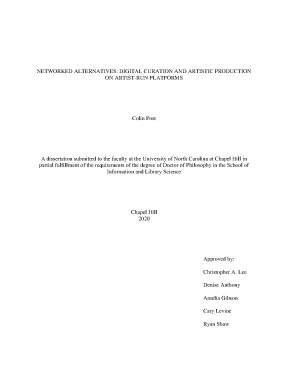
Tải xuống để đọc toàn bộNETWORKED ALTERNATIVES: DIGITAL CURATION AND ARTISTIC PRODUCTION ON ARTIST-RUN PLATFORMS Colin Post A dissertation submitted to the faculty at the University of North Carolina at Chapel Hill in partial fulfillment of the requirements of the degree of Doctor of Philosophy in the School of Information and Library Science Chapel Hill 2020 Approved by: Christopher A. Lee Denise Anthony Amelia Gibson Cary Levine Ryan Shaw © 2020 Colin Post ALL RIGHTS RESERVED ii ABSTRACT Colin Post: Networked Alternatives: Digital Curation and Artistic Production on Artist-run Platforms (Under the direction of Christopher A. Lee) This dissertation explores how artists creatively engaged with digital and networked technologies care for their artworks and related studio or personal archival materials. As digital and new media artworks frequently face preservation concerns and require regular maintenance shortly after the point of creation, artists often become the first stewards of their own work.
Central to these artistic engagements, artists leverage digital and networked technologies to circulate artworks in exhibition and display contexts outside of museums and commercial galleries, including online platforms and hybrid gallery spaces that I refer to as ‘networked alternatives.’ I position these networked alternatives in longer histories of artists’ experiments with digital and networked technologies as well as artists’ efforts to effect their own exhibition contexts alternative to arts institutions and markets. Along with the artists, the curators of these spaces play crucial roles in the digital curation of these artworks and archival materials. The curators not only work with artists to mitigate technical issues in the process of staging networked exhibitions but also undertake largely volunteer labor to ensure the long-term viability of artworks featured in these exhibitions. As artists and curators care for these artworks and archives throughout the lifecycle of these materials, they seek out information and learn new skills contributing to situated knowledges needed to perform digital curation labor.
From the creation of new artworks to the iii ongoing care of older works, these artists develop digital curation repertoires that become fundamental to their broader artistic efforts. Processes and practices for managing data across complex information systems are integral to activities involved in creating, exhibiting, and experiencing digital and new media artworks. I analyze these digital curation information needs and practices through the theoretical framework of information worlds, examining the various other individuals, organizations, technologies, communities, and sociopolitical factors that impact these information needs and practices. These artists and curators in turn shape the art worlds and various other social worlds constituting their information worlds; the digital curation repertoires of these individuals both drive and reflect broader changes in how art is created, disseminated, and experienced across these social worlds.
iv To Annot v ACKNOWLEDGMENTS I have researched and written this dissertation during one of the most trying and rewarding periods of my life, and the successful completion of this project has only been made possible through the enduring support of many, many people. I first owe a huge debt of gratitude to my committee, all of whom offered guidance, insightful feedback, and much needed encouragement. In the moments after successfully defending my dissertation proposal, I informed my committee that my wife and I were expecting our first child. My wife’s pregnancy and the first year of our daughter’s life would coincide with the inception, maturation, and completion of my dissertation research.
Along with congratulatory wishes from my committee, I received the reassuring information that four of my five committee members had successfully completed their own dissertations while expecting and welcoming children into the world. In addition to their scholarly insights that have informed my research and writing, my committee members have also shared in the joys (and tribulations) of new parenthood. They have all provided sound models for balancing demanding academic undertakings with a rich family life, and I will carry those lessons with me as I begin my career following graduation. My advisor, Cal Lee, deserves special thanks for his support and feedback: he has been instrumental in guiding me from my initial research idea through to a (pretty long) dissertation.
Any readers of this document will appreciate the careful feedback that Cal provided on everything from grammar and sentence structure through to the intellectual core of my arguments. My wife, Rachel Finkelstein, deserves undying credit for being an incredible mother and a supportive partner. Even while returning to her job as a high school teacher, Rachel afforded vi me time to type away at my desk along with daily encouragement. She placed my emotional wellbeing and my professional success among her top priorities, and I will be forever grateful for that.
Through all this, we have grown closer than ever, laid a strong foundation for our family, and together, we have raised an inquisitive, gregarious, and thoroughly silly daughter, Annot Finkelstein. Although it has been at times extraordinarily difficult to look after a newborn while writing a dissertation, I am routinely revivified by the energy exuded by this little girl. She is a fount of inspiration as I continue my work in this area. Both of our parents have been along with us on this journey, too.
They have made countless trips to visit us (and have provided free child care), making it possible for us to focus on our work as well as to continue nurturing our relationship with each other. Long before I started working on this dissertation, my parents, Keith and Rachel Post, have encouraged my creativity and curiosity, two indispensable strengths for any scholar. I hope to raise my daughter just as my parents raised me. Rachel’s parents, Marvin Finkelstein and Karen Olson, have been outstanding cheerleaders for both of us, and they’ve tracked the progress of this dissertation with great enthusiasm—and not just because they want their grandchild’s dad to have a job.
Rachel’s sister, Michele, and my brother and sister, Andrew and Aubrey, have likewise joined the cheering section, showering us with regular encouragement as we raise our daughter and make progress in our careers. Beyond our immediate families, both Rachel and I have been so fortunate to find a community of fellow scholars, artists, and friends in North Carolina. Among them, Patrick Golden and his partner, Rosa Kneller, have been constant companions. I have shared in many successes and setbacks with Patrick, who has always been just as ready to share a beer or some moments of respite at a favorite fishing spot on these occasions.
My dear, lifelong friend Kolin vii Smith has always been ready to talk baseball when I’ve needed a break and offer words of encouragement when I’ve needed a boost. I was also supremely fortunate to receive a five-year fellowship from the Royster Society that not only funded my doctoral education, including two full years of non-service funding, but also fostered an interdisciplinary community of faculty and graduate students that truly enriched my time at the University of North Carolina. Of course, this research would not have been possible without the inspiring community of artists that I have worked with for the last several years now. Cameron Buckley and Daniel Smith, the curators of Paper-Thin, welcomed my interest in their project and provided me with everything I needed or wanted to know, including generous introductions to all of the artists who have contributed work to the platform.
I am extremely grateful to all of the artists who, in turn, contributed to my research. All the artists discussed in the dissertation are carrying out stellar projects that warrant attention beyond the present document. I hope to honor them by continuing to share this research on their amazing work in publications and presentations, as well as with my future students. Moreover, I see the present research project as only the start of my involvement with this remarkable community of artists.
There are many more friends, family, and mentors that I would like to thank, but I worry about adding too many more pages to the dissertation. In lieu of rattling off an endless string of names, I’ll close by saying that if we spoke at any time between 2016 and 2020, you have a part in this accomplishment. viii TABLE OF CONTENTS CHAPTER 1: INTRODUCTION .1) The First Stewards of Digital and New Media Art .2) Paper-Thin and Networked Alternatives .3) Statement of Purpose and Research Questions.4) Overview of Research Design and Methods .5) Overview of Main Findings. 27 CHAPTER 2: LITERATURE REVIEW .1) Digital and New Media Art .2) Information Needs, Behaviors, and Practices .2) Conceptual and Theoretical Framework.2) Sociology of Art and Art Worlds .3) Relevant Approaches to Cultural Heritage Preservation .3) Post-Custodialism and Community Archives.4) Personal Information Management and Personal Digital Archiving.4) Artists’ Information Needs and Behaviors .5) Art and Networked Technologies.
111 CHAPTER 3: METHODS AND STUDY DESIGN .1 Overview of Methods .1) Constructivist Grounded Theory .3) Art Historical Methods .2) Reflection on Research Methodology .1) Relationship between Method and Theory .2) Self-reflective Statement on Positionality as Researcher .1) Case Study and Sample Selection .4) Evaluating the Study. 148 x CHAPTER 4: DIGITAL CURATION INFORMATION NEEDS AND PRACTICES .1) Artists’ Information Needs and Practices .1) Digital Curation Challenges .2) Personal Archiving Practices .3) Practices of Care .4) Organizations and Communities .2) Information Needs and Practices of Paper-Thin Curators .1) Overview of Paper-Thin .3) Paper-Thin as Archives. 279 CHAPTER 5: ARTISTS’ INFORMATION WORLDS .1) Overview of Social Worlds and Arenas .2) Permeable Art Worlds .1) Local and Networked Arts Communities .2) Intersections and Tensions with Information Technology Industries .3) The Shape of Digital Art History .3) Changing Conditions for Exhibiting, Selling, and Experiencing Art .1) Relationships between Artists and Curators .2) Relationships with Collecting Institutions and Private Collectors .3) Relationships with Audiences .4) Gaining Skills to Create and Care for Artworks.1) Implications for Cultural Heritage Institutions .2) Implications for Arts Education and Pedagogy .3) Limitations of the Study .4) Directions for Future Research. 351 xii LIST OF TABLES Table 1 Overview of Study Participants.
136 Table 2 Overview of Digital Curation Challenges and Related Practices. 153 Table 3 Overview of Information Needs and Sources. 155 Table 4 Overview of Paper-Thin Volumes. 239 xiii LIST OF FIGURES Fig.
1 Temporary splash page for NewHive. 3 Workflow for D'Alessio's creative projects. 4 Documentation photographs on VVORK. 5 Zachary Dean Norman, image still of Ragged Point Barbados from Endangered Data.
7 Sarah Rothberg, Memory/Place: My House. 8 Raul De Lara, Invasive Species (Burning Man). 9 Andy Lomas, from Mutant Vase Forms. 10 Phillip Stearns, GyrFalcon (Open Vault).
11 Screenshot of Paper-Thin’s landing page. 12 Andy Lomas, Cellular Forms. 13 Hunter Jonakin, Collector’s Digital Art Piece. 14 Daniel Baird and Haseeb Ahmed, HWBMx8.
15 Zachary Dean Norman, transform dot rotate. 16 Martina Menegon, I’ll Keep You Warm and Safe In My People Zoo. 17 Installation shot of Paper-Thin v3. 18 Installation shot of Paper-Thin v3.
19 Installation shot of Paper-Thin v3. 20 Social worlds/arenas map. 21 Sarah Rothberg, installation shot of Touching a Cactus. 318 xiv CHAPTER 1: INTRODUCTION Cultural heritage institutions have steadily developed novel techniques, approaches, and tools for the ongoing care of digital and new media art, but these works often face preservation concerns long before entering institutional collections, and far more works will never enter into institutional collections at all.
Significantly, artists themselves along with the curators of smaller galleries and art platforms, which I describe with the term ‘networked alternatives,’ have taken on primary responsibilities in the digital curation of artworks and related archival materials. Created and exhibited with rapidly changing digital and networked technologies, these artworks are sustained only through the application of both routine and exceptional digital curation efforts, including refreshing storage media, format migration, and altogether recreating older artworks with current technologies.
Nội dung được bảo vệ bản quyền — Tải xuống đầy đủ
Trích dẫn luận án này
Colin Post (2020). Post dissertation final submit version [Luận án tiến sĩ, University of North Carolina at Chapel Hill]. LuanAn.net. https://luanan.net/ly-luan-va-lich-su-giao-duc/post-dissertation-final-submit-version
Câu hỏi thường gặp
Luận án "Post dissertation final submit version" nghiên cứu về vấn đề gì?
Hoàn thiện luận văn cuối cùng: bản nộp chính thức sau chỉnh sửa. Đảm bảo mọi yêu cầu về định dạng và nội dung được đáp ứng trước khi nộp.
Luận án "Post dissertation final submit version" được bảo vệ tại trường nào?
Luận án này được bảo vệ tại University of North Carolina at Chapel Hill. Năm bảo vệ: 2020.
Luận án "Post dissertation final submit version" thuộc chuyên ngành gì?
Luận án "Post dissertation final submit version" thuộc chuyên ngành Information and Library Science. Danh mục: Lý Luận và Lịch Sử Giáo Dục.
Luận án "Post dissertation final submit version" có bao nhiêu trang?
Luận án "Post dissertation final submit version" có 384 trang. Bạn có thể xem trước một phần tài liệu ngay trên trang web trước khi tải về.
Cách tải luận án "Post dissertation final submit version" về máy như thế nào?
Để tải luận án về máy, bạn nhấn nút "Tải xuống ngay" trên trang này, sau đó hoàn tất thanh toán phí lưu trữ. File sẽ được tải xuống ngay sau khi thanh toán thành công. Hỗ trợ qua Zalo: 0559 297 239.