Nghiên cứu Jordan of Giano: Tầm nhìn Evangelical và cuộc tranh chấp trong Đạo Phanxicô thế kỷ 13
Khám phá Jordan of Giano và tầm nhìn Phúc Âm. Tìm hiểu sâu về đức tin, sự truyền giáo và vai trò trong lịch sử Kitô giáo.
Năm xuất bản
Số trang
412
Thời gian đọc
1 giờ 2 phút
Lượt xem
0
Lượt tải
0
Phí lưu trữ
60 Point
Tổng quan nhanh
- Chủ đề:
- Jordan of Giano: Tái định nghĩa Tầm nhìn Phúc âm dòng Phanxicô
- Số trang:
- 412 trang
- Trường:
- University of North Carolina at Chapel Hill
- Chuyên ngành:
- History
- Tác giả:
- Jon D. Powell
- Năm:
- 2016
Tóm tắt nội dung luận án
I.Jordan of Giano Tái định nghĩa Tầm nhìn Phúc âm dòng Phanxicô
Tài liệu này khám phá tầm nhìn Phúc âm của Jordan of Giano. Nó phân tích cách ông định hình lại bản sắc Dòng Phanxicô vào thế kỷ 13. Nghiên cứu tập trung vào mối quan hệ giữa ký ức và tường thuật trong Chronica của Jordan (Giordano da Giano). Chronica không chỉ là nguồn thông tin thực tế. Nó còn là một công cụ để định hình bản sắc nhóm cho Anh em Hèn mọn. Tài liệu này đặc biệt nhấn mạnh sự phức tạp của việc ghi nhớ và tường thuật. Việc này giúp hiểu rõ hơn về những cuộc tranh luận nội bộ trong Dòng Phanxicô thời kỳ đầu. Jordan of Giano đã sử dụng ký ức tập thể và cá nhân để thảo luận các chủ đề gây tranh cãi. Những chủ đề này bao gồm sứ mệnh, tử đạo, giáo sĩ hóa và sự giản dị.
1.1. Biên niên sử Giordano da Giano và ký ức tập thể
Biên niên sử của Jordan of Giano được xem xét. Nguồn tài liệu này không chỉ ghi lại sự kiện. Nó thể hiện cách Jordan dựa vào ký ức cá nhân và ký ức tập thể của Dòng Phanxicô. Điều này ảnh hưởng đến cách câu chuyện được kể. Nó tạo ra một tường thuật mới hoặc được diễn giải lại. Quá trình này cung cấp cái nhìn sâu sắc về cách các tu sĩ nhớ lại sự kiện. Họ định hình ký ức đó để tạo ra bản sắc nhóm.
1.2. Mục tiêu nghiên cứu Tầm nhìn Phúc âm bản sắc Phanxicô
Nghiên cứu này đặt câu hỏi về các phương pháp luận phổ biến. Nó không chỉ xem Chronica là một nguồn sự thật để giải đáp "Vấn đề Phanxicô". Thay vào đó, nó nhấn mạnh việc Jordan dựa vào ký ức. Việc này giúp hiểu rõ tầm nhìn Phúc âm của Jordan. Tầm nhìn đó định hình một bản sắc giáo sĩ cho Dòng Phanxicô. Bản sắc này đối lập với sự giản dị ban đầu.
1.3. Bối cảnh lịch sử Các Dòng Hành khất thế kỷ 13
Dòng Phanxicô là một trong các Dòng Hành khất nổi bật. Dòng này phát triển mạnh mẽ vào thế kỷ 13. Bối cảnh thần học trung cổ và các phong trào tu sĩ đóng vai trò quan trọng. Hiểu biết về thời kỳ này giúp làm rõ những căng thẳng nội bộ. Những căng thẳng này xoay quanh lý tưởng của Thánh Phanxicô Assisi. Đó là lý tưởng về đời sống tông đồ và khó nghèo phúc âm.
II.Ký ức Lịch sử Dòng Phanxicô thế kỷ 13
Tài liệu này thay đổi quan điểm về lịch sử Dòng Phanxicô. Nó nhấn mạnh cách ký ức định hình tường thuật. Jordan of Giano đã không chỉ ghi lại các sự kiện. Ông đã tạo ra một câu chuyện có mục đích. Câu chuyện này phản ánh những tranh cãi về bản sắc trong Dòng Phanxicô vào thế kỷ 13. Sứ mệnh của Dòng Phanxicô tại Đức năm 1221 được ông kể lại. Tuy nhiên, đó không chỉ là bản tường thuật đơn thuần. Đó là một cách để thể hiện bản sắc giáo sĩ. Bản sắc này tương phản với sự giản dị được miêu tả trong các huyền thoại của Dòng ở Ý.
2.1. Tác động của ký ức lên tường thuật lịch sử
Cách tiếp cận truyền thống xem Chronica là nguồn thông tin thực tế. Tuy nhiên, nghiên cứu này lập luận khác. Nó cho thấy ký ức cá nhân và tập thể là yếu tố chính. Chúng ảnh hưởng đến việc Jordan sáng tác Chronica. Sự phụ thuộc này đã định hình bản tường thuật cuối cùng. Việc này làm thay đổi cách hiểu về Chronica như một tài liệu lịch sử.
2.2. Vấn đề Phanxicô và tiểu sử Thánh Phanxicô Assisi
"Vấn đề Phanxicô" cố gắng biên soạn tiểu sử Thánh Phanxicô Assisi. Nó tìm kiếm ý định lý tưởng của Thánh nhân cho Dòng Phanxicô. Nghiên cứu này cho rằng Jordan không chỉ nhằm mục đích đó. Tường thuật của ông không chỉ để trả lời câu hỏi tiểu sử. Nó phục vụ một mục đích rộng lớn hơn. Đó là việc định hình bản sắc giáo sĩ cho Dòng Phanxicô.
2.3. Dòng Phanxicô và sứ mệnh tại Đức năm 1221
Biên niên sử của Jordan thường được xem là tường thuật chính. Nó kể về các sự kiện liên quan đến sứ mệnh của Dòng Phanxicô tới Đức năm 1221. Tuy nhiên, tài liệu này đề xuất một cách đọc khác. Jordan sử dụng tường thuật này để bày tỏ một bản sắc giáo sĩ. Bản sắc đó đi ngược lại bản sắc giản dị. Bản sắc giản dị được thể hiện trong các huyền thoại Phanxicô. Các huyền thoại này được sáng tác ở Ý vào đầu đến giữa thế kỷ 13.
III.Phanxicô Assisi Tranh luận về bản sắc tông đồ
Tầm nhìn của Jordan of Giano làm nổi bật cuộc tranh luận. Cuộc tranh luận đó xoay quanh bản sắc tông đồ của Dòng Phanxicô. Thánh Phanxicô Assisi đã thiết lập Dòng với lý tưởng khó nghèo phúc âm và đời sống tông đồ giản dị. Tuy nhiên, Dòng phát triển nhanh chóng. Điều này dẫn đến những căng thẳng về việc duy trì lý tưởng ban đầu. Jordan thông qua Chronica của mình đã góp phần vào cuộc tranh luận này. Ông ủng hộ một bản sắc giáo sĩ hơn. Bản sắc này khác với sự giản dị mà nhiều người mong muốn.
3.1. Bản sắc giáo sĩ đối lập sự giản dị ban đầu
Tài liệu này lập luận. Jordan đã sử dụng tường thuật của mình. Mục đích là để thể hiện một bản sắc giáo sĩ cho Dòng Phanxicô. Bản sắc này đối lập với sự giản dị ban đầu. Sự giản dị này được mô tả trong các huyền thoại Phanxicô sớm hơn. Những huyền thoại này tập trung vào lý tưởng của Thánh Phanxicô Assisi. Bản sắc giáo sĩ nhấn mạnh vai trò của tu sĩ như linh mục và học giả.
3.2. Đời sống tông đồ và sự phát triển của Dòng Phanxicô
Dòng Phanxicô ban đầu được thành lập để sống đời sống tông đồ. Điều này bao gồm khó nghèo phúc âm và rao giảng Tin Mừng. Tuy nhiên, sự phát triển nhanh chóng của Dòng mang lại thách thức. Việc quản lý một tổ chức lớn đòi hỏi cấu trúc phức tạp hơn. Điều này dẫn đến sự thay đổi trong cách hiểu về đời sống tông đồ. Nó cũng ảnh hưởng đến các Dòng Hành khất khác.
3.3. Thần học trung cổ và ý nghĩa bản sắc Dòng
Trong thần học trung cổ, bản sắc của các dòng tu rất quan trọng. Nó định hình vai trò của họ trong Giáo hội và xã hội. Cuộc tranh luận về bản sắc của Dòng Phanxicô phản ánh những căng thẳng lớn hơn. Những căng thẳng này liên quan đến thần học và xã hội của thế kỷ 13. Tầm nhìn của Jordan of Giano cung cấp cái nhìn độc đáo. Nó cho thấy cách các tu sĩ hiểu và định hình bản sắc của Dòng Phanxicô.
IV.Khó nghèo Phúc âm Đời sống tu sĩ Cuộc chiến tư tưởng
Tài liệu này đi sâu vào cuộc chiến tư tưởng. Cuộc chiến này diễn ra trong Dòng Phanxicô thế kỷ 13. Tâm điểm là lý tưởng khó nghèo phúc âm và đời sống tu sĩ. Jordan of Giano đã chứng kiến và tham gia vào cuộc tranh luận này. Ông đã sử dụng Chronica của mình để bảo vệ quan điểm. Quan điểm đó nhấn mạnh sự cần thiết của một cấu trúc giáo sĩ. Điều này được cho là phù hợp hơn với sứ mệnh và sự phát triển của Dòng Phanxicô. Cuộc chiến này phản ánh những thách thức mà các Dòng Hành khất phải đối mặt. Họ phải cân bằng giữa lý tưởng sáng lập và thực tế của một tổ chức ngày càng lớn mạnh.
4.1. Khó nghèo phúc âm Lý tưởng thực tế
Lý tưởng khó nghèo phúc âm là nền tảng của Dòng Phanxicô. Thánh Phanxicô Assisi đã đặt ra yêu cầu cao về sự từ bỏ của cải. Tuy nhiên, việc duy trì lý tưởng này gặp nhiều khó khăn. Dòng Phanxicô phát triển nhanh chóng. Họ cần cơ sở vật chất và giáo dục cho các tu sĩ. Điều này tạo ra căng thẳng giữa lý tưởng và thực tế. Các giải pháp khác nhau được đề xuất.
4.2. Khác biệt giữa các huyền thoại Phanxicô tại Ý
Các huyền thoại Phanxicô được sáng tác ở Ý. Những huyền thoại này thường nhấn mạnh sự giản dị và sự vâng phục của Thánh Phanxicô Assisi. Chúng tạo ra một bản sắc Dòng Phanxicô cụ thể. Tầm nhìn của Jordan khác biệt. Ông trình bày một bản sắc giáo sĩ hơn. Sự khác biệt này cho thấy các quan điểm đa dạng tồn tại trong Dòng. Nó cũng thể hiện cách ký ức được diễn giải khác nhau.
4.3. Vai trò của Hồng y bảo hộ và hệ thống cấp bậc
Vai trò của Hồng y bảo hộ rất quan trọng. Hồng y bảo hộ giám sát Dòng Phanxicô. Điều này ảnh hưởng đến sự phát triển và quản trị của Dòng. Hệ thống cấp bậc nội bộ cũng trở nên phức tạp hơn. Jordan of Giano thảo luận các chủ đề này. Ông xem chúng là những điểm gây tranh cãi. Chúng liên quan đến việc thể hiện bản sắc Phanxicô. Điều này cho thấy sự ảnh hưởng của cấu trúc bên ngoài và bên trong.
V.Biên niên sử Jordan Nguồn sử liệu quan trọng Dòng Phanxicô
Biên niên sử của Jordan of Giano là một nguồn sử liệu vô cùng quan trọng. Nó không chỉ cung cấp thông tin về sứ mệnh tại Đức. Nó còn cho thấy cách ký ức định hình lịch sử. Tài liệu này lập luận rằng cần có cách đọc mới. Cách đọc này phải xem xét ý định của tác giả. Nó cũng phải hiểu cách tường thuật được xây dựng. Biên niên sử này là một minh chứng cho sự phức tạp của lịch sử Dòng Phanxicô. Nó giúp hiểu sâu hơn về những cuộc tranh luận tư tưởng thế kỷ 13.
5.1. Định hình lại quan điểm về Jordan của Giano Chronica
Nghiên cứu này thách thức các quan điểm hiện có. Nó lập luận rằng Chronica không chỉ là một kho sự kiện. Nó là một tác phẩm được xây dựng cẩn thận. Jordan of Giano đã sử dụng nó để thể hiện quan điểm của mình. Quan điểm đó về bản sắc Dòng Phanxicô. Việc này định hình lại cách các nhà sử học tiếp cận tài liệu này. Nó mở ra những cách hiểu mới về lịch sử Dòng Phanxicô.
5.2. Sự hiểu biết của tác giả và cấu trúc tường thuật
Tài liệu nhấn mạnh. Cần phải đọc các nguồn theo sự hiểu biết ngày càng phát triển của các tác giả. Cấu trúc tường thuật ảnh hưởng đến việc thể hiện sự hiểu biết đó. Mức độ khác biệt trong cấu trúc này phụ thuộc vào ký ức. Nó cũng phụ thuộc vào ý định của tác giả trong việc xây dựng một tường thuật cụ thể.
5.3. Thúc đẩy nghiên cứu lịch sử Dòng Phanxicô sâu rộng hơn
Công trình này khuyến khích nghiên cứu sâu hơn. Nó cần khám phá vai trò của ký ức và tường thuật. Việc này áp dụng cho việc hiểu lịch sử Dòng Phanxicô. Nó cũng áp dụng cho các Dòng Hành khất khác. Các nhà nghiên cứu có thể xem xét cách các nguồn được xây dựng. Điều này mang lại cái nhìn phong phú hơn về thần học trung cổ và đời sống tu sĩ.
Tải xuống file đầy đủ để xem toàn bộ nội dung
Tải đầy đủ (412 trang)Trích đoạn nội dung luận án
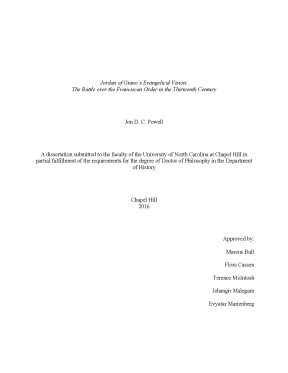
Tải xuống để đọc toàn bộJordan of Giano’s Evangelical Vision: The Battle over the Franciscan Order in the Thirteenth Century Jon D. Powell A dissertation submitted to the faculty of the University of North Carolina at Chapel Hill in partial fulfillment of the requirements for the degree of Doctor of Philosophy in the Department of History Chapel Hill 2016 Approved by: Marcus Bull Flora Cassen Terence McIntosh Jehangir Malegam Evyatar Marienberg © 2016 Jon D. Powell ALL RIGHTS RESERVED ii ABSTRACT Jon D. Powell: Jordan of Giano’s Evangelical Vision: The Battle over the Franciscan Order in the Thirteenth Century (Under the direction of Marcus Bull) My dissertation, “Jordan of Giano’s Evangelical Vision: The Battle over the Franciscan Order in the Thirteenth Century,” explores the relationship between memory and narrative as found in Jordan of Giano’s (c.
While the primary theme that this dissertation explores is the nature of Franciscan mission, that topic is considered in connection with the subjects of martyrdom, clericalization, education, simplicity, hierarchy, language, and the role of the cardinal protector. More to the point, this dissertation investigates the manner in which Jordan drew on Franciscan collective memory and his own personal memories of events pertaining to mission in order to discuss these themes as points of contention with respect to expressions of Franciscan identity. It is Jordan’s process of creating a new or a reinterpreted narrative that provides us with the most apparent insights into how friars as individuals and as groups remembered events and how they shaped those memories for the purpose of creating a group identity for the Friars Minor. My dissertation aims to revise the extant historiography in two main areas: First, in contrast to the prevailing methodological approach to the text—which views Jordan’s Chronica as a source of fairly factual information that can be employed to answer the Franciscan Question, or the attempt to compile a biography of the historical Francis of Assisi (1181/1182–1226) and to ascertain his ideal intentions for the Order —this study emphasizes how Jordan relied primarily on personal and collective memory to compose the Chronica and iii how this reliance affected the resulting narrative.
Second, instead of viewing the Chronica as merely recounting the primary events that occurred in relation to the Franciscan mission to Germany in 1221, this dissertation suggests that Jordan uses his narrative to express a clerical identity for the order, one that runs counter to an identity of simplicity that was expressed in Franciscan legenda composed in Italy during the early to mid thirteenth century. This dissertation argues that, in addition, we should read the sources in terms of the authors’ evolving understanding of the Order, how narrative construction affects the expression of that understanding, and to the extent to which this construction differs depending on the memories availably to the author as well as the author’s intent in constructing a particular narrative. iv To Jeong, Pauline, and André for their support, while I devoted substantial time to this endeavor. To Marcus Bull for his unflagging confidence in me and for his continued moral support during the research and writing processes.
v ACKNOWLEDGEMENTS Writing this part of my dissertation has been a particular pleasure. It has reminded me of the many people who made the road to the Ph. Several institutions were very generous in their support of project: Biblioteka Kórnicka, Biblioteka Jagiellońska, the Medieval and Early Modern Studies, and the History Department at the University of North Carolina. Much appreciation must be directed toward the administrators and staff at institutions in Poland for their help with my research.
Tomasz Jasiński, Mrs. Magdalena Marcinkowska, and Małgorzata Potocka, and Gregor Kubacki at the Biblioteka Kórnicka and Monika Jaglarz at the Biblioteka Jagiellońska of the Jagiellonian University were incredibly generous with their time and assistance in locating the manuscripts that I wanted to review and in furnishing me with space in which to work. Without the Medieval and Early Modern Studies, and the History Department at the University of North Carolina, this dissertation would have been much more difficult to write, since they have supported my years as a graduate student as well as funding the time needed to write this study as well as the travel for research. The staff at UNC’s Davis Library, including the personnel in Interlibrary Loan, have been delightful and helpful.
They have more than proved themselves to be able and friendly in their work and in providing a comfortable working environment. Quite a number of the faculty members at the History Departments at the University of North Carolina and Duke University have been sympathetic, understanding, and encouraging over the years. Fitzhugh Brundage, Lloyd Kramer, Tania String, Miles Fletcher, Kathleen vi Duval, Jerma Jackson, Susan Pennybacker, Don Reid, William Sturkey, Karen Auerbach, John Sweet, Harry Watson, and Molly Worthen always had a kind or helpful word for me. Caroline Bruzelius and Rachel Deagman at Duke deserve special thanks for discussing many aspects of the Franciscans and their critics with me.
I also learned much in the form of pedagogy as well as content as a teaching or grading assistant for Marcus Bull, Flora Cassen, Adam Domby, Brendan Hunziker, Patrick Kent, Katie Otis, Sarah Shields, Jay Smith, Patricia Sullivan, and Brett Whalen. I also thank Brett Whalen for guiding me through the early process, for directing me to the Franciscans, and for furnishing me with his insightful comments. The directors of graduate studies, Melissa Bullard, Cynthia Radding, and Chad Bryant, were always most gracious in helping me to coordinate my occasional scheduling difficulties or in working through obstacles. John Sweet deserves much thanks for his tireless work in helping me with the job search process and for providing the title for this dissertation.
The staff in the History Department at the University of North Carolina—Joy Jones and Violet Anderson, the graduate coordinators; Diana Devereaux, the undergraduate coordinator; Joyce Loftin, the accounting technician; Adam Kent, the university administrative manager; Genevieve Cecil, the office assistant; and Renee McIntire, the department’s web site content manager—were exceptionally helpful in reminding me about and helping me with various forms, paperwork, and administrative tasks as well as in answering whatever questions I had. My dissertation committee, consisting of Marcus Bull, Flora Cassen, Jehangir Malegam, Terence McIntosh, and Evyatar Marienberg, listened patiently to my semi-developed ideas, provided much-needed emotional support, gave the dissertation a careful reading, and wrote countless letters of recommendation. For all that, I am extremely grateful. vii Marcus Bull has been the ideal advisor in every respect.
He provided the perfect balance between ensuring that I was productive and providing me the latitude to follow my own intuition. He made certain that the researching and writing process was enjoyable and was always ready to deliver valuable advice. His guidance on memory and narrative was particularly helpful. While it is a trope to say that a work is improved by the advisor’s intervention and that any errors and imperfections belong to the author, these details are in fact the case with this dissertation.
At the University of North Carolina, I benefited enormously from the help and friendship of former and current graduate students Mike Smith, Shawn Gumbleton, Adam Domby, Jennifer Kosmin, Ryan Peeks, Ann Halbert-Brooks, Josh Hevert, Allie Locking, Beth Hasseler, Peter Raleigh, Daniel Morgan, Julie Ault, Jeffrey Ryan Harris, Bret Devereaux, Ross Twele, Marina Jones, Tommy Shephard, Sarah Bond, Derek Holmgren, Brittany Lehman, Anndal Narayanan, Alex Ruble, and Joshua Tait. Will Griffin, Rob Shapard, and Katie Otis deserve special thanks for pointing me to and discussing the application of memory theory in oral history. Besides being a great friend during the early phases of graduate school, Mike Bazemore has also been a wonderful professional colleague. A support network of friends has been crucial.
Much appreciation is given to Conrad and Bettina Kaiser in Germany; Pauline Gourmeron, André Béhague, and Christophe and Anne Menier in France, ByoungYeop Choi in South Korea, Eros Munoz-Jimenez in Mexico, and Azia and Aisha Jabar Al-bitar in Jordan for making this process easier. I thank Mel Harmon, Paul Haggard, Leonard Bishop, Kelly Coblenz, Tony Kyle, Dave Talley, Belinda Christ, Frans Aberillo, Shane Elliott, Dan and Kristen Faulkner, Melissa Alexander, Bronwen Llewellyn, and Brian Brooks for their moral support. viii These years would have been much more difficult without my wonderful family. Bob and Frances Powell and SungJae Cho provided much help by helping to take care of Pauline and André while I worked.
However, I cannot thank enough Jeong, Pauline, and André. They provided the basis for so much that it is difficult to express my gratitude appropriately. All I can say is that I know how fortunate I am to have them. ix TABLE OF CONTENTS LIST OF ABBREVIATIONS.1 The Chronica, Memory, and Themes .7 Historiography of the Chronica and the Approach for this Study.12 Primary Sources Associated with the Chronica .19 Organization of this Study .23 A Brief Methodological Overview .27 CHAPTER 1: JORDAN, THE CHRONICA, AND GENRE: CHRONICLES, MEMOIRS, AND ORAL HISTORY .31 Jordan of Giano: Career Politician and Accidental Chronicler .32 Difficulty in Categorizing the Chronica .40 Is the Chronica a Chronicle or an Annal? .44 Is the Chronica a Memoir or an Autobiography? .52 Is the Chronica an Oral History? .59 x CHAPTER 2: THEORY AND METHODOLOGY: MEMORY, NARRATIVE, AND IDENTITY .63 How the Brain Stores and Recalls Individual Memory.64 Autobiographic Memory and Narrative Construction.71 How Groups and Organizations Store and Recall Social Memory .75 Narrative and Narrative Construction .88 The Reliability of Memory and Narrative .108 CHAPTER 3: MEMORY AND MISSION IN JORDAN’S CHRONICA .110 Personal Memory in the Chronica.112 Collective Memory and Eyewitnesses in the Chronica.125 Textual Sources in the Chronica.134 The 1219 Missions to France, Germany, and Hungary .150 CHAPTER 4: EARLY THIRTEENTH-CENTURY FRANCISCAN MARTYRDOM: TEMPORAL OR SPIRITUAL INTERPRETATIONS.154 The Fourteenth-century Passiones and Thirteenth-century Franciscan Martyrdom .156 The Spiritual Geography of Franciscan Martyrdom.167 Persecution as Part of Mission in the Chronica.185 xi CHAPTER 5: EARLY-THIRTEENTH CENTURY FRANCISCAN MISSION: CONFRONTATIONAL OR CONFESSIONAL INTERPRETATIONS .188 Francis’ Depiction of the Friars’ Demeanor when They Went on Mission.191 The Friars’ Sermons and Conduct while on Mission in the Early Thirteenth Century .201 Francis as an Example of Franciscan Conduct on Mission .221 CHAPTER 6: FRANCISCAN CLERICALIZATION AND EDUCATION: INTERCONNECTIONS WITH SIMPLICITY.224 Illiterate Versus Literate Friars within a Clericalized Franciscan Order .228 Simplicity Versus Education within a Clericalized Franciscan Order.267 CHAPTER 7: FRANCISCAN CLERICALIZATION AND EDUCATION: INTERCONNECTIONS WITH MISSION.269 Provincial Emphasis on Clericalization and Education .271 Education in the English and German Provinces.276 The Efficacy of Clerical versus Lay Friars in regard to the Order’s Expansion.295 CHAPTER 8: MISSIONS AS JUSTIFICATION FOR APPOINTING A CARDINAL PROTECTOR.297 Maintenance of Franciscan Orthodoxy as Justification for the Cardinal Protector in Francis’ Writings.300 Protection from Enemies as Justification for the Cardinal Protector in Thomas of Celano’s Life of Saint Francis and in the “We who were with him” Texts .304 xii The Failure of the 1219 Missions as Against the Italian Lay Friars’ Disobedience as Justifications for the Cardinal Protector .333 CHAPTER 9: FRANCISCAN CLERICALIZATION AND EDUCATION: INTERCONNECTIONS WITH LANGUAGE.335 Multilingualism in the 1219 and 1221 Missions .374 xiii LIST OF ABBREVIATIONS Journals and Series AF Analecta Franciscana, 12 vols.
AFH Archivum Franciscanum Historicum. BF Bullarium Franciscanum, Romanorum pontificum, constitutions, epistolas ac diplomata continens tribus ordinis S. Francisci spectantia, vol. FA:ED 1 Francis of Assisi: Early Documents: The Saint, volume 1, ed.
Wayne Hellmann, William J. FA:ED 2 Francis of Assisi: Early Documents: The Founder, volume 2, ed. Wayne Hellmann, William J. FS Franciscan Studies.
MF Miscellanea Francescana. MGH SS Monumenta Germaniae historica Scriptores in Folio. Major Medieval Franciscan Texts 1 Celano Thomas of Celano, “Vita Prima S. Francisci,” in AF 10 (1927), 1–117.
2 Celano Thomas of Celano, “Vita Secunda S. Francisci,” in AF 10 (1927), 127–268. Chronica majora Matthew of Paris, Chronica majora, vol. 6, Rerum Britannicarum Medii Ævi Scriptores or Chronicles and Memorials of Great Britain and Ireland during the Middle Ages (London, Longman & co.
Compilatio Assisiensis “The Assisi Compilation,” edition: Compilatio Assisiensis dagli scritti di fr. Leone e compagni su s.
Nội dung được bảo vệ bản quyền — Tải xuống đầy đủ
Trích dẫn luận án này
Jon D. Powell (2016). Jordan of Giano và tầm nhìn Evangelical [Luận án tiến sĩ, University of North Carolina at Chapel Hill]. LuanAn.net. https://luanan.net/nghien-cuu-van-hoa/ton-giao-hoc/nghien-cuu-jordan-of-giano-tam-nhin-evangelical
Câu hỏi thường gặp
Luận án "Jordan of Giano và tầm nhìn Evangelical" nghiên cứu về vấn đề gì?
Khám phá Jordan of Giano và tầm nhìn Phúc Âm. Tìm hiểu sâu về đức tin, sự truyền giáo và vai trò trong lịch sử Kitô giáo.
Luận án "Jordan of Giano và tầm nhìn Evangelical" được bảo vệ tại trường nào?
Luận án này được bảo vệ tại University of North Carolina at Chapel Hill. Năm bảo vệ: 2016.
Luận án "Jordan of Giano và tầm nhìn Evangelical" thuộc chuyên ngành gì?
Luận án "Jordan of Giano và tầm nhìn Evangelical" thuộc chuyên ngành History. Danh mục: Tôn Giáo Học.
Luận án "Jordan of Giano và tầm nhìn Evangelical" có bao nhiêu trang?
Luận án "Jordan of Giano và tầm nhìn Evangelical" có 412 trang. Bạn có thể xem trước một phần tài liệu ngay trên trang web trước khi tải về.
Cách tải luận án "Jordan of Giano và tầm nhìn Evangelical" về máy như thế nào?
Để tải luận án về máy, bạn nhấn nút "Tải xuống ngay" trên trang này, sau đó hoàn tất thanh toán phí lưu trữ. File sẽ được tải xuống ngay sau khi thanh toán thành công. Hỗ trợ qua Zalo: 0559 297 239.