T Cell Immunity in Hepatitis C Virus Infection: Dissertation by Alex Hartlage, Ohio State University
Nghiên cứu miễn dịch tế bào T trong mô hình chuột nhiễm virus viêm gan C (HCV) theo Hartlage 2020.
Biomedical Sciences Graduate Program
Luan An
Luận án tiến sĩ
Năm xuất bản
Số trang
151
Thời gian đọc
23 phút
Lượt xem
1
Lượt tải
0
Phí lưu trữ
50 Point
Tổng quan nhanh
- Chủ đề:
- T Cell Immunity in Hepatitis C: Rodent Model Insights
- Số trang:
- 151 trang
- Trường:
- The Ohio State University
- Chuyên ngành:
- Biomedical Sciences Graduate Program
- Tác giả:
- Alex Stephen Hartlage
- Năm:
- 2020
Tóm tắt nội dung luận án
I.T Cell Immunity in Hepatitis C Rodent Model Insights
Hepatitis C virus (HCV) chronically infects 71 million people globally. This viral infection is a major cause of severe progressive liver diseases. These conditions include cirrhosis and hepatocellular carcinoma. Persistence of HCV in most infected persons results from failed virus-specific T cell immunity. An effective HCV vaccine is highly sought after. The only HCV vaccine candidate in phase II clinical trials aims to induce virus-specific CD4+ and CD8+ T cell responses. However, the precise role of T cells in acute HCV control remains uncertain. Reasons for T cell failure are also not fully understood. Addressing these fundamental questions has been challenging. The absence of relevant HCV animal models has been a significant barrier. Chimpanzees, previously used for research, are no longer available. Current mouse models are immune-compromised. This makes them unsuitable for detailed immunological studies. Recent discoveries offer new possibilities for in vivo modeling. Closely-related viral homologs of HCV have been found in diverse animal hosts. The rodent hepacivirus (RHV), discovered in wild Norway rats, is the most promising of these. RHV shares important virological features with HCV. Notably, it causes chronic hepatotropic infections in immune-competent laboratory rats. This provides a robust and accessible model. It allows direct investigation into T cell response, immune pathogenesis, and viral persistence mechanisms.
1.1. Global Burden of Hepatitis C Virus Infection HCV
Hepatitis C virus (HCV) impacts 71 million individuals worldwide. HCV infection is a primary driver of serious liver pathologies. These include advanced cirrhosis and hepatocellular carcinoma. The global health burden is immense. Persistent infection by HCV underscores the urgent need for better preventive strategies. Understanding antiviral immunity is central to combating this widespread pathogen.
1.2. Challenges in Studying HCV Cellular Immunity
HCV persistence is thought to stem from a failure of virus-specific T cell immunity. The exact contribution of T cells to acute HCV control is unclear. Why T cells tend to fail against HCV also requires elucidation. Answering these questions has been difficult. The lack of permissive, immune-competent animal models for HCV infection has been a major impediment. Past models presented significant limitations.
1.3. Emergence of Rodent Hepacivirus RHV Model
New avenues for in vivo research have opened with the discovery of viral homologs. Rodent hepacivirus (RHV), found in rats, is a compelling surrogate for HCV. RHV exhibits key virological characteristics similar to HCV. Crucially, it establishes chronic hepatotropic infections in immune-competent rats. This model offers a unique opportunity to study T cell response, adaptive immunity, and viral persistence in a relevant system.
II.Understanding HCV Persistent Infection T Cell Failure
The central objective of studies utilizing the RHV model is to elucidate the importance of T cells during infection. It also seeks to identify mechanisms leading to their failure to eliminate persistent virus. This investigation occurs in both naïve and immunized contexts. The persistence of HCV infection is a hallmark of the disease. It affects a large proportion of infected individuals. This chronicity is widely attributed to deficiencies in the host's T cell response. Specifically, the inability of virus-specific T cells to mount an effective and sustained antiviral immunity allows the virus to persist. Early viral load has emerged as a key factor. It influences the nature and fate of T cell responses. High initial viral titers can lead to T cell exhaustion or impaired functionality. This compromises the cellular immunity needed for viral clearance. Understanding these dynamics is critical for developing effective interventions. These include therapeutic strategies and preventative vaccines. The RHV model offers an unparalleled platform. It allows researchers to dissect the complex interplay between the virus and the host immune system. Insights gained can directly inform approaches to enhance T cell immunity against HCV.
2.1. T Cell Immunity and HCV Persistent Infection
Chronic HCV infection is a major health concern. This persistence is frequently linked to a failure of virus-specific T cell immunity. The ability of the host's immune system to clear the virus often falters. This allows the Hepatitis C virus to establish long-term infection. Investigating this immune pathogenesis is crucial for developing successful treatments.
2.2. Unraveling Mechanisms of T Cell Dysfunction
The mechanisms behind T cell dysfunction in chronic HCV infection are complex. T cells may become exhausted, anergic, or undergo apoptosis. These failures prevent effective antiviral immunity. Studies aim to identify these specific pathways of T cell impairment. Understanding these mechanisms is vital for restoring robust T cell response.
2.3. Impact of Early Viral Load on T Cell Response
Early viral load emerges as a critical determinant of T cell fate. A high initial viral burden can contribute to the inability of T cells to mediate protective immunity. This suggests that the magnitude of initial viral replication profoundly influences the quality and durability of the host's cellular immunity. This finding has implications for vaccine timing and efficacy.
III.Rat Hepacivirus RHV Model for HCV Research Advances
The rodent hepacivirus (RHV) model provides an invaluable tool for HCV research. It addresses the long-standing need for an immune-competent small animal model. RHV shares significant virological features with the Hepatitis C virus. This includes a similar genomic organization and tropism. RHV infections in immune-competent laboratory rats mirror key aspects of human HCV infection. The model allows for detailed immunological studies. Researchers can now investigate the precise dynamics of the T cell response. Mechanisms of viral persistence and immune evasion can also be explored. Unlike previous models, RHV in rats develops chronic hepatotropic infections. This faithfully replicates a central aspect of HCV pathogenesis. The ease and utility of the rat RHV infection system are considerable. It enables systematic manipulation of the host immune system. Experimental interventions, such as vaccination and T cell depletion, become feasible. These studies provide direct evidence. T cells are vital for hepacivirus control. The model also highlights the effectiveness of vaccines that stimulate cellular immunity. This can occur even without parallel antibody induction in preventing virus persistence. The RHV model thus accelerates understanding of HCV immunity. It also facilitates the development of new antiviral strategies and vaccines.
3.1. RHV as a Surrogate for Hepatitis C Virus HCV
Rodent hepacivirus (RHV) serves as an effective surrogate for Hepatitis C virus. It recapitulates key aspects of HCV infection in an accessible small animal. This includes its ability to cause chronic liver infections. The RHV model addresses critical gaps in HCV research. It allows for in-depth analysis of the T cell response and viral pathogenesis.
3.2. Advantages of the Immune Competent Rat Model
The RHV model utilizes immune-competent laboratory rats. This offers a significant advantage over immune-compromised mouse models. The intact immune system allows for robust studies of adaptive immunity. Researchers can observe natural T cell responses and their interactions with the virus. This provides a more accurate representation of human HCV infection dynamics.
3.3. Addressing Fundamental Questions in HCV Pathogenesis
The rat RHV system enables investigation into core questions of HCV pathogenesis. These include mechanisms of viral persistence and immune evasion. The model facilitates studies on how T cell immunity fails or succeeds. It is also crucial for evaluating vaccine candidates designed to enhance cellular immunity. This directly informs future HCV prevention and treatment strategies.
IV.T Cell Response Critical for Antiviral Immunity Vaccines
Experimental evidence directly demonstrates the critical role of T cells in hepacivirus control. Studies utilized a recombinant adenovirus vaccine. This vaccine expressed RHV non-structural proteins as an experimental tool. Vaccination prevented RHV persistence in most animals. This highlights the prophylactic potential of T cell-inducing vaccines. Transient depletion of CD8+ or CD4+ T cells undermined protective immunity. This finding provides direct evidence for the necessity of both T cell subsets. These cells are essential for effective antiviral immunity. The data clearly show T cells are a critical component of immunity to persistent infection. Furthermore, these studies reveal that vaccines stimulating cellular immunity can be effective. They can prevent virus persistence even without parallel antibody induction. This challenges conventional vaccine development paradigms. It suggests a strong focus on robust T cell responses may be sufficient for protection against chronic viral infections. The insights gained are directly applicable to Hepatitis C virus vaccine development. They underscore the importance of strategies designed to induce potent and sustained T cell responses. This robust T cell response is vital for clearing the virus and preventing chronicity.
4.1. T Cells Prevent Rat Hepacivirus RHV Persistence
Direct evidence indicates T cells are vital for hepacivirus control. Vaccination with a recombinant adenovirus expressing RHV proteins prevented viral persistence in most animals. This finding strongly supports the role of cellular immunity in clearing the virus. It demonstrates the feasibility of T cell-focused vaccine strategies.
4.2. CD4 and CD8 T Cells Essential for Protection
Transient depletion of specific T cell subsets compromises protective immunity. Removing CD8+ or CD4+ T cells led to a failure in preventing RHV persistence. This highlights the indispensable contribution of both CD4+ T cells and CD8+ T cells. They act as critical components of the adaptive immunity required for viral clearance.
4.3. Vaccine Induced Cellular Immunity Efficacy
Vaccines that stimulate robust cellular immunity can effectively prevent virus persistence. This efficacy can be achieved even in the absence of significant antibody induction. This finding challenges traditional vaccine design. It suggests that potent T cell responses alone may be sufficient for protection against chronic Hepatitis C virus infection.
V.Immune Evasion Vaccine Efficacy in HCV RHV Models
Viral strategies for immune evasion present significant challenges to vaccine development. The RHV model provides a platform to study these mechanisms. Studies used an RHV strain containing immune escape mutations. These mutations were located within dominant CD8+ T cell epitopes. This allowed for investigation into the impact of antigenic mismatch. Antigen mismatch emerged as an important determinant of RHV vaccine efficacy. Vaccines designed against one viral strain may fail to protect against variants with altered epitopes. This finding has profound implications for Hepatitis C virus vaccine design. It underscores the need for vaccines that induce broad, cross-reactive T cell responses. Such responses are critical for overcoming viral diversity and immune evasion. The research also revealed correlates of successful immunity to heterologous virus. Identifying these immune correlates is essential for rational vaccine development. It allows for the selection of vaccine candidates most likely to provide broad protection. These findings contribute significantly to understanding viral persistence and host immunity. They guide future efforts to develop effective T cell-based vaccines against HCV, addressing the challenge of viral evolution.
5.1. Antigen Mismatch and Vaccine Protection against RHV
Antigen mismatch is a crucial factor affecting vaccine efficacy against RHV. Studies utilizing an RHV strain with immune escape mutations within dominant CD8+ T cell epitopes demonstrated this. A lack of match between vaccine antigens and circulating viral strains can compromise protection. This emphasizes the need for vaccines that account for viral diversity.
5.2. Correlates of Successful Immunity to Heterologous Virus
The RHV model revealed specific correlates of successful immunity to heterologous virus. These markers are essential for predicting vaccine effectiveness against diverse viral strains. Identifying these correlates helps in designing vaccines that elicit broad protective T cell responses. This is key for overcoming immune evasion strategies.
5.3. Implications for Future Hepatitis C Virus Vaccines
The findings have direct implications for future Hepatitis C virus vaccine development. They highlight the importance of inducing T cell responses capable of recognizing diverse viral variants. Strategies must address potential immune escape mutations. This ensures robust and long-lasting protection against HCV infection, overcoming challenges posed by viral persistence and evolution.
Tải xuống file đầy đủ để xem toàn bộ nội dung
Tải đầy đủ (151 trang)Trích đoạn nội dung luận án
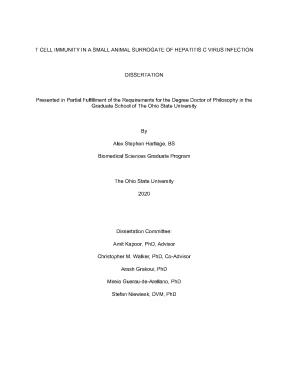
Tải xuống để đọc toàn bộT CELL IMMUNITY IN A SMALL ANIMAL SURROGATE OF HEPATITIS C VIRUS INFECTION DISSERTATION Presented in Partial Fulfillment of the Requirements for the Degree Doctor of Philosophy in the Graduate School of The Ohio State University By Alex Stephen Hartlage, BS Biomedical Sciences Graduate Program The Ohio State University 2020 Dissertation Committee: Amit Kapoor, PhD, Advisor Christopher M. Walker, PhD, Co-Advisor Arash Grakoui, PhD Mireia Guerau-de-Arellano, PhD Stefan Niewiesk, DVM, PhD Copyright by Alex Stephen Hartlage 2020 Abstract The hepatitis C virus (HCV) chronically infects 71 million people worldwide and is major cause of severe progressive liver diseases such as cirrhosis and hepatocellular carcinoma. Persistence of HCV in most infected persons is thought to be a consequence of failed virus-specific T cell immunity. Indeed, the only HCV vaccine candidate to progress to phase II clinical efficacy testing in humans is a virally vectored prime-boost regimen designed to induce virus-specific CD4 and CD8 T cell responses.
However, there is still uncertainty about the role of T cells in acute HCV control, why they tend to fail, and whether their induction via vaccine could prevent virus chronicity. Addressing these fundamental questions has been exceedingly difficult in the absence of relevant HCV animal models. Chimpanzees, the only species besides humans fully permissive to HCV infection, are no longer available for research, and current mouse models are immune- compromised and therefore unsuitable for detailed immunological studies. In recent years, a number of closely-related viral homologs of HCV have been discovered in diverse animal hosts, opening new possibilities for in vivo modeling.
The most promising of these is a rodent hepacivirus (RHV) discovered in wild Norway rats (Rattus norvegicus). RHV shares important virological features with HCV and, most notably, causes chronic hepatotropic infections in immune- competent laboratory rats. The central objective of these studies was to elucidate the importance of T cells during rat RHV infection and to identify mechanisms leading to their failure to eliminate persistent virus, in both naïve and immunized contexts. Using a recombinant adenovirus vaccine expressing RHV non-structural proteins as an experimental tool, we demonstrate that T cells are a critical component of immunity to persistent infection.
Vaccination prevented RHV persistence in most animals and transient depletion of CD8 or CD4 T cells undermined protective immunity. We also describe the nature and fate of RHV-specific CD8 T cells induced during persistent infection and reveal early viral load as a key factor underlying their inability to mediate protective immunity in this model. Finally, using an RHV strain containing immune escape mutations within ii dominant CD8 T cell epitopes, we highlight antigen mismatch as an important determinant of RHV vaccine efficacy and reveal correlates of successful immunity to heterologous virus. Overall, our data provide direct evidence that T cells are vital for hepacivirus control and that vaccines that stimulate cellular immunity without parallel antibody induction can be effective in preventing virus persistence.
Furthermore, our studies highlight the ease and utility of rat RHV infection for investigating mechanisms of HCV immunity, persistence, and vaccine protection. iii To my family, friends, and all those without whom this work would not have been possible. My success is truly yours to share. iv Acknowledgements I am forever indebted to my graduate advisors Drs.
Kapoor and Walker who provided endless support and career guidance for me throughout my training. When I entered graduate school four years ago, I had a growing interesting in the science of vaccines and viral diseases but little experience within this field. Thank you both for sharing your knowledge and passion with me and helping me grow as an independent scientist and professional. The opportunity to pursue science with you has been forever life-changing.
From the bottom of my heart, thank you. Additionally, I would like to extend my deepest gratitude to my committee members Drs. Grakoui, Guerau, and Niewiesk for their thoughtful teachings and advice. Your friendly and kindhearted support has meant the world to me these past few years.
I must also acknowledge Dr. Victoria Velazquez for her unwavering encouragement and support during my training. Victoria, your dedication and patience with me has been a cornerstone of my graduate school success. I will forever remember the technical, scientific, and personal help you graciously provided me with during these past several years.
Thank you immensely for your lessons and time. And finally, thank you to my wonderful soon-to-be wife Kelsey for all her love and support and for giving my life meaning outside of science and medicine. You are my world. v Vita Born – Cincinnati, OH………………………………….
Biochemistry, The Ohio State University……………………………………….2010-2013 Medical Scientist Training Program, The Ohio State University………………………2014-present Publications Hartlage AS, Walker CM, Kapoor A. Priming of antiviral CD8 T cells without effector function by a persistently replicating hepatitis C-like virus. Hartlage AS, Srinivasa Murthy S, Kumar A, Trivedi S, Dravid P, Sharma H, Walker CM, Kapoor A. Vaccination to prevent T cell subversion can protect against persistent hepacivirus infection.
Kohnken R, Wen J, Mundy-Bosse B, McConnell K, Keiter A, Grinshpun L, Hartlage AS, Yano M, McNeil B, Chakravarti N, William B, Bradner J, Caligiuri MA, Porcu P, Mishra A. 2018 Diminished microRNA-29b level is associated with BRD4-mediated activation of oncogenes in cutaneous T- cell lymphoma. Trivedi S, Murthy S, Sharma H, Hartlage AS, Kumar A, Gadi S, Simmonds P, Chauhan LV, Scheel TKH, Billerbeck E, Burbelo PD, Rice CM, Lipkin WI, Vandergrift K, Cullen JM, Kapoor A. Viral persistence, liver disease and host response in Hepatitis C-like virus rat model.
Billerbeck, E, Wolfisberg R, Fahnoe U, Xiao JW, Quirk C, Luna JM, Cullen JM, Hartlage AS, Chiriboga L, Ghoshal K, Lipkin WI, Bukh J, Scheel TKH, Kapoor A, Rice CM. Mouse models of acute and chronic hepacivirus infection. Hartlage AS, Cullen JM, Kapoor A. The Strange, Expanding World of Animal Hepaciviruses.
Hartlage AS*, Liu T*, Patton JT, Garman SL, Lozanski G, Zhang X, Habibe K, Losanski G, Lustberg ME, Caligiuri MA, and Baiocchi RA. The Epstein-Barr virus lytic protein BZLF1 as a candidate target antigen for vaccine development. *equal co-authorship Briercheck EL, Trotta RT, Chen L, Hartlage AS, Cole JP, Cole TD, Mao C, Banerjee PP, Hsu HT, Mace EM, Ciarlariello D, Mundy-Bosse BL, Garcia-Cao I, Yu L, Pilarsky R, Yu J, Leone G, Pandolfi PP, Orange JS, and Caligiuri MA. PTEN is a negative regulator of natural killer cell cytolytic function.
vi Fields of Study Major Field: Biomedical Sciences Graduate Program Area of emphasis: Immunology vii Table of Contents Abstract……………………………………………………………………………………………….……vi List of Tables…………………………………………………………………………….ix List of Figures………………………………………………………………………………….x Chapter 1: Introduction – Background and Objectives……………………………………….………1 Chapter 2: Vaccine prevention of hepacivirus persistence………………………………….16 Chapter 3: Antiviral CD8 T cell dysfunction and response to antiviral treatment……………….49 Chapter 4: Vaccine mismatch and CD8 T cell escape……….80 Chapter 5: Identification of a novel Rano-A allele………………………………………………….107 Chapter 6: Final discussion and conclusion………………………………………….122 viii List of Tables Table 2. PCR primer sequences…………………………………………………………………. RHV core class II epitopes……………………………………………………………. RHV primer sequences………………………………………………………………….
RHV class I and II epitopes………………………………………………………. NS5B polymerase mutations associated with Sofosbuvir resistance……………. RHV primer sequences……………………………………………………………. RHV class I and II epitopes………………………………………………………….……106 ix List of Figures Figure 2.
Functional profile of RHV-specific T cells after infection…………………………. Breadth of core-specific CD4+ T cell response……………………………………. Direct tetramer staining of RHV-specific CD8+ T cells after infection…………………39 Figure 2. Immunogenicity of Ad-NSmut and characterization of vaccine-elicited T cell repertoire…………………………………………………………………………………………………40 Figure 2.
T cell immunization confers partial protection against RHV infection…………. Class I epitope evolution in vaccinated rat R558……………………. Vaccine-induced T cell responses after RHV challenge……………. T cell responses in Ad-null vaccinated rats after challenge………………….
Impact of CD8 T cell depletion upon vaccine efficacy…………………. Impact of CD4 T cell depletion upon vaccine efficacy……………………. Identification of novel RHV class I epitopes………………………………. Early expansion of intrahepatic CD8 T cells targeting RHV after infection……………69 Figure 3.
RHV-specific CD8 T cells fail to produce effector cytokines……………………………70 Figure 3. RHV-specific CD4 T cell cytokine responses after infection……………………………72 Figure 3. Phenotypic differentiation of RHV-specific CD8 T cells…………………………………73 Figure 3. Early DAA treatment partially ameliorates RHV-specific CD8 T cell dysfunction….
Evolution of R558 immune escape variants………………………………………. Evolution of RHV polyprotein in vaccinated rat R558………………………………. Stability of R558 escape mutations after passage into naïve rats……………. Vaccine efficacy against wild-type versus escape virus………………………….
T cell responses and viral evolution in infection non-resolvers………………………. RHV-specific T cell responses after clearance or persistence of escape virus. Secondary immunity to escape virus after clearance of wild-type RHV infection. Evolutionary divergence of Rano-AHz………………………………………………….110 xi CHAPTER 1 Introduction – Background and Objectives 1.1 Overview of hepatitis C virus infection and treatment: the need for a vaccine Chronic infections by the hepatitis C virus (HCV), a bloodborne RNA hepacivirus of the Flaviviridae family, are a primary cause of severe progressive liver diseases and a major public health threat.
Approximately 71 million people are infected worldwide and at least 400,000 die annually from HCV-related liver complications, including cirrhosis, end-stage liver disease, and hepatocellular carcinoma(1, 2). Within the United States, HCV is the leading cause of death by an infectious pathogen, exceeding that of HIV and tuberculosis combined, and transmission is increasing due to rising injection drug abuse fueled by an ongoing opioid epidemic(3, 4). For over two decades since the virus’ discovery in 1989 as the primary cause of transfusion- acquired non-A, non-B hepatitis(5), standard-of-care HCV treatment consisted of combination pegylated interferon-a plus ribavirin, a regimen which yielded sustained virologic cure in approximately 50% of adherent patients but was often accompanied by severe, sometimes dangerous, side effects(6, 7). In 2011 the first direct-acting antivirals (DAAs), targeting the HCV protease, were approved for clinical treatment.
These agents elevated treatment success when combined with interferon-based therapy but were still suboptimal and associated with unwanted side effects(8, 9). Subsequent development of newer DAAs, targeting additional viral proteins critical for the HCV lifecycle, has revolutionized HCV therapy, allowing for an all-oral, interferon- free regimen that safely achieves cure in >95% of treated individuals after only 8 weeks of therapy(10, 11). 1 Because of the remarkable efficacy and safety profile of DAA treatment, the World Health Organization has now set a target for HCV elimination by 2030(1). Indeed, progression of HCV- associated liver complications often takes years to decades to develop(2) and termination of HCV infection via therapy substantially reduces the risk of liver-related mortality and disease(12, 13).
Thus, intervening with these agents represents a conceptually plausible strategy to reduce, and possibly even eradicate, HCV-related disease(14). However, significant barriers to HCV treatment remain that are likely to hinder global elimination efforts. These include the high cost of antiviral therapy, risk for DAA resistance, insufficient infection surveillance programs, and poor treatment adherence within difficult-to-treat patient groups(11, 15). Additionally, individuals cured by DAA therapy remain immunologically susceptible to HCV reinfection(16, 17), which will likely complicate elimination of the virus from high-risk populations such as injection drug users.
Thus, there is a growing belief that a preventive vaccine, effective in HCV-naïve and/or DAA-cured individuals, will ultimately be needed to help curb HCV transmission and achieve global elimination goals(11, 14, 18). Since acute HCV is rarely symptomatic and disease development is only observed in the chronic phase of infection, an effective HCV vaccine would need only to reduce or eliminate progression to lifelong HCV persistence. However, despite over thirty years of sustained research efforts, a vaccine is still unavailable and development is progressing at a disappointingly slow pace.2 Feasibility of an HCV vaccine Several lines of evidence highlight the feasibility of an HCV vaccine. First, during the acute of phase of infection, initial control of HCV viremia coincides with the appearance of virus-specific B and T cell responses in blood(19-21).
Long-term maintenance of these responses, particularly CD4 T cell help, is strongly correlated with spontaneous resolution of infection(22-25), which occurs in approximately 30% of HCV-naïve individuals. Second, natural clearance of HCV 2 infection generates long-lived immunity that significantly reduces the risk of HCV chronicity upon re-infection, including occasionally against heterologous strains(26, 27). Indeed, prospective studies of injection drug users demonstrated a 60% reduction in rate of HCV persistence during secondary infection of those that resolved prior infection(28, 29).
Nội dung được bảo vệ bản quyền — Tải xuống đầy đủ
Trích dẫn luận án này
Alex Stephen Hartlage (2020). T Cell Immunity in Hepatitis C Virus Rodent Model - Hartlage 2020 [Luận án tiến sĩ, The Ohio State University]. LuanAn.net. https://luanan.net/khoa-hoc-y-duoc/t-cell-immunity-hepatitis-c-virus-rodent-model-hartlage-ohio-state-2020
Câu hỏi thường gặp
Luận án "T Cell Immunity in Hepatitis C Virus Rodent Model - Hartlage 2020" nghiên cứu về vấn đề gì?
Nghiên cứu miễn dịch tế bào T trong mô hình chuột nhiễm virus viêm gan C (HCV) theo Hartlage 2020.
Luận án "T Cell Immunity in Hepatitis C Virus Rodent Model - Hartlage 2020" được bảo vệ tại trường nào?
Luận án này được bảo vệ tại The Ohio State University. Năm bảo vệ: 2020.
Luận án "T Cell Immunity in Hepatitis C Virus Rodent Model - Hartlage 2020" thuộc chuyên ngành gì?
Luận án "T Cell Immunity in Hepatitis C Virus Rodent Model - Hartlage 2020" thuộc chuyên ngành Biomedical Sciences Graduate Program. Danh mục: Khoa Học Y - Dược.
Luận án "T Cell Immunity in Hepatitis C Virus Rodent Model - Hartlage 2020" có bao nhiêu trang?
Luận án "T Cell Immunity in Hepatitis C Virus Rodent Model - Hartlage 2020" có 151 trang. Bạn có thể xem trước một phần tài liệu ngay trên trang web trước khi tải về.
Cách tải luận án "T Cell Immunity in Hepatitis C Virus Rodent Model - Hartlage 2020" về máy như thế nào?
Để tải luận án về máy, bạn nhấn nút "Tải xuống ngay" trên trang này, sau đó hoàn tất thanh toán phí lưu trữ. File sẽ được tải xuống ngay sau khi thanh toán thành công. Hỗ trợ qua Zalo: 0559 297 239.