Luận án Tiến sĩ Khoa học Máy tính: Công cụ Refactoring thân thiện với lập trình viên
Luận án tiến sĩ, công trình nghiên cứu sâu rộng, đóng góp kiến thức mới, thể hiện năng lực chuyên môn.
Luan An
Luận án tiến sĩ
Năm xuất bản
Số trang
244
Thời gian đọc
37 phút
Lượt xem
0
Lượt tải
0
Phí lưu trữ
50 Point
Tổng quan nhanh
- Chủ đề:
- 1. Dissertation Overview: Advancing Refactoring Tool Usability
- Số trang:
- 244 trang
- Trường:
- Portland State University
- Chuyên ngành:
- Computer Science
- Tác giả:
- Emerson Murphy-Hill
- Năm:
- 2009
Tóm tắt nội dung luận án
I. Dissertation Overview Advancing Refactoring Tool Usability
This doctoral research, a significant academic thesis, received approval on February 26, 2009. The dissertation committee and the doctoral program accepted the work. This marks a crucial step for the PhD candidate in Computer Science. The rigorous approval process validates the extensive academic writing and research conducted. This process involved a detailed review of the abstract and the full dissertation document. The dissertation's central theme focuses on "Programmer Friendly Refactoring Tools." This academic thesis investigates current refactoring tool underutilization by programmers. It aims to improve software project productivity through better tool adoption. The research identifies a critical gap between tool design and programmer needs. This gap prevents widespread beneficial use of existing tools. Emerson Murphy-Hill authored this comprehensive dissertation. The work fulfills requirements for a Doctor of Philosophy degree in Computer Science. Portland State University awarded the degree in 2009. This doctoral research was partially funded by the National Science Foundation, highlighting its academic and scientific merit. The institutional backing provided a robust environment for this significant academic undertaking.
1.1. Academic Thesis Details and Approval
This doctoral research, a significant academic thesis, received approval on February 26, 2009. The dissertation committee and the doctoral program accepted the work. This marks a crucial step for the PhD candidate in Computer Science. The rigorous approval process validates the extensive academic writing and research conducted. This process involved a detailed review of the abstract and the full dissertation document.
1.2. Core Research Focus Programmer Tools
The dissertation's central theme focuses on "Programmer Friendly Refactoring Tools." This academic thesis investigates current refactoring tool underutilization by programmers. It aims to improve software project productivity through better tool adoption. The research identifies a critical gap between tool design and programmer needs. This gap prevents widespread beneficial use of existing tools.
1.3. Author and Institutional Context
Emerson Murphy-Hill authored this comprehensive dissertation. The work fulfills requirements for a Doctor of Philosophy degree in Computer Science. Portland State University awarded the degree in 2009. This doctoral research was partially funded by the National Science Foundation, highlighting its academic and scientific merit. The institutional backing provided a robust environment for this significant academic undertaking.
II. Problem Statement Programmer Refactoring Tool Adoption
Semi-automated refactoring tools offer substantial benefits. Despite this, programmers currently underuse them. This underutilization limits potential productivity gains in software development. The problem extends beyond mere awareness; it touches upon fundamental interaction design. This crucial issue motivated the initial research proposal for this doctoral work. A significant disparity exists between how advanced refactoring tools are designed and how programmers prefer to use them. This widening chasm impedes effective tool integration into daily workflows. Tools often impose usage patterns that conflict with natural programmer behavior. This divergence represents a major barrier to adoption and efficiency. Addressing this gap is central to the academic thesis. Software projects stand to gain enormous productivity advantages from increased refactoring tool adoption. Streamlined code changes and improved maintainability contribute to project success. Unlocking this potential requires tools that fit programmer behavior. This dissertation proposes a pathway to realize these latent productivity improvements. The research seeks to transform theoretical benefits into practical realities through focused data analysis.
2.1. Underutilization of Semi Automated Tools
Semi-automated refactoring tools offer substantial benefits. Despite this, programmers currently underuse them. This underutilization limits potential productivity gains in software development. The problem extends beyond mere awareness; it touches upon fundamental interaction design. This crucial issue motivated the initial research proposal for this doctoral work.
2.2. Widening Chasm Tool Design vs. User Needs
A significant disparity exists between how advanced refactoring tools are designed and how programmers prefer to use them. This widening chasm impedes effective tool integration into daily workflows. Tools often impose usage patterns that conflict with natural programmer behavior. This divergence represents a major barrier to adoption and efficiency. Addressing this gap is central to the academic thesis.
2.3. Productivity Gains Untapped Potential
Software projects stand to gain enormous productivity advantages from increased refactoring tool adoption. Streamlined code changes and improved maintainability contribute to project success. Unlocking this potential requires tools that fit programmer behavior. This dissertation proposes a pathway to realize these latent productivity improvements. The research seeks to transform theoretical benefits into practical realities through focused data analysis.
III. Research Methodology Analyzing Refactoring Tool Behavior
The research established a strong theoretical base for refactoring. It explored existing refactoring theory, defining what refactoring entails. Considerations included when programmers should refactor. This literature review provided crucial context for subsequent empirical studies. A model of programmer refactoring tool usage also formed part of this foundational work. A significant portion of this doctoral research involved detailed analysis of programmer behavior. Data was collected on tool-usage patterns. This included observations of how different refactorings are performed, both with and without tools. The studies sought to understand actual programmer interactions. Findings on refactoring behavior emerged from this careful data analysis. The methodology incorporated an exploratory study of refactoring, specifically focusing on the "Extract Method" refactoring. A survey also gathered insights into general refactoring behavior. This approach aimed to uncover underlying reasons for tool adoption or rejection. Suggestions for tool improvements directly stemmed from these empirical investigations. Threats to validity were also considered.
3.1. Theoretical Foundations Refactoring Concepts
The research established a strong theoretical base for refactoring. It explored existing refactoring theory, defining what refactoring entails. Considerations included when programmers should refactor. This literature review provided crucial context for subsequent empirical studies. A model of programmer refactoring tool usage also formed part of this foundational work.
3.2. Observational Studies Programmer Tool Usage
A significant portion of this doctoral research involved detailed analysis of programmer behavior. Data was collected on tool-usage patterns. This included observations of how different refactorings are performed, both with and without tools. The studies sought to understand actual programmer interactions. Findings on refactoring behavior emerged from this careful data analysis.
3.3. Exploratory Research User Behavior Insights
The methodology incorporated an exploratory study of refactoring, specifically focusing on the "Extract Method" refactoring. A survey also gathered insights into general refactoring behavior. This approach aimed to uncover underlying reasons for tool adoption or rejection. Suggestions for tool improvements directly stemmed from these empirical investigations. Threats to validity were also considered.
IV. Key Findings Uncovering Programmer Refactoring Habits
Significant differences emerged between how toolsmiths envision refactoring tools and how programmers actually use them. This disparity highlights a major communication and design challenge. Tool designers often operate with assumptions not aligned with real-world programmer practices. This finding is critical for future tool development, emphasizing user-centric academic writing. The research revealed that "Floss Refactoring" is a common practice among programmers. This involves frequent, small, unrecorded refactorings. Refactorings occur often, indicating their importance in development workflows. However, these frequent activities often bypass advanced tool usage, pointing to a need for more seamless integration. This insight guides the improvement of refactoring tools. Refactoring tools remain underused despite their potential. Programmers often do not configure refactoring tools, limiting their effectiveness. Commit messages do not reliably predict refactoring activities. These findings underscore significant barriers to wider tool adoption. Different refactorings are performed with and without tools, revealing specific functional gaps. This data analysis informs practical solutions.
4.1. Discrepancies Toolsmiths vs. Users
Significant differences emerged between how toolsmiths envision refactoring tools and how programmers actually use them. This disparity highlights a major communication and design challenge. Tool designers often operate with assumptions not aligned with real-world programmer practices. This finding is critical for future tool development, emphasizing user-centric academic writing.
4.2. Common Practices Floss Refactoring Frequency
The research revealed that "Floss Refactoring" is a common practice among programmers. This involves frequent, small, unrecorded refactorings. Refactorings occur often, indicating their importance in development workflows. However, these frequent activities often bypass advanced tool usage, pointing to a need for more seamless integration. This insight guides the improvement of refactoring tools.
4.3. Tool Adoption Barriers Underuse and Configuration
Refactoring tools remain underused despite their potential. Programmers often do not configure refactoring tools, limiting their effectiveness. Commit messages do not reliably predict refactoring activities. These findings underscore significant barriers to wider tool adoption. Different refactorings are performed with and without tools, revealing specific functional gaps. This data analysis informs practical solutions.
V. Usability Guidelines Designing Programmer Friendly Tools
This academic thesis proposes concrete usability guidelines. These guidelines directly address the identified gap between tool design and programmer needs. They aim to direct the development of the next generation of refactoring tools. The goal is to ensure tools fit programmer behavior, rather than vice versa. This is a core contribution of the doctoral research. Specific principles emerged for designing tools that effectively support "Floss Refactoring." These principles emphasize seamless integration and intuitive interaction. They guide tool developers in creating systems that complement natural programmer habits. This includes making tools easier to configure and more adaptive to immediate needs. The work builds upon insights from extensive data analysis. The dissertation offers clear suggestions for tool improvements. These recommendations are grounded in empirical findings and usability principles. They target areas like smell identification, user interface design, and configuration options. Implementing these suggestions can significantly enhance the utility and adoption of refactoring tools. This aspect reinforces the practical impact of the academic writing.
5.1. Bridging the Usability Chasm
This academic thesis proposes concrete usability guidelines. These guidelines directly address the identified gap between tool design and programmer needs. They aim to direct the development of the next generation of refactoring tools. The goal is to ensure tools fit programmer behavior, rather than vice versa. This is a core contribution of the doctoral research.
5.2. Principles for Floss Refactoring Tools
Specific principles emerged for designing tools that effectively support "Floss Refactoring." These principles emphasize seamless integration and intuitive interaction. They guide tool developers in creating systems that complement natural programmer habits. This includes making tools easier to configure and more adaptive to immediate needs. The work builds upon insights from extensive data analysis.
5.3. Future Tool Improvement Suggestions
The dissertation offers clear suggestions for tool improvements. These recommendations are grounded in empirical findings and usability principles. They target areas like smell identification, user interface design, and configuration options. Implementing these suggestions can significantly enhance the utility and adoption of refactoring tools. This aspect reinforces the practical impact of the academic writing.
VI. Impact Future Enhancing Software Development Practice
This academic thesis makes significant contributions to software engineering. It provides a deeper understanding of programmer behavior regarding refactoring tools. The usability guidelines offer a practical framework for tool development. This research helps advance practices for creating more effective and efficient software. It supports the broader goal of improved software quality. The doctoral research extends knowledge within computer science, particularly in human-computer interaction and software engineering. It offers novel insights into developer tool interaction. This work establishes a foundation for future studies in programmer productivity and tool design. The dissertation defense successfully presented these contributions to the academic community. The findings open several avenues for future research. Further investigation into specific refactoring patterns and tool-supported development could yield more insights. Exploration of new interaction models for refactoring tools is also warranted. This academic writing provides a robust starting point for ongoing efforts to make software development more intuitive and productive. Continued data analysis will refine these directions.
6.1. Advancing Software Engineering Practices
This academic thesis makes significant contributions to software engineering. It provides a deeper understanding of programmer behavior regarding refactoring tools. The usability guidelines offer a practical framework for tool development. This research helps advance practices for creating more effective and efficient software. It supports the broader goal of improved software quality.
6.2. Contributions to Computer Science
The doctoral research extends knowledge within computer science, particularly in human-computer interaction and software engineering. It offers novel insights into developer tool interaction. This work establishes a foundation for future studies in programmer productivity and tool design. The dissertation defense successfully presented these contributions to the academic community.
6.3. Future Research Directions
The findings open several avenues for future research. Further investigation into specific refactoring patterns and tool-supported development could yield more insights. Exploration of new interaction models for refactoring tools is also warranted. This academic writing provides a robust starting point for ongoing efforts to make software development more intuitive and productive. Continued data analysis will refine these directions.
Tải xuống file đầy đủ để xem toàn bộ nội dung
Tải đầy đủ (244 trang)Trích đoạn nội dung luận án
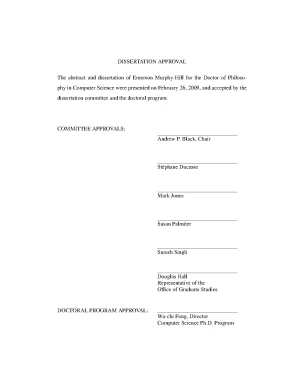
Tải xuống để đọc toàn bộDISSERTATION APPROVAL The abstract and dissertation of Emerson Murphy-Hill for the Doctor of Philoso- phy in Computer Science were presented on February 26, 2009, and accepted by the dissertation committee and the doctoral program. COMMITTEE APPROVALS: Andrew P. Black, Chair Stéphane Ducasse Mark Jones Susan Palmiter Suresh Singh Douglas Hall Representative of the Office of Graduate Studies DOCTORAL PROGRAM APPROVAL: Wu-chi Feng, Director Computer Science Ph. Program ABSTRACT An abstract of the dissertation of Emerson Murphy-Hill for the Doctor of Philoso- phy in Computer Science presented February 26, 2009.
Title: Programmer Friendly Refactoring Tools Tools that perform semi-automated refactoring are currently under-utilized by programmers. If more programmers adopted refactoring tools, software projects could make enormous productivity gains. However, as more advanced refactor- ing tools are designed, a great chasm widens between how the tools must be used and how programmers want to use them. This dissertation begins to bridge this chasm by exposing usability guidelines to direct the design of the next generation of programmer-friendly refactoring tools, so that refactoring tools fit the way program- mers behave, not vice-versa.
PROGRAMMER FRIENDLY REFACTORING TOOLS by EMERSON MURPHY-HILL A dissertation submitted in partial fulfillment of the requirements for the degree of DOCTOR OF PHILOSOPHY in COMPUTER SCIENCE Portland State University 2009 To Tetey Acknowledgements This research could not have been accomplished without the help of countless others. First and foremost, thanks to my advisor, Andrew P. Black, for always providing en- lightening guidance and advice. Thanks to the members of my thesis committee, each of whom contributed to this work: Stéphane Ducasse, Doug Hall, Mark Jones, Susan Palmiter, and Suresh Singh.
Thanks to the National Science Foundation for partially funding this research under grant CCF-0520346. Thanks to Ken Brown at the Port- land State Bookstore for donating gift cards as rewards for experiment participants. Thanks to the Computer Science department’s staff for the continuous support and encouragement: Shiva Gudeti, Beth Holmes, Kathi Lee, Rene Remillard, and Bar- bara Sabath. Thanks to my research colleagues Chris Parnin and Danny Dig for their hard work during parts of this research.
Thanks to Gail Murphy, Mik Kersten, Leah Findlater, Markus Keller, and Peter Weißgerber for use of their data. Thanks for Ser- gio Antoy, Andrew Black, Mark Jones, and Len Shapiro for inviting their students to participate in my experiments. Thanks to Robert Bauer, Paul Berry, Dan Brown, Cynthia Brown, Christian Bird, Tim Chevalier, Rob DeLine, Iavor Diatchki, Akshay Dua, Rafael Fernández-Moctezuma, Shiva Gudeti, Tom Harke, Anthony Hornof, Brian Huffman, Ed Kaiser, Rashawn Knapp, Jim Larson, Chuan-kai Lin, Ralph Lon- don, Bart Massey, Kathryn Mohror, Andrew McCreight, David Novick, Nick Pilk- ington, Philip Quitslund, Claudia Rocha, Suresh Singh, Tim Sheard, Jeremy Stein- hauer, Aravind Subhash, Kal Toth, Eric Wheeler, Candy Yiu, and many anonymous reviewers for detailed, insightful criticism. Thanks to Barry Anderson, Robert Bow- iii didge, Margaret Burnett, Jonathan Edwards, Joshua Kerievsky, Gregor Kiczales, Bill Opdyke, Bill Pugh, Jacek Ratzinger, and Vineet Sinha, Mathieu Verbaere, for their suggestions.
Thanks to the participants of the Software Engineering seminar at UIUC for their suggestions. Special thanks to participants of my studies and interviews, without whom this research would have been impossible. Contents Acknowledgements ii Contents iv List of Tables xi List of Figures xiv 1 A Roadmap 1 2 Refactoring Theory 3 2.2 What is Refactoring? .3 When Should Programmers Refactor? .5 A Model of How Programmers Use Refactoring Tools .6 The Structure of this Dissertation .3 The Data that We Analyzed .4 Findings on Refactoring Behavior .1 Toolsmiths and Users Differ .2 Programmers Repeat Refactorings .3 Programmers Often Do Not Configure Refactoring Tools .4 Commit Messages Do Not Predict Refactoring .5 Floss Refactoring is Common .6 Refactorings are Frequent .7 Refactoring Tools are Underused .8 Different Refactorings are Performed with and without Tools 40 3.1 Tool-Usage Behavior .4 Limitations of this Study. 45 4 A Problem with Refactoring Tools 46 4.2 Usability, Guidelines, and the Value of Guidelines Specific to Refac- toring .3 Why Usability is Important to Refactoring Tools .5 An Exploratory Study of Refactoring .1 The Extract Method Refactoring .6 A Survey about Refactoring Behavior .7 Usable Floss Refactoring Tools .1 Principles for Tools that Support Floss Refactoring .2 Tools for Floss Refactoring.
57 5 The Identification Step 60 5.2 Guidelines and Related Work .4 Details of Stench Blossom .2 How Smells were Identified without Stench Blossom 83 5.3 How Smells were Identified with Stench Blossom .4 Suggestions for Tool Improvements .4 Threats to Validity. 92 6 The Selection Step 93 6.4 Threats to Validity .5 Related Work: Alternative Selection Techniques .6 Generalization to Other Refactorings .2 Two More Selection Guidelines .3 Tool Description: Refactoring Cues. 110 7 The Initiation Step 111 7.3 Related Work: Alternative Tool Initiation Techniques .1 Previous Studies: Pie Menus vs.2 Memorability Study: Pie Menus with and without Placement Rules .4 Threats to Validity. 126 8 The Configuration Step 127 8.3 Related Work: Alternative Configuration Techniques .1 Analytical Study: Refactoring Cues vs.1 Analysis by Stepwise Comparison .2 Threats to Validity .2 Opinion Study: Pie Menus, Refactoring Cues, Hotkeys, and Linear Menus .4 Threats to Validity.
142 CONTENTS ix 9 The Error Interpretation Step 143 9.4 Threats to Validity .5 Related Work: Existing Research on Refactoring Errors .6 Generalization to Other Refactorings .1 A Taxonomy of Refactoring Preconditions .1 Methodology for Deriving a Precondition Taxonomy 156 9.3 Application of the Remaining Guidelines to the Taxonomy .3 Example Experiment Run .6 Threats to Validity .1 Summary of Contributions .4 The Thesis Statement. 205 References 210 List of Tables 3.1 Refactoring tool usage in Eclipse. Some tool logging began in the middle of the Toolsmiths data collection (shown in light grey) and after the Users data collection (denoted with a *).2 The number and percentage of explicitly batched refactorings, for all Eclipse tool-based refactorings that support explicit batches. Some tool logging began in the middle of the Toolsmiths data collection (shown in light grey).3 Refactoring tool configuration in Eclipse from Toolsmiths.4 Refactoring between commits in Eclipse CVS.
Plain numbers count com- mits in the given category; tuples contain the number of refactorings in each commit.1 Preconditions to the E XTRACT M ETHOD refactoring, based on Opdyke’s preconditions [58]. I have omitted preconditions that were not encoun- tered during the formative study.1 Some smell names and descriptions .2 Programming experience of subjects.3 Post-experiment results regarding guidelines.1 Total number of correctly selected and mis-selected if statements over all subjects for each tool. 98 LIST OF TABLES xii 6.2 Mean correct selection time over all subjects for each tool.3 The number of times subjects used each tool to select if statements in each code set.1 How refactorings can be initiated using Eclipse 3.3 and my current im- plementation of pie menus, in the order in which each refactoring ap- pears on the system menu (Figure 7.1 on page 112); for pie menus, the direction in which the menu item appears is shown in the third column. I implemented the last three refactorings specifically for pie menus.2 A comparison of initiation mechanisms for refactorings tools.1 Advantages and disadvantages of pie menus and refactoring cues enu- merated by the interviewer, labeled with + for advantage and – for dis- advantage.2 A comparison of selection and configuration mechanisms for refactoring tools.1 The number and type of mistakes when finding problems during the E X - TRACT M ETHOD refactoring over all subjects, for each tool, and the mean time to correctly identify all violated preconditions.
Subjects diag- nosed errors in a total of 64 refactorings with each tool. Smaller numbers indicate better performance.3 In which order the four different groups of subjects used the two refac- toring tools over the two code sets.4 Refactorings and precondition violations used in the experiment. 190 LIST OF TABLES xiii 9.5 The number and type of mistakes when diagnosing violations of refac- toring preconditions, for each tool. The right-most column lists the total mean amount of time subjects spent diagnosing preconditions for all 8 refactorings.
The asterisk (*) indicates that a timing was not obtained for one subject, so I could not include it in the mean. Subjects diagnosed er- rors in a total of 80 refactorings with each tool. Smaller numbers indicate better performance.1 The guidelines postulated in this dissertation. Step indicates a step in the refactoring process (Section 2.
Guideline states a postulated guide- line and the page number where it was motivated. Tools lists my tools that implement that guideline and the page number where the tool was evaluated. 209 List of Figures 2.1 A stream class hierarchy in java. In grey, an equivalent change is made in each version.2 Selected code to be refactored in Eclipse.3 A context menu in Eclipse.
The next step is to select Extract Method. in the menu.4 A configuration dialog asks you to enter information. The next step is to type “isSubnormal” into the Method name text box, after which the Preview > and OK buttons will become active.5 A preview of the changes that will be made to the code. At the top, you can see a summary of the changes.
The original code is on the left, and the refactored code on the right. You press OK to have the changes applied.6 A model of how programmers use conventional refactoring tools. Steps outlined in black are the focus of this dissertation.1 Percentage of refactorings that appear in batches as a function of batch threshold, in seconds. 60-seconds, the batch size used in Table 3.1 on page 23, is drawn in green.2 Refactorings over 40 intervals.
32 LIST OF FIGURES xv 3.3 Uses of Eclipse refactoring tools by 41 developers. Each column is la- beled with the name of a refactorings performed using a tool in Eclipse, and the number of programmers that used that tool. Each row represents an individual programmer. Each box is labeled by how many times that programmer used the refactoring tool.
The darker pink the interior of a box, the more times the programmer used that tool. Data provided courtesy of Murphy and colleagues [47].1 A code selection (above, highlighted in blue) that a tool cannot extract into a new method.2 At the top, a method in java.Long in an X-develop editor. At the bottom, the code immediately after the completion of the E XTRACT M ETHOD refactoring. The name of the new method is m, but the cursor is positioned to facilitate an immediate R ENAME refactoring.1 Examples of a smell visualization in Noseprints [62].
On the left, infor- mation about L ONG M ETHOD for 3 classes, and on the right, information about L ARGE C LASS for 3 other classes. This visualization appears in- side of a window when the programmer asks the Visual Studio program- ming environment to find smells in a code base. Screenshots provided courtesy of Chris Parnin.2 A compilation warning in Eclipse, shown as a squiggly line underneath program code. This line, for example, calls attention to the fact that this expression is being T YPECAST.3 Ambient View, displaying the severity of several smells at the right of the editor.
71 LIST OF FIGURES xvi 5.4 Active View, where the programmer has placed the mouse cursor over a petal representing F EATURE E NVY to reveal the name of the smell and a clickable [+] to allow the programmer to transition to Explanation View.5 Explanation View, showing details about the smell named in Figure 5.1 The Selection Assist tool in the Eclipse environment, shown covering the entire if statement, in green. The user’s selection is partially overlaid, darker.2 Box View tool in the Eclipse environment, to the left of the program code.3 Mean time in seconds to select if statements using the mouse and key- board versus Selection Assist (left) and Box View (right). Each subject is represented as a whole or partial X. The distance between the bot- tom legs represents the number of mis-selections using the mouse and keyboard.
Nội dung được bảo vệ bản quyền — Tải xuống đầy đủ
Trích dẫn luận án này
Emerson Murphy-Hill (2009). Công cụ Refactoring thân thiện lập trình viên: Luận án Tiến sĩ [Luận án tiến sĩ, Portland State University]. LuanAn.net. https://luanan.net/giao-duc-hoc/dissertation
Câu hỏi thường gặp
Luận án "Công cụ Refactoring thân thiện lập trình viên: Luận án Tiến sĩ" nghiên cứu về vấn đề gì?
Luận án tiến sĩ, công trình nghiên cứu sâu rộng, đóng góp kiến thức mới, thể hiện năng lực chuyên môn.
Luận án "Công cụ Refactoring thân thiện lập trình viên: Luận án Tiến sĩ" được bảo vệ tại trường nào?
Luận án này được bảo vệ tại Portland State University. Năm bảo vệ: 2009.
Luận án "Công cụ Refactoring thân thiện lập trình viên: Luận án Tiến sĩ" thuộc chuyên ngành gì?
Luận án "Công cụ Refactoring thân thiện lập trình viên: Luận án Tiến sĩ" thuộc chuyên ngành Computer Science. Danh mục: Giáo Dục Học.
Luận án "Công cụ Refactoring thân thiện lập trình viên: Luận án Tiến sĩ" có bao nhiêu trang?
Luận án "Công cụ Refactoring thân thiện lập trình viên: Luận án Tiến sĩ" có 244 trang. Bạn có thể xem trước một phần tài liệu ngay trên trang web trước khi tải về.
Cách tải luận án "Công cụ Refactoring thân thiện lập trình viên: Luận án Tiến sĩ" về máy như thế nào?
Để tải luận án về máy, bạn nhấn nút "Tải xuống ngay" trên trang này, sau đó hoàn tất thanh toán phí lưu trữ. File sẽ được tải xuống ngay sau khi thanh toán thành công. Hỗ trợ qua Zalo: 0559 297 239.