Nghiên cứu hào phóng tại các trường quân sự: Đặc điểm và động lực của các nhà tài trợ chính
Khám phá sự hào phóng tại các trường quân sự. Phân tích văn hóa, hành vi và tác động của lòng vị tha trong môi trường học thuật quân đội.
Educational Administration
Luan An
Luận án tiến sĩ
Năm xuất bản
Số trang
130
Thời gian đọc
20 phút
Lượt xem
1
Lượt tải
0
Phí lưu trữ
40 Point
Tổng quan nhanh
- Chủ đề:
- Hảo tâm trường quân sự: Đặc điểm & động lực nhà tài trợ
- Số trang:
- 130 trang
- Trường:
- University of South Carolina
- Chuyên ngành:
- Educational Administration
- Tác giả:
- John Paul Dowd III
- Năm:
- 2015
Tóm tắt nội dung luận án
I.Hảo tâm trường quân sự Đặc điểm động lực nhà tài trợ
Nghiên cứu này khám phá sự hào phóng tại các trường quân sự. Mục tiêu là hiểu rõ đặc điểm và động lực của các nhà tài trợ lớn. Các Học viện Quân sự Liên bang và Trường Cao đẳng Quân sự cấp cao là trọng tâm. Hiểu rõ quyên góp trường quân sự giúp các tổ chức này phát triển bền vững. Nghiên cứu cung cấp cái nhìn sâu sắc về lý do mạnh thường quân cho đi. Phát hiện này hỗ trợ chiến lược gây quỹ hiệu quả. Các tổ chức quân sự có thể thu hút nguồn lực cần thiết. Sự hào phóng hỗ trợ giáo dục và đào tạo lãnh đạo tương lai.
1.1. Phạm vi nghiên cứu về sự hào phóng
Nghiên cứu tập trung vào các Học viện Quân sự Liên bang và Trường Cao đẳng Quân sự cấp cao. Đây là các cơ sở giáo dục độc đáo. Mục tiêu là hiểu sâu về hành vi quyên góp tại các cơ sở này. Việc xác định các yếu tố thúc đẩy tài trợ là cần thiết. Dữ liệu từ các nhà hảo tâm chính được phân tích kỹ lưỡng. Điều này cung cấp bức tranh toàn diện về lòng hào phóng.
1.2. Bối cảnh độc đáo của giáo dục quân sự
Giáo dục quân sự có những đặc thù riêng biệt. Điều này ảnh hưởng đến động lực của mạnh thường quân. Hào phóng ở đây có thể khác với các trường đại học dân sự truyền thống. Các giá trị như danh dự, nghĩa vụ, quốc gia có vai trò lớn. Sự khác biệt này cần được khám phá chi tiết. Nó giúp các nhà gây quỹ điều chỉnh cách tiếp cận.
II.Hồ sơ nhà tài trợ giáo dục quốc phòng chủ chốt
Việc xây dựng hồ sơ nhà tài trợ giáo dục quốc phòng là rất quan trọng. Nghiên cứu xác định các đặc điểm chung của mạnh thường quân. Thông tin này giúp các trường quân sự nhắm mục tiêu gây quỹ chính xác hơn. Hồ sơ bao gồm các yếu tố nhân khẩu học, mối liên hệ với quân đội và lịch sử quyên góp. Hiểu rõ đặc điểm mạnh thường quân là chìa khóa để nuôi dưỡng mối quan hệ lâu dài. Điều này đảm bảo sự hỗ trợ liên tục cho các học viện quân đội.
2.1. Ai là mạnh thường quân quân sự lớn
Hồ sơ nhà tài trợ giáo dục quốc phòng thường bao gồm cựu học viên. Phụ huynh học viên hiện tại và cựu học viên cũng là những người đóng góp quan trọng. Các cá nhân không có mối liên hệ trực tiếp nhưng có lòng yêu nước cũng tham gia. Đặc điểm về tuổi tác, nghề nghiệp và địa vị xã hội được khảo sát. Nhiều người là những chuyên gia thành đạt và lãnh đạo doanh nghiệp.
2.2. Mối liên hệ với cộng đồng quân sự
Một yếu tố nổi bật là mối liên hệ sâu sắc với quân đội. Nhiều nhà tài trợ là cựu học viên quân sự. Kinh nghiệm cá nhân định hình cam kết của họ. Lòng trung thành này thúc đẩy quyên góp trường quân sự đáng kể. Những người này cảm thấy có trách nhiệm duy trì chất lượng giáo dục. Họ muốn đảm bảo các thế hệ tương lai nhận được nền tảng vững chắc.
III.Quyên góp trường quân sự Động lực mạnh thường quân
Nghiên cứu đi sâu vào động lực nhà hảo tâm quân đội. Việc hiểu rõ tại sao họ cho đi là rất quan trọng. Các động lực bao gồm lòng yêu nước, sự biết ơn và mong muốn duy trì di sản. Đây là những yếu tố độc đáo trong bối cảnh quân sự. Các trường có thể sử dụng thông tin này để tạo ra thông điệp gây quỹ mạnh mẽ hơn. Việc kết nối với những giá trị cốt lõi của nhà tài trợ sẽ tối đa hóa tiềm năng quyên góp. Điều này giúp tăng cường hỗ trợ cho các học viện.
3.1. Các yếu tố thúc đẩy quyên góp chính
Động lực nhà hảo tâm quân đội rất đa dạng. Lòng yêu nước và tài trợ là một động lực mạnh mẽ. Mong muốn hỗ trợ các thế hệ lãnh đạo quân sự tương lai cũng quan trọng. Tình cảm sâu sắc đối với tổ chức cá nhân cũng thúc đẩy sự cho đi. Một số nhà tài trợ muốn tôn vinh những người đã phục vụ. Một số khác muốn tạo ra sự khác biệt tích cực cho đất nước.
3.2. Vai trò của lòng trung thành và di sản
Cảm giác thuộc về và duy trì di sản trường học là động lực mạnh. Cựu học viên quân sự thường quyên góp để đảm bảo chất lượng giáo dục. Họ muốn giữ vững truyền thống của học viện quân đội. Việc này giúp tạo ra tác động lâu dài cho các thế hệ sĩ quan tương lai. Lòng trung thành này vượt xa lợi ích cá nhân.
3.3. Tầm quan trọng của trải nghiệm cá nhân
Trải nghiệm cá nhân tại trường quân sự định hình động lực. Ký ức tích cực và sự biết ơn là nền tảng. Các nhà tài trợ muốn đảm bảo trải nghiệm tương tự cho người khác. Điều này tạo ra một vòng tuần hoàn của sự hào phóng. Họ muốn 'trả ơn' cho cơ hội đã nhận được. Việc này cũng mang lại cảm giác thỏa mãn cá nhân.
IV.Tài trợ học viện quân đội Vai trò cựu học viên
Cựu học viên quân sự là một nguồn lực tài chính cực kỳ quan trọng. Họ có mối liên hệ sâu sắc và lòng trung thành mãnh liệt với các trường. Nghiên cứu nhấn mạnh tầm quan trọng của việc duy trì gắn kết với nhóm này. Các chiến lược hiệu quả có thể biến lòng trung thành thành tài trợ học viện quân đội đáng kể. Sự hỗ trợ của cựu sinh viên đảm bảo các chương trình chất lượng và cơ sở vật chất hiện đại. Việc này là trụ cột cho sự thành công lâu dài của các học viện.
4.1. Cựu học viên là nguồn lực chủ chốt
Cựu học viên quân sự đại diện cho nhóm tài trợ mạnh mẽ nhất. Họ có mối quan hệ lâu dài với trường. Sự đầu tư cá nhân vào học viện rất cao. Các chiến dịch gây quỹ cho trường sĩ quan thường nhắm mục tiêu vào nhóm này. Cựu học viên hiểu rõ giá trị của nền giáo dục quân sự. Họ chứng kiến tác động của nó trong sự nghiệp của mình.
4.2. Duy trì gắn kết cựu học viên
Các trường quân sự cần chiến lược để duy trì gắn kết. Giao tiếp thường xuyên và các sự kiện cựu học viên là quan trọng. Việc này củng cố lòng trung thành. Nó khuyến khích tài trợ học viện quân đội liên tục. Các chương trình cố vấn và mạng lưới cũng giữ cho cựu sinh viên được kết nối. Sự gắn kết này chuyển thành sự hỗ trợ tài chính.
4.3. Từ thiện cá nhân từ cựu sinh viên
Nhiều cựu sinh viên thực hiện quyên góp trường quân sự cá nhân. Họ thường cam kết tài trợ lớn. Sự hào phóng của họ hỗ trợ học bổng, cơ sở vật chất và chương trình. Đây là một trụ cột cho sự phát triển của trường. Các khoản đóng góp này thường được thúc đẩy bởi sự biết ơn. Họ muốn tạo cơ hội cho các thế hệ sinh viên tiếp theo.
V.Gây quỹ cho trường sĩ quan Tầm quan trọng thách thức
Gây quỹ cho trường sĩ quan không chỉ là việc thu tiền. Nó đảm bảo tương lai của giáo dục quốc phòng. Các học viện quân sự đối mặt với những thách thức đặc thù trong việc thu hút tài trợ. Việc hiểu rõ những thách thức này giúp phát triển các chiến lược hiệu quả. Nghiên cứu cung cấp cơ sở để các trường tăng cường nỗ lực gây quỹ. Việc này đảm bảo họ có thể tiếp tục đào tạo các nhà lãnh đạo tài năng cho quân đội. Nguồn tài trợ bền vững là chìa khóa cho sự xuất sắc.
5.1. Đảm bảo nguồn lực cho tương lai
Gây quỹ cho trường sĩ quan là thiết yếu. Nó đảm bảo các nguồn lực tài chính ổn định. Điều này hỗ trợ các chương trình giáo dục chất lượng cao. Nó cũng giúp phát triển cơ sở vật chất hiện đại. Các khoản tài trợ đảm bảo học viện có thể thu hút đội ngũ giảng viên giỏi nhất. Nó cũng hỗ trợ các công nghệ đào tạo tiên tiến.
5.2. Các thách thức trong việc thu hút tài trợ
Các tổ chức tài trợ quân sự đối mặt với những thách thức riêng. Sự cạnh tranh gây quỹ rất cao. Việc xác định và nuôi dưỡng mạnh thường quân đòi hỏi kỹ năng đặc biệt. Cần có cách tiếp cận sáng tạo để thu hút quyên góp trường quân sự. Duy trì mối quan hệ lâu dài với nhà tài trợ là một nhiệm vụ liên tục. Điều này đòi hỏi sự cống hiến và chiến lược rõ ràng.
Mục lục chi tiết luận án
Tải xuống file đầy đủ để xem toàn bộ nội dung
Tải đầy đủ (130 trang)Trích đoạn nội dung luận án
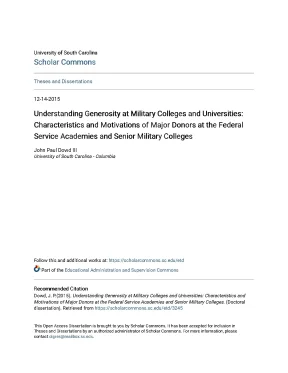
Tải xuống để đọc toàn bộUniversity of South Carolina Scholar Commons Theses and Dissertations 12-14-2015 Understanding Generosity at Military Colleges and Universities: Characteristics and Motivations of Major Donors at the Federal Service Academies and Senior Military Colleges John Paul Dowd III University of South Carolina - Columbia Follow this and additional works at: https://scholarcommons.edu/etd Part of the Educational Administration and Supervision Commons Recommended Citation Dowd, J. Understanding Generosity at Military Colleges and Universities: Characteristics and Motivations of Major Donors at the Federal Service Academies and Senior Military Colleges. Retrieved from https://scholarcommons.edu/etd/3245 This Open Access Dissertation is brought to you by Scholar Commons. It has been accepted for inclusion in Theses and Dissertations by an authorized administrator of Scholar Commons.
For more information, please contact digres@mailbox. UNDERSTANDING GENEROSITY AT MILITARY COLLEGES AND UNIVERSITIES: CHARACTERISTICS AND MOTIVATIONS OF MAJOR DONORS AT THE FEDERAL SERVICE ACADEMIES AND SENIOR MILITARY COLLEGES by John Paul Dowd III Bachelor of Arts Winthrop University, 1989 Master of Education The University of South Carolina, 1993 Submitted in Partial Fulfillment of the Requirements For the Degree of Doctor of Philosophy in Educational Administration College of Education University of South Carolina 2015 Accepted by: Katherine Chaddock, Major Professor Chris Plyler, Committee Member James Rex, Committee Member Julie Rotholz, Committee Member Lacy Ford, Senior Vice Provost and Dean of Graduate Studies i © Copyright by John Paul Dowd III, 2015 All Rights Reserved ii DEDICATION To my wife, Kim: you were my sidekick in the pursuit of this degree and you are so incredibly bright. It is you who should be wearing a doctoral hood. You have supported me throughout this process and done so with never wavering encouragement.
You maintained the balance in our family, took care of the kids, and our family never missed a beat. Without you, this degree would have never even been a dream, much less a reality. I love you dearly. To Gibson and Brauer: while it is hard for you to imagine, Dad started this degree to honor you and make your life even better.
You are my inspiration and I thought of you the entire way during this journey. I missed so many of your activities and chances for us to be together, but you always forgave me and told me how you understood when I was locked away writing. I am blessed beyond measure to be your father. I love you to the moon and back! To my mother, Barry Gibson Webster: thank you for always making sure that my priorities were in order, my compass was pointing north, and that I knew, no matter what, that education was paramount to achieving success in life.
To my stepfather Dr. Ronald Webster – you encouraged me and offered assistance around every corner. To my father JP Dowd, Jr. and sister, Elizabeth Dowd Dorrell: thank you for always being interested in and supporting my work.
iii ACKNOWLEDGEMENTS Dr. Jason Silverman – You always saw an educational spark in me and drove me to try and fuel the flame. Raymond Murphy – if not for you, I would have never been given the chance to pursue a M. degree, much less work toward a PhD.
You saw something in me in the fall of 1991 that I could not see in myself. Mark Tompkins - your guidance and support for only knowing me a short time was beyond measure. Cermette Clardy – If not for you deciding that I had promise in the field of advancement, I would not be where I am today. I owe you so much.
Jim Rex – You hired me as a graduate intern and introduced me to the profession into this profession in January 1993. You have been an integral part of my life personally and professionally. Chris Plyler – Hard to imagine that in 1993, I was working as an intern with you while you were Chancellor at USC Beaufort. Now for you to serve on my committee is a compliment that I can never repay.
Julie Rotholz – You have been a guiding light to make sure I became an accomplished researcher and pushed me to explore my scholarly limits. I am grateful for all of your feedback and support. Katherine Chaddock – Thank you seems so inadequate when I reflect on everything you have done to hold my hand through this process. You pressed me to become a scholar and in the process we became friends.
I could not have selected a better chair, thank you from my entire family. Anna Janosik Cooke – You, my friend, are the unsung hero in this entire effort; I share this success with you, and can’t imagine not having your help. Elton Hendricks – You first planted the seed with me that I needed to earn a doctoral degree if I was ever going to want to have a ticket to the best seat in the theater. Thank you for inspiring me to want that ticket.
General John Rosa– You have been supportive of me and encouraged me to complete this degree from the first day I joined your staff in February 2013. I am forever indebted. You are a true principled leader. My Board Members, Especially Chairs W Coleman, Reamer King, and Bud Watts IV – You afforded me the time to complete the degree while at FMU and The Citadel Foundation.
Your support was imperative and unwavering. I have been fortunate to serve with you all. Kathleen Hancock – you supported me on this journey from day one at The Citadel Foundation, and kept me focused and found time to get me to the finish line, not an easy task. To all my staff and colleagues at Methodist University, Columbia College, Francis Marion University, The Citadel and The Citadel Foundation - I share this with you because you all have had some impact on my life and career.
I have been blessed to work with amazing colleagues. My PhD Cohorts – Kyle, Stephanie, and Telesia – Wow! What can I say? You guys rock! I am so grateful that we got the chance to walk this path together. Thank you! The Staff at Norwich University, The Citadel, Virginia Military Institute, Virginia Tech, and United States Naval Academy - for distributing the survey for me and a special thanks to all those persons who responded. Fred Carter – If there were one person who I can look back on and determine that without his support, I would have never earned this degree, it would be you.
Sir, you sat me down in your office in the fall of 2009 and not only told me I needed to pursue the degree, but laid the road map for me on how I would get it done. I can’t begin to thank you enough. It is my goal to use this degree in an effort to honor your legacy of public service and to serve as an effective leader not only in higher education, but as a leader for the greater public good, especially in South Carolina. v ABSTRACT The purpose of this study was to determine the characteristics and motivations of major donors at three federal service academies and the six senior military colleges.
Although much literature has been published on donor motivation, as well as studies determining what donor characteristics are linked to the decision of alumni to financially contribute back to their alma maters, research specific to the federal service academies and the senior military colleges could not be found. Therefore, this study addressed the void in the literature. The methods used to gather this data were survey instrument and personal interviews. The researcher sent letters to colleagues at the study institutions and then conducted eight personal interviews in a semi-structured environment.
The interviews were selected by participants indicating on the survey their willingness to contribute, as well as via the researcher’s personal contacts. The findings were limited to a small sample, due to having 5 out of 9 institutions participate in distributing the survey; 158 surveys were ultimately returned. This small sample size is typical of mail surveys in qualitative studies. Nevertheless, the results highlighted a number of interesting indications about giving; it is anticipated that these will serve as valuable reference points in future research on this subject of military giving (especially in regard to alumni giving).
These results included, perhaps predictably, some similarities between the motivations of these donors and donors at institutions with vi similar unique or “niche” missions. However, there were some interesting differences as well. Gender played a prominent role, as did age and the perceived value of leaving a legacy at the institution. Student experiences did not have as much of a role in motivating donor behavior; however, donors who were on an athletic team showed an increased propensity to give.
The research also supported findings in previous studies, showing that involvement at the school leads to higher contributions and that donors need to have faith in administrative leadership in order to permit their gifts to be used in the best interest of the school. Finally, the research supported the supposition that leaving a legacy and enhancing the institution’s brand was of high importance to major donors. The results can assist professional advancement staff at the subject institutions to develop strategic and specific fundraising approaches with major donors on their respective campuses. The data points indicated by the study can be beneficial when working with current or future major donors at the federal service academies and senior military colleges and universities.
The alumni and other major donors who participated in the survey and interviews have immense loyalty to their alma maters. The study also provides foundational research in giving at military colleges and universities, which clearly have strong similarities and differences from other niche mission schools such as Historically Black Colleges and Universities (HBCU) and women’s colleges (as well as links to mainstream private and public universities). Dissertation Director: Dr. Katherine Chaddock vii TABLE OF CONTENTS DEDICATION.
vi LIST OF TABLES. xiii CHAPTER 1: INTRODUCTION .1 Philanthropy and Military Colleges .1 Purpose of the Study .7 Background of Subject Schools .18 viii CHAPTER 2: LITERATURE REVIEW .20 Historical and Descriptive Literature: Philanthropy and Higher Education. Philanthropy: General Definitions and History .20 Philanthropy in American Higher Education .23 History of Higher Education Fundraising Campaigns .24 Motivations for Giving .28 Alumni Giving Studies .36 Fundraising at the Federal Service Academies and Military Colleges .52 Survey Distribution and Instrument .57 CHAPTER 4: FINDINGS OF SURVEYS AND INTERVIEWS .58 Overview of Purpose and Methods .58 Survey Findings: Introduction .58 Survey Findings: Institution and Gift Type Profile .59 Survey Findings: Donor Motivation .62 Survey Findings: Stewardship of Gifts .68 Survey Findings: Demographics and Characteristics of the Sample .73 Confidence in Current Leadership .73 Positive Brand and Reputation.74 Current Alumni and Donor Involvement .76 x CHAPTER 5: DISCUSSION, RECOMMENDATIONS, AND CONCLUSION .78 Review of the Study’s Purpose .79 Motivational Factors: Absence of Student Experiences .79 Motivational Factors: Confidence in Current Leadership .82 Motivational Factors: Alumni Involvement and Engagement .84 Demographic Characteristics: Age and Giving .86 Demographics Characteristics: Proximity to Campus .87 Demographics Characteristics: Donor Age .89 Conclusions of Key Findings .90 Recommendations for Further Research .93 Implications for Practice .98 APPENDIX A: INSTITUTIONAL REVIEW BOARD APPROVAL.103 APPENDIX B: SURVEY INSTRUMENT .104 xi APPENDIX C: COLLEAGUE LETTER .112 APPENDIX D: INTERVIEW PROTOCOL .115 xii LIST OF TABLES TABLE 1.1: Summary of Federal Service Academies and Military Colleges .1: Donor/Organization Integration Model .2: Private Gifts Received .1: Donor Response by Institution.3: Types of Gifts .4: Participation in Student Activities .5: Level of Engagement Post Graduation .6: Motivations for Donors .7: Influential Staff Contact .8: Satisfaction with Ability to Direct Gifts .9: Age of Donors .10: Income for Donors .
Nội dung được bảo vệ bản quyền — Tải xuống đầy đủ
Trích dẫn luận án này
John Paul Dowd III (2015). Hào phóng tại các trường quân sự: Đặc điểm và động lực nhà tài trợ [Luận án tiến sĩ, University of South Carolina]. LuanAn.net. https://luanan.net/quan-ly-giao-duc/quan-ly-giao-duc-dai-hoc/hao-phong-tai-truong-quan-su-dac-diem-dong-luc-tai-tro
Câu hỏi thường gặp
Luận án "Hào phóng tại các trường quân sự: Đặc điểm và động lực nhà tài trợ" nghiên cứu về vấn đề gì?
Khám phá sự hào phóng tại các trường quân sự. Phân tích văn hóa, hành vi và tác động của lòng vị tha trong môi trường học thuật quân đội.
Luận án "Hào phóng tại các trường quân sự: Đặc điểm và động lực nhà tài trợ" được bảo vệ tại trường nào?
Luận án này được bảo vệ tại University of South Carolina. Năm bảo vệ: 2015.
Luận án "Hào phóng tại các trường quân sự: Đặc điểm và động lực nhà tài trợ" thuộc chuyên ngành gì?
Luận án "Hào phóng tại các trường quân sự: Đặc điểm và động lực nhà tài trợ" thuộc chuyên ngành Educational Administration. Danh mục: Quản Lý Giáo Dục Đại Học.
Luận án "Hào phóng tại các trường quân sự: Đặc điểm và động lực nhà tài trợ" có bao nhiêu trang?
Luận án "Hào phóng tại các trường quân sự: Đặc điểm và động lực nhà tài trợ" có 130 trang. Bạn có thể xem trước một phần tài liệu ngay trên trang web trước khi tải về.
Cách tải luận án "Hào phóng tại các trường quân sự: Đặc điểm và động lực nhà tài trợ" về máy như thế nào?
Để tải luận án về máy, bạn nhấn nút "Tải xuống ngay" trên trang này, sau đó hoàn tất thanh toán phí lưu trữ. File sẽ được tải xuống ngay sau khi thanh toán thành công. Hỗ trợ qua Zalo: 0559 297 239.