Luận án Tiến sĩ: Race, Region, and College Football in the U. South (1945-1975) bởi Samuel Zebulon Baker
Luận án khám phá mối liên hệ phức tạp giữa chủng tộc, khu vực và bóng đá đại học miền Nam, phân tích các yếu tố lịch sử và văn hóa.
Emory University
Liberal Arts
Luan An
Luận án
Năm xuất bản
Số trang
377
Thời gian đọc
57 phút
Lượt xem
0
Lượt tải
0
Phí lưu trữ
60 Point
Tổng quan nhanh
- Chủ đề:
- Race, Region & Southern College Football Dynamics
- Số trang:
- 377 trang
- Trường:
- Emory University
- Chuyên ngành:
- Liberal Arts
- Tác giả:
- Samuel Zebulon Baker
- Năm:
- 2009
Tóm tắt nội dung luận án
I.Race Region Southern College Football Dynamics
Luận án này khám phá mối quan hệ giữa chủng tộc, khu vực và bóng đá đại học ở miền Nam Hoa Kỳ. Giai đoạn nghiên cứu là từ cuối Thế chiến II đến thời kỳ phi phân biệt chủng tộc vào những năm 1970. Luận án xem xét cách các ý tưởng về chủng tộc và khu vực ảnh hưởng đến doanh nghiệp bóng đá đại học phổ biến. Đây là công trình học thuật quy mô đầy đủ đầu tiên về sự hội nhập chủng tộc trong bóng đá miền Nam. Nó đánh giá các động lực xã hội và văn hóa đã thúc đẩy hoặc cản trở sự tham gia của người da đen tại các tổ chức truyền thống của người da trắng (TWIs).
1.1. Khảo sát Động lực Khu vực và Chủng tộc
Dự án đi sâu vào cách ý tưởng về chủng tộc và khu vực thấm nhuần bóng đá đại học. Southern culture định hình môn thể thao này. Nó khảo sát một giai đoạn biến đổi lịch sử. Các yếu tố khu vực có ảnh hưởng sâu rộng đến thể thao. Điều này được xem xét từ 1945 đến 1975.
1.2. Phân tích Tích hợp Chủng tộc Toàn diện
Đây là nghiên cứu học thuật đầy đủ đầu tiên về racial integration trong bóng đá miền Nam. Nó đánh giá chi tiết các động lực xã hội và văn hóa. Những động lực này thúc đẩy hoặc cản trở sự tham gia của African American athletes. Nghiên cứu tập trung vào các thể chế da trắng truyền thống.
1.3. Chính trị Thể thao và Định hình Chính sách
Nghiên cứu tập trung vào chính trị của thể thao. Đó là 'trò chơi bên ngoài sân cỏ' đã định hình chính sách của các tổ chức. Chính sách này liên quan đến chủng tộc và cạnh tranh. Tham vọng bóng đá bị ràng buộc bởi luật pháp, phong tục và ý chí phổ biến. Chúng cũng chi phối mối quan hệ giữa người Mỹ gốc Phi và chính trường đại học.
II.Racial Integration of Southern Football Unfolds
Sự trỗi dậy của African American athletes là một phần của cách mạng xã hội. Nó giao thoa với chính trị thể chế. Quá trình này phức tạp và đầy cân nhắc. Nó phản ánh nỗ lực đưa người Mỹ gốc Phi vào đời sống đại học. Dự án kéo dài dòng thời gian của cuộc đấu tranh civil rights movement trong giáo dục đại học miền Nam. Nó cho thấy những khó khăn về chủng tộc đã tiêu tốn các trường đại học, từ lớp học đến phòng thay đồ. Điều này xảy ra rất lâu trước và sau khi sinh viên da đen đầu tiên nhập học.
2.1. Sự trỗi dậy của Vận động viên Da đen
Sự xuất hiện của African American athletes được xem xét. Nó đặt ở giao điểm của chính trị thể chế và cách mạng xã hội. Đây là một phần của quá trình phức tạp. Quá trình này đưa người Mỹ gốc Phi vào đời sống đại học. Nó là một dấu mốc quan trọng trong sports history.
2.2. Kéo dài Thời gian Đấu tranh Quyền dân sự
Dự án mở rộng khung thời gian của civil rights movement. Nó liên quan đến giáo dục đại học miền Nam. Các vấn đề về chủng tộc đã ảnh hưởng đến toàn bộ trường đại học. Điều này xảy ra trước và sau khi sinh viên da đen nhập học. Nó làm nổi bật sự kéo dài của cuộc đấu tranh desegregation.
2.3. Khảo sát Xu hướng Cạnh tranh Thương mại
Phạm vi học thuật được mở rộng. Nó khảo sát các xu hướng cạnh tranh và thương mại. Các xu hướng học thuật và thể thao cũng được xem xét. Các xu hướng chủng tộc và khu vực cuối cùng đã phá vỡ văn hóa segregation của ngày thi đấu. College athletics phản ánh sự thay đổi này.
III.Civil Rights College Athletics in the South
Luận án kết nối college athletics với civil rights movement rộng lớn hơn. Sự desegregation của thể thao phản ánh những thay đổi xã hội. Nỗ lực racial integration mở rộng ra ngoài lớp học. Nó lan đến các sân chơi, đặc biệt là SEC football. Các chính sách thể chế về segregation dần tan rã. Các cuộc chiến pháp lý và áp lực xã hội thúc đẩy sự thay đổi. Các trường đại học đối mặt với nhu cầu bình đẳng ngày càng tăng. African American athletes tìm kiếm cơ hội. Southern culture ảnh hưởng sâu sắc đến tốc độ thay đổi này.
3.1. Phong trào Quyền Dân sự và Thể thao
Công trình này liên kết college athletics với civil rights movement. Sự phi phân biệt chủng tộc trong thể thao phản ánh thay đổi xã hội. Sự thúc đẩy racial integration vượt ra ngoài lớp học. Nó bao trùm các sân bóng đá, đặc biệt là SEC football hùng mạnh.
3.2. Chấm dứt Chính sách Phân biệt Chủng tộc
Các chính sách segregation của thể chế dần biến mất. Các thách thức pháp lý và áp lực xã hội thúc đẩy điều này. Các trường đại học phải đối mặt với các yêu cầu bình đẳng ngày càng tăng. African American athletes yêu cầu có cơ hội. Đây là một phần quan trọng của sports history.
3.3. Vai trò của Văn hóa Miền Nam
Southern culture đã định hình tốc độ thay đổi. Các truyền thống và phong tục thường chống lại desegregation. Tuy nhiên, sự nổi tiếng của bóng đá lại trở thành chất xúc tác. Nó cung cấp một nền tảng rõ ràng cho tiến bộ chủng tộc. Điều này thể hiện racial dynamics.
IV.Desegregation Impact on Southern Higher Ed
Sự xuất hiện của African American athletes đã thay đổi các khuôn viên trường. Nó thách thức các chuẩn mực chủng tộc lâu đời. Môi trường đại học thay đổi, từ phòng thay đồ đến sinh viên. Quá trình này thường đầy căng thẳng. Racial dynamics hiện diện khắp nơi. Các cuộc thảo luận về chủng tộc diễn ra trong lớp học. Các quyết định về racial integration ảnh hưởng đến các chương trình thể thao. Dự án này cho thấy các vấn đề về chủng tộc đã bao trùm trường đại học. Văn hóa segregated culture của ngày thi đấu dần biến mất. Người hâm mộ, cầu thủ và cộng đồng đều thích nghi.
4.1. Ảnh hưởng đến Môi trường Đại học
Sự xuất hiện của African American athletes đã thay đổi các khuôn viên. Nó thách thức các chuẩn mực chủng tộc đã ăn sâu. Môi trường đại học thay đổi đáng kể. Từ phòng thay đồ đến đời sống sinh viên, ảnh hưởng của desegregation là rõ rệt.
4.2. Từ Phòng học đến Phòng thay đồ
Racial dynamics có mặt ở mọi nơi trong trường. Các cuộc thảo luận về chủng tộc diễn ra trong lớp học. Các quyết định về racial integration ảnh hưởng trực tiếp đến các chương trình thể thao. Luận án nhấn mạnh sự bao trùm của các vấn đề chủng tộc đối với trường đại học.
4.3. Biến đổi Văn hóa Ngày thi đấu
Văn hóa segregation của ngày thi đấu dần biến mất. Người hâm mộ, cầu thủ và cộng đồng đã thích nghi với sự thay đổi. Sự biến đổi này phản ánh những thay đổi lớn trong Southern culture. College athletics trở thành một tấm gương phản chiếu miền Nam đang thay đổi.
V.Unpacking Racial Dynamics in College Sports
Nghiên cứu đánh giá các yếu tố thúc đẩy hoặc cản trở sự tham gia của người da đen. Điều này bao gồm các động lực xã hội và văn hóa. Dư luận, các phán quyết pháp lý và sự phản kháng của thể chế đều đóng vai trò. Việc hiểu những sắc thái này là rất quan trọng đối với sports history. Các chính sách quản lý chủng tộc trong college athletics được kiểm tra. Những chính sách này được định hình bởi áp lực bên ngoài và các cuộc tranh luận nội bộ. Mối tương tác giữa thể thao và xã hội được nhấn mạnh. Điều này bao gồm giai đoạn từ 1945 đến 1975.
5.1. Phân tích Các yếu tố Thúc đẩy Cản trở
Luận án đánh giá các yếu tố thúc đẩy hoặc cản trở black participation. Các động lực xã hội và văn hóa được phân tích. Dư luận, các quyết định pháp lý và sự kháng cự của các tổ chức đều có vai trò. Hiểu biết này là trung tâm của sports history.
5.2. Nhìn vào Chính sách Chủng tộc Thể thao
Các chính sách quản lý chủng tộc trong college athletics được kiểm tra. Những chính sách này được định hình bởi áp lực bên ngoài và các cuộc tranh luận nội bộ. Sự tương tác giữa thể thao và xã hội được làm nổi bật. Điều này diễn ra trong suốt thời kỳ segregation và desegregation.
5.3. Nâng cao Hiểu biết về Thể thao Miền Nam
Nghiên cứu này làm sâu sắc thêm sự hiểu biết về racial integration trong Southern football. Nó cung cấp một cái nhìn học thuật toàn diện. Trọng tâm là cách thức phức tạp mà chủng tộc và khu vực định hình môn thể thao. Đây là một đóng góp quan trọng cho sports history.
Tải xuống file đầy đủ để xem toàn bộ nội dung
Tải đầy đủ (377 trang)Trích đoạn nội dung luận án
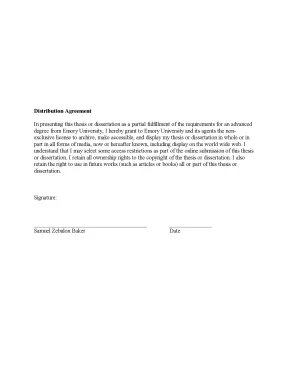
Tải xuống để đọc toàn bộDistribution Agreement In presenting this thesis or dissertation as a partial fulfillment of the requirements for an advanced degree from Emory University, I hereby grant to Emory University and its agents the non- exclusive license to archive, make accessible, and display my thesis or dissertation in whole or in part in all forms of media, now or hereafter known, including display on the world wide web. I understand that I may select some access restrictions as part of the online submission of this thesis or dissertation. I retain all ownership rights to the copyright of the thesis or dissertation. I also retain the right to use in future works (such as articles or books) all or part of this thesis or dissertation.
Signature: ________________________________________ _______________ Samuel Zebulon Baker Date Fields of Contest: Race, Region, and College Football in the U. South, 1945-1975 By Samuel Zebulon Baker Doctor of Philosophy Graduate Institute of the Liberal Arts _____________________________________ [Advisor’s signature] Dana F. Advisor _____________________________________ [Member’s signature] Joseph Crespino, Ph. Committee Member _____________________________________ [Member’s signature] James L.
Committee Member Accepted: _____________________________________ Lisa A. Dean of the Graduate School _______________________ Date Fields of Contest: Race, Region, and College Football in the U. South, 1945-1975 By Samuel Zebulon Baker M., University of Alabama, 2003 B., Georgia Southern University, 2001 Advisor: Dana F. An abstract of A dissertation submitted to the Faculty of the Graduate School fo Emory University in partial fulfillment of the requirements of the degree of Doctor of Philosophy Graduate Institute of the Liberal Arts Emory University 2009 ABSTRACT Fields of Contest: Race, Region, and College Football in the U.
South, 1945-1975 By Samuel Zebulon Baker This project explores how ideas of race and region suffused the popular enterprise of college football in the U. South, from the end of the Second World War to the days of desegregation in the seventies. It stands as the first full-scale scholarly consideration of how the racial integration of southern football unfolded, principally assessing the social and cultural dynamics which impelled, and impeded, black participation at traditionally white institutions (TWIs). In so doing, I fix my gaze on the politics of sport — the game away from the game that shaped institutional policies of race and competition.
From College Station to College Park, gridiron ambitions were indissolubly bound by the same vicissitudes of law, custom, and popular will which governed the relationship between African Americans and the university itself. Situated as it was at the intersection of institutional politics and social revolution, the rise of the black athlete is justly appreciated as of a piece with the always complicated, ever maddening, and intractably deliberative process through which African Americans were brought into the life of the campus. I establish how the dilemmas of race consumed the university, from classroom to locker room, long before, and long after, black students first enrolled in it. In turn, this project not only lengthens the timetable by which the struggle for civil rights occurred in southern higher education, but widens the scholarly viewfinder, surveying the trends — competitive and commercial, academic and athletic, racial and regional — that ultimately dismantled the segregated culture of gameday.
Fields of Contest: Race, Region, and College Football in the U. South, 1945-1975 By Samuel Zebulon Baker M., University of Alabama, 2003 B., Georgia Southern University, 2001 Advisor: Dana F. A dissertation submitted to the Faculty of the Graduate School of Emory University in partial fulfillment of the requirements of the degree of Doctor of Philosophy Graduate Institute of the Liberal Arts Emory University 2009 for My mother and father Elizabeth Ann and Josie Mama and Papa and Dana F. White ACKNOWLEDGMENTS In developing, researching, and writing a project of this kind, one obviously incurs a number of debts.
This is no less true for me than for any other soul intrepid enough to write a dissertation. In my case, I am most indebted to the members of my dissertation committee — Dana F. White, Joseph Crespino, and James L. All three of these professors gave me more than ample time and space — and encouragement — to produce this dissertation.
Crespino and Roark took time out of their own work and obligations in the Department of History to serve on this committee, providing invaluable guidance and support throughout. Though I know he thought I was a wee bit crazy to have an expert on slavery in antebellum South Carolina serve as a reader on a project about college football, Dr. Roark — the consummate scholar and gentleman — dispensed his duties with great aplomb and good cheer, reading the complete manuscript in a matter of days. His positive impressions of the finished product will always be one of my most valued achievements.
In the same way, Dr. Crespino consistently proved a useful sounding board for ideas, given both his expertise in the period and his passion for football. It was a great pleasure and honor for me to work and study with someone undoubtedly destined to become a giant in his field so early in his career. As for Dr.
White, to whom this dissertation is, in part, dedicated, there really isn’t any adequate way for me to express what he has contributed not only to this dissertation as its director, or in my six years as a graduate student at Emory, but (as maudlin as it might sound) my life. I simply couldn’t have made it through this program without his steady hand and unfailing counsel. Aside from my father and grandfather, there is no man I admire more than him. Like Eugene Gant’s realization about his Pulpit Hill professor, Vergil Weldon, upon his graduation, Dr.
White has no less been for me “the last of those giants to whom we give the faith of our youth, believing like children that the riddle of our lives may be solved by their quiet judgment.” Two other professors, Matthew Bernstein in Film Studies and Ronald Schuchard in English, likewise deserve mention here, particularly for teaching me that all good scholarship should possess a relevance beyond the Ivory Tower. Schuchard once put it, “we are all writing for a generally educated, generally interested audience” — precisely for whom I always believed I was writing here. I am similarly grateful to the selection committees for the A. Worley Brown Southern Studies Fellowship and the Office for Undergraduate Education Program Assistant Fellowship, which I held, respectively, in 2007-2008 and 2008-2009.
In both cases, the financial support I received from these fellowships helped me complete this work. I might say a word of thanks (again) to Dr. Roark, who was the Brown advisor in 2007-2008; Joanne Brzinski, who acted as my direct supervisor for most of my time working in the OUE; Dee McGraw, with whom I worked most happily in the winter of 2008; and Philip Wainwright and Mollie Korski, to whom I was assigned in the spring of 2009, and graciously allowed me ample leeway to complete the final stages of dissertation writing. Many friends lent a great deal of their time and energy to helping me realize this project.
The greatest single contribution was made by Sarah Toton. Her suggestion, in April 2008, that we form a writing group — whose sole members would be she and I — became a pleasant surprise, supplying me with a dutiful audience and sharp-eyed editor. She read every word of this dissertation far too many times, bringing to each reading a freshness and sense of purpose which made the writing better and clearer and rooted firmly in the human dimension of this history. To put it frankly, this is a better dissertation because she read it.
But, then again, in every way possible, my time here at Emory was better because she was here. In different ways, Jay Hughes simply made life for a cloistered writer better. Whether it was concerts, ball games, or our (near) weekly lunches, I could count on him to pull me out of a life of the mind and back into living in the here and now. Since he joined the program in 2005, we have seen each other through some personal highs and lows and, at the end of my tour of duty in the ILA, Jay’s friendship is one of those things I’m proudest to come away with.
Like Guy Clark sings, “I got a pretty good friend who’s seen me at my worst / And he can’t tell if I’m a blessing or a curse / But he always shows up when the chips are down / That’s the kind of stuff I like to be around.” Manuel Montoya similarly became a close friend and invaluable colleague — thanks, in part, to Jay. He has taught me that great intelligence should come with great humility. I simply cannot think of anyone who combines such boundless achievement — for God’s sake, he’s a Rhodes Scholar — with such boundless sincerity and decency. A better man you will not find.
I might say a special word about Michael Thompson and Erica Bruchko. In our first two years here, the three of us were among that small vanguard of Southern Studies students on campus — me in the ILA, they in History. In almost every class on the South, you would likely find two or more of us. From this experience, I already considered them friends and colleagues.
But my relationship with them was enriched exponentially when we shared the Brown Southern Studies Fellowship in 2007-2008. As I was writing in the fall of 2007, and they were off in the various archives of South Carolina, I enjoyed nothing more than hearing back from them on what they were uncovering. In the spring, when we gathered for our periodic sessions with Dr. Roark, they couldn’t have been better critics or more unfailing personal supporters.
After we finished those meetings, we would wander down to the Emory Village, and eat lunch, still chatting away about our mutual interests. Those were happy days, spent in the company of two people who will surely prove lifelong colleagues and (more importantly) friends. Still others did more than their part. Pellom McDaniels and Molly McGehee supplied early and enduring models for surviving the ILA with the integrity of your work (and sanity) still intact.
Aukje Kluge provided a necessary spur at important moments — academic and otherwise. Michelle Miles offered constant, consistent encouragement. Jean-Paul Cauvin contributed theory, vocabulary, and laughter. Elizabeth Milewicz listened and listened.
Shlomit Ritz Finkelstein exhorted. Yolande Tomlinson beamed. Shan Muhktar regrettably arrived too late. Others who added to this work in their particular way: Ju-Hwan Kim, Erin Sells, Jennifer Hughes, Elizabeth Chase, Levin Arnsparger, Leah Rosenberg and Nathan Hofer, Haipeng Zhou, Lillien Waller, Jere Alexander, Kwesi DeGraft-Hanson, Randy Gue, Aimi Hamraie, Megan Friddle, Anne Koch-Rein, Brittney Cooper, Brenda Tindal, Mashadi Matabane, Katie Rawson, Kira Walsh, Betty Woodman, Melissa Anderson, Folashade Alao, Ellen Griffith Spears, Cary Jones, Martin Lüthe, Mary Pinckney Battle, Sarah Franzen, and Jennifer Sarrett.
As for family, I thank my uncle, Buddy Burnett, and my cousin, Stephanie Burnett, for their encouragement and interest. (Now that it’s finished, they finally get to read it!) During this project, I gained a brother-in-law in John Codega. Even though he’s a Yankee from Rhode Island, who likes soccer no less, his increasing devotion to college football and the warmer climes of the South — and his deep and sincere love for my sister — evens things out. Simply put, the dedication says everything which one would need to know about the six most important people in my world: my mother and father, Ann and Sam Baker; my sisters, Elizabeth Ann Codega and Josie Baker; and my grandparents, Gaines and Dorothy Burnett.
Happily, everything in my life has always been for them. This dissertation, on the other hand, is but a small expression of everything they have done for me — mostly, always, of and by and through and in their love.
Nội dung được bảo vệ bản quyền — Tải xuống đầy đủ
Trích dẫn luận án này
Samuel Zebulon Baker (2009). Luận án: Race, Region & College Football Miền Nam [Luận án tiến sĩ, Emory University]. LuanAn.net. https://luanan.net/nghien-cuu-van-hoa/luan-an-race-region-college-football-mien-nam-1945-1975
Câu hỏi thường gặp
Luận án "Luận án: Race, Region & College Football Miền Nam" nghiên cứu về vấn đề gì?
Luận án khám phá mối liên hệ phức tạp giữa chủng tộc, khu vực và bóng đá đại học miền Nam, phân tích các yếu tố lịch sử và văn hóa.
Luận án "Luận án: Race, Region & College Football Miền Nam" được bảo vệ tại trường nào?
Luận án này được bảo vệ tại Emory University. Năm bảo vệ: 2009.
Luận án "Luận án: Race, Region & College Football Miền Nam" thuộc chuyên ngành gì?
Luận án "Luận án: Race, Region & College Football Miền Nam" thuộc chuyên ngành Liberal Arts. Danh mục: Nghiên Cứu Văn Hóa.
Luận án "Luận án: Race, Region & College Football Miền Nam" có bao nhiêu trang?
Luận án "Luận án: Race, Region & College Football Miền Nam" có 377 trang. Bạn có thể xem trước một phần tài liệu ngay trên trang web trước khi tải về.
Cách tải luận án "Luận án: Race, Region & College Football Miền Nam" về máy như thế nào?
Để tải luận án về máy, bạn nhấn nút "Tải xuống ngay" trên trang này, sau đó hoàn tất thanh toán phí lưu trữ. File sẽ được tải xuống ngay sau khi thanh toán thành công. Hỗ trợ qua Zalo: 0559 297 239.