Piketty2020hupextracts
Tóm tắt Piketty 2020: Phân tích sâu sắc về bất bình đẳng và giàu có toàn cầu. Khám phá xu hướng và đề xuất chính sách.
Năm xuất bản
Số trang
156
Thời gian đọc
24 phút
Lượt xem
0
Lượt tải
0
Phí lưu trữ
50 Point
Tổng quan nhanh
- Chủ đề:
- Cuộc cách mạng tư duy về bất bình đẳng kinh tế
- Số trang:
- 156 trang
- Trường:
- harvard university
- Chuyên ngành:
- Kinh tế học
- Tác giả:
- Thomas Piketty
- Năm:
- 2020
Tóm tắt nội dung luận án
I.Cuộc cách mạng tư duy về bất bình đẳng kinh tế
Thomas Piketty, tác giả của Capital in the Twenty-First Century, tiếp tục khuấy động cuộc tranh luận toàn cầu. Tác phẩm mới, Capital and Ideology, là một thách thức táo bạo. Sách thúc đẩy một cuộc cách mạng trong cách suy nghĩ về chính trị, ý thức hệ và lịch sử. Piketty phơi bày những ý tưởng đã duy trì bất bình đẳng trong hàng thiên niên kỷ qua. Tác phẩm cũng lý giải sự thất bại của chính trị nông cạn cánh tả và cánh hữu ngày nay. Nó phác thảo cấu trúc của một hệ thống kinh tế công bằng hơn.
1.1. Thomas Piketty Tiếp nối tư duy về bất bình đẳng
Thomas Piketty đã gây chấn động với Capital in the Twenty-First Century. Cuốn sách đó đã kích hoạt cuộc tranh luận toàn cầu về bất bình đẳng kinh tế. Với Capital and Ideology, Piketty đào sâu hơn. Tác phẩm này là sự tiếp nối và mở rộng tư duy của ông. Sách không chỉ mô tả phân phối tài sản mà còn đi vào gốc rễ của nó. Mục tiêu là hiểu và thay đổi hệ thống.
1.2. Thách thức tư tưởng về chính trị và lịch sử
Capital and Ideology đặt ra câu hỏi lớn. Nó thách thức cách hiểu truyền thống về chính trị và lịch sử. Piketty lập luận rằng các hệ thống kinh tế không phải là định mệnh. Chúng là những cấu trúc lịch sử. Các quyết định chính trị và ý thức hệ đã định hình chúng. Điều này bao gồm cả thị trường, lợi nhuận và tư bản. Hiểu được điều này là bước đầu để thay đổi.
1.3. Hệ thống kinh tế công bằng hơn
Cuốn sách không chỉ chỉ trích. Nó còn đưa ra một lộ trình hướng tới tương lai. Piketty phác thảo một cấu trúc kinh tế khác. Một hệ thống công bằng hơn là có thể. Nó đòi hỏi sự xem xét lại căn bản các ý tưởng duy trì bất bình đẳng kinh tế. Mục tiêu là xây dựng xã hội dựa trên nguyên tắc bình đẳng.
II.Lịch sử kinh tế và nguyên nhân bất bình đẳng
Piketty khẳng định nền kinh tế không phải là một thực tế tự nhiên. Thị trường, lợi nhuận và tư bản đều là những cấu trúc lịch sử. Chúng phụ thuộc vào những lựa chọn cụ thể của xã hội. Capital and Ideology khám phá tương tác vật chất và tư tưởng của các nhóm xã hội xung đột. Những tương tác này đã tạo ra chế độ nô lệ, nông nô, chủ nghĩa thực dân, cộng sản và chủ nghĩa tư bản siêu việt. Chúng định hình cuộc sống của hàng tỷ người.
2.1. Kinh tế không phải là tự nhiên mà là sự lựa chọn
Quan điểm cốt lõi của Piketty rất rõ ràng. Kinh tế không phải là quy luật bất biến. Nó là kết quả của các quyết định con người. Các thể chế, quy tắc về phân phối tài sản đều là do con người tạo ra. Điều này có nghĩa là chúng có thể được thay đổi. Sự thay đổi đòi hỏi một tư duy mới về quyền lực và cấu trúc xã hội.
2.2. Tương tác xã hội định hình hệ thống bất bình đẳng
Sách đi sâu vào lịch sử kinh tế 500 năm qua. Nó phân tích các tương tác giữa các nhóm xã hội. Những tương tác này đã tạo ra các chế độ bất bình đẳng kinh tế khác nhau. Từ nô lệ đến nông nô, từ chủ nghĩa thực dân đến chủ nghĩa tư bản hiện đại. Mỗi hệ thống đều có cơ sở ý thức hệ riêng. Sự hiểu biết này giúp nhìn nhận rõ hơn các thách thức hiện tại.
2.3. Động lực thực sự của tiến bộ con người
Piketty lập luận rằng động lực lớn nhất của tiến bộ nhân loại là cuộc đấu tranh vì bình đẳng và giáo dục. Không phải là sự thiêng liêng hóa quyền tài sản hay theo đuổi sự ổn định. Giai đoạn bất bình đẳng kinh tế cực đoan hiện nay, kể từ những năm 1980, là một phản ứng. Nó chống lại chủ nghĩa cộng sản. Nhưng nó cũng là hệ quả của sự thiếu hiểu biết và chuyên môn hóa trí tuệ.
III.Giải pháp tái phân phối của cải và tài sản
Piketty không dừng lại ở việc phân tích các vấn đề. Ông đưa ra một tầm nhìn cho tương lai. Tầm nhìn này dựa trên một hệ thống kinh tế và chính trị cân bằng hơn. Ông đề xuất một "chủ nghĩa xã hội tham dự" mới. Hệ thống này được xây dựng trên một ý thức hệ của bình đẳng. Nó tập trung vào quyền sở hữu xã hội, giáo dục và chia sẻ kiến thức cùng quyền lực. Đây là con đường để đạt được tái phân phối của cải một cách công bằng.
3.1. Chủ nghĩa xã hội tham dự Một tầm nhìn mới
Khái niệm "chủ nghĩa xã hội tham dự" của Piketty là một đề xuất trọng tâm. Nó không phải là chủ nghĩa cộng sản cũ. Đây là một hệ thống đề cao sự tham gia rộng rãi. Mục tiêu là phân quyền kinh tế và chính trị. Bình đẳng không chỉ là khẩu hiệu. Nó là nguyên tắc tổ chức cơ bản. Hệ thống này hướng tới một xã hội dân chủ hơn và công bằng hơn.
3.2. Quyền sở hữu xã hội và giáo dục
Một trụ cột của chủ nghĩa xã hội tham dự là quyền sở hữu xã hội. Điều này có nghĩa là tài sản được quản lý vì lợi ích chung. Nó không phải là sở hữu tư nhân tuyệt đối. Giáo dục cũng là một phần không thể thiếu. Nó cung cấp cơ hội bình đẳng cho tất cả mọi người. Đây là cách để chống lại bất bình đẳng kinh tế và thúc đẩy sự phát triển của xã hội.
3.3. Chia sẻ kiến thức và quyền lực
Tái phân phối của cải không chỉ là tiền. Nó còn là chia sẻ kiến thức và quyền lực. Một hệ thống tiến bộ cần đảm bảo mọi người đều có quyền tiếp cận tri thức. Quyền lực cũng cần được phân tán rộng rãi. Điều này có thể bao gồm các cơ chế như thuế tài sản toàn cầu và thuế lũy tiến. Các cơ chế này nhằm đảm bảo phân phối tài sản công bằng hơn.
IV.Phân tích sâu về chủ nghĩa tư bản và ý thức hệ
Capital and Ideology là một công trình nghiên cứu toàn diện. Nó không chỉ là một cuốn sách kinh tế. Đây là một công trình lịch sử kinh tế và tư tưởng. Piketty xem xét cách các ý tưởng duy trì bất bình đẳng kinh tế. Ông chỉ ra những thất bại của chính trị hiện đại. Sách cũng giải thích tại sao giai đoạn chủ nghĩa tư bản cực đoan lại xuất hiện sau những năm 1980.
4.1. Vai trò của ý thức hệ trong duy trì bất bình đẳng
Piketty khẳng định ý thức hệ đóng vai trò trung tâm. Nó không chỉ là tập hợp các ý tưởng. Ý thức hệ là công cụ để biện minh và duy trì bất bình đẳng kinh tế. Các ý tưởng về quyền sở hữu thiêng liêng đã được sử dụng. Chúng hợp pháp hóa sự chênh lệch lớn về phân phối tài sản. Phá vỡ những ý thức hệ này là cần thiết. Điều đó mở đường cho một xã hội công bằng hơn.
4.2. Chính trị bế tắc và chủ nghĩa tư bản cực đoan
Cuốn sách phân tích chính trị nông cạn cánh tả và cánh hữu. Các chính sách hiện tại không giải quyết được gốc rễ vấn đề. Chúng thất bại trong việc đối phó với bất bình đẳng kinh tế đang gia tăng. Sự chuyên môn hóa trí tuệ và chính trị bản sắc đã dẫn đến bế tắc. Điều này đã góp phần vào sự trỗi dậy của chủ nghĩa tư bản cực đoan, hay hypercapitalism.
4.3. Từ chủ nghĩa cộng sản đến chủ nghĩa tư bản siêu việt
Piketty giải thích sự gia tăng bất bình đẳng kinh tế sau những năm 1980. Một phần là phản ứng chống lại chủ nghĩa cộng sản. Tuy nhiên, nó cũng là kết quả của sự thiếu hiểu biết. Đây không phải là sự phát triển tự nhiên. Đó là một con đường được tạo ra bởi các lựa chọn chính sách. Sách cung cấp một cái nhìn sâu sắc về các chế độ xã hội khác nhau. Bao gồm cả chế độ nô lệ và chủ nghĩa thực dân, để thấy rõ sự tương đồng và khác biệt.
Tải xuống file đầy đủ để xem toàn bộ nội dung
Tải đầy đủ (156 trang)Trích đoạn nội dung luận án
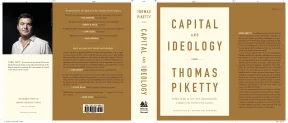
Tải xuống để đọc toàn bộ usa JOEL SAGET/AFP VIA GETTY IMAGES From reviews of Capital in the Twenty-First Century THOMAS “The most important economics book of the year—and maybe of the decade.” PIKETTY CAPITAL —PAUL K R U G MAN , New York Times “Piketty’s economic analysis and historical proofs are breathtaking. R EI CH , Guardian R “A book that nobody interested in a defining issue of our era can afford to ignore.” C A P I T A L AND IDEOLOGY —J OHN CAS S I DY, New Yorker THOMAS PIKETTY’S bestselling Capital in the Twenty-First “[Piketty] is now the most talked-about economist on the planet.” AND Century galvanized global debate about inequality. In —RAN A FO R O O H AR , Time this audacious follow-up, Piketty challenges us to revo- IDEOLOGY lutionize how we think about politics, ideology, and his- tory. He exposes the ideas that have sustained inequality for the past millennium, reveals why the shallow poli- Early acclaim for Capital and Ideology tics of right and left are failing us today, and outlines the structure of a fairer economic system.
“Thomas Piketty’s magisterial global and connected history takes us on a whirl- Our economy, Piketty observes, is not a natural fact. wind journey across the world during the past 500 years to show how shifting Markets, profits, and capital are all historical constructs T HOM A S P I K E T T Y is Director of Studies at L’École des Hautes Études en Sciences Sociales and Professor at the ideas and politics have shaped a wide variety of inequality regimes. Fully em- bracing the power of historical analysis, Capital and Ideology emboldens us to reimagine what is possible today. Enormously rich in argument and evidence, this tour de force by one of the most influential thinkers of our age is a must-read R that depend on choices.
Piketty explores the material and ideological interactions of conflicting social groups that have given us slavery, serfdom, colonialism, com- munism, and hypercapitalism, shaping the lives of bil- THOMAS Paris School of Economics. He is the author of Capital for anyone grappling with the dilemmas of our present. He concludes that the great driver of human in the Twenty-First Century. —SVEN BECKERT, author of Empire of Cotton: A Global History progress over the centuries has been the struggle for equality and education and not, as often argued, the sa- “A book of remarkable clarity and dynamism.
Drawing lessons from a breathtak- cralization of property rights or the pursuit of stability. ing survey of different historical experiences, it teaches us that nothing is inevi- The new era of extreme inequality that has derailed that table, that there exist a whole range of possibilities between hypercapitalism and progress since the 1980s, he shows, is partly a reaction PIKETTY the disasters of the communist experience. It’s up to us to make our future. Let’s against communism, but it is also the fruit of ignorance, roll up our sleeves.” intellectual specialization, and our drift toward the —EST HER DUFLO, Nobel Laureate in Economic Sciences dead-end politics of identity.
Once we understand this, we can begin to envision “Might become even more politically influential than. Capital in the Twenty- a more balanced approach to economics and politics.” Piketty argues for a new “participatory” socialism, a sys- —SI MON K U PER , Financial Times tem founded on an ideology of equality, social proper- THE BELKNAP PRESS OF Author of the #1 New York Times Bestseller ty, education, and the sharing of knowledge and power. H A R VA R D U N I V E R S I T Y P R E S S Capital in the Twenty-First Century Capital and Ideology is destined to be one of the indis- pensable books of our time, a work that not only will hup.edu help us understand the world, but will change it. T RA N S LAT E D B Y A RT H U R G O L D H A M M E R JACKET DESIGN: GRACIELA GALUP PikettyUS_jacket_final.indd All Pages 12/4/19 3:39 PM CAPITAL AND IDEOLOGY R Thomas Piketty Translated by Arthur Goldhammer The Belknap Press of Harvard University Press Cambridge, Mass ac hus etts London, E ngland —-1 2020 —0 —+1 514-81779_ch00_2P.indd 3 11/13/19 8:55 PM Copyright © 2020 by the President and Fellows of Harvard College First published in French as Capital et idéologie Copyright © 2019 Éditions du Seuil, 2019 All rights reserved Printed in the United States of Americ a First printing Design by Dean Bornstein Library of Congress Cataloging-in-Publication Data -1— 0— +1— 514-81779_ch00_2P.indd 4 11/13/19 8:55 PM Contents Preface and Acknowledgments .
Inequality Regimes in History 1. Ternary Societies: Trifunctional Inequality . 51 rders: Power and Property . European Societies of O 3. The Invention of Ownership Societies .
Ownership Societies: The Case of France . Ownership Societies: European Trajectories . Slave and Colonial Societies 6. Slave Societies: Extreme Inequality .
Colonial Societies: Diversity and Domination . Ternary Societies and Colonialism: The Case of India . Ternary Societies and Colonialism: Eurasian Trajectories . The Great Transformation of the Twentieth C entury 10.
The Crisis of Ownership Societies . Social-Democratic Societies: Incomplete Equality . Communist and Postcommunist Societies . Hypercapitalism: Between Modernity and Archaism .
Rethinking the Dimensions of Political Conflict 14. Borders and Property: The Construction of Equality . Brahmin Left: New Euro-American Cleavages . Social Nativism: The Postcolonial Identitarian Trap .
Elements for a Participatory Socialism for the Twenty-First Century . 1043 Contents in Detail . 1045 ables and Illustrations . 1059 List of T Index .indd 5 11/13/19 8:55 PM -1— 0— +1— 514-81779_ch00_2P.indd 6 11/13/19 8:55 PM Preface and Acknowledgments This book is in large part a sequel to Capital in the Twenty-First C entury (French edition, 2013; English, 2014), but it can be read independently. Like the previous work, it is the culmination of a collective effort in the sense that it would never have seen the light of day without the help and support of nu- merous friends and colleagues. I am of course solely responsible for the inter- pretations and analyses developed in the pages that follow, but by myself I would never have been able to assemble the historical sources on which this research rests.
I rely in particular on the data collected in the World Inequality Database (http://WID. This project represents the combined effort of more than a hundred researchers in more than eighty countries around the world. It is currently the largest database available for the historical study of income and wealth inequality both between and within countries. For the purposes of this book I have also collected numerous other sources and documents concerning periods, countries, and aspects of inequality not well covered by WID.world, including, for example, data on preindustrial and colonial socie ties; on inequalities of education, gender, race, religion, and status; and also on religious beliefs, political attitudes, and electoral behavior.
Only the principal references are cited in the text and footnotes. Readers interested in detailed information regarding the whole range of historical sources, bibliographic references, and methods used in this book are urged to consult the online technical appendix at http://piketty. Interested readers w ill also find in the online appendix many graphs and data series not included in the text due to space limitations. I sometimes refer to these sources in the footnotes.
The glossary at the end of this book contains definitions for several terms that may be unfamiliar to readers, which are marked with an asterisk in the text. I am particularly grateful to Facundo Alvaredo, Lucas Chancel, Em- manuel Saez, and Gabriel Zucman, with whom I codirected the WID.world project and the World Inequality Lab at the Paris School of Economics and the University of California at Berkeley. Out of this joint venture came the recent World Inequality Report 2018 (http://wir2018.w orld), of which I —-1 make abundant use in this book. I also wish to thank the institutions that —0 vii —+1 514-81779_ch00_2P.indd 7 11/13/19 8:55 PM viii.
Preface and Acknowle dgments made this project possible, first and foremost the École des Hautes Études en Sciences Sociales (EHESS), where I have taught since 2000—one of the few institutions in the world where social scientists of all stripes can listen to and exchange ideas with one another. I also wish to thank the École Normale Su- périeure and all the other institutions that joined forces in 2007 to create the Paris School of Economics, which I hope w ill contribute to the development of the economics of the twenty-first c entury, an economics that is at once po litical and historical, multipolar and multidisciplinary. For their invaluable assistance I also wish to thank Lydia Assouad, Abhijit Banerjee, Adam Barbé, Charlotte Bartels, Erik Bengtsson, Asma Benhenda, Yonatan Berman, Nitin Bharti, Thomas Blanchet, Cécile Bonneau, Manon Bouju, Jérôme Bourdieu, Antoine Bozio, Cameron Campbell, Guillaume Carré, Guilhem Cassan, Amélie Chelly, Bijia Chen, Denis Cogneau, Léo Czajka, Anne-Laure Delatte, Mauricio De Rosa, Richard Dewever, Mark Dincecco, Esther Duflo, Luis Estevez-Bauluz, Ignacio Flores, Juliette Fournier, Bertrand Garbinti, Amory Gethin, Jonathan Goupille-Lebret, Yajna Govind, Julien Grenet, Jean-Yves Grenier, Malka Guillot, Pierre-Cyrille Hautcoeur, Stéphanie Hennette, Simon Henochsberg, Cheuk Ting Hung, Thanasak Jemmama, Francesca Jensenius, Fabian Kosse, Attila Lindner, Noam Maggor, Clara Martinez Toledano, Ewan McGaughey, Cyril Milhaud, Eric Monnet, Marc Morgan, Mathilde Munoz, Alix Myczkowski, Delphine Nougayrede, Filip Novokmet, Katharina Pistor, Gilles Postel-Vinay, Jean-Laurent Rosen- thal, Nina Rousille, Guillaume Sacriste, Aurélie Sotura, Alessandro Stanziani, Blaise Truong-Loï, Antoine Vauchez, Sebastien Veg, Marlous van Waijenburg, Richard Von Glahn, Daniel Waldenström, Li Yang, Tom Zawisza, and Roxane Zighed as well as all my friends and colleagues at the Centre François-Simiand d’Histoire Économique et Sociale and the Centre de Recherches Historiques of the EHESS and the Paris School of Economics. I also owe special thanks to Arthur Goldhammer.
Every time I go through the pages of the English version of Capital in the Twenty-First Century or Capital and Ideology, I realize how fortunate I was to have Art as my translator. Without his help, I would never have been able to communicate with English-speaking readers with the same precision and elegance. This book has also benefited from the numerous debates and discussions in which I have had the good fortune to participate since the publication of Capital in the Twenty-First Century. I spent much of 2014–2016 traveling around the -1— world, meeting readers, researchers, dissenters, and citizens e ager to join the de- 0— bate.
I participated in hundreds of discussions about my book and the questions +1— 514-81779_ch00_2P.indd 8 11/13/19 8:55 PM Preface and Acknowle dgments. ix it raised. From t hese many encounters I learned an immense amount, which has helped me to delve deeper into the historical dynamics of inequality. Among the many shortcomings of my previous book, two deserve special mention.
First, that work focused too exclusively on the historical experience of the wealthy countries of the world (in Western Europe, North America, and Japan). This was due in part to the difficulty of accessing historical sources adequate for the study of other countries and regions. It was nevertheless a choice that sharply restricted my focus and thinking. Second, the e arlier book tended to treat the political and ideological changes associated with in equality and redistribution as a sort of black box.
I did propose a number of hypotheses concerning, for example, changes in political ideas and attitudes in regard to inequality and private property as a result of the two world wars of the twentieth c entury, economic crises, and the communist challenge, but I never tackled head-on the question of how inegalitarian ideologies evolved. In this new work I attempt to do this much more explicitly by examining the question in a much broader temporal, spatial, and comparative perspective.
Nội dung được bảo vệ bản quyền — Tải xuống đầy đủ
Trích dẫn luận án này
Thomas Piketty (2020). Piketty2020hupextracts [Luận án tiến sĩ, Harvard University]. LuanAn.net. https://luanan.net/kinh-te/piketty2020hupextracts
Câu hỏi thường gặp
Luận án "Piketty2020hupextracts" nghiên cứu về vấn đề gì?
Tóm tắt Piketty 2020: Phân tích sâu sắc về bất bình đẳng và giàu có toàn cầu. Khám phá xu hướng và đề xuất chính sách.
Luận án "Piketty2020hupextracts" được bảo vệ tại trường nào?
Luận án này được bảo vệ tại Harvard University. Năm bảo vệ: 2020.
Luận án "Piketty2020hupextracts" thuộc chuyên ngành gì?
Luận án "Piketty2020hupextracts" thuộc chuyên ngành Kinh tế học. Danh mục: Kinh Tế.
Luận án "Piketty2020hupextracts" có bao nhiêu trang?
Luận án "Piketty2020hupextracts" có 156 trang. Bạn có thể xem trước một phần tài liệu ngay trên trang web trước khi tải về.
Cách tải luận án "Piketty2020hupextracts" về máy như thế nào?
Để tải luận án về máy, bạn nhấn nút "Tải xuống ngay" trên trang này, sau đó hoàn tất thanh toán phí lưu trữ. File sẽ được tải xuống ngay sau khi thanh toán thành công. Hỗ trợ qua Zalo: 0559 297 239.