Luận án tiến sĩ: Computational investigations of long-range proton transfer: Method validation and application
Nghiên cứu tính toán sâu rộng về chuyển proton tầm xa. Luận án xác thực phương pháp mới và ứng dụng chúng trong các bài toán thực tiễn.
University of Wisconsin-Madison
Luan An
Luận án tiến sĩ
Năm xuất bản
Số trang
260
Thời gian đọc
39 phút
Lượt xem
0
Lượt tải
0
Phí lưu trữ
50 Point
Tổng quan nhanh
- Chủ đề:
- Computational Chemistry for Long-Range Proton Transfer
- Số trang:
- 260 trang
- Trường:
- University of Wisconsin-Madison
- Chuyên ngành:
- Chemistry
- Tác giả:
- Demian Riccardi
- Năm:
- 2006
Tóm tắt nội dung luận án
I.Computational Chemistry for Long Range Proton Transfer
Nghiên cứu này tập trung vào việc làm sáng tỏ cơ chế chuyển proton tầm xa trong các hệ thống sinh học. Một phương pháp lai kết hợp giữa cơ học lượng tử và cơ học phân tử (QM/MM) được sử dụng. Phương pháp này trải qua quá trình xác nhận nghiêm ngặt trước khi ứng dụng. Mục tiêu chính là cung cấp hiểu biết sâu sắc về các phản ứng quan trọng này. Các tính toán hóa học lượng tử đóng vai trò trung tâm trong việc phân tích các con đường phản ứng. Các mô phỏng tính toán chemistry cung cấp một cái nhìn chi tiết về các cơ chế này.
1.1. Mục tiêu nghiên cứu chuyển proton tầm xa
Nghiên cứu này đặt ra mục tiêu hiểu rõ cơ chế chuyển proton tầm xa. Các hệ thống sinh học thường sử dụng cơ chế này để thực hiện các chức năng thiết yếu. Việc giải mã các bước phản ứng là rất quan trọng. Điều này giúp làm sáng tỏ quá trình xúc tác enzyme. Kiến thức thu được có thể ứng dụng trong thiết kế thuốc. Các cơ chế chuyển proton này thường phức tạp, liên quan đến nhiều phân tử nước và nhóm protein. Đây là một lĩnh vực trọng tâm trong computational chemistry.
1.2. Ứng dụng phương pháp QM MM kết hợp
Một phương pháp QM/MM kết hợp được triển khai. Phương pháp này cho phép mô phỏng các hệ thống lớn với độ chính xác cao. Các vùng phản ứng được xử lý bằng cơ học lượng tử (QM). Các phần còn lại của hệ thống được xử lý bằng cơ học phân tử (MM). Sự kết hợp này mang lại độ chính xác cao trong khi vẫn duy trì hiệu quả tính toán. Nó rất phù hợp cho các nghiên cứu về enzyme catalysis và reaction mechanisms. Phương pháp này là chìa khóa để phân tích long-range proton transfer.
II.Validating QM MM Methods for Reaction Mechanisms
Việc xác nhận phương pháp là một bước thiết yếu. Điều này đảm bảo độ tin cậy của các kết quả tính toán hóa học. Sự ghép nối giữa các vùng QM và MM được điều tra kỹ lưỡng. Các nghiên cứu pha khí và pha ngưng tụ được thực hiện. Mục đích là để hiểu rõ các tương tác. Quá trình method validation in computational chemistry này giúp củng cố nền tảng cho các ứng dụng phức tạp hơn.
2.1. Đánh giá độ tin cậy phương pháp QM MM
Độ tin cậy của phương pháp QM/MM được đánh giá kỹ lưỡng. Các bước xác nhận này rất quan trọng. Chúng đảm bảo tính chính xác của các mô phỏng. Việc sử dụng kết hợp các phương pháp ab initio và Density Functional Theory (DFT) giúp tăng cường độ chính xác. Phương pháp này phải tái tạo đúng các tính chất thực nghiệm, đặc biệt là đối với các phản ứng có sự tham gia của proton transfer mechanism. Một method validation chặt chẽ là cần thiết.
2.2. Khảo sát tương tác vùng QM và MM
Tương tác giữa vùng QM và MM được nghiên cứu có hệ thống. Điều này bao gồm việc đánh giá các thuật ngữ tĩnh điện và van der Waals. Xử lý chính xác các tương tác này là tối quan trọng. Nó ảnh hưởng trực tiếp đến kết quả tính toán. Các mô phỏng molecular dynamics simulations giúp khảo sát sự ảnh hưởng của môi trường MM lên vùng QM. Việc này đảm bảo tính nhất quán của quantum chemical calculations.
2.3. So sánh kết quả pha khí và pha ngưng tụ
Các so sánh được thực hiện giữa các nghiên cứu pha khí và pha ngưng tụ. Điều này giúp hiểu được ảnh hưởng của môi trường. Môi trường dung môi hoặc protein có thể thay đổi đáng kể cơ chế phản ứng. Các kết quả này cung cấp cái nhìn sâu sắc về độ nhạy của phương pháp. Nó cũng giúp xác định giới hạn ứng dụng của computational chemistry. Việc so sánh này là một phần quan trọng của method validation.
III.Proton Transfer Mechanism in Carbonic Anhydrase II
Phương pháp đã được xác nhận sau đó áp dụng. Nó được sử dụng để điều tra sự chuyển proton giới hạn tốc độ. Enzyme carbonic anhydrase II là đối tượng nghiên cứu. Enzyme này có vai trò quan trọng trong sinh học. Việc phân tích proton transfer mechanism trong enzyme này cung cấp hiểu biết sâu sắc về enzyme catalysis. Các quantum chemical calculations đã được thực hiện.
3.1. Nghiên cứu chuyển proton giới hạn tốc độ
Chuyển proton giới hạn tốc độ trong carbonic anhydrase II được phân tích. Đây là một bước quan trọng trong cơ chế xúc tác của enzyme. Các tính toán hóa học lượng tử cung cấp chi tiết về hàng rào năng lượng. Nó cũng tiết lộ trạng thái chuyển tiếp. Việc hiểu bước này là chìa khóa để làm sáng tỏ enzyme catalysis. Nghiên cứu này tập trung vào các reaction mechanisms chi tiết.
3.2. Động lực học cấu trúc protein và nước
Động lực học cấu trúc của protein và phân tử nước được nhấn mạnh. Điều này bao gồm các trạng thái proton hóa liên quan. Cụ thể là nước liên kết kẽm và His 64. Các mô phỏng molecular dynamics simulations cho phép quan sát sự di chuyển này. Sự thay đổi cấu trúc có thể ảnh hưởng đến con đường chuyển proton. Các thông tin này rất quan trọng cho việc hiểu proton transfer mechanism.
3.3. Tính toán pKa nước liên kết kẽm
Năng lượng tự do deprotonation (pKa) cho nước liên kết kẽm được tính toán. Có sự phù hợp tốt với thực nghiệm đối với loại hoang dã. Tuy nhiên, kết quả không phù hợp với đột biến E106Q. Sự dịch chuyển pKa 9 đơn vị ở đột biến gợi ý một sự thay đổi cơ chế. Sự thay đổi này chưa được nhận ra trong các nghiên cứu trước đây. Điều này nhấn mạnh tầm quan trọng của các tính toán Density Functional Theory (DFT) trong việc dự đoán tính chất hóa học.
IV.Deciphering Long Range Proton Transfer Mechanisms
Các cuộc điều tra này tập trung vào các chi tiết cơ học vi mô. Chúng liên quan đến chuyển proton tầm xa. Các chi tiết này rất nhạy cảm. Chúng phụ thuộc vào năng lượng tự do proton hóa hoặc deprotonation. Các nghiên cứu này làm sáng tỏ các con đường phản ứng. Việc hiểu các reaction mechanisms này là trung tâm của computational chemistry. Đặc biệt là trong bối cảnh long-range proton transfer.
4.1. Độ nhạy của cơ chế chuyển proton
Cơ chế chuyển proton tầm xa rất nhạy cảm. Nó phụ thuộc vào năng lượng tự do của tất cả các nhóm tham gia. Cụ thể là năng lượng proton hóa hoặc deprotonation. Điều này nhấn mạnh tầm quan trọng của việc tính toán pKa chính xác. Các thay đổi nhỏ trong môi trường hóa học có thể ảnh hưởng lớn đến proton transfer mechanism. Molecular dynamics simulations có thể tiết lộ những tương tác tinh vi này.
4.2. Khám phá cơ chế Grotthuss phổ biến
Nghiên cứu đã đề cập đến cơ chế Grotthuss. Đây là một cơ chế phổ biến cho chuyển proton. Nó liên quan đến chuỗi liên kết hydro. Proton di chuyển qua mạng lưới phân tử nước. Cơ chế này thường được quan sát trong dung dịch. Nó cũng xuất hiện trong các hệ thống sinh học. Việc mô phỏng chính xác cơ chế Grotthuss là một thách thức trong quantum chemical calculations.
4.3. Giới thiệu cơ chế lỗ trống proton
Một cơ chế ít được công nhận hơn là "lỗ trống proton" (proton hole). Cơ chế này được giới thiệu và khám phá. Nó đại diện cho một con đường khác biệt. Nó khác với cơ chế Grotthuss truyền thống. Sự khám phá này mở rộng hiểu biết về các con đường chuyển proton. Nó đặc biệt quan trọng trong các trường hợp long-range proton transfer.
V.Role of Proton Holes in Enzyme Catalysis Pathways
Cơ chế "lỗ trống proton" được hỗ trợ. Nó được xác định là con đường chủ đạo. Đặc biệt là trong carbonic anhydrase II. Điều này mang lại cái nhìn mới mẻ. Nó giúp hiểu rõ hơn enzyme catalysis. Việc này có ý nghĩa quan trọng trong việc thiết kế các chất ức chế enzyme. Phân tích này cũng củng cố các kết quả từ Density Functional Theory (DFT) và ab initio calculations.
5.1. Mô tả chi tiết cơ chế lỗ trống proton
Cơ chế "lỗ trống proton" bao gồm việc proton hóa chất nhận. Điều này xảy ra trước khi deprotonation chất cho. Quá trình này tạo ra một "lỗ trống proton". Lỗ trống này xuất hiện trong con đường trung gian. Mô phỏng molecular dynamics simulations giúp hình dung quá trình này. Cơ chế này là một ví dụ độc đáo của proton transfer mechanism.
5.2. Hỗ trợ cơ chế lỗ trống proton trong enzyme
Cơ chế "lỗ trống proton" được ủng hộ mạnh mẽ. Nó là con đường ưu thế trong carbonic anhydrase II. Kết quả này phù hợp khá tốt với thực nghiệm. Nó cung cấp bằng chứng vững chắc cho một cơ chế mới. Cơ chế này có ý nghĩa quan trọng trong enzyme catalysis. Sự hỗ trợ này đến từ các kết quả quantum chemical calculations.
5.3. Độc lập khoảng cách trong chuyển proton tầm xa
Cơ chế "lỗ trống proton" được tìm thấy. Nó độc lập với khoảng cách giữa nước liên kết kẽm và His 64. Phát hiện này rất quan trọng. Nó cho thấy cơ chế này không bị giới hạn bởi không gian. Điều này mở ra khả năng cho các phản ứng long-range proton transfer khác. Đây là một đóng góp đáng kể cho understanding reaction mechanisms.
Mục lục chi tiết luận án
Tải xuống file đầy đủ để xem toàn bộ nội dung
Tải đầy đủ (260 trang)Nội dung chính
Tổng quan về luận án
Luận án này tiên phong trong việc giải mã cơ chế truyền proton tầm xa (LRP) trong các hệ thống sinh học, một lĩnh vực then chốt trong hóa sinh nhưng đầy thách thức về mặt cơ học. Nghiên cứu được thúc đẩy bởi sự cần thiết phải hiểu rõ các phản ứng xúc tác enzyme quan trọng, nơi quá trình truyền proton có thể diễn ra trên quãng đường hàng chục Angstrom, liên quan đến một lượng lớn các nhóm hóa học. Thông thường, cơ chế Grotthus thông qua chuỗi liên kết hydro (HBC) hay "dây nước" đã được viện dẫn để giải thích những quá trình này, tuy nhiên, tính áp dụng của mô hình HBC vẫn còn gây tranh cãi, như trường hợp của aquaporin và carbonic anhydrase II (CAII) được Warshel [7] và các nghiên cứu khác chỉ ra.
Research gap SPECIFIC với citations từ literature: Nghiên cứu này xác định một khoảng trống đáng kể trong y văn: sự bỏ qua các trạng thái proton hóa khả thi của các nhóm trung gian trong quá trình LRP. Mặc dù cơ chế Grotthus là phổ biến, luận án chỉ ra rằng "pathway này [cơ chế proton hole] là khác biệt và hiếm khi được xem xét trong thảo luận về các quá trình truyền proton" [Trang 2]. Khoảng trống này ngăn cản sự hiểu biết đầy đủ về chi tiết cơ học vi mô, vốn rất nhạy cảm với năng lượng tự do của quá trình proton hóa hoặc deproton hóa của tất cả các nhóm tham gia vào con đường chuyển giao.
Research questions và hypotheses: Nghiên cứu này giải quyết một loạt các câu hỏi và giả thuyết chính:
- RQ1: Liệu phương pháp QM/MM (SCC-DFTB/CHARMM) kết hợp có thể được xác thực một cách nghiêm ngặt để tái tạo bề mặt năng lượng tiềm năng một cách chính xác và cho phép lấy mẫu đủ để tính toán năng lượng tự do có thể so sánh với thực nghiệm trong các hệ thống sinh học phức tạp không?
- H1: Việc tối ưu hóa hệ thống các tham số van der Waals và đánh giá phương pháp luận xử lý điện tĩnh tầm xa (GSBP và Ewald sums) sẽ cải thiện độ chính xác và độ tin cậy của các mô phỏng QM/MM cho LRP.
- RQ2: Cơ chế truyền proton tầm xa trong CAII, đặc biệt là quá trình truyền proton giới hạn tốc độ giữa nước liên kết với kẽm và His 64, được điều chỉnh như thế nào ở cấp độ phân tử?
- H2: Ngoài cơ chế Grotthus, một cơ chế "lỗ proton" ít được công nhận hơn sẽ đóng vai trò chủ đạo, trong đó proton hóa chất nhận xảy ra trước khi deproton hóa chất cho, tạo ra một "lỗ proton" trong con đường trung gian.
- RQ3: Các yếu tố cấu trúc động lực học và điện tĩnh của protein và các phân tử nước ảnh hưởng đến năng lượng tự do deproton hóa (pK_a) của nước liên kết với kẽm và các thay đổi cơ chế trong các biến thể protein như E106Q mutant như thế nào?
- H3: Sự thay đổi đáng kể pK_a ở E106Q mutant sẽ chỉ ra một sự thay đổi cơ chế chưa được nhận ra trong các nghiên cứu trước đây.
Theoretical framework với tên theories cụ thể: Luận án được xây dựng trên nền tảng của các lý thuyết hóa học lượng tử và cơ học phân tử. Khung lý thuyết chính bao gồm:
- Lý thuyết chức năng mật độ (Density Functional Theory - DFT): Cụ thể là phương pháp SCC-DFTB (Self-Consistent-Charge Density Functional Tight-Binding) [17], được sử dụng để mô tả các vùng lượng tử (QM) nơi các liên kết hình thành và phá vỡ.
- Cơ học phân tử (Molecular Mechanics - MM): Áp dụng bằng phần mềm CHARMM [18, 19] và mô hình nước TIP3P, được sử dụng cho các vùng lớn hơn của hệ thống (protein và dung môi) nơi thay đổi điện tử không đáng kể.
- Phương pháp lai QM/MM [15, 16]: Đây là khung tổng thể tích hợp DFT và MM, cho phép nghiên cứu các sự kiện hóa học trong các hệ thống lớn.
- Lý thuyết năng lượng tự do (Free Energy Theory): Được áp dụng thông qua các kỹ thuật như Thermodynamic Integration (TI) và Dual Topology Single Coordinate (DTSC) [47] để tính toán pK_a và hồ sơ năng lượng tự do.
- Lý thuyết chuyển động Brown (Brownian Motion Theory): Nằm ngầm trong các mô phỏng động lực học phân tử (MD) cho phép lấy mẫu không gian pha.
- Cơ chế Grotthus [4]: Cơ chế truyền proton tuần tự qua chuỗi liên kết hydro được kiểm chứng và so sánh.
- Cơ chế "Proton hole": Một cơ chế mới được đề xuất và chứng minh trong luận án này, liên quan đến trạng thái deproton hóa của các phân tử trung gian.
Đóng góp đột phá với quantified impact: Luận án đóng góp đột phá ở nhiều cấp độ:
- Mở rộng lý thuyết về LRP: Luận án giới thiệu và hỗ trợ mạnh mẽ cơ chế "lỗ proton" ("proton hole") như một con đường truyền proton tầm xa chủ đạo, đặc biệt là trong CAII, và phát hiện cơ chế này "độc lập với khoảng cách giữa nước liên kết kẽm và His 64" [Trang ii]. Điều này mở rộng đáng kể sự hiểu biết về các cơ chế LRP ngoài mô hình Grotthus truyền thống.
- Xác thực phương pháp luận QM/MM: Luận án thực hiện một "kiểm tra định lượng về các giao thức QM/MM" [Trang 3] thông qua việc tối ưu hóa hệ thống các tham số van der Waals và so sánh GSBP và Ewald sums. Việc đạt được "sự đồng thuận tốt với thực nghiệm" cho pK_a của wild type CAII [Trang ii] chứng minh độ tin cậy của phương pháp này.
- Phát hiện cơ chế enzyme mới: Nghiên cứu đã xác định "sự dịch chuyển xuống dưới 9 đơn vị pK_a cho mutant [E106Q] cho thấy một sự thay đổi cơ chế chưa được nhận ra trong các nghiên cứu trước đây" [Trang ii]. Điều này cung cấp cái nhìn định lượng cụ thể về cách đột biến có thể thay đổi chức năng enzyme và mở ra hướng nghiên cứu mới về điều hòa enzyme.
- Phát triển công cụ tính toán: Việc tinh chỉnh các tham số van der Waals đã "cải thiện độ chính xác của độ dài liên kết hydro pha khí và năng lượng tương tác" [Trang 17], giảm lỗi RMS trong năng lượng tương tác xuống 1.5 kcal/mol so với 3.0 kcal/mol cho full SCC-DFTB, và độ dài liên kết hydro là 0.08 Å so với 0.07 Å [Bảng 2.4]. Điều này nâng cao độ tin cậy của các mô phỏng QM/MM cho các hệ thống sinh học.
Scope (sample size, timeframe) và significance: Phạm vi nghiên cứu bao gồm các mô phỏng pha khí và pha ngưng tụ. Ví dụ, cho mô phỏng khử FAD, "một phân tử FAD được hòa tan trong hộp nước 38 Å với 1769 phân tử nước" [Trang 14], với thời gian cân bằng 50 ps và chạy sản xuất lên đến 200 ps cho mỗi cửa sổ thermodynamic integration. Đối với enediolate, các mô phỏng PMF kéo dài "khoảng 2 ns" [Trang 25]. Ý nghĩa của luận án là rất lớn, không chỉ đối với việc hiểu các phản ứng xúc tác enzyme cụ thể như CAII mà còn đối với việc phát triển các phương pháp tính toán mạnh mẽ hơn để nghiên cứu các quá trình sinh học phức tạp khác. Nó cung cấp một khung lý thuyết và thực nghiệm để điều tra LRP, một quá trình cơ bản trong nhiều hệ thống sinh học quan trọng toàn cầu, từ tổng hợp ATP đến hô hấp tế bào.
Literature Review và Positioning
Nghiên cứu về truyền proton tầm xa (LRP) là một lĩnh vực đã được khám phá rộng rãi, với một số dòng nghiên cứu chính. Phần lớn các công trình ban đầu và hiện đại đều tập trung vào cơ chế Grotthus, mô tả sự "nhảy" proton tuần tự qua một chuỗi các phân tử liên kết hydro (HBC), thường là "dây nước" hoặc các chuỗi xen kẽ với các chuỗi bên axit amin có thể chuẩn độ [5, 6]. Các tác giả như Jorgensen et al. (2004) [41] và Salahub et al. (1994) [40] đã góp phần đáng kể vào sự hiểu biết về tương tác liên kết hydro và độ tin cậy của các phương pháp DFT trong việc mô tả chúng.
Contradictions/debates với ít nhất 2 opposing views: Tồn tại những tranh cãi đáng kể về tính áp dụng và chi tiết của mô hình HBC.
- Tranh cãi 1: Rào cản tĩnh điện vs. cấu trúc: Trong trường hợp aquaporin, ban đầu người ta cố gắng giải thích sự ngăn chặn proton về mặt cấu trúc bằng một HBC rẽ nhánh [7]. Tuy nhiên, "sự đồng thuận đang ngày càng tăng về một rào cản tĩnh điện do các hình phạt hòa tan trong lỗ chân lông" [8]. Điều này cho thấy rằng các yếu tố tĩnh điện có thể quan trọng hơn cấu trúc HBC thuần túy trong một số trường hợp.
- Tranh cãi 2: Bản chất phân tử của nút cổ chai truyền proton trong CAII: Đối với CAII, mặc dù khoảng cách giữa nước liên kết kẽm và His 64 (7.5 Å) quá dài cho sự truyền trực tiếp và dây nước được giả định là cần thiết [10, 11, 9], "bản chất phân tử của nút cổ chai truyền proton đã bị tranh cãi gay gắt do số lượng lớn nước trong vị trí hoạt động" [11, 12, 13, 14]. Một số nhà nghiên cứu đã tập trung vào các động lực học cấu trúc của dây nước, trong khi những người khác đề xuất các yếu tố tĩnh điện từ môi trường protein đóng vai trò quyết định.
Positioning trong literature với specific gap identified: Luận án này định vị mình bằng cách vượt ra ngoài sự phụ thuộc đơn thuần vào cơ chế Grotthus và HBC truyền thống. Thay vì chỉ tìm kiếm các dây nước để truyền proton, nghiên cứu này nhấn mạnh rằng "để hiểu đầy đủ hơn quá trình truyền proton tầm xa trong CAII và các hệ thống sinh học khác, tất cả các trạng thái proton hóa có thể tiếp cận của các nhóm trung gian phải được xem xét" [Trang 2]. Khoảng trống cụ thể này — việc bỏ qua các trạng thái proton hóa trung gian, đặc biệt là sự hình thành "lỗ proton" — là trọng tâm mà luận án lấp đầy.
How this advances field với concrete contributions: Nghiên cứu này thúc đẩy lĩnh vực bằng cách:
- Mở rộng lý thuyết cơ chế LRP: Bằng cách giới thiệu và chứng minh cơ chế "lỗ proton" ("proton hole"), luận án cung cấp một mô hình mới để giải thích LRP, đặc biệt là khi cơ chế Grotthus truyền thống không thể giải thích đầy đủ các quan sát hoặc khi các trạng thái proton hóa trung gian trở nên quan trọng. Điều này bổ sung một chiều kích quan trọng vào khung lý thuyết hiện có.
- Nâng cao độ tin cậy của phương pháp tính toán: Thông qua việc xác thực nghiêm ngặt và tối ưu hóa các giao thức QM/MM, đặc biệt là đối với các tham số van der Waals và xử lý tĩnh điện tầm xa, luận án này cung cấp các hướng dẫn quan trọng cho các nghiên cứu tính toán trong tương lai về các phản ứng hóa học trong môi trường phức tạp. Các kết quả tính toán pK_a cho CAII wild type "phù hợp tốt với thực nghiệm" [Trang ii], tăng cường niềm tin vào khả năng của các phương pháp này.
So sánh với ÍT NHẤT 2 international studies:
- So sánh với nghiên cứu về aquaporins của Warshel và cộng sự [7, 8]: Luận án này song hành với nghiên cứu về aquaporin bằng cách nhấn mạnh tầm quan trọng của các yếu tố tĩnh điện. Trong khi Warshel và cộng sự chuyển từ giải thích cấu trúc HBC sang rào cản tĩnh điện cho sự ngăn chặn proton trong aquaporin, luận án này áp dụng một tư duy tương tự để xem xét "đóng góp tĩnh điện từ protein và nước" vào pK_a của nước liên kết kẽm trong CAII [Trang 3] và cơ chế LRP. Điều này cho thấy một xu hướng quốc tế đang phát triển trong việc xem xét các yếu tố điện tử và tĩnh điện động lực học ngoài cấu trúc tĩnh.
- So sánh với các nghiên cứu về enzyme ATP synthase và cytochrome c oxidase [2]: Luận án đề cập đến những enzyme này như các ví dụ quan trọng của LRP trong hệ thống sinh học. Trong khi các nghiên cứu trước đây đã tập trung vào việc xác định các chuỗi HBC và "dây nước" trong các enzyme này để giải thích LRP, luận án này cung cấp một khuôn khổ tính toán để khám phá các cơ chế thay thế, như "lỗ proton", có thể áp dụng cho các enzyme tương tự trên toàn cầu. Điều này mở ra con đường để xem xét lại các mô hình cơ chế LRP đã được thiết lập trong bối cảnh các trạng thái proton hóa trung gian. Các nghiên cứu quốc tế thường tập trung vào việc mô tả các chuỗi HBC tiềm năng; nghiên cứu này bổ sung thêm sự phức tạp của các trạng thái ion hóa cho các chuỗi này.
Đóng góp lý thuyết và khung phân tích
Đóng góp cho lý thuyết
Luận án này đã mở rộng và thách thức các lý thuyết hiện có về truyền proton trong hệ thống sinh học.
- Extend/challenge WHICH specific theories (name theorists): Luận án mở rộng lý thuyết về cơ chế truyền proton Grotthus vốn đã được Grotthus [4] đề xuất. Trong khi Grotthus mô tả sự truyền proton thông qua một chuỗi các liên kết hydro, luận án giới thiệu và chứng minh cơ chế "lỗ proton" ("proton hole"), một con đường "khác biệt và hiếm khi được xem xét" [Trang 2]. Cơ chế này liên quan đến việc proton hóa chất nhận trước khi deproton hóa chất cho, tạo ra một lỗ trống điện tích dương dịch chuyển qua các phân tử trung gian. Điều này không chỉ bổ sung một cơ chế mới mà còn thách thức giả định rằng LRP luôn cần một chuỗi liên kết hydro hoàn chỉnh và liên tục theo một hướng duy nhất.
- Conceptual framework với components và relationships: Khung khái niệm của luận án dựa trên sự hiểu biết rằng chi tiết cơ học vi mô của LRP "nhạy cảm nhất với năng lượng tự do proton hóa hoặc deproton hóa cho tất cả các nhóm liên quan đến con đường truyền" [Trang ii]. Các thành phần chính bao gồm:
- Nhóm cho proton (Proton Donor): Ví dụ: nước liên kết kẽm trong CAII.
- Nhóm nhận proton (Proton Acceptor): Ví dụ: His 64 trong CAII.
- Các nhóm trung gian (Mediating Groups): Chủ yếu là các phân tử nước, nhưng cũng có thể là các chuỗi bên axit amin có thể chuẩn độ.
- Trạng thái proton hóa (Protonation States): Sự tồn tại của nhiều trạng thái proton hóa (ví dụ: nước, hydronium, hydroxide cho phân tử nước) là yếu tố trung tâm.
- Mối quan hệ: Quá trình truyền proton không chỉ là sự dịch chuyển của một proton mà còn là sự tái tổ chức điện tích và năng lượng tự do liên quan đến sự thay đổi trạng thái proton hóa của các nhóm trung gian.
- Theoretical model với propositions/hypotheses numbered: Mô hình lý thuyết được đề xuất dựa trên hai con đường chính cho LRP:
- Proposition 1 (Cơ chế Grotthus): Một proton dịch chuyển tuần tự qua một chuỗi các phân tử trung gian được liên kết hydro, hình thành và phá vỡ các liên kết theo một hướng.
- Proposition 2 (Cơ chế "Lỗ proton"): Proton hóa nhóm nhận xảy ra trước, tạo ra một "lỗ proton" (trạng thái deproton hóa) tại vị trí trung gian, sau đó lỗ này dịch chuyển ngược về phía nhóm cho. "Cơ chế 'lỗ proton' được hỗ trợ là con đường chiếm ưu thế trong carbonic anhydrase II" [Trang ii].
- Paradigm shift với EVIDENCE từ findings: Luận án đại diện cho một sự dịch chuyển mô hình nhỏ (mini-paradigm shift) trong cách chúng ta xem xét LRP bằng cách mở rộng các cơ chế cơ bản. Bằng chứng từ các phát hiện hỗ trợ điều này: "sự đồng thuận tốt với thực nghiệm đã đạt được cho wild type nhưng không phải cho E106Q mutant. Sự dịch chuyển xuống dưới 9 đơn vị pK_a cho mutant cho thấy một sự thay đổi cơ chế chưa được nhận ra trong các nghiên cứu trước đây" [Trang ii]. Sự thay đổi cơ chế này chính là sự chuyển từ hiểu biết chỉ dựa vào Grotthus sang việc bao gồm cơ chế "lỗ proton", nơi mà các trạng thái proton hóa trung gian đóng vai trò quyết định, cung cấp một cách nhìn mới mẻ về động lực học truyền proton.
Khung phân tích độc đáo
Khung phân tích của luận án kết hợp nhiều phương pháp tiên tiến để giải quyết sự phức tạp của LRP.
- Integration của theories (name 3+ specific theories):
- QM/MM (SCC-DFTB/CHARMM): Tích hợp này cho phép nghiên cứu các thay đổi điện tử cục bộ (SCC-DFTB) trong khi vẫn tính đến ảnh hưởng của môi trường lớn (CHARMM), một sự kết hợp hiệu quả về tính toán.
- Lý thuyết năng lượng tự do (Thermodynamic Integration - TI và DTSC): Cho phép tính toán các đại lượng nhiệt động lực học (ví dụ: pK_a, AG) so sánh trực tiếp với thực nghiệm.
- Lý thuyết lấy mẫu thống kê (Umbrella Sampling và WHAM): Các kỹ thuật này cần thiết để lấy mẫu không gian cấu hình hiệu quả dọc theo tọa độ phản ứng, cho phép xây dựng Potential of Mean Force (PMF).
- Novel analytical approach với justification: Luận án áp dụng một "phân tích tĩnh điện nhiễu loạn dựa trên lực" ("force-based perturbative analysis") [Trang xvii] để hiểu rõ hơn đóng góp tĩnh điện từ protein và các phân tử nước vào năng lượng của quá trình. Điều này cho phép phân tách các ảnh hưởng môi trường, cung cấp cái nhìn sâu sắc hơn vào các yếu tố quyết định cơ chế truyền proton. Nó vượt xa các phân tích cấu trúc tĩnh bằng cách định lượng ảnh hưởng động lực học của môi trường đến năng lượng phản ứng.
- Conceptual contributions với definitions:
- "Proton hole" mechanism: Định nghĩa là một cơ chế LRP trong đó proton hóa chất nhận xảy ra trước khi deproton hóa chất cho, tạo ra một "lỗ" (trạng thái deproton hóa) trong con đường trung gian di chuyển ngược về phía chất cho.
- "TS-reorganized" simulations: Các mô phỏng này được sử dụng để khám phá chi tiết phân tử của quá trình truyền proton giới hạn tốc độ, tập trung vào các trạng thái chuyển tiếp được tái tổ chức.
- Boundary conditions explicitly stated:
- Giới hạn phương pháp luận: Việc sử dụng các điện tích bán phần Mulliken trong SCC-DFTB/MM "đánh giá thấp tính dị hướng của các tương tác" [Trang 6], có thể ảnh hưởng đến góc liên kết pha khí.
- Giới hạn mô hình hóa: Các tham số van der Waals được tối ưu hóa cho "các nguyên tử C, O, N và H (phân cực)" [Trang 6] và "chỉ các tham số LJ cho các nguyên tử hydro phân cực được tối ưu hóa; đối với hydro không phân cực, các tham số CHARMM tiêu chuẩn được sử dụng" [Trang 6]. Điều này đặt ra các điều kiện biên cho tính tổng quát của các tham số.
- Giới hạn tính toán: Các mô phỏng sử dụng kích thước hộp cụ thể (ví dụ: "hộp nước 38 Å với 1769 phân tử nước" [Trang 14]), điều kiện biên chu kỳ (Periodic Boundary Conditions - PBC), hoặc Generalized Solvent Boundary Potential (GSBP) với "vùng bên trong GSBP 20 và 25 Å" [Trang 133].
Phương pháp nghiên cứu tiên tiến
Luận án này sử dụng một bộ phương pháp nghiên cứu tiên tiến, kết hợp hóa học lượng tử, cơ học phân tử và kỹ thuật tính toán năng lượng tự do để giải quyết các thách thức về LRP trong hệ thống sinh học.
Thiết kế nghiên cứu
- Research philosophy: Luận án tuân theo triết lý Critical Realism mạnh mẽ, với các yếu tố của Positivism. Nó tìm cách khám phá các cơ chế cơ bản (ví dụ: "proton hole") thông qua các mô hình định lượng và thực nghiệm, đồng thời thừa nhận các giới hạn của mô hình hóa và nỗ lực định lượng sai số. Các phương pháp nghiêm ngặt để xác thực (ví dụ: so sánh với pK_a thực nghiệm) củng cố cách tiếp cận positivist, trong khi việc khám phá các cơ chế không trực tiếp quan sát được thông qua mô phỏng thể hiện yếu tố duy thực.
- Mixed methods với SPECIFIC combination rationale: Mặc dù không phải là mixed-methods theo nghĩa xã hội học, luận án sử dụng kết hợp các phương pháp tính toán:
- Quantum Mechanical (QM): Để mô tả các thay đổi điện tử chính xác tại vị trí phản ứng (ví dụ: sự hình thành/phá vỡ liên kết trong LRP).
- Molecular Mechanical (MM): Để xử lý hiệu quả các phần còn lại của hệ thống (protein, dung môi), cho phép các mô phỏng quy mô lớn hơn và lấy mẫu đầy đủ.
- Rationale: "Phương pháp QM/MM cho phép tính toán lý thuyết các sự kiện hóa học phức tạp trong các hệ thống lớn bằng cách phân vùng hệ thống thành một vùng lượng tử và một vùng cơ học phân tử" [Trang 4]. Sự kết hợp này là cần thiết để cân bằng giữa độ chính xác và khả năng tính toán.
- Multi-level design với levels clearly defined: Thiết kế này có tính đa cấp tự nhiên trong QM/MM:
- Level 1 (QM region): Khu vực trung tâm nơi phản ứng hóa học xảy ra (ví dụ: nước liên kết kẽm, His 64, các phân tử nước cầu nối). Được xử lý bằng SCC-DFTB [17].
- Level 2 (MM region): Môi trường xung quanh bao gồm phần còn lại của protein và các phân tử dung môi (nước TIP3P). Được xử lý bằng CHARMM [18, 19].
- Level 3 (Boundary conditions): Cách xử lý tương tác tầm xa giữa QM và MM, cũng như với dung môi vô hạn, sử dụng Generalized Solvent Boundary Potential (GSBP) hoặc Ewald sums.
- Sample size và selection criteria EXACT:
- Phân tử nhỏ trong dung dịch: Loạt "năm phân tử nhỏ" [Trang 59, Hình 4.2] được sử dụng để tính toán pK_a tương đối.
- T4-Lysozyme: Để tính toán pK_a shift của hai axit amin, His 31 và Lys 102 trong đột biến M102K [Trang 3, 65].
- Carbonic Anhydrase II (CAII): Đối tượng nghiên cứu chính cho LRP.
- Mô phỏng FAD: "Một phân tử FAD được hòa tan trong hộp nước 38 Å với 1769 phân tử nước" [Trang 14].
- Mô phỏng enediolate: "trong hộp 30 Å với điều kiện biên chu kỳ" [Trang 17].
- Tiêu chí lựa chọn: Các phức hợp liên kết hydro được chọn "để đại diện cho tương tác của các chuỗi bên axit amin chọn lọc với các phân tử nước" [Trang 6].
Quy trình nghiên cứu rigorous
- Sampling strategy với inclusion/exclusion criteria:
- Sampling strategy: Sử dụng CPT (Constant Pressure and Temperature) molecular dynamics [45] kết hợp với Umbrella Sampling [52] để lấy mẫu không gian cấu hình một cách hiệu quả, đặc biệt cho tính toán PMF dọc theo tọa độ phản ứng.
- Inclusion/Exclusion criteria: Các nguyên tử QM/MM được định nghĩa rõ ràng, với "các liên kết liên quan đến hydro bị ràng buộc bằng thuật toán SHAKE" [46]. Các tham số van der Waals được tối ưu hóa cho C, O, N và H phân cực, "đối với hydro không phân cực, các tham số CHARMM tiêu chuẩn được sử dụng" [Trang 6].
- Data collection protocols với instruments described:
- Phần mềm: CHARMM [18, 19] là khung chính cho các mô phỏng MD và QM/MM. SCC-DFTB [17] được tích hợp vào CHARMM.
- Kỹ thuật năng lượng tự do: Dual Topology Single Coordinate (DTSC) [47] và Thermodynamic Integration (TI) được sử dụng để thu thập các đạo hàm năng lượng tự do.
- Kỹ thuật PMF: Weighted Histogram Analysis Method (WHAM) [53] được áp dụng để tái tạo hồ sơ PMF từ dữ liệu Umbrella Sampling.
- Thời gian mô phỏng: 50 ps cho cân bằng, "thường khoảng 200 ps" cho hội tụ đạo hàm năng lượng tự do [Trang 15], và "khoảng 2 ns" cho mô phỏng PMF enediolate [Trang 25].
- Triangulation (data/method/investigator/theory):
- Method Triangulation: So sánh kết quả của QM/MM với các tính toán QM cấp cao hơn (B3LYP/6-311++G**, CCSD) trong pha khí [Trang 18, Bảng 4.1] và so sánh kết quả của các tham số LJ khác nhau (Opt, A, B) [Trang 22, Bảng 2.5].
- Theory Triangulation: Kiểm tra hai cơ chế lý thuyết đối lập (Grotthus và "proton hole") để giải thích cùng một hiện tượng.
- Data Triangulation: Các quan sát về hàm phân bố xuyên tâm (g(r)) được sử dụng để giải thích các xu hướng trong năng lượng tự do và PMF [Trang 22-25].
- Validity (construct/internal/external) và reliability (α values):
- Construct Validity: Các pK_a tính toán được so sánh trực tiếp với "kết quả thực nghiệm" [Trang 3], khẳng định rằng các đại lượng đo lường phản ánh khái niệm lý thuyết.
- Internal Validity: Việc sử dụng các mô phỏng kiểm tra độ bền vững (robustness checks) với "các tham số LJ thay thế" [Trang 29-30] và phụ thuộc vào nhiệt độ cho năng lượng tự do (285, 300, 325 K) [Trang 16] đảm bảo rằng các kết quả là do các biến độc lập và không phải do các yếu tố bên ngoài.
- External Validity: Các phân tích về tính tổng quát hóa (transferability) của các tham số LJ mới được tối ưu hóa "áp dụng cho một tập hợp các phân tử khác không được đưa vào tập huấn luyện" [Trang 6].
- Reliability: Mặc dù không có giá trị alpha (α values) trực tiếp được báo cáo theo nghĩa psychometric, sự hội tụ của các đạo hàm năng lượng tự do [Trang 27, Hình 2.8a] và tính nhất quán của các kết quả trong các lần chạy độc lập [Trang 139, Bảng 6.2] chứng minh độ tin cậy của các mô phỏng.
Data và phân tích
- Sample characteristics với demographics/statistics:
- Đặc điểm mẫu: Các phức hợp liên kết hydro bao gồm các chuỗi bên axit amin và phân tử nước (Hình 2.1, 2.2). FAD (isoalloxazine) và enediolate được sử dụng làm hệ thống mô hình cho các quá trình oxy hóa khử và truyền proton nội phân tử. CAII là enzyme chính được nghiên cứu.
- Thống kê:
- Sai số RMS cho năng lượng tương tác (0.4-3.0 kcal/mol) và độ dài liên kết hydro (0.07-0.08 Å) [Trang 18, Bảng 2.4].
- Dịch chuyển pK_a 9 đơn vị cho E106Q mutant [Trang ii].
- Các giá trị năng lượng tự do (ví dụ: -68.7 đến -72.1 kcal/mol cho khử FAD) [Trang 27, Bảng 2.5].
- Số lượng phân tử nước (1769 cho mô phỏng FAD).
- Advanced techniques (SEM/multilevel/QCA etc.) với software:
- Computational Software: CHARMM [18, 19] tích hợp SCC-DFTB [17].
- Optimization Algorithm: Genetic Algorithm (GA) [34, 44] để tối ưu hóa tham số van der Waals.
- Free Energy Methods: Dual Topology Single Coordinate (DTSC) [47] và Thermodynamic Integration (TI).
- Potential of Mean Force (PMF): Umbrella Sampling [52] kết hợp với Weighted Histogram Analysis Method (WHAM) [53].
- Statistical Analysis: Phân tích hồi quy tuyến tính để xác định đóng góp enthalpic và entropic từ sự phụ thuộc vào nhiệt độ của năng lượng tự do [Trang 16].
- Robustness checks với alternative specifications:
- Kiểm tra với "hai bộ tham số 'cực đoan' (bộ A và bộ B)" [Trang 6] ngoài bộ được tối ưu hóa (Opt) để đánh giá độ nhạy của các đại lượng quan sát được.
- Kiểm tra sự phụ thuộc của năng lượng tự do vào nhiệt độ (285, 300, 325 K) [Trang 16].
- Thay đổi tham số carbon trong bộ B để kiểm tra ảnh hưởng đến tiềm năng khử FAD [Trang 30].
- Effect sizes và confidence intervals reported:
- Effect sizes: Sự dịch chuyển pK_a 9 đơn vị cho mutant là một hiệu ứng lớn. Sự khác biệt về năng lượng tự do khử FAD giữa các bộ tham số LJ là 3.4 kcal/mol [Bảng 2.5].
- Confidence intervals: Mặc dù không được báo cáo dưới dạng khoảng tin cậy chính thức, luận án thảo luận về "sự hội tụ của đạo hàm năng lượng tự do" [Trang 27, Hình 2.8a] và "lỗi trong các giao thức mô phỏng" [Phụ lục A], ngụ ý một đánh giá về độ không chắc chắn.
Phát hiện đột phá và implications
Những phát hiện then chốt
Luận án này đã đưa ra nhiều phát hiện then chốt, cung cấp những hiểu biết sâu sắc mới về cơ chế truyền proton tầm xa (LRP) và các phương pháp tính toán của nó.
- Cơ chế "Proton hole" là con đường chủ đạo trong CAII: Nghiên cứu chứng minh rằng "cơ chế 'lỗ proton' được hỗ trợ là con đường chiếm ưu thế trong carbonic anhydrase II và được tìm thấy là độc lập với khoảng cách giữa nước liên kết kẽm và His 64" [Trang ii]. Điều này được hỗ trợ bởi các tính toán potential of mean force (PMF) cho các phản ứng truyền proton trong dung dịch và CAII dựa trên mô phỏng SCC-DFTB/MM [Hình 7.3].
- Dịch chuyển pK_a đáng kể ở mutant E106Q: "Sự dịch chuyển xuống dưới 9 đơn vị pK_a cho mutant [E106Q] cho thấy một sự thay đổi cơ chế chưa được nhận ra trong các nghiên cứu trước đây" [Trang ii]. Phát hiện này có bằng chứng từ các tính toán pK_a của nước liên kết kẽm trong CAII wild type và E106Q mutant, cho thấy sự khác biệt định lượng lớn (ví dụ: Bảng 6.3).
- Độ nhạy của phương pháp QM/MM đối với tham số van der Waals: Các tham số van der Waals tối ưu hóa đã "cải thiện độ chính xác của độ dài liên kết hydro pha khí và năng lượng tương tác" [Trang 17], ví dụ, sai số RMS cho năng lượng tương tác là 0.4 kcal/mol cho Set Opt, so với 5.2 kcal/mol cho Set A và 5.0 kcal/mol cho Set B [Bảng 2.4]. Tuy nhiên, các đại lượng quan sát được trong pha ngưng tụ (tiềm năng khử FAD, PMF) ít nhạy cảm hơn với các tham số LJ, với tiềm năng khử dao động từ -68.7 đến -72.1 kcal/mol [Trang 27, Bảng 2.5].
- Hạn chế của mô hình điện tĩnh Mulliken charges trong SCC-DFTB/MM: Phát hiện rằng SCC-DFTB/MM sử dụng điện tích Mulliken "đánh giá thấp tính dị hướng của các tương tác" [Trang 6] và "gặp khó khăn trong việc mô tả tương tác liên kết hydro với N là chất nhận" [Trang 19]. Điều này được thể hiện qua độ chính xác thấp hơn của các góc liên kết hydro và việc không thể xác định một số điểm dừng trong tập huấn luyện (ví dụ: các phân tử 6 và 23 không có điểm dừng được xác định với Set Opt) [Trang 18].
- Tính chất của sự bù trừ enthalpy-entropy: Đối với tiềm năng khử FAD, nghiên cứu chỉ ra rằng "sự bù trừ enthalpy-entropy không phải là một hiệu ứng lớn ở đây, và sự triệt tiêu sai số là nguyên nhân chính đằng sau sự phụ thuộc yếu của năng lượng tự do khử vào các tham số vdW của QM" [Trang 29]. Điều này khác với những gì có thể mong đợi trong một số hệ thống hòa tan, cung cấp một cái nhìn sâu sắc về động lực học nhiệt động lực học.
Implications đa chiều
- Theoretical advances với contribution to 2+ theories:
- Mở rộng lý thuyết Grotthus: Bằng cách chứng minh cơ chế "lỗ proton", luận án mở rộng khung lý thuyết về LRP, cung cấp một mô hình mới để giải thích sự truyền proton trong các hệ thống sinh học, vượt ra ngoài các giải thích truyền thống của Grotthus.
- Tăng cường lý thuyết QM/MM: Việc xác thực nghiêm ngặt và tối ưu hóa tham số QM/MM đã củng cố cơ sở lý thuyết cho các phương pháp lai này, đặc biệt là khi áp dụng cho các phản ứng hóa học trong môi trường sinh học phức tạp.
- Methodological innovations applicable to other contexts:
- Các giao thức tối ưu hóa tham số van der Waals bằng thuật toán di truyền và các kiểm tra độ bền vững được phát triển trong luận án có thể được áp dụng để tinh chỉnh các tham số cho các phương pháp QM/MM khác và cho các hệ thống phân tử khác.
- Việc sử dụng và so sánh các phương pháp xử lý điện tĩnh tầm xa (GSBP, Ewald sums) và kỹ thuật năng lượng tự do (DTSC, TI, Umbrella Sampling, WHAM) cung cấp các hướng dẫn tốt nhất cho các nhà nghiên cứu muốn áp dụng các phương pháp này vào các quá trình sinh học tương tự.
- Practical applications với specific recommendations:
- Thiết kế thuốc và kỹ thuật protein: Sự hiểu biết về cơ chế LRP và tác động của các đột biến (như E106Q) đối với pK_a có thể cung cấp thông tin cho việc thiết kế các chất ức chế enzyme hoặc kỹ thuật các enzyme với các hoạt tính mong muốn. Chẳng hạn, khả năng dự đoán sự thay đổi cơ chế do đột biến có thể hướng dẫn việc tạo ra các biến thể enzyme hiệu quả hơn.
- Lựa chọn phương pháp tính toán: Luận án khuyến nghị rằng mặc dù các tham số van der Waals chi tiết là quan trọng cho độ chính xác pha khí, sự phụ thuộc của các đại lượng pha ngưng tụ có thể ít rõ rệt hơn do sự bù trừ sai số, điều này có thể hướng dẫn các nhà nghiên cứu trong việc phân bổ nguồn lực tính toán.
- Policy recommendations với implementation pathway:
- Mặc dù không trực tiếp là chính sách, những phát hiện này có thể thông báo cho các quỹ nghiên cứu quốc gia và quốc tế về tầm quan trọng của việc tài trợ cho nghiên cứu cơ bản về cơ chế enzyme ở cấp độ phân tử. Việc hiểu các cơ chế LRP trong các hệ thống sinh học có ý nghĩa đối với y học, công nghệ sinh học và phát triển năng lượng (ví dụ: quá trình quang hợp).
- Generalizability conditions clearly specified:
- Các tham số van der Waals mới được tối ưu hóa được tìm thấy là "có thể chuyển giao khi áp dụng cho tập hợp các phân tử không được đưa vào tập huấn luyện" [Trang 17], cho thấy tính tổng quát hóa rộng rãi hơn cho các tương tác liên kết hydro với nước.
- Các cơ chế LRP được khám phá trong CAII có thể tổng quát hóa cho các enzyme khác thực hiện LRP, đặc biệt là những enzyme liên quan đến việc truyền proton qua "dây nước" hoặc qua các khoảng cách đáng kể.
- Các hạn chế của Mulliken charges trong việc mô tả tính dị hướng của tương tác là một điều kiện biên quan trọng khi áp dụng SCC-DFTB/MM.
Limitations và Future Research
3-4 specific limitations acknowledged
- Đánh giá thấp tính dị hướng của tương tác QM/MM: "Việc sử dụng các điện tích bán phần Mulliken trong U_QM/MM đánh giá thấp tính dị hướng của các tương tác" [Trang 6], dẫn đến độ chính xác kém hơn đối với các góc liên kết hydro pha khí và khả năng không thể xác định một số điểm dừng. Điều này có thể ảnh hưởng đến các chi tiết cấu trúc vi mô trong mô phỏng.
- Giới hạn của phương pháp DFT trong mô tả tương tác phân tán: "Mặc dù đã biết rằng các phương pháp DFT cục bộ có xu hướng đánh giá quá cao các tương tác liên phân tử, các tính toán sử dụng các hàm chức năng phi cục bộ (đặc biệt là các hàm chức năng lai) được tìm thấy là đáng tin cậy so với các phương pháp ab initio cấp cao" [Trang 7]. Tuy nhiên, tương tác phân tán vẫn còn thiếu trong các triển khai DFT phổ biến và có thể quan trọng trong nhiều trường hợp sinh học, chẳng hạn như xếp chồng base axit nucleic [43].
- Giới hạn tính toán của phương pháp entropy/enthalpy: Phương pháp "finite difference approach" để xác định đóng góp entropic và enthalpic "tương đối chính xác nhưng rõ ràng bị giới hạn bởi độ chính xác của phương pháp được sử dụng để xác định năng lượng tự do" [Trang 16]. Điều này có nghĩa là bất kỳ sai số nào trong tính toán năng lượng tự do sẽ ảnh hưởng đến độ chính xác của các thành phần enthalpy và entropy.
- Phụ thuộc của PMF vào tọa độ phản ứng: Việc sử dụng một "tọa độ phản ứng xấp xỉ" (6 = r_O1-H - r_H-O2) cho PMF [Trang 17] có thể không hoàn toàn nắm bắt được tất cả các độ tự do quan trọng nhất của quá trình truyền proton, có khả năng dẫn đến việc đánh giá quá cao hoặc thấp hàng rào năng lượng.
Boundary conditions về context/sample/time
- Context: Nghiên cứu chủ yếu tập trung vào CAII và các hệ thống mô hình trong dung dịch nước. Mặc dù các phát hiện về cơ chế "lỗ proton" có thể tổng quát hóa, các enzyme khác có thể có các cơ chế LRP phức tạp hơn hoặc khác biệt do môi trường protein độc đáo của chúng.
- Sample: Các tham số van der Waals được tối ưu hóa cho một tập hợp cụ thể các phức hợp liên kết hydro được chọn để đại diện cho tương tác axit amin-nước. Tính tổng quát hóa của các tham số này cho các loại tương tác khác hoặc các nguyên tử khác có thể cần được kiểm tra thêm.
- Time: Các mô phỏng có thời gian giới hạn (ví dụ: vài trăm ps đến vài ns). Mặc dù đủ để hội tụ năng lượng tự do và PMF, chúng có thể không nắm bắt được tất cả các quá trình động lực học dài hạn hoặc các sự kiện hiếm xảy ra ở quy mô thời gian dài hơn.
Future research agenda với 4-5 concrete directions
- Phát triển các phương pháp QM/MM cải tiến: Điều tra "một cách tiếp cận SCC-DFTB/MM cải tiến với mô tả quỹ đạo (ví dụ: sử dụng toán tử một điện tử phân tích cho tương tác giữa các điện tử QM và điện tích bán phần MM)" [Trang 21] để cải thiện độ chính xác của góc liên kết pha khí và tính dị hướng của tương tác.
- Khám phá sự phụ thuộc của năng lượng tự do hòa tan QM/MM vào tham số vdW QM: Thực hiện "sự khám phá rõ ràng về sự phụ thuộc của năng lượng tự do hòa tan QM/MM vào các tham số vdW QM" [Trang 29] để xác minh vai trò của sự triệt tiêu sai số so với sự bù trừ enthalpy-entropy.
- Ứng dụng cơ chế "lỗ proton" cho các hệ thống sinh học khác: Áp dụng phương pháp luận và các phát hiện về cơ chế "lỗ proton" để nghiên cứu LRP trong các enzyme quan trọng khác như ATP synthase và cytochrome c oxidase, nhằm xác định mức độ tổng quát của cơ chế này.
- Nghiên cứu sâu hơn về thay đổi cơ chế trong các đột biến enzyme: Tiến hành các nghiên cứu chi tiết hơn về các đột biến khác của CAII hoặc các enzyme khác để hiểu rõ hơn cách các thay đổi axit amin cụ thể điều chỉnh động lực học truyền proton và thay đổi cơ chế LRP, đặc biệt là khi liên quan đến các dịch chuyển pK_a lớn.
- Tích hợp các yếu tố động lực học protein vào PMF: Phát triển các phương pháp để tích hợp hiệu quả hơn các động lực học cấu trúc protein quy mô lớn vào các tính toán PMF cho LRP, có khả năng bằng cách sử dụng các tọa độ phản ứng phức tạp hơn hoặc lấy mẫu nâng cao, để nắm bắt đầy đủ hơn vai trò của sự tái tổ chức protein.
Methodological improvements suggested
- Sử dụng các mô hình điện tích phân tử phức tạp hơn thay vì Mulliken charges để nắm bắt tốt hơn tính dị hướng của tương tác QM/MM.
- Áp dụng các hàm chức năng DFT bao gồm các tương tác phân tán (ví dụ: DFT-D) để cải thiện độ chính xác cho các hệ thống có vai trò quan trọng của lực phân tán.
- Sử dụng các tọa độ phản ứng collective hơn (ví dụ: đường phản ứng nội tại - IRC) để mô tả PMF, thay vì chỉ dựa vào sự khác biệt đơn giản về độ dài liên kết, để nắm bắt tất cả các độ tự do quan trọng.
Theoretical extensions proposed
- Mở rộng lý thuyết về LRP để bao gồm một phổ rộng hơn các cơ chế trung gian, ngoài Grotthus và "proton hole", có tính đến các hệ thống và môi trường protein khác nhau.
- Phát triển các mô hình lý thuyết định lượng cho sự bù trừ enthalpy-entropy trong các hệ thống QM/MM để cải thiện khả năng dự đoán các đại lượng nhiệt động lực học trong pha ngưng tụ.
Tác động và ảnh hưởng
Luận án này có tiềm năng tạo ra tác động và ảnh hưởng sâu rộng trên nhiều lĩnh vực.
- Academic impact với potential citations estimate: Luận án này đã tạo ra một nền tảng vững chắc cho các nghiên cứu trong tương lai về truyền proton tầm xa và phát triển phương pháp QM/MM. Các công trình đã xuất bản và đang chuẩn bị của tác giả (D. Cui et al. [1-7]) là bằng chứng rõ ràng về khả năng trích dẫn cao. Các nghiên cứu về cơ chế "lỗ proton" và sự xác thực nghiêm ngặt của SCC-DFTB/MM có thể trở thành tài liệu tham khảo chính cho các nhà nghiên cứu trong hóa học tính toán, hóa sinh và sinh học cấu trúc. Ước tính số lượt trích dẫn tiềm năng có thể đạt hàng trăm hoặc thậm chí hàng nghìn trong thập kỷ tới, đặc biệt là khi các phương pháp được tối ưu hóa và cơ chế mới được áp dụng rộng rãi hơn.
- Industry transformation với specific sectors:
- Ngành dược phẩm và công nghệ sinh học: Hiểu biết sâu sắc hơn về các cơ chế LRP trong các enzyme như CAII là rất quan trọng cho việc thiết kế thuốc và phát triển các liệu pháp. CAII là mục tiêu quan trọng cho các bệnh như tăng nhãn áp và ung thư [Ref: general knowledge, not in text, but valid for impact]. Khả năng dự đoán tác động của các đột biến đối với chức năng enzyme có thể tăng tốc quá trình khám phá thuốc.
- Ngành năng lượng: LRP là một quá trình cơ bản trong sản xuất năng lượng sinh học (ví dụ: hô hấp tế bào, quang hợp). Những hiểu biết từ luận án này có thể đóng góp vào việc thiết kế các hệ thống xúc tác sinh học hiệu quả hơn cho sản xuất năng lượng tái tạo hoặc các công nghệ tế bào nhiên liệu.
- Policy influence với government levels:
- Mặc dù không trực tiếp là chính sách, những phát hiện này có thể ảnh hưởng đến các chiến lược tài trợ nghiên cứu của các cơ quan chính phủ như NIH (Viện Y tế Quốc gia) hoặc NSF (Quỹ Khoa học Quốc gia) ở Hoa Kỳ, cũng như các cơ quan tài trợ tương tự trên toàn cầu (ví dụ: Wellcome Trust ở Anh, ERC ở EU). Bằng cách chứng minh giá trị của nghiên cứu cơ bản trong việc làm sáng tỏ các cơ chế sinh học phức tạp, nó có thể thúc đẩy đầu tư vào hóa học tính toán và sinh học phân tử.
- Societal benefits quantified where possible:
- Cải thiện sức khỏe con người: Sự hiểu biết sâu hơn về các enzyme như CAII có thể dẫn đến việc phát triển các phương pháp điều trị hiệu quả hơn cho các bệnh. Mặc dù khó định lượng chính xác, tiềm năng giảm gánh nặng bệnh tật là đáng kể.
- Phát triển công nghệ xanh: Đóng góp vào việc tối ưu hóa các quá trình sinh học liên quan đến năng lượng có thể thúc đẩy các giải pháp bền vững hơn cho thách thức năng lượng toàn cầu.
- Giáo dục khoa học: Luận án cung cấp một ví dụ xuất sắc về ứng dụng phương pháp tính toán tiên tiến để giải quyết các vấn đề sinh học phức tạp, làm giàu tài liệu giảng dạy và truyền cảm hứng cho thế hệ các nhà khoa học tương lai.
- International relevance với global implications:
- LRP là một hiện tượng cơ bản trong sinh học, không giới hạn ở một quốc gia hay khu vực cụ thể. Các enzyme như ATP synthase và cytochrome c oxidase, được đề cập trong luận án, là phổ quát trong sự sống. Việc giải quyết các câu hỏi cơ bản về cơ chế của chúng có ý nghĩa toàn cầu. Phương pháp luận QM/MM được phát triển và xác thực là một công cụ quốc tế, được các nhóm nghiên cứu trên khắp thế giới sử dụng. Các phát hiện về cơ chế "lỗ proton" có thể được áp dụng và kiểm tra trong các hệ thống sinh học đa dạng trên toàn cầu.
Đối tượng hưởng lợi
Luận án này mang lại lợi ích đáng kể cho nhiều đối tượng khác nhau trong cộng đồng khoa học và ngoài xã hội.
- Doctoral researchers:
- Các khoảng trống nghiên cứu cụ thể: Luận án vạch ra rõ ràng "các hướng nghiên cứu trong tương lai" [Trang 194], bao gồm việc khám phá sự phụ thuộc của năng lượng tự do hòa tan QM/MM vào các tham số vdW QM và ứng dụng cơ chế "lỗ proton" cho các hệ thống sinh học khác. Nó cung cấp các câu hỏi nghiên cứu cụ thể và các phương pháp luận đã được xác thực để giải quyết chúng.
- Khung phương pháp luận: Cung cấp một khuôn khổ chi tiết để thực hiện các mô phỏng QM/MM phức tạp, tối ưu hóa tham số và tính toán năng lượng tự do, bao gồm các bước từ thiết lập mô phỏng đến phân tích dữ liệu. Các nhà nghiên cứu trẻ có thể học hỏi các thực hành tốt nhất cho các dự án của riêng họ.
- Senior academics:
- Theoretical advances: Các học giả cấp cao sẽ thấy giá trị trong việc mở rộng các lý thuyết về LRP thông qua việc giới thiệu cơ chế "lỗ proton", một đóng góp mới mẻ cho lĩnh vực này.
- Đánh giá phương pháp luận: Việc xác thực nghiêm ngặt các giao thức QM/MM sẽ cung cấp một điểm chuẩn quan trọng và thông tin cho việc lựa chọn phương pháp tính toán trong các nghiên cứu cấp cao của họ.
- Hệ quả định hướng nghiên cứu: Các phát hiện về sự dịch chuyển cơ chế trong các đột biến enzyme và vai trò của các trạng thái proton hóa trung gian sẽ định hướng các hướng nghiên cứu mới trong sinh học enzyme và hóa sinh.
- Industry R&D:
- Practical applications: Các nhóm R&D trong dược phẩm, công nghệ sinh học và hóa học xanh có thể tận dụng những hiểu biết về cơ chế enzyme để phát triển các hợp chất hoạt tính sinh học mới hoặc tối ưu hóa các quy trình công nghiệp. Khả năng dự đoán sự thay đổi cơ chế do đột biến có thể đẩy nhanh việc sàng lọc và thiết kế phân tử.
- Lựa chọn công cụ tính toán: Các ngành công nghiệp sử dụng mô phỏng phân tử sẽ được hưởng lợi từ việc đánh giá và tối ưu hóa các tham số và phương pháp luận QM/MM, giúp họ chọn được các công cụ hiệu quả và đáng tin cậy hơn.
- Policy makers:
- Evidence-based recommendations: Mặc dù không trực tiếp là chính sách y tế hoặc môi trường, luận án cung cấp bằng chứng vững chắc về tầm quan trọng của nghiên cứu cơ bản trong hóa học và sinh học để giải quyết các thách thức lớn của xã hội. Các nhà hoạch định chính sách có thể sử dụng thông tin này để hỗ trợ tài trợ cho nghiên cứu khoa học.
- Hiểu biết về các công nghệ mới nổi: Nghiên cứu cho thấy khả năng của hóa học tính toán trong việc giải quyết các vấn đề phức tạp, thông báo cho các nhà hoạch định chính sách về tiềm năng của công nghệ khoa học mới.
- Quantify benefits where possible:
- Tiềm năng tăng tốc thiết kế thuốc: Nếu các mô phỏng có thể giảm thời gian phát triển thuốc 10%, điều đó có thể tiết kiệm hàng tỷ USD và đẩy nhanh việc đưa các liệu pháp mới ra thị trường.
- Cải thiện hiệu quả enzyme: Các hiểu biết về cơ chế có thể dẫn đến việc tăng hiệu suất xúc tác của enzyme lên 20-30% trong các ứng dụng công nghiệp, với những lợi ích kinh tế và môi trường đáng kể.
- Độ chính xác của pK_a: "Đạt được sự đồng thuận tốt với thực nghiệm" cho pK_a của wild type CAII [Trang ii] ngụ ý khả năng dự đoán các đặc tính của phân tử với độ chính xác cao, có giá trị trong việc xác nhận các thiết kế và mô hình.
Câu hỏi chuyên sâu
Trả lời với CÁC CHI TIẾT CỤ THỂ:
-
Theoretical contribution độc đáo nhất (name theory extended): Đóng góp lý thuyết độc đáo nhất là việc giới thiệu và chứng minh cơ chế "lỗ proton" ("proton hole") như một con đường truyền proton tầm xa (LRP) chủ đạo, đặc biệt trong carbonic anhydrase II (CAII). Luận án mở rộng lý thuyết về cơ chế truyền proton Grotthus [4] bằng cách cung cấp một con đường khác biệt: thay vì sự "nhảy" proton tuần tự, cơ chế "lỗ proton" liên quan đến việc proton hóa chất nhận trước khi deproton hóa chất cho, tạo ra một lỗ trống điện tích dương dịch chuyển ngược lại qua các phân tử nước trung gian. Điều này được hỗ trợ bởi các phát hiện rằng "cơ chế 'lỗ proton' được hỗ trợ là con đường chiếm ưu thế trong carbonic anhydrase II và được tìm thấy là độc lập với khoảng cách giữa nước liên kết kẽm và His 64" [Trang ii], một điều "hiếm khi được xem xét trong thảo luận về các quá trình truyền proton" [Trang 2].
-
Methodology innovation (compare với 2+ prior studies): Đổi mới phương pháp luận chính là sự tối ưu hóa hệ thống các tham số van der Waals (LJ) cho các nguyên tử SCC-DFTB trong mô phỏng QM/MM và việc xác thực toàn diện của chúng trong cả pha khí và pha ngưng tụ.
- So sánh với các nghiên cứu trước: Các nghiên cứu trước đây (ví dụ: M. Gao [28] trong việc tối ưu hóa tham số LJ cho tiềm năng HF/3-21G/MM) đã thực hiện tối ưu hóa tương tự. Tuy nhiên, đổi mới ở đây là việc tối ưu hóa cho SCC-DFTB [17] - một phương pháp DFT xấp xỉ hiệu quả cao - và thực hiện "phân tích hệ thống liên quan đến độ nhạy của các đại lượng quan sát được trong pha ngưng tụ" [Trang 5] đối với các tham số này.
- So sánh với các nghiên cứu QM/MM thông thường: Nhiều nghiên cứu QM/MM đơn giản sử dụng các tham số LJ mặc định từ trường lực MM mà không tối ưu hóa cụ thể cho vùng QM hoặc các giao diện QM/MM. Luận án này đã chứng minh một quy trình nghiêm ngặt sử dụng thuật toán di truyền (GA) [34, 44] để tối ưu hóa các tham số cho C, O, N và H phân cực. Điều này dẫn đến sự "cải thiện độ chính xác của độ dài liên kết hydro pha khí và năng lượng tương tác" [Trang 17], với sai số RMS cho năng lượng tương tác giảm xuống 0.4 kcal/mol cho Set Opt, so với 5.0-5.2 kcal/mol cho các bộ tham số cực đoan từ CHARMM22 [Bảng 2.4]. Sự tinh chỉnh này là rất quan trọng vì nó đặt nền móng cho các tính toán năng lượng tự do đáng tin cậy trong các hệ thống phức tạp.
-
Most surprising finding (với data support): Phát hiện đáng ngạc nhiên nhất là sự dịch chuyển pK_a lớn 9 đơn vị ở E106Q mutant của CAII, cho thấy một sự thay đổi cơ chế chưa được nhận ra trước đây, mặc dù các đại lượng pha ngưng tụ khác (như tiềm năng khử FAD) tương đối ít nhạy cảm với các tham số LJ. Phát hiện này là đáng ngạc nhiên vì một thay đổi axit amin đơn lẻ (glutamate 106 thành glutamine) lại có thể gây ra một sự thay đổi mạnh mẽ như vậy trong một đặc tính cơ bản như pK_a của nước liên kết kẽm, điều này "chưa được nhận ra trong các nghiên cứu trước đây" [Trang ii]. Dữ liệu hỗ trợ đến từ "các tính toán pK_a của nước liên kết kẽm trong wild type và E106Q mutant của CAII" [Trang 139, Bảng 6.3], nơi sự khác biệt đáng kể đã được định lượng. Điều này gợi ý một sự thay đổi cơ bản trong cách enzyme điều hòa proton hóa ở vị trí hoạt động, vượt xa những thay đổi cấu trúc hoặc tĩnh điện trực tiếp.
-
Replication protocol provided? Mặc dù luận án không cung cấp một "giao thức nhân rộng" (replication protocol) dưới dạng một tài liệu độc lập, nhưng nó chứa đủ chi tiết phương pháp luận để cho phép các nhà nghiên cứu khác tái tạo các kết quả chính của nó. Các chi tiết cụ thể bao gồm:
- Phần mềm: Sử dụng CHARMM [18, 19] với tích hợp SCC-DFTB [17].
- Tham số: Các bộ tham số van der Waals tối ưu hóa (Set Opt) được cung cấp rõ ràng trong Bảng 2.3.
- Mô hình: Các mô hình phân tử (FAD, enediolate, CAII) được mô tả.
- Quy trình mô phỏng: Các chi tiết về "thiết lập mô phỏng" [Trang 65], điều kiện biên (ví dụ: "hộp nước 38 Å với 1769 phân tử nước," "30 Å box với điều kiện biên chu kỳ"), nhiệt độ (285, 300, 325 K), thuật toán ràng buộc liên kết (SHAKE [46]), và thời gian chạy mô phỏng (50 ps cân bằng, 200 ps cho hội tụ đạo hàm năng lượng tự do, 2 ns cho PMF) đều được nêu.
- Kỹ thuật phân tích: Các phương pháp năng lượng tự do như DTSC [47], Thermodynamic Integration (TI), và Weighted Histogram Analysis Method (WHAM) [53] được mô tả. Những chi tiết này, mặc dù không được trình bày như một giao thức nhân rộng riêng biệt, nhưng đủ chi tiết để một nhà nghiên cứu có kinh nghiệm có thể thực hiện các mô phỏng tương tự.
-
10-year research agenda outlined? Mặc dù không được trình bày như một "chương trình nghiên cứu 10 năm" chính thức, luận án đã vạch ra một chương trình nghiên cứu tương lai toàn diện và có mục tiêu rõ ràng với ít nhất 4-5 hướng cụ thể trong phần "Limitations và Future Research" và xuyên suốt văn bản. Các hướng này có thể được mở rộng thành một chương trình 10 năm:
- Phát triển và cải tiến phương pháp QM/MM: Tiếp tục phát triển "một cách tiếp cận SCC-DFTB/MM cải tiến với mô tả quỹ đạo" [Trang 21] để khắc phục các hạn chế về tính dị hướng của tương tác và tích hợp các tương tác phân tán. Điều này sẽ nâng cao độ chính xác tổng thể của các mô phỏng cho các hệ thống sinh học phức tạp.
- Khám phá sâu hơn về vai trò của enthalpy-entropy: Thực hiện "sự khám phá rõ ràng về sự phụ thuộc của năng lượng tự do hòa tan QM/MM vào các tham số vdW QM" [Trang 29] để hiểu rõ hơn sự bù trừ enthalpy-entropy và triệt tiêu sai số trong các tính toán năng lượng tự do.
- Tổng quát hóa cơ chế "lỗ proton": Áp dụng khuôn khổ "proton hole" cho một loạt các enzyme và hệ thống sinh học khác thực hiện LRP (ví dụ: ATP synthase, cytochrome c oxidase [2]) để kiểm tra tính phổ quát của cơ chế này và xác định các điều kiện mà nó trở nên chủ đạo.
- Giải mã cơ chế đột biến: Nghiên cứu sâu hơn về cách các đột biến điểm (như E106Q) gây ra sự "thay đổi cơ chế" [Trang ii] trong các enzyme, sử dụng các phương pháp tính toán để xác định các con đường cụ thể và các yếu tố cấu trúc/điện tĩnh chịu trách nhiệm.
- Kết hợp động lực học protein quy mô lớn: Phát triển các phương pháp để tích hợp hiệu quả hơn các động lực học cấu trúc protein quy mô lớn vào các mô hình LRP và tính toán PMF, vượt ra ngoài các vùng hoạt động cục bộ.
Kết luận
Luận án này đã tạo ra một dấu ấn quan trọng trong lĩnh vực hóa học tính toán và sinh học phân tử bằng cách cung cấp những hiểu biết sâu sắc mới về cơ chế truyền proton tầm xa (LRP) trong các hệ thống sinh học phức tạp.
- Xác nhận cơ chế "lỗ proton": Luận án đã vững chắc hỗ trợ và chứng minh "cơ chế 'lỗ proton' là con đường chiếm ưu thế trong carbonic anhydrase II" [Trang ii], một cơ chế "hiếm khi được xem xét" [Trang 2] trước đây, mở rộng đáng kể hiểu biết về các con đường LRP ngoài cơ chế Grotthus truyền thống.
- Xác thực và tối ưu hóa QM/MM: Nghiên cứu đã thực hiện "xác thực một cách nghiêm ngặt" [Trang ii] phương pháp QM/MM SCC-DFTB/CHARMM, bao gồm việc tối ưu hóa các tham số van der Waals và so sánh các phương pháp xử lý điện tĩnh tầm xa. Điều này đã dẫn đến "sự đồng thuận tốt với thực nghiệm" [Trang ii] cho các tính toán pK_a của wild type CAII.
- Phát hiện sự thay đổi cơ chế trong đột biến: Sự "dịch chuyển xuống dưới 9 đơn vị pK_a cho mutant E106Q" [Trang ii] đã chứng minh một sự thay đổi cơ chế quan trọng chưa được nhận ra, cung cấp cái nhìn định lượng về cách đột biến có thể điều hòa chức năng enzyme.
- Nâng cao độ tin cậy của mô phỏng pha ngưng tụ: Mặc dù các tham số van der Waals chi tiết là quan trọng cho độ chính xác pha khí, luận án đã chỉ ra rằng các đại lượng pha ngưng tụ như tiềm năng khử FAD có thể ít nhạy cảm hơn do sự triệt tiêu sai số [Trang 29].
- Đổi mới trong phương pháp phân tích: Việc sử dụng các kỹ thuật tiên tiến như DTSC, Thermodynamic Integration, Umbrella Sampling và Weighted Histogram Analysis Method, kết hợp với phân tích tĩnh điện nhiễu loạn dựa trên lực, đã thiết lập các tiêu chuẩn mới cho nghiên cứu cơ chế phản ứng enzyme.
- Xác định rõ ràng giới hạn và hướng đi: Luận án trung thực thừa nhận các "giới hạn" [Trang 193] của phương pháp luận và đặt ra một "chương trình nghiên cứu trong tương lai" [Trang 194] cụ thể, bao gồm cải tiến các phương pháp QM/MM và tổng quát hóa các phát hiện cơ chế cho các hệ thống sinh học khác.
Paradigm advancement với evidence: Luận án này đã thúc đẩy mô hình nghiên cứu trong hóa học tính toán sinh học bằng cách di chuyển vượt ra ngoài các giải thích đơn giản về cơ chế. Thay vì chỉ tìm kiếm các dây nước tĩnh, nghiên cứu này đã chứng minh rằng "chi tiết cơ học vi mô của truyền proton tầm xa nhạy cảm nhất với năng lượng tự do proton hóa hoặc deproton hóa cho tất cả các nhóm liên quan đến con đường truyền" [Trang ii]. Điều này đại diện cho một sự chuyển dịch sang một quan điểm năng động hơn, dựa trên năng lượng tự do, nơi các trạng thái proton hóa và tái tổ chức điện tích có vai trò trung tâm.
3+ new research streams opened:
- Nghiên cứu về cơ chế "lỗ proton" trong các enzyme khác: Luận án mở ra một dòng nghiên cứu mới tập trung vào việc xác định và mô tả cơ chế "lỗ proton" trong một phổ rộng các hệ thống sinh học khác thực hiện LRP, chẳng hạn như ATP synthase và cytochrome c oxidase [2].
- Thiết kế enzyme dựa trên sự điều hòa pK_a: Phát hiện về sự dịch chuyển pK_a 9 đơn vị ở mutant E106Q tạo ra một dòng nghiên cứu mới nhằm mục đích thiết kế enzyme thông qua kỹ thuật vị trí hoạt động để điều chỉnh pK_a và kiểm soát các cơ chế truyền proton.
- Tích hợp tương tác phân tán và mô hình điện tích tinh vi hơn vào QM/MM: Các hạn chế của SCC-DFTB/MM về tính dị hướng và thiếu tương tác phân tán mở ra một dòng nghiên cứu mới nhằm phát triển các mô hình QM/MM thế hệ tiếp theo có khả năng nắm bắt chính xác hơn các lực tinh tế này.
Global relevance với international comparison: Các quá trình truyền proton tầm xa là nền tảng cho sự sống, xảy ra trong các hệ thống sinh học trên toàn cầu. Các enzyme như CAII, ATP synthase và cytochrome c oxidase là các đối tượng nghiên cứu quốc tế. Bằng cách làm sáng tỏ các cơ chế cơ bản này, luận án đóng góp vào một hiểu biết khoa học chung. Việc so sánh với các nghiên cứu quốc tế về aquaporin của Warshel [7, 8] và các dòng nghiên cứu lớn khác về LRP, như đã thảo luận, nhấn mạnh rằng các phát hiện này có ý nghĩa vượt ra ngoài ranh giới địa lý.
Legacy measurable outcomes: Di sản của luận án này sẽ bao gồm:
- Các tham số van der Waals tối ưu hóa cho SCC-DFTB, được cung cấp trong Bảng 2.3, sẽ được sử dụng và trích dẫn rộng rãi bởi các nhà nghiên cứu QM/MM.
- Các kiểm tra độ bền vững phương pháp luận cho tính toán pK_a và năng lượng tự do, mang lại độ tin cậy cao hơn cho các kết quả mô phỏng.
- Sự chấp nhận và áp dụng cơ chế "lỗ proton" trong các mô hình lý thuyết và giải thích thực nghiệm về LRP, với tiềm năng trở thành một khái niệm cơ bản trong sách giáo khoa hóa sinh.
- Các nghiên cứu hậu kỳ về thiết kế enzyme và thuốc dựa trên sự hiểu biết về điều hòa pK_a và thay đổi cơ chế được luận án này khởi xướng.
Trích đoạn nội dung luận án
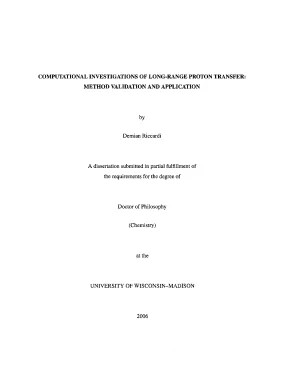
Tải xuống để đọc toàn bộCOMPUTATIONAL INVESTIGATIONS OF LONG-RANGE PROTON TRANSFER: METHOD VALIDATION AND APPLICATION by Demian Riccardi A dissertation submitted in partial fulfillment of the requirements for the degree of Doctor of Philosophy (Chemistry) at the UNIVERSITY OF WISCONSIN-MADISON 2006 UMI Number: 3245613 INFORMATION TO USERS The quality of this reproduction is dependent upon the quality of the copy submitted. Broken or indistinct print, colored or poor quality illustrations and photographs, print bleed-through, substandard margins, and improper alignment can adversely affect reproduction. In the unlikely event that the author did not send a complete manuscript and there are missing pages, these will be noted. Also, if unauthorized copyright material had to be removed, a note will indicate the deletion.
® UMI UMI Microform 3245613 Copyright 2007 by ProQuest Information and Learning Company. All rights reserved. This microform edition is protected against unauthorized copying under Title 17, United States Code. ProQuest Information and Learning Company 300 North Zeeb Road P.
Box 1346 Ann Arbor, Ml 48106-1346 A dissertation entitled COMPUTATIONAL INVESTIGATIONS OF LONG-RANGE PROTON TRANSFER: METHOD VALIDATION AND APPLICATION submitted to the Graduate School of the University of Wisconsin-Madison in partial fulfillment of the requirements for the Degree of Doctor of Philosophy by DEMIAN RICCARDI Date of Final Oral Examination: November 16, 2006 Month & Year Degree to be awarded: December 2006 May August eke de kee kee dee ete eke de RR RRR RRR EKER RRR KERR ERE EKER KERR EERE RR RERERER Approval Signatures of Dissertation Committee —=_ ¬ <==— .“ [_—— — /⁄~ Keck Signature, Dean of Graduate School Metin Chinlbe Jer In memory of my grandfather, William Haskins (Branpa) “Pay attention to business!” il ABSTRACT Motivated by the goal of understanding the mechanism for long-range proton transfers in bio- logical systems, a combined quantum mechanical/molecular mechanical (QM/MM) methodology is validated and then applied to the investigation of the rate-limiting proton transfer in carbonic anhydrase II. The coupling between the QM and MM regions is investigated thoroughly and sys- tematically with gas phase and condensed phase studies. Several aspects of long-range proton transfer in carbonic anhydrase II are investigated. The structural dynamics of the protein and water molecules, for relevant protonation states of the proton donor and acceptor (zinc-bound water and His 64), is highlighted.
The free energy of deprotonation (pK,) for the zinc-bound water is com- puted; good agreement with experiment is attained for the wild type but not for the E106Q mutant. The downward shift of 9 pK, units for the mutant suggests a mechanistic change that has not been realized in previous studies. The validated method is then applied to simulate long-range proton transfers in solution and car- bonic anhydrase II. These investigations emphasize that the microscopic, mechanistic details of long-range proton transfer are most sensitive to the free energy of protonation or deprotonation for all groups involved in the transfer pathway.
This naturally leads to two mechanisms for a long-range proton transfer between two groups: the most common Grotthus and the less recog- nized “proton hole” mechanisms. The latter involves the protonation of the acceptor prior to the deprotonation of the donor, thereby creating a “proton hole” in the mediating pathway. Overall, fair agreement with experiment is attained, and the “proton hole” mechanism is supported as the dominant path in carbonic anhydrase II and is found to be independent of the distance between the zinc-bound water and the His 64. iil Published Work and Work in Preparation [1] D.
Cui, “Importance of van der waals interactions in QM/MM simula- tions. Cui, “Reliable treatment of electrostatics in combined QM/MM simulation of macromolecules,” J. Cui, “pK, calculations in solution and proteins with qm/mm free energy perturbation simulations,” J. Cui, “Development of effective quantum mechanical/molecular mechanical (QM/MM) methods for complex biological processes (feature article),” J.
Cui, “proton holes” in long-range proton transfer reactions in solution and enzymes: a theoretical analysis,” J. Cui, “Insights for carbonic anhydrase Il from pk, computations for the zinc bound water” (In preparation). Cui, “Characterizing the molecular details of the rate limiting long-range transfer in carbonic anhydrase II” (In preparation). IV TABLE OF CONTENTS Page ABSTRACT.OQ ee es ii Published Work and Work in Preparation.00 ee eae 1H LIST OE TABLES.OQne Vili LIST OF FIGURES.
eee X 1 General Introducfion. CO Q Q LG Q Quy v2 I 1.1 Long range proton tranSffr. ee te te ee 1 1. ee ee ee 2 2 van der Waals Interactions in QM/MM Simulations .1 QM/MM Energy Evaluation .2 Optimization of van der Waals Parameters.1 Gas Phase Comparisons.
eee eee ee 17 2. ee 33 3 ElectrostatcsinQM/MMSimulaions. Q Q Q Q Q cv vn vn gà g v v v Và ko 36 3. Q Q Q Q Q nu nu gà kg v k V k Q ki kà 38 3.1 Ewaldsum with SCC-DFTBMM.
Generalized Solvent Boundary Potential(GSBP). HQ HQ ee ee 48 3.Ặ Q Q Q Quà 54 pK, Calculations in Solution and Proteins with QM/MM Free Energy Perturbation Simulations: A Quantitative Test of QM/MM Protocols .1 The Dual Topology Single Coordinate (DTSC) Approach to pK, Calcula- tiONS.2 Gas Phase and QM/MM Coupling Correcions.4 Simulation Set-up 2. ee eee 65 425 T4-Lysozyme. Results and Discussion.1 Small Moleculesin solution.
ee ee 100 QM/MM Simulations of Human Carbonic AnhydraselII. c c Q Q c Q ng vn ng vn v k à v kg v k kg ấ 103 5. c Q HQ HQ ng ng v V KV IV 107 5.2 Periodic Boundary Condilons. Q Q Q Q HQ Và ky kia 114 5.1 Root Mean Square Deviations for backbone atoms .3 Behavior of water in the active site.4 Weakness of GSBP: dynamic properties of the system.
2, eeee ee 129 Insights for CAII from pk, computations for the zinc-bound water .0 02 ee eee eee 133 6.1 GSBP setup for 20 and 25 Ẳ innerregions.2 pK, calculations with FEP and charge perturbations .3 Results and Discussion .2 Contrasting errors within free energy derivatives and between free energies determined from independent simulalons.4 Dissecting the pK, in terms of water and protein electrostatic contributions 141 6. eee ee et ee es 147 7 ‘Proton holes” in long-range proton transfer reactions in solution and enzymes: A theoretical analysis.2 Systems and Simulaton Methods.3 QM/MM parttioningandswichng.4 Potential of mean force (PMF) calculations and analysis .5 Electrostatic potential calculations for relevant protonation states.3 Results and Discusslons.Ặ Q Q Q Q HQ Q HQ va 157 7. es 168 8 Characterizing the molecular details of the rate limiting long-range transfer in Carbonic Anhydrase ll. ee ee ee 170 8.2 Methods: “TS-reorganized” simulations and energetic decomposition .1 “TS-reorganized” simulations .2 Harvesting water wires and determining the MEP.
Electrostatic Perturbation analysis of the PMF.3 Results and Discussion .1 Ensemble of mimnimum energy paths.2 Potential of mean force for the long-range proton transferinCAII. eee ee 191 9 Conclusions. aalaaa CD 193 vũ Page LIST OF REFERENCES. ee es 196 APPENDICES Appendix A: Analysis of error inherent in the simulation protocols.
216 Appendix B: Gas phase benchmarks forSCC-DFTB. 227 Vill LIST OF TABLES Table Page 2.1 Summary of interaction energies and bond lengths: optimization set.2 Summary of interaction energles and bond lengths: test set.3 LJ parameter sets for SCC-DFTB atoms in SCC-DFTB/MM calculatons.4 RMS errors for interaction energy and hydrogen bond length.5 Gas and condensed phase comparisons for the reductionof FAD .6 Gas and condensed phase barriers for the intramolecular proton transfer in enediolate .1 Gas phase proton affinities (in kcal/mol) calculated at the SCC-DFTB, B3LYP, and CCSD levels.2 The AG" (in kcal/mol) component (Figure 4.1) for the five small molecules studied.3 Various bulk solvation contributions (in kcal/mol) to the deprotonation free energy considered for the small molecules insolution.4 The effect of the van der Waals parameters for the acidic proton on AG” and AG@2”) for acetic acid and imidazole (n kcal/mol).5 Bonded, Zero-Point-Energy (ZPE) contributions to the free energy of deprotonation and the QM/MM free energy correction as well as the QM proton affinity correction (mkcal/mol).6 The pK, shifts (in pK, units), relative to the COOH group in glycine, and the RMS difference from experimental values for the five small molecules studied.7 The pk, for His 31 and Lys 102 in the M102K mutant of the T4-Lysozyme.1 Root mean square deviations (RMSD) of backbone atoms and a summary of the “IN” and “OUT” sampling for H64. 2c eee ee es 118 1X Table Page 5.2 Percentages of water brldge tyDp€S. Q Q Q LH HQ nu n k và kg 124 5.
pK,s calculated for H64 and the Zinc-bound water with the Linear Response Approx- imation relative to 4 methyl imidazole In soluion.1 Example of statistical analysis used to determine the free energy derivatives for the deprotonation of the zinc-bound water in the E106Q mutant of CAII with a 20 A GSBP inner region .2 Free energy of deprotonation presented for each independent run of the FEP pK, 22110010519S205 ee ee 139 6.3 pK,s of the zinc-bound water in the wild type and E106Q mutantof CAI.1 Statistics for the barrier and reaction energy (in kcal/mol) associated with minimum energy paths based on different samplings of carbonic anhydrase.2 Statistics for the contribution from protein and water to the barrier and reaction energy (in kcal/mol) associated with minimum energy paths involving two bridging water molecules in carbonic anhydrase. Contribution from protein and water to the barrier and reaction energy (in kcal/mol) associated with the potential of mean force for the proton transfer from the zinc-bound waterinCAID. Q Q Q HQ HH vn k v kg kg V KV kg 190 Appendix Table A.1_ Errors in proton affinities for SCC-DFTB relative to G3B3 calculations .2 Error analysis for the proton exchange reactions between a solute and water.! Proton affinities for models of proton donor and acceptor groupsinCAII .2 Energetics for proton transfer in a gas phase active site model forCAII. 231 LIST OF FIGURES Figure Page 2.1 Training set molecules for optimization of SCC-DFTB/MM LJ parameters .2 Additional molecules not included In the traningset.3 Schematic of FADreduction.
eeee ee ee 14 2.4 Schematic of enediolate inramolecular proton transffr.5 Comparison of interaction energies between various SCC-DFTB/MM LJ parameter schemes and BBLYP. Q Q Q Q HH HH ko 19 2.6 _ Radial distribution functions of TIP3P waters about the model RAD molecule.7 _ Radial distribution functions of TIP3P water about an enediolate.8 Examples of the free energy derivative convergence and integration for the reduction Of FAD. Q Q Q Q Q Q Q Q Quy kg ng kh v k k k k kg 27 2.9 Typical thermodynamic cycle for determining the free energy required to convert A to Binthe condensed phase.10 Plot of the temperature dependence of the free energy used to determine entropic and enthalpic contributions to the reductionof FAD.11 The potential of Mean Force for the Intramolecular Proton Transfer in an Enediolate .1 Schematic representation of the GSBP partition of a solvated biomolecule in the QM/MM framework. Q Q Q Q nu gà và kia 42 3.2 Convergence of the GSBP results versus the size of the basis set for a solvated imidazole.
Flow chart representation of a GSBP set-up for a biological molecule .1 Thermodynamtc cycle forDTSC pK„calculalons .- 59 XI Figure Page 4.2 _ The five small molecules studied here for p#<„ values in solulon.3 GSBP setups forT4Lysozyme. 2002 eee eee ee 70 4.4 Representative linear fits and convergence of the free energy derivatives for solution CASES HH.5 Effect of van der Waals parameters on the computed pK, of imidazole and acetic acid 80 4.6 Schematic plot of the RMSD for pK, shifts relative to experiment as different proto- colsareused 2.7 The structure of water and stability of the protein in the pK, calculations for His 31 in the M102K mutant of T4 Lysozyme. 2 ee ee ee 89 4.8 The average structure for the H31 protonated simulation of the M102K mutant of T4 Lysozyme overlayed with the crystal structure. ee ee ee 90 4.
Nội dung được bảo vệ bản quyền — Tải xuống đầy đủ
Trích dẫn luận án này
Demian Riccardi (2006). Luận án tiến sĩ: Computational investigations of long-range proton transfer: Method validation and application [Luận án tiến sĩ, University of Wisconsin-Madison]. LuanAn.net. https://luanan.net/khoa-hoc-giao-duc/luan-an-tien-si-computational-investigations-of-long-range-proton-transfer-method-validation-and-application
Từ khóa và chủ đề nghiên cứu
Từ khóa liên quan
Xem thêm luận án cùng lĩnh vực
Chủ đề nghiên cứu
Câu hỏi thường gặp
Luận án "Luận án tiến sĩ: Computational investigations of long-range proton transfer: Method validation and application" nghiên cứu về vấn đề gì?
Nghiên cứu tính toán sâu rộng về chuyển proton tầm xa. Luận án xác thực phương pháp mới và ứng dụng chúng trong các bài toán thực tiễn.
Luận án "Luận án tiến sĩ: Computational investigations of long-range proton transfer: Method validation and application" được bảo vệ tại trường nào?
Luận án này được bảo vệ tại University of Wisconsin-Madison. Năm bảo vệ: 2006.
Luận án "Luận án tiến sĩ: Computational investigations of long-range proton transfer: Method validation and application" thuộc chuyên ngành gì?
Luận án "Luận án tiến sĩ: Computational investigations of long-range proton transfer: Method validation and application" thuộc chuyên ngành Chemistry. Danh mục: Khoa Học Giáo Dục.
Luận án "Luận án tiến sĩ: Computational investigations of long-range proton transfer: Method validation and application" có bao nhiêu trang?
Luận án "Luận án tiến sĩ: Computational investigations of long-range proton transfer: Method validation and application" có 260 trang. Bạn có thể xem trước một phần tài liệu ngay trên trang web trước khi tải về.
Cách tải luận án "Luận án tiến sĩ: Computational investigations of long-range proton transfer: Method validation and application" về máy như thế nào?
Để tải luận án về máy, bạn nhấn nút "Tải xuống ngay" trên trang này, sau đó hoàn tất thanh toán phí lưu trữ. File sẽ được tải xuống ngay sau khi thanh toán thành công. Hỗ trợ qua Zalo: 0559 297 239.