Nghiên cứu về Liệu pháp Nghệ thuật tại Trường Tiểu học: Quan điểm của Trẻ em và Nhà trị liệu
Khám phá liệu pháp nghệ thuật cho trẻ tiểu học. Nghiên cứu lợi ích, ứng dụng và tác động tích cực đến sự phát triển toàn diện của học sinh.
Cardiff University
Educational Psychology
Luan An
Luận án tiến sĩ
Năm xuất bản
Số trang
332
Thời gian đọc
50 phút
Lượt xem
0
Lượt tải
0
Phí lưu trữ
60 Point
Tổng quan nhanh
- Chủ đề:
- Nghiên cứu liệu pháp nghệ thuật trường tiểu học
- Số trang:
- 332 trang
- Trường:
- Cardiff University
- Chuyên ngành:
- Educational Psychology
- Tác giả:
- Doreen Roslyn Robinson
- Năm:
- 2020
Tóm tắt nội dung luận án
I.Nghiên cứu liệu pháp nghệ thuật trường tiểu học
Nghiên cứu này khám phá liệu pháp nghệ thuật trong các trường tiểu học. Nó thu thập quan điểm từ trẻ em tám đến mười tuổi. Các chuyên gia trị liệu nghệ thuật cũng chia sẻ ý kiến. Nghiên cứu nhằm mục đích hiểu trải nghiệm của trẻ. Nó xác định các kỹ năng trẻ có được trong liệu pháp. Thúc đẩy sức khỏe tâm thần trẻ em là một trọng tâm ngày càng tăng. Nhiều trường hiện nay sử dụng trị liệu nghệ thuật. Các chuyên gia này hỗ trợ phúc lợi trẻ em. Nghiên cứu góp phần vào việc hiểu các can thiệp tại trường học. Nó nhấn mạnh tầm quan trọng của tiếng nói học sinh.
1.1. Mục tiêu và đối tượng nghiên cứu
Mục tiêu chính là thu thập quan điểm của học sinh tiểu học. Trẻ em từ tám đến mười tuổi là đối tượng tham gia. Nghiên cứu tìm hiểu suy nghĩ của trẻ về liệu pháp nghệ thuật. Nó cũng muốn biết các kỹ năng trẻ học được. Những kỹ năng này có được sử dụng sau liệu pháp không. Liệu pháp nghệ thuật trong trường học ngày càng được chú trọng.
1.2. Phương pháp thu thập dữ liệu
Dữ liệu được thu thập qua phỏng vấn bán cấu trúc. Mười trẻ em đã tham gia phỏng vấn. Phương pháp "vẽ, viết và kể" giúp trẻ ghi nhớ. Ba chuyên gia trị liệu nghệ thuật tham gia một nhóm tập trung. Quan điểm của họ bổ sung cho nghiên cứu. Phân tích chủ đề được sử dụng để xử lý dữ liệu. Đây là một nghiên cứu định tính liệu pháp nghệ thuật.
1.3. Tổng quan về liệu pháp nghệ thuật
Liệu pháp nghệ thuật là một can thiệp tâm lý. Nó sử dụng quá trình sáng tạo nghệ thuật. Mục đích là cải thiện sức khỏe thể chất, tinh thần và cảm xúc. Liệu pháp này giúp trẻ em thể hiện bản thân. Nó phát triển khả năng đối phó với khó khăn. Việc áp dụng liệu pháp nghệ thuật trường học hỗ trợ nhiều trẻ.
II.Lợi ích liệu pháp nghệ thuật cho học sinh tiểu học
Các phát hiện chính cho thấy trẻ em thích các buổi trị liệu. Chúng phát triển các kỹ năng quan trọng. Những kỹ năng này được sử dụng sau khi kết thúc liệu pháp. Điều này chứng tỏ hiệu quả liệu pháp nghệ thuật. Liệu pháp hỗ trợ phúc lợi học sinh tiểu học. Nó góp phần vào sức khỏe tâm thần trẻ em. Trẻ em có cơ hội thể hiện cảm xúc. Chúng học cách giải quyết vấn đề.
2.1. Trải nghiệm tích cực của trẻ em
Trẻ em rất thích thú với các buổi trị liệu nghệ thuật. Môi trường trị liệu mang lại cảm giác an toàn. Trẻ em cảm thấy được lắng nghe và thấu hiểu. Các hoạt động nghệ thuật tạo niềm vui. Đây là một lợi ích liệu pháp sáng tạo rõ ràng. Trải nghiệm tích cực này thúc đẩy sự tham gia.
2.2. Kỹ năng phát triển và ứng dụng
Trẻ em học được nhiều kỹ năng mới. Các kỹ năng này bao gồm giao tiếp phi ngôn ngữ. Khả năng thể hiện cảm xúc được cải thiện. Trẻ em học cách đối phó với căng thẳng. Kỹ năng giải quyết vấn đề cũng được nâng cao. Những kỹ năng này tiếp tục được sử dụng trong cuộc sống hàng ngày. Điều này thể hiện sự phát triển cảm xúc xã hội.
2.3. Tác động đến sức khỏe tâm thần trẻ em
Liệu pháp nghệ thuật có tác động tích cực. Nó cải thiện sức khỏe tâm thần trẻ em. Trẻ em giảm lo âu và căng thẳng. Sự tự tin và lòng tự trọng được tăng cường. Liệu pháp cung cấp một kênh an toàn. Trẻ em có thể xử lý các cảm xúc khó khăn. Điều này nâng cao phúc lợi học sinh tiểu học tổng thể.
III.Quan điểm chuyên gia về can thiệp nghệ thuật trường học
Các chuyên gia trị liệu nghệ thuật đánh giá cao công việc này. Họ coi môi trường trường học là nơi làm việc thú vị. Có nhiều ưu điểm khi làm việc tại trường. Điều này bao gồm cơ hội giao tiếp với nhân viên trường. Liên kết với phụ huynh cũng dễ dàng hơn. Tuy nhiên, có những hạn chế nhất định. Việc chia sẻ tài nguyên là một thách thức. Danh sách chờ dài của trẻ em cần liệu pháp cũng là một vấn đề.
3.1. Ưu điểm làm việc trong môi trường trường học
Chuyên gia trị liệu đánh giá cao sự tiện lợi. Trường học cung cấp môi trường quen thuộc cho trẻ. Giao tiếp với giáo viên và nhân viên hỗ trợ. Điều này giúp hiểu rõ hơn về nhu cầu của trẻ. Liên kết trực tiếp với phụ huynh cũng là một lợi thế. Nó tối ưu hóa việc áp dụng liệu pháp nghệ thuật trường học.
3.2. Hạn chế và thách thức triển khai liệu pháp
Có một số khó khăn trong triển khai. Việc chia sẻ tài nguyên nghệ thuật là một thách thức. Không gian dành riêng cho liệu pháp có thể hạn chế. Danh sách chờ dài cho liệu pháp nghệ thuật rất phổ biến. Điều này gây áp lực cho các chuyên gia. Cần giải pháp để hỗ trợ tất cả trẻ em.
3.3. Vai trò của trường học trong hỗ trợ tâm lý
Trường học đóng vai trò quan trọng. Chúng cung cấp các can thiệp sớm. Can thiệp nghệ thuật cho trẻ là một công cụ hiệu quả. Trường học tạo môi trường hỗ trợ cho sức khỏe tâm thần. Sự hợp tác giữa trị liệu viên và nhân viên trường là cần thiết. Điều này đảm bảo phúc lợi học sinh tiểu học toàn diện.
IV.Định hướng nghiên cứu và phát triển liệu pháp nghệ thuật
Kết quả nghiên cứu chỉ ra nhiều lĩnh vực cần khám phá thêm. Điều này có ý nghĩa quan trọng cho thực hành tâm lý giáo dục. Cần nghiên cứu thêm về các phương pháp đổi mới. Mục tiêu là hỗ trợ trẻ em đưa ra quyết định sáng suốt. Đây là quyền của trẻ em được nêu trong Công ước Liên Hợp Quốc về Quyền trẻ em (UNCRC). Việc giảm giờ học nghệ thuật trong chương trình cũng là một mối lo ngại. Nó ảnh hưởng đến sức khỏe tâm thần trẻ em và phúc lợi.
4.1. Nhu cầu khám phá thêm các cách tiếp cận
Nghiên cứu khuyến nghị tiếp tục khám phá. Cần tìm hiểu các phương pháp hỗ trợ mới. Các cách tiếp cận đổi mới là cần thiết. Chúng giúp trẻ em tham gia vào quá trình quyết định. Điều này tăng cường quyền tự chủ của trẻ. Đây là một phần quan trọng của nghiên cứu định tính liệu pháp nghệ thuật.
4.2. Tầm quan trọng của quyền trẻ em trong trị liệu
Công ước Liên Hợp Quốc về Quyền trẻ em rất quan trọng. Điều 13 quy định quyền được thể hiện ý kiến. Trẻ em có quyền tham gia vào các quyết định ảnh hưởng đến chúng. Các can thiệp liệu pháp phải tôn trọng điều này. Trị liệu nghệ thuật cần tạo cơ hội cho tiếng nói của trẻ.
4.3. Ảnh hưởng của việc giảm nghệ thuật trong chương trình
Việc giảm thời lượng học nghệ thuật gây lo ngại. Nó có thể ảnh hưởng tiêu cực đến trẻ em. Nghệ thuật là một kênh quan trọng để thể hiện cảm xúc. Nó hỗ trợ sự phát triển cảm xúc xã hội. Điều này liên quan đến Điều 31 của UNCRC. Cần xem xét tác động đến sức khỏe tâm thần trẻ em.
Mục lục chi tiết luận án
Tải xuống file đầy đủ để xem toàn bộ nội dung
Tải đầy đủ (332 trang)Trích đoạn nội dung luận án
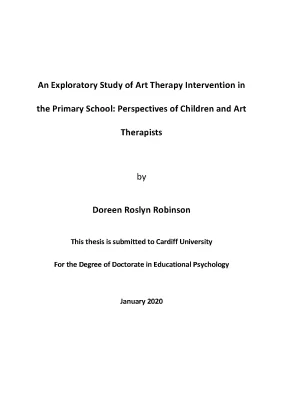
Tải xuống để đọc toàn bộAn Exploratory Study of Art Therapy Intervention in the Primary School: Perspectives of Children and Art Therapists by Doreen Roslyn Robinson This thesis is submitted to Cardiff University For the Degree of Doctorate in Educational Psychology January 2020 Dedication For my daughter and her optimistic nature, her encouragement and support has provided me with the sustenance needed to maintain effort and persevere, particularly at those times when I needed to remember that this was the next stage in my journey. Thank you for your listening ear. iii Acknowledgements Firstly I would like to express my thanks to the children and the art therapists who participated in this research, it was my pleasure meeting with you and getting to know you during this study. In addition thank you to the headteachers, staff and parents of the schools for their willingness to support this exploratory study.
I would also like to express my sincere thanks to Dale Bartle and Andrea Higgins who provided support and encouragement during the process of this research. Last but not least thank you to my partner for your patience throughout this study and accepting that when it is finally completed we will return to having a more fulfilling social life. iv Abstract An exploratory study was carried out to elicit the views of primary school children from the ages of eight to ten years. The aim of the study was to learn what the children thought about art therapy intervention in the school setting and to obtain their perspectives about any skills they learned and continue to use after attending art therapy.
Promoting children’s mental health has become increasingly in focus and many schools have employed art therapists to support children to help maintain their mental health wellbeing. The method used to gather the data for the research was semi-structured interviews with ten children. During the interview, the children used the “draw write and tell” approach to support their recall. Three art therapists participated in a focus group and provided another perspective about the children’s views.
Thematic analysis was employed to analyse the data from both the therapists and the children. Overall the findings of the study revealed that the children enjoyed therapy sessions and developed skills that they had utilised after they attended therapy. The therapists indicated that they valued working in the school environment because it was an enjoyable experience and there were advantages to working in the school setting such as the opportunity to communicate with school staff as well as link with parents. There were some constraints connected with art therapy sessions in the school setting which included sharing resources and waiting list of children that required art therapy intervention.
The outcome from the study indicated that there were areas that may benefit from further exploration which may have implications for EP practice. These include carrying out research into innovative approaches for supporting children to make informed decisions as specified in the United Nations Convention on the Rights of the Child (UNCRC), Article 13 (1989). In addition, the perceived reduction of art in the curriculum and its impact on children’s mental health and wellbeing which links to UNCRC Article 31. v List of Abbreviations AATA American Art Therapy Association AI Appreciative Inquiry BAAT British Association of Art Therapy BPS British Psychological Society CATA Canadian Art Therapy Association DfE Department for Education DECP Division of Educational and Child Psychology DOH Department of Health EP Educational Psychologist IPA Interpretive Phenomenological Analysis NHS National Health Service PHE Public Health England SENCo Special Needs Coordinator TA Thematic Analysis UK United Kingdom UKCCIS United Kingdom Council for Child Internet Safety UNCRC United Nations Convention on the Rights of the Child vi Contents Chapter 1 .2 An Outline of the study .3 Promoting Children’s Mental Health and Wellbeing in England .4 What is Mental Health? .5 Definitions of Wellbeing .6 Concern about Mental Health and Wellbeing .7 What is Resilience? .8 Risk Factors and Protective Factors .10 The role of the school in providing interventions .11 School-based interventions .13 A Sense of Belonging .14 School-based counselling .15 The Relevance of Children and Young people’s Mental Health and Wellbeing to .16 Outline of the Thesis .1 Introduction to Literature Review .3 Definitions of Art Therapy .4 A Brief History of Art Therapy.5 The Psychological Aspects of Art Therapy .6 Art Therapy with Children .7 Review of Studies about the Effectiveness of Art Therapy .8 Review of Studies that Include Art Therapy with Adults .9 Review of Studies that Include Art Therapy in the Treatment of Health-Related Conditions with Children .10 Review of Studies about Art Therapy in the Primary School Setting .11 Early Art Therapy Studies in the School .12 Art Therapy for Children with Learning and Social-Emotional needs .13 Art Therapy for Children with Social, Emotional and Mental Health Concern .14 Art Therapy Studies in the UK .16 Importance of Children’s Views .1 The Voice of the Child in Art Therapy .17 Art Therapists’ Perspectives about Art Therapy in Schools .18 EPs and the Voice of the Child .19 Reasons for Research with Primary School Children .19 Aims and Research Questions.20 Research Questions: Child Participants .21 Research Questions: Art Therapists .1 Introduction to the methodology .1 Ontology and Epistemology .2 Researcher’s Ontological and Epistemological Position .5 Limitations to Qualitative Research.6 Trustworthiness in Qualitative Research .1 Interpretative Phenomenological Analysis .2 Limitations to IPA .4 Limitations to Discourse Analysis .6 Limitations to using Thematic Analysis .3 Introduction to the Design .1 Recruitment of Child Participants .1 Assent from Child Participants .5 Inclusion and Exclusion Criteria.
Sample Size and Demographic. Semi-Structured Interviews .1 Limitations to Semi-structured Interviews .2 Interviews with Children.8 Using Visual Imagery to Support Interviews with Children .1 ‘Draw Write and Tell’ Technique. 2 Limitations to the ‘Draw Write and Tell’ Technique. Pilot Questions for the Semi-structured Interviews.10 The Drawing Session .12 Debriefing Child Participants .13 Safeguarding and Child Protection .14 Anonymous and Confidential Data .16 Recruitment of Art Therapists .17 Participants for Focus Group .18 Informed Consent: Art Therapists.19 Ethical considerations: Art Therapists .21 Focus Group interviews .22 Limitations to Focus Groups .24 Piloting the focus group questions .24 Focus Group with Art Therapists .26 Criticism of Appreciative Inquiry .27 Interview with Art Therapists .28 Focus Group Debrief Information .29 Analysis of Data .1 Inductive Versus Deductive Thematic Analysis .2 Familiarisation with and identifying interesting features of the data .3 Generating Preliminary Codes .4 Searching for Themes .6 Defining and Naming Themes .7 Producing the Report .1 Introduction to the Findings .2 Details of Data Presentation .2 Overarching Theme: Supportive in the School Environment .1 Main Theme: Appreciative of time and safe space .1 Subordinate theme: Convenient .2 Subordinate Theme: Impact on learning .3 Subordinate Theme: Insufficient Time .2 Main Theme: Feelings of Wellbeing.
Subordinate Theme: Positive Emotions .2 Subordinate Theme: Place for Reflection .3 Subordinate Theme: Release Negative Thoughts .3 Main theme: Feelings of Competence .1 Subordinate Theme: Improved Competence in Drawing .2 Subordinate theme: Understand and regulate emotions .3 Subordinate Theme: Self-Efficacy. Main Theme: Information about Art Therapy .1 Subordinate: Child Assent Inconsistent .2 Subordinate Theme: Parental Involvement .3 Subordinate theme: Therapist’s Involvement .4 Overarching theme: School Environment .1 Main theme: Impact of Art Therapy .1 Subordinate Theme: Safe Space .2 Subordinate theme: Wellbeing .3 Subordinate Theme: Developed skills.4 Subordinate Theme: Impact Delayed. Main Theme: Advantages .1 Subordinate Theme: Link between child and adults .2 Subordinate Theme: Work not complicated. Subordinate Theme: Resources .2 Children’s Perception of Art in Art Therapy .3 Subordinate Theme: Wait List .4 Subordinate Theme: Impact on learning .4 Main theme: Communication .1 Subordinate Theme: Referral .2 Subordinate Theme: Consent and Information.
125 Discussion of Findings.1 Introduction to Discussion .1 Supportive in the school environment .3 Work not complex .5 Appreciative of Time and Safe Space .8 Impact on Learning .10 Feelings of Wellbeing .12 Place for Reflection .13 Release Negative Thoughts .14 Feelings of Competence -Developed Skills.16 Improved Drawing Skills .18 Communication Information and Consent .22 Art Therapist involvement –link between child and adults .23 Children’s Perceptions about Art Therapy .1 Introduction to Conclusion .1 What do children see as the benefits of art therapy as an intervention in the primary school setting? .2 What skills do children feel they acquire having participated in art therapy? .3 Do children feel that they have sustained the skills acquired, following completion of art therapy?.4 How were children included in making the decision to participate in art therapy? .5 What are the advantages and limitations to children having art therapy in the school setting?.6 What are the skills that therapists hope that children will develop after participating in art therapy? .7 What information do therapists think that children receive before meeting the therapist and are children included in the decision to meet with a therapist? .8 What are art therapists’ views of the themes that emerged from the analysis of the children’s data? .1 Reflections on the research design and limitations .2 Recruitment of child participants .3 Recruitment of art therapists .4 Semi structured interviews limitations .5 Focus group size .6 Sample size of study .7 Analysis of data .4 Implications for education .5 Implications for educational psychologists .6 My Learning Journey .1 Implication for EP practice. 198 Braun and Clarke’s 15 point check list. 199 Examples of Draw Write and Tell prompts. 201 Prompts for Drawing Session and Semi-structured Interviews.
206 Thesis proposal submitted to Ethics with approved documents. 236 Focus group interview schedule. 240 Debrief Form: Focus Group. 241 Focus Group with Art Therapists: Flip Chart notes sheet 1.
244 Interviews with Children: Original transcript. 269 Focus Group Interview with Art Therapists: Original transcripts. 291 Examples of Codes with Data Extracts Child Participant. 295 Examples of Organising Codes with Post It Notes: Child Participants.
297 Initial Annotated Notes; Focus Group. 306 Example of Additional Codes with Extracts from Focus Group: Themes from children. 308 Exploring themes with data extracts: Child participants. 317 Thematic Map Child Participants.
318 Thematic Map Focus Group. 318 xiv List of Tables and Figures Page Table 1 Author’s interpretation of Maslow’s Hierarchy of Needs 18 Table 2 Inclusion criteria for literature search 23 Table 3 Child Participants with Gender Year Group and School 72 Table 4 Child Participants: Main Theme and Subordinate Theme1 96 Table 5 Child Participants: Main Theme and Subordinate Theme2 100 Table 6 Child Participants: Main Theme and Subordinate Theme 3 103 Table 7 Child Participants: Main Theme and Subordinate Theme 4 107 Table 8 Focus Group: Main Theme and Subordinate Theme1 111 Table 9 Focus Group: Main Theme and Subordinated Theme 2 115 Table 10 Focus Group: Main Theme and Subordinated Theme 3 117 Table 11 Focus Group: Main Theme and Subordinate Theme 4 123 List of Figures Figure 1 Flow Diagram of Literature Search 197 Figure 2 Final Thematic Map: Child Participants 317 Figure 3 Final Thematic Map: Focus Group 318 xv Chapter 1 Introduction Background The decision to carry out this study stems from having studied Art and Education before becoming an educational psychologist. I have been particularly interested in how art can be used to support children who have experienced trauma. In my role as an educational psychologist, it had come to my attention that many schools that were visited employed art therapists to support children that experienced a range of emotional difficulties.
This further generated my interest in the area of creative therapy interventions with children, particularly young children such as those in the primary school setting. In October 2004, I attended the conference ‘Crafting the Future’, in which creative therapists, including art therapists shared how they worked with children and adults. This allowed me to increase my knowledge about the work of creative therapists, particularly how they worked with children. The therapists who attended the conference called for research into the effectiveness of creative therapy interventions.
Nội dung được bảo vệ bản quyền — Tải xuống đầy đủ
Trích dẫn luận án này
Doreen Roslyn Robinson (2020). Nghiên cứu Liệu pháp Nghệ thuật tại Trường Tiểu học [Luận án tiến sĩ, Cardiff University]. LuanAn.net. https://luanan.net/giao-duc-hoc/tam-ly-hoc-giao-duc/nghien-cuu-lieu-phap-nghe-thuat-truong-tieu-hoc
Câu hỏi thường gặp
Luận án "Nghiên cứu Liệu pháp Nghệ thuật tại Trường Tiểu học" nghiên cứu về vấn đề gì?
Khám phá liệu pháp nghệ thuật cho trẻ tiểu học. Nghiên cứu lợi ích, ứng dụng và tác động tích cực đến sự phát triển toàn diện của học sinh.
Luận án "Nghiên cứu Liệu pháp Nghệ thuật tại Trường Tiểu học" được bảo vệ tại trường nào?
Luận án này được bảo vệ tại Cardiff University. Năm bảo vệ: 2020.
Luận án "Nghiên cứu Liệu pháp Nghệ thuật tại Trường Tiểu học" thuộc chuyên ngành gì?
Luận án "Nghiên cứu Liệu pháp Nghệ thuật tại Trường Tiểu học" thuộc chuyên ngành Educational Psychology. Danh mục: Tâm Lý Học Giáo Dục.
Luận án "Nghiên cứu Liệu pháp Nghệ thuật tại Trường Tiểu học" có bao nhiêu trang?
Luận án "Nghiên cứu Liệu pháp Nghệ thuật tại Trường Tiểu học" có 332 trang. Bạn có thể xem trước một phần tài liệu ngay trên trang web trước khi tải về.
Cách tải luận án "Nghiên cứu Liệu pháp Nghệ thuật tại Trường Tiểu học" về máy như thế nào?
Để tải luận án về máy, bạn nhấn nút "Tải xuống ngay" trên trang này, sau đó hoàn tất thanh toán phí lưu trữ. File sẽ được tải xuống ngay sau khi thanh toán thành công. Hỗ trợ qua Zalo: 0559 297 239.