Dissertation fall 2018
Luận án thạc sĩ, mùa thu 2018. Nghiên cứu chuyên sâu, thành quả học thuật.
Luan An
Luận án tiến sĩ
Năm xuất bản
Số trang
186
Thời gian đọc
28 phút
Lượt xem
0
Lượt tải
0
Phí lưu trữ
50 Point
Tổng quan nhanh
- Chủ đề:
- Chuyển đổi Đồng Giáo Dục: Vai trò Thể thao Đại học
- Số trang:
- 186 trang
- Trường:
- The Pennsylvania State University
- Chuyên ngành:
- Higher Education
- Tác giả:
- Danielle Barney
- Năm:
- 2019
Tóm tắt nội dung luận án
I.Chuyển đổi Đồng Giáo Dục Vai trò Thể thao Đại học
Lịch sử chương trình thể thao liên trường tại Elmira College và Vassar College giai đoạn 1960-1970 được nghiên cứu. Đây là thời kỳ các trường cao đẳng nữ lịch sử này chuyển sang đồng giáo dục. Thái độ, niềm tin về thể thao đại học không hoàn toàn đồng nhất. Bối cảnh thể thao đại học quốc gia khác biệt đáng kể cho nam và nữ. Thế giới thể thao đại học nữ đặc biệt trải qua nhiều biến đổi. Các trường tự quyết định hình thức đại diện thể thao của mình. Điều này độc đáo vì không có truyền thống thể thao nam trước đây. Luận án này là một phần của nghiên cứu sau đại học năm 2018. Nó đáp ứng các yêu cầu của luận án tiến sĩ.
1.1. Lịch sử Thể thao Liên trường 1960s 1970s
Nghiên cứu tập trung vào hai trường cao đẳng nữ lịch sử: Elmira College và Vassar College. Giai đoạn 1960-1970 là trọng tâm. Cả hai trường đều chuyển đổi sang mô hình đồng giáo dục. Sự chuyển đổi này đặt ra những thách thức mới. Nó cũng mở ra cơ hội cho chương trình thể thao. Bối cảnh lịch sử thể thao liên trường quốc gia cho nam và nữ rất khác biệt vào thời điểm đó. Điều này ảnh hưởng đến quyết định của từng trường.
1.2. Khái niệm khác biệt về Thể thao Nữ
Thế giới thể thao đại học dành cho phụ nữ trải qua những thay đổi lớn. Điều này xảy ra chính trong giai đoạn này. Các chương trình thể thao nữ chứng kiến sự biến đổi đáng kể. Quan niệm về vai trò, cấu trúc thể thao nữ không đồng nhất. Các trường phải đối mặt với lựa chọn. Họ quyết định cách tích hợp thể thao vào bản sắc mới của mình.
1.3. Quyết định của các trường Cao đẳng
Các trường cao đẳng có lựa chọn độc đáo. Họ tự định hình đại diện thể thao của mình. Không có truyền thống cung cấp cơ hội thể thao cho nam giới trước đây. Việc này khiến sự lựa chọn trở nên tiên phong. Vassar và Elmira thể hiện cách diễn giải riêng. Vai trò thể thao trong bản sắc chuyển đổi của họ rất độc đáo.
II.Động lực Thể thao tại Elmira College trong Coeducation
Tại Elmira vào năm 1969, thể thao liên trường nam là thành phần quan trọng. Nó có chủ đích trong quá trình đồng giáo dục. Tài liệu lưu trữ và xuất bản của trường chứng minh điều này. Thể thao là tâm điểm của đời sống sinh viên. Nó được coi là biểu tượng của uy tín trường. Thể thao liên trường phát triển khẩn trương. Ban đầu chủ yếu dành cho nam. Sau đó mới bao gồm cả hai giới. Chương trình thể thao dường như là một nghi thức nhập môn. Nó dành cho giáo dục nam giới. Trường đã tách biệt phần lớn chương trình nam và nữ. Điều này củng cố các định kiến giới. Nó cũng tăng cường sự khác biệt về địa vị. Điều này xảy ra ngay từ đầu quá trình đồng giáo dục. Luận án này là một tài liệu nghiên cứu tốt nghiệp. Nó được đệ trình vào mùa thu năm 2018.
2.1. Thể thao nam là trọng tâm coeducation
Elmira College xem thể thao nam là một phần thiết yếu. Đây là yếu tố then chốt cho sự chuyển đổi đồng giáo dục. Sự kiện thể thao liên trường được coi là điểm nhấn. Nó được tổ chức sôi nổi trong đời sống sinh viên. Thể thao cũng là minh chứng cho uy tín của trường. Các ấn phẩm, tài liệu lưu trữ làm rõ quan điểm này.
2.2. Tăng cường định kiến giới qua thể thao
Elmira ban đầu tách biệt chương trình thể thao nam và nữ. Việc này diễn ra phần lớn về mặt hành chính. Điều này vô tình củng cố các định chuẩn giới. Nó tạo ra sự khác biệt về địa vị. Nam giới và nữ giới có vị thế khác nhau. Việc phân tách này diễn ra ngay từ khi bắt đầu đồng giáo dục.
2.3. Thể thao như một nghi thức nhập môn
Sự phát triển của chương trình thể thao diễn ra cấp bách. Nó dường như là một nghi thức bắt buộc. Đây là nghi thức để nhập môn vào hệ thống giáo dục nam. Thể thao ban đầu chủ yếu phục vụ nam giới. Sau đó mới mở rộng cho cả hai giới. Cách tiếp cận này định hình rõ ràng vai trò của thể thao.
III.Vassar College Định hình Thể thao và Bình đẳng Giới
Tại Vassar, thể thao nam là chủ đề thảo luận phổ biến. Điều này diễn ra khi đồng giáo dục tiến triển. Tuy nhiên, một chương trình thể thao quy mô lớn không phải ưu tiên. Trường không muốn thể hiện bản thân theo cách đó. Trường giữ thể thao trong Khoa Giáo dục Thể chất. Việc này củng cố quá trình xã hội hóa sinh viên. Nó ưu tiên một cấu trúc không thiên vị giới tính nào. Nó cũng không ưu tiên bất kỳ khái niệm thể thao cụ thể nào. Chương trình liên trường phát triển chậm chạp. Nó không tránh khỏi những chỉ trích. Trường vẫn kiên quyết với tính độc đáo của mình. Đồng thời, nỗi sợ 'tinh thần jock' tồn tại. Nỗi sợ liên kết với đồng tính luyến ái cũng phổ biến. Những điều này làm suy yếu nỗ lực thiết lập thể thao liên trường. Điều này chỉ phản ánh các nguyên mẫu giới tính phổ biến. Luận án này bao gồm một tóm tắt luận án chi tiết.
3.1. Thảo luận về thể thao không ưu tiên quy mô lớn
Vassar College thảo luận nhiều về thể thao nam. Nhưng trường không chọn xây dựng chương trình thể thao quy mô lớn. Họ không muốn thể hiện bản thân qua "thể thao lớn". Đây là một phần trong bản sắc chuyển đổi của trường. Các ấn phẩm sinh viên và tài liệu lưu trữ chứng minh điều này.
3.2. Giữ thể thao trong Khoa Giáo dục Thể chất
Thể thao được giữ trong Khoa Giáo dục Thể chất. Điều này củng cố một cấu trúc xã hội hóa. Cấu trúc này không thiên vị giới tính nào. Nó cũng không ưu tiên bất kỳ quan điểm thể thao cụ thể nào. Việc này phản ánh nỗ lực duy trì bình đẳng. Tuy nhiên, nó cũng đối mặt với những thách thức.
3.3. Thể hiện tính cách lịch sử duy trì bình đẳng
Phù hợp với đặc tính lịch sử của Vassar, việc đối xử nam nữ bình đẳng hơn. Có ý định duy trì sự bình đẳng. Tuy nhiên, việc chọn lọc tuyển sinh lại giảm sút. Điều này xảy ra sau đồng giáo dục. Ngay cả khi ít nhấn mạnh vào thể thao. Sự phát triển thể thao tại Vassar thể hiện khả năng của cấu trúc thể thao. Nó có thể phản ánh, thúc đẩy sứ mệnh của trường.
IV.Nghiên cứu Luận án Ảnh hưởng Giới tính và Thể thao
Lịch sử thể chế tại Vassar và Elmira bổ sung vào kiến thức. Nó làm tăng hiểu biết về sự đa dạng của thay đổi thể chế. Nó chứng minh tiềm năng sử dụng thể thao trong quá trình thay đổi. Nghiên cứu cung cấp nền tảng cho phân tích. Nó xem xét ảnh hưởng của địa vị, uy tín đến thay đổi toàn trường. Cụ thể hơn, nó ảnh hưởng đến sự phát triển của thể thao liên trường. Những lịch sử này phân lập các mô hình thay đổi giới tính. Những mô hình này có thể bị ảnh hưởng hoặc định hình sâu sắc bởi thể thao liên trường. Luận án tiến sĩ này là một công trình nghiên cứu sau đại học quan trọng. Nó đóng góp vào lĩnh vực giáo dục đại học.
4.1. Phân tích sự thay đổi thể chế đa dạng
Nghiên cứu của luận án cung cấp cái nhìn sâu sắc. Nó về sự đa dạng của các thay đổi thể chế. Các trường cao đẳng có những con đường chuyển đổi riêng. Thể thao đóng vai trò khác nhau trong mỗi trường. Điều này cho thấy không có một mô hình chung.
4.2. Khai thác tiện ích của thể thao trong biến đổi
Luận án chứng minh tiện ích của thể thao. Thể thao có thể là công cụ hữu ích trong thay đổi thể chế. Nó giúp định hình bản sắc, củng cố giá trị. Thể thao cũng có thể phản ánh văn hóa, hướng đi của trường.
4.3. Xác định các mô hình thay đổi giới tính
Các lịch sử trường hợp này làm rõ các mô hình thay đổi giới tính. Thể thao liên trường có thể ảnh hưởng sâu sắc đến những mô hình này. Ngược lại, những mô hình này cũng có thể định hình thể thao. Sự tương tác này rất phức tạp và đa chiều. Luận án này góp phần vào các hướng dẫn viết học thuật.
V.Hiểu biết Mới về Chuyển đổi và Thể thao Đại học
Tóm lại, nghiên cứu này đóng góp vào lý thuyết. Nó làm rõ cách thể thao phản ánh, thúc đẩy sứ mệnh của trường. Điều này xảy ra ngay cả khi bản sắc trường đang được tái định hình. Tại Elmira, sự phát triển thể thao sớm gợi nhớ ảnh hưởng văn hóa của thể thao. Sự khác biệt giữa hai trường rất rõ ràng. Nghiên cứu này mở rộng hiểu biết về vai trò của thể thao. Nó là một yếu tố quan trọng trong quá trình chuyển đổi thể chế.
5.1. Bối cảnh lịch sử và bối cảnh quốc gia
Tóm tắt luận án này xem xét bối cảnh lịch sử rộng lớn. Các chương trình thể thao nữ trải qua những chuyển đổi đáng kể. Bối cảnh quốc gia về thể thao nam và nữ cũng khác nhau. Điều này tạo ra một bức tranh phức tạp.
5.2. Luận án tiến sĩ này và nghiên cứu năm 2018
Luận án này là một công trình nghiên cứu tiến sĩ. Nó được hoàn thành vào mùa thu 2018. Nó tuân thủ các yêu cầu luận án tiến sĩ. Đây là một đóng góp quan trọng cho lĩnh vực giáo dục đại học. Nó là một ví dụ về nghiên cứu sau đại học năm 2018.
5.3. Yêu cầu luận án tiến sĩ và tóm tắt
Công trình này đáp ứng các yêu cầu cao. Đó là yêu cầu của trường đại học cho một luận án tiến sĩ. Nó bao gồm một tóm tắt luận án kỹ lưỡng. Tóm tắt này trình bày các phát hiện chính. Nó nêu bật ý nghĩa của nghiên cứu.
Tải xuống file đầy đủ để xem toàn bộ nội dung
Tải đầy đủ (186 trang)Trích đoạn nội dung luận án
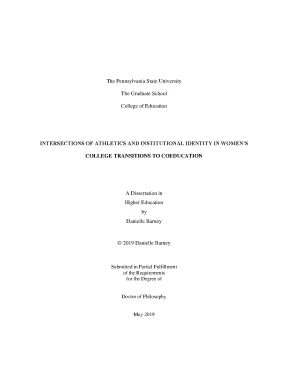
Tải xuống để đọc toàn bộThe Pennsylvania State University The Graduate School College of Education INTERSECTIONS OF ATHLETICS AND INSTITUTIONAL IDENTITY IN WOMEN’S COLLEGE TRANSITIONS TO COEDUCATION A Dissertation in Higher Education by Danielle Barney © 2019 Danielle Barney Submitted in Partial Fulfillment of the Requirements for the Degree of Doctor of Philosophy May 2019 ii The dissertation of Danielle Barney was reviewed and approved* by the following: Roger L. Geiger Distinguished Professor of Education Dissertation Advisor Professor-in-Charge of Higher Education Program Mark Dyreson Professor of Kinesiology Jaime Schultz Associate Professor of Kinesiology and Women’s Studies John J. Cheslock Associate Professor of Education *Signatures are on file in the Graduate School. iii ABSTRACT The history of the intercollegiate athletics programs at Elmira College and Vassar College in the time frame of the 1960s and 1970s, when both historical women’s colleges went coeducational, illustrates that attitudes and beliefs about collegiate sports in formerly single-sex women’s colleges were not entirely homogeneous.
In the 1960s and 1970s, the national structure of and assumptions about college athletics in the United States for men and women were remarkably different. The women’s collegiate sports world particularly experienced significant transformations of its own during the time frame. This overarching history, played out on an institutional level that had no past tradition of providing such athletics opportunities for males, placed the unique choice of athletics representation into the hands of the colleges themselves. Not only were the Vassar and Elmira coeducation transitions unique, but their interpretation of the role of athletics within that transitional identity was pioneering.
College archival and other publications demonstrate that at Elmira in 1969, men’s intercollegiate athletics was a purposeful and important component to its coeducation. The spectacle of intercollegiate athletics was to be a celebrated focus of student life and an example of the college’s prestige. Intercollegiate athletics, first mainly for men and more inclusively for both genders only later, developed with an urgency that made such sport programs appear as a rite of entrance into male education. By initially administratively separating the greater part of the men’s and women’s programs, Elmira supported stereotypical gender norms with an athletics nexus and therefore reinforced a status level differential between its men and its women from the start of coeducation.
For Vassar, student and university publications and archives materials show that athletics for men was a common discussion topic as coeducation progressed, yet a large-scale athletics program was not how the college wanted itself represented. By keeping intercollegiate athletics housed within the Physical Education Department, the college reinforced the process of socializing students into a structure which favored neither gender nor any particular concept of athletics. Development of the intercollegiate program occurred slowly, though not without criticism, throughout the 1970s. While the college insisted on its uniqueness, simultaneous fears of the “jock” mentality and of association with homosexuality riddled efforts to establish any type of intercollegiate sport, and only reflected prevailing gendered archetypes.
True to Vassar’s historical character, despite the fall back to norms, the treatment of men and women was more equivalent and harbored intentions of maintaining equality. Ironically, admissions selectivity, one of the main reasons the college rejected a big-time athletics program, actually suffered in the years following coeducation even with minimal emphasis on athletics. The progress of intercollegiate athletics at Vassar manifested the ability of sport program structure to reflect and promote the institutional mission, even if institutional identity was still being reformulated. At Elmira, in contrast, the early developments of sport during coeducation served as a reminder of the cultural influence of athletics.
The significance of such institutional histories as those of Vassar and Elmira add to the body of knowledge about the diversity of institutional change, demonstrate the potential utility of sport during such change, and contribute a foundation for analysis of the influence of status and prestige on institutional-wide change and more specifically on the development of intercollegiate athletics. Finally, such histories isolate gendered patterns of change which can be influenced by or profoundly shape intercollegiate athletics. iv TABLE OF CONTENTS List of Tables. vi Chapter One.
1 Introduction of Inquiry. 5 Significance of Study. 6 Overview of Chapters. 10 Liberal Arts Colleges in the 1960s and 1970s.
12 Sports and Higher Education. 19 Women in Higher Education in 1960s and 1970s. 20 Coeducation Trend at Men’s Colleges. 23 Impact of Coeducation on Women’s Colleges.
26 The Gendered Dimension of Coeducation. 30 Elmira College and Vassar College Prior to Coeducation. 37 Historical Elmira College. 38 Historical Vassar College.
39 Intercollegiate Athletics and Physical Education. 41 Development of Intercollegiate Athletics Through the 1970s. 41 Physical Education at Elmira College. 49 Physical Education at Vassar College.
62 Units of Anaylsis. 71 Historical Origins and Coeducation Transition. 71 Vassar Roots and First Decade of Coeducation. 73 Elmira Roots and First Decade of Coeducation.
105 Athletics Developments During the Coeducation Transition, 1969-1980. 105 Athletics at Vassar: Coeducation Transition through 1980. 105 Vassar Women's Athletics (Post-Coeducation). 118 Athletics at Elmira: Coeducation Transition through 1980.
122 Elmira Women's Athletics (Post-Coeducation). 145 Analysis of Research Findings. 145 Role Athletics Played in Coeducation Strategies. 146 Changes in Women's Athletics at Vassar and Elmira at the Beginning of Coeducation.
152 v Connection of Athletics Development to Institutional Identity and Contemporary Trends. 159 Consistency at Vassar College. 160 Ebbs and Tides at Elmira College. 163 Long Term Implications.
170 Recommendations for Future Research. 175 vi LIST OF TABLES Table 1: Yield on Spring 1973 Offers of Admission at Vassar College .81 1 CHAPTER ONE Introduction of Inquiry The 1960s and 1970s were revolutionary decades in American higher education. Social change influenced vast transformations in colleges and universities during the two decades, and the rapidly expanding collegiate enrollment and career interests of women were at the root of many significant changes. For the 261 men’s colleges operating in 1960, competition for the brightest students along with a downward demographic trend led many to take advantage of the enrollment opportunities an additional population offered by opening their doors to women.1 Women, in turn, enrolled in overwhelming numbers, and from 1948 to 1970, jumped from 29- to 41-percent of the college-going population.2 This growing collegiate female contingent was, moreover, largely attracted to coeducational institutions.
Such developments placed severe strains on women’s colleges, which were threatened by academic, financial, and prestige issues such as narrower applicant pools and drift of young faculty to coeducational institutions, along with the questioning of social and academic relevance of single-sex education for women. Thus, many historical women’s colleges were impelled to make strategic and at times difficult decisions about their status and viability. Significant developments in intercollegiate athletics occurring at the same time influenced changes in co-curricular activities at colleges and universities. The predominant men’s intercollegiate athletics organization, the National Collegiate Athletic Association (NCAA), grew larger and more comprehensive in membership.
Meanwhile, an even greater shift in collegiate sports occurred for women in the 1970s. A more focused awareness of disparities in extracurricular sport offerings was prompted by the pairing of gender equity and intercollegiate athletics in Title IX of the Education Amendments of 1972.3 Further, the 2 Association for Intercollegiate Athletics for Women (AIAW) was formed in 1972 to provide championship opportunities and a national governing structure to intercollegiate athletics programs for women. Both developments added to the expansion of sports opportunities, legally and structurally, for on-campus activities as well as nationally-organized intercollegiate competition. Partnered with the changing collegiate demographics, these two historical changes inspired, and even required, colleges to reinvent themselves in the face of profound institutional change.
Women’s colleges, in particular, were forced to contemplate serious institutional changes. These colleges addressed the trend towards coeducation by closing, merging with a nearby men’s college through a coordination process, starting new academic programs such as weekend schools to compensate for insufficient revenue, or admitting men. At Vassar College and Elmira College, two small liberal arts women’s colleges in upstate New York, these developments converged when both made the momentous decision in 1969 to end over 100 years of single-sex education and become coeducational. This study examines decisions made on intercollegiate athletics programs throughout the 1970s while they were transitioning to coeducation.
Interpreting the coeducation transformation through the microcosm of intercollegiate athletics reveals a relationship centered on gender expectations and notions of equality. It helps define the colleges’ traditional, and emerging, institutional mission and identity. As a result of coeducation, long-standing Elmira and Vassar traditions of pioneering opportunity for women’s education, as well as leadership in promotion of women’s health, exercise, and sports opportunities, required reevaluation and potential reformulation. At Elmira, coeducation was “compatible with [the college’s] tradition of meeting the contemporary needs of society as it did in 1855 when the College enrolled young ladies in an effort to offer equal 3 educational opportunities for women.”4 Administrators believed that coeducation at the “New Vassar” must maintain the strengths of the traditional Vassar, and must “be the first woman’s college in [the] league to face the new world” by promoting the equality and partnership of men and women in learning.5 In the change to coeducation, these colleges ultimately sought to lead the way in providing a more culturally, socially, and academically relevant education for their students.
But simply admitting men or women does not necessarily yield a relevant education for either gender. In addition to noting curricular changes such as the development of women’s studies majors or co-curricular additions of women’s centers on campus, the social life and culture students experienced was an area of higher education historians Leslie Miller-Bernal and Susan Poulson examined in their case studies of women’s experiences at newly coeducational institutions.6 In men’s colleges that went coeducational they looked for signs of institutional attitudes towards gender in the educational environment by examining the percentages of representation in honors programs and societies, certain majors, and in the composition of the faculty and administration. An area of campus life Miller-Bernal and Poulson reported as being indicative of institutional attitudes towards gender, but provided little detail about, was the athletics programs. Yet a traditionally entrenched gender binary exists in athletics more than any other campus activity.
Sport has been regarded as a “crucial arena of struggle over basic social conceptions of masculinity and femininity, and as such has become a fundamental arena of ideological contest in terms of power relations between men and women.”7 Consequently, athletics is an important location for the study of the new coeducational collegiate missions and their consistency in promoting equal opportunity for the student body. Higher education historian John Thelin viewed intercollegiate sports as a “conspicuous and useful” topic for 4 understanding colleges and universities.8 The structure and the values athletics programs promote can reveal much about an institution, especially in times of transition. Given the strong institutional histories of women’s physical education and sport participation, along with emerging opportunities for women’s intercollegiate athletics in the 1970s, it is paradoxical that at Elmira and Vassar, the groundbreaking changes in 1969 led to more narrowly focused drive to attract and accommodate the new male students. For Vassar, “[a]thletics became another integral ingredient in the development of Vassar’s unique coeducational atmosphere.”9 Administrators stressed the athleticism of its new male students in admissions material, but promoted the perception that big-time college athletics was not essential for a student body that ranked above average in traits such as “peer independence…and cultural sophistication.”10 Vassar allowed for what it considered to be a natural evolution of its athletics programs, and therefore provided only minimal additional material support to the Physical Education department where athletics was housed.
Even within such an atmosphere, Vassar’s social, student, and institutional culture primarily focused on and privileged male teams early during coeducation. Elmira used a concerted effort in men’s athletics as an attraction for the new male student population and a way to promote its new coeducational identity.
Nội dung được bảo vệ bản quyền — Tải xuống đầy đủ
Trích dẫn luận án này
Danielle Barney (2019). Dissertation fall 2018 [Luận án tiến sĩ, The Pennsylvania State University]. LuanAn.net. https://luanan.net/giao-duc-hoc/dissertation-fall-2018
Câu hỏi thường gặp
Luận án "Dissertation fall 2018" nghiên cứu về vấn đề gì?
Luận án thạc sĩ, mùa thu 2018. Nghiên cứu chuyên sâu, thành quả học thuật.
Luận án "Dissertation fall 2018" được bảo vệ tại trường nào?
Luận án này được bảo vệ tại The Pennsylvania State University. Năm bảo vệ: 2019.
Luận án "Dissertation fall 2018" thuộc chuyên ngành gì?
Luận án "Dissertation fall 2018" thuộc chuyên ngành Higher Education. Danh mục: Giáo Dục Học.
Luận án "Dissertation fall 2018" có bao nhiêu trang?
Luận án "Dissertation fall 2018" có 186 trang. Bạn có thể xem trước một phần tài liệu ngay trên trang web trước khi tải về.
Cách tải luận án "Dissertation fall 2018" về máy như thế nào?
Để tải luận án về máy, bạn nhấn nút "Tải xuống ngay" trên trang này, sau đó hoàn tất thanh toán phí lưu trữ. File sẽ được tải xuống ngay sau khi thanh toán thành công. Hỗ trợ qua Zalo: 0559 297 239.