Adetty perez de miles final dissertation
Luận văn tiến sĩ Adetty Perez de Miles: Phân tích chuyên sâu các phương pháp và kết quả nghiên cứu đột phá.
Art Education and Women’s Studies
Luan An
Luận án tiến sĩ
Năm xuất bản
Số trang
268
Thời gian đọc
41 phút
Lượt xem
0
Lượt tải
0
Phí lưu trữ
50 Point
Tổng quan nhanh
- Chủ đề:
- Luận án Adetty Perez de Miles: Đối thoại & Nghệ thuật
- Số trang:
- 268 trang
- Trường:
- The Pennsylvania State University
- Chuyên ngành:
- Art Education and Women’s Studies
- Tác giả:
- Adetty R. Pérez de Miles
- Năm:
- 2011
Tóm tắt nội dung luận án
I.Luận án Adetty Perez de Miles Đối thoại Nghệ thuật
Luận án Adetty Perez de Miles là một công trình học thuật quan trọng, hoàn thành tại Đại học Pennsylvania State vào tháng 5 năm 2011. Luận văn này cung cấp một điều tra lý thuyết sâu rộng. Nghiên cứu tập trung vào mối liên hệ giữa thuyết đối thoại của Mikhail Bakhtin và dự án nghệ thuật công cộng 'The School of Panamerican Unrest (SPU)' của Pablo Helguera. Đây là một luận văn cuối khóa Adetty Perez de Miles, khám phá cách các diễn ngôn được hình thành trong bối cảnh nghệ thuật đương đại. Luận án tiến sĩ Adetty Perez de Miles này thể hiện sự giao thoa giữa nghệ thuật, giáo dục và triết học ngôn ngữ. Công trình học thuật Adetty Perez de Miles này tạo ra một lăng kính mới để hiểu về đối thoại và tương tác xã hội trong nghệ thuật.
1.1. Tổng quan Luận văn cuối khóa Adetty Perez de Miles
Luận văn này điều tra lý thuyết về thuyết đối thoại của Bakhtin. Nó liên kết thuyết này với 'The School of Panamerican Unrest (SPU)' của Pablo Helguera. SPU là một dự án nghệ thuật công cộng quy mô lớn. Nó bao gồm một chuyến đi liên lục địa khắp châu Mỹ. Dự án này tổ chức các hội thảo nghệ sĩ, thảo luận bàn tròn và biểu diễn. Đây là nội dung chính của luận văn cao học Adetty Perez de Miles. Luận án cung cấp cái nhìn sâu sắc về các tương tác diễn ra.
1.2. Nền tảng Lý thuyết Thuyết Đối thoại của Bakhtin
Thuyết đối thoại của Mikhail Bakhtin được sử dụng như một công cụ phân tích. Nó giúp mổ xẻ các diễn ngôn phát triển tại các buổi biểu diễn của SPU. Triết lý ngôn ngữ của Bakhtin được đặt vào một bối cảnh mới: thực hành nghệ thuật đương đại. Việc đọc và viết lại thông qua các quan điểm nữ quyền cũng được xem xét. Nghiên cứu Adetty Perez de Miles này mở rộng ứng dụng của lý thuyết đối thoại trong lĩnh vực nghệ thuật.
1.3. Dự án Nghệ thuật The School of Panamerican Unrest
SPU là một dự án nghệ thuật công cộng quy mô lớn. Nó đã thực hiện một chuyến đi đường bộ khắp châu Mỹ. Tại mỗi điểm dừng, Helguera đã tổ chức các hội thảo nghệ sĩ, thảo luận và biểu diễn. Những tương tác này là trường hợp nghiên cứu chính. Chúng được phân tích trong luận văn Adetty Perez de Miles. Dự án cung cấp dữ liệu phong phú về các cuộc trao đổi đối thoại trong không gian công cộng.
II.Phương pháp Nghiên cứu Luận văn Adetty Perez de Miles
Nghiên cứu Adetty Perez de Miles này áp dụng một thiết kế nghiên cứu trường hợp định tính. Phương pháp này được sử dụng để phân tích và diễn giải dữ liệu. Dữ liệu chính là các tương tác đối thoại của những người tham gia SPU. Từ khung diễn giải của thuyết đối thoại Bakhtin, luận văn kiểm tra các loại đối thoại và trao đổi đối thoại. Những trao đổi này diễn ra khi người tham gia tương tác với dự án SPU. Phân tích này là một phần cốt lõi của luận án tiến sĩ Adetty Perez de Miles. Nó nhấn mạnh tầm quan trọng của sự tách biệt và khác biệt trong đối thoại. Nghiên cứu này cung cấp một khuôn khổ chi tiết để hiểu các quá trình đối thoại phức tạp.
2.1. Thiết kế Nghiên cứu Định tính và Phân tích Dữ liệu
Luận văn sử dụng thiết kế nghiên cứu trường hợp định tính. Nó phân tích và diễn giải dữ liệu thu thập được. Dữ liệu bao gồm các tương tác đối thoại của những người tham gia SPU. Thiết kế này hướng dẫn nỗ lực làm rõ các vấn đề quan trọng. Đó là các vấn đề liên quan đến tương tác đối thoại của SPU. Bối cảnh, thời gian và địa điểm diễn ra trường hợp được xem xét. Đây là một phần quan trọng của bảo vệ luận án Adetty Perez de Miles.
2.2. Phân tích Các Cuộc Trao đổi Đối thoại SPU
Luận văn kiểm tra các loại đối thoại và trao đổi đối thoại. Những cuộc trao đổi này được thực hiện bởi người tham gia SPU. Phân tích SPU sử dụng lý thuyết Bakhtin. Nó nhấn mạnh rằng sự tách biệt và khác biệt là yếu tố thiết yếu. Những yếu tố này góp phần vào các cuộc đối thoại của SPU. Luận văn nghiên cứu mối quan hệ giữa đối ứng, khác biệt và kiến thức có bối cảnh.
2.3. Bối cảnh Nghiên cứu và Quan điểm Nữ quyền
Nghiên cứu được đọc và viết lại thông qua các quan điểm nữ quyền. Tuy nhiên, đây không phải là một phân tích nữ quyền về SPU. Đối thoại trong công trình của Bakhtin và Helguera không chỉ là ngôn ngữ. Nó là triết lý giao tiếp. Đối thoại là cách để hiểu và tạo ra bản thân. Nó liên quan đến người khác. Đây là một điểm trọng tâm của luận văn tiến sĩ khoa học Adetty Perez de Miles.
III.Kết quả Nghiên cứu Adetty Perez de Miles Giáo dục Nghệ thuật
Các phát hiện từ luận án Adetty Perez de Miles cho thấy một cách tiếp cận đối thoại. Cách tiếp cận này đối với giao tiếp và sư phạm tạo ra không gian cho sự cởi mở. Nó cũng tạo ra sự khác biệt ý kiến, sự mơ hồ và phản tư phê phán. Cách tiếp cận này mang lại khả năng cho người học phát triển tiếng nói của riêng mình. Điều này xảy ra trong mối quan hệ với những người khác trong xã hội, vượt qua những khác biệt. Thuyết đối thoại của Bakhtin và thực hành nghệ thuật của Helguera tạo điều kiện cho những hiểu biết sâu sắc. Những hiểu biết này có thể được sử dụng để hình dung đối thoại trong không gian sư phạm. Các không gian này thể hiện các hành vi có tính quan hệ, tham gia và có trách nhiệm. Tìm kiếm luận văn Adetty Perez de Miles để khám phá thêm về những ứng dụng này.
3.1. Vai trò của Đối thoại trong Giao tiếp và Sư phạm
Một cách tiếp cận đối thoại tạo ra không gian cho sự cởi mở. Nó cũng tạo ra sự khác biệt ý kiến, sự mơ hồ và phản tư phê phán. Thuyết đối thoại của Bakhtin và thực hành của Helguera thúc đẩy những ý tưởng này. Các không gian sư phạm có thể trở nên mang tính quan hệ, tham gia và có trách nhiệm. Luận văn cuối khóa Adetty Perez de Miles cung cấp bằng chứng cho những lợi ích này.
3.2. Phát triển Tiếng nói Người Học qua Đối thoại
Khả năng phát triển tiếng nói của riêng người học là một lợi ích chính. Điều này xảy ra trong mối quan hệ với những người khác trong xã hội. Nó vượt qua những khác biệt. Cách tiếp cận đối thoại thúc đẩy sự hiểu biết sâu sắc. Luận án tiến sĩ Adetty Perez de Miles cung cấp một khuôn khổ cho sự phát triển này.
3.3. Thách thức Các Quan niệm Đối thoại Hời hợt
Các lý thuyết của Bakhtin và Helguera giúp các nhà giáo dục và sinh viên. Họ có thể thách thức các quan niệm đối thoại hời hợt và thiếu phê phán. Phương pháp này có thể được sử dụng để kiểm tra các thực hành. Những thực hành này điều chỉnh và hạn chế đối thoại trong các không gian công cộng. Điều này bao gồm các triển lãm nghệ thuật và lớp học. Công trình học thuật Adetty Perez de Miles cung cấp công cụ cho sự thay đổi này.
IV.Ý nghĩa Công trình học thuật Adetty Perez de Miles
Luận văn của Adetty R. Pérez de Miles có ý nghĩa sâu rộng cho lĩnh vực giáo dục nghệ thuật và nghiên cứu văn hóa. Nó không chỉ là một luận án tiến sĩ khoa học mà còn là một hướng dẫn thực hành. Công trình này khuyến khích các cuộc tham gia lý thuyết phức tạp và đa diện với ngôn ngữ. Nó giúp các nghệ sĩ, nhà giáo dục và sinh viên thách thức các thực hành hạn chế đối thoại. Bảo vệ luận án Adetty Perez de Miles đã chứng minh giá trị của việc xem xét đối thoại như một công cụ mạnh mẽ. Nó không chỉ để giao tiếp mà còn để tạo ra và hiểu về bản thân trong mối quan hệ với người khác. Để tìm kiếm luận văn Adetty Perez de Miles, có thể truy cập các cơ sở dữ liệu học thuật của Đại học Pennsylvania State.
4.1. Ứng dụng trong Giáo dục và Thực hành Nghệ thuật
Nghiên cứu này cung cấp một phương pháp luận. Nghệ sĩ, nhà giáo dục và sinh viên có thể kiểm tra phê phán các thực hành. Những thực hành này điều chỉnh và hạn chế đối thoại. Điều này bao gồm các triển lãm nghệ thuật, lớp học và các môi trường học tập khác. Luận văn Adetty Perez de Miles là một nguồn tài nguyên quý giá cho những ai muốn thúc đẩy đối thoại chân thực.
4.2. Thúc đẩy Sự Tham gia Lý thuyết Phức tạp
Cách tiếp cận của Bakhtin và Helguera khuyến khích sự tham gia lý thuyết phức tạp. Các lý thuyết này liên quan đến ngôn ngữ. Chúng giúp hiểu rằng đối thoại là một cách để tạo ra và hiểu bản thân. Điều này xảy ra trong mối quan hệ với người khác. Nó cũng là một thực hành lắng nghe tích cực và hiểu biết đáp ứng. Đây là một điểm nhấn của luận văn tiến sĩ Adetty Perez de Miles.
4.3. Tìm kiếm luận văn Adetty Perez de Miles để Tham khảo
Luận án tiến sĩ khoa học Adetty Perez de Miles là một tài liệu tham khảo quan trọng. Nó dành cho các nhà nghiên cứu, học giả và chuyên gia. Những người quan tâm đến thuyết đối thoại, nghệ thuật công cộng và giáo dục. Để tiếp cận toàn bộ công trình học thuật Adetty Perez de Miles, người đọc có thể tìm kiếm thông qua các thư viện đại học hoặc các cổng thông tin học thuật.
Mục lục chi tiết luận án
Tải xuống file đầy đủ để xem toàn bộ nội dung
Tải đầy đủ (268 trang)Trích đoạn nội dung luận án
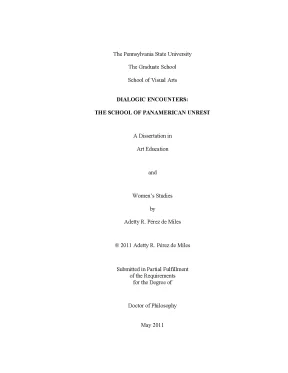
Tải xuống để đọc toàn bộThe Pennsylvania State University The Graduate School School of Visual Arts DIALOGIC ENCOUNTERS: THE SCHOOL OF PANAMERICAN UNREST A Dissertation in Art Education and Women’s Studies by Adetty R. Pérez de Miles © 2011 Adetty R. Pérez de Miles Submitted in Partial Fulfillment of the Requirements for the Degree of Doctor of Philosophy May 2011 The dissertation of Adetty R. Pérez de Miles was reviewed and approved* by the following: Karen T.
Keifer-Boyd Professor of Art Education & Affiliate Professor of Women’s Studies Dissertation Advisor Chair of Committee Department Head of Graduate Program Patricia M. Amburgy Associate Professor of Art Education Simone Osthoff Associate Professor of Art Mrinalini Sinha Professor of History *Signatures are on file in the Graduate School iii ABSTRACT This dissertation is a theoretical investigation of the nexus between Mikhail Mikhailovich Bakhtin’s theory of dialogism and Pablo Helguera’s The School of Panamerican Unrest (2006). The School of Panamerican Unrest (SPU) was an extensive public art project that involved an intercontinental road trip throughout the Americas. At each stop, which included traditional and non-traditional art venues, Helguera conducted artist workshops, round-table discussions, and performances.
I use Bakhtin’s theory of dialogism as a lens to analyze the discourses that developed in-situ at the SPU performances. In this study, I bring Bakhtin’s philosophy of language (dialogism) into a new context, that is, a contemporary art practice, as (re)read and (re)written through feminist perspectives. I use a qualitative case study research design to analyze and interpret the data. The dialogue-interactions of SPU participants provide the case study in this dissertation.
The case study research design guides my effort to particularize, i., retell, cite, analyze, understand, and interpret, what is significant about the case’s or the SPU’s dialogue- interactions own issues in the time, place, and context in which the case took place. From the interpretive frame of Bakhtin’s theory of dialogism, I examine the kinds of dialogues and dialogic exchanges participants performed when they engaged with The School of Panamerican Unrest. In my analysis of the SPU, I use Bakhtinian theory to underscore that separateness and difference (autonomous-communion) are essential to the dialogues of the SPU. Throughout the dissertation, I analyze Bakhtin’s theories of iv dialogism in relationship to reciprocity, difference, and situated knowledge.
Though these ideas align with feminist theory, this study is not a feminist analysis of the SPU. Dialogue in the work of Bakhtin and Helguera means much more than language or communication. Dialogue is not simply about verbal exchange between people but about philosophy of communication. Bakhtin’s theories and Helguera’s artistic praxis advance the notion that dialogue is a way to understand and create the self in relation to another person, and a practice of active listening and responsive understanding and action.
Bakhtin’s and Helguera’s approach to dialogue and voice encourage complex and multifaceted theoretical engagements with language. Accordingly, their theories can assist educators and students in challenging superficial, under-theorized, and uncritical notions of dialogue. Bakhtin’s and Helguera’s inquiry can be used as a methodology through which artists, educators, and students, can critically examine and challenge practices that regulate and restrict dialogue in public spaces, including art exhibitions, classrooms, and other learning environments. The research findings of this study suggests that a dialogic approach to communication and pedagogy creates spaces for open-endedness, difference of opinions, ambiguity, critical reflection, and the possibility for learners to develop their own voice in relationship to social others across difference.
Bakhtin’s theory of dialogism and Helguera’s artistic praxis facilitate insights that can be used to envision dialogue or dialogism in pedagogical spaces that embody relational, participatory, and responsible acts. v TABLE OF CONTENTS CHAPTER 1: INTRODUCTION TO THE POTENTIALITY OF BAKHTIN’S THEORY OF DIALOGISM AND HELGUERA’S ARTISTIC PRAXIS FOR ART EDUCATION. 1 Reciprocal Encounters Between Bakhtin’s Theory of Dialogism and the Dialogic Exchanges of The School of Panamerican Unrest. 2 Statement of Problem.
12 Significance of the Study: A Case for Dialogism in Art as Pedagogy. 13 Limitations of the Study. 21 Overview of Chapters. 22 CHAPTER 2: BAKHTIN’S THEORY OF DIALOGISM.
25 Introduction to Bakhtin’s Theory of Dialogism. 26 Polyphony: A Theory of Multi-Voicedness, Creativity, and Authorship. 28 An “Unsympathetic” Reading of Polyphony. 39 Heteroglossia: The Diversity of Social Speech Types and Dialogism.
43 Heteroglossia, Where Centripetal and Centrifugal Forces Collide. 44 Centralizing and Decentralizing Discourses, Heteroglossia and Monoglossia. 50 Is Dialogism Politically Regressive and Monologism Politically Progressive?. 53 Counter-Approaches to Monologism: Bakhtin’s Theories of Dialogism and Critical Interrogations of Saussure’s Linguistics.
56 Diachrony and Synchrony: Historical and Structural Perspectives in Linguistics. 58 Sign, Signifier, and Signified (Cat, Sat, Hat). 60 The Microlinguistic Level of Heteroglossia: Bakhtin’s Philosophy of the Utterance. 63 Feminist Counter-Point Reclamations of the Utterance.
68 The Unfinalizability and Dialogicity of SPU Encounters. 71 The Addressivity and Answerability of the Utterance. 73 CHAPTER 3: RESEARCH METHODS. 85 Qualitative Research Methods and Case Study Research Design.
85 Selection of Research Respondents. 90 Research Data Gathering and Management. 91 Data Collection from Observation. 92 Data Collection from Interviews.
95 vi Data Collection from Archival Records. 96 Trustworthiness and Credibility. 97 Framework for Analyzing the Data. 104 Presentation of the Final Case Report.
106 CHAPTER 4: ANALYSIS OF THE NEXUS BETWEEN BAKHTIN’S THEORY OF DIALOGISM AND HELGUERA’S SCHOOL OF PANAMERICAN UNREST. 109 The Centralizing and Decentralizing Forces of Heteroglossia Relating to the Discourses of Public Art, Helguera’s Dialogue-Interactions at the Inauguration of the SPU in New York. 110 Hidden Polemics: Intentions and Contentions of the SPU, and Wright’s Heteroglossic Dialogue-Interactions in New York. 116 Dialogue Across Difference.
119 Polyphonic and Polyvalent Ideological Positions and Authorial Speech that Open Up to The Other. 123 Transformation Signals a Moment of Crisis: The Fracture Lines of Monologic and Dialogic Speech Acts. 127 Unfinalizability: The Centralizing and Decentralizing Forces of Heteroglossia in Micro and Macro Perspectives of Transformation, and the Unfinalizability of the Utterance (Heteroglossia) as Theorized in the Dialogue-Interactions of SPU Participants .130 The Unfinalizability of the Utterance in the Dialogue-Interactions of SPU Participants: Echoes, Crisis, Renovation, and the Rebirth of Pan-America .132 Unfinalizability: The Pathos of the Artist as Revolutionary Subject (the Micro-Linguistic Repeatability of the Utterance) .136 Unfinalizability: Micro and Macro Perspectives of Revolution/Transformation in Education.138 The Relationship of Power: Living and Acting Answerability Inside and Outside the Art Institution .141 The Centralizing and Decentralizing Forces of Heteroglossia: The Fluidity of Fiction/Reality and Representation in Public Art .149 Answerability, the Indifference of Art’s Autonomy in its Refusal to Answer, and the Signature as Ethical Performative Inquiry and Way of Being, and Being Unindifferently .164 Answerability, Autonomy’s Monologic Twin (Heteronomy), and More than the Sum of its Parts or the Ground Where Agency Emerges .173 vii CHAPTER 5: REFLECTIONS ON THE SPU AND DIALOGIC ART PEDAGOGY. 183 The Nexus of Bakhtin’s Theory of Dialogism and the Dialogue-Interactions of Helguera’s SPU.
185 The Meanings and Functions of Dialogue in Relationship to Pedagogy. 189 Dialogue as an Instructional Method: An Instrumental Approach to Dialogue. 195 Dialogue as Conversation (Inclusive-Divergent). 196 Dialogue as Inquiry (Inclusive-Convergent).
198 Dialogue as Debate (Critical-Divergent). 198 Dialogue as Instruction (Critical-Convergent). 199 The Meanings and Functions of Dialogue in Relationship to Pedagogy: Findings, Implications, Limits, and Possibilities. 201 The Antidialogicity of Consensus and Awakening the Student’s Internally Persuasive Discourses.
213 Appendix A: Abbreviations of Works by Bakhtin. 243 Appendix B: Implied Consent Interview(s) (No Signature-Letter Format). 246 Appendix C: Implied Consent Interview(s) (Signature-Letter Format). 247 Appendix D: Research Recruitment Letter.
249 Appendix E: Implied Informed Consent Form. 251 Appendix F: Itinerary of the SPU’s Scheduled Discussions. 254 viii LIST OF FIGURES Figure 1: Group of students about to perform The Panamerican Address of Tegucigalpa, National Gallery of Art, Tegucigalpa, Honduras. 154 Figure 2: Pablo Helguera singing the Panamerican Anthem, National Gallery of Art, Tegucigalpa Honduras.
154 ix ACKNOWLEDGEMENTS My deepest gratitude goes to family members, professors, and friends whose advice, insights, and patience have guided me through this study. I would like to thank my committee members: Karen T. Keifer-Boyd, Patricia M. Amburgy, Mrinalini Sinha, and Simone Osthoff for their encouragement, feedback, and support.
To my dissertation advisor, Dr. Keifer-Boyd: your support has made every difference to me at every single step toward finishing this dissertation. I can only hope that you have some sense of how much I appreciate you. Your responsiveness to my concerns, and the generosity with which you shared your time and knowledge with me have been great gifts to me.
I offer gratitude to my daughter Michelle Lee Abeyta and my son Randy William Miles for the infinite love they give me. I am grateful, too, for the joy that Sophia Michelle Abeyta and William Alexander Miles bring to my life. And, I will always value the support I have received from advisors, friends, and family: Dr. Marnina Gonick, Dr.
Michelle Kraft, Dr. Elizabeth Leal, Dr. Mary Cain Fehr, Maryellen Murphy, Ece Akdeniz, Ana and Andres Esparza, Sean Patrick Abeyta, Jennifer R. Miles, Violeta Ramos, and Elena Paura.
I honor and give many thanks to my mother, Maria Elena Pérez, who has always been an inspiration in my life. And, I must also thank the Alumni Association at Penn State, which recognized and supported my work with the Alumni Association Dissertation Award—a boost that provided me with much needed financial support and encouragement. x Finally, it is a pleasure to thank Stephen Wright, Alicia Herrero, and Bayardo Blandino for their willingness to work with me, and for sharing their insights about the SPU. This study would have not been possible without the generous support of Pablo Helguera.
xi Para el gran amor de mi vida, Billy G. Miles CHAPTER 1 INTRODUCTION TO THE POTENTIALITY OF BAKHTIN’S THEORY OF DIALOGISM AND HELGUERA’S ARTISTIC PRAXIS FOR ART EDUCATION In this study, I bring the work of Russian philosopher and literary theorist Mikhail Mikhailovich Bakhtin to bear on the work of Pablo Helguera, a prolific1 New York– based artist whose work includes performance, installation, and various experimental formats such as symposiums, phonographic recordings, opera arias, and intercontinental road trips. Specifically, I use Bakhtin’s philosophy of language, i., his theory of dialogism, and its attendant concepts: polyphony, heteroglossia, monoglossia, polyglossia, and the utterance, as a lens to analyze the discourses that developed in-situ at Helguera’s different School of Panamerican Unrest (2006) performances. I participated in these performances as an observer2 in New York City; Tempe, Arizona; San Francisco, California; Tegucigalpa, Honduras; Santiago de Chile, Chile; and Buenos Aires, Argentina.
Ultimately, the purpose of the study is to envision, through a Bakhtinian lens, the nexus between dialogism and art in a contemporary public art practice, namely, The School of Panamerican Unrest (SPU) or Escuela Panamericana del Desasosiego (EPD). I consider these encounters and intersections for their implications, that is, their limitations and possibilities for art and pedagogy. The School of Panamerican Unrest was an extensive public art project that involved an intercontinental road trip along the length of the Pan-American Highway, from Anchorage, Alaska to Ushuaia, Argentina. At each stop, which included traditional and non-traditional art venues, Helguera conducted artist workshops, round-table 2 discussions, and performances.
The topics and ideas for each site unfolded in relation to the specificity of each location, including such factors as socio-political history and culture; and in collaboration with the interests and visions of local organizers, artists, and participants. At each location, Helguera collaborated with artists, curators, and audience members who created art manifestos and performed civic proclamations. For Helguera, the project sought to generate inter-cultural dialogue, to forge “connections between the different regions of the Americas through discussions, performances, film screenings, and short-term and long-term collaborations between organizations and individuals” (P. Helguera, personal communication, May 5, 2006).
Dialogue in the work of Bakhtin and in the work of Helguera means much more than language or communication.
Nội dung được bảo vệ bản quyền — Tải xuống đầy đủ
Trích dẫn luận án này
Adetty R. Pérez de Miles (2011). Adetty perez de miles final dissertation [Luận án tiến sĩ, The Pennsylvania State University]. LuanAn.net. https://luanan.net/giao-duc-hoc/phuong-phap-giang-day/adetty-perez-de-miles-final-dissertation
Câu hỏi thường gặp
Luận án "Adetty perez de miles final dissertation" nghiên cứu về vấn đề gì?
Luận văn tiến sĩ Adetty Perez de Miles: Phân tích chuyên sâu các phương pháp và kết quả nghiên cứu đột phá.
Luận án "Adetty perez de miles final dissertation" được bảo vệ tại trường nào?
Luận án này được bảo vệ tại The Pennsylvania State University. Năm bảo vệ: 2011.
Luận án "Adetty perez de miles final dissertation" thuộc chuyên ngành gì?
Luận án "Adetty perez de miles final dissertation" thuộc chuyên ngành Art Education and Women’s Studies. Danh mục: Phương Pháp Giảng Dạy.
Luận án "Adetty perez de miles final dissertation" có bao nhiêu trang?
Luận án "Adetty perez de miles final dissertation" có 268 trang. Bạn có thể xem trước một phần tài liệu ngay trên trang web trước khi tải về.
Cách tải luận án "Adetty perez de miles final dissertation" về máy như thế nào?
Để tải luận án về máy, bạn nhấn nút "Tải xuống ngay" trên trang này, sau đó hoàn tất thanh toán phí lưu trữ. File sẽ được tải xuống ngay sau khi thanh toán thành công. Hỗ trợ qua Zalo: 0559 297 239.