Luận án tiến sĩ an investigation into efl teachers and students perspective on f
Luận án: Luận án tiến sĩ an investigation into efl teachers and students perspective on factors influencing oral fluency in the context of the university in vie
Luan An
Luận án tiến sĩ
Năm xuất bản
Số trang
213
Thời gian đọc
32 phút
Lượt xem
1
Lượt tải
0
Phí lưu trữ
50 Point
Tổng quan nhanh
- Chủ đề:
- Nghiên cứu nhận thức giáo viên, sinh viên về nói lưu loát EFL
- Số trang:
- 213 trang
- Trường:
- Trường Đại học Ngoại ngữ - Đại học Huế
- Chuyên ngành:
- Lý luận và phương pháp dạy học bộ môn Tiếng Anh
- Tác giả:
- Võ Nguyên Dạ Thảo
- Năm:
- 2022
Tóm tắt nội dung luận án
I.Nghiên cứu nhận thức giáo viên sinh viên về nói lưu loát EFL
Luận án tiến sĩ này tiến hành điều tra sâu rộng. Nghiên cứu tập trung vào nhận thức của giáo viên và sinh viên. Các yếu tố ảnh hưởng đến sự lưu loát khi nói tiếng Anh (EFL oral fluency) được xem xét. Bối cảnh nghiên cứu là các trường đại học tại Việt Nam. Mục tiêu là cung cấp cái nhìn toàn diện về thực trạng và các yếu tố chi phối. Điều này đóng góp vào lý thuyết và phương pháp giảng dạy tiếng Anh. Các kết quả nghiên cứu hỗ trợ cải thiện chất lượng đào tạo tiếng Anh. Nâng cao kỹ năng nói lưu loát cho sinh viên chuyên ngữ. Sự hiểu biết về nhận thức này rất quan trọng. Nó giúp định hướng các phương pháp sư phạm hiệu quả. Từ đó, xây dựng một môi trường học tập tối ưu.
1.1. Mục tiêu chính luận án tiến sĩ về lưu loát nói
Mục tiêu cốt lõi của luận án là khám phá nhận thức. Cả giáo viên và sinh viên đều được khảo sát về các yếu tố. Những yếu tố này tác động đến khả năng nói tiếng Anh lưu loát. Nghiên cứu cũng phân tích nhận thức của giáo viên. Đặc biệt về các yếu tố cảm xúc và bên ngoài. Chúng có khả năng ảnh hưởng đến sự lưu loát khi nói của sinh viên EFL. Việc này cung cấp dữ liệu nền tảng. Dữ liệu này cần thiết cho các đề xuất cải tiến.
1.2. Đối tượng nghiên cứu và bối cảnh cụ thể
Nghiên cứu được thực hiện với các sinh viên chuyên ngữ tiếng Anh. Họ đang theo học tại các trường đại học ở Việt Nam. Đối tượng tham gia còn bao gồm các giáo viên tiếng Anh đang giảng dạy. Bối cảnh đại học Việt Nam là trọng tâm. Điều này đảm bảo tính phù hợp của kết quả. Các yếu tố văn hóa, xã hội cụ thể được tính đến. Sự hiểu biết sâu sắc về bối cảnh địa phương rất quan trọng. Nó giúp diễn giải các phát hiện một cách chính xác.
II.Khám phá các yếu tố ảnh hưởng đến nói tiếng Anh lưu loát
Nghiên cứu này đi sâu vào nhiều nhóm yếu tố. Các nhóm yếu tố này tác động đến kỹ năng nói lưu loát. Chúng bao gồm các yếu tố sư phạm, công nghệ, cảm xúc, và ngoại cảnh. Sự phức tạp của kỹ năng nói đòi hỏi cách tiếp cận đa chiều. Việc phân tích từng nhóm yếu tố giúp xác định rõ ràng các ưu tiên. Từ đó, xây dựng chương trình giảng dạy hiệu quả hơn. Nghiên cứu cũng xem xét mức độ ảnh hưởng của từng yếu tố. Điều này cung cấp cái nhìn chi tiết cho các nhà hoạch định chính sách giáo dục. Việc nắm bắt các yếu tố này giúp tối ưu hóa quá trình học tập. Nó hỗ trợ sinh viên đạt được sự lưu loát mong muốn.
2.1. Nhận định từ giáo viên về yếu tố ảnh hưởng lưu loát
Giáo viên EFL thể hiện kiến thức sâu rộng. Họ hiểu rõ các yếu tố đóng góp vào sự lưu loát khi nói. Công nghệ được đánh giá là yếu tố ảnh hưởng mạnh mẽ nhất. Trong khi đó, loại hình nhiệm vụ nói (task type) ít được xem là quan trọng. Các giáo viên cũng có thái độ tích cực đối với các yếu tố sư phạm. Yếu tố hướng dẫn và công nghệ được ưu tiên hàng đầu. Tuy nhiên, nhận thức này không phải lúc nào cũng phản ánh hoàn toàn. Nó không phải lúc nào cũng phản ánh thành công trong thực tiễn giảng dạy.
2.2. Các yếu tố cảm xúc và bên ngoài quan trọng
Luận án nhấn mạnh vai trò của các yếu tố cảm xúc. Các yếu tố bên ngoài cũng rất quan trọng đối với người học EFL. Những yếu tố này bao gồm sự tự tin, động lực, lo lắng. Môi trường học tập và quy mô lớp học cũng được xem xét. Chúng tác động đáng kể đến hiệu suất nói của sinh viên. Việc quản lý và hỗ trợ các yếu tố này là cần thiết. Điều này giúp tạo điều kiện thuận lợi cho việc phát triển kỹ năng nói lưu loát.
III.Phương pháp luận và thiết kế nghiên cứu về lưu loát nói
Nghiên cứu áp dụng mô hình giải thích tuần tự hỗn hợp. Đây là phương pháp kết hợp định lượng và định tính. Việc này đảm bảo tính khách quan và chiều sâu của dữ liệu. Giai đoạn định lượng thu thập dữ liệu trên quy mô lớn. Giai đoạn định tính đi sâu vào chi tiết các nhận định. Quy trình thu thập và phân tích dữ liệu được thực hiện chặt chẽ. Điều này đảm bảo độ tin cậy và giá trị của các phát hiện. Phương pháp luận này phù hợp với mục tiêu nghiên cứu. Nó giúp trả lời các câu hỏi phức tạp về nhận thức và ảnh hưởng. Cách tiếp cận này giúp xây dựng nền tảng vững chắc. Nó cho phép đưa ra các khuyến nghị có cơ sở khoa học.
3.1. Thiết kế nghiên cứu hỗn hợp giải thích tuần tự
Nghiên cứu sử dụng mô hình Creswell & Clark (2007). Đây là mô hình giải thích tuần tự (sequential explanatory model). Đầu tiên là thu thập và phân tích dữ liệu định lượng. Sau đó, kết quả định lượng được giải thích thêm. Việc giải thích này thông qua dữ liệu định tính. Cách tiếp cận này giúp cung cấp cái nhìn toàn diện. Nó bao gồm cả phạm vi rộng và chiều sâu chi tiết. Điều này tăng cường tính xác thực của các phát hiện.
3.2. Quy trình thu thập và phân tích dữ liệu nghiên cứu
Dữ liệu được thu thập từ 45 giáo viên EFL và 115 sinh viên EFL. Công cụ chính là bảng câu hỏi 47 mục. Sáu cuộc phỏng vấn bán cấu trúc chuyên sâu cũng được tiến hành. Quy trình thu thập dữ liệu được kiểm soát chặt chẽ. Việc này đảm bảo tính nhất quán và độ tin cậy. Dữ liệu định lượng được phân tích bằng thống kê. Dữ liệu định tính được phân tích theo chủ đề. Các phát hiện được tổng hợp để đưa ra kết luận cuối cùng.
IV.Kết quả nghiên cứu các yếu tố ảnh hưởng lưu loát nói EFL
Các phát hiện từ nghiên cứu cung cấp thông tin giá trị. Giáo viên EFL có sự hiểu biết tốt về các yếu tố. Các yếu tố này góp phần vào sự lưu loát khi nói. Tuy nhiên, nhận thức của họ không luôn được phản ánh hoàn toàn. Nó không phải lúc nào cũng được phản ánh thành công trong thực hành giảng dạy. Có sự đồng thuận cao về tầm quan trọng của công nghệ. Công nghệ được xem là yếu tố ảnh hưởng nhất. Trong khi đó, loại hình nhiệm vụ nói lại bị đánh giá thấp. Các yếu tố sư phạm, đặc biệt là hướng dẫn và công nghệ, được giáo viên đánh giá cao. Các kết quả này mở ra những hướng mới. Chúng giúp cải thiện phương pháp dạy và học tiếng Anh. Nâng cao chất lượng kỹ năng nói cho sinh viên.
4.1. Sự đồng thuận về yếu tố công nghệ ảnh hưởng lớn nhất
Kết quả cho thấy giáo viên EFL có sự đồng thuận cao. Công nghệ là yếu tố có ảnh hưởng mạnh mẽ nhất. Nó ảnh hưởng đến sự lưu loát khi nói của sinh viên EFL. Điều này phản ánh xu hướng hiện đại trong giáo dục. Việc tích hợp công nghệ vào giảng dạy là cần thiết. Nó giúp tăng cường hiệu quả học tập. Ngược lại, loại hình nhiệm vụ nói được coi là ít ảnh hưởng nhất.
4.2. Nhận thức giáo viên về yếu tố sư phạm công nghệ
Mặc dù có nhiều nỗ lực trong phương pháp giảng dạy. Giáo viên EFL thể hiện thái độ tích cực cao. Thái độ này dành cho các yếu tố sư phạm. Trong số đó, các yếu tố hướng dẫn và công nghệ nổi bật nhất. Điều này cho thấy giáo viên nhận thức được giá trị. Giá trị của việc áp dụng các phương pháp hiện đại. Họ cũng nhận thức được vai trò của công nghệ trong lớp học. Tuy nhiên, việc chuyển đổi nhận thức thành hành động cần được khuyến khích thêm.
V.Vai trò công nghệ yếu tố cảm xúc trong lưu loát tiếng Anh
Nghiên cứu làm rõ vai trò then chốt của công nghệ. Công nghệ đóng vai trò quan trọng trong việc thúc đẩy lưu loát. Các yếu tố cảm xúc cũng được phân tích kỹ lưỡng. Chúng có tác động sâu sắc đến hiệu suất học tập. Sự tự tin, động lực, và lo lắng của sinh viên cần được quan tâm. Môi trường học tập cần được thiết kế hỗ trợ các yếu tố này. Điều này bao gồm việc sử dụng các công cụ kỹ thuật số. Nó cũng đòi hỏi việc tạo ra một không gian an toàn. Nơi sinh viên có thể thực hành nói mà không sợ hãi. Việc kết hợp hiệu quả công nghệ và hỗ trợ cảm xúc. Điều này tạo ra một lộ trình mạnh mẽ. Nó dẫn đến sự cải thiện đáng kể trong kỹ năng nói tiếng Anh.
5.1. Công nghệ Yếu tố then chốt thúc đẩy nói lưu loát
Công nghệ được xác định là động lực mạnh mẽ. Nó thúc đẩy sự phát triển của kỹ năng nói lưu loát. Giáo viên và sinh viên đều nhận thức được tiềm năng của nó. Việc sử dụng các ứng dụng học tiếng, nền tảng trực tuyến. Các tài nguyên đa phương tiện có thể tăng cường đáng kể. Chúng tăng cường cơ hội thực hành và tiếp xúc ngôn ngữ. Sự tích hợp công nghệ một cách chiến lược là cần thiết.
5.2. Ảnh hưởng của yếu tố cảm xúc đến người học EFL
Các yếu tố cảm xúc đóng vai trò quan trọng. Chúng tác động đến quá trình học tập và hiệu suất nói. Cụ thể là sự lo lắng khi nói, động lực, và thái độ học tập. Những yếu tố này có thể cản trở hoặc thúc đẩy sự lưu loát. Việc tạo ra một môi trường học tập tích cực. Một môi trường hỗ trợ về mặt cảm xúc là rất quan trọng. Điều này giúp sinh viên vượt qua rào cản và tự tin hơn.
VI.Hàm ý sư phạm cải thiện việc dạy nói tiếng Anh tại ĐH
Từ các phát hiện, luận án đưa ra nhiều hàm ý. Chúng dành cho việc cải thiện phương pháp giảng dạy. Các phương pháp này liên quan đến lưu loát nói tiếng Anh. Các nhà giáo dục cần xem xét lại các chiến lược hiện có. Đặc biệt, việc tích hợp công nghệ vào chương trình học là cấp thiết. Cần đào tạo giáo viên về cách sử dụng hiệu quả các công cụ kỹ thuật số. Việc tập trung vào các yếu tố cảm xúc của sinh viên cũng quan trọng. Điều này giúp tạo ra một môi trường học tập hỗ trợ. Các đề xuất này nhằm mục đích nâng cao chất lượng giảng dạy. Chúng giúp sinh viên đạt được khả năng nói lưu loát vượt trội. Việc ứng dụng kết quả nghiên cứu vào thực tiễn giáo dục là rất cần thiết. Nó mang lại lợi ích lâu dài cho người học.
6.1. Đề xuất cải tiến phương pháp giảng dạy kỹ năng nói
Các nhà nghiên cứu đề xuất cải tiến phương pháp giảng dạy. Cần chú trọng hơn vào việc sử dụng công nghệ trong lớp học. Giáo viên nên được trang bị kiến thức và kỹ năng. Điều này giúp họ tích hợp hiệu quả các công cụ kỹ thuật số. Việc thiết kế các hoạt động nói mang tính tương tác cao. Các hoạt động này cần giảm thiểu áp lực cho sinh viên. Điều này giúp thúc đẩy sự tự tin và chủ động.
6.2. Ứng dụng kết quả vào thực tiễn giáo dục đại học
Kết quả nghiên cứu có thể được ứng dụng rộng rãi. Việc này được thực hiện trong việc phát triển chương trình giảng dạy. Nó cũng có thể giúp đào tạo giáo viên tiếng Anh. Các trường đại học cần xem xét lại các chính sách. Chính sách này liên quan đến việc hỗ trợ sinh viên. Đặc biệt là trong việc phát triển kỹ năng nói lưu loát. Việc tạo ra một môi trường học tập toàn diện. Môi trường này bao gồm cả yếu tố công nghệ và cảm xúc. Điều này rất quan trọng đối với sự thành công của người học.
Mục lục chi tiết luận án
Tải xuống file đầy đủ để xem toàn bộ nội dung
Tải đầy đủ (213 trang)Trích đoạn nội dung luận án
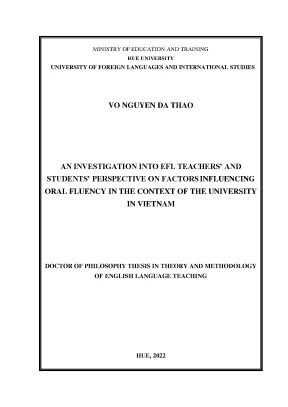
Tải xuống để đọc toàn bộMINISTRY OF EDUCATION AND TRAINING HUE UNIVERSITY UNIVERSITY OF FOREIGN LANGUAGES AND INTERNATIONAL STUDIES VO NGUYEN DA THAO AN INVESTIGATION INTO EFL TEACHERS’ AND STUDENTS’ PERSPECTIVE ON FACTORS INFLUENCING ORAL FLUENCY IN THE CONTEXT OF THE UNIVERSITY IN VIETNAM DOCTOR OF PHILOSOPHY THESIS IN THEORY AND METHODOLOGY OF ENGLISH LANGUAGE TEACHING HUE, 2022 MINISTRY OF EDUCATION AND TRAINING HUE UNIVERSITY UNIVERSITY OF FOREIGN LANGUAGES AND INTERNATIONAL STUDIES VO NGUYEN DA THAO AN INVESTIGATION INTO EFL TEACHERS’ AND STUDENTS’ PERSPECTIVE ON FACTORS INFLUENCING ORAL FLUENCY IN THE CONTEXT OF THE UNIVERSITY IN VIETNAM DOCTOR OF PHILOSOPHY THESIS IN THEORY AND METHODOLOGY OF ENGLISH LANGUAGE TEACHING CODE: 9140111 SUPERVISOR: Assoc. TRAN VAN PHUOC Dr. TRAN QUANG HAI HUE, 2022 BỘ GIÁO DỤC VÀ ĐÀO TẠO ĐẠI HỌC HUẾ TRƯỜNG ĐẠI HỌC NGOẠI NGỮ VÕ NGUYÊN DẠ THẢO NGHIÊN CỨU NHẬN THỨC CỦA GIÁO VIÊN VÀ SINH VIÊN VỀ CÁC YẾU TỐ ẢNH HƯỞNG ĐẾN VIỆC NÓI TIẾNG ANH LƯU LOÁT Ở TRƯỜNG ĐẠI HỌC TẠI VIỆT NAM LUẬN ÁN TIẾN SĨ LÝ LUẬN VÀ PHƯƠNG PHÁP DẠY HỌC BỘ MÔN TIẾNG ANH HUẾ, 2022 BỘ GIÁO DỤC VÀ ĐÀO TẠO ĐẠI HỌC HUẾ TRƯỜNG ĐẠI HỌC NGOẠI NGỮ NGHIÊN CỨU NHẬN THỨC CỦA GIÁO VIÊN VÀ SINH VIÊN VỀ CÁC YẾU TỐ ẢNH HƯỞNG ĐẾN VIỆC NÓI TIẾNG ANH LƯU LOÁT Ở TRƯỜNG ĐẠI HỌC TẠI VIỆT NAM LUẬN ÁN TIẾN SĨ LÝ LUẬN VÀ PHƯƠNG PHÁP DẠY HỌC BỘ MÔN TIẾNG ANH MÃ SỐ: 9140111 NGƯỜI HƯỚNG DẪN KHOA HỌC: PGS. TRẦN VĂN PHƯỚC TS.TRẦN QUANG HẢI HUẾ, 2022 ABSTRACT The present study investigates teachers’ and students’ perspectives on the factors influencing the oral fluency of Vietnamese tertiary English majors.
Also, it explores teachers’ perspectives of affective and external factors that would influence the speaking fluency of EFL students. The study was a mixed-method sequential explanatory model (Creswell & Clark, 2007). The data was collected from 45 EFL teachers and 115 EFL students at universities in Vietnam by means of a forty-seven- item questionnaire. Six semi-structured in-depth interviews were conducted.
The findings revealed that EFL teachers were knowledgeable about factors contributing to the speaking fluency of EFL students. Specifically, there was a high consensus on technology as the most influential factor, while task type is the least influential one. Their perspectives, however, were not totally and successfully reflected in their responses. Although EFL teachers made great efforts in their teaching approach, they showed high attitudes toward instructional factors.
among which instructional and technological factors were the most prominent. Due to the limited timeframe, an emphasis is placed on the affective factors and external factors of EFL learners. From the findings, methodological and pedagogical implications are made for improvements to LOF. i TABLE OF CONTENTS ABSTRACT.
i TABLE OF CONTENTS. ii LIST OF TABLES. vi LIST OF FIGURES. viii LIST OF ABBREVIATIONS.
ix CHAPTER 1: INTRODUCTION. Background of the study. Statement of the problem. Purpose of the study.
Scope of the study. Significance of the study. Definitions of key terms. Organization of the thesis.
9 CHAPTER 2: REVIEW OF LITERATURE. Overview of teaching speaking and speaking Fluency in Vietnam. Fluency as proficiency. Fluency versus Accuracy.
Gardner’s socio-educational model. Second language acquisition contexts. Krashen’s Monitor Theory. The Acquisition and Learning.
The Monitor Hypothesis. The Natural Order hypothesis. The Input Hypothesis. The Affective Filter Hypothesis.
L2 Oral fluency factors. Summary of Theoretical Framework .4 The Gaps in the Literature. Data collection instruments. Questionnaires for teachers and students.
Semi-structured interviews for teachers and students. Data collection procedure. Piloting the questionnaires. Piloting the semi-structured interview.
Administering the semi-structured interview. Data analysis procedures. Reliability and Validity. 86 CHAPTER 4: FINDINGS AND DISCUSSION.
The quantitative analysis of teachers’ and students’ perspectives on LOF. The descriptive analysis of teachers’ perspectives on LOF .2 The descriptive analysis of students’ perspectives on LOF. The qualitative analysis of teachers’ and students’ perspectives on LOF. The overall analysis of teachers’ and students’ perspectives on factors influencing LOF.
The overal analysis of teachers’ perspectives on factors influencing LOF. The overal analysis of students’ perspectives on factors influencing LOF .4 The quantitative analysis of teachers’ perspectives on factors influencing LOF. Behavior and attitude factors. Task Type Factors.
Environment – Class Size Factors.The qualitative analysis of teachers’ perspectives on factors influencing LOF. The descriptive analysis of students’ perspectives on factors influencing LOF. Behavior and attitude factors. Task Type Factors.
Environment – Class Size Factors. The qualitative analysis of students’ perspectives on factors influencing LOF. Discussion on LOF from EFL students’ and teachers’ perspectives. Discussion on teachers’ perspectives on factors influencing LOF.
Discussion on students’ perspectives on factors influencing LOF. Discussion on teachers' and students' perspectives on factors influencing LOF. Summary of the Study. Summary of the Findings.
Limitations of the study. Implications and contributions of the study. Recommendations for Future Research. 130 LISTS OF AUTHOR’S WORK.
167 v LIST OF TABLES Table 2. The Krashen's Input Hypothesis with the teaching instruction. Krashen's Input Hypothesis with the technology. Summary of the student participants’ personal information.
Summary of the teacher participants’ personal information. Show how data were collected for this study. Summary of the Questionnaire Instrument with closed-ended items for quantitative data. Interview questions for teachers and students.
Coding for interviewing teacher participants. Coding for interviewing student participants. The reliability of teachers’ pilot questionnaire. The reliability of students’ pilot questionnaire.
The reliability of the official questionnaire- Teachers. The reliability of the official questionnaire- Students. The reliability of the theme - Teachers. The reliability of the theme - Students.
EFL students’ and teachers’ perspectives towards LOF. EFL teachers’ perspectives towards the importance of LOF. EFL students’ perspectives towards the importance of LOF. Summary of the Themes for Interview Question One - Teachers.
below presents the summary of emergent themes from students’ responses. Summary of the Themes for Interview Question One - Teachers. Summary of the Themes for Interview Question One - students. EFL teachers’ and students’ perspectives towards factors influencing LOF.
EFL teachers’ perspectives towards factors influencing LOF. EFL students’ attitudes towards factors influencing LOF. EFL teachers’ attitudes towards Student Behavior and Attitude factors. EFL teachers’ attitudes towards Motivational factors.
EFL teachers’ attitudes towards Anxiety factors. EFL teachers’ attitudes towards Task Type Factors. EFL teachers’ attitudes towards Instructional factors. EFL teachers’ attitudes towards Environment – Class Size factors.
EFL teachers’ attitudes towards Exposure factors. EFL teachers’ attitudes towards Technology factors. EFL students’ attitudes towards Behavior and Attitude Factors. EFL students’ attitudes towards Motivational Factors.
EFL students’ attitudes towards Anxiety factors. EFL students’ attitudes towards Task Type factors. EFL students’ attitudes towards Instructional factors. EFL Students’ attitudes towards Environment – Class Size factors.
EFL Students’ attitudes towards Exposure factors. EFL students’ attitudes towards Technology factors. Summary of the Themes for Interview Question four - students. 113 vii LIST OF FIGURES Figure 2.
Aspects of L2 fluency – Segalowitz’s model. Gardner’s socio-educational model (adapted from Gardner, 1985). The framework of oral fluency factors. Four elements of research design .1: EFL teachers’ perspectives towards factors influencing LOF.
EFL students’ perspectives towards factors influencing LOF. 96 viii LIST OF ABBREVIATIONS CLT Communicative Language Teaching EMI English Medium Instruction ELT English Language Teaching IELTS International English Language Testing System L2 Foreign Language or Second Language LOF L2 oral fluency MOET Ministry of Education and Training MALS Mobile Application for Listening and Speaking PhD Doctor of Philosophy TEFL Teaching English as a Foreign Language TBLT Task-Based Language Teaching TL Target Language SD Standard Deviation SLA Second Language Acquisition SPSS Statistical Package for the Social Sciences ix CHAPTER 1: INTRODUCTION 1. Background of the study Internationalization has arisen as a popular trend in the worldwide landscape of higher education to recruit a more diversified student population and facilitate global, regional, and domestic institutional competition for students (Wallitsch, 2014). Because English is continuously becoming the world's most influential international language, it is widely regarded as the primary means of communication for people in many parts of the world (Chen, 2009).
Also, the English language is now exploited by many people around the globe for multiple communication patterns in different social contexts (e., academic settings and workplace environments). Consequently, the widespread use of English worldwide has posed many challenges to learning and teaching English these days. Saying that the way English is learned and taught has begun to change. There is no longer a concern about the specific or most effective teaching pedagogical method but rather a focus on obtaining teaching principles (Jacobs & Renandya, 2016, p.
Furthermore, this shift applies to such pedagogical adjustments. Thus, EFL teachers should concentrate on developing procedural knowledge (i., knowledge of how or negotiation strategies) in their classrooms rather than propositional knowledge (i., knowledge of what or norms and conventions of a language) (Canagarajah, 2014, p. By doing that, procedural knowledge will provide students with comprehensive strategies to deal with the language of globalization. Moreover, it seems reasonable to admit that the ultimate goal of teaching English as a foreign language (TEFL) is to foster and promote learners' communicative competence to meet the growing demand for English as a communication tool around the globe today.
Oral language competence in speaking and listening is a crucial indicator of students' academic, personal, and professional success (Morreale et al. Correspondingly, Emanuel (2011) discovered that oral communication activities, such as listening and speaking, accounted for more than three-quarters of their daily time in a study of how college students spend their time communicating academically. In contrast, reading and writing made up barely a quarter. Thus, this is an essential aspect for instructors because it shows that they should facilitate and encourage their students to adopt more effective oral communication skills.
After all, the fact is that language is communication, and language teaching is for communication. In order to advocate and support a balance of opportunities for teaching 1 practices in the classroom, Nation (2014) claimed that it is essential for a language course to balance the four strands of meaning-focused input, meaning-focused output, language-focused learning, and fluency development. However, fluency development seems to be given less attention in the whole teaching practices framework. Meanwhile, each strand should be given an equal amount of time in a learning course.
In pursuit of promoting the fourth trend, for language learners to maximize their progress in language learning, the relevant factors responsible for enhancing their language skills, especially speaking fluency, must be taken into consideration. This is extremely important because fluency might be considered a goal for learning and teaching English as a second language. As can be seen, a large amount of research postulates that temporal and lexical factors, speaker factors, and speaker-external factors influence individual foreign language speaking achievement (Kopnická & Calgary, 2016). Even though EFL teachers and learners often assume that "practice will help the mechanisms of production, how precisely this does happen is not clear" (Biancarosa, Shanley, Biancarosa, & Shanley, 2016).
It is stated that fluency cannot be coached or taught and that it will arise naturally, for instance, due to living overseas (Chambers, 1997; Leonard, 2015). However, on the other hand, it concluded that fluency serves as one of the components of proficiency (Chambers, 1997). As a result, appropriate methods and well-planned instruction provided by EFL teachers are critical components in achieving ultimate fluency (Segalowitz, Gatbonton, & Trofimovich, 2009; Kopnická & Calgary, 2016). This means that language teachers must recognize the relevant factors influencing fluency, which helps to improve oral fluency significantly.
Nội dung được bảo vệ bản quyền — Tải xuống đầy đủ
Trích dẫn luận án này
Võ Nguyên Dạ Thảo (2022). Luận án tiến sĩ an investigation into efl teachers and stude [Luận án tiến sĩ, Trường Đại học Ngoại ngữ - Đại học Huế]. LuanAn.net. https://luanan.net/tai-lieu-khac/luan-an-tien-si-an-investigation-into-efl-teachers-and-students-perspective-on-factors-influencing-oral-fluency-in-the-context-of-the-university-in-vietnam
Câu hỏi thường gặp
Luận án "Luận án tiến sĩ an investigation into efl teachers and stude" nghiên cứu về vấn đề gì?
Luận án: Luận án tiến sĩ an investigation into efl teachers and students perspective on factors influencing oral fluency in the context of the university in vie
Luận án "Luận án tiến sĩ an investigation into efl teachers and stude" được bảo vệ tại trường nào?
Luận án này được bảo vệ tại Trường Đại học Ngoại ngữ - Đại học Huế. Năm bảo vệ: 2022.
Luận án "Luận án tiến sĩ an investigation into efl teachers and stude" thuộc chuyên ngành gì?
Luận án "Luận án tiến sĩ an investigation into efl teachers and stude" thuộc chuyên ngành Lý luận và phương pháp dạy học bộ môn tiếng Anh. Danh mục: Tài liệu khác.
Luận án "Luận án tiến sĩ an investigation into efl teachers and stude" có bao nhiêu trang?
Luận án "Luận án tiến sĩ an investigation into efl teachers and stude" có 213 trang. Bạn có thể xem trước một phần tài liệu ngay trên trang web trước khi tải về.
Cách tải luận án "Luận án tiến sĩ an investigation into efl teachers and stude" về máy như thế nào?
Để tải luận án về máy, bạn nhấn nút "Tải xuống ngay" trên trang này, sau đó hoàn tất thanh toán phí lưu trữ. File sẽ được tải xuống ngay sau khi thanh toán thành công. Hỗ trợ qua Zalo: 0559 297 239.