An empirical investigation of turnover intentions of internal auditors
Đánh giá thực nghiệm về ý định nghỉ việc của nhân viên nội bộ doanh nghiệp
Business
Luan An
Luận án tiến sĩ
Năm xuất bản
Số trang
196
Thời gian đọc
30 phút
Lượt xem
0
Lượt tải
0
Phí lưu trữ
50 Point
Tổng quan nhanh
- Chủ đề:
- 1. Tổng quan ý định nghỉ việc của kiểm toán viên nội bộ
- Số trang:
- 196 trang
- Trường:
- Virginia Commonwealth University
- Chuyên ngành:
- Business
- Tác giả:
- Satina V. Williams
- Năm:
- 2003
Tóm tắt nội dung luận án
I. Tổng quan ý định nghỉ việc của kiểm toán viên nội bộ
Luận án nghiên cứu ý định nghỉ việc của kiểm toán viên nội bộ. Đây là một nghiên cứu thực nghiệm tại Đại học Virginia Commonwealth. Tác giả là Satina V. Williams. Công trình hoàn thành năm 2003. Thôi việc tự nguyện gây tốn kém cho doanh nghiệp. Chi phí tuyển dụng và đào tạo tăng cao. Kiến thức tổ chức bị mất theo người ra đi. Nghề kiểm toán nội bộ đối mặt áp lực lớn. Tái cấu trúc và sa thải làm tăng bất an. Bất an công việc thúc đẩy ý định nghỉ việc. Nghiên cứu tìm hiểu các yếu tố gốc rễ. Quản lý nguồn nhân lực cần dữ liệu rõ ràng. Giữ chân nhân viên trở thành ưu tiên hàng đầu. Mô hình lý thuyết kết nối nhiều biến số. Cam kết tổ chức giữ vai trò trung tâm. Sự hài lòng trong công việc cũng được xem xét.
1.1. Bối cảnh và mục tiêu nghiên cứu thực nghiệm
Bối cảnh nghiên cứu xuất phát từ thực tế ngành. Nhiều tổ chức cắt giảm nhân sự. Kiểm toán viên nội bộ cảm thấy bất an. Ý định nghỉ việc tăng theo. Mục tiêu là đo lường các yếu tố tác động. Nghiên cứu thực nghiệm dùng dữ liệu khảo sát. Kết quả hỗ trợ quản lý nguồn nhân lực. Giữ chân nhân viên là đích đến cuối cùng.
1.2. Tầm quan trọng của giữ chân nhân viên
Giữ chân nhân viên giúp tổ chức ổn định. Thôi việc tự nguyện làm gián đoạn công việc. Chi phí thay thế nhân sự rất lớn. Kinh nghiệm kiểm toán khó tái tạo nhanh. Cam kết tổ chức cao làm giảm rủi ro nghỉ việc. Hỗ trợ từ tổ chức củng cố lòng trung thành. Văn hóa công ty tích cực giữ chân người giỏi.
II. Mô hình lý thuyết về ý định nghỉ việc tự nguyện
Mô hình lý thuyết là nền tảng của luận án. Mô hình liên kết bất an công việc với hậu quả tâm lý. Bất an công việc là trạng thái lo lắng. Người lao động sợ mất vị trí của mình. Trạng thái này ảnh hưởng đến thái độ làm việc. Cam kết tổ chức suy giảm khi bất an tăng. Cam kết nghề nghiệp cũng chịu tác động. Ý định nghỉ việc là kết quả cuối cùng. Mô hình dựa trên các lý thuyết hành vi tổ chức. Phản ứng của người ở lại sau sa thải được phân tích. Người ở lại thường mất tinh thần. Niềm tin vào tổ chức giảm sút. Thôi việc tự nguyện trở thành lựa chọn khả dĩ. Mô hình giúp dự đoán hành vi nghỉ việc. Quản lý nguồn nhân lực dùng mô hình để can thiệp sớm.
2.1. Bất an công việc và trạng thái tâm lý
Bất an công việc gây căng thẳng kéo dài. Người lao động lo về tương lai. Sự hài lòng trong công việc giảm rõ rệt. Tâm lý bất ổn dẫn tới ý định nghỉ việc. Tái cấu trúc làm tăng cảm giác này. Hỗ trợ từ tổ chức có thể giảm nhẹ tác động. Cân bằng công việc và cuộc sống cũng bị ảnh hưởng.
2.2. Phản ứng của người ở lại sau sa thải
Sa thải để lại hậu quả cho người ở lại. Khối lượng công việc tăng đột ngột. Niềm tin vào tổ chức bị xói mòn. Cam kết tổ chức suy yếu theo. Thôi việc tự nguyện gia tăng sau các đợt cắt giảm. Văn hóa công ty thay đổi tiêu cực. Giữ chân nhân viên trở nên khó khăn hơn.
2.3. Liên kết giữa các biến số trong mô hình
Mô hình nối nhiều biến số với nhau. Bất an công việc là biến đầu vào. Cam kết tổ chức là biến trung gian. Ý định nghỉ việc là biến kết quả. Sự hài lòng trong công việc điều tiết quan hệ. Nghiên cứu thực nghiệm kiểm định từng đường dẫn. Quản lý nguồn nhân lực dựa vào kết quả để hành động.
III. Cam kết tổ chức và mức độ hài lòng trong công việc
Cam kết tổ chức là yếu tố cốt lõi của nghiên cứu. Cam kết phản ánh sự gắn bó với tổ chức. Người gắn bó ít có ý định nghỉ việc. Cam kết nghề nghiệp khác với cam kết tổ chức. Cam kết nghề nghiệp gắn với chuyên môn kiểm toán. Hai loại cam kết tác động khác nhau. Sự hài lòng trong công việc bổ sung cho cam kết. Người hài lòng làm việc tích cực hơn. Thôi việc tự nguyện giảm khi hài lòng cao. Văn hóa công ty nuôi dưỡng cam kết bền vững. Hỗ trợ từ tổ chức tăng cường sự gắn bó. Quản lý nguồn nhân lực cần đo lường cả hai yếu tố. Giữ chân nhân viên phụ thuộc vào mức cam kết. Nghiên cứu thực nghiệm xác nhận mối quan hệ này.
3.1. Vai trò của cam kết tổ chức
Cam kết tổ chức làm giảm ý định nghỉ việc. Người cam kết cao ở lại lâu hơn. Sự gắn bó tạo ra hiệu suất ổn định. Hỗ trợ từ tổ chức nuôi dưỡng cam kết. Văn hóa công ty tích cực củng cố lòng trung thành. Giữ chân nhân viên trở nên dễ dàng hơn. Thôi việc tự nguyện hạ thấp rõ rệt.
3.2. Sự hài lòng và cam kết nghề nghiệp
Sự hài lòng trong công việc thúc đẩy gắn bó. Cam kết nghề nghiệp gắn với chuyên môn kiểm toán. Người yêu nghề ít muốn rời đi. Cân bằng công việc và cuộc sống tăng sự hài lòng. Quản lý nguồn nhân lực cần chú ý hai yếu tố. Ý định nghỉ việc giảm khi cả hai cao. Nghiên cứu thực nghiệm chứng minh điều này.
IV. Nghiên cứu thực nghiệm và phương pháp khảo sát mẫu
Phương pháp nghiên cứu dựa trên khảo sát thực nghiệm. Dữ liệu thu từ kiểm toán viên nội bộ. Bảng hỏi đo nhiều biến số quan trọng. Bất an công việc được đo bằng thang đo chuẩn. Cam kết nghề nghiệp và cam kết tổ chức cũng vậy. Ý định nghỉ việc là biến phụ thuộc chính. Mẫu khảo sát đại diện cho ngành. Phân tích thống kê kiểm định các giả thuyết. Nghiên cứu thực nghiệm tăng độ tin cậy của kết luận. Kết quả hỗ trợ mô hình lý thuyết. Quản lý nguồn nhân lực dùng dữ liệu để ra quyết định. Giữ chân nhân viên dựa trên bằng chứng rõ ràng. Phương pháp minh bạch giúp tái lập nghiên cứu.
4.1. Thiết kế mẫu khảo sát và đối tượng
Mẫu khảo sát gồm kiểm toán viên nội bộ. Đối tượng làm việc tại nhiều tổ chức. Bảng hỏi gửi tới từng người tham gia. Câu hỏi đo bất an công việc và cam kết tổ chức. Sự hài lòng trong công việc cũng được ghi nhận. Quy mô mẫu đủ lớn cho phân tích. Nghiên cứu thực nghiệm yêu cầu dữ liệu chất lượng.
4.2. Đo lường các biến số nghiên cứu
Mỗi biến số dùng thang đo riêng. Bất an công việc đo bằng thang đo đã kiểm chứng. Cam kết nghề nghiệp tách khỏi cam kết tổ chức. Ý định nghỉ việc đo trực tiếp qua bảng hỏi. Sự hài lòng trong công việc bổ trợ phân tích. Độ tin cậy thang đo được kiểm tra kỹ. Kết quả phục vụ quản lý nguồn nhân lực.
4.3. Phân tích dữ liệu và kiểm định giả thuyết
Phân tích dùng kỹ thuật thống kê đa biến. Các đường dẫn trong mô hình được kiểm định. Quan hệ giữa bất an và ý định nghỉ việc được xác nhận. Cam kết tổ chức đóng vai trò trung gian. Thôi việc tự nguyện liên hệ với nhiều yếu tố. Nghiên cứu thực nghiệm cho kết luận vững chắc. Dữ liệu hỗ trợ giữ chân nhân viên.
V. Giữ chân nhân viên và quản lý nguồn nhân lực hiệu quả
Kết quả nghiên cứu phục vụ thực tiễn quản lý. Giữ chân nhân viên là mục tiêu trọng tâm. Thôi việc tự nguyện gây thiệt hại lớn cho tổ chức. Quản lý nguồn nhân lực cần chiến lược rõ ràng. Giảm bất an công việc là bước đầu tiên. Tăng cam kết tổ chức là bước thứ hai. Sự hài lòng trong công việc cần được nâng cao. Hỗ trợ từ tổ chức tạo niềm tin lâu dài. Văn hóa công ty tích cực giữ người tài. Cân bằng công việc và cuộc sống giảm áp lực. Lãnh đạo cần truyền thông minh bạch. Kiểm toán viên nội bộ cần lộ trình nghề nghiệp rõ ràng. Ý định nghỉ việc giảm khi các điều kiện được đáp ứng.
5.1. Chiến lược giảm thôi việc tự nguyện
Giảm thôi việc tự nguyện cần hành động sớm. Bất an công việc phải được kiểm soát. Truyền thông minh bạch xoa dịu lo lắng. Cam kết tổ chức tăng nhờ chính sách công bằng. Hỗ trợ từ tổ chức tạo cảm giác an toàn. Sự hài lòng trong công việc được cải thiện. Giữ chân nhân viên đạt hiệu quả cao hơn.
5.2. Ứng dụng cho quản lý nguồn nhân lực
Quản lý nguồn nhân lực dùng kết quả nghiên cứu. Chính sách giữ chân được thiết kế dựa trên dữ liệu. Đào tạo và phát triển giảm ý định nghỉ việc. Lộ trình nghề nghiệp rõ ràng tạo động lực. Văn hóa công ty tích cực củng cố cam kết tổ chức. Cân bằng công việc và cuộc sống được chú trọng. Nghiên cứu thực nghiệm dẫn dắt quyết định.
VI. Hỗ trợ từ tổ chức và cân bằng công việc cuộc sống
Hỗ trợ từ tổ chức là yếu tố giữ chân quan trọng. Người được hỗ trợ cảm thấy được trân trọng. Cảm giác này làm tăng cam kết tổ chức. Ý định nghỉ việc giảm theo. Cân bằng công việc và cuộc sống cũng then chốt. Áp lực kiểm toán thường rất cao. Mất cân bằng dẫn tới kiệt sức. Kiệt sức thúc đẩy thôi việc tự nguyện. Sự hài lòng trong công việc phụ thuộc vào cân bằng này. Văn hóa công ty linh hoạt hỗ trợ người lao động. Quản lý nguồn nhân lực cần chính sách phù hợp. Giữ chân nhân viên đòi hỏi cả hai yếu tố. Nghiên cứu thực nghiệm khẳng định tầm quan trọng của chúng.
6.1. Tác động của hỗ trợ từ tổ chức
Hỗ trợ từ tổ chức tạo niềm tin bền vững. Người lao động cảm thấy an toàn hơn. Cam kết tổ chức tăng rõ rệt. Bất an công việc giảm xuống. Ý định nghỉ việc cũng hạ thấp. Văn hóa công ty tích cực củng cố hiệu ứng này. Giữ chân nhân viên trở nên dễ dàng hơn.
6.2. Cân bằng công việc và cuộc sống bền vững
Cân bằng công việc và cuộc sống giảm kiệt sức. Áp lực kiểm toán cần được điều tiết. Thời gian linh hoạt giúp người lao động hồi phục. Sự hài lòng trong công việc tăng theo. Thôi việc tự nguyện giảm khi cân bằng tốt. Quản lý nguồn nhân lực cần chính sách hỗ trợ. Nghiên cứu thực nghiệm xác nhận lợi ích này.
Mục lục chi tiết luận án
Tải xuống file đầy đủ để xem toàn bộ nội dung
Tải đầy đủ (196 trang)Trích đoạn nội dung luận án
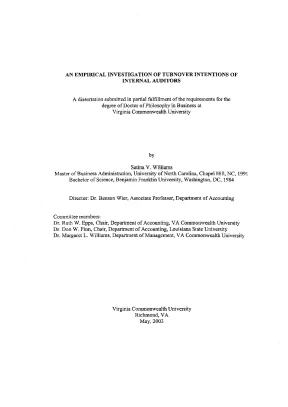
Tải xuống để đọc toàn bộAN EMPIRICAL INVESTIGATION OF TURNOVER INTENTIONS OF INTERNAL AUDITORS A dissertation submitted in partial fulfillment of the requirements for the degree of Doctor of Philosophy in Business at Virginia Commonwealth University by Satina V. Williams Master of Business Administration, University of North Carolina, Chapel Hill, NC, 1991 Bachelor of Science, Benjamin Franklin University, Washington, DC, 1984 Director: Dr. Benson Wier, Associate Professor, Department of Accounting Committee members: Dr. Epps, Chair, Department of Accounting, VA Commonwealth University Dr, Don W.
Finn, Chair, Department of Accounting, Louisiana State University Dr. Williams, Department of Management, VA Commonwealth University Virginia Commonwealth University Richmond, VA May, 2003 UMI Number: 3091837 UML UMI Microform 3091837 Copyright 2003 by ProQuest Information and Learning Company. All rights reserved. This microform edition is protected against unauthorized copying under Title 17, United States Code.
ProQuest Information and Learning Company 300 North Zeeb Road P. Box 1346 Ann Arbor, Mi 48106-1346 © Satina V. Williams 2003 All Rights Reserved School of Business Virginia Commonwealth University This is to certify that the dissertation prepared by Satina V. Williams entitled, AN EMPIRICAL INVESTIGATION OF TURNOVER INTENTIONS OF INTERNAL AUDITORS, has been approved by her committee as satisfactory completion of the dissertation requirement for the degree of Doctor of Philosophy in Business.
ÂwwU /JA« Benson Wier, Director, Virginia Commonwealth University Commmittee Mefners: Ắ TW ff yee! Ruth W. Epps, Virginie’ Commonwealth University Don W- Fam Don W. Finn, Louisiana State University 7 haramet Lh hill, 4Œ Margaret L. Williams, Virginia Commonwealth University Ruth W.
Epps, Chair, BepArtment of Accounting ntl rte, 7 Michael Sesnowitz, Dean, School of Buginess 49.# F, Douglas Boudinot, Dean, School of Graduate Studies Date “ ii Acknowledgements I wish to acknowledge my committee chair, Dr. Wier, for his support, guidance and patience throughout my dissertation process. I thank my committee members, Drs. Epps, Finn, and Williams for their support and guidance.
I acknowledge the VCU accounting faculty and other School of Business faculty and staff for always having encouraging words. To my classmates, thank you for your support and encouragement. Thank you to KPMG and Bernie Milano and the staff of the PhD Project for the financial support and the vision that is becoming a reality in business schools across the country. My family and friends have also played an important role in my completing the PhD program.
I thank my parents, John Arthur and Vernola Williams, who always came through for me. My sisters (Shelley, Leona and Arlisa) and brothers (Quintelle, John,and Reginald, PhD) and many friends who asked the important question, how is your dissertation coming? A special thank you to Dr. Charles Cook (Raleigh, NC) who made it possible for me to stay healthy while living the life of a student and always remembered to ask about my progress in the program. I must also thank those who came before me.
My ancestors, whose names I will never know, who came to this country in chains and endured hardships I can only imagine. Because of their determination to be free and live, I have reached this goal. To my ancestors born in this country and who are now asleep, they could not enjoy the many privileges we enjoy today but fought so their children could. Thank you to my grandparents who raised my parents to appreciate the importance of a good education.
To my parents who understand that the future belongs to those who prepare for it today. I thank you all. I only pray that you are as proud of me as I am of you. I thank God for this opportunity and the strength to complete the program.
He is my Foundation, To whom much is given, much is required. Freely I have received, freely I give. 1H Table of Contents lu. List Of FIBUTCS.
on" «no ke ke ch Thế ben ke kereseeeerssee XĨ Abstract. se, Vil Chapter 1 Re The Theoretical Model. VY ng ng v4 4157174 H1 K2 11 8 1 10 k1 11215 8 key saves Current State of Voluntary TUTHOVCF. co HH ng TH kg Hà 4x mưu mom Internal Audit Profession.
KH ng ưếy oe Internal Audit Ôu[SOUTCITE. cung HH ng ng nh net Chapter 2 LITERATURE REVIEW AND HYPOTHESES DEVELOPMENT. co càng HH TH Hà ng Hà the trrierveeee Ÿ PO) 8N. 19 Survivors’ Reactions to Layoffs.
seed 6022 nh can. sen HH HH HH HH ưêc 30 Psychological State-Job Ïns€CUTify. -- sen xe, 30 Consequences-Professional Commitment and Organizational Commitment. cv H21 11k cày 31 Orgamizational Commitmeri(.
or sessed Outcome-Turnover Intention. V* HH HH ve ch LH nghe HH ket 35 Chapter 3 RESEARCH METHODOLOGY 00. Sample SUTV€VCỦ. HH HH kh KỲ t9 kg ket khe sen.
tt KH nh tr cư 41 JOb ÏnS€CUYHẨY. cà HH HH TH HH ve K* HH n1 xe, 41 Professional Commitment.csscsccsesssesseeserectensressssereenenseneses KH he 41 Organizational Commitment. kg TH KH 108 cv 42 Turnover IntenHion.csxee H 1 ng HT HT nh .sd+9°xsd4s4546e9esw-ae®t4bpdboteedbsdoeene .°ớ_“ PORES aveererveraradeevorer 4d Structural Equations ÀnaÌySIS. có cung HH KH HH Ha key we 4d Chapter 4 Demographics AE.
Goodness of FIt. 4 tư GA 4299482142466 0900909260200 4 SỬ(020A 0409090424264 2t9%00 A0 30%66 06 ự hợ Set 33 Test of Hypotheses.Ÿ«ưng Sông Sức — Chapter 5 CONCLUSION nh HH ng ng nh ch se sec OE REHEHOEHAEEDEHENOAMERERETEMHE HORE ERATE 60 Limitations and Future Ñes€arCh. LH ke vn cưa References. sodearerecaanes oavene pesene Woe neesnsererace “2 .ee°tenvebpdasesase evevee Chae on nen aH eK deo arereae.
Gà HH HH HH KH To TK HT it ket cty TA Appendix B.e UE RHR O EME RHE S ERECTOR HEME DHA ERE HA EHSHEP EDEREDE Crd rereorandreer seceraeveasessneees OO « Appendix C DORR OER UE RER ASAE HCCI STH ORR ERE REROR PERE ROSEN PEAEAER PEPER ERIK OED ER EN OD muạahesddddPseadgedae+e Deena eer ner eNeeaeeNSe 88 VIA.`46^ "ˆˆY4%44021521946hn0 594520994 9402926084229 464402 eenvoeve +1Ä#eees® đx1ds°ase6 690429 tSŸ-C° List of Tables Table | Page 1. Reliability Scores and Factor LOAd1DBS. cá HH HH HH 9g 1x xay .9Ề1 11 1110121 tá Hà KH TT HT T1 Cà Hà trọ 47 3. Descrnptive Statistics of Measured Varlables.
Ô 4, Pearson Correlations Among Measured Variables. Ăn Hye 31 "Co co ềốa on nh cố ae. wee dT vị List of Figures Figure : Page 1. kg xe V9 911 11k xe trxg KH 1g 12 1 10151 kg 6 2.
Internal Auditor Turnover Intention MoOđ€Ï. ng HH nh 1x ssesecreessze 2 Vil ABSTRACT AN EMPIRICAL INVESTIGATION OF TURNOVER INTENTIONS OF INTERNAL AUDITORS | By Satina Vivian Williams, Ph. A dissertation submitted in partial fulfillment of the requirements for the degree of Doctor of Philosophy in Business at Virginia Commonwealth University. Virginia Commonwealth University, 2003 Major Director: Dr.
Benson Wier, Associate Professor, Department of Accounting Excessive tumover in any organization should be of concern to its management. The high cost of turnover, which includes losing qualified personnel, necessitates management’s continuing efforts to seek out reasons valued employees leave voluntarily. Prior studies show that organizational events requiring layoffs can lead to undesirable outcomes, such as turnover. This study examines how outsourcing, a management decision that results in layoff, impacts tumover intentions of internal auditors.
Although outsourcing is not a new phenomenon, management’s plans to improve efficiency and enhance financial performance by outsourcing have brought the topic to a higher level of attention. The study proposes that outsourcing creates a degree of job insecurity and can result in undesirable changes in professional and organizational commitments and a higher probability of turnover intentions. Internal auditors respond to survey items that measure their psychological state Gob insecurity), the consequences of job insecurity (professional commitment and organizational commitment), and the outcome (turnover vill intention). Structural equation modeling is used to analyze the relationships among the study variables.
Results of the study show that the internal auditors in this sample have relatively low levels of job insecurity. The results also suggest that it is in the organization’s best interest, when engaged in outsourcing, to monitor job insecurity. The significant relationships among variables indicate that an increased level of job insecurity negatively affects professional commitment and organizational commitment and 1S positively related to turnover intention. Chapter 1 _HNTRODUCTION _ The purpose of this study is to investigate turnover intentions of internal auditors who have remained in the profession subsequent to the increased outsourcing of internal audit functions.
Turnover intention is “an individual’s own estimated (subjective) probability that they are permanently leaving the organization at some point in the near future (Vandenberg and Nelson 1999, p.” This study is important because employee turnover, averaging 1.2 percent of the workforce per month, continues to plague American businesses costing firms millions of dollars and many valued employees each year, thus, negatively affecting organizational effectiveness (Vandenberg and Nelson 1999), Doll (1983) asserts that although a certain amount of turnover is necessary to maintain a healthy and vigorous organization, excessive, uncontrolled turnover of quality personnel is expensive, disrupts planning, decreases job efficiency, and negatively affects staff morale and client relations. Reducing turnover is beneficial, particularly when the employees who intend to leave have outstanding ability and high potential (Doll 1983). Enhancing managements’ understanding of the possible turnover effects of outsourcing will allow organizations to establish procedures to allay some of these undesirable outcomes. Therefore, it would be 2 in an organization’s best interest to use all available, relevant evidence to analyze turnover-related issues pertaining to outsourcing (Moody 2000).
While excessive turnover in any department would be of concern to management, internal auditors were chosen as subjects for this study because of their importance to _ management and their unique position in the organization. Often referred to as the eyes and ears of ‘management, internal auditors 1) possess intimate knowledge of the organization required for high-quality audit services, 2) are a management resource for immediate attention in crisis situations, 3) are in a position to help prevent fraud and handle fraud related issues and 4) help maintain independence and objectivity by ‘separating attestation and consulting services (Chadwick 2000). Vinten (1995) suggests that the internal auditor, as a participant observer, is in a better position to obtain more information and a greater depth of knowledge than would be possible from third party providers. When comparing organizations that maintain internal audit departments with those that do not, Welch, Holmes, and Strawser (1996) find that internal auditors are able to detect fraud earlier than others and limit resulting damage, thus, adding value to the firm.
Kalbers and Fogarty (1995) assert that internal auditors, a part of the accounting profession, serve an important role in today’s organizations. However, compared to other accounting professionals, research examining internal auditors is relatively limited. As the leading organization for the internal audit profession, the Institute of Internal Auditors (IIA) may find this study of value when carrying out its mission of promoting and developing the practice of internal auditing. TIA activities include educating members and others as to the practice of internal auditing as it exists in various 3 countries.! Not only should current and potential internal auditors be aware of the current trend in outsourcing, but they should also be aware of its impact on the profession.
This study also enhances our understanding of outsourcing and its effect on attitudes, behavior and commitment to the profession and employing organizations. Positive trends shown in the 2000 Job Market Survey for the internal auditing profession indicate that the health of the profession is strong (Oxner and Kusel 2000). Inasmuch as this may be good news for the profession, management must also consider how internal auditors’ perceptions of outsourcing impact their psychological state and behavior and that those perceptions may differ from the conclusions reached in the job market survey. Low levels of organizational commitment and job satisfaction coupled with high turnover adversely impact the internal audit department's ability to provide usable information to external auditors and organizations.
Low levels of organizational commitment and job satisfaction accompanied by high turnover can “.
Nội dung được bảo vệ bản quyền — Tải xuống đầy đủ
Trích dẫn luận án này
Satina V. Williams (2003). An empirical investigation of turnover intentions of interna [Luận án tiến sĩ, Virginia Commonwealth University]. LuanAn.net. https://luanan.net/quan-tri-kinh-doanh/quan-tri-nguon-nhan-luc/an-empirical-investigation-of-turnover-intentions-of-internal-auditors
Câu hỏi thường gặp
Luận án "An empirical investigation of turnover intentions of interna" nghiên cứu về vấn đề gì?
Đánh giá thực nghiệm về ý định nghỉ việc của nhân viên nội bộ doanh nghiệp
Luận án "An empirical investigation of turnover intentions of interna" được bảo vệ tại trường nào?
Luận án này được bảo vệ tại Virginia Commonwealth University. Năm bảo vệ: 2003.
Luận án "An empirical investigation of turnover intentions of interna" thuộc chuyên ngành gì?
Luận án "An empirical investigation of turnover intentions of interna" thuộc chuyên ngành Business. Danh mục: Quản Trị Nguồn Nhân Lực.
Luận án "An empirical investigation of turnover intentions of interna" có bao nhiêu trang?
Luận án "An empirical investigation of turnover intentions of interna" có 196 trang. Bạn có thể xem trước một phần tài liệu ngay trên trang web trước khi tải về.
Cách tải luận án "An empirical investigation of turnover intentions of interna" về máy như thế nào?
Để tải luận án về máy, bạn nhấn nút "Tải xuống ngay" trên trang này, sau đó hoàn tất thanh toán phí lưu trữ. File sẽ được tải xuống ngay sau khi thanh toán thành công. Hỗ trợ qua Zalo: 0559 297 239.