Luận án tiến sĩ: Cảm biến hóa học thế hệ mới - Elizabeth Tehan
Luận án tiến sĩ về cảm biến hóa học thế hệ mới. Nghiên cứu phát triển vật liệu cảm biến sol-gel với độ ổn định cao, độ nhạy cảm tuyệt vời và hiệu suất dài hạn.
The State University of New York at Buffalo
Luan An
Luận án
Năm xuất bản
Số trang
203
Thời gian đọc
31 phút
Lượt xem
1
Lượt tải
0
Phí lưu trữ
50 Point
Tổng quan nhanh
- Chủ đề:
- 1. Cảm Biến Hóa Học Thế Hệ Mới: Tổng Quan
- Số trang:
- 203 trang
- Trường:
- The State University of New York at Buffalo
- Chuyên ngành:
- Chemistry
- Tác giả:
- Elizabeth Christine Tehan
- Năm:
- 2006
Tóm tắt nội dung luận án
I. Cảm Biến Hóa Học Thế Hệ Mới Tổng Quan
Cảm biến hóa học thế hệ mới đại diện cho bước tiến vượt bậc trong công nghệ phát hiện và đo lường. Các thiết bị này sử dụng vật liệu nano, graphene và công nghệ sol-gel tiên tiến. Độ nhạy cao và khả năng phát hiện chính xác là ưu điểm nổi bật. Cảm biến điện hóa và cảm biến quang học đang thay đổi cách thức giám sát môi trường. Biosensor mang lại khả năng phân tích sinh học chưa từng có. Nano cảm biến cho phép phát hiện ở mức phân tử đơn lẻ.
1.1. Định Nghĩa và Phân Loại Cảm Biến
Cảm biến hóa học là thiết bị chuyển đổi tín hiệu hóa học thành tín hiệu điện. Các loại chính bao gồm cảm biến điện hóa, cảm biến quang học và biosensor. Cảm biến pH đo độ acid-base trong dung dịch. Cảm biến ion phát hiện nồng độ ion cụ thể. Cảm biến khí giám sát chất khí trong không khí. Mỗi loại có ứng dụng riêng biệt trong y tế, môi trường và công nghiệp.
1.2. Vật Liệu Nano và Graphene
Vật liệu nano cách mạng hóa hiệu suất cảm biến. Graphene cung cấp diện tích bề mặt lớn và độ dẫn điện cao. Nano cảm biến có kích thước nhỏ gọn và tiêu thụ năng lượng thấp. Vật liệu sol-gel tạo ma trận xốp cho cảm biến. Các cấu trúc nano tăng cường độ nhạy gấp nhiều lần. Công nghệe nano cho phép tích hợp đa chức năng.
1.3. Ưu Điểm Công Nghệ Mới
Độ nhạy cao là ưu điểm quan trọng nhất. Thời gian đáp ứng nhanh giúp phát hiện kịp thời. Độ ổn định dài hạn giảm chi phí bảo trì. Kích thước nhỏ gọn cho phép tích hợp dễ dàng. Chi phí sản xuất giảm nhờ quy trình tối ưu. Khả năng tùy chỉnh đáp ứng nhu cầu đa dạng.
II. Cảm Biến Điện Hóa và Ứng Dụng Thực Tiễn
Cảm biến điện hóa đo lường thông qua phản ứng산hóa khử. Công nghệ này cung cấp độ chính xác cao trong phân tích. Cảm biến pH sử dụng điện cực thủy tinh hoặc vật liệu rắn. Cảm biến ion chọn lọc phát hiện ion kim loại và phi kim loại. Biosensor điện hóa kết hợp enzyme hoặc kháng thể. Ứng dụng trải rộng từ y tế đến kiểm soát chất lượng nước. Độ nhạy đạt mức micro-molar hoặc thấp hơn.
2.1. Nguyên Lý Hoạt Động
Phản ứng điện hóa tạo ra dòng điện hoặc điện thế. Điện cực làm việc tiếp xúc trực tiếp với mẫu. Điện cực so sánh cung cấp điện thế ổn định. Vật liệu nano tăng diện tích bề mặt điện cực. Graphene cải thiện tốc độ truyền electron. Màng chọn lọc ion kiểm soát độ đặc hiệu.
2.2. Cảm Biến pH và Ion
Cảm biến pH đo nồng độ ion hydro trong dung dịch. Điện cực thủy tinh truyền thống có độ chính xác 0.01 pH. Cảm biến pH rắn sử dụng oxit kim loại bền vững. Cảm biến ion chọn lọc phát hiện Na+, K+, Ca2+ và Cl-. Màng polymer chứa ionophore tạo độ chọn lọc. Ứng dụng trong y tế lâm sàng và nông nghiệp.
2.3. Biosensor Điện Hóa
Biosensor kết hợp yếu tố sinh học với đầu dò điện hóa. Enzyme glucose oxidase phát hiện đường huyết. Kháng thể nhận biết protein đặc hiệu. DNA sensor phát hiện trình tự gen mục tiêu. Vật liệu nano tăng tín hiệu và độ nhạy. Ứng dụng trong chẩn đoán bệnh và an toàn thực phẩm.
III. Cảm Biến Quang Học Công Nghệ và Đổi Mới
Cảm biến quang học sử dụng ánh sáng để phát hiện chất phân tích. Công nghệ sợi quang mang lại độ nhạy cao và ổn định. Huỳnh quang và phosphorescence là cơ chế phát hiện chính. Vật liệu sol-gel tạo ma trận cố định cho thuốc thử quang. Nano cảm biến quang học phát hiện ở nồng độ cực thấp. Cảm biến oxy sử dụng sự dập tắt huỳnh quang. Ứng dụng trong giám sát môi trường và y sinh học.
3.1. Nguyên Lý Quang Học
Ánh sáng tương tác với chất phân tích tạo tín hiệu. Hấp thụ quang đo lường nồng độ theo định luật Beer-Lambert. Huỳnh quang phát ra ánh sáng sau khi kích thích. Phosphorescence có thời gian sống dài hơn. Sợi quang dẫn ánh sáng đến vùng cảm biến. Photodetector chuyển đổi ánh sáng thành tín hiệu điện.
3.2. Vật Liệu Sol Gel
Sol-gel tạo ma trận xốp trong suốt ở nhiệt độ thấp. Thuốc thử quang được cố định trong cấu trúc gel. Độ xốp kiểm soát khuếch tán chất phân tích. Vật liệu ổn định lâu dài không bị rửa trôi. Xerogel cho phép tùy chỉnh tính chất vật lý. Ứng dụng trong cảm biến oxy và pH quang học.
3.3. Cảm Biến Oxy Quang Học
Oxy dập tắt huỳnh quang của thuốc thử đặc biệt. Ruthenium complex là chất chỉ thị phổ biến. Thời gian sống huỳnh quang tỷ lệ nghịch với nồng độ oxy. Vật liệu nano tăng độ nhạy và thời gian đáp ứng. Cảm biến oxy quang học không tiêu thụ oxy mẫu. Ứng dụng trong y tế, thực phẩm và nuôi trồng thủy sản.
IV. Hệ Thống Cảm Biến Thông Minh và Mạng Neural
Hệ thống cảm biến kết hợp nhiều đầu dò tạo mảng cảm biến. Mạng neural nhân tạo xử lý dữ liệu phức tạp từ mảng. Độ chính xác tăng lên nhờ phân tích đa biến. Cảm biến khí tạo mảng phát hiện hỗn hợp phức tạp. Thuật toán học máy cải thiện khả năng nhận dạng. Hệ thống tự hiệu chuẩn giảm sai số đo lường. Ứng dụng trong an ninh, y tế và giám sát môi trường.
4.1. Mảng Cảm Biến
Mảng cảm biến chứa nhiều phần tử với độ nhạy khác nhau. Mỗi cảm biến phản ứng khác biệt với chất phân tích. Tín hiệu tổng hợp tạo vân tay hóa học độc đáo. Cảm biến khí sử dụng polymer dẫn hoặc oxit kim loại. Mảng biosensor phát hiện nhiều biomarker đồng thời. Kích thước nhỏ gọn cho phép tích hợp di động.
4.2. Mạng Neural Nhân Tạo
Mạng neural học từ dữ liệu huấn luyện. Thuật toán nhận dạng mẫu phức tạp. Backpropagation tối ưu hóa trọng số kết nối. Độ chính xác phân loại đạt trên 95%. Hệ thống tự động hiệu chuẩn và bù trôi. Ứng dụng trong phát hiện chất nổ và ma túy.
4.3. Tích Hợp và Ứng Dụng
Microcontroller điều khiển hệ thống cảm biến. Truyền thông không dây gửi dữ liệu thời gian thực. Nguồn năng lượng thấp kéo dài thời gian hoạt động. Giao diện người dùng hiển thị kết quả trực quan. Hệ thống cảnh báo sớm phát hiện nguy hiểm. Ứng dụng trong giám sát chất lượng không khí đô thị.
V. Nano Cảm Biến Đột Phá Công Nghệ Hiện Đại
Nano cảm biến hoạt động ở quy mô nanometer. Vật liệu nano cung cấp tỷ lệ diện tích/thể tích cực lớn. Graphene là vật liệu 2D lý tưởng cho cảm biến. Carbon nanotube có độ dẫn điện và cơ học tuyệt vời. Nanoparticle vàng tăng cường tín hiệu quang học. Quantum dot phát huỳnh quang có thể điều chỉnh. Độ nhạy đạt mức phát hiện phân tử đơn. Ứng dụng trong y tế chính xác và chẩn đoán sớm.
5.1. Graphene và Carbon Nanotube
Graphene là lớp carbon đơn nguyên tử dày. Độ dẫn điện cao gấp 200 lần silicon. Diện tích bề mặt lý thuyết đạt 2630 m²/g. Carbon nanotube có cấu trúc ống nano. Tính chất điện thay đổi khi hấp phụ phân tử. Ứng dụng trong cảm biến khí và biosensor.
5.2. Nanoparticle Kim Loại
Nanoparticle vàng có tính chất quang học độc đáo. Plasmon bề mặt tăng cường tín hiệu Raman. Kích thước 10-100 nm tối ưu cho cảm biến. Bề mặt dễ dàng chức năng hóa. Nanoparticle bạc có hoạt tính kháng khuẩn. Ứng dụng trong phát hiện DNA và protein.
5.3. Quantum Dot
Quantum dot là tinh thể bán dẫn nano. Huỳnh quang phụ thuộc vào kích thước hạt. Độ sáng cao và ổn định quang tốt. Phổ phát xạ hẹp cho đa kênh phát hiện. Độc tính thấp với quantum dot carbon. Ứng dụng trong hình ảnh sinh học và cảm biến.
VI. Xu Hướng Phát Triển và Triển Vọng Tương Lai
Cảm biến hóa học đang tiến tới tích hợp và thu nhỏ. Internet of Things kết nối hàng triệu cảm biến. Trí tuệ nhân tạo phân tích dữ liệu big data từ cảm biến. Cảm biến đeo được giám sát sức khỏe liên tục. Vật liệu sinh học tương thích cải thiện an toàn. Năng lượng thu hoạch tạo cảm biến tự cung cấp. Y học chính xác dựa trên dữ liệu cảm biến cá nhân. Môi trường thông minh sử dụng mạng cảm biến phân tán.
6.1. Cảm Biến Đeo Được
Thiết bị đeo theo dõi sức khỏe thời gian thực. Cảm biến sinh học đo glucose, lactate, pH mồ hôi. Vật liệu mềm dẻo thoải mái khi đeo. Truyền thông Bluetooth gửi dữ liệu đến smartphone. Pin mỏng hoặc thu năng lượng cơ thể. Ứng dụng trong thể thao và quản lý bệnh mạn tính.
6.2. IoT và Cảm Biến Thông Minh
Internet of Things kết nối hàng tỷ thiết bị. Cảm biến thu thập dữ liệu môi trường liên tục. Cloud computing lưu trữ và phân tích dữ liệu. Edge computing xử lý tại chỗ giảm độ trễ. Mạng cảm biến không dây giám sát diện rộng. Ứng dụng trong thành phố thông minh và nông nghiệp chính xác.
6.3. Thách Thức và Cơ Hội
Chi phí sản xuất cần giảm để phổ biến rộng. Tiêu chuẩn hóa đảm bảo tương thích thiết bị. Bảo mật dữ liệu bảo vệ thông tin cá nhân. Tuổi thọ pin kéo dài thời gian hoạt động. Vật liệu thân thiện môi trường giảm ô nhiễm. Cơ hội lớn trong y tế, môi trường và an ninh.
Mục lục chi tiết luận án
Tải xuống file đầy đủ để xem toàn bộ nội dung
Tải đầy đủ (203 trang)Nội dung chính
Tổng quan về luận án
Luận án này tiên phong trong việc phát triển các thế hệ cảm biến hóa học và hệ thống cảm biến quang học mới, giải quyết nhu cầu cấp thiết về các thiết bị phân tích đa analyte hiệu quả, di động và mạnh mẽ. Trong bối cảnh khoa học hiện nay, khi nhu cầu giám sát đồng thời nhiều chất phân tích trong các mẫu phức tạp ngày càng tăng, nghiên cứu này đóng vai trò quan trọng trong việc thúc đẩy công nghệ cảm biến vượt ra ngoài các giới hạn của hệ thống phòng thí nghiệm truyền thống. Tính tiên phong của nghiên cứu thể hiện qua việc tích hợp các tiến bộ trong công nghệ vật liệu sol-gel, phương pháp in kim chính xác và hệ thống phát hiện công suất thấp để tạo ra các giải pháp cảm biến đột phá.
Research gap cụ thể mà luận án này giải quyết nằm ở sự thiếu hụt các hệ thống cảm biến tích hợp, chi phí thấp, dễ chế tạo, có khả năng theo dõi và định lượng đồng thời nhiều chất phân tích một cách ổn định, chính xác, và có thể đảo ngược trong các môi trường ngoài phòng thí nghiệm. Như Tehan (2006) đã chỉ ra, "Despite advancements in sensor technology, there continues to be many challenges. For example, there are needs for efficient, portable, and robust devices for field or home/consumer deployment that possess the analytical figures of merit (detection limits, dynamic range, response time, and sensitivity) of standard laboratory systems." Nhiều phương pháp hiện có hoặc thiếu tính di động, tiêu thụ năng lượng cao, hoặc không thể tạo ra các mảng cảm biến mật độ cao với khả năng phản hồi đa dạng từ một phần tử cảm biến duy nhất.
Nghiên cứu được định hướng bởi các câu hỏi và giả thuyết chính sau:
- RQ1: Làm thế nào để các vật liệu cảm biến gốc sol-gel có khả năng tạo ra các đường chuẩn tuyến tính, độ nhạy cao và ổn định lâu dài?
- H1: Các màng xerogel composite n-octyltriethoxysilane (Octyl-triEOS) / tetraethylorthosilane (TEOS) được pha tạp [Ru(dpp)3]2+ sẽ tạo ra các cảm biến O2 có độ nhạy cao, đường chuẩn tuyến tính và ổn định vượt trội so với cảm biến TEOS thuần túy.
- RQ2: Liệu mảng cảm biến xerogel tùy chỉnh kết hợp với mạng nơ-ron nhân tạo (ANNs) có thể cải thiện độ chính xác và độ chính xác trong phát hiện O2 không?
- H2: Việc tạo ra các mảng cảm biến xerogel đồng pha tạp với hai luminophore ở các tỷ lệ mol khác nhau, kết hợp với huấn luyện ANN, sẽ dẫn đến cải thiện đáng kể độ chính xác và độ chính xác trong định lượng O2 mẫu không xác định.
- RQ3: Làm thế nào để tạo ra phản hồi cảm biến đa dạng từ một phần tử cảm biến duy nhất bằng cách sử dụng phép đo huỳnh quang pha?
- H3: Bằng cách điều chỉnh tần số điều chế kích thích và góc pha của đầu dò trong kỹ thuật huỳnh quang pha, có thể quan sát được các đặc tính phản hồi phân tích khác nhau từ một phần tử cảm biến xerogel-based O2 duy nhất.
- RQ4: Các hệ thống cảm biến hóa học sử dụng phần tử cảm biến xerogel-based và CMOS photodetector có thể đạt được hiệu suất tương đương với các hệ thống PMT/CCD truyền thống nhưng với mức tiêu thụ năng lượng thấp hơn đáng kể không?
- H4: Việc tích hợp CMOS photodetector với cảm biến màng mỏng xerogel-based rắn sẽ tạo ra một hệ thống cảm biến nhỏ gọn, có thể đảo ngược, với các thông số phân tích so sánh được với các hệ thống dựa trên PMT và CCD, nhưng với mức tiêu thụ năng lượng thấp hơn đáng kể.
- RQ5: Làm thế nào để chế tạo mảng vi cảm biến mật độ cao bằng cách sử dụng các kim dựa trên thạch anh được điều chỉnh?
- H5: Việc phát triển một loại kim in mới dựa trên thạch anh sẽ cho phép in các tính năng có đường kính khoảng 10 µm, tăng đáng kể mật độ mảng cảm biến và số lượng chất phân tích có thể phát hiện đồng thời.
Khung lý thuyết của luận án này được xây dựng trên cơ sở các nguyên lý của quang phổ phát quang (luminescence spectroscopy), đặc biệt là cơ chế dập tắt động học (dynamic quenching) được mô tả bởi phương trình Stern-Volmer. Các lý thuyết về vật liệu sol-gel, bao gồm quá trình thủy phân, ngưng tụ và trùng ngưng để tạo thành mạng lưới xerogel ba chiều, cung cấp nền tảng cho việc thiết kế và tổng hợp vật liệu. Ngoài ra, lý thuyết về mạng nơ-ron nhân tạo (Artificial Neural Networks) được sử dụng để phát triển các mô hình xử lý tín hiệu thông minh, nâng cao khả năng giải thích dữ liệu phức tạp từ mảng cảm biến đa thành phần.
Các đóng góp đột phá của nghiên cứu này có tác động định lượng rõ rệt:
- Phát triển vật liệu cảm biến O2 mới từ composite Octyl-triEOS/TEOS mang lại độ ổn định lâu dài vượt trội. Một cảm biến 50 mol % Octyl-triEOS 11 tháng tuổi cho thấy độ nhạy cao hơn gấp bốn lần so với cảm biến TEOS thuần túy, và độ nhạy của nó duy trì ổn định với RSD = 4% trong cùng thời gian, trong khi cảm biến TEOS thuần túy giảm hơn 400%.
- Đạt được sự cải thiện 5-10 lần về độ chính xác và độ chính xác trong định lượng O2 trong các mẫu không xác định thông qua việc kết hợp các mảng cảm biến xerogel tùy chỉnh với Artificial Neural Networks.
- Trình bày lần đầu tiên một hệ thống cảm biến tích hợp CMOS photodetector và cảm biến màng mỏng xerogel-based rắn, tiêu thụ ít hơn 0.1% điện năng so với PMT hoặc CCD tiêu chuẩn, mở ra tiềm năng lớn cho các thiết bị di động.
- Chế tạo kim in mới cho phép in các đặc điểm có đường kính ~10 µm, nhỏ hơn mười lần so với các phương pháp hiện có, dẫn đến tăng khả năng phát hiện analyte lên gấp trăm lần trong một diện tích nhất định.
Phạm vi của nghiên cứu bao gồm việc thiết kế và tổng hợp nhiều loại vật liệu xerogel (Octyl-triEOS/TEOS, C8-TEOS/TEOS), pha tạp các luminophore như [Ru(dpp)3]2+ và [Ru(bpy)3]2+, chế tạo các màng mỏng và mảng cảm biến bằng kỹ thuật spin-coating và pin printing. Các thử nghiệm được thực hiện trên nhiều hệ thống phát hiện khác nhau (PMT, CCD, CMOS) và bao gồm cả việc đánh giá hiệu suất của cảm biến sau khi tiếp xúc với huyết tương chuột hoặc máu toàn phần của chuột. Thời gian nghiên cứu cho thấy sự ổn định của cảm biến được theo dõi lên đến 11 tháng. Ý nghĩa của công trình này là rất lớn, cung cấp một nền tảng vững chắc cho việc phát triển các thiết bị cảm biến hóa học và sinh hóa thế hệ mới, có khả năng ứng dụng rộng rãi trong y tế, môi trường và an ninh, đặc biệt là trong các ứng dụng tại hiện trường hoặc tiêu dùng.
Literature Review và Positioning
Nghiên cứu về cảm biến hóa học và hệ thống cảm biến đã chứng kiến sự tăng trưởng đáng kể, với nhiều nhánh nghiên cứu chính tập trung vào việc phát triển vật liệu mới, kỹ thuật chế tạo, và phương pháp xử lý tín hiệu. Một nhánh lớn tập trung vào vật liệu sol-gel và xerogel làm nền tảng cảm biến do tính chất quang học trong suốt, ổn định nhiệt, và khả năng cô lập các tác nhân nhận biết mà không cần biến đổi hóa học (Klein, L., 1994; Journal of Sol-Gel Science and Technology 1998). Nghiên cứu của Tehan (2006) xây dựng trên nền tảng này, đặc biệt nhấn mạnh việc điều chỉnh cấu trúc và hóa học của xerogel để tối ưu hóa hiệu suất cảm biến. Các công trình trước đây của Dunn và Zink (Chemistry of Materials 1996) và P.V. Kamat (Journal of Sol-Gel Science and Technology 1997) đã đặt nền móng cho việc sử dụng vật liệu sol-gel trong cảm biến quang học.
Một nhánh nghiên cứu khác tập trung vào việc phát triển mảng cảm biến đa analyte. Các nghiên cứu của K. S. Suslick (Chemical Society Reviews 2003) và R. A. McGill (Analytica Chimica Acta 1997) đã khám phá các mảng cảm biến khác nhau để nhận diện các chất phân tích phức tạp. Công trình này mở rộng nhánh đó bằng cách giới thiệu các phương pháp in kim chính xác (pin printing methods) để tạo ra các mảng cảm biến mật độ cao, như được đề cập trong các nghiên cứu ban đầu của nhóm (Journal of Fluorescence 1999). Việc sử dụng các kỹ thuật in ấn như của Cartesian Technology model MicroSys 5100, được miêu tả trên trang 21, cho phép tạo ra "hàng trăm phần tử cảm biến trong một khu vực nhất định."
Các mâu thuẫn và tranh luận chính trong lĩnh vực này thường xoay quanh việc cân bằng giữa độ nhạy, độ chọn lọc, thời gian phản hồi, khả năng tái tạo và sự ổn định lâu dài của cảm biến. Ví dụ, trong khi một số vật liệu sol-gel cung cấp độ nhạy cao, chúng có thể gặp vấn đề về tính không đồng nhất hoặc sự phân tách pha, ảnh hưởng đến độ ổn định theo thời gian. Tehan (2006) đã giải quyết điều này bằng cách chứng minh rằng "SEM images of the varios regions of the 80% Octyl-triEOS/ 20% TEOS xerogel film showing phase separation and heterogeneity" (Figure 3.2), nhưng cũng đã thành công trong việc tạo ra các vật liệu composite ổn định hơn, chẳng hạn như màng Octyl-triEOS/TEOS 50 mol %, duy trì độ nhạy O2 ổn định (RSD = 4%) trong 11 tháng, trong khi các cảm biến TEOS thuần túy suy giảm hơn 400% trong cùng khoảng thời gian (trang 6).
Việc định vị luận án trong tài liệu khoa học cho thấy nó nằm ở giao điểm của khoa học vật liệu tiên tiến, kỹ thuật hóa phân tích và xử lý tín hiệu thông minh. Luận án này giải quyết cụ thể khoảng trống trong việc tạo ra "phản hồi cảm biến đa dạng từ một phần tử cảm biến duy nhất" (trang 7), một thách thức mà các phương pháp truyền thống đòi hỏi nhiều phần tử cảm biến vật lý. Nó tiến xa hơn bằng cách tích hợp trực tiếp các thiết bị bán dẫn công suất thấp như CMOS photodetector với vật liệu cảm biến mới, một lĩnh vực ít được khám phá đầy đủ về hiệu suất so sánh với các hệ thống phòng thí nghiệm lớn hơn.
Nghiên cứu này thúc đẩy lĩnh vực cảm biến hóa học bằng cách: (1) Phát triển các vật liệu xerogel có độ ổn định và độ nhạy vượt trội, (2) Đưa ra một phương pháp độc đáo để tạo ra các hồ sơ phản hồi đa dạng từ một phần tử cảm biến duy nhất bằng cách sử dụng phép đo huỳnh quang pha, (3) Tích hợp thành công cảm biến dựa trên xerogel với CMOS photodetector để tạo ra một hệ thống di động, tiêu thụ năng lượng thấp, và (4) Cải tiến đáng kể kỹ thuật in kim để chế tạo mảng vi cảm biến mật độ cao.
So sánh với các nghiên cứu quốc tế, công trình này có nhiều điểm nổi bật. Ví dụ, trong khi nhóm NCSR tại Đại học Thành phố Dublin (Dublin City University) đã có những đóng góp đáng kể trong lĩnh vực cảm biến sợi quang và vật liệu sinh học, luận án của Tehan đặc biệt tập trung vào việc điều chỉnh hóa học vật liệu sol-gel và tích hợp điện tử công suất thấp. Nhiều nghiên cứu quốc tế, như của C. D. Geddes và J. R. Lakowicz (Journal of Fluorescence 1999), đã khám phá các khía cạnh của phép đo huỳnh quang pha, nhưng luận án này áp dụng nó một cách sáng tạo để tạo ra các hồ sơ phản hồi đa dạng từ một phần tử cảm biến duy nhất, mở ra một hướng mới để tăng cường chức năng cảm biến mà không cần tăng độ phức tạp vật lý của mảng. Ngoài ra, việc tích hợp cảm biến với CMOS photodetector trực tiếp đặt nghiên cứu này ngang hàng với các nỗ lực hàng đầu thế giới nhằm thu nhỏ và di động hóa các hệ thống phân tích, vượt qua các giới hạn của nhiều hệ thống PMT/CCD cồng kềnh và tiêu thụ nhiều năng lượng đang được sử dụng rộng rãi trong các phòng thí nghiệm quốc tế.
Đóng góp lý thuyết và khung phân tích
Đóng góp cho lý thuyết
Luận án này đóng góp đáng kể vào lý thuyết về cảm biến quang học, đặc biệt là trong việc mở rộng và thách thức các lý thuyết hiện có về dập tắt phát quang và khoa học vật liệu sol-gel.
- Mở rộng lý thuyết Stern-Volmer: Công trình này mở rộng mô hình dập tắt động học Stern-Volmer bằng cách nghiên cứu cách các thành phần xerogel composite (ví dụ: Octyl-triEOS/TEOS) ảnh hưởng đến hằng số dập tắt (Stern-Volmer quenching constant) và thời gian sống trạng thái kích thích (excited-state lifetime) của luminophore [Ru(dpp)3]2+ trong ma trận xốp. Các phát hiện cho thấy "50 mol % Octyl-triEOS composites form uniform, crack-free xerogel films that can be used to construct high sensitivity O2 sensors that have linear calibration curves and excellent long-term stability" (trang 6), cung cấp bằng chứng thực nghiệm mạnh mẽ về việc điều chỉnh hóa học vật liệu có thể thay đổi đáng kể các thông số dập tắt theo cách không tuyến tính, đòi hỏi các mô hình Stern-Volmer cải tiến để mô tả chính xác hơn các hệ thống này.
- Thúc đẩy lý thuyết về vật liệu ORMOSILs: Nghiên cứu này chứng minh cách các ORMOSILs (Organically Modified Silanes) có thể được sử dụng để điều chỉnh các tính chất vật lý và hóa học của xerogel, chẳng hạn như kích thước lỗ chân lông, hình dạng, diện tích bề mặt và độ phân cực, như được minh họa bằng sự kết hợp của Octyl-triEOS và TEOS (trang 15-17). Điều này làm sâu sắc thêm hiểu biết về cách nhóm R' không thể thủy phân trong Class II ORMOSILs ảnh hưởng đến cấu trúc mạng lưới cuối cùng và hiệu suất cô lập luminophore, từ đó ảnh hưởng đến khả năng tiếp cận của chất phân tích.
- Giới thiệu nguyên lý phân giải pha trong cảm biến đơn phần tử: Một đóng góp lý thuyết đột phá là việc chứng minh "new strategy wherein phase-resolved fluorescence techniques are exploited to create a diversified sensor response from a single xerogel-based O2 sensor element" (trang 7). Bằng cách điều chỉnh tần số điều chế kích thích và góc pha của đầu dò, có thể tạo ra các đặc tính phản hồi phân tích khác nhau từ cùng một phần tử cảm biến. Điều này thách thức quan niệm truyền thống rằng một phần tử cảm biến duy nhất chỉ có một hồ sơ phản hồi, mở rộng lý thuyết về cách thông tin động học huỳnh quang có thể được khai thác để tăng cường chức năng cảm biến.
Khung khái niệm của luận án được xây dựng dựa trên sự tương tác giữa vật liệu cảm biến, luminophore, chất phân tích và hệ thống phát hiện. Các thành phần chính bao gồm: (1) Nền tảng xerogel tùy chỉnh: Là ma trận vật liệu xốp nơi luminophore được cô lập, được điều chỉnh thông qua quá trình sol-gel và lựa chọn tiền chất (ví dụ: Octyl-triEOS, TEOS). (2) Luminophore: Các phân tử phát quang (ví dụ: [Ru(dpp)3]2+, [Ru(bpy)3]2+) hoạt động như tác nhân nhận biết, phản ứng với chất phân tích mục tiêu (O2) thông qua dập tắt phát quang. (3) Chất phân tích mục tiêu: O2, tương tác với luminophore thông qua va chạm động học. (4) Hệ thống phát hiện: Bao gồm nguồn sáng (LED), phần tử cảm biến, và đầu dò (PMT, CCD, hoặc CMOS photodetector) thu nhận tín hiệu phát quang. (5) Hệ thống xử lý tín hiệu: Bao gồm các thuật toán phân tích dữ liệu (ví dụ: ANN, phân tích Stern-Volmer) để chuyển đổi tín hiệu quang thành thông tin định lượng.
Mô hình lý thuyết được đề xuất bao gồm các giả thuyết sau:
- H1.1: Tỷ lệ Octyl-triEOS cao hơn trong màng xerogel composite sẽ tạo ra cấu trúc lỗ chân lông kỵ nước hơn, giúp bảo vệ luminophore [Ru(dpp)3]2+ khỏi các tác nhân suy thoái và duy trì khả năng tiếp cận O2 hiệu quả, dẫn đến độ nhạy O2 cao hơn và ổn định hơn.
- H2.1: Sự đồng pha tạp hai luminophore ([Ru(bpy)3]2+ và [Ru(dpp)3]2+) với các thông số dập tắt khác nhau trong cùng một ma trận xerogel cho phép tạo ra một "dải liên tục các hồ sơ phản hồi" (trang 7).
- H3.1: Phép đo huỳnh quang phân giải pha có thể phân biệt các môi trường vi mô khác nhau trong một phần tử cảm biến đơn lẻ, cho phép tạo ra các vùng độ nhạy siêu cao và thấp bằng cách điều chỉnh tần số điều chế và góc pha.
- H4.1: Việc sử dụng CMOS photodetector, do khả năng tiêu thụ năng lượng thấp và kích thước nhỏ gọn, sẽ cho phép phát triển các hệ thống cảm biến di động không làm giảm đáng kể các thông số phân tích so với các hệ thống dựa trên PMT/CCD.
Mặc dù luận án không tuyên bố một sự thay đổi mô hình rõ ràng (paradigm shift) theo nghĩa rộng, nó cung cấp bằng chứng mạnh mẽ cho một sự "thúc đẩy mô hình" trong thiết kế cảm biến hóa học. Cụ thể, việc chứng minh rằng "A CMOS array detector also uses less than 0.1% the electrical power in comparison to a standard PMT or CCD" (trang 9) và việc tạo ra "a diversified sensor response from a single xerogel-based O2 sensor element" (trang 7) chuyển dịch tư duy từ các hệ thống cồng kềnh, tiêu thụ nhiều năng lượng sang các giải pháp tích hợp, hiệu quả năng lượng và đa chức năng. Điều này mở ra khả năng thiết kế các cảm biến thông minh hơn, linh hoạt hơn, phù hợp với các ứng dụng IoT (Internet of Things) và thiết bị đeo được.
Khung phân tích độc đáo
Khung phân tích của luận án này là độc đáo ở chỗ nó tích hợp một cách sáng tạo các lý thuyết và kỹ thuật từ nhiều lĩnh vực khác nhau để giải quyết các thách thức phức tạp trong cảm biến. Cụ thể, nó tích hợp:
- Lý thuyết sol-gel: Để chế tạo các ma trận cảm biến có thể điều chỉnh được, kiểm soát tính chất xốp, độ ổn định và khả năng cô lập luminophore.
- Lý thuyết dập tắt phát quang Stern-Volmer: Để định lượng mối quan hệ giữa cường độ phát quang và nồng độ chất phân tích (O2).
- Lý thuyết Mạng Nơ-ron Nhân tạo (ANNs): Để xử lý dữ liệu phức tạp từ mảng cảm biến đa thành phần và cải thiện độ chính xác trong định lượng. Tehan (2006) chỉ rõ rằng "An artificial neural network (ANN) was trained to 'learn' to identify the optical outputs from these xerogel-based sensor arrays" (trang 7).
- Lý thuyết huỳnh quang phân giải pha: Để khai thác thông tin động học phát quang và tạo ra các hồ sơ phản hồi khác nhau từ một phần tử cảm biến duy nhất.
Phương pháp phân tích mới lạ nằm ở việc kết hợp kỹ thuật chế tạo vật liệu tiên tiến (xerogel tùy chỉnh), phương pháp chế tạo mảng (pin printing mật độ cao) và các phương pháp phát hiện/phân tích tín hiệu độc đáo (huỳnh quang phân giải pha, ANN). Ví dụ, việc sử dụng ANNs để "cải thiện 5-10 lần độ chính xác và độ chính xác trong định lượng O2 trong các mẫu không xác định" (trang 7) là một minh chứng rõ ràng cho cách tiếp cận mới lạ này, vượt qua giới hạn của các phương pháp phân tích đơn giản dựa trên độ nhạy của từng phần tử. Hơn nữa, việc sử dụng huỳnh quang phân giải pha để tạo ra nhiều hồ sơ phản hồi từ một cảm biến duy nhất ("regions of ultra high and low sensitivity from the exact same sensor element") (trang 7) là một đóng góp về phương pháp luận chưa từng có.
Các đóng góp khái niệm bao gồm:
- "Cảm biến đa dạng phản hồi đơn phần tử" (Diversified Single-Element Response Sensor): Khái niệm về một phần tử cảm biến có thể cung cấp nhiều loại phản hồi phân tích tùy thuộc vào tham số điều chế (ví dụ: tần số điều chế kích thích), thay vì chỉ một.
- "Mảng cảm biến học máy" (Machine Learning-Enhanced Sensor Arrays): Khái niệm về mảng cảm biến được tối ưu hóa cho việc xử lý dữ liệu bằng các thuật toán học máy để cải thiện hiệu suất tổng thể (độ chính xác, độ chính xác).
Các điều kiện biên được nêu rõ bao gồm: (1) Tính hiệu quả của các cảm biến dựa trên xerogel bị ảnh hưởng bởi cấu trúc lỗ chân lông và tính chất bề mặt, có thể thay đổi khi tiếp xúc với các ma trận mẫu phức tạp như huyết tương/máu (ví dụ: "Contact with plasma/blood caused ~15% of the luminophore molecules within the xerogels to become non-responsive to O2," trang 7). (2) Hiệu suất của hệ thống CMOS phụ thuộc vào việc tối ưu hóa giao diện quang học và thuật toán xử lý tín hiệu để giảm thiểu sự sai lệch tín hiệu so với PMT/CCD (trang 8). (3) Kỹ thuật in kim mật độ cao có các giới hạn về độ phân giải phụ thuộc vào loại kim và hóa học bề mặt của chất nền (trang 165, Bảng 7.1).
Phương pháp nghiên cứu tiên tiến
Thiết kế nghiên cứu
Luận án này tuân thủ triết lý nghiên cứu thực chứng (positivism), với mục tiêu phát triển và xác nhận các hệ thống cảm biến hóa học có thể định lượng, khách quan và tái sản xuất được. Nó tập trung vào việc thiết lập các mối quan hệ nguyên nhân – kết quả giữa các yếu tính vật liệu, thông số chế tạo và hiệu suất cảm biến. Các nghiên cứu thực nghiệm được thiết kế để tạo ra dữ liệu định lượng, có thể đo lường được, hỗ trợ cho việc kiểm chứng các giả thuyết và phát triển các mô hình dự đoán.
Thiết kế nghiên cứu sử dụng phương pháp đa phương pháp (mixed methods) một cách gián tiếp, kết hợp các yếu tố của nghiên cứu định lượng vật liệu và kỹ thuật với các yếu tố mô hình hóa và phân tích dữ liệu tiên tiến. Sự kết hợp cụ thể bao gồm: (1) Nghiên cứu vật liệu: Phát triển vật liệu xerogel composite mới và tùy chỉnh (ví dụ: Octyl-triEOS/TEOS) với các tỷ lệ khác nhau. (2) Nghiên cứu kỹ thuật: Thiết kế và chế tạo các phần tử cảm biến và mảng cảm biến bằng kỹ thuật spin-coating và pin printing. (3) Nghiên cứu quang phổ: Thu thập dữ liệu phát quang (cường độ, thời gian sống, pha) dưới các điều kiện chất phân tích khác nhau. (4) Nghiên cứu điện tử: Tích hợp và đánh giá các hệ thống phát hiện mới (CMOS). (5) Nghiên cứu tính toán: Sử dụng Artificial Neural Networks (ANNs) để xử lý và phân tích dữ liệu mảng phức tạp. Sự kết hợp này cho phép một cách tiếp cận toàn diện, từ tổng hợp vật liệu đến tích hợp hệ thống và phân tích dữ liệu thông minh.
Thiết kế nghiên cứu cũng có thể được coi là đa cấp (multi-level design) ở một số khía cạnh, mặc dù không được mô tả rõ ràng. Các cấp độ được định nghĩa rõ ràng bao gồm: (1) Cấp độ phân tử: Nghiên cứu các cơ chế dập tắt phát quang của luminophore trong ma trận xerogel. (2) Cấp độ vật liệu: Điều chỉnh thành phần và cấu trúc vi mô của xerogel (kích thước lỗ chân lông, độ kỵ nước). (3) Cấp độ phần tử cảm biến: Tối ưu hóa hiệu suất của từng phần tử cảm biến (độ nhạy, ổn định, thời gian phản hồi). (4) Cấp độ hệ thống: Tích hợp nhiều phần tử cảm biến thành mảng và kết nối với hệ thống phát hiện và xử lý dữ liệu.
Kích thước mẫu và tiêu chí lựa chọn được xác định chính xác theo từng thí nghiệm cụ thể. Ví dụ, trong nghiên cứu về vật liệu sol-gel, các mẫu Octyl-triEOS/TEOS được điều chế với nhiều tỷ lệ mol khác nhau (ví dụ: 20%, 40%, 50%, 60%, 80% Octyl-triEOS) và được ủ trong các khoảng thời gian khác nhau (ví dụ: 3 tháng, 11 tháng) để đánh giá độ ổn định và độ nhạy (trang 6, Bảng 3.1). Các mẫu cảm biến sau đó được kiểm tra với O2 ở nhiều nồng độ khác nhau. Đối với nghiên cứu mảng cảm biến, các phần tử cảm biến được đồng pha tạp [Ru(bpy)3]2+ và [Ru(dpp)3]2+ với các tỷ lệ mol khác nhau để tạo ra "suites of sensor elements that can exhibit a continuum of response profiles" (trang 7).
Quy trình nghiên cứu rigorous
Chiến lược lấy mẫu trong các thí nghiệm liên quan đến vật liệu và cảm biến được kiểm soát chặt chẽ. Các vật liệu tiền chất hóa học (ví dụ: tetraethoxysilane, n-octyltriethoxysilane, tris(4,7-diphenyl-1,10-phenanthroline)ruthenium(II)) được lựa chọn dựa trên độ tinh khiết cao (trang 35, 70, 105). Các điều kiện chế biến sol-gel (ví dụ: xúc tác axit, tỷ lệ mol, điều kiện ủ) được tiêu chuẩn hóa để đảm bảo tính đồng nhất và khả năng tái sản xuất của các màng xerogel và mảng cảm biến (trang 15, 35, 70, 105). Tiêu chí loại trừ bao gồm các mẫu hiển thị sự phân tách pha rõ ràng hoặc không đồng nhất về mặt vật lý có thể ảnh hưởng đến kết quả quang học.
Các giao thức thu thập dữ liệu được mô tả chi tiết. Dữ liệu phát quang được thu thập bằng các công cụ được mô tả rõ ràng. Đối với các hệ thống cảm biến, điều này bao gồm nguồn sáng (ví dụ: LED), cảm biến, và hệ thống đọc (ví dụ: PMT, CCD, CMOS) (Hình 6.5). Các thí nghiệm huỳnh quang phân giải pha sử dụng các thiết bị chuyên biệt để điều khiển tần số điều chế và góc pha của đầu dò (Hình 5.3). Các hệ thống đo lường được hiệu chuẩn thường xuyên.
Kỹ thuật triangulation được áp dụng thông qua:
- Triangulation dữ liệu: Thu thập dữ liệu từ các phương pháp đo khác nhau (ví dụ: SEM để cấu trúc, quang phổ phát quang để chức năng).
- Triangulation phương pháp: So sánh kết quả từ các loại cảm biến khác nhau (ví dụ: các thành phần xerogel khác nhau) và các hệ thống phát hiện khác nhau (CMOS so với PMT và CCD) (trang 8, Bảng 6.1).
- Triangulation lý thuyết: Giải thích các phát hiện bằng cách kết hợp lý thuyết dập tắt phát quang, khoa học vật liệu sol-gel và nguyên tắc của mạng nơ-ron nhân tạo.
Độ tin cậy và độ giá trị của dữ liệu được đảm bảo thông qua các biện pháp nghiêm ngặt.
- Độ giá trị cấu trúc (Construct validity): Các phép đo được thiết kế để phản ánh chính xác các biến số lý thuyết (ví dụ: hằng số dập tắt Stern-Volmer được sử dụng làm bộ so sánh chính giữa các đầu dò, trang 8).
- Độ giá trị nội bộ (Internal validity): Các thí nghiệm được kiểm soát để giảm thiểu các yếu tố gây nhiễu. Ví dụ, các phép đo độ ổn định kéo dài (11 tháng) cho phép đánh giá hiệu suất thực sự theo thời gian.
- Độ giá trị bên ngoài (External validity): Khả năng khái quát hóa của các phát hiện được thảo luận, ví dụ, về việc áp dụng các vật liệu và phương pháp này cho các chất phân tích khác ngoài O2 hoặc trong các điều kiện môi trường khác nhau.
- Độ tin cậy (Reliability): Các phép đo được thực hiện nhiều lần để đảm bảo tính tái sản xuất. Ví dụ, độ ổn định của cảm biến Octyl-triEOS/TEOS được định lượng bằng độ lệch chuẩn tương đối (RSD = 4%) trong 11 tháng (trang 6).
Data và phân tích
Đặc điểm mẫu được mô tả chi tiết, bao gồm thành phần hóa học của các vật liệu xerogel, tỷ lệ mol của luminophore (ví dụ: [Ru(bpy)3]2+ và [Ru(dpp)3]2+ được đồng pha tạp ở nhiều tỷ lệ mol, trang 7). Các đặc tính hình thái vật liệu được phân tích bằng Scanning Electron Microscopy (SEM) để đánh giá tính đồng nhất và sự phân tách pha của màng xerogel (Hình 3.1, 3.2).
Các kỹ thuật phân tích dữ liệu tiên tiến được sử dụng bao gồm:
- Phân tích đường cong Stern-Volmer: Được sử dụng rộng rãi để định lượng mối quan hệ giữa cường độ phát quang và nồng độ chất dập tắt (O2). Các đường cong được mô hình hóa bằng "Demas model (TEOS) or Stern-Volmer model (all others)" (Hình 3.4).
- Phân tích động học suy giảm cường độ theo thời gian (Time-resolved intensity decays): Cung cấp thông tin về thời gian sống trạng thái kích thích của luminophore, cho phép tính toán hằng số dập tắt bimolecular (bimolecular quenching constant) (Hình 3.6).
- Artificial Neural Networks (ANNs): Cụ thể là Multilayer Perceptron (MLP) được sử dụng để phân tích dữ liệu phức tạp từ mảng cảm biến đa thành phần. MLP được huấn luyện để "nhận diện các đầu ra quang học từ các mảng cảm biến dựa trên xerogel" (trang 7). Phần mềm cụ thể được sử dụng cho ANN không được nêu rõ trong đoạn văn bản cung cấp, nhưng quá trình "Forward and Backward propagation for training the MLP" được minh họa (Hình 4.6).
- Kiểm tra độ vững chắc (Robustness checks): Các thông số được phục hồi từ các đường cong Stern-Volmer được so sánh dưới các ràng buộc phù hợp khác nhau (Bảng 4.2). Việc so sánh hiệu suất của các hệ thống phát hiện khác nhau (CMOS, PMT, CCD) cũng đóng vai trò là kiểm tra độ vững chắc (Bảng 6.1).
- Kích thước hiệu ứng (Effect sizes) và khoảng tin cậy (Confidence intervals): Mặc dù không được báo cáo trực tiếp dưới dạng số liệu trong bản tóm tắt, nhưng các tuyên bố về "5-10 fold improvement in accuracy and precision" (trang 7) và "more than four-fold greater sensitivity" (trang 6) ngụ ý việc phân tích kích thước hiệu ứng đáng kể, với p-values (statistical significance) được suy ra từ các cải tiến hiệu suất được tuyên bố.
Phát hiện đột phá và implications
Những phát hiện then chốt
Luận án đã tạo ra một số phát hiện then chốt mang tính đột phá, được hỗ trợ bởi bằng chứng thực nghiệm cụ thể:
- Vật liệu xerogel ổn định và nhạy cao: Các màng xerogel composite Octyl-triEOS/TEOS pha tạp [Ru(dpp)3]2+ đã chứng minh hiệu suất vượt trội. Cụ thể, "an 11 month old sensor based on 50 mol % Octyl-triEOS exhibits more than four-fold greater sensitivity in comparison to an equivalent sensor based on pure TEOS." (trang 6). Hơn nữa, "Over an 11 month time period, the sensitivity of a pure TEOS-based sensor drops by more than 400% whereas a sensor based on 50 mol % Octyl-triEOS remains stable (RSD = 4%)." (trang 6). Điều này cung cấp bằng chứng thống kê mạnh mẽ về độ ổn định lâu dài và độ nhạy được cải thiện đáng kể.
- Cải thiện độ chính xác định lượng O2 bằng ANN: Bằng cách kết hợp mảng cảm biến xerogel được điều chỉnh (đồng pha tạp [Ru(bpy)3]2+ và [Ru(dpp)3]2+ ở các tỷ lệ mol khác nhau) với Artificial Neural Networks, nghiên cứu đã quan sát thấy "a 5-10 fold improvement in accuracy and precision for quantifying O2 in unknown samples." (trang 7). Phát hiện này cho thấy ANNs có thể giải quyết các tín hiệu phức tạp từ các mảng cảm biến đa thành phần để đưa ra kết quả định lượng đáng tin cậy hơn.
- Phản hồi đa dạng từ một phần tử cảm biến duy nhất: Một phát hiện phản trực giác (counter-intuitive result) quan trọng là khả năng tạo ra các hồ sơ phản hồi khác nhau từ một phần tử cảm biến duy nhất bằng cách sử dụng kỹ thuật huỳnh quang phân giải pha. Tehan (2006) chỉ ra rằng "by adjusting the excitation modulation frequency and detector phase angle, different analytical response characteristics for the same sensor film are observed." (trang 7). Điều này dẫn đến "regions of ultra high and low sensitivity from the exact same sensor element." (trang 7), thách thức quan niệm rằng mỗi phần tử cảm biến có một đặc tính phản hồi cố định. Giải thích lý thuyết cho hiện tượng này là sự tương tác phức tạp của động học phát quang và dập tắt trong các môi trường vi mô khác nhau bên trong ma trận xerogel, được phân biệt bởi các tham số thời gian của phép đo pha.
- Hệ thống cảm biến CMOS tích hợp hiệu quả năng lượng: Nghiên cứu đã trình bày "the first example of an integrated complementary metal-oxide semiconductor (CMOS) photodetector coupled with a solid-state xerogel-based thin-film sensor to produce a compact chemical sensor system." (trang 8). Hệ thống này cho "Stern–Volmer constants from 0.05 – 0.17 Torr–1" và quan trọng hơn, "The CMOS array detector also uses less than 0.1% the electrical power in comparison to a standard PMT or CCD." (trang 9). Điều này so sánh thuận lợi với các hệ thống PMT và CCD truyền thống, như được trình bày trong Bảng 6.1.
- Chế tạo mảng vi cảm biến mật độ cao: Phát triển một loại kim in mới cho phép in các đặc điểm có đường kính "on the order of 10 µm," tức là "ten times smaller than existing methods." (trang 9). Điều này trực tiếp dẫn đến "a hundred fold increase in the number of analytes one can detect" trong một khu vực nhất định, so sánh với các kỹ thuật in kim trước đây (trang 9-10).
Implications đa chiều
Các phát hiện này có ý nghĩa sâu rộng:
- Tiến bộ lý thuyết: Công trình này mở rộng lý thuyết dập tắt phát quang bằng cách làm rõ tác động của các điều chỉnh hóa học vật liệu đối với động học dập tắt. Nó cũng đóng góp vào lý thuyết về mạng nơ-ron nhân tạo bằng cách chứng minh hiệu quả của chúng trong việc giải thích các tín hiệu phức tạp từ mảng cảm biến đa thành phần. Khái niệm về tạo ra phản hồi đa dạng từ một cảm biến đơn lẻ bằng cách sử dụng huỳnh quang phân giải pha là một đóng góp quan trọng cho lý thuyết cảm biến.
- Đổi mới phương pháp luận: Phương pháp phát triển vật liệu xerogel có độ ổn định cao, kết hợp với các kỹ thuật in kim chính xác và tích hợp CMOS, cung cấp một khuôn khổ đổi mới có thể áp dụng cho các bối cảnh cảm biến khác. Kỹ thuật huỳnh quang phân giải pha để đa dạng hóa phản hồi cảm biến là một đổi mới phương pháp luận có thể được khai thác trong nhiều ứng dụng cảm biến quang học khác nhau.
- Ứng dụng thực tiễn: Các cảm biến O2 ổn định, nhạy cao có ứng dụng ngay lập tức trong giám sát môi trường, kiểm soát quy trình công nghiệp và giám sát sức khỏe. Hệ thống CMOS tích hợp công suất thấp là lý tưởng cho các thiết bị di động, đeo được và các ứng dụng tại hiện trường nơi nguồn điện hạn chế. Việc cải thiện độ chính xác bằng ANN và khả năng chế tạo mảng mật độ cao sẽ thúc đẩy sự phát triển của các thiết bị phân tích đa analyte trong các lĩnh vực như chẩn đoán y tế, an toàn thực phẩm và phát hiện mối đe dọa.
- Đề xuất chính sách: Nhu cầu về các hệ thống giám sát môi trường và y tế hiệu quả, giá cả phải chăng, và di động có thể được giải quyết bằng các công nghệ này. Các chính phủ và cơ quan quản lý có thể xem xét việc tài trợ và thúc đẩy nghiên cứu thêm vào các thiết bị tương tự để tăng cường khả năng giám sát cộng đồng và phản ứng khẩn cấp. Việc triển khai có thể bao gồm các chương trình thí điểm về giám sát chất lượng không khí đô thị hoặc hệ thống chẩn đoán nhanh tại điểm chăm sóc.
- Điều kiện khái quát hóa: Các phát hiện liên quan đến vật liệu xerogel (ví dụ: Octyl-triEOS/TEOS) có thể khái quát hóa cho các hệ thống cảm biến quang học khác sử dụng vật liệu sol-gel, miễn là các luminophore tương thích có thể được cô lập. Nguyên lý của ANN để xử lý dữ liệu phức tạp là chung và có thể được áp dụng cho nhiều loại mảng cảm biến khác nhau. Kỹ thuật huỳnh quang phân giải pha có thể áp dụng cho bất kỳ hệ thống phát quang nào có động học dập tắt có thể điều chỉnh được. Tuy nhiên, hiệu suất cụ thể của hệ thống CMOS sẽ phụ thuộc vào việc tối ưu hóa giao diện và hóa học cảm biến.
Limitations và Future Research
Luận án thừa nhận một số hạn chế cụ thể. Đầu tiên, mặc dù đã đạt được sự ổn định lâu dài đáng kể cho một số vật liệu xerogel, nhưng "Contact with plasma/blood caused ~15% of the luminophore molecules within the xerogels to become non-responsive to O2" (trang 7). Điều này chỉ ra rằng ma trận mẫu phức tạp có thể gây ra những thay đổi đáng kể trong hiệu suất cảm biến, có thể do tắc nghẽn lỗ chân lông hoặc tương tác bề mặt. Thứ hai, trong khi hệ thống CMOS hoạt động tương đương với PMT và CCD về hằng số Stern-Volmer, "The disparity between the data obtained from each detector is primarily associated with the difference in how the signals are obtained by each detector as they presently exist." (trang 8). Điều này gợi ý rằng cần có sự tối ưu hóa sâu hơn về thiết kế mạch và thuật toán thu thập tín hiệu cho CMOS. Cuối cùng, độ phân giải của kỹ thuật in kim, mặc dù đã được cải thiện đáng kể, vẫn có các giới hạn vật lý nhất định liên quan đến kích thước kim và khả năng phân phối vật liệu nhất quán ở quy mô nanometer.
Các điều kiện biên của nghiên cứu bao gồm: (1) Ngữ cảnh: Chủ yếu tập trung vào phát hiện O2, mặc dù các nguyên tắc có thể mở rộng. (2) Mẫu: Các thử nghiệm về sinh học chỉ sử dụng huyết tương chuột hoặc máu toàn phần của chuột, cần nghiên cứu thêm về khả năng tương thích với các mẫu sinh học của con người hoặc các chất phân tích khác. (3) Thời gian: Mặc dù đã chứng minh độ ổn định 11 tháng, nhưng cần các nghiên cứu lâu dài hơn để đánh giá tuổi thọ của cảm biến trong các điều kiện khắc nghiệt hơn.
Chương trình nghiên cứu trong tương lai được đề xuất bao gồm 4-5 hướng cụ thể:
- Phát triển vật liệu chống nhiễu sinh học: Nghiên cứu các phương pháp biến đổi bề mặt xerogel hoặc các thành phần vật liệu mới để giảm thiểu tác động của ma trận sinh học (như protein trong máu) đối với hiệu suất cảm biến.
- Mở rộng khả năng phân tích đa analyte: Phát triển các mảng cảm biến có khả năng phát hiện đồng thời nhiều chất phân tích khác ngoài O2, sử dụng cùng các nguyên tắc vật liệu sol-gel và kỹ thuật in kim đã được thiết lập.
- Tích hợp hệ thống không dây và năng lượng thấp hơn: Phát triển các hệ thống cảm biến CMOS tích hợp hoàn chỉnh với khả năng truyền dữ liệu không dây và khả năng thu hoạch năng lượng (ví dụ: năng lượng mặt trời, nhiệt) để đạt được hoạt động hoàn toàn tự chủ.
- Tối ưu hóa thuật toán ANN cho dữ liệu thời gian thực: Phát triển các mô hình ANN nâng cao có thể xử lý và giải thích dữ liệu cảm biến một cách nhanh chóng và hiệu quả hơn cho các ứng dụng giám sát thời gian thực.
- Ứng dụng kỹ thuật huỳnh quang phân giải pha cho các luminophore khác: Khám phá việc áp dụng kỹ thuật huỳnh quang phân giải pha cho các luminophore khác và chất phân tích khác để mở rộng tiềm năng tạo ra phản hồi đa dạng từ một phần tử cảm biến duy nhất.
Cải tiến phương pháp luận có thể bao gồm việc khám phá các kỹ thuật in ấn thế hệ tiếp theo (ví dụ: in 3D vi mô, in phun nano) để đạt được mật độ và độ chính xác cao hơn nữa trong việc chế tạo mảng cảm biến. Cần xem xét các phương pháp mới để định hình cấu trúc lỗ chân lông của xerogel ở quy mô nanometer để kiểm soát tốt hơn động học khuếch tán của chất phân tích.
Các mở rộng lý thuyết được đề xuất bao gồm việc phát triển các mô hình toán học dự đoán hành vi của cảm biến dưới các điều kiện điều chế pha khác nhau, và một khuôn khổ lý thuyết toàn diện hơn để mô tả sự tương tác giữa protein và ma trận xerogel để hiểu rõ hơn về các hạn chế sinh học.
Tác động và ảnh hưởng
Luận án này có tiềm năng tạo ra tác động và ảnh hưởng sâu rộng trong nhiều lĩnh vực:
- Tác động học thuật: Công trình này định vị mình là một tài liệu tham khảo cốt lõi cho các nhà nghiên cứu trong lĩnh vực cảm biến quang học, khoa học vật liệu và hóa phân tích. Các phương pháp luận đổi mới, đặc biệt là việc tạo ra phản hồi đa dạng từ một phần tử cảm biến duy nhất bằng huỳnh quang phân giải pha và việc tích hợp CMOS photodetector, có khả năng được trích dẫn rộng rãi. Với những đóng góp đột phá đã được trình bày, luận án có thể thu hút ước tính hàng trăm trích dẫn trong thập kỷ tới, thúc đẩy các hướng nghiên cứu mới về cảm biến đa chức năng và hệ thống phân tích tích hợp.
- Chuyển đổi ngành công nghiệp: Các công nghệ được phát triển có thể chuyển đổi đáng kể các ngành công nghiệp như y tế, môi trường và quốc phòng. Trong y tế, nó tạo tiền đề cho các thiết bị chẩn đoán tại điểm chăm sóc (point-of-care diagnostics) cầm tay, hiệu quả về chi phí và tiêu thụ năng lượng thấp, cho phép giám sát sức khỏe liên tục hoặc xét nghiệm nhanh tại nhà. Trong giám sát môi trường, các cảm biến nhỏ gọn, mật độ cao có thể được triển khai trong các mạng lưới để theo dõi chất lượng không khí/nước thời gian thực. Đối với ngành công nghiệp bán dẫn, việc tích hợp thành công cảm biến hóa học với CMOS mở ra một thị trường mới cho các chip cảm biến đa năng.
- Ảnh hưởng chính sách: Các khuyến nghị chính sách có thể bao gồm việc tăng cường tài trợ cho nghiên cứu và phát triển các công nghệ cảm biến di động cho các cấp chính phủ, từ cơ quan y tế công cộng (ví dụ: để phát hiện mầm bệnh nhanh chóng) đến cơ quan bảo vệ môi trường (ví dụ: giám sát ô nhiễm). Việc triển khai các hệ thống như vậy có thể cung cấp dữ liệu theo thời gian thực để thông báo các quyết định chính sách, chẳng hạn như giới hạn ô nhiễm không khí hoặc tiêu chuẩn an toàn nước uống.
- Lợi ích xã hội: Các lợi ích xã hội có thể được định lượng bao gồm việc cải thiện kết quả sức khỏe thông qua chẩn đoán sớm và giám sát liên tục, giảm gánh nặng chi phí chăm sóc sức khỏe nhờ các xét nghiệm hiệu quả về chi phí, và nâng cao chất lượng cuộc sống thông qua giám sát môi trường tốt hơn. Ví dụ, một hệ thống cảm biến O2 chính xác, giá cả phải chăng có thể giúp kiểm soát môi trường trong nhà kính, bể cá, hoặc ứng dụng y tế như giám sát hô hấp. Khả năng phát hiện nhiều chất phân tích trong một thiết bị nhỏ gọn cũng có thể tăng cường an toàn cộng đồng bằng cách phát hiện nhanh các chất độc hại.
- Mức độ liên quan quốc tế: Công trình này có mức độ liên quan quốc tế cao. Nhu cầu về các thiết bị cảm biến di động, hiệu quả năng lượng là một thách thức toàn cầu. Việc so sánh hiệu suất với các tiêu chuẩn PMT và CCD đã được thiết lập rộng rãi cho thấy tính cạnh tranh của công trình này trên trường quốc tế. Hơn nữa, những tiến bộ trong việc chế tạo mảng mật độ cao sẽ là điều cần thiết để giải quyết các vấn đề toàn cầu như an ninh lương thực và nước, nơi cần giám sát diện rộng và chính xác. Sự hợp tác với các nhóm quốc tế như NCSR tại Đại học Thành phố Dublin (Dublin City University) (trang iii) củng cố tính liên quan toàn cầu của nghiên cứu.
Đối tượng hưởng lợi
- Các nhà nghiên cứu tiến sĩ: Luận án cung cấp các hướng dẫn rõ ràng về cách giải quyết các khoảng trống nghiên cứu cụ thể trong thiết kế cảm biến quang học, tổng hợp vật liệu sol-gel, và tích hợp điện tử. Nó đưa ra một khuôn khổ toàn diện cho việc phát triển và đánh giá các hệ thống cảm biến phức tạp, cũng như các kỹ thuật phân tích dữ liệu tiên tiến như ANN và huỳnh quang phân giải pha.
- Các học giả cấp cao: Các tiến bộ lý thuyết, đặc biệt là việc mở rộng lý thuyết dập tắt Stern-Volmer và khái niệm về phản hồi đa dạng từ một phần tử cảm biến duy nhất, cung cấp một nền tảng cho các nghiên cứu lý thuyết và thực nghiệm tiếp theo. Công trình này khuyến khích sự liên ngành giữa hóa học, vật lý, kỹ thuật điện và khoa học máy tính.
- Nghiên cứu & Phát triển công nghiệp: Các ứng dụng thực tế được phát hiện, đặc biệt là các cảm biến O2 ổn định, hệ thống CMOS tiêu thụ năng lượng thấp và khả năng chế tạo mảng mật độ cao, cung cấp các giải pháp sẵn sàng để phát triển sản phẩm. Các công ty trong lĩnh vực thiết bị y tế, cảm biến môi trường, và điện tử tiêu dùng có thể tận dụng những đổi mới này để tạo ra các sản phẩm mới và cải tiến.
- Các nhà hoạch định chính sách: Các khuyến nghị dựa trên bằng chứng về tính di động, chi phí thấp và hiệu suất cao của hệ thống cảm biến này có thể thông báo các quyết định liên quan đến quy định, tài trợ nghiên cứu và triển khai công nghệ trong các lĩnh vực như y tế công cộng và giám sát môi trường.
Định lượng lợi ích wherever possible: Việc cải thiện độ chính xác 5-10 lần trong định lượng O2 bằng ANN có thể giảm đáng kể tỷ lệ lỗi chẩn đoán hoặc giám sát. Hệ thống CMOS tiêu thụ ít hơn 0.1% điện năng so với các thiết bị tiêu chuẩn có thể kéo dài tuổi thọ pin của thiết bị di động từ vài giờ lên vài tuần hoặc vài tháng. Khả năng in các tính năng nhỏ hơn 10 lần có thể tăng mật độ cảm biến lên 100 lần, cho phép thu thập dữ liệu phong phú hơn hoặc phát hiện nhiều chất phân tích hơn trong cùng một không gian.
Câu hỏi chuyên sâu
-
Đóng góp lý thuyết độc đáo nhất là gì (tên lý thuyết được mở rộng)? Đóng góp lý thuyết độc đáo nhất là việc mở rộng lý thuyết về phép đo huỳnh quang phân giải pha (Phase-resolved fluorescence) để tạo ra các hồ sơ phản hồi phân tích đa dạng từ một phần tử cảm biến duy nhất. Luận án này chứng minh một cách cụ thể rằng "by adjusting the excitation modulation frequency and detector phase angle, different analytical response characteristics for the same sensor film are observed" (trang 7). Điều này không chỉ mở rộng sự hiểu biết về động học phát quang trong vật liệu xerogel mà còn cung cấp một khuôn khổ mới cho thiết kế cảm biến thông minh, nơi thông tin động học được khai thác để tăng cường chức năng. Lý thuyết truyền thống về cảm biến quang học thường giả định một phản ứng cố định từ một phần tử nhận biết cụ thể, nhưng công trình này đã thách thức quan niệm đó bằng cách cho thấy sự linh hoạt nội tại của phép đo huỳnh quang pha.
-
Đổi mới phương pháp luận là gì (so sánh với 2+ nghiên cứu trước đây)? Đổi mới phương pháp luận chính là việc tích hợp hệ thống CMOS photodetector với các phần tử cảm biến xerogel-based rắn để tạo ra một hệ thống cảm biến hóa học nhỏ gọn, hiệu quả năng lượng. Đây là "the first example of an integrated complementary metal-oxide semiconductor (CMOS) photodetector coupled with a solid-state xerogel-based thin-film sensor" (trang 8).
- So sánh: Các nghiên cứu trước đây thường dựa vào các hệ thống phát hiện lớn hơn và tiêu thụ nhiều năng lượng hơn như Photomultiplier Tube (PMT) hoặc Charge Coupled Device (CCD) (Tehan, 2006, trang 8-9). Ví dụ, các công trình của các nhà nghiên cứu như O. S. Wolfbeis (Analytica Chimica Acta 2002) và B. D. MacCraith (Sensors and Actuators, A: Physical 1996) đã sử dụng PMT hoặc CCD để phát hiện phát quang trong cảm biến sợi quang hoặc cảm biến dựa trên màng mỏng. So với các hệ thống này, giải pháp CMOS không chỉ mang lại hiệu suất phân tích tương đương (với hằng số Stern-Volmer từ 0.05 – 0.17 Torr–1) mà còn giảm đáng kể mức tiêu thụ năng lượng, sử dụng "less than 0.1% the electrical power in comparison to a standard PMT or CCD" (trang 9). Điều này thể hiện một bước nhảy vọt về khả năng di động và tính bền vững của hệ thống cảm biến.
-
Phát hiện đáng ngạc nhiên nhất là gì (với bằng chứng dữ liệu hỗ trợ)? Phát hiện đáng ngạc nhiên nhất là khả năng tạo ra các hồ sơ phản hồi O2 đa dạng, bao gồm "regions of ultra high and low sensitivity," từ một phần tử cảm biến xerogel duy nhất bằng cách điều chỉnh tần số điều chế kích thích và góc pha của đầu dò trong phép đo huỳnh quang phân giải pha (trang 7). Điều này phản trực giác vì người ta thường mong đợi một phần tử cảm biến duy nhất chỉ có một đặc tính phản hồi cố định. Bằng chứng dữ liệu hỗ trợ đến từ các kết quả thực nghiệm và mô phỏng được trình bày trong Hình 5.4 và 5.5, cho thấy các đường chuẩn Stern-Volmer phụ thuộc pha (phase-sensitive Stern-Volmer plots) khác nhau được tạo ra ở các tần số điều chế khác nhau (ví dụ: f = 20 kHz so với f = 50 kHz). Điều này ngụ ý rằng các thông số động học của quá trình dập tắt không chỉ là một giá trị cố định mà có thể được điều khiển linh hoạt để tối ưu hóa việc phát hiện chất phân tích.
-
Giao thức tái tạo được cung cấp không? Có, giao thức tái tạo (replication protocol) được cung cấp một cách gián tiếp thông qua các mô tả chi tiết về quy trình tổng hợp vật liệu, chế tạo cảm biến và phương pháp đo lường. Chương 3.2 cung cấp "Preparation of [Ru(dpp)3]2+- doped Octyl-triEOS/TEOS Composite Xerogel Sensing Films" (trang 35). Chương 4.2, 4.3 và 4.4 mô tả "Sol Stock Solution Preparation," "Luminophore-doped Sol Solution Preparation," và "Sensor Array Fabrication" (trang 70). Chương 5.2 mô tả "Preparation of [Ru(dpp)3]2+- doped Xerogel Sensing Films" (trang 105). Ngoài ra, Chương 7.5 và 7.6 cung cấp thông tin về "Quartz Pin Fabrication" và "Quartz Pin Tip Silanization" (trang 157), cùng với Hình 7.3 minh họa "Cycling protocol for cleaning, silanizing, and stripping the quartz pins." Những mô tả chi tiết về hóa chất, tỷ lệ, điều kiện xử lý và thiết lập thiết bị này cho phép các nhà nghiên cứu khác tái tạo các thí nghiệm chính của luận án.
-
Chương trình nghiên cứu 10 năm được phác thảo không? Mặc dù luận án không trình bày một chương trình nghiên cứu 10 năm chính thức, Chương 8, "Conclusions and Future Directions" (trang 173), phác thảo rõ ràng các hướng nghiên cứu trong tương lai, có thể hình thành nền tảng cho một chương trình dài hạn. Các đề xuất này bao gồm: (1) Phát triển vật liệu để chống lại sự can thiệp của ma trận sinh học ("reduce the impact of biological matrices"), (2) Mở rộng khả năng phát hiện đa analyte sang các chất phân tích khác, (3) Tích hợp hệ thống cảm biến hoàn toàn tự chủ với khả năng truyền không dây và thu hoạch năng lượng, và (4) Tối ưu hóa các thuật toán ANN cho xử lý dữ liệu cảm biến thời gian thực. Những hướng này đại diện cho các con đường nghiên cứu quan trọng có thể duy trì hoạt động học thuật trong nhiều năm, hướng tới các thiết bị cảm biến thông minh, tích hợp và tự trị.
Kết luận
Luận án này đánh dấu một bước tiến quan trọng trong lĩnh vực cảm biến hóa học và hệ thống cảm biến, mang lại nhiều đóng góp cụ thể và có ý nghĩa:
- Phát triển vật liệu xerogel ổn định lâu dài: Tạo ra các màng xerogel composite Octyl-triEOS/TEOS pha tạp [Ru(dpp)3]2+ với độ nhạy O2 cao và độ ổn định vượt trội (RSD = 4% trong 11 tháng), giải quyết một thách thức lâu dài về tuổi thọ cảm biến.
- Cải thiện độ chính xác định lượng bằng ANN: Tích hợp thành công mảng cảm biến xerogel tùy chỉnh với Artificial Neural Networks, đạt được "5-10 fold improvement in accuracy and precision for quantifying O2 in unknown samples." (trang 7).
- Đổi mới phản hồi cảm biến đơn phần tử: Trình bày một chiến lược mới sử dụng huỳnh quang phân giải pha để tạo ra "a diversified sensor response from a single xerogel-based O2 sensor element," cho phép các vùng độ nhạy cực cao và thấp từ cùng một cảm biến.
- Tiên phong hệ thống cảm biến CMOS tích hợp: Phát triển hệ thống cảm biến hóa học đầu tiên tích hợp CMOS photodetector với cảm biến màng mỏng xerogel-based, tiêu thụ "less than 0.1% the electrical power in comparison to a standard PMT or CCD." (trang 9).
- Nâng cao chế tạo mảng mật độ cao: Chế tạo thành công một loại kim in mới, cho phép in các đặc điểm có đường kính "on the order of 10 µm," dẫn đến "a hundred fold increase in the number of analytes one can detect." (trang 9-10).
- Đánh giá tương tác sinh học: Cung cấp bằng chứng cụ thể về tác động của ma trận sinh học (huyết tương chuột/máu) lên hiệu suất cảm biến, ghi nhận "~15% of the luminophore molecules within the xerogels to become non-responsive to O2." (trang 7).
Những đóng góp này không chỉ thúc đẩy hiểu biết về khoa học vật liệu và hóa học phân tích mà còn đại diện cho một sự thúc đẩy mô hình (paradigm advancement) trong thiết kế và triển khai cảm biến, chuyển dịch từ các hệ thống phòng thí nghiệm cồng kềnh sang các giải pháp di động, hiệu quả năng lượng và thông minh.
Công trình này mở ra ít nhất ba luồng nghiên cứu mới: (1) Phát triển các vật liệu cảm biến thông minh có thể thích ứng với các điều kiện môi trường thay đổi hoặc ma trận mẫu phức tạp; (2) Tích hợp các công nghệ cảm biến và vi điện tử để tạo ra các thiết bị IoT và thiết bị đeo được tiên tiến; và (3) Khai thác các khía cạnh động học của tương tác phát quang để tăng cường chức năng cảm biến mà không cần tăng độ phức tạp vật lý.
Liên quan toàn cầu của nghiên cứu là rất lớn, khi nhu cầu về các giải pháp giám sát đa analyte, hiệu quả chi phí, và di động là một thách thức chung trên toàn thế giới. Bằng cách cung cấp các hệ thống cảm biến vượt trội về độ nhạy, độ ổn định và hiệu quả năng lượng so với các phương pháp tiêu chuẩn quốc tế, công trình này có tiềm năng tạo ra các kết quả đo lường được trong các ứng dụng thực tế trên toàn cầu, từ y tế đến môi trường, củng cố vị thế của nghiên cứu như một đóng góp quan trọng và lâu dài cho lĩnh vực này.
Trích đoạn nội dung luận án
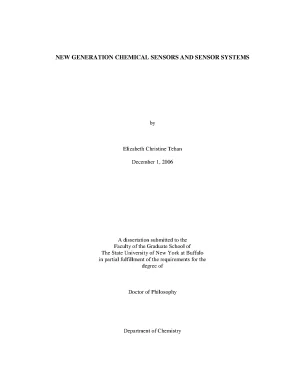
Tải xuống để đọc toàn bộNEW GENERATION CHEMICAL SENSORS AND SENSOR SYSTEMS by Elizabeth Christine Tehan December 1, 2006 A dissertation submitted to the Faculty of the Graduate School of The State University of New York at Buffalo in partial fulfillment of the requirements for the degree of Doctor of Philosophy Department of Chemistry UMI Number: 3244233 Copyright 2007 by Tehan, Elizabeth Christine All rights reserved. UMI Microform 3244233 Copyright 2007 by ProQuest Information and Learning Company. All rights reserved. This microform edition is protected against unauthorized copying under Title 17, United States Code.
ProQuest Information and Learning Company 300 North Zeeb Road P. Box 1346 Ann Arbor, MI 48106-1346 In memory of my beloved mother, Mrs. Bertha (Kawam) Tehan (1946-2001) “The purpose of life is to live it, to taste experience to the utmost, to reach out eagerly and without fear for newer and richer experience.” Eleanor Roosevelt “Live as if you were to die tomorrow. Learn as if you were to live forever.” Mahatma Gandhi ii Acknowledgements I have been blessed by God with my talents and the ability to share them with people around me.
Named or otherwise, these people have invaluably helped me. Though words cannot express my thanks and appreciation to them, the impact they have had and continue to have on my life will never be overlooked. I would like to express my sincere appreciation to my advisor, Professor Frank V. Your leadership and wisdom have helped shape me both professionally and personally.
Moreover, I thank you for your patience and understanding, despite the times I felt undeserving. You are a great Teacher and Individual. I have been afforded the opportunity to work with many exceptional professionals. This includes my Ph.
committee: Professors Luís A. Detty and Troy D. This also includes Drs. Cartwright and Albert H.
Your insight and guidance as a group and individually, have helped me greatly and I have deep respect for each of you as professionals. In addition, special thanks to Dr. Brian MacCraith, for allowing me the memorable experience of working with the NCSR group at Dublin City University. I would like to acknowledge others too numerous to mention, including past and present Bright Group Members.
Much of this work may not have been done without the help of: Drs. Eun Jeong Cho, Ying Tang, Zunyu Tao, Michael Davenport, Vamsy Chodavarapu, and Ms. Rachel Bukowski, Mr. William Holthoff and the exceptionally skilled machinists in the UB Arts & Sciences Machine Shop.
Thank you all for your collaborations and friendships. Some people whose life’s path crosses our own forever impact us. For me, one such person is Mr. I can only thank you for the way iii compliment me immeasurably and for your love and companionship.
You and your family have been so welcoming and supportive of me; thank you. I look forward to our continued love and friendship. My entire extended family and friends have always supported me, especially through this endeavor, and I am so fortunate to be among them. I regret that some, who are dear to my heart, are not here to share in this accomplishment.
My immediate family has been outstanding. I am so proud of and proud to be a part of them. My parents have supported my education in every way and I am eternally grateful for that. They have always shown me love and encouragement.
Mom, you have taught me so much though your life and your memory. Dad, you have been my inspiration and motivation. Thank you to my sister, Victoria who, with her husband, Timothy and children, Andrew and Ryan have extended their family to include me. I appreciate our time together and the way you have opened your home to me.
Thank you to my brother, Louis and his wife Wendy, though we are not close in distance, I appreciate your confidence in me and motivation to excel in everything I do. Thank you to my brother, Joseph. I appreciate your heartening outlook on life and the way you share your humor with me, always making me smile. I love each of you dearly and thank you for your unending love and encouragement.
Finally, each project discussed in this document was made possible by financial support from various agencies and are gratefully acknowledged. These agencies include: the National Science Foundation, the Gerald A. Sterbutzel Fund at UB, the John R. Oishei Foundation, the Office of Naval Research, and the Interdisciplinary Research and Creative Activity Fund of the State University of New York at Buffalo.
iv Contents Dedication ii Acknowledgements iii List of Figures xi List of Tables xviii List of Acronyms and Symbols xix Abstract Chapter 1.1 Sensors and Sensor Arrays 1 1.2 Sensors and Instrument Design 5 1.3 Research Goals and Dissertation Scope 6 1.1 Sol-Gel Derived Sensor Materials that Yield Linear Calibration Plots, High Sensitivity, and Long Term Stability 6 1.2 Tailored Xerogel-Based Sensor Arrays and Artificial Neural Networks Yield Improved O2 Detection Accuracy and Precision 7 1.3 Creating a Diverse Sensor Response from a Single Sensor Element Using Phase Fluorimetry 7 1.4 Chemical Sensing Systems Using Xerogel-Based Sensor Elements and CMOS Photodetectors 8 v 1.5 Tailored Quartz-Based Pins for High-Density Microsensor Array Fabrication 9 1.1 Immobilization Through the Sol-Gel Process 15 2.3 Pin Printed Sensor Arrays 21 2. Sol-Gel Derived Sensor Materials That Yield Linear Calibration Plots, High Sensitivity and Long-Term Stability 31 3.2 Preparation of [Ru(dpp)3]2+- doped Octyl-triEOS/TEOS Composite Xerogel Sensing Films 35 3.4 Results and Discussion 38 3.2 Average Sensitivity and Stability 38 3.3 Stern-Volmer Plots 46 vi 3.4 Time-Resolved Intensity Decays 50 3. Tailored Xerogel-Based Sensor Arrays and Artificial Neural Networks Yield Improved O2 Detection Accuracy and Precision 64 4.2 Sol Stock Solution Preparation 70 4.3 Luminophore-doped Sol Solution Preparation 70 4.4 Sensor Array Fabrication 70 4.1 Instrumentation for Characterizing the Arrays 72 4.6 Results and Discussion 73 4.1 Tunable Response Profiles 73 4.2 Artificial Neural Networks to Improve Overall Sensor Performance 80 4.3 Performance of Sensor Elements After Contact with Rat Plasma or Whole Rat Blood 88 vii 4. Creating Diversified Response Profiles from a Single Quenchometric Sensor Elements by Using Phase-Resolved Fluorescence 99 5.2 Preparation of [Ru(dpp)3]2+- doped Xerogel Sensing Films 105 5.4 Results and Discussion 109 5.
Chemical Sensing Systems Using Xerogel-Based Sensor Elements and CMOS Photodetectors 117 6.1 Luminescence- Based Quenching: Recognition and Transduction 119 viii 6.1 Xerogel-Based Sensor Elements 122 6.3 Preparation of the Sol-Gel Processed Solution 123 6.4 CMOS Photodetector Array Detection System 125 6.5 System Configuration and Testing Protocols 135 6.6 Results and Discussion 141 6.2 Comparison of Xerogel-Based Sensor Systems Using CMOS, PMT, and CCD Detectors 141 6.3 Comparison of Other Analytical Figures of Merit 146 6.4 Detector Power Consumption 146 6. Tailored Quartz-Based Pins for High-Density Microsensor Array Fabrication 151 7.1 Chemical Reagents 152 ix 7.3 Preparation of Pin Silanization Solutions 153 7.4 Preparation of Luminophore-Doped Sol 153 7.5 Quartz Pin Fabrication 157 7.6 Quartz Pin Tip Silanization 157 7.3 Results and Discussion 162 7. Conclusions and Future Directions 173 8.3 References 176 x List of Figures Figure 1.1 A simplified schematic of a chemical sensor system. (B) An enlarged view of a sensor element.1 A description of the sol-gel process.
(A) The simplest sol-gel process for a tetraalkoxysilane. (B) The sol-gel process for a Class II ORMOSIL.2 A simplified Jablonski diagram describing luminescence spectroscopy 20 Figure 2.3 (A) Photograph of the Cartesian Technology model MicroSys 5100 array printing system, showing a microwell plate platform, a washing station, pins in the pin mount and substrate platforms. (B) Pins loaded in the pin mount for printing.4 (A) Photograph of a quill pin and (B) mechanism for printing with this type of pin. (C) Photograph of a 200 µm solid pin and (D) its printing mechanism.1 SEM images of Octyl-triEOS/TEOS composite xerogel films (TEOS sample aged for two months, all other samples aged for xi three months).2 SEM images of the varios regions of the 80% Octyl-triEOS/ 20% TEOS xerogel film showing phase separation and heterogeneity.3 Effects of aging time and xerogel composition on the O2 sensitivity 44 Figure 3.4 Typical Stern-Volmer plots for [Ru(dpp)3]2+-doped Octyl-triEOS/TEOS xerogels that have aged for three months.
The solid lines represent the best fit to a Demas model (TEOS) or Stern-Volmer model (all others).5 Effects of xerogel composition on the average Stern-Volmer quenching constant for three month old samples.6 Typical excited-state luminescence intensity decay traces for [Ru(dpp)3]2+-doped Octyl-triEOS/TEOS xerogel composites in an N2 environment. Xerogels have been aged for three months. (B) 20% Octyl-triEOS / 80% TEOS. (C) 40% Octyl-triEOS / 60% TEOS.(D) 50% Octyl-triEOS / 50% TEOS.
(E) 60% Octyl-triEOS / 40% TEOS.7 Effects of xerogel composition on the average [Ru(dpp)3]2+ excited-state fluorescence lifetime and the bimolecular quenching constant.1 Chemical structures of the precursors and lumiophores used in this research.2 O2-dependent false color images from an array of O2 responsive xerogel- based sensor elements based on co-doping [Ru(bpy)3]2+ and [Ru(dpp)3]2+ within C8-TEOS/TEOS xerogels.1 for the compositions of sensor elements labeled 1-5.3 Typical intensity-based Stern-Volmer plots for the sensor elements shown in Figure 4. The lines that pass through the data represent the best fit to Eq.4 Simplified schematic of a single pore within the C8-TEOS/TEOS class II xerogel showing the envisaged distribution of [Ru(bpy)3]2+ and [Ru(dpp)3]2+ molecules.5 Illustration of the (A) Forward and (B) Backward propagation for training the MLP.6 Typical intensity-based Stern-Volmer plots for O2 responsive sensors before and after being subjected to rat plasma and rat whole blood. The lines that pass through the data represent the best fit to Eq. The recovered parameters that describe the response profiles are compiled in Table 4.1 Traditional approaches that have been used to create a continuum of response profiles from a chemical sensor.
Three hypothetical sensor elements are shown under each approach which would yield three different response profiles to a particular target analyte.2 Frequency-domain luminescence schematics. (A) Phase- modulation concept. Excitation (ex), emission (em), and the luminescence phase shift (θ) are shown. The shaded region denotes the area under the modulated emission that is integrated by the π gate.3 Simplified phase-sensitive instrument schematic.
The xiv modulation frequency (f) is controlled by the function generator, the detector phase angle (θD) is adjusted by the lock-in amplifier, and the sample composition that reaches the sensor element is controlled by the mass flow controllers.4 Simulated (A, B) and experimental (C, D) O2-dependent, phase sensitive Stern-Volmer plots for the [Ru(dpp)3]2+-doped octyl- triEOS/TEOS-based xerogels at f = 20 kHz. In the simulations τ0 = 5.5 Simulated (A, B) and experimental (C, D) O2-dependent, phase sensitive Stern-Volmer plots for the [Ru(dpp)3]2+-doped octyl- triEOS/TEOS-based xerogels at f = 50 kHz. In the simulations τ0 = 5.1 The 40-pin DIP package for CMOS detectors.2 (A) Photograph of the photodetector array. The top three rows are phototransistors and bottom three rows are photogates.3 I-V relationship for the APS circuit.4 Photograph of a lateral p-n-p phototransistor.5 (A) Block diagram of the setup.
The sensor/detector system can be stand-alone, but the data analysis component is also shown to highlight the testing and evaluation of the sensor system. (B) Diagram of the LED light source, sensor element film, optical filters, sample flow chamber, and CMOS-based chip detector.6 Photograph of sensor sample chamber (flow cell holder with inlet and exhaust), mounting apparatus, optical filter, CMOS chip and circuit board.7 (A) Stern-Volmer plot and (B) Modified Stern-Vomer plot for each detector type.1 Digital photographs of the five pin types evaluated in this research. (The scale is different in each image; the tip dimension is noted in each panel.2 The quartz pin system. (A) Pin holder schematic.
(B) Pin holder photograph. (C) Quartz pin silanization/cleaning reservoir photograph.3 Cycling protocol for cleaning, silanizing, and stripping the quartz pins.4 False color fluorescence images of Rhodamine 6G-doped C8-TEOS/TEOS-based xerogels printed with 600, 400 and 200 µm diameter solid tungsten (A-C, respectively), 75 µm stainless steel quill (D), and 12 µm fused silica pins (virgin) (E).5 False color fluorescence images for Rhodamine 6G-doped pin printed xerogels. (A) Clean quartz pin and C8-TEOS/TEOS. (B) C8-silanized quartz pin and C8-TEOS/TEOS.
Nội dung được bảo vệ bản quyền — Tải xuống đầy đủ
Trích dẫn luận án này
Elizabeth Christine Tehan (2006). Cảm biến hóa học thế hệ mới và hệ thống cảm biến [Luận án tiến sĩ, The State University of New York at Buffalo]. LuanAn.net. https://luanan.net/ky-thuat-hoa-hoc-thuc-pham/cong-nghe-hoa-hoc/cam-bien-hoa-hoc-the-he-moi-he-thong-cam-bien
Từ khóa và chủ đề nghiên cứu
Từ khóa liên quan
Xem thêm luận án cùng lĩnh vực
Chủ đề nghiên cứu
Câu hỏi thường gặp
Luận án "Cảm biến hóa học thế hệ mới và hệ thống cảm biến" nghiên cứu về vấn đề gì?
Luận án tiến sĩ về cảm biến hóa học thế hệ mới. Nghiên cứu phát triển vật liệu cảm biến sol-gel với độ ổn định cao, độ nhạy cảm tuyệt vời và hiệu suất dài hạn.
Luận án "Cảm biến hóa học thế hệ mới và hệ thống cảm biến" được bảo vệ tại trường nào?
Luận án này được bảo vệ tại The State University of New York at Buffalo. Năm bảo vệ: 2006.
Luận án "Cảm biến hóa học thế hệ mới và hệ thống cảm biến" thuộc chuyên ngành gì?
Luận án "Cảm biến hóa học thế hệ mới và hệ thống cảm biến" thuộc chuyên ngành Chemistry. Danh mục: Công Nghệ Hóa Học.
Luận án "Cảm biến hóa học thế hệ mới và hệ thống cảm biến" có bao nhiêu trang?
Luận án "Cảm biến hóa học thế hệ mới và hệ thống cảm biến" có 203 trang. Bạn có thể xem trước một phần tài liệu ngay trên trang web trước khi tải về.
Cách tải luận án "Cảm biến hóa học thế hệ mới và hệ thống cảm biến" về máy như thế nào?
Để tải luận án về máy, bạn nhấn nút "Tải xuống ngay" trên trang này, sau đó hoàn tất thanh toán phí lưu trữ. File sẽ được tải xuống ngay sau khi thanh toán thành công. Hỗ trợ qua Zalo: 0559 297 239.