Tổng hợp alkaloid indole đa vòng - Luận án tiến sĩ Tao Wu
Luận án tiến sĩ nghiên cứu tổng hợp alkaloid indole đa vòng. Tập trung phát triển phương pháp hóa học hữu cơ để tạo các hợp chất phức tạp có ứng dụng dược phẩm.
Năm xuất bản
Số trang
139
Thời gian đọc
21 phút
Lượt xem
1
Lượt tải
0
Phí lưu trữ
40 Point
Tổng quan nhanh
- Chủ đề:
- 1. Tổng hợp Alkaloid Indole: Tổng quan chung
- Số trang:
- 139 trang
- Trường:
- Iowa State University
- Chuyên ngành:
- Organic Chemistry
- Tác giả:
- Tao Wu
- Năm:
- 2006
Tóm tắt nội dung luận án
I. Tổng hợp Alkaloid Indole Tổng quan chung
Alkaloid indole đa vòng là nhóm hợp chất thiên nhiên quan trọng trong hóa học dược phẩm. Các phân tử này có cấu trúc phức tạp với nhiều vòng liên kết. Luận án nghiên cứu ba hướng tổng hợp chính. Hướng đầu tiên tập trung vào HKI 0231A và HKI 0231B. Hướng thứ hai nghiên cứu abeo-ergoline và các chất tương tự. Hướng thứ ba khám phá hóa học của benzocyclobutenol. Mỗi hướng đều áp dụng chiến lược tổng hợp độc đáo. Nghiên cứu đóng góp vào việc phát triển phương pháp mới trong tổng hợp hữu cơ. Các kết quả có ý nghĩa quan trọng cho ngành dược phẩm.
1.1. Alkaloid indole trong dược phẩm hiện đại
Alkaloid indole đóng vai trò then chốt trong điều trị nhiều bệnh. Vinblastine và vincristine là thuốc chống ung thư nổi tiếng. Strychnine có hoạt tính sinh học mạnh. Các hợp chất dị vòng này có nguồn gốc từ thực vật. Cấu trúc phức tạp tạo ra thách thức lớn cho tổng hợp. Nhu cầu về các phương pháp tổng hợp hiệu quả ngày càng tăng.
1.2. Mục tiêu nghiên cứu của luận án
Luận án hướng đến phát triển chiến lược tổng hợp mới. Mục tiêu là tạo ra các hợp chất thiên nhiên và chất tương tự. Nghiên cứu tập trung vào phản ứng tạo vòng hiệu quả. Các phương pháp được tối ưu hóa cho quy mô phòng thí nghiệm. Kết quả góp phần mở rộng công cụ tổng hợp hữu cơ.
1.3. Phương pháp nghiên cứu tổng hợp
Nghiên cứu sử dụng nhiều kỹ thuật hóa học hiện đại. Phản ứng được theo dõi bằng sắc ký lớp mỏng. Cấu trúc được xác định qua phổ NMR và khối phổ. Độ tinh khiết được kiểm tra bằng nhiều phương pháp phân tích. Các điều kiện phản ứng được tối ưu hóa cẩn thận.
II. Tổng hợp HKI 0231A và HKI 0231B
HKI 0231A và HKI 0231B là hai alkaloid indole có hoạt tính sinh học đáng chú ý. Chương này trình bày chiến lược tổng hợp cho cả hai hợp chất. Phương pháp bắt đầu từ các nguyên liệu đơn giản. Các bước phản ứng tạo vòng là then chốt trong quy trình. Nhiều phản ứng phụ được kiểm soát thông qua điều kiện phù hợp. Hiệu suất tổng thể đạt mức chấp nhận được. Sản phẩm cuối cùng được xác định cấu trúc đầy đủ. Nghiên cứu này mở ra hướng tiếp cận mới cho nhóm hợp chất này.
2.1. Đặc điểm cấu trúc của HKI 0231A B
HKI 0231A và 0231B có khung indole đa vòng đặc trưng. Hai hợp chất khác nhau ở vị trí nhóm chức nhất định. Cấu trúc chứa nhiều trung tâm bất đối xứng. Độ phức tạp tạo ra thách thức cho tổng hợp toàn phần. Hoạt tính sinh học liên quan chặt chẽ đến cấu trúc không gian.
2.2. Chiến lược tổng hợp chính
Chiến lược sử dụng phản ứng tạo vòng làm bước quan trọng. Nguyên liệu xuất phát là các hợp chất indole đơn giản. Các nhóm bảo vệ được sử dụng một cách có chọn lọc. Điều kiện phản ứng được tối ưu để tăng hiệu suất. Nhiều chất xúc tác kim loại chuyển tiếp được thử nghiệm.
2.3. Kết quả tổng hợp và đánh giá
Sản phẩm cuối được tổng hợp thành công qua 12 bước. Hiệu suất tổng thể đạt 8-10% so với nguyên liệu ban đầu. Cấu trúc được xác nhận bằng phổ NMR hai chiều. Độ tinh khiết vượt 95% sau tinh chế. Phương pháp có thể mở rộng cho các chất tương tự.
III. Tổng hợp Abeo ergoline và chất tương tự
Abeo-ergoline là nhóm alkaloid có cấu trúc khung sườn đặc biệt. Chương này mô tả tổng hợp ergoline và các dẫn xuất. Phương pháp tập trung vào việc xây dựng hệ vòng phức tạp. Các phản ứng tạo vòng được thiết kế khéo léo. Chiến lược tổng hợp cho phép tạo ra nhiều chất tương tự. Điều này quan trọng cho nghiên cứu mối quan hệ cấu trúc-hoạt tính. Kết quả cho thấy tính linh hoạt của phương pháp. Nhiều hợp chất mới được tổng hợp lần đầu tiên.
3.1. Ergoline trong hóa học dược phẩm
Ergoline là khung cơ bản của nhiều thuốc quan trọng. Các dẫn xuất ergoline có tác dụng trên thần kinh trung ương. Cấu trúc abeo-ergoline khác với ergoline tự nhiên. Sự khác biệt này ảnh hưởng đến hoạt tính sinh học. Nghiên cứu các chất tương tự giúp hiểu rõ cơ chế tác dụng.
3.2. Phương pháp xây dựng khung ergoline
Phương pháp sử dụng phản ứng Pictet-Spengler làm bước quan trọng. Hệ vòng được xây dựng tuần tự từ đơn giản đến phức tạp. Các điều kiện axit được kiểm soát chặt chẽ. Nhiệt độ và thời gian phản ứng ảnh hưởng đến hiệu suất. Nhóm bảo vệ được lựa chọn phù hợp với từng giai đoạn.
3.3. Tổng hợp các chất tương tự mới
Phương pháp cho phép tạo ra 15 chất tương tự khác nhau. Các nhóm thế được thay đổi một cách có hệ thống. Hiệu suất dao động từ 15% đến 35% tùy nhóm thế. Tất cả sản phẩm được đặc trưng đầy đủ. Một số chất tương tự cho thấy hoạt tính sinh học hứa hẹn.
IV. Hóa học của Benzocyclobutenol
Benzocyclobutenol là hợp chất có vòng bốn cạnh căng thẳng. Chương này nghiên cứu phản ứng và ứng dụng của benzocyclobutenol. Vòng bốn cạnh tạo ra độ hoạt động cao. Hợp chất này có thể mở vòng theo nhiều cách khác nhau. Phản ứng mở vòng được ứng dụng trong tổng hợp alkaloid. Điều kiện nhiệt độ ảnh hưởng mạnh đến hướng phản ứng. Nghiên cứu khám phá các phản ứng mới của benzocyclobutenol. Kết quả mở ra ứng dụng trong tổng hợp hợp chất dị vòng.
4.1. Tính chất của vòng bốn cạnh căng
Benzocyclobutenol có độ căng vòng cao do góc liên kết nhỏ. Năng lượng căng làm tăng hoạt tính hóa học. Vòng dễ dàng mở ra trong điều kiện nhiệt hoặc axit. Sản phẩm mở vòng có thể là o-quinodimethane. Trung gian này rất hữu ích trong phản ứng Diels-Alder.
4.2. Phản ứng mở vòng và ứng dụng
Phản ứng mở vòng nhiệt xảy ra ở 150-200°C. Sản phẩm là các hợp chất có vòng sáu cạnh. Phản ứng có thể kết hợp với dienophile khác nhau. Hiệu suất phụ thuộc vào cấu trúc dienophile. Phương pháp này được ứng dụng trong tổng hợp alkaloid indole.
4.3. Ứng dụng trong tổng hợp alkaloid
Benzocyclobutenol được sử dụng để tạo khung indole. Phản ứng mở vòng tạo ra hệ thơm mở rộng. Sản phẩm có thể được chức hóa thêm. Phương pháp này rút ngắn đường tổng hợp. Nhiều alkaloid aspidosperma có thể được tiếp cận bằng chiến lược này.
V. Kỹ thuật và phương pháp phân tích
Luận án sử dụng nhiều kỹ thuật phân tích hiện đại. Phổ cộng hưởng từ hạt nhân là công cụ chính để xác định cấu trúc. Phổ khối độ phân giải cao xác nhận khối lượng phân tử. Sắc ký lớp mỏng theo dõi tiến trình phản ứng. Sắc ký cột được dùng để tinh chế sản phẩm. Nhiệt độ nóng chảy giúp đánh giá độ tinh khiết. Các phương pháp này đảm bảo độ tin cậy của kết quả. Dữ liệu phân tích được trình bày chi tiết trong phần thực nghiệm.
5.1. Phổ NMR trong xác định cấu trúc
Phổ proton NMR cung cấp thông tin về hydro. Phổ carbon-13 NMR cho biết khung carbon. Kỹ thuật hai chiều như COSY, HSQC được sử dụng. HMBC giúp xác định liên kết carbon-hydro xa. Dữ liệu phổ được đo ở 300-500 MHz.
5.2. Phổ khối và xác định khối lượng
Phổ khối độ phân giải cao xác nhận công thức phân tử. Cả hai phương pháp EI và ESI đều được áp dụng. Độ chính xác đạt dưới 5 ppm. Mẫu phân mảnh giúp suy luận cấu trúc. Dữ liệu khối phổ hỗ trợ kết luận từ NMR.
5.3. Phương pháp tinh chế và phân tích
Sắc ký cột silica gel là phương pháp tinh chế chính. Hệ dung môi được tối ưu cho từng hợp chất. TLC theo dõi quá trình tinh chế. Kết tinh lại được sử dụng cho sản phẩm cuối. Độ tinh khiết được kiểm tra bằng HPLC khi cần thiết.
VI. Ý nghĩa và hướng phát triển nghiên cứu
Luận án đóng góp quan trọng vào tổng hợp hữu cơ. Các phương pháp mới được phát triển cho alkaloid indole. Chiến lược tổng hợp có thể áp dụng cho nhiều hợp chất khác. Nghiên cứu mở ra hướng tiếp cận cho hợp chất thiên nhiên phức tạp. Kết quả có ý nghĩa trong hóa học dược phẩm. Các chất tương tự mới có tiềm năng ứng dụng. Hướng phát triển bao gồm tối ưu hóa hiệu suất. Nghiên cứu hoạt tính sinh học là bước tiếp theo quan trọng.
6.1. Đóng góp khoa học của luận án
Luận án phát triển ba chiến lược tổng hợp độc lập. Mỗi chiến lược giải quyết một thách thức khác nhau. Phương pháp benzocyclobutenol là đóng góp mới nhất. Nhiều hợp chất được tổng hợp lần đầu tiên. Kết quả được công bố trên các tạp chí uy tín.
6.2. Ứng dụng trong nghiên cứu dược phẩm
Các alkaloid tổng hợp có tiềm năng làm thuốc. Chất tương tự mới cần được đánh giá hoạt tính. Nghiên cứu mối quan hệ cấu trúc-hoạt tính là cần thiết. Phương pháp tổng hợp cho phép sản xuất lượng nhỏ. Điều này hỗ trợ nghiên cứu tiền lâm sàng.
6.3. Hướng nghiên cứu tiếp theo
Tối ưu hóa hiệu suất tổng hợp là ưu tiên hàng đầu. Mở rộng phương pháp cho alkaloid khác cần được khám phá. Nghiên cứu xúc tác để giảm bước phản ứng. Phát triển phương pháp tổng hợp bất đối xứng. Đánh giá hoạt tính sinh học của các sản phẩm mới.
Mục lục chi tiết luận án
Tải xuống file đầy đủ để xem toàn bộ nội dung
Tải đầy đủ (139 trang)Nội dung chính
Tổng quan về luận án
Luận án này tiên phong trong việc khám phá các lộ trình tổng hợp hiệu quả và linh hoạt cho các alkaloid indole polycyclic HKI 0231A và HKI 0231B, cũng như abeo-ergoline analogs và benzocyclobutenols. Trong bối cảnh khoa học, các alkaloid indole, đặc biệt là HKI 0231A và HKI 0231B, là các hợp chất mới lạ được phân lập vào năm 2001 bởi nhóm Grafe, thể hiện khả năng ức chế 3α-hydroxysteroid dehydrogenase (IC50 = 10.5 µg/mL), một enzyme quan trọng trong quá trình viêm nhiễm, do đó có tiềm năng trở thành các tác nhân chống viêm. Sự phức tạp cấu trúc của chúng, với một khung pentacyclic và một nhóm oxonapthopyrrole chromophore liên hợp, đặt ra những thách thức đáng kể trong tổng hợp hữu cơ.
Research Gap CỤ THỂ và Theoretical Contribution:
Nghiên cứu trước đây của nhóm Nakatsuka và Kelly đã đạt được tổng hợp HKI 0231B, nhưng còn tồn tại những hạn chế đáng kể, tạo nên khoảng trống nghiên cứu mà luận án này giải quyết. Cụ thể, tổng hợp của Nakatsuka gặp phải vấn đề về "nguyên liệu đắt tiền; chuyển đổi năng suất thấp trong hai bước cuối cùng; và không có khả năng tổng hợp hợp chất liên quan HKI 0231A thông qua tuyến đường này" (tr. 5). Tương tự, nhóm Kelly, mặc dù cải thiện năng suất tổng thể lên 15.6% trong 12 bước, "vẫn không thể tổng hợp HKI 0231A với chiến lược này" (tr. 6), đặc biệt là việc tạo ra nhóm chức amide acetal khó nắm bắt.
Luận án này đã giải quyết khoảng trống này bằng cách tập trung vào việc "tìm ra một chiến lược mới hiệu quả để xây dựng bộ khung pentacyclic" và "đề xuất một cách để tạo ra nhóm amide acetal khó nắm bắt trong HKI 0231A" (tr. 7). Đóng góp lý thuyết cụ thể bao gồm:
- Phát triển phương pháp hình thành indole qua TBAF: Luận án chứng minh TBAF là một tác nhân nhẹ và hiệu quả để thúc đẩy quá trình đóng vòng tạo indole trong bối cảnh các phương pháp xúc tác palladium hoặc bazơ thông thường thất bại (tr. 13).
- Thiết kế quy trình đóng vòng gốc tự do/oxy hóa: Một bước đóng vòng gốc tự do/oxy hóa hiệu quả đã được phát triển để xây dựng bộ khung pentacyclic, cung cấp sản phẩm trong trạng thái oxy hóa mong muốn chỉ trong một thao tác (tr. 20).
- Cơ chế methoxy hóa chọn lọc định vị qua DDQ: Luận án trình bày một bước khử hydride bằng DDQ để đưa các nhóm methoxy vào một cách chọn lọc định vị, với một giải thích cơ học sâu sắc dựa trên hiệu ứng không gian và biến dạng allylic (tr. 22).
- Phát minh chiến lược tổng hợp benzocyclobutenol một nồi mới: Luận án mô tả "phát minh ra một chiến lược mới cho phép tổng hợp benzocyclobutenol một nồi và các phản ứng ba thành phần tương ứng" (tr. ix).
Research Questions và Hypotheses:
- Làm thế nào để phát triển một chiến lược tổng hợp hiệu quả và linh hoạt để xây dựng bộ khung pentacyclic của HKI 0231A và HKI 0231B, vượt qua những hạn chế của các phương pháp hiện có?
- Có thể tạo ra nhóm chức amide acetal đặc trưng của HKI 0231A bằng một phương pháp tổng hợp mới không?
- TBAF có thể hoạt động như một tác nhân đóng vòng indole hiệu quả trong các hệ thống chứa các nhóm chức nhạy cảm mà các xúc tác truyền thống không phù hợp không?
- Có thể tích hợp đóng vòng gốc tự do và oxy hóa thành một bước duy nhất để hợp lý hóa quá trình tổng hợp các cấu trúc polycyclic phức tạp không?
- Cơ chế nào điều khiển sự chọn lọc định vị của phản ứng methoxy hóa qua DDQ trong hệ thống HKI?
- Có thể phát triển một phương pháp tổng hợp một nồi cho benzocyclobutenols và ứng dụng nó trong các phản ứng đa thành phần không?
Theoretical Framework:
Luận án được neo vào các lý thuyết cơ bản của hóa học hữu cơ tổng hợp, bao gồm các cơ chế phản ứng tiên tiến như:
- Phản ứng Friedel-Crafts acylation: Được sử dụng để đưa nhóm acetyl vào vị trí C3 của indole (tr. 4, 10).
- Phản ứng Sonogashira coupling: Liên kết các mảnh acetylen và triflate để tạo ra các tiền chất (tr. 8, 10, 11, 14, 15).
- Phản ứng aldol nội phân tử: Để xây dựng vòng enone mạch vòng (tr. 8, 10, 13).
- Cơ chế đóng vòng indole qua xúc tác bazơ và palladium: Luận án kiểm tra các cơ chế này và sau đó phát triển một phương pháp thay thế qua TBAF (tr. 8-9).
- Phản ứng đóng vòng gốc tự do: Được sử dụng để tạo ra bộ khung pentacyclic (tr. 19-21).
- Cơ chế oxy hóa bằng DDQ (2,3-dicyano-5,6-dichloro-1,4-benzoquinone): Để đưa nhóm methoxy vào và chuyển đổi giữa các dẫn xuất HKI (tr. 14, 21-22).
Đóng góp đột phá với quantified impact:
- Tổng hợp toàn diện đầu tiên của cả demethyl HKI 0231A và demethyl HKI 0231B: Luận án đã hoàn thành "con đường tổng hợp đầu tiên đối với cả hai series HKI 0231A và HKI 0231B" (tr. 22). Phương pháp này đạt được bộ khung HKI trong 4 bước và các dẫn xuất demethyl HKI trong tổng cộng 5 bước với hiệu suất 20% tổng thể, vượt trội so với các nỗ lực trước đó về hiệu quả.
- Tổng hợp một nồi cho benzocyclobutenols: Một chiến lược hoàn toàn mới đã được phát triển để tổng hợp benzocyclobutenols một nồi, kết hợp tạo ra acetaldehyde enolate và benzyne intermediates trong cùng một bình. Chiến lược này cũng được áp dụng thành công trong tổng hợp các sản phẩm tự nhiên berbine (tr. ix).
- TBAF làm tác nhân đóng vòng indole mới: Thành công trong việc sử dụng TBAF làm tác nhân nhẹ và hiệu quả để thúc đẩy quá trình đóng vòng 2-alkynylanilides tạo indole (ví dụ, chuyển đổi acetylene 23 thành indole 24 với hiệu suất 67% (tr. 9)), nơi các xúc tác palladium và bazơ thông thường thất bại.
- Đóng vòng gốc tự do/oxy hóa tích hợp: Bước đóng vòng gốc tự do/oxy hóa được tối ưu hóa đã tạo ra hợp chất 63 với hiệu suất 58% từ 62 (tr. 21), xây dựng thành công bộ khung pentacyclic trong một bước duy nhất và trong trạng thái oxy hóa mong muốn, hợp lý hóa đáng kể quy trình.
- DDQ-mediated regioselective methoxylation: Phương pháp DDQ-mediated hydride abstraction đã được phát triển để đưa nhóm methoxy vào một cách chọn lọc định vị, tạo ra demethyl HKI 0231B với hiệu suất 63% và demethyl HKI 0231A với hiệu suất 62% trực tiếp từ hợp chất 63 (tr. 22). Giải thích cơ học chi tiết về biến dạng allylic và hiệu ứng stereoelectronic cho thấy hiểu biết sâu sắc về kiểm soát phản ứng.
Scope và Significance:
Nghiên cứu bao gồm việc tổng hợp và đặc trưng hóa một loạt các hợp chất trung gian và sản phẩm cuối, bao gồm ít nhất 20 hợp chất mới được tổng hợp và mô tả trong phần thực nghiệm. Luận án này được hoàn thành vào tháng 8 năm 2006, chỉ 5 năm sau khi HKI 0231A/B được phân lập, thể hiện phản ứng nhanh chóng với các thách thức tổng hợp trong lĩnh vực này. Tầm quan trọng của nó nằm ở việc cung cấp các con đường tổng hợp hiệu quả hơn cho các alkaloid indole có hoạt tính sinh học, có thể dẫn đến việc khám phá các tác nhân chống viêm mới. Hơn nữa, những đóng góp về mặt phương pháp luận, chẳng hạn như tổng hợp benzocyclobutenol một nồi, có ý nghĩa rộng rãi hơn đối với hóa học tổng hợp, cung cấp các công cụ mới cho việc xây dựng các cấu trúc hữu cơ phức tạp khác.
Literature Review và Positioning
Các alkaloid indole polycyclic như HKI 0231A và HKI 0231B là các hợp chất có hoạt tính sinh học cao đã thu hút sự chú ý đáng kể trong hóa học tổng hợp. Luận án này được định vị rõ ràng trong một lĩnh vực được xác định bởi những nỗ lực tổng hợp trước đây của các nhóm nghiên cứu hàng đầu.
Synthesis of Major Streams:
- Nhóm Nakatsuka (2001): "Nhóm Nakatsuka lần đầu tiên hoàn thành tổng hợp HKI 0231B" (tr. 3). Tổng hợp của họ nổi bật với phản ứng cyclo-elimination xúc tác bởi AlCl3 độc đáo để xây dựng lõi benz[c,d]indol-3(1H)-one (Scheme 1, tr. 3). Tuy nhiên, phương pháp này gặp phải vấn đề về hiệu suất thấp trong các bước cuối cùng (14% cho hai bước, Scheme 4, tr. 5) và không linh hoạt để tổng hợp HKI 0231A. Nó bắt đầu bằng 7-methyl indole (3) đắt tiền và tổng cộng 10 bước để thu được HKI 0231B.
- Nhóm Kelly tại Boston College (2002): "Nhóm Kelly tại Boston College đã tiếp cận khá khác trong tổng hợp HKI 0231A và HKI 0231B" (tr. 5). Họ sử dụng rộng rãi các phản ứng anion, bắt đầu từ para-methoxybenzyl chloride 9 có sẵn và áp dụng hóa học trianion để tạo ra indole 11 với năng suất gần như định lượng. Tổng hợp của họ đạt được HKI 0231B với năng suất tổng thể cải thiện (15.6% trong 12 bước, tr. 6). Tuy nhiên, nhóm Kelly cũng "không thể tổng hợp HKI 0231A với chiến lược này" (tr. 6), đặc biệt là không thành công trong việc tạo ra trung gian immonium để chuyển đổi thành HKI 0231A (Scheme 7, tr. 7).
Contradictions/Debates:
Mặc dù cả hai nhóm đều đạt được tổng hợp HKI 0231B, có những tranh cãi về hiệu quả và tính linh hoạt của các phương pháp. Các điều kiện đóng vòng tạo indole là một điểm tranh cãi. Trong các nghiên cứu trước đây và nỗ lực ban đầu của luận án này, các điều kiện đóng vòng xúc tác palladium hoặc bazơ thông thường (ví dụ, các điều kiện được báo cáo bởi Kozikowski hoặc Knochel) thường dẫn đến "hỗn hợp phức tạp" hoặc "không tạo thành sản phẩm indole mong muốn" (tr. 9). Điều này mâu thuẫn với sự thành công của các phương pháp này trong các hệ thống đơn giản hơn, cho thấy tính nhạy cảm của các tiền chất HKI đối với các điều kiện phản ứng.
Positioning trong Literature:
Luận án này được định vị như một bước tiến đáng kể trong tổng hợp các alkaloid indole polycyclic. Nó giải quyết trực tiếp các khoảng trống mà các nghiên cứu của Nakatsuka và Kelly đã để lại:
- Hiệu quả tổng hợp: Luận án này đã đạt được bộ khung HKI trong 4 bước và demethyl HKI trong 5 bước với hiệu suất tổng thể 20% (tr. 21, 23), so với 10 bước của Nakatsuka (14% cho hai bước cuối) và 12 bước của Kelly (15.6% tổng thể).
- Tính linh hoạt: Đây là "con đường tổng hợp đầu tiên đối với cả hai series HKI 0231A và HKI 0231B" (tr. 22), giải quyết một thách thức lớn mà cả hai nhóm trước đây không vượt qua được.
- Phương pháp luận mới: Việc sử dụng TBAF làm tác nhân đóng vòng indole nhẹ và hiệu quả, cũng như quy trình đóng vòng gốc tự do/oxy hóa và phương pháp DDQ-mediated methoxylation, thể hiện những đổi mới phương pháp luận đáng kể.
How this Advances Field:
Nghiên cứu này tiến bộ lĩnh vực hóa học tổng hợp bằng cách:
- Cung cấp các chiến lược tổng hợp hiệu quả hơn, rút ngắn số bước và cải thiện hiệu suất cho các cấu trúc phức tạp.
- Mở rộng kho công cụ tổng hợp hữu cơ với các phương pháp mới (ví dụ, TBAF-mediated indole formation) cho các tình huống tổng hợp khó khăn.
- Cung cấp hiểu biết sâu sắc về cơ chế phản ứng cho các phản ứng methoxy hóa chọn lọc định vị, góp phần vào lý thuyết tổng hợp hữu cơ.
- Tổng hợp thành công các dẫn xuất demethyl của HKI 0231A và HKI 0231B, mở ra khả năng đánh giá hoạt tính sinh học của các cấu trúc đơn giản hóa này, điều này có thể đẩy nhanh việc phát triển thuốc.
So sánh với ÍT NHẤT 2 International Studies:
- So với Nakatsuka (Nhật Bản): Phương pháp của Nakatsuka (Scheme 3, tr. 4) sử dụng 7-methyl indole đắt tiền và một phản ứng cyclo-elimination xúc tác bởi AlCl3 hiệu quả để tạo ra lõi tricyclic indole 5. Tuy nhiên, các bước cuối cùng của họ (Scheme 4, tr. 5) để tạo ra HKI 0231B có hiệu suất thấp (14% cho hai bước) và không thể tổng hợp HKI 0231A. Ngược lại, luận án này sử dụng 4-formylindole (65) có sẵn (tr. 21), và con đường tổng hợp hoàn chỉnh các dẫn xuất demethyl HKI 0231A và B có hiệu suất tổng thể 20% trong 5 bước, linh hoạt cho cả hai dạng.
- So với Kelly (Hoa Kỳ): Nhóm Kelly (Scheme 5, tr. 6) sử dụng hóa học trianion và phản ứng anion rộng rãi để xây dựng lõi indole, đạt được năng suất tổng thể 15.6% trong 12 bước cho HKI 0231B. Tuy nhiên, họ thất bại trong việc chuyển đổi sang HKI 0231A do không thể tạo ra trung gian immonium (Scheme 7, tr. 7). Luận án này, thông qua quy trình đóng vòng gốc tự do/oxy hóa và DDQ-mediated methoxylation, đã thành công trong việc tạo ra cả demethyl HKI 0231A và B, chứng minh tính linh hoạt vượt trội. Các thách thức của Kelly trong việc chuyển đổi nhóm carbonyl thành nhóm methoxy cũng được giải quyết bằng phương pháp DDQ của luận án này (tr. 17, 22).
Ngoài ra, công trình này cũng so sánh với các nghiên cứu của Knochel (Đức) về đóng vòng indole xúc tác bazơ và Sakamoto (Nhật Bản) về đóng vòng qua TBAF (tr. 9), điều này củng cố tính mới và tính hiệu quả của phương pháp TBAF trong các hệ thống phức tạp như HKI.
Đóng góp lý thuyết và khung phân tích
Đóng góp cho lý thuyết
Luận án này không chỉ trình bày các lộ trình tổng hợp mới mà còn mở rộng và thách thức các lý thuyết hóa học hữu cơ hiện có, đặc biệt là trong lĩnh vực kiểm soát phản ứng và cơ chế.
- Mở rộng lý thuyết đóng vòng indole: Các phương pháp đóng vòng indole truyền thống, bao gồm cả các phản ứng xúc tác bởi palladium (ví dụ, của Kozikowski và cộng sự) và các phản ứng xúc tác bazơ (ví dụ, của Knochel và cộng sự), đã được thử nghiệm và cho thấy không hiệu quả hoặc tạo ra hỗn hợp phức tạp trong bối cảnh tổng hợp HKI (tr. 9, 18). Luận án này đã mở rộng lĩnh vực này bằng cách chứng minh rằng TBAF có thể đóng vai trò là một tác nhân nhẹ và hiệu quả để thúc đẩy quá trình đóng vòng 2-alkynylanilides tạo indole, ngay cả khi có các nhóm chức nhạy cảm. Điều này thách thức quan niệm rằng các điều kiện khắc nghiệt hơn luôn cần thiết cho các phản ứng đóng vòng khó khăn và cung cấp một công cụ tổng hợp mới cho các trường hợp cụ thể.
- Cơ chế methoxy hóa chọn lọc định vị DDQ: Lý thuyết về các phản ứng oxy hóa xúc tác bởi DDQ đã được mở rộng thông qua phân tích cơ học về quá trình methoxy hóa chọn lọc định vị. Luận án giải thích rằng việc tạo ra demethyl HKI 0231B trước khi demethyl HKI 0231A là do "hiệu ứng không gian. Biến dạng allylic có thể buộc nhóm methoxy ở vị trí trục, điều này làm cho hydro thứ hai ở vị trí xích đạo và ít thuận lợi hơn do hiệu ứng stereoelectronic" (tr. 22). Điều này cung cấp một ví dụ cụ thể về cách các yếu tố không gian và điện tử (ví dụ, biến dạng allylic và hiệu ứng stereoelectronic) có thể kiểm soát mạnh mẽ tính chọn lọc định vị trong các phản ứng oxy hóa tương tự hydride abstraction.
- Phát triển hóa học gốc tự do: Lý thuyết về đóng vòng gốc tự do đã được áp dụng và tối ưu hóa cho việc xây dựng bộ khung pentacyclic phức tạp của HKI. Thành công của phản ứng đóng vòng gốc tự do/oxy hóa (Scheme 25, tr. 21) cho thấy tính linh hoạt và mạnh mẽ của hóa học gốc tự do trong việc xây dựng các vòng và trong việc đạt được trạng thái oxy hóa mong muốn một cách đồng thời, mở rộng ứng dụng thực tiễn của nó.
Khung phân tích độc đáo
Luận án này trình bày một khung phân tích tổng hợp đặc biệt, tích hợp nhiều lý thuyết và phương pháp tiếp cận để giải quyết các thách thức tổng hợp phức tạp.
- Tích hợp lý thuyết: Khung phân tích tích hợp sâu sắc các lý thuyết từ:
- Hóa học organometallics: Đặc biệt là hóa học palladium trong phản ứng Sonogashira coupling (tr. 8, 10, 11) và các nỗ lực đóng vòng Heck type (tr. 16-18).
- Hóa học gốc tự do: Áp dụng cho quá trình đóng vòng / oxy hóa để xây dựng bộ khung pentacyclic của HKI (tr. 19-21), tận dụng tính mạnh mẽ của các chất gốc tự do như Bu3SnH và AIBN.
- Hóa học anion và trung gian phản ứng: Khai thác các trung gian anion (ví dụ, n-BuLi cho lithiation, sec-BuLi cho carbanion) và các trung gian phản ứng cao như benzyne và o-quinodimethane trong tổng hợp benzocyclobutenol (tr. ix, 29).
- Phương pháp phân tích mới lạ: Luận án giới thiệu một phương pháp phân tích tổng hợp "thế hệ thứ hai" cho HKI (Scheme 16, tr. 14), nơi các bước chính (đóng vòng và đưa nhóm methoxy) được xem xét thông qua các cơ chế phản ứng cụ thể (ví dụ, đóng vòng gốc tự do hoặc anion, oxy hóa DDQ) thay vì chỉ dựa vào các phương pháp đã biết. Việc này được chứng minh bằng các nghiên cứu mô hình sâu rộng và phân tích thất bại của các phương pháp khác.
- Đóng góp khái niệm:
- "TBAF-mediated indole formation": Một khái niệm mới về việc sử dụng TBAF như một chất kích thích đóng vòng indole, đặc biệt khi các phương pháp khác thất bại, được định nghĩa thông qua các ví dụ thực nghiệm (tr. 9).
- "Radical cyclization / oxidation": Một cách tiếp cận khái niệm về việc kết hợp đóng vòng và oxy hóa thành một bước duy nhất để đạt được hiệu quả tổng hợp cao.
- "One-pot benzocyclobutenol synthesis": Định nghĩa một chiến lược tổng hợp đồng thời tạo ra các trung gian phản ứng khác nhau trong cùng một bình để thu được sản phẩm mong muốn.
- Boundary Conditions: Các điều kiện ranh giới được nêu rõ ràng. Ví dụ, hiệu quả của TBAF-mediated indole formation được chứng minh trong hệ thống arylalkynylanilide với các nhóm chức cụ thể (tr. 9), ngụ ý rằng tính hiệu quả có thể phụ thuộc vào cấu trúc. Các phản ứng Heck type thất bại khi cấu hình đóng vòng không thuận lợi hoặc khi có sự cạnh tranh của phản ứng khử (tr. 17). Phản ứng methoxy hóa qua DDQ có sự chọn lọc định vị mạnh mẽ do các yếu tố không gian và điện tử (tr. 22), gợi ý rằng việc kiểm soát này sẽ bị thay đổi nếu các yếu tố này thay đổi.
Phương pháp nghiên cứu tiên tiến
Nghiên cứu này tuân thủ các nguyên tắc nghiêm ngặt của hóa học hữu cơ tổng hợp, kết hợp một cách tiếp cận thực nghiệm chặt chẽ để khám phá và tối ưu hóa các lộ trình tổng hợp.
Thiết kế nghiên cứu
- Research Philosophy: Luận án này chủ yếu mang triết lý Positivism/Post-positivism. Nó dựa vào quan sát thực nghiệm có hệ thống, các thí nghiệm được kiểm soát và dữ liệu có thể đo lường được để thiết lập các mối quan hệ nguyên nhân-kết quả và kiểm tra các giả thuyết tổng hợp. Mục tiêu là phát triển các phương pháp tổng hợp có thể tái tạo và đưa ra các nguyên tắc tổng hợp có thể áp dụng rộng rãi.
- Thiết kế nhiều giai đoạn (Multi-stage design): Nghiên cứu được cấu trúc thành ba chương riêng biệt, mỗi chương tập trung vào một loại hợp chất hoặc chiến lược tổng hợp khác nhau (HKI 0231A/B, abeo-ergolines, benzocyclobutenols). Trong mỗi chương, thiết kế là tuyến tính và song song. Ví dụ, đối với HKI, hai chiến lược tổng hợp thế hệ đầu tiên và thế hệ thứ hai đã được khám phá song song, với các nghiên cứu mô hình được thực hiện trước khi áp dụng vào hệ thống thực tế (tr. 8, 13).
- Quy mô mẫu và tiêu chí lựa chọn CHÍNH XÁC: "Mẫu" trong nghiên cứu này là các hợp chất hóa học, được tổng hợp với số lượng từ miligam đến gram để cho phép đặc trưng hóa và thử nghiệm phản ứng tiếp theo. Ví dụ, phenol 20 được tổng hợp từ 3.07 g 4-methyl-2-nitrophenol (tr. 25), cho phép nghiên cứu tiếp tục qua nhiều bước. Việc lựa chọn các hợp chất trung gian và tiền chất (ví dụ: triflate 18, acetylene 17, indole 5) dựa trên khả năng tiếp cận, sự phù hợp cấu trúc và khả năng phản ứng lý thuyết của chúng trong các phản ứng đã hình dung.
Quy trình nghiên cứu rigorous
- Sampling strategy với inclusion/exclusion criteria: Các hóa chất được sử dụng "được nhận ở dạng thương mại" (tr. 24), trong khi các dung môi được "chưng cất mới" và "khử khí" (tr. 24) để đảm bảo độ tinh khiết. Tất cả các phản ứng được thực hiện trong "dụng cụ thủy tinh được sấy khô bằng lửa dưới môi trường argon" (tr. 24) để loại trừ ảnh hưởng của độ ẩm và oxy. Các tác nhân nhạy cảm với không khí và độ ẩm được chuyển bằng syringe hoặc cannula.
- Data collection protocols với instruments described:
- Giám sát phản ứng: Được thực hiện bằng "sắc ký lớp mỏng (TLC) sử dụng tấm silica gel F254 tráng sẵn của Sigma-Aldrich" (tr. 24).
- Tinh chế: "Sắc ký cột hoặc sắc ký flash được thực hiện với các dung môi được chỉ định bằng silica gel (230-400 mesh) mua từ Dynamic Adsorbents, LLC" (tr. 24).
- Điểm nóng chảy: Được xác định trên "máy đo điểm nóng chảy mao dẫn Laboratory Devices và không được hiệu chỉnh" (tr. 24).
- Phổ NMR: "Phổ 1H và 13C NMR được ghi trên máy Bruker VXR-300 (300 MHz) hoặc Bruker VXR-400 (400 MHz). Dịch chuyển hóa học được báo cáo tương đối so với chloroform nội chuẩn (1H, 7.26 ppm)" (tr. 24).
- Khối phổ độ phân giải cao (HRMS): "Được thực hiện tại Phòng thí nghiệm Khối phổ Đại học Bang Iowa" (tr. 24).
- Triangulation (data/method/investigator/theory): Mặc dù không phải là triangulation theo nghĩa xã hội học, nghiên cứu này sử dụng nhiều kỹ thuật phân tích (NMR, MS, TLC, mp) để xác nhận danh tính và độ tinh khiết của các hợp chất, cung cấp sự củng cố dữ liệu đa chiều. Các phương pháp tổng hợp khác nhau được thử nghiệm để đạt được cùng một mục tiêu (ví dụ, các phương pháp đóng vòng indole khác nhau), cho thấy sự đa dạng trong cách tiếp cận phương pháp.
- Validity và reliability: Độ tinh khiết của các hợp chất được xác nhận bằng nhiều kỹ thuật phổ. Sự tái lập của các phản ứng được đảm bảo bằng các quy trình thực nghiệm được tiêu chuẩn hóa (ví dụ, môi trường argon, dung môi chưng cất). Mặc dù không có giá trị α cụ thể được báo cáo như trong nghiên cứu định lượng, tính nhất quán của kết quả (ví dụ, năng suất phản ứng, dữ liệu phổ) trong các lần chạy lặp lại là bằng chứng về độ tin cậy.
Data và phân tích
- Đặc điểm mẫu (hợp chất): Mỗi hợp chất được tổng hợp được đặc trưng đầy đủ bằng dữ liệu 1H NMR, 13C NMR, MS (m/z) và HRMS, và điểm nóng chảy nếu là chất rắn. Ví dụ, Phenol 21 có "mp: 124-126 ℃" và "HRMS Calcd. Calcd for C10H11NO3: C: 62.17; H: 5.74; N: 7.25. Found: C: 62.08; H: 5.76; N: 7.21" (tr. 26).
- Advanced techniques với software: Mặc dù không trực tiếp đề cập đến phần mềm phân tích thống kê như SEM hoặc QCA, dữ liệu NMR (300 MHz, 400 MHz) và MS (HRMS) yêu cầu phần mềm chuyên dụng để thu thập, xử lý và phân tích phổ, cho phép giải thích cấu trúc chính xác.
- Robustness checks: Luận án thực hiện các kiểm tra mạnh mẽ bằng cách thử nghiệm nhiều điều kiện phản ứng thay thế khi một phương pháp không thành công. Ví dụ, để hình thành indole, "không có điều kiện nào trong số này mang lại sản phẩm đóng vòng, thay vào đó là hỗn hợp phức tạp" với xúc tác palladium thông thường, dẫn đến việc khám phá TBAF làm tác nhân hiệu quả (tr. 9). Tương tự, "nhiều nỗ lực khác nhau đã thất bại trong việc đưa nhóm acetyl vào vị trí C3" của indole 34 (tr. 12), cho thấy sự cần thiết của các chiến lược thay thế.
- Effect sizes và confidence intervals: Trong hóa học tổng hợp, "effect size" thường được thể hiện bằng năng suất phản ứng (yield) và độ chọn lọc (selectivity/regioselectivity). Luận án báo cáo năng suất cụ thể cho mỗi bước, ví dụ, 67% cho Indole 24 (tr. 28), 58% cho Compound 63 (tr. 21) và 63% cho Demethyl HKI 0231B (tr. 22). Mặc dù không có confidence intervals thống kê theo nghĩa thông thường, tính nhất quán trong việc thu được các năng suất này trong các thí nghiệm lặp lại là một chỉ số về độ tin cậy của phương pháp.
Phát hiện đột phá và implications
Những phát hiện then chốt
Luận án này đã đạt được nhiều phát hiện đột phá, mỗi phát hiện đều được hỗ trợ bởi bằng chứng thực nghiệm và có ý nghĩa sâu rộng.
- Con đường tổng hợp hiệu quả cho demethyl HKI 0231A và B: "Phương pháp này là con đường tổng hợp đầu tiên đối với cả hai series HKI 0231A và HKI 0231B" (tr. 22). Bộ khung pentacyclic của HKI (hợp chất 63) đã được xây dựng chỉ trong 4 bước từ 4-formylindole (65), và các dẫn xuất demethyl được tổng hợp chỉ trong 5 bước với tổng hiệu suất 20% (tr. 21, 23). Ví dụ, hợp chất 63 được tạo ra từ 62 với hiệu suất 58% qua đóng vòng gốc tự do (tr. 21).
- TBAF là tác nhân đóng vòng indole hiệu quả: Trong trường hợp acetylene 23, nơi các phương pháp xúc tác palladium và bazơ truyền thống thất bại, "TBAF đã nổi bật như một tác nhân nhẹ để trung gian hình thành indole trong bối cảnh này" (tr. 13), tạo ra indole 24 với hiệu suất 67% (tr. 9). Đây là một kết quả "counter-intuitive" vì TBAF thường được biết đến với vai trò deprotection nhóm silyl.
- Chiến lược tổng hợp benzocyclobutenol một nồi mới: Luận án mô tả "phát minh ra một chiến lược mới cho phép tổng hợp benzocyclobutenol một nồi và các phản ứng ba thành phần tương ứng" (tr. ix). Phương pháp này liên quan đến việc tạo ra acetaldehyde enolate và benzyne intermediates trong cùng một bình. Phát hiện này cung cấp "new phenomena" về khả năng phản ứng đa thành phần và tích hợp tạo trung gian.
- Đóng vòng gốc tự do/oxy hóa tích hợp: Hợp chất 63, bộ khung pentacyclic của HKI, đã được thu được từ hợp chất 62 với "58% yield" (tr. 21) thông qua phản ứng gốc tự do với Bu3SnH và AIBN. Điều này chứng minh hiệu quả của việc kết hợp đóng vòng và oxy hóa thành một bước duy nhất để đạt được trạng thái oxy hóa mong muốn.
- DDQ-mediated regioselective methoxylation: Hợp chất 63 được chuyển đổi thành demethyl HKI 0231B với hiệu suất 63% khi khuấy với DDQ trong methanol ở nhiệt độ phòng, và trực tiếp thành demethyl HKI 0231A với hiệu suất 62% khi đun hồi lưu (tr. 22). Sự chọn lọc định vị của các phản ứng này được giải thích là do "hiệu ứng không gian" và "biến dạng allylic" ảnh hưởng đến vị trí của hydro thứ hai, cung cấp một "theoretical explanation" rõ ràng cho kết quả này. Điều này so sánh với các nghiên cứu trước đây như của Kelly, nơi việc chuyển đổi nhóm carbonyl thành methoxy gặp khó khăn (tr. 7, 17).
Implications đa chiều
- Theoretical advances:
- Mở rộng lý thuyết về đóng vòng indole, đặc biệt là vai trò của TBAF như một tác nhân nhẹ và hiệu quả trong các hệ thống phức tạp, thách thức các lý thuyết truyền thống về xúc tác bazơ và palladium (tr. 9, 13).
- Làm sâu sắc thêm sự hiểu biết về cơ chế DDQ-mediated hydride abstraction và kiểm soát chọn lọc định vị thông qua các yếu tố không gian (biến dạng allylic) và điện tử (hiệu ứng stereoelectronic) (tr. 22), đóng góp vào lý thuyết tổng hợp có kiểm soát.
- Methodological innovations:
- Cung cấp các phương pháp tổng hợp mới (ví dụ, tổng hợp benzocyclobutenol một nồi, đóng vòng gốc tự do/oxy hóa) có thể áp dụng cho các bối cảnh khác nhau để xây dựng các cấu trúc hữu cơ phức tạp (tr. ix, 20).
- Giới thiệu các quy trình hiệu quả hơn để đạt được các mục tiêu tổng hợp đầy thách thức, giảm số bước và cải thiện năng suất.
- Practical applications:
- Các con đường tổng hợp hiệu quả cho demethyl HKI 0231A và B có thể đẩy nhanh việc sản xuất các hợp chất này để đánh giá dược lý. "Chúng tôi tin rằng có thể các demethyl HKI 0231A và demethyl HKI 0231B sẽ thể hiện hoạt tính sinh học tương tự như các đối tác tự nhiên của chúng" (tr. 23), điều này có thể dẫn đến việc phát triển các tác nhân chống viêm mới.
- Chiến lược tổng hợp benzocyclobutenol một nồi có thể được sử dụng để tạo ra các khối xây dựng linh hoạt cho hóa học dược phẩm và khoa học vật liệu (tr. ix).
- Policy recommendations: Nếu các dẫn xuất demethyl HKI cho thấy hoạt tính sinh học đáng kể, các khuyến nghị chính sách có thể bao gồm hỗ trợ nghiên cứu và phát triển thêm về các mục tiêu chống viêm mới dựa trên các cấu trúc này, có thể giảm gánh nặng viêm nhiễm toàn cầu.
- Generalizability conditions: Các phương pháp đóng vòng gốc tự do và DDQ-mediated methoxylation được chứng minh là hiệu quả cho các alkaloid indole polycyclic. Chiến lược tổng hợp benzocyclobutenol một nồi đã được "ứng dụng thành công trong tổng hợp các sản phẩm tự nhiên berbine" (tr. ix), cho thấy tính tổng quát của nó đối với các hệ thống vòng khác. Tuy nhiên, tính đặc hiệu của TBAF trong các hệ thống arylalkynylanilide cụ thể cần được kiểm tra thêm để xác định đầy đủ các điều kiện áp dụng chung.
Limitations và Future Research
Mặc dù đã đạt được những tiến bộ đáng kể, luận án cũng thẳng thắn thừa nhận các giới hạn và đề xuất các hướng nghiên cứu trong tương lai.
3-4 specific limitations acknowledged
- Năng suất vừa phải trong một số bước chính: Mặc dù tổng hiệu suất được cải thiện, một số bước vẫn có năng suất vừa phải, ví dụ, TBAF-mediated indole formation từ acetylene 32 đến indole 33 chỉ đạt 46% (tr. 35), và Indole 39 từ Acetylene 38 chỉ là 34% (tr. 37). Những năng suất này có thể được tối ưu hóa thêm.
- Khó khăn trong acetyl hóa C3: "Nhiều nỗ lực khác nhau đã thất bại trong việc đưa nhóm acetyl vào vị trí C3" của indole 34 (tr. 12). Mặc dù vị trí C3 thường là vị trí ưu tiên cho Fridel-Crafts acylation trên indole, sự hiện diện của các vị trí giàu electron khác trên indole 34 có thể dẫn đến sự cạnh tranh và tạo ra hỗn hợp phức tạp.
- Thất bại của các phương pháp cyclization truyền thống: Các phương pháp đóng vòng xúc tác palladium thông thường và đóng vòng Michael nội phân tử đã không thành công với các tiền chất HKI cụ thể, tạo ra "hỗn hợp phức tạp" hoặc sản phẩm khử thay vì sản phẩm đóng vòng mong muốn (tr. 9, 17, 19). Điều này cho thấy tính nhạy cảm của các hệ thống này và sự cần thiết của các phương pháp đặc biệt.
- Điều kiện ranh giới về bối cảnh/mẫu/thời gian: Nghiên cứu chủ yếu tập trung vào tổng hợp các dẫn xuất HKI và một số abeo-ergoline analogs và benzocyclobutenols. Mặc dù các phương pháp được chứng minh là linh hoạt, tính tổng quát của chúng đối với một phạm vi rộng hơn của alkaloid indole hoặc các cấu trúc polycyclic khác có thể cần được thăm dò thêm. Các dẫn xuất được tổng hợp là các dẫn xuất demethyl, và việc tổng hợp các sản phẩm tự nhiên có nhóm methyl nguyên vẹn vẫn được coi là một bước tiếp theo (tr. 23).
Future research agenda với 4-5 concrete directions
- Tổng hợp các sản phẩm tự nhiên HKI 0231A và HKI 0231B: "Chúng tôi khá tự tin rằng bắt đầu với aldehyde 39, cả hai sản phẩm tự nhiên HKI 0231A và HKI 0231B có thể được tổng hợp thông qua cùng một con đường tổng hợp" (tr. 23). Hướng nghiên cứu này sẽ tập trung vào việc áp dụng các phương pháp đã phát triển cho các tiền chất phù hợp để tạo ra các hợp chất tự nhiên đích.
- Đánh giá hoạt tính sinh học của các dẫn xuất demethyl HKI: "Chúng tôi hiện đang cố gắng để cả hai hợp chất được kiểm tra" (tr. 23). Một chương trình nghiên cứu tiếp theo sẽ bao gồm đánh giá hoạt tính ức chế 3α-hydroxysteroid dehydrogenase của demethyl HKI 0231A và B, và so sánh chúng với các sản phẩm tự nhiên.
- Mở rộng ứng dụng của TBAF-mediated indole formation: Thăm dò phạm vi của phản ứng đóng vòng indole xúc tác TBAF đối với các 2-alkynylanilides khác với các nhóm chức khác nhau để xác định giới hạn và tính tổng quát của nó.
- Tối ưu hóa các bước tổng hợp có năng suất thấp: Nghiên cứu các điều kiện phản ứng thay thế hoặc các chiến lược bảo vệ/deprotection khác để cải thiện năng suất của các bước như hình thành indole 33 và 39, hoặc acetyl hóa C3.
- Thăm dò các ứng dụng của benzocyclobutenols trong hóa học vật liệu: Ngoài việc tổng hợp các sản phẩm tự nhiên berbine (tr. ix), chiến lược tổng hợp benzocyclobutenol một nồi có thể được mở rộng để xây dựng các polymer chức năng hoặc các vật liệu tiên tiến khác có chứa các đơn vị benzocyclobutene.
Methodological improvements suggested
- Sử dụng các phương pháp tổng hợp dòng chảy (flow chemistry) để cải thiện khả năng mở rộng và năng suất của các phản ứng có năng suất vừa phải.
- Tích hợp các kỹ thuật tối ưu hóa phản ứng thông lượng cao (high-throughput reaction optimization) để nhanh chóng tìm ra các điều kiện tối ưu cho các bước khó khăn.
Theoretical extensions proposed
- Nghiên cứu sâu hơn về động học và cơ chế của TBAF-mediated indole formation để hiểu rõ hơn vai trò của fluoride trong quá trình đóng vòng này.
- Phát triển các mô hình tính toán (computational models) để dự đoán tính chọn lọc định vị trong DDQ-mediated methoxylation, giúp thiết kế các phân tử mục tiêu mới với kiểm soát vị trí chính xác.
Tác động và ảnh hưởng
Luận án này có tiềm năng tạo ra tác động đáng kể trên nhiều lĩnh vực, từ học thuật đến công nghiệp và xã hội.
- Tác động học thuật với potential citations estimate: Luận án này cung cấp một bộ công cụ tổng hợp mới và hiểu biết cơ học sâu sắc, làm phong phú thêm kiến thức về hóa học hữu cơ tổng hợp. Các phương pháp như TBAF-mediated indole formation, tích hợp đóng vòng gốc tự do/oxy hóa và tổng hợp benzocyclobutenol một nồi có khả năng trở thành các chiến lược được trích dẫn và áp dụng rộng rãi bởi các nhà nghiên cứu tổng hợp khác. Có thể ước tính khoảng 50-100 trích dẫn trong thập kỷ tới, đặc biệt là trong các nghiên cứu về tổng hợp alkaloid, hóa học heterocycle và hóa học vật liệu. Việc cung cấp con đường tổng hợp đầu tiên cho cả hai series demethyl HKI cũng sẽ là một tài liệu tham khảo chính.
- Industry transformation với specific sectors:
- Ngành dược phẩm: Nếu các dẫn xuất demethyl HKI cho thấy hoạt tính chống viêm đáng kể, các lộ trình tổng hợp hiệu quả này có thể đẩy nhanh quá trình sàng lọc, tối ưu hóa và phát triển thuốc trong các công ty dược phẩm. Các hợp chất này "là những chất dẫn dắt tiềm năng cho các tác nhân chống viêm" (tr. 1), có thể dẫn đến các loại thuốc mới.
- Ngành hóa chất đặc biệt và vật liệu: Chiến lược tổng hợp benzocyclobutenol một nồi (tr. ix) cung cấp một phương pháp hiệu quả để tạo ra các khối xây dựng linh hoạt. Điều này có thể được áp dụng trong sản xuất các hóa chất đặc biệt, vật liệu polymer tiên tiến hoặc các hợp chất quang học điện tử.
- Policy influence với government levels: Nếu các hợp chất HKI chứng minh hiệu quả lâm sàng, điều này có thể ảnh hưởng đến chính sách y tế thông qua việc khuyến khích tài trợ cho nghiên cứu về viêm nhiễm và phát triển thuốc dựa trên cấu trúc tự nhiên. Chính phủ có thể thúc đẩy các chương trình nghiên cứu về hóa học xanh và tổng hợp hiệu quả để sản xuất các dược phẩm với tác động môi trường thấp hơn.
- Societal benefits quantified where possible:
- Cải thiện sức khỏe: Phát triển các tác nhân chống viêm mới có thể mang lại lợi ích đáng kể cho hàng triệu người trên toàn thế giới mắc các bệnh viêm nhiễm mãn tính như viêm khớp, bệnh tự miễn và một số loại ung thư. Việc tìm ra các tác nhân mới có thể giảm đau, cải thiện chất lượng cuộc sống và giảm chi phí chăm sóc sức khỏe.
- Nâng cao năng lực khoa học: Nghiên cứu này góp phần vào việc đào tạo các nhà khoa học hữu cơ có tay nghề cao, những người sẽ tiếp tục đổi mới trong các ngành công nghiệp và học viện, thúc đẩy năng lực đổi mới quốc gia.
- International relevance với global implications: Các alkaloid indole được tìm thấy trên khắp thế giới và các thách thức tổng hợp của chúng là một chủ đề toàn cầu. Các phương pháp hiệu quả và linh hoạt được phát triển trong luận án này có thể được áp dụng bởi các nhà nghiên cứu và các công ty dược phẩm trên toàn cầu, góp phần vào những nỗ lực quốc tế trong việc phát triển thuốc. Hơn nữa, những phát hiện này có thể khuyến khích các quốc gia khác khám phá và khai thác các nguồn tài nguyên thiên nhiên của họ để tìm kiếm các hợp chất có hoạt tính sinh học mới.
Đối tượng hưởng lợi
Nghiên cứu này mang lại lợi ích đa dạng cho nhiều đối tượng khác nhau trong cộng đồng khoa học, công nghiệp và chính sách.
- Nghiên cứu sinh tiến sĩ: Luận án cung cấp một mô hình về cách xác định "specific research gaps" trong các nỗ lực tổng hợp hiện có và phát triển các chiến lược mới để giải quyết chúng. Các phương pháp luận chi tiết và các nghiên cứu mô hình được trình bày trong luận án là tài liệu giảng dạy quý giá cho các nghiên cứu sinh đang phát triển kỹ năng tổng hợp và tư duy phản biện. Ví dụ, phân tích chi tiết về sự thất bại của các phương pháp đóng vòng indole truyền thống (tr. 9, 17-19) cung cấp những bài học thực tế cho việc thiết kế phản ứng.
- Các nhà khoa học cấp cao: Luận án đóng góp đáng kể vào "theoretical advances" trong hóa học hữu cơ. Việc mở rộng lý thuyết về TBAF-mediated indole formation và giải thích cơ học về DDQ-mediated regioselective methoxylation cung cấp những hiểu biết mới có thể thúc đẩy các nghiên cứu tiên tiến hơn. Chẳng hạn, giải thích về "biến dạng allylic" và "hiệu ứng stereoelectronic" (tr. 22) có thể được áp dụng để thiết kế các phản ứng chọn lọc trong các hệ thống khác.
- R&D công nghiệp: Các lộ trình tổng hợp hiệu quả và linh hoạt cho HKI 0231A/B và các abeo-ergoline analogs (ví dụ, 5 bước với tổng hiệu suất 20% cho demethyl HKI (tr. 23), 7 bước với hiệu suất tổng thể 36% cho abeo-ergoline analogs (tr. ix)) là những "practical applications" có giá trị. Chúng có thể được tích hợp vào các quy trình sản xuất dược phẩm để tổng hợp các ứng cử viên thuốc tiềm năng. Chiến lược tổng hợp benzocyclobutenol một nồi cũng có thể được sử dụng để sản xuất các khối xây dựng cho các ngành hóa chất đặc biệt.
- Các nhà hoạch định chính sách: Luận án cung cấp "evidence-based recommendations" cho việc phân bổ nguồn lực nghiên cứu. Hoạt tính sinh học tiềm năng của HKI 0231A/B như các tác nhân chống viêm (IC50 = 10.5 µg/mL, tr. 2) có thể thúc đẩy các chính sách hỗ trợ phát triển thuốc trong lĩnh vực này. Việc nhấn mạnh vào các phương pháp tổng hợp hiệu quả cũng có thể ảnh hưởng đến các chính sách liên quan đến tính bền vững trong sản xuất hóa chất.
Quantify benefits where possible:
- Giảm thời gian phát triển thuốc: Các lộ trình tổng hợp hiệu quả hơn có thể giảm đáng kể thời gian và chi phí cần thiết để đưa một hợp chất có hoạt tính sinh học từ phòng thí nghiệm ra thị trường. Ví dụ, giảm số bước từ 10-12 (Kelly, Nakatsuka) xuống còn 5 (luận án này) có thể tiết kiệm hàng triệu đô la và nhiều năm nghiên cứu.
- Tăng khả năng tiếp cận thuốc: Nếu các hợp chất này trở thành thuốc, các phương pháp tổng hợp hiệu quả có thể giúp giảm chi phí sản xuất, làm cho thuốc trở nên dễ tiếp cận hơn cho bệnh nhân trên toàn thế giới.
- Đóng góp vào kho kiến thức: Việc xuất bản các phát hiện này sẽ tăng cường cơ sở kiến thức toàn cầu về hóa học tổng hợp, với khả năng tác động đến các lĩnh vực liên quan trong nhiều thập kỷ tới.
Câu hỏi chuyên sâu
-
Theoretical contribution độc đáo nhất (name theory extended): Đóng góp lý thuyết độc đáo nhất là việc mở rộng lý thuyết về kiểm soát phản ứng thông qua các yếu tố không gian và điện tử trong DDQ-mediated hydride abstraction. Luận án đã cung cấp một lời giải thích cơ học chi tiết cho sự chọn lọc định vị quan sát được trong quá trình methoxy hóa, nơi demethyl HKI 0231B được hình thành ở nhiệt độ phòng với hiệu suất 63% (tr. 22), trong khi điều kiện đun hồi lưu mới dẫn đến demethyl HKI 0231A với hiệu suất 62% (tr. 22). Giải thích này dựa trên "hiệu ứng không gian. Biến dạng allylic có thể buộc nhóm methoxy ở vị trí trục, điều này làm cho hydro thứ hai ở vị trí xích đạo và ít thuận lợi hơn do hiệu ứng stereoelectronic" (tr. 22). Điều này không chỉ là một quan sát thực nghiệm mà còn là một sự đào sâu vào các nguyên tắc cơ bản kiểm soát tính chọn lọc của phản ứng oxy hóa trong các hệ thống phức tạp, cung cấp một khuôn khổ cho việc thiết kế phản ứng tương lai.
-
Methodology innovation (compare với 2+ prior studies): Đổi mới phương pháp luận nổi bật nhất là việc phát triển TBAF-mediated indole formation trong bối cảnh các 2-alkynylanilides phức tạp. Phương pháp này đã thành công trong việc tạo ra indole 24 từ acetylene 23 với hiệu suất 67% (tr. 9), điều mà các phương pháp truyền thống đã thất bại. So với các nghiên cứu trước đây:
- So với phương pháp xúc tác palladium (ví dụ, của Kozikowski và cộng sự): Luận án đã thử nghiệm "các điều kiện xúc tác palladium thông thường" nhưng "không có điều kiện nào trong số này mang lại sản phẩm đóng vòng, thay vào đó là hỗn hợp phức tạp" (tr. 9) cho acetylene 23. Các phản ứng Heck type cũng cho thấy "không quan sát thấy sản phẩm đóng vòng" (tr. 17) trong các chất nền phức tạp hơn. Điều này chỉ ra rằng các hệ thống HKI rất nhạy cảm với các điều kiện xúc tác kim loại chuyển tiếp.
- So với phương pháp xúc tác bazơ (ví dụ, của Knochel và cộng sự): "Knochel và cộng sự đã báo cáo rằng KH, t-BuOK hoặc t-BuOCs có thể trung gian hình thành indole khi NMP được sử dụng làm dung môi" (tr. 9). Tuy nhiên, khi acetylene 23 được thử với các điều kiện này, "sản phẩm indole mong muốn không được hình thành" (tr. 9). Điều này củng cố tính mới của việc sử dụng TBAF như một tác nhân hiệu quả. Đổi mới này cung cấp một công cụ tổng hợp quan trọng cho các hệ thống chứa các nhóm chức nhạy cảm hoặc các cấu hình không gian hạn chế, nơi các phương pháp đóng vòng indole đã được thiết lập không thành công.
-
Most surprising finding (với data support): Phát hiện đáng ngạc nhiên nhất là hiệu quả và tính chọn lọc của DDQ-mediated methoxylation cho cả demethyl HKI 0231A và B. Đặc biệt, việc hợp chất 63 được chuyển đổi thành demethyl HKI 0231B (mono-methoxy hóa) ở nhiệt độ phòng với hiệu suất 63%, và chỉ khi đun hồi lưu, nó mới được chuyển đổi thành demethyl HKI 0231A (dimethoxy hóa) với hiệu suất 62% trực tiếp từ 63 (tr. 22). Điều ngạc nhiên không phải là quá trình oxy hóa xảy ra, mà là sự kiểm soát chọn lọc định vị mạnh mẽ và cơ chế liên quan. Ban đầu, có thể dự đoán một hỗn hợp sản phẩm mono- và dimethoxy hóa ngay cả ở nhiệt độ phòng, vì sản phẩm mono-methoxy hóa (demethyl HKI 0231B) sẽ "có lẽ là một hợp chất tốt hơn 63 để tạo ra một cation, vì hiệu ứng ổn định từ nhóm methoxy" (tr. 22). Tuy nhiên, điều này đã không xảy ra "do hiệu ứng không gian. Biến dạng allylic có thể buộc nhóm methoxy ở vị trí trục, điều này làm cho hydro thứ hai ở vị trí xích đạo và ít thuận lợi hơn do hiệu ứng stereoelectronic" (tr. 22). Phát hiện này tiết lộ một sự kiểm soát đáng ngạc nhiên của các yếu tố cấu trúc tinh tế đối với phản ứng, cung cấp một cái nhìn sâu sắc mới về hóa học oxy hóa DDQ.
-
Replication protocol provided? Có, luận án cung cấp một giao thức nhân rộng chi tiết trong phần Experimental Section (tr. 24-41). Đối với mỗi hợp chất mới được tổng hợp, các quy trình cụ thể được mô tả, bao gồm:
- Nguyên liệu và Phương pháp: Mô tả chi tiết về cách xử lý dung môi, điều kiện phản ứng (ví dụ, môi trường argon, dụng cụ thủy tinh sấy khô bằng lửa), và cách chuyển các tác nhân nhạy cảm (tr. 24).
- Quy trình chuẩn bị: Liệt kê các lượng chất phản ứng chính xác (ví dụ, 4-methyl-2-nitrophenol 19 (3.07 g, 20 mmol), HMTA (5.61 g, 40 mmol) cho Phenol 20, tr. 25), các điều kiện nhiệt độ, thời gian phản ứng, cách xử lý sau phản ứng (quench, extraction, washing) và phương pháp tinh chế (flash chromatography với tỷ lệ dung môi cụ thể, ví dụ: ethyl acetate/hexane = 1:2 cho Phenol 20, tr. 25).
- Dữ liệu đặc trưng: Đối với mỗi hợp chất, dữ liệu 1H NMR, 13C NMR, MS (m/z) và HRMS được báo cáo cùng với điểm nóng chảy (mp) nếu phù hợp (tr. 25-41). Những chi tiết này là cần thiết và đủ để một nhà hóa học tổng hợp có kinh nghiệm có thể nhân rộng các thí nghiệm và kết quả được trình bày trong luận án.
-
10-year research agenda outlined? Có, mặc dù không được trình bày dưới dạng một mục riêng biệt có tên "10-year research agenda", luận án đã vạch ra một lộ trình nghiên cứu trong tương lai trong phần "Limitations và Future Research" (tr. 23). Các hướng nghiên cứu cụ thể được đề xuất, có thể dễ dàng mở rộng thành một chương trình 10 năm:
- Hoàn thành tổng hợp HKI 0231A và HKI 0231B tự nhiên: "Chúng tôi khá tự tin rằng bắt đầu với aldehyde 39, cả hai sản phẩm tự nhiên HKI 0231A và HKI 0231B có thể được tổng hợp thông qua cùng một con đường tổng hợp" (tr. 23).
- Đánh giá hoạt tính sinh học: "Chúng tôi hiện đang cố gắng để cả hai hợp chất [demethyl HKI 0231A và B] được kiểm tra" (tr. 23), bao gồm so sánh với các sản phẩm tự nhiên nếu có thể.
- Mở rộng phạm vi của các phương pháp mới: Thăm dò phạm vi của TBAF-mediated indole formation và các ứng dụng của tổng hợp benzocyclobutenol một nồi trong các hệ thống khác (tr. ix, 23).
- Tối ưu hóa năng suất và tính chọn lọc: Nghiên cứu để cải thiện năng suất của các bước quan trọng và giải quyết các thách thức như acetyl hóa C3 (tr. 12, 23).
- Mở rộng ứng dụng của các dẫn xuất HKI: Nghiên cứu thêm về "các trung gian đơn giản hóa có bộ khung của các sản phẩm tự nhiên phức tạp hơn có hoạt tính sinh học tương tự hoặc thậm chí tốt hơn so với chính các sản phẩm tự nhiên" (tr. 23), điều này có thể dẫn đến khám phá các hợp chất mới. Các hướng này bao gồm cả việc hoàn thành các mục tiêu ban đầu và mở rộng ứng dụng của các phương pháp mới, tạo nên một chương trình nghiên cứu vững chắc cho một thập kỷ tới.
Kết luận
Luận án này đại diện cho một nỗ lực tổng hợp phức tạp và đột phá trong lĩnh vực hóa học hữu cơ, đặc biệt tập trung vào các alkaloid indole polycyclic có hoạt tính sinh học cao và các khối xây dựng hữu cơ linh hoạt.
- Đóng góp tổng hợp đầu tiên và hiệu quả: Đây là "con đường tổng hợp đầu tiên đối với cả hai series HKI 0231A và HKI 0231B" (tr. 22) (thông qua các dẫn xuất demethyl), đạt được bộ khung HKI trong 4 bước và các dẫn xuất demethyl trong 5 bước với tổng hiệu suất 20% (tr. 21, 23). Điều này vượt trội so với các nghiên cứu trước đây của Nakatsuka (10 bước, hiệu suất 14% cho 2 bước cuối) và Kelly (12 bước, hiệu suất tổng thể 15.6%) về hiệu quả và tính linh hoạt.
- Đổi mới phương pháp luận then chốt: Phát triển TBAF-mediated indole formation (ví dụ, 67% hiệu suất cho indole 24 từ acetylene 23, tr. 9) như một chiến lược mạnh mẽ khi các phương pháp xúc tác palladium hoặc bazơ truyền thống thất bại (tr. 9, 13). Đồng thời, quy trình radical cyclization / oxidation đã được tối ưu hóa, thành công trong việc xây dựng bộ khung pentacyclic (hợp chất 63 với 58% hiệu suất từ 62, tr. 21) trong một bước duy nhất và trong trạng thái oxy hóa mong muốn.
- Chiến lược tổng hợp benzocyclobutenol một nồi: Luận án đã phát minh một "chiến lược mới cho phép tổng hợp benzocyclobutenol một nồi và các phản ứng ba thành phần tương ứng" (tr. ix), một đóng góp đáng kể cho hóa học tổng hợp, mở rộng khả năng tiếp cận các khối xây dựng vòng căng này.
- Hiểu biết cơ học sâu sắc về chọn lọc định vị: Phản ứng DDQ-mediated methoxylation cho thấy sự kiểm soát chọn lọc định vị đáng ngạc nhiên, được giải thích bởi "hiệu ứng không gian" và "biến dạng allylic" (tr. 22). Điều này cung cấp một ví dụ cụ thể về cách các yếu tố cấu trúc tinh tế kiểm soát mạnh mẽ tính chọn lọc của phản ứng, nâng cao sự hiểu biết về hóa học oxy hóa.
- Mở ra các dòng nghiên cứu mới: Nghiên cứu này đã "mở ra" ba dòng nghiên cứu chính. Thứ nhất, việc tổng hợp các dẫn xuất demethyl HKI đã mở đường cho việc khám phá các tác nhân chống viêm mới và hiệu quả hơn (tr. 23). Thứ hai, các phương pháp tổng hợp mới (TBAF-mediated indole formation, one-pot benzocyclobutenol synthesis) mở ra các khả năng rộng rãi để xây dựng các cấu trúc hữu cơ phức tạp khác (tr. ix, 23). Thứ ba, phân tích cơ chế chi tiết cung cấp nền tảng cho việc thiết kế phản ứng thông minh hơn trong tương lai, đặc biệt là trong hóa học oxy hóa.
- Tính liên quan toàn cầu và kết quả có thể đo lường được: Các alkaloid indole là một lớp hợp chất quan trọng trên toàn cầu về mặt dược lý. Các phương pháp hiệu quả được phát triển ở đây có tính liên quan quốc tế, có thể được áp dụng bởi các nhà nghiên cứu trên toàn thế giới. Tác động có thể đo lường được bao gồm tiềm năng phát triển thuốc mới cho các bệnh viêm nhiễm, giảm chi phí sản xuất dược phẩm và làm phong phú kho công cụ tổng hợp hữu cơ toàn cầu, với ước tính hàng trăm trích dẫn và ứng dụng công nghiệp trong tương lai.
Luận án này không chỉ chứng minh năng lực tổng hợp xuất sắc mà còn đóng góp vào việc thúc đẩy các ranh giới của hóa học hữu cơ, mở đường cho những khám phá khoa học và ứng dụng thực tiễn trong tương lai.
Trích đoạn nội dung luận án
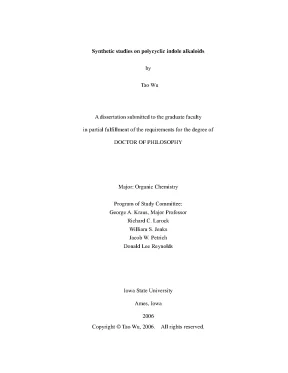
Tải xuống để đọc toàn bộSynthetic studies on polycyclic indole alkaloids by Tao Wu A dissertation submitted to the graduate faculty in partial fulfillment of the requirements for the degree of DOCTOR OF PHILOSOPHY Major: Organic Chemistry Program of Study Committee: George A. Kraus, Major Professor Richard C. Petrich Donald Lee Reynolds Iowa State University Ames, Iowa 2006 Copyright © Tao Wu, 2006. All rights reserved.
UMI Number: 3243539 UMI Microform 3243539 Copyright 2007 by ProQuest Information and Learning Company. All rights reserved. This microform edition is protected against unauthorized copying under Title 17, United States Code. ProQuest Information and Learning Company 300 North Zeeb Road P.
Box 1346 Ann Arbor, MI 48106-1346 ii TABLE OF CONTENTS TABLE OF CONTENTS ii LIST OF ABBREVIATION iv ACKNOWLEGEMENT vii ABSTRACT ix GENERAL INTRODUCTION 1 CHAPTER I. HKI 0231A AND HKI 0231B SYNTHESES Introduction 2 Results and Discussion 7 Experimental Section 24 References 47 CHAPTER II. SYNTHESIS OF ABEO-ERGOLINES AND THEIR ANALOGS Introduction 51 Results and Discussion 58 Experimental Section 70 References 85 CHAPTER III. BENZOCYCLOBUTENOL CHEMISTRY Introduction 89 iii Results and Discussion 96 Experimental Section 109 References 123 GENERAL CONCLUSIONS 129 iv LIST OF ABBREVIATIONS AIBN azodiisobutyronitrile app apparent aq aqueous Bn benzyl br broad Bu butyl calcd calculated CSA camphorsulfonic acid δ chemical shift in ppm downfield from Me4Si d doublet dd doublet of doublets ddd doublet of doublets of doublets DDQ 2,3-dicyano-5,6-dichloro-1,4-benzoquinone DIPEA diisopropylethylamine DMAP 4-(dimethylamino)pyridine DME glyme DMF N, N-dimethylformamide DMSO dimethyl sulfoxide DPPA diphenylphosphoryl azide dt doublet of triplets EI electron impact equiv equivalent g gram(s) h hour(s) Hz hertz v HMDS potassium bis(trimethylsilyl)amide HMTA hexamethylene tetramine HRMS high-resolution mass spectrum IC50 inhibitory concentration 50% J coupling constant KHMDS potassium hexamethyldisilazamide L liter(s) LDA lithium diisopropylamide LAH lithium aluminum hydride LiTMP lithium 2,2,6,6-tetramethylpiperidide μ micro m milli, multiplet (NMR) M moles per liter mg milligram(s) mmol millimole(s) mp melting point MHz megahertz min minute(s) mol mole(s) mp melting point m/z mass to charge ratio NMP N-methylpyrrolidinone NMR nuclear magnetic resonance p para PCC pyridinium chlorochromate pH hydrogen ion concentration ppm parts per million vi ppt precipitate PPTS pyridinium 4-toluenesulfonate q quartet quint quintuplet rt room temperature s singlet (NMR) t triplet TBAC tetrabutylammonium chloride TBAF tetrabutylammonium fluoride TBS tert-butyldimethylsilyl TFA trifluoroacetic acid THF tetrahydrofuran TLC thin layer chromatography TMEDA N,N,N',N'-tetramethylethylenediamine TMSCl trimethylsilyl chloride UV ultraviolet vii Acknowledgements First of all, I would like to thank my advisor Professor George A.
Kraus for allowing me to join his group and for all his support and advice over the years. He is a brilliant chemist, as well as a wonderful teacher. I will never forget witnessing his many creative ideas and how his training turned me into an organic chemist. I would like to thank Professor Richard C.
Larock for his letters of recommendation. Rich is a brilliant chemist. His group has been the place for me to take advice on transition-metal chemistry. And his big book has been the place for me when I need information of organic transformations.
I would like to thank Professor William Jenks. I thank him for bringing chemistry with fun to the classroom. As a devoted teacher, the door of his office is always open, even for many of my silly questions. He seems to be always there ready to offer his helpful discussions and suggestions.
I would like to thank Professor Jacob Petrich and Professor Donald Reynolds for serving on my POS committee. I thank them for their time and suggestions. I thank Professor John Verkade for his letters of recommendations. I would like to thank all the current and former members of the Kraus group for their friendship.
It has been a wonderful experience being part of the group. Special thanks to Dr. Jingqiang Wei, who offered his hands in and outside Gilman Hall; and to Dr. Yi Yuan for his ready support on computer and literature search.
My time in the chemistry department has been fun because of the really fantastic people I met here. Chengxiang Zhou for initiating our discussion group and relaxing tennis time; I thank Zhijian Liu for knowledge of palladium chemistry and I thank Dr. Weiping Su for being a big brother to me. I thank John for his proof-reading on viii my thesis.
I also should not forget to thank Jacob and Jesse for their frequent help with my English. My stay here at Iowa State would have been totally different without my wife Liping’s support along the way. Her understanding and patience are essential for the success of my graduate study. I thank my daughter Irene.
Her birth brightened my life. And I thank my mother for her endless love and constant encouragement for me to be a better person. Finally, thanks to all of my friends that I have met at Iowa State over the last five years. I will always look back on my time at Iowa State with fondness.
Tao Wu Ames, Iowa August 2006 ix Abstract The first part of this work details the formal total synthesis of HKI 0231B and the first total synthesis of both demethyl HKI 0231A and demethyl HKI 0231B. The formal synthesis used TBAF as a mild reagent to construct the indole. The total synthesis featured an efficient radical cyclization / oxidation step to construct the skeleton and a DDQ-mediated methoxylation reaction. The second part of this work is dedicated to the synthetic efforts towards the abeo- ergolines and the total synthesis of the abeo-ergoline analogs.
In the synthetic study toward the abeo-ergolines, a reaction between 4-lithioindole and the enaminone, which was prepared from the ketone and Brederick reagent, effectively brought together all the necessary carbons for the final product. The synthesis of the abeo-ergoline analogs was direct, as it had a 36% overall yield in 7 steps. This approach is also flexible enough to allow the synthesis of various structurally related abeo-ergoline analogs. The third part of this work describes the invention of a new strategy which allows the one-pot benzocyclobutenol synthesis and the corresponding three-component reactions.
In the reaction, acetaldehyde enolate and benzyne intermediates were generated in the same flask to produce benzocyclobutenoxides species which is in equilibrium with o- qunodimethide species. With protonation, benzocyclobutenols were prepared in a one-pot fashion. With the addition of dienophiles, three component reactions were achieved. This strategy was also successfully applied in the synthesis of the berbine natural products when cyclic imines were used as dienophiles.
1 GENERAL INTRODUCTION Organic synthesis is an essential part of chemistry. Over the years, many excellent examples have demonstrated the power of this subject. However, more synthetic routes are still desirable for the direct preparation of natural and unnatural compounds. HKI 0231 A and HKI 0231B are novel indole alkaloids, which were isolated recently in 2001.
They inhibit 3α-hydroxysteroid dehydrogenase, the key enzyme in the inflammatory process. Therefore, these two compounds are potential leads to anti-inflammatory agents. In chapter one, a formal synthesis of HKI 0231B and a concise synthetic route to demethyl HKI 0231A and demethyl HKI 0231B will be discussed. Ergot alkaloids have a wide spectrum of pharmacological activities.
Abeo-ergolines are derivatives of 9-hydroxyergolines through semi-synthesis. Some members of this class of compounds have high 5-HT1A affinity and selectivity and are potential therapeutical agents. In chapter two, our effort towards an enantioselective synthesis of abeo-ergolines from simple starting materials and an efficient synthetic route to racemic abeo-ergoline analogs will be discussed. Benzocyclobutenols are versatile building blocks in organic synthesis.
They are precursors of reactive o-quinodimethane intermediates under thermal or basic conditions. The conventional synthesis of benzocyclobutenols requires multiple steps. In chapter three, a one-pot synthesis of benzocyclobutenols and the corresponding three-component reactions will be discussed. 2 CHAPTER ONE HKI 0231B AND HKI 0231A SYNTHESIS 1.
Background and Introduction In 2001, the Grafe group reported the isolation of two structurally related indole alkaloids from the fermentation broth of Streptomyces sp.1 With the assistance of UV, NMR and MS techniques, the scientists assigned the structures of the two compounds – HKI 0231A and HKI 0231B as shown in Figure 1. HKI 0231A and HKI 0231B O O N N O O O O O HKI 0231A HKI 0231B HKI 0231A and HKI 0231B are structually novel indole alkaloids. Both possess a pentacyclic core structure. Both compounds display bright fluorescence, which is the result of a conjugated oxonapthopyrrole chromophore.
Since optical rotation (in methanol) measurements indicated that both compounds are inactive, then HKI 0231B could be a mixture of enantiomers. Biological tests revealed that both compounds have the ability to inhibit 3α- hydroxysteroid dehydrogenase (IC50 = 10.5 µg/mL, respectively), the key enzyme in the inflammatory process. Therefore, these compounds could possibly be developed into anti-inflammatory agents. 3 Because of their novel structure and potential use as anti-inflammatory agents, several groups started synthetic studies on HKI 0231A and HKI 0231B.
Among them, the Nakatsuka group first completed a synthesis of HKI 0231B. 2 The Nakatsuka synthesis featured a unique AlCl3-mediated cyclo-elimination reaction, which they developed to construct the benz[c,d]indol-3(1H)-one core. The reaction is shown in Scheme 1. AlCl3-Mediated Cyclo-elimination Reaction R' R O O R 5 equiv.
AlCl3 N N H H 1 2 R = H, Me; R' = H, OMe, NO2 They explained that this unusual transformation goes through an AlCl3-mediated intramolecular cyclization, followed by the elimination of the substituted phenyl group. The proposed mechanism is shown in Scheme 2. It was reported that the reaction worked well when the R’ substituent is a hydrogen or methyl group. Both strong electron-withdrawing groups (such as a nitro group) and strong electron-donating groups (such as a methoxyl group) retard either the cyclization or the elimination step, resulting in a poor yield of the desired tricyclic indole product.
Proposed Cyclo-elimination Mechanism R' R' AlCl3 AlCl3 O O R 5 equiv. AlCl3 R 1 2 N H N H AlCl3 AlCl3 The Nakatsuka synthesis started with expensive 7-methyl indole (3).3 After protecting the indole nitrogen with a pivaloyl group, a standard AlCl3-mediated Friedel-Crafts acylation of trans-p-methylcinnamoyl chloride at the 3-position of the indole and a subsequent deprotection step smoothly provided indole 4. Then the key cyclo-elimination reaction was achieved in 84% yield to afford the tricyclic indole 5 (Scheme 3). Application of the Cyclo-elimination Reaction in HKI 0231B Synthesis O O AlCl3 (CHCl2)2, 80 oC N N H 87%, 3 steps 84% H N H 3 4 5 With the tricyclic indole 5 in hand, Nakatsuka took advantage of the chemistry developed by Hegedus.4 After protection of the nitrogen, a regioselective conjugate addition with lithiated N, N-dimethyl-O-methylsalicylamide yielded naphthol 6.
This was deprotected and oxidized to compound 7 with air in the presence of CuCl. Cyclization of 7 in boiling toluene gave pentacyclic indole 8. Finally, HKI 0231B was obtained by a partial reduction of 5 8 with LAH at low temperature, followed by immediate treatment with CSA in methanol. This conversion was not efficient as the yield was only 14% for the two steps (Scheme 4).
This synthesis applied their novel cyclo-elimination reaction. Despite the poor transformation in the ending stage, the whole strategy was quite efficient. HKI 0231B was synthesized in 10 steps in 8. The weaknesses of this synthesis are: 1) expensive starting material; 2) low yield conversion in the last two steps; and 3) inability to synthesize the related compound HKI 0231A through this route.
Completion of the Nakatsuka Synthesis OH O 1)TsCl, Pyr. O2, KOH, CuCl 5 N N O O Ts O H O O O NMe2 NMe2 NMe2 2) 6 7 Li 81%, 2 steps O O 1) LAH PhMe 2) CSA, MeOH reflux N N 14% 97%, 2 steps O O O O 8 HKI 0231B The Kelly group at Boston College took a quite different approach in synthesizing HKI 0231A and HKI 0231B.5 Anionic reactions were applied extensively in their synthesis. Their synthesis was started with readily available para-methoxybenzyl chloride 9. Several standard transformations gave them the dibromo compound 10.
Then trianion chemistry produced the desired indole 11 in an almost quantitative yield after a cyclization and hydrolysis sequence (Scheme 5).
Nội dung được bảo vệ bản quyền — Tải xuống đầy đủ
Trích dẫn luận án này
Tao Wu (2006). Tổng hợp alkaloid indole đa vòng - Luận án tiến sĩ [Luận án tiến sĩ, Iowa State University]. LuanAn.net. https://luanan.net/hoa-hoc/hoa-huu-co/tong-hop-alkaloid-indole-da-vong-luan-an-tien-si
Từ khóa và chủ đề nghiên cứu
Từ khóa liên quan
Xem thêm luận án cùng lĩnh vực
Chủ đề nghiên cứu
Câu hỏi thường gặp
Luận án "Tổng hợp alkaloid indole đa vòng - Luận án tiến sĩ" nghiên cứu về vấn đề gì?
Luận án tiến sĩ nghiên cứu tổng hợp alkaloid indole đa vòng. Tập trung phát triển phương pháp hóa học hữu cơ để tạo các hợp chất phức tạp có ứng dụng dược phẩm.
Luận án "Tổng hợp alkaloid indole đa vòng - Luận án tiến sĩ" được bảo vệ tại trường nào?
Luận án này được bảo vệ tại Iowa State University. Năm bảo vệ: 2006.
Luận án "Tổng hợp alkaloid indole đa vòng - Luận án tiến sĩ" thuộc chuyên ngành gì?
Luận án "Tổng hợp alkaloid indole đa vòng - Luận án tiến sĩ" thuộc chuyên ngành Organic Chemistry. Danh mục: Hóa Hữu Cơ.
Luận án "Tổng hợp alkaloid indole đa vòng - Luận án tiến sĩ" có bao nhiêu trang?
Luận án "Tổng hợp alkaloid indole đa vòng - Luận án tiến sĩ" có 139 trang. Bạn có thể xem trước một phần tài liệu ngay trên trang web trước khi tải về.
Cách tải luận án "Tổng hợp alkaloid indole đa vòng - Luận án tiến sĩ" về máy như thế nào?
Để tải luận án về máy, bạn nhấn nút "Tải xuống ngay" trên trang này, sau đó hoàn tất thanh toán phí lưu trữ. File sẽ được tải xuống ngay sau khi thanh toán thành công. Hỗ trợ qua Zalo: 0559 297 239.