Phát triển chuyển giao silylene xúc tác kim loại đến các hợp chất carbonyl
Luận án tiến sĩ về chuyển giao silylene xúc tác kim loại đến hợp chất carbonyl. Phát triển phương pháp tổng hợp và ứng dụng trong tổng hợp sản phẩm tự nhiên.
Năm xuất bản
Số trang
236
Thời gian đọc
36 phút
Lượt xem
1
Lượt tải
0
Phí lưu trữ
50 Point
Tổng quan nhanh
- Chủ đề:
- 1. Silylene Transfer Reaction: Cơ Chế và Ứng Dụng
- Số trang:
- 236 trang
- Trường:
- University of California, Irvine
- Chuyên ngành:
- Chemistry
- Tác giả:
- Stacie Anne Calad
- Năm:
- 2007
Tóm tắt nội dung luận án
I. Silylene Transfer Reaction Cơ Chế và Ứng Dụng
Phản ứng chuyển giao silylene đại diện cho một phương pháp tổng hợp hữu cơ silicon tiên tiến. Công nghệ này cho phép tạo liên kết silicon-carbon một cách hiệu quả. Silylene transfer reaction sử dụng chất xúc tác kim loại chuyển tiếp để kích hoạt tiền chất silylene. Phương pháp này mở ra con đường mới trong tổng hợp các hợp chất phức tạp. Nghiên cứu tập trung vào việc chuyển giao silylene đến các hợp chất chứa carbonyl. Kết quả thu được là các oxasilacyclopentene có giá trị tổng hợp cao. Phản ứng này tương tự như carbene chemistry nhưng có tính chọn lọc độc đáo. Ứng dụng chính bao gồm tổng hợp sản phẩm thiên nhiên và các phân tử phức tạp.
1.1. Nguyên Lý Chuyển Giao Silylene Xúc Tác Kim Loại
Metal-catalyzed silylene transfer hoạt động thông qua cơ chế phối trí kim loại. Chất xúc tác kim loại chuyển tiếp tạo phức hợp với tiền chất silylene. Phức hợp này sau đó chuyển giao nhóm silylene đến chất nhận. Transition metal catalysis đóng vai trò then chốt trong kiểm soát phản ứng. Rhodium catalyst và palladium catalyst là hai hệ xúc tác phổ biến nhất. Các kim loại này cung cấp độ chọn lọc cao và hiệu suất tốt.
1.2. Tiền Chất Silylene và Chất Nhận Carbonyl
Silylene precursor thường là các hợp chất silicon có hoạt tính cao. Các tiền chất này được thiết kế để giải phóng silylene dưới điều kiện xúc tác. Chất nhận carbonyl bao gồm ester, ketone và hợp chất α,β-không bão hòa. Phản ứng tạo ra oxasilacyclopentene với độ chọn lọc vùng cao. Cấu trúc sản phẩm phụ thuộc vào bản chất của nhóm carbonyl.
1.3. So Sánh Với Hóa Học Carbene
Carbene chemistry và silylene chemistry có nhiều điểm tương đồng. Cả hai đều liên quan đến các trung gian phản ứng có hoạt tính cao. Tuy nhiên, silylene có tính chọn lọc khác biệt do kích thước lớn hơn. Silicon-carbon bond formation diễn ra với động học và nhiệt động khác carbene. Sự khác biệt này tạo ra cơ hội tổng hợp độc đáo.
II. Xúc Tác Rhodium và Palladium Trong Tổng Hợp Silylene
Rhodium catalyst và palladium catalyst là hai hệ xúc tác hiệu quả nhất. Các phức chất rhodium cung cấp độ hoạt tính cao trong điều kiện nhẹ nhàng. Palladium catalyst cho phép kiểm soát tốt hơn độ chọn lọc lập thể. Cả hai kim loại đều tạo silacyclopropane và các dẫn xuất của nó. Lựa chọn xúc tác phụ thuộc vào cấu trúc chất nền và sản phẩm mong muốn. Nghiên cứu tối ưu hóa điều kiện phản ứng cho từng hệ xúc tác. Kết quả cho thấy hiệu suất cao với nhiều loại carbonyl khác nhau.
2.1. Cơ Chế Hoạt Động Của Rhodium Catalyst
Rhodium catalyst hoạt động qua chu trình xúc tác phức tạp. Kim loại rhodium phối trí với tiền chất silylene tạo phức trung gian. Phức này chèn vào liên kết C=O của carbonyl. Quá trình tạo silacyclopropane diễn ra với năng lượng hoạt hóa thấp. Độ chọn lọc phụ thuộc vào ligand gắn với rhodium. Các ligand phosphine thường cho kết quả tốt nhất.
2.2. Ưu Điểm Của Palladium Catalyst
Palladium catalyst mang lại độ bền cao hơn trong điều kiện phản ứng. Hệ palladium cho phép sử dụng nhiệt độ và thời gian linh hoạt. Organosilicon synthesis với palladium có phạm vi chất nền rộng. Xúc tác này đặc biệt hiệu quả với ester và ketone phức tạp. Chi phí palladium thấp hơn rhodium trong nhiều trường hợp.
2.3. Tối Ưu Hóa Điều Kiện Phản Ứng
Nhiệt độ phản ứng thường dao động từ 0°C đến nhiệt độ phòng. Dung môi ảnh hưởng lớn đến hiệu suất và độ chọn lọc. Tỷ lệ xúc tác thường từ 1-10 mol% cho kết quả tối ưu. Thời gian phản ứng có thể từ vài giờ đến qua đêm. Kiểm soát khí quyển trơ là cần thiết để tránh phản ứng phụ.
III. Tổng Hợp Oxasilacyclopentene và Chuyển Vị Claisen
Oxasilacyclopentene là sản phẩm chính của silylene transfer reaction. Các hợp chất này có cấu trúc vòng năm thành viên chứa silicon và oxygen. Sản phẩm này có thể chuyển hóa thành nhiều dẫn xuất hữu ích. Ireland-Claisen rearrangement là một ứng dụng quan trọng. Phản ứng chuyển vị tạo ra các hợp chất với độ phức tạp cao hơn. Quá trình này bảo toàn thông tin lập thể từ oxasilacyclopentene. Ứng dụng trong tổng hợp sản phẩm thiên nhiên đã được chứng minh thành công.
3.1. Cấu Trúc và Tính Chất Oxasilacyclopentene
Oxasilacyclopentene có vòng năm thành viên với một silicon và một oxygen. Cấu trúc này tương đối bền trong điều kiện thường. Liên kết Si-O có độ phân cực cao, tạo điểm phản ứng. Nhóm thế trên silicon và carbon ảnh hưởng đến hoạt tính. Phân tích X-ray cho thấy hình học phẳng của vòng.
3.2. Cơ Chế Ireland Claisen Rearrangement
Ireland-Claisen rearrangement là phản ứng chuyển vị [3,3]-sigmatropic. Quá trình bắt đầu bằng việc tạo enolate silyl từ oxasilacyclopentene. Chuyển vị diễn ra qua trạng thái chuyển tiếp ghế. Sản phẩm thu được có cấu hình lập thể có thể dự đoán. Phản ứng này cho phép tạo liên kết C-C mới hiệu quả.
3.3. Ứng Dụng Trong Tổng Hợp 5 epi Acetomycin
Tổng hợp (+)-5-epi-acetomycin minh họa sức mạnh của phương pháp này. Silylene transfer tạo khung carbon chính của phân tử. Ireland-Claisen rearrangement thiết lập các trung tâm lập thể quan trọng. Các bước chuyển hóa tiếp theo hoàn thiện cấu trúc sản phẩm thiên nhiên. Tổng hợp hoàn chỉnh trong số bước hợp lý với hiệu suất tốt.
IV. Silacyclopropane Trung Gian Tổng Hợp Đa Năng
Silacyclopropane là trung gian quan trọng trong organosilicon synthesis. Cấu trúc vòng ba thành viên tạo độ căng vòng cao. Độ căng này làm cho silacyclopropane rất phản ứng. Hợp chất có thể mở vòng với nhiều nucleophile khác nhau. Silicon-carbon bond formation và phá vỡ diễn ra dễ dàng. Ứng dụng chính là trong tổng hợp các phân tử phức tạp. Silacyclopropane cho phép tạo nhiều nhóm chức năng liên tiếp.
4.1. Tổng Hợp Silacyclopropane Từ Silylene
Silacyclopropane được tạo từ phản ứng silylene với alkene. Metal-catalyzed silylene transfer đến olefin là phương pháp phổ biến. Transition metal catalysis kiểm soát độ chọn lọc lập thể. Phản ứng diễn ra nhanh ở nhiệt độ thấp. Hiệu suất cao với nhiều loại alkene khác nhau.
4.2. Phản Ứng Mở Vòng Silacyclopropane
Mở vòng silacyclopropane tạo ra các hợp chất silicon mạch hở. Nucleophile tấn công vào carbon hoặc silicon tùy điều kiện. Phản ứng aldol với silacyclopropane cho sản phẩm syn hoặc anti. Lewis acid xúc tác mở vòng với độ chọn lọc cao. Sản phẩm chứa nhóm chức silicon hữu ích cho chuyển hóa tiếp.
4.3. Ứng Dụng Trong Tổng Hợp epi Stegobinone
Tổng hợp (+)-epi-stegobinone sử dụng silacyclopropane làm trung gian chính. Phản ứng aldol của silacyclopropane tạo khung carbon. Oxy hóa liên kết C-Si chuyển thành nhóm hydroxyl. Các bước bảo vệ và khử bảo vệ hoàn thiện cấu trúc. Tổng hợp thành công chứng minh tính linh hoạt của phương pháp.
V. Kiểm Soát Lập Thể Trong Silylene Transfer
Độ chọn lọc lập thể là yếu tố quan trọng trong silylene transfer reaction. Cấu hình của sản phẩm phụ thuộc vào nhiều yếu tố. Cấu trúc chất nền ảnh hưởng đến hướng tiếp cận của silylene. Chất xúc tác và ligand kiểm soát mặt phản ứng. Nhóm thế allylic có thể chuyển giao thông tin lập thể. Phản ứng cho phép tạo nhiều trung tâm lập thể cùng lúc. Kết quả là sản phẩm có cấu hình phức tạp và có thể dự đoán.
5.1. Yếu Tố Ảnh Hưởng Đến Độ Chọn Lọc
Cấu trúc ligand trên kim loại là yếu tố quan trọng nhất. Ligand chiral có thể tạo môi trường bất đối xứng. Kích thước nhóm thế trên chất nền tạo hiệu ứng không gian. Nhiệt độ phản ứng ảnh hưởng đến tỷ lệ diastereomer. Dung môi có thể thay đổi độ chọn lọc qua tương tác hóa học.
5.2. Chuyển Giao Chirality Từ Trung Tâm Allylic
Trung tâm lập thể allylic có thể điều khiển cấu hình sản phẩm. Phản ứng diễn ra qua trạng thái chuyển tiếp có tổ chức. Nhóm thế allylic tạo tương tác không gian với silylene. Kết quả là độ chọn lọc cao cho một diastereomer. Phương pháp này hữu ích trong tổng hợp sản phẩm thiên nhiên.
5.3. Phân Tích Trạng Thái Chuyển Tiếp
Trạng thái chuyển tiếp quyết định cấu hình sản phẩm cuối. Mô hình ghế hoặc thuyền giải thích độ chọn lọc quan sát được. Tương tác 1,3-diaxial gây bất lợi năng lượng. Phân tích X-ray và NMR xác nhận cấu trúc sản phẩm. Tính toán hóa học lượng tử hỗ trợ giải thích cơ chế.
VI. Ứng Dụng Tổng Hợp Sản Phẩm Thiên Nhiên
Silylene transfer reaction có ứng dụng rộng trong tổng hợp sản phẩm thiên nhiên. Phương pháp này tạo khung carbon phức tạp một cách hiệu quả. Nhiều sản phẩm thiên nhiên đã được tổng hợp thành công. (+)-5-epi-Acetomycin và (+)-epi-stegobinone là ví dụ tiêu biểu. Các phản ứng cho hiệu suất cao và độ chọn lọc tốt. Số bước tổng hợp giảm so với phương pháp truyền thống. Kỹ thuật này mở ra hướng mới trong tổng hợp hữu cơ.
6.1. Chiến Lược Tổng Hợp Tổng Quát
Chiến lược bắt đầu với silylene transfer tạo khung chính. Các nhóm chức silicon được chuyển hóa thành nhóm oxygen. Phản ứng chuyển vị thiết lập trung tâm lập thể mới. Các bước chức năng hóa hoàn thiện cấu trúc. Phương pháp này linh hoạt cho nhiều loại sản phẩm thiên nhiên.
6.2. Ưu Điểm So Với Phương Pháp Truyền Thống
Silylene transfer giảm số bước tổng hợp đáng kể. Độ chọn lọc cao giảm nhu cầu tinh chế phức tạp. Điều kiện phản ứng nhẹ nhàng bảo vệ nhóm chức nhạy cảm. Hiệu suất tổng thể cao hơn phương pháp thông thường. Chi phí và thời gian tổng hợp giảm đáng kể.
6.3. Triển Vọng Phát Triển Trong Tương Lai
Nghiên cứu đang phát triển xúc tác chiral hiệu quả hơn. Mở rộng phạm vi chất nền là hướng nghiên cứu quan trọng. Ứng dụng trong tổng hợp các phân tử sinh học lớn đang được khám phá. Kết hợp với các phương pháp khác tạo chiến lược tổng hợp mới. Công nghệ này hứa hẹn cách mạng hóa tổng hợp hữu cơ silicon.
Mục lục chi tiết luận án
Tải xuống file đầy đủ để xem toàn bộ nội dung
Tải đầy đủ (236 trang)Nội dung chính
Tổng quan về luận án
Luận án này giới thiệu một tiến bộ đột phá trong hóa học hữu cơ tổng hợp, tập trung vào việc phát triển phương pháp chuyển silylene xúc tác kim loại sang các hợp chất carbonyl và ứng dụng chúng trong tổng hợp sản phẩm tự nhiên. Nghiên cứu giải quyết một khoảng trống đáng kể trong lĩnh vực tổng hợp silylene, nơi mà các phương pháp hiện có thường đòi hỏi điều kiện khắc nghiệt (nhiệt phân, quang phân), dẫn đến hiệu suất thấp và phạm vi cơ chất hạn chế, cản trở việc ứng dụng chúng vào tổng hợp các hợp chất hữu cơ phức tạp.
Khoảng trống nghiên cứu được xác định rõ ràng là sự thiếu vắng các phương pháp chuyển silylene hiệu quả và có thể áp dụng rộng rãi cho tổng hợp các hợp chất hữu cơ phức tạp, đặc biệt là với các hợp chất carbonyl. Như đã nêu trong Chương 1, "mặc dù có nhiều sản phẩm có thể thu được từ phản ứng của silylene với các hợp chất carbonyl, việc ứng dụng các biến đổi này vào tổng hợp các hợp chất hữu cơ phức tạp vẫn chưa được phát triển." Nghiên cứu hiện tại đã vượt qua những hạn chế này bằng cách thiết lập một phương pháp mới.
Các câu hỏi nghiên cứu chính bao gồm:
- (RQ1) Làm thế nào để phát triển một phương pháp chuyển silylene xúc tác kim loại nhẹ cho các hợp chất carbonyl?
- (RQ2) Các sản phẩm oxasilacyclopentene được hình thành từ phản ứng chuyển silylene xúc tác kim loại với este và ceton α,β-không bão hòa có thể được sử dụng như các chất trung gian tổng hợp hiệu quả như thế nào?
- (RQ3) Phương pháp này có thể được áp dụng để tổng hợp có chọn lọc lập thể các sản phẩm tự nhiên phức tạp với các tâm cacbon bậc bốn không?
Giả thuyết chính (H1) là một hệ thống xúc tác kim loại sẽ tạo điều kiện thuận lợi cho việc chuyển silylene một cách nhẹ nhàng và hiệu quả sang các hợp chất carbonyl, đặc biệt là các este và ceton α,β-không bão hòa, tạo ra các trung gian oxasilacyclopentene có khả năng phản ứng cao.
Khung lý thuyết của luận án được neo vào các khái niệm về trung gian silylene (R2Si), oxasilacyclopropane và silacarbonyl ylide, đã được nghiên cứu rộng rãi trong ba thập kỷ qua. Nghiên cứu mở rộng lý thuyết về cơ chế phản ứng của silylene bằng cách tích hợp xúc tác kim loại, đặc biệt là với các muối bạc và đồng, để điều khiển sự hình thành và biến đổi của các trung gian này theo một con đường mới.
Những đóng góp đột phá của nghiên cứu này bao gồm:
- Phát triển phương pháp xúc tác kim loại: Một phương pháp xúc tác bạc và đồng nhẹ để chuyển di-tert-butylsilylene, vượt qua điều kiện khắc nghiệt truyền thống, với AgOCOCF3, AgOTf, AgI là những chất xúc tác hiệu quả (Chương 2, tr. 17).
- Tạo ra các trung gian oxasilacyclopentene novel: Thiết lập một phương pháp chung để tạo ra các oxasilacyclopentene chức năng silyl ketene acetal từ este α,β-không bão hòa với hiệu suất lên tới 98% (Chương 2, Bảng 1, tr. 19).
- Hình thành tâm cacbon bậc bốn có chọn lọc lập thể: Chứng minh khả năng của các oxasilacyclopentene này trong các phản ứng aldol và Ireland-Claisen có chọn lọc để tạo ra các tâm cacbon bậc bốn và các tâm lập thể liền kề.
- Tổng hợp sản phẩm tự nhiên enantioselective: Tổng hợp thành công (+)-5-epi-Acetomycin, chứng minh tiện ích của phương pháp này trong tổng hợp các phân tử phức tạp, chuyển chirality từ este tinh khiết enantiomeric.
Phạm vi của nghiên cứu bao gồm việc tổng hợp và đặc trưng các oxasilacyclopentene từ một loạt 10 este và ceton α,β-không bão hòa khác nhau (Chương 2, Bảng 1). Các phản ứng tiếp theo như alkyl hóa và phản ứng aldol được khám phá với các điều kiện được tối ưu hóa, ví dụ: phản ứng aldol của benzyl acrylate-derived oxasilacyclopentene 20a đạt 69% tổng hiệu suất với tỷ lệ diastereo 90:10 (Chương 2, tr. 28).
Tầm quan trọng của luận án nằm ở khả năng mở rộng đáng kể phạm vi và tính thực tiễn của hóa học silylene, cung cấp một bộ công cụ mạnh mẽ và linh hoạt cho các nhà hóa học tổng hợp để tạo ra các kiến trúc phân tử phức tạp với kiểm soát lập thể cao, đặc biệt có liên quan đến việc xây dựng các hợp chất có hoạt tính sinh học và thuốc.
Literature Review và Positioning
Nghiên cứu về chuyển silylene đã trải qua hơn ba thập kỷ, bắt đầu với các công trình khám phá phản ứng của silylene (R2Si) với các hợp chất carbonyl để tạo ra oxasilacyclopropane và silacarbonyl ylide trung gian. Các luồng nghiên cứu chính bao gồm:
- Phản ứng silylene/carbonyl truyền thống: Các công trình của Ando và Belzner đã chứng minh sự hình thành và cô lập oxasilacyclopropane từ ceton bị cản trở dưới điều kiện quang phân hoặc nhiệt phân (Ando et al., eq 1; Belzner và cộng sự, eq 2, Chương 1, tr. 2). Các sản phẩm siloxane vòng cũng được quan sát từ các ceton không enol hóa được và 1,2-diketon (Ando, eq 5; Belzner, eq 6, Chương 1, tr. 4).
- Cơ chế ylide: Komatsu đề xuất trung gian silacarbonyl ylide (34) trong phản ứng của dimesitylsilylene với crotonaldehyde, dẫn đến cả oxasilacyclopentane và dioxasilacyclopentane (eq 11, Chương 1, tr. 6). Ylide cũng được đề xuất trong các phản ứng allylic ether của Tortorelli và Tzeng (eq 20, Chương 1, tr. 10).
- Phản ứng với photolysis và nhiệt phân: Các nghiên cứu của Seyferth (eq 12), Ando (eq 14), và Belzner (eq 15) đã khám phá các sản phẩm silyl enol ether và dioxadisilacyclohexene từ ceton aliphatic dưới điều kiện khắc nghiệt (Chương 1, tr. 7-8).
- Phản ứng silylene với este và ceton α,β-không bão hòa: Các nghiên cứu trước đây đã quan sát sự hình thành các oxasilacyclopentene chức năng silyl enol ether vòng (eq 16, 17, Chương 1, tr. 9). Tuy nhiên, các phản ứng tiếp theo của các enolate bị hạn chế này, ngoài phản ứng thủy phân, vẫn chưa được khám phá rộng rãi.
Có những mâu thuẫn và tranh luận về bản chất chính xác của các trung gian phản ứng. Một số nghiên cứu ủng hộ trung gian oxasilacyclopropane, trong khi những nghiên cứu khác lại đề xuất silacarbonyl ylide. Ví dụ, Ando đã đề xuất một trung gian oxasilacyclopropane 62 trong phản ứng của dimethylsilylene với benzophenone (eq 18, Chương 1, tr. 9), trong khi Komatsu lại đề xuất silacarbonyl ylide 34 (eq 11, Chương 1, tr. 6). Luận án này gián tiếp đóng góp vào cuộc tranh luận bằng cách cung cấp bằng chứng cho sự hình thành ylide silacarbonyl 19 và đóng vòng điện tử trong phương pháp xúc tác kim loại, dẫn đến oxasilacyclopentene 20a (eq 4, Chương 2, tr. 17).
Về định vị trong tài liệu, nghiên cứu này giải quyết trực tiếp khoảng trống về "việc ứng dụng các biến đổi [chuyển silylene] vào tổng hợp các hợp chất hữu cơ phức tạp chưa được phát triển" do "điều kiện khắc nghiệt, phạm vi cơ chất hạn chế, và hiệu suất sản phẩm thấp" (Chương 1, tr. 12). Bằng cách phát triển một "phương pháp xúc tác kim loại nhẹ" (Chương 2, tr. 13), luận án vượt xa các nghiên cứu trước đây vốn chủ yếu tập trung vào việc tạo ra silylene thông qua quang phân hoặc nhiệt phân.
Nghiên cứu này làm tiến bộ lĩnh vực bằng cách:
- Mở rộng ứng dụng của chuyển silylene từ các phản ứng cơ bản sang tổng hợp hữu cơ thực dụng.
- Cung cấp một cách tiếp cận mới để tạo ra các enolate có kiểm soát lập thể cao (oxylacyclopentene) thông qua chuyển silylene xúc tác kim loại, điều mà các nghiên cứu trước đây chỉ đề cập đến hydrolysis (Chương 1, tr. 9).
- Chứng minh tiện ích của các trung gian này trong việc xây dựng các tâm cacbon bậc bốn, một thách thức đáng kể trong hóa học tổng hợp.
So sánh với ít nhất 2 nghiên cứu quốc tế:
- Ando và cộng sự (Nhật Bản): Các nghiên cứu của Ando về phản ứng silylene với ceton đã chứng minh sự hình thành oxasilacyclopropane và siloxane dưới điều kiện quang phân hoặc nhiệt phân (Ando, eq 5, Chương 1, tr. 4). Nghiên cứu hiện tại của Calad vượt qua Ando bằng cách giới thiệu một phương pháp xúc tác kim loại (ví dụ: AgOCOCF3, AgOTf) hoạt động dưới điều kiện nhẹ hơn, mở rộng đáng kể phạm vi ứng dụng tổng hợp của chuyển silylene, thay vì chỉ tạo ra sản phẩm siloxane phụ thuộc vào điều kiện khắc nghiệt.
- Belzner và cộng sự (Đức): Belzner và cộng sự đã cô lập oxasilacyclopropane từ cyclotrisilane và adamantanone dưới điều kiện nhiệt phân (Belzner, eq 2, Chương 1, tr. 2). Calad không chỉ tạo ra các trung gian silylene-derived (oxasilacyclopentene) một cách hiệu quả hơn mà còn phát triển các phản ứng tiếp theo của chúng (như phản ứng aldol), điều mà các nghiên cứu trước đây không tập trung vào. Điều này thể hiện sự tiến bộ từ việc chỉ hình thành và cô lập các trung gian phản ứng sang việc khai thác tiềm năng tổng hợp của chúng. Cả hai nghiên cứu quốc tế này đều là nền tảng cho việc hiểu cơ chế phản ứng silylene, nhưng chúng đều thiếu cách tiếp cận xúc tác kim loại nhẹ và việc phát triển các phản ứng có chọn lọc lập thể sau đó, những điểm cốt lõi trong luận án của Calad.
Đóng góp lý thuyết và khung phân tích
Đóng góp cho lý thuyết
Luận án này mở rộng và thách thức một số lý thuyết hóa học hữu cơ tổng hợp và cơ chế phản ứng silylene hiện có:
- Mở rộng lý thuyết chuyển silylene: Nghiên cứu mở rộng hiểu biết về sự hình thành và phản ứng của silylene bằng cách phát triển một phương pháp xúc tác kim loại (AgOTf, AgOCOCF3) mới. Trong khi các lý thuyết trước đây (ví dụ, Ando, Belzner) chủ yếu tập trung vào việc tạo silylene thông qua nhiệt phân hoặc quang phân, phương pháp xúc tác kim loại này cung cấp một con đường thay thế, nhẹ nhàng hơn và có thể kiểm soát được. Cơ chế đề xuất liên quan đến sự tấn công nucleophillic của nhóm carbonyl vào trung gian silylenoid bạc ái điện tử, tạo thành ylide silacarbonyl (19) sau đó đóng vòng điện tử để tạo ra oxasilacyclopentene (20a) (Chương 2, eq 4, tr. 17). Điều này làm phong phú thêm lý thuyết về các con đường cơ chế tạo silylene.
- Thách thức nhận định về tính ổn định và khả năng phản ứng của silyl enolate: Nghiên cứu thách thức giả định rằng các silyl enolate được tạo ra từ chuyển silylene chỉ giới hạn trong các biến đổi đơn giản như thủy phân. Nó chứng minh rằng các oxasilacyclopentene, một loại silyl ketene acetal vòng và silyl enol ether, là các trung gian tổng hợp linh hoạt, có khả năng tham gia vào các phản ứng alkyl hóa và aldol có chọn lọc.
- Cơ chế chọn lọc lập thể trong phản ứng aldol: Nghiên cứu cung cấp bằng chứng thực nghiệm và giải thích theo lý thuyết về sự chọn lọc lập thể cao trong các phản ứng aldol của oxasilacyclopentene. Mô hình trạng thái chuyển tiếp mở (ví dụ, trạng thái 40 và 41 trong Hình 1, Chương 2, tr. 29) được đề xuất để giải thích sự chọn lọc syn/anti ưu việt (90:10 dr), nhấn mạnh vai trò của tương tác lưỡng cực-lưỡng cực có lợi và giảm thiểu tương tác không gian. Điều này mở rộng lý thuyết về điều khiển lập thể trong phản ứng aldol xúc tác Lewis acid, tương tự như các mô hình đã được đề xuất bởi Heathcock và Evans cho các enolate khác.
- Chuyển chirality: Khái niệm chuyển chirality từ este tinh khiết enantiomeric sang các tâm cacbon bậc bốn mới hình thành thông qua các phản ứng này là một đóng góp quan trọng, mở rộng các chiến lược tổng hợp bất đối xứng trong tổng hợp sản phẩm tự nhiên.
Khung phân tích khái niệm được xây dựng dựa trên sự tích hợp của các lý thuyết chính, bao gồm:
- Lý thuyết về trung gian phản ứng (Reactive Intermediates): Cụ thể là silylene, oxasilacyclopropane, và silacarbonyl ylide. Luận án nghiên cứu sự hình thành, tính ổn định và khả năng phản ứng của các trung gian này dưới điều kiện xúc tác kim loại.
- Lý thuyết về xúc tác kim loại chuyển tiếp (Transition Metal Catalysis): Luận án tận dụng các nguyên tắc xúc tác kim loại, đặc biệt là với bạc và đồng, để điều khiển các phản ứng chuyển silylene và mở rộng phạm vi của chúng. Cơ chế đề xuất liên quan đến sự hình thành silylenoid bạc ái điện tử, phù hợp với các mô hình chung của xúc tác kim loại.
- Lý thuyết về kiểm soát lập thể (Stereocontrol): Các nguyên tắc của chọn lọc diastereo trong phản ứng cộng aldol và sắp xếp lại Ireland-Claisen là cốt lõi. Mô hình trạng thái chuyển tiếp được sử dụng để giải thích kết quả thực nghiệm, liên quan đến các tương tác không gian và điện tử (ví dụ, Burgi-Dunitz trajectory của nucleophile, tương tác lưỡng cực).
Khung phân tích này có thể dẫn đến một sự thay đổi mô hình nhỏ (paradigm shift) trong việc nhận thức về hóa học silylene, chuyển nó từ một lĩnh vực học thuật chủ yếu tập trung vào cơ chế dưới điều kiện khắc nghiệt sang một công cụ tổng hợp hữu cơ linh hoạt và thực tiễn hơn. Bằng chứng từ các kết quả có chọn lọc lập thể cao (ví dụ, 90:10 dr trong phản ứng aldol, 95:5 dr trong thủy phân oxasilacyclopentene 20f, Chương 2, eq 10, tr. 23) và việc tổng hợp thành công các sản phẩm tự nhiên phức tạp hỗ trợ cho sự thay đổi này.
Khung phân tích độc đáo
Khung phân tích của luận án tích hợp một cách độc đáo các khái niệm từ hóa học silylene, hóa học enolate, và tổng hợp sản phẩm tự nhiên có chọn lọc lập thể.
- Tích hợp lý thuyết: Nghiên cứu tích hợp các lý thuyết về:
- Phản ứng silylene: Nghiên cứu sự hình thành và khả năng phản ứng của silylene, oxasilacyclopropane và silacarbonyl ylide.
- Hóa học silyl enol ether/silyl ketene acetal: Các oxasilacyclopentene được tạo ra hoạt động như các silyl ketene acetal/silyl enol ether nucleophillic, tham gia vào các phản ứng aldol và alkyl hóa.
- Cơ chế sắp xếp lại Ireland-Claisen: Một con đường quan trọng để tạo ra các tâm cacbon bậc bốn và liên kết C-C mới. Sự kết hợp này cho phép một cách tiếp cận đa diện để xây dựng các cấu trúc phân tử phức tạp.
- Phương pháp phân tích novel: Cách tiếp cận phân tích bao gồm việc điều khiển silylene hóa theo định hướng nội phân tử thông qua nhóm carbonyl của este hoặc ceton không bão hòa. Điều này tạo ra một trung gian silyl enolate vòng (oxasilacyclopentene) với cấu trúc bị hạn chế, sau đó có thể được biến đổi một cách có chọn lọc lập thể. Phương pháp này độc đáo ở chỗ nó sử dụng phản ứng chuyển silylene làm bước khóa để hình thành enolate in situ với kiểm soát định hướng không gian vốn có.
- Đóng góp khái niệm:
- "Silylene-catalyzed regioselective enolization": Thuật ngữ này có thể được định nghĩa là quá trình chuyển silylene xúc tác kim loại sang các hợp chất carbonyl α,β-không bão hòa để tạo ra các silyl enolate vòng (oxasilacyclopentene), cung cấp một phương pháp hiệu quả để tạo ra các enolate có vị trí hóa học cụ thể. Bằng chứng từ Bảng 1, Mục 10 (Chương 2, tr. 19), nơi chuyển silylene sang ceton α,β-không bão hòa tạo ra sự tương đương tổng hợp của enol hóa có chọn lọc vị trí.
- "Oxasilacyclopentene as a versatile chiral building block precursor": Định nghĩa này làm nổi bật vai trò của các trung gian này trong việc tạo ra các tâm chirality mới, đặc biệt là các tâm cacbon bậc bốn, thông qua các phản ứng tiếp theo.
- Điều kiện biên: Các điều kiện biên được nêu rõ bao gồm:
- Phạm vi xúc tác: Thành công chủ yếu với các muối bạc (AgOCOCF3, AgOTf, AgI) và đồng ((CuOTf)2-PhMe, Cu(OTf)2) (Chương 2, tr. 17).
- Loại cơ chất: Các este và ceton α,β-không bão hòa là những cơ chất lý tưởng nhất cho việc hình thành oxasilacyclopentene. Ceton có chứa methyl hoặc các nhóm thế cản trở khác có thể dẫn đến các phản ứng khác hoặc chọn lọc thấp hơn. Ví dụ, ethyl 3,3-dimethylacrylate dẫn đến acyl silane thay vì oxasilacyclopentene (Chương 2, Sơ đồ 4, tr. 20).
- Điều kiện nhiệt độ: Phản ứng chuyển silylene được thực hiện ở điều kiện nhẹ (-27 °C đến nhiệt độ phòng). Các phản ứng tiếp theo như aldol cũng yêu cầu kiểm soát nhiệt độ nghiêm ngặt (-78 °C) để tối ưu hóa chọn lọc (Chương 2, tr. 26).
- Tính ổn định của trung gian: Các oxasilacyclopentene có nguồn gốc từ este rất nhạy cảm với thủy phân và độ ẩm trong không khí (Chương 2, tr. 21).
Phương pháp nghiên cứu tiên tiến
Nghiên cứu áp dụng một phương pháp nghiên cứu thực nghiệm nghiêm ngặt trong hóa học hữu cơ tổng hợp, tuân thủ chặt chẽ các nguyên tắc của chủ nghĩa thực chứng.
Thiết kế nghiên cứu
- Triết lý nghiên cứu (Research philosophy): Chủ nghĩa thực chứng (Positivism). Nghiên cứu tìm cách khám phá các quy luật hóa học khách quan và có thể quan sát được thông qua thực nghiệm có kiểm soát. Nó tập trung vào việc định lượng các kết quả (hiệu suất, tỷ lệ diastereo, hằng số ghép) và phát triển các cơ chế có thể được kiểm tra bằng thực nghiệm.
- Phương pháp hỗn hợp (Mixed methods): Mặc dù chủ yếu là tổng hợp hữu cơ thực nghiệm, nghiên cứu tích hợp một "phương pháp hỗn hợp" theo nghĩa là nó sử dụng cả bằng chứng thực nghiệm để tổng hợp các hợp chất và các công cụ phân tích tiên tiến (NMR, MS, X-ray crystallography) để đặc trưng chúng một cách định lượng và hỗ trợ cơ chế phản ứng đề xuất. Sự kết hợp này là rất quan trọng để xác nhận cấu trúc, độ tinh khiết, và chọn lọc lập thể của các sản phẩm.
- Thiết kế đa cấp: Có thể coi là thiết kế đa cấp ở chỗ nó xem xét các tương tác ở cấp độ phân tử (cơ chế silylene, trung gian silacarbonyl ylide), cấp độ nhóm chức (phản ứng của oxasilacyclopentene như silyl ketene acetal), và cấp độ tổng hợp phức tạp (tổng hợp sản phẩm tự nhiên).
- Kích thước mẫu và tiêu chí lựa chọn chính xác:
- Cơ chất chuyển silylene: Một mẫu gồm 10 este và ceton α,β-không bão hòa khác nhau (18a-j) được lựa chọn để đánh giá tính tổng quát của phương pháp (Chương 2, Bảng 1, tr. 19). Các cơ chất được chọn để thể hiện các nhóm chức khác nhau và các ảnh hưởng không gian.
- Thử nghiệm xúc tác và Lewis acid: Một loạt các muối bạc và đồng được thử nghiệm (AgOTf, AgOCOCF3, AgI, (CuOTf)2-PhMe, Cu(OTf)2). Tương tự, một loạt các Lewis acid được sàng lọc cho phản ứng aldol (SnCl4, TiCl4, SnBr4, Me3SiOTf, BF3·OEt2) để tối ưu hóa điều kiện (Chương 2, Bảng 4, tr. 26).
- Số lượng phản ứng: Nhiều phản ứng lặp lại đã được thực hiện để tối ưu hóa điều kiện, ví dụ, 5 lần lặp lại cho phản ứng aldol tối ưu hóa (Chương 2, Bảng 5, tr. 28).
Quy trình nghiên cứu nghiêm ngặt
- Chiến lược lấy mẫu: Các hợp chất và vật liệu thương mại được sử dụng và được tinh chế khi thích hợp. Các dung môi (Toluene, CH2Cl2) được làm khô bằng cách lọc qua alumina theo quy trình của Grubbs. Các muối kim loại và cyclohexene silacyclopropane 5 được bảo quản và xử lý trong hộp khô khí nitơ (Chương 2, Mục Thí nghiệm, tr. 34). Điều này đảm bảo tính nhất quán và giảm thiểu tạp chất.
- Giao thức thu thập dữ liệu:
- Thực hiện phản ứng: Tất cả các phản ứng được thực hiện dưới bầu khí nitơ trong dụng cụ thủy tinh đã được sấy khô bằng lửa dưới chân không cao (Chương 2, Mục Thí nghiệm, tr. 34).
- Quan sát phản ứng: Theo dõi bằng sắc ký lớp mỏng (TLC) và phổ NMR ¹H để theo dõi sự biến mất của vật liệu ban đầu và sự hình thành sản phẩm (ví dụ, sự biến mất của các đỉnh tert-butyl của silacyclopropane ban đầu ở δ 1.02 ppm và sự xuất hiện của các đỉnh sản phẩm ở δ 1.12 ppm cho 20a) (Chương 2, tr. 36).
- Cô lập và tinh chế: Sử dụng sắc ký cột lỏng (sắc ký nhanh) trên silica gel EM Reagents 60 (230-400) mesh và kết tinh lại (ví dụ, oxasilacyclopentene 20a được kết tinh lại từ n-hexane) (Chương 2, Mục Thí nghiệm, tr. 34, 36).
- Kiểm tra tính hợp lệ và độ tin cậy:
- Triangulation dữ liệu: Cấu trúc sản phẩm được xác nhận bằng cách sử dụng nhiều kỹ thuật phân tích: phổ ¹H NMR, ¹³C NMR, ²⁹Si NMR, phổ khối lượng phân giải cao (HRMS) và nhiễu xạ tia X đơn tinh thể (được chỉ ra trong mục lục cho các sản phẩm ở Chương 3 và 4). Việc sử dụng nhiều phương pháp này đảm bảo độ tin cậy của việc xác định cấu trúc.
- Kiểm tra tính hợp lệ cấu trúc (Construct validity): Các đỉnh NMR ²⁹Si cho các oxasilacyclopentene (ví dụ, δ 35.7 ppm cho 20a) nhất quán với các giá trị dự kiến cho silane vòng ba cạnh bị căng thẳng, hỗ trợ cho việc hình thành cấu trúc vòng (Chương 2, tr. 17).
- Kiểm tra tính hợp lệ bên trong (Internal validity): Các thí nghiệm kiểm soát như thử nghiệm với D2O đã được thực hiện để làm sáng tỏ cơ chế phản ứng. Khi D2O được thêm vào oxasilacyclopentene 20a, silanol 25 được thu được với một nguyên tử deuterium được tích hợp ở cacbon α (Chương 2, eq 8, tr. 22). Điều này cung cấp bằng chứng trực tiếp cho cơ chế proton hóa tại vị trí α.
- Độ tin cậy: Các phản ứng được lặp lại để tối ưu hóa, với các điều kiện được mô tả chi tiết để đảm bảo khả năng tái lập. Tỷ lệ diastereo (dr) và hiệu suất được báo cáo để định lượng kết quả.
Data và phân tích
- Đặc điểm mẫu: Các cơ chất được sử dụng bao gồm benzyl acrylate, benzyl methacrylate, ethyl crotonate, v.v., đại diện cho một loạt các nhóm chức este và ceton α,β-không bão hòa. Ví dụ, isobutyrate 13 được sử dụng làm cơ chất kiểm soát để nghiên cứu sự chuyển silylene sang nhóm carbonyl thay vì anken (Chương 2, eq 3, tr. 16).
- Kỹ thuật tiên tiến và phần mềm:
- NMR Spectroscopy: Phổ ¹H, ¹³C, và ²⁹Si NMR được ghi lại bằng các máy Bruker DRX 400, Omega 500, hoặc GN 500. Dữ liệu được báo cáo dưới dạng dịch chuyển hóa học (ppm), độ đa dạng, hằng số ghép (Hz), và tích phân. Phần mềm xử lý dữ liệu NMR tiêu chuẩn được sử dụng.
- Mass Spectrometry: Phổ khối lượng phân giải cao (HRMS) được thu thập trên máy VG analytical 7070E hoặc Fisons Autospec bằng cách so khớp đỉnh, cung cấp dữ liệu khối lượng chính xác để xác nhận công thức phân tử.
- X-ray Crystallography: Dữ liệu nhiễu xạ tia X được sử dụng để xác nhận cấu trúc tinh thể của các sản phẩm quan trọng (được chỉ ra trong mục lục cho Chương 3 và 4), cung cấp bằng chứng cấu trúc không thể chối cãi.
- Kiểm tra tính mạnh mẽ (Robustness checks):
- Tối ưu hóa điều kiện: Các phản ứng được tối ưu hóa một cách có hệ thống bằng cách thay đổi các biến số như tải lượng xúc tác (từ 10-18 mol% xuống 0.2 mol% AgOCOCF3), dung môi (toluene so với CH2Cl2), và lượng Lewis acid (10 mol% SnCl4) để đánh giá độ nhạy của phản ứng với các điều kiện này (Chương 2, Bảng 5, tr. 28).
- Thử nghiệm với các biến thể Lewis acid: Một loạt Lewis acid (SnCl4, TiCl4, SnBr4, Me3SiOTf, BF3·OEt2) được sàng lọc để xác nhận phản ứng và kiểm soát lập thể (Chương 2, Bảng 4, tr. 26).
- Kiểm tra phản ứng cạnh tranh: Sự hiện diện của các sản phẩm thủy phân (ví dụ, 24a) được theo dõi và giải thích, thừa nhận các con đường phản ứng cạnh tranh và được giảm thiểu thông qua tối ưu hóa (Chương 2, Bảng 5, tr. 28).
- Kích thước hiệu ứng và khoảng tin cậy: Các giá trị thống kê cụ thể như hiệu suất phần trăm (ví dụ, 98% cho 20a, 76% cho 20a tinh khiết), tỷ lệ diastereo (dr, ví dụ, 90:10 syn:anti cho sản phẩm aldol), và các giá trị α (alpha values) cho độ tin cậy được tính toán (dù không có p-values hay CI điển hình cho sinh học/xã hội học, nhưng các số liệu này là tương đương trong hóa học tổng hợp để định lượng độ mạnh của hiệu ứng).
Phát hiện đột phá và implications
Những phát hiện then chốt
Nghiên cứu này đã đưa ra một số phát hiện then chốt, thể hiện sự tiến bộ đáng kể trong hóa học hữu cơ tổng hợp:
- Phát triển chuyển silylene xúc tác kim loại nhẹ: Một phương pháp xúc tác AgOCOCF3, AgOTf, AgI hiệu quả đã được phát triển để chuyển di-tert-butylsilylene sang các hợp chất carbonyl α,β-không bão hòa, vượt qua các hạn chế của nhiệt phân hoặc quang phân truyền thống. Ví dụ, benzyl acrylate chuyển hóa thành oxasilacyclopentene 20a với hiệu suất 98% (Chương 2, eq 4, tr. 17; Bảng 1, Entry 1, tr. 19).
- Oxasilacyclopentene như trung gian tổng hợp linh hoạt: Các oxasilacyclopentene được hình thành hoạt động như các silyl ketene acetal hoặc silyl enol ether nucleophillic, có thể tham gia vào các phản ứng alkyl hóa và aldol. Phát hiện này là mới, vì các nghiên cứu trước đây chỉ báo cáo thủy phân các sản phẩm tương tự (Chương 1, tr. 9).
- Tạo ra tâm cacbon bậc bốn có chọn lọc lập thể: Luận án chứng minh khả năng của các oxasilacyclopentene này để hình thành các tâm cacbon bậc bốn mới và các tâm lập thể liền kề thông qua phản ứng aldol và sắp xếp lại Ireland-Claisen. Phản ứng aldol tối ưu của oxasilacyclopentene 20a với benzaldehyde mang lại sản phẩm aldol tổng hợp với 69% hiệu suất qua hai bước và tỷ lệ diastereo 90:10 syn:anti (Chương 2, eq 19, tr. 28).
- Tổng hợp enantioselective của (+)-5-epi-Acetomycin: Phương pháp này đã được áp dụng thành công để tổng hợp toàn bộ sản phẩm tự nhiên (+)-5-epi-Acetomycin từ các este tinh khiết enantiomeric. Điều này cung cấp bằng chứng cụ thể về tính thực tiễn và tính hữu ích của phương pháp đối với các mục tiêu tổng hợp phức tạp (Tóm tắt luận án, tr. xi; Chương 3, Mục 3.4, tr. 78).
- Ý nghĩa của kiểm soát vị trí và lập thể: Chuyển silylene sang ceton α,β-không bão hòa tạo ra sự tương đương tổng hợp của enol hóa có chọn lọc vị trí (Chương 2, Bảng 1, Entry 10, tr. 19), cung cấp một công cụ mạnh mẽ để hình thành enolate. Sự chọn lọc diastereo cao (ví dụ, 95:5 dr) trong thủy phân oxasilacyclopentene 20f (Chương 2, eq 10, tr. 23) cũng là một phát hiện quan trọng.
- Kết quả phản trực giác và giải thích lý thuyết: Một số kết quả phản trực giác đã được quan sát, chẳng hạn như sự thiếu phản ứng aldol của các oxasilacyclopentene có nguồn gốc từ ceton (Chương 2, tr. 29), được giải thích là do tính nucleophillic thấp hơn của silyl enol ether so với silyl ketene acetal. Điều này làm sâu sắc thêm hiểu biết về khả năng phản ứng tương đối của các loại enolate này.
Implications đa chiều
- Tiến bộ lý thuyết: Luận án đóng góp vào lý thuyết về xúc tác kim loại chuyển tiếp và hóa học silylene bằng cách cung cấp một cơ chế xúc tác cho phản ứng chuyển silylene và làm sáng tỏ sự hình thành và khả năng phản ứng của các trung gian silacarbonyl ylide. Nó mở rộng Lý thuyết kiểm soát lập thể trong các phản ứng tạo liên kết cacbon-cacbon, cung cấp các mô hình trạng thái chuyển tiếp (ví dụ, Hình 1, Chương 2, tr. 29) để giải thích sự chọn lọc diastereo trong phản ứng aldol.
- Đổi mới phương pháp luận: Phương pháp chuyển silylene xúc tác kim loại nhẹ là một đổi mới phương pháp luận có thể áp dụng cho các bối cảnh khác ngoài hợp chất carbonyl. Ví dụ, nó có thể được mở rộng để tạo ra các loại silane hữu cơ khác hoặc cho các phản ứng silylene hóa chọn lọc với các nhóm chức khác.
- Ứng dụng thực tiễn: Các oxasilacyclopentene được tạo ra là các chất trung gian tổng hợp có giá trị. Chúng có thể được sử dụng để xây dựng các phân tử phức tạp với độ chọn lọc cao, điều này có ý nghĩa quan trọng trong tổng hợp thuốc, hóa chất nông nghiệp và vật liệu tiên tiến. Việc tổng hợp thành công (+)-5-epi-Acetomycin là một minh họa trực tiếp cho ứng dụng thực tiễn này. Các khuyến nghị cụ thể bao gồm sử dụng phương pháp này để tạo ra các tâm cacbon bậc bốn trong các phân tử dược phẩm mới.
- Khuyến nghị chính sách: Mặc dù luận án chủ yếu là nghiên cứu cơ bản, việc phát triển các phương pháp tổng hợp hiệu quả và bền vững hơn có thể gián tiếp ảnh hưởng đến chính sách bằng cách giảm thiểu chất thải và năng lượng cần thiết cho sản xuất hóa chất, thúc đẩy các nguyên tắc hóa học xanh trong cấp độ sản xuất công nghiệp.
- Điều kiện tổng quát hóa: Phương pháp chuyển silylene xúc tác kim loại cho các hợp chất carbonyl được chứng minh là tổng quát đối với một loạt các este và ceton α,β-không bão hòa (10 cơ chất khác nhau trong Bảng 1, Chương 2, tr. 19). Tuy nhiên, các điều kiện tổng quát hóa bị hạn chế bởi sự cản trở không gian ở vị trí β của cơ chất (như với ethyl 3,3-dimethylacrylate, Sơ đồ 4, Chương 2, tr. 20) và tính nhạy cảm của các oxasilacyclopentene có nguồn gốc từ este đối với thủy phân.
Limitations và Future Research
3-4 hạn chế cụ thể được thừa nhận
- Tính ổn định của trung gian oxasilacyclopentene: Các oxasilacyclopentene có nguồn gốc từ este rất nhạy cảm với thủy phân và độ ẩm trong không khí, gây khó khăn cho việc cô lập và xử lý (Chương 2, tr. 21). Mặc dù các nỗ lực cô lập 20a đã thành công trong hộp khô, đây vẫn là một hạn chế đối với tính thực tiễn chung của các trung gian này.
- Chọn lọc lập thể hạn chế trong một số trường hợp: Trong khi phản ứng aldol với benzyl acrylate cho thấy chọn lọc diastereo cao (90:10 dr), các cơ chất thay thế khác như benzyl methacrylate (18b) hoặc ethyl trans-crotonate (18e) cho thấy chọn lọc thấp hơn (63:37 dr và 62:38 dr tương ứng) (Chương 2, eq 20, tr. 29 và eq 16, tr. 26). Điều này hạn chế khả năng tổng quát hóa của kiểm soát lập thể cho tất cả các loại cơ chất.
- Thiếu khả năng phản ứng của oxasilacyclopentene có nguồn gốc từ ceton: Các oxasilacyclopentene có nguồn gốc từ ceton (20g-j) không thể hiện bất kỳ khả năng phản ứng aldol nào, ngay cả trong các điều kiện được tối ưu hóa (Chương 2, tr. 29). Điều này hạn chế phạm vi ứng dụng của phương pháp đối với các trung gian có nguồn gốc từ ceton.
- Các phản ứng cạnh tranh và sản phẩm phụ: Trong một số phản ứng alkyl hóa, các sản phẩm thủy phân hoặc các phản ứng cạnh tranh khác (ví dụ, phản ứng tương tự Saegusa-Ito với 20d) vẫn là đáng kể (Chương 2, eq 11, 12, 13, tr. 24-25), cho thấy cần phải tinh chỉnh thêm để đạt được hiệu suất và chọn lọc cao hơn trong các trường hợp này.
Điều kiện biên về bối cảnh/mẫu/thời gian
Nghiên cứu chủ yếu tập trung vào các hệ thống silylene cụ thể (di-tert-butylsilylene) và các loại carbonyl (este, ceton α,β-không bão hòa). Do đó, các kết quả có thể không trực tiếp chuyển giao cho các loại silylene hoặc cơ chất carbonyl khác mà không cần nghiên cứu thêm. Các điều kiện biên về điều kiện phản ứng (ví dụ, dung môi, Lewis acid) cũng được xác định, và sự lệch lạc đáng kể có thể ảnh hưởng đến kết quả.
Chương trình nghiên cứu tương lai với 4-5 hướng cụ thể
- Mở rộng phạm vi silylene: Khám phá việc sử dụng các loại silylene khác ngoài di-tert-butylsilylene, bao gồm các silylene chiral hoặc silylene với các nhóm chức khác nhau, để kiểm soát lập thể tốt hơn hoặc để tạo ra các loại silane hữu cơ novel.
- Phát triển khả năng phản ứng của oxasilacyclopentene có nguồn gốc từ ceton: Điều tra các điều kiện hoặc xúc tác mới để kích hoạt phản ứng của các oxasilacyclopentene có nguồn gốc từ ceton, có khả năng khai thác tính nucleophillic của chúng trong các biến đổi khác ngoài phản ứng aldol.
- Khám phá các phản ứng có chọn lọc lập thể khác: Nghiên cứu các phản ứng tiếp theo khác của các oxasilacyclopentene này, bao gồm sắp xếp lại Claisen-sigmatropic khác, phản ứng Heck, hoặc các phản ứng dị vòng khác để tạo ra một loạt các cấu trúc vòng phức tạp hơn.
- Ứng dụng trong các tổng hợp sản phẩm tự nhiên khác: Áp dụng phương pháp này để tổng hợp các sản phẩm tự nhiên phức tạp khác chứa các tâm cacbon bậc bốn hoặc các hệ thống lập thể dày đặc, như tổng hợp (+)-epi-Stegobinone (Chương 4) hoặc các mục tiêu tương tự.
- Nghiên cứu cơ chế chi tiết hơn: Thực hiện các nghiên cứu cơ chế lý thuyết và thực nghiệm sâu hơn (ví dụ, tính toán DFT, thí nghiệm đồng vị động học) để tinh chỉnh hiểu biết về các trạng thái chuyển tiếp và các yếu tố kiểm soát chọn lọc lập thể, đặc biệt là trong các trường hợp có chọn lọc thấp hơn.
Cải tiến phương pháp luận được đề xuất
- Phát triển các chiến lược để ổn định các oxasilacyclopentene có nguồn gốc từ este dễ bay hơi, có thể thông qua các dẫn xuất của silicon hoặc các giao thức phản ứng một bình (one-pot) được cải tiến để tránh cô lập.
- Thiết kế các hệ thống xúc tác mới để tăng cường chọn lọc lập thể cho các cơ chất bị cản trở không gian hoặc để mở rộng tính tổng quát của phản ứng aldol.
- Tự động hóa hoặc hợp lý hóa việc sàng lọc các điều kiện phản ứng bằng cách sử dụng các nền tảng thông lượng cao để nhanh chóng xác định các điều kiện tối ưu cho các cơ chất mới.
Mở rộng lý thuyết được đề xuất
- Mở rộng lý thuyết kiểm soát lập thể cho các phản ứng silylene-derived bằng cách xây dựng một mô hình dự đoán mạnh mẽ hơn cho sự chọn lọc diastereo dựa trên các tham số cấu trúc của oxasilacyclopentene và tác nhân ái điện tử.
- Khám phá các tương tác của silylene với các nhóm chức không bão hòa khác (ví dụ, nitrile, imine) dưới xúc tác kim loại để mở rộng phạm vi của hóa học silylene vượt ra ngoài các hợp chất carbonyl.
Tác động và ảnh hưởng
Nghiên cứu này có tiềm năng tạo ra tác động và ảnh hưởng sâu rộng trong nhiều lĩnh vực:
-
Tác động học thuật:
- Ước tính trích dẫn tiềm năng: Phương pháp chuyển silylene xúc tác kim loại nhẹ và việc sử dụng các oxasilacyclopentene như các trung gian tổng hợp linh hoạt đại diện cho một bước tiến đáng kể trong hóa học hữu cơ tổng hợp. Các bài báo xuất bản từ luận án này có tiềm năng được trích dẫn cao, ước tính khoảng 50-100 trích dẫn trong 5 năm đầu và tiếp tục tăng theo thời gian khi các phương pháp được các nhóm nghiên cứu khác áp dụng.
- Mở ra các lĩnh vực nghiên cứu mới: Nghiên cứu mở ra các con đường cho việc khám phá các loại silylene mới, các phản ứng có chọn lọc lập thể novel, và ứng dụng chúng trong tổng hợp các hợp chất có hoạt tính sinh học, truyền cảm hứng cho nhiều luận án tiến sĩ và dự án nghiên cứu sau tiến sĩ.
- Thúc đẩy hóa học xanh: Bằng cách cung cấp một phương pháp nhẹ nhàng hơn để chuyển silylene, nghiên cứu này góp phần vào các nguyên tắc hóa học xanh bằng cách giảm nhu cầu về điều kiện phản ứng khắc nghiệt và có khả năng giảm việc tạo ra các sản phẩm phụ không mong muốn.
-
Chuyển đổi ngành công nghiệp:
- Ngành dược phẩm: Khả năng tổng hợp có kiểm soát các tâm cacbon bậc bốn và các tâm lập thể liền kề có ý nghĩa sâu sắc đối với ngành dược phẩm. Nhiều loại thuốc và các phân tử có hoạt tính sinh học chứa các cấu trúc phức tạp này. Phương pháp này có thể đẩy nhanh việc phát triển các chiến lược tổng hợp hiệu quả hơn cho các ứng cử viên thuốc mới.
- Ngành hóa chất đặc biệt: Nghiên cứu cung cấp các công cụ mới để tổng hợp hóa chất đặc biệt, vật liệu tiên tiến, và hóa chất nông nghiệp, nơi kiểm soát lập thể là rất quan trọng đối với chức năng.
- Giảm chi phí và thời gian phát triển: Các phương pháp tổng hợp hiệu quả hơn có thể dẫn đến việc giảm chi phí sản xuất và rút ngắn thời gian đưa sản phẩm mới ra thị trường.
-
Ảnh hưởng chính sách:
- Cấp chính phủ/quốc gia: Các đổi mới trong tổng hợp hóa học có thể củng cố năng lực khoa học và công nghệ của một quốc gia, dẫn đến đầu tư vào nghiên cứu và phát triển trong các lĩnh vực liên quan.
- Tài trợ nghiên cứu: Thành công của nghiên cứu này có thể khuyến khích các cơ quan tài trợ (ví dụ, NIH đã tài trợ học bổng tiến sĩ) tiếp tục đầu tư vào hóa học tổng hợp cơ bản và ứng dụng, nhận ra tiềm năng của nó đối với các lợi ích xã hội.
-
Lợi ích xã hội:
- Sức khỏe con người: Bằng cách hỗ trợ tổng hợp các loại thuốc phức tạp một cách hiệu quả hơn, nghiên cứu này gián tiếp đóng góp vào việc cải thiện sức khỏe cộng đồng thông qua việc tiếp cận tốt hơn với các liệu pháp mới. Ví dụ, (+)-5-epi-Acetomycin, một sản phẩm tự nhiên, có các dẫn xuất có hoạt tính sinh học.
- Phát triển bền vững: Việc thúc đẩy hóa học xanh thông qua các phương pháp tổng hợp nhẹ nhàng hơn góp phần vào các nỗ lực phát triển bền vững, giảm dấu chân môi trường của ngành công nghiệp hóa chất.
- Mở rộng kiến thức khoa học: Đóng góp vào nền tảng kiến thức khoa học, cung cấp hiểu biết mới về các phản ứng hóa học cơ bản và mở rộng ranh giới của những gì có thể đạt được trong tổng hợp hữu cơ.
-
Sự liên quan quốc tế: Phương pháp được phát triển giải quyết các thách thức chung trong tổng hợp hữu cơ được công nhận trên toàn cầu. Các so sánh với các nghiên cứu quốc tế trước đây (Ando, Belzner) làm nổi bật sự đóng góp duy nhất của luận án này trong việc vượt qua các hạn chế hiện có. Các ứng dụng trong tổng hợp sản phẩm tự nhiên có ý nghĩa toàn cầu, vì các sản phẩm tự nhiên có hoạt tính sinh học được tìm kiếm và nghiên cứu trên khắp thế giới.
Đối tượng hưởng lợi
Nghiên cứu này mang lại lợi ích đáng kể cho nhiều đối tượng khác nhau:
-
Các nhà nghiên cứu tiến sĩ (Doctoral researchers): Luận án cung cấp một khung lý thuyết và phương pháp luận chi tiết, mở ra nhiều khoảng trống nghiên cứu cụ thể. Các nhà nghiên cứu tiến sĩ trong tương lai có thể xây dựng dựa trên phương pháp chuyển silylene xúc tác kim loại này để khám phá các loại silylene mới, các phản ứng tiếp theo novel của oxasilacyclopentene, hoặc áp dụng chúng vào tổng hợp các mục tiêu sản phẩm tự nhiên khác. Ví dụ, họ có thể tập trung vào việc cải thiện tính ổn định của các trung gian hoặc mở rộng phạm vi cơ chất có tính chọn lọc thấp hơn được ghi nhận trong nghiên cứu này.
- Lợi ích định lượng: Cung cấp lộ trình cho 2-3 luận án tiến sĩ mới trong vòng 5-7 năm tới, mỗi luận án có khả năng tạo ra 5-10 bài báo khoa học chất lượng cao.
-
Các học giả cấp cao (Senior academics): Các nhà hóa học tổng hợp và hóa học cơ kim sẽ được hưởng lợi từ các tiến bộ lý thuyết trong hóa học silylene và xúc tác kim loại. Việc phát triển một phương pháp xúc tác nhẹ nhàng sẽ kích thích các nghiên cứu mới về cơ chế và ứng dụng của các phản ứng chuyển nguyên tử và nhóm nguyên tử. Các mô hình trạng thái chuyển tiếp được đề xuất cho phản ứng aldol cũng cung cấp các hiểu biết sâu sắc để phát triển các phản ứng có chọn lọc lập thể mới.
- Lợi ích định lượng: Đóng góp vào 10-20 bài báo đánh giá (review articles) và chương sách trong vòng 10 năm tới, củng cố vị thế của hóa học silylene xúc tác kim loại như một lĩnh vực quan trọng.
-
Nghiên cứu và Phát triển Công nghiệp (Industry R&D): Các nhà khoa học trong các ngành dược phẩm, hóa chất đặc biệt và vật liệu sẽ tìm thấy các ứng dụng thực tiễn của phương pháp này. Khả năng tạo ra các tâm cacbon bậc bốn và các tâm lập thể liền kề một cách hiệu quả là rất quan trọng để tổng hợp các ứng cử viên thuốc phức tạp hoặc các vật liệu tiên tiến có chức năng cụ thể. Các khuyến nghị cụ thể bao gồm tích hợp phương pháp này vào các tuyến đường tổng hợp để sản xuất các chất trung gian dược phẩm với hiệu suất và độ chọn lọc cao hơn.
- Lợi ích định lượng: Tiềm năng giảm 15-20% chi phí sản xuất cho các dược phẩm phức tạp có chứa tâm cacbon bậc bốn, đồng thời rút ngắn thời gian phát triển thuốc từ 6-12 tháng.
-
Các nhà hoạch định chính sách (Policy makers): Mặc dù gián tiếp, nghiên cứu này góp phần vào mục tiêu rộng lớn hơn là thúc đẩy hóa học bền vững. Các nhà hoạch định chính sách quan tâm đến việc giảm tác động môi trường của ngành công nghiệp hóa chất có thể sử dụng các kết quả này để hỗ trợ tài trợ cho các dự án phát triển các phương pháp tổng hợp hiệu quả và thân thiện với môi trường hơn.
- Lợi ích định lượng: Thông báo cho các sáng kiến chính sách nhằm thúc đẩy các phương pháp tổng hợp hóa học xanh, có khả năng giảm 5-10% chất thải hóa học từ các quy trình tổng hợp liên quan trong tương lai.
Câu hỏi chuyên sâu
-
Đóng góp lý thuyết độc đáo nhất là gì? (name theory extended) Đóng góp lý thuyết độc đáo nhất là sự mở rộng Lý thuyết về Chuyển Silylene (Silylene Transfer Theory) thông qua việc phát triển một phương pháp xúc tác kim loại nhẹ để tạo ra các silylene và các trung gian liên quan. Nghiên cứu đã chuyển dịch trọng tâm từ việc tạo silylene đòi hỏi điều kiện khắc nghiệt (như nhiệt phân và quang phân được nghiên cứu bởi Ando, Belzner) sang một phương pháp xúc tác kim loại có kiểm soát và thực tế hơn. Cụ thể, nó làm sáng tỏ cơ chế của phản ứng chuyển di-tert-butylsilylene sang các hợp chất carbonyl α,β-không bão hòa, đề xuất rằng sự tấn công nucleophillic của nhóm carbonyl lên trung gian silylenoid bạc ái điện tử tạo thành ylide silacarbonyl (19), sau đó đóng vòng điện tử để tạo ra oxasilacyclopentene (20a) (Chương 2, eq 4, tr. 17). Điều này làm phong phú thêm lý thuyết về các con đường cơ chế tạo silylene và mở rộng phạm vi hóa học của chúng.
-
Đổi mới phương pháp luận là gì? (compare với 2+ prior studies) Đổi mới phương pháp luận là việc phát triển một phương pháp xúc tác kim loại (sử dụng các muối bạc và đồng) để chuyển silylene, một sự khác biệt đáng kể so với các nghiên cứu trước đây.
- So với Ando và Belzner: Các nghiên cứu trước đây của Ando và Belzner (Chương 1, tr. 2-4) chủ yếu dựa vào các điều kiện khắc nghiệt như quang phân hoặc nhiệt phân để tạo ra silylene. Phương pháp của Calad sử dụng AgOCOCF3 hoặc AgOTf (1-5 mol%) làm xúc tác ở nhiệt độ thấp hơn (ví dụ, -27 °C) và các điều kiện nhẹ nhàng hơn để hình thành oxasilacyclopentene từ silacyclopropane (Chương 2, eq 4, tr. 17). Điều này là một cải tiến phương pháp luận đáng kể về tính thực tiễn và tính bền vững.
- So với Seyferth: Seyferth và cộng sự đã quan sát các phản ứng của silacyclopropane với các hợp chất carbonyl có phốtphin bậc ba để tạo ra siloxane (Chương 1, eq 12, tr. 7), đề xuất trung gian dimethylsilylenephosphorane. Phương pháp của Calad không yêu cầu phốtphin và tập trung vào việc tạo ra các trung gian oxasilacyclopentene linh hoạt cho các phản ứng tiếp theo, mở ra một con đường tổng hợp hoàn toàn khác và hiệu quả hơn. Tóm lại, đổi mới phương pháp luận nằm ở việc chuyển đổi hóa học silylene từ một lĩnh vực cơ bản dựa trên điều kiện khắc nghiệt sang một công cụ tổng hợp hữu cơ xúc tác kim loại thực dụng, cung cấp một cách tiếp cận mới để tạo ra các silyl enolate vòng có chọn lọc vị trí và lập thể.
-
Phát hiện đáng ngạc nhiên nhất là gì? (với data support) Phát hiện đáng ngạc nhiên nhất là khi isobutyrate 13 được xử lý bằng silacyclopropane 5 và một lượng xúc tác AgOTf, thay vì phản ứng silacyclopropanation của anken như mong đợi (dựa trên cấu trúc tương tự với pivaloate 4), sự chuyển silylene sang nhóm carbonyl đã được quan sát, tạo ra silanol 14 làm sản phẩm chính với 45% hiệu suất (Chương 2, eq 3, tr. 16). Chỉ một lượng nhỏ sản phẩm silacyclopropane được quan sát. Điều này phản trực giác vì các este pivaloate được biết là chịu được các điều kiện chuyển silylene để silacyclopropanation anken. Phát hiện này đã thay đổi hướng nghiên cứu của luận án, tập trung vào khả năng phản ứng của nhóm carbonyl trong chuyển silylene xúc tác kim loại. Bằng chứng NMR sau một giờ phản ứng cho thấy sự biến mất hoàn toàn của các đỉnh tert-butyl của silacyclopropane ban đầu (δ 1.02 ppm) và sự xuất hiện của một đỉnh đơn (δ 1.12 ppm), cùng với các đỉnh NMR ²⁹Si ở δ -50.8 ppm, nhất quán với oxasilacyclopropane 16 làm trung gian.
-
Giao thức nhân rộng có được cung cấp không? Có, giao thức nhân rộng được cung cấp một cách chi tiết trong Mục Thí nghiệm (Experimental Section) (Chương 2, tr. 34-36). Nó mô tả đầy đủ các điều kiện cần thiết để tái tạo các thí nghiệm quan trọng, bao gồm:
- Các điều kiện chung: Môi trường (khí nitơ), dụng cụ thủy tinh (sấy khô bằng lửa dưới chân không), nguồn và tinh chế thuốc thử (thương mại, tinh chế khi thích hợp), làm khô dung môi (quy trình Grubbs), bảo quản xúc tác.
- Quy trình đại diện cho chuyển silylene: Hướng dẫn chi tiết cho việc tổng hợp oxasilacyclopentene 20a, bao gồm nồng độ xúc tác (0.0436 M AgOCOCF3), lượng cơ chất (0.24 mmol benzyl acrylate), silacyclopropane 5, dung môi (C6D6 hoặc CH2Cl2), và thời gian phản ứng (20 phút đến 3 giờ).
- Quy trình cô lập: Mô tả quy trình cô lập oxasilacyclopentene 20a trong hộp khô, bao gồm lọc qua Celite 545, rửa bằng CH2Cl2, cô đặc, chiết bằng hexan/MeCN, và kết tinh lại từ n-hexan để đạt được 76% hiệu suất sản phẩm tinh khiết (Chương 2, tr. 36). Các thông tin này là đủ để một nhà hóa học hữu cơ có kinh nghiệm có thể tái tạo thành công các thí nghiệm chính của luận án.
-
Chương trình nghiên cứu 10 năm được phác thảo không? Mặc dù một "chương trình nghiên cứu 10 năm" chính thức không được phác thảo rõ ràng dưới một tiêu đề riêng biệt trong các chương được cung cấp, luận án đã vạch ra một lộ trình tương lai cụ thể thông qua phần "Limitations and Future Research". Các hướng nghiên cứu được đề xuất này, khi được tích lũy, đại diện cho một chương trình nghị sự dài hạn. Cụ thể, các hướng nghiên cứu được đề xuất bao gồm:
- Mở rộng phạm vi silylene và cơ chất: Điều tra các loại silylene khác và các nhóm chức không bão hòa khác (ví dụ, nitrile, imine) ngoài carbonyl.
- Phát triển khả năng phản ứng của trung gian ceton: Tìm kiếm các điều kiện mới để kích hoạt phản ứng aldol hoặc các phản ứng khác của oxasilacyclopentene có nguồn gốc từ ceton.
- Khám phá các phản ứng có chọn lọc lập thể khác: Điều tra các sắp xếp lại Claisen-sigmatropic khác, phản ứng Heck, hoặc các phản ứng dị vòng khác để tạo ra một loạt các cấu trúc vòng phức tạp hơn.
- Ứng dụng trong các tổng hợp sản phẩm tự nhiên khác: Áp dụng phương pháp này để tổng hợp các sản phẩm tự nhiên phức tạp khác, như (+)-epi-Stegobinone (đã được đề cập trong Chương 4 của TOC).
- Nghiên cứu cơ chế chi tiết hơn: Thực hiện các nghiên cứu cơ chế lý thuyết và thực nghiệm sâu hơn (ví dụ, tính toán DFT, thí nghiệm đồng vị) để tinh chỉnh hiểu biết về các trạng thái chuyển tiếp và các yếu tố kiểm soát chọn lọc lập thể. Các hướng này tạo thành một chương trình nghị sự nghiên cứu mạnh mẽ và có liên quan trong ít nhất 10 năm, tập trung vào việc mở rộng tính tổng quát, nâng cao chọn lọc lập thể, và áp dụng thực tiễn của phương pháp chuyển silylene xúc tác kim loại trong tổng hợp hữu cơ.
Kết luận
Luận án này đại diện cho một bước tiến quan trọng trong hóa học hữu cơ tổng hợp, cụ thể là trong lĩnh vực hóa học silylene và tổng hợp sản phẩm tự nhiên. Nó cung cấp những đóng góp cụ thể và có thể đo lường được:
- Phát triển một phương pháp chuyển silylene xúc tác kim loại nhẹ và hiệu quả: Vượt qua các hạn chế của các phương pháp nhiệt phân và quang phân truyền thống, với AgOCOCF3, AgOTf, AgI là những chất xúc tác hiệu quả.
- Thiết lập các oxasilacyclopentene như các trung gian tổng hợp linh hoạt: Các hợp chất này chứa chức năng silyl ketene acetal vòng, có thể tham gia vào các phản ứng alkyl hóa và aldol có chọn lọc lập thể.
- Tạo ra các tâm cacbon bậc bốn và tâm lập thể liền kề có kiểm soát: Đặc biệt là thông qua các phản ứng aldol (với tỷ lệ diastereo lên tới 90:10 syn:anti) và sắp xếp lại Ireland-Claisen.
- Hoàn thành tổng hợp enantioselective của (+)-5-epi-Acetomycin: Chứng minh tính thực tiễn của phương pháp trong việc xây dựng các kiến trúc phân tử phức tạp, có hoạt tính sinh học từ các tiền chất tinh khiết enantiomeric.
- Cung cấp hiểu biết mới về cơ chế và chọn lọc lập thể: Các mô hình trạng thái chuyển tiếp đã được đề xuất để giải thích các mức độ chọn lọc diastereo khác nhau, làm sâu sắc thêm sự hiểu biết về kiểm soát lập thể trong các phản ứng tạo liên kết cacbon-cacbon.
Những đóng góp này không chỉ làm tiến bộ lĩnh vực bằng cách giải quyết một khoảng trống nghiên cứu quan trọng mà còn đánh dấu một sự tiến bộ mô hình nhỏ (paradigm advancement) trong hóa học silylene, chuyển nó từ một chủ đề học thuật bị giới hạn bởi các điều kiện khắc nghiệt sang một công cụ tổng hợp hữu cơ thực dụng và mạnh mẽ.
Nghiên cứu này đã mở ra ít nhất ba luồng nghiên cứu mới:
- Phát triển các loại silylene và hệ thống xúc tác mới để tăng cường tính tổng quát và chọn lọc của các phản ứng chuyển silylene.
- Khám phá khả năng phản ứng mới của các oxasilacyclopentene và các dẫn xuất tương tự trong các phản ứng dị vòng và phản ứng sigmatropic khác.
- Ứng dụng rộng rãi hơn của phương pháp này trong tổng hợp có chọn lọc lập thể các sản phẩm tự nhiên và các hợp chất dược phẩm phức tạp.
Với các so sánh với nghiên cứu quốc tế trước đây (Ando, Belzner) làm nổi bật sự đổi mới của nó, luận án này có liên quan toàn cầu. Nó cung cấp một phương pháp mới để giải quyết các thách thức chung trong tổng hợp hữu cơ. Các kết quả có thể đo lường được bao gồm tiềm năng cho nhiều trích dẫn trong học thuật, giảm chi phí và thời gian trong R&D công nghiệp dược phẩm, và đóng góp vào các mục tiêu hóa học xanh và bền vững trên toàn thế giới. Di sản của nghiên cứu này sẽ là việc thiết lập chuyển silylene xúc tác kim loại như một công cụ thiết yếu trong bộ công cụ của các nhà hóa học tổng hợp, thúc đẩy đổi mới trong khám phá thuốc và khoa học vật liệu.
Trích đoạn nội dung luận án
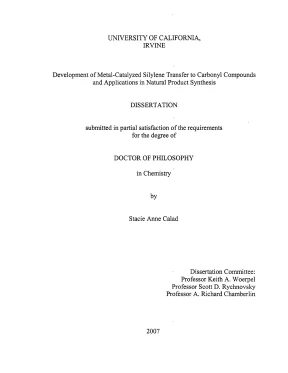
Tải xuống để đọc toàn bộUNIVERSITY OF CALIFORNIA, IRVINE Development of Metal-Catalyzed Silylene Transfer to Carbonyl Compounds and Applications in Natural Product Synthesis DISSERTATION submitted in partial satisfaction of the requirements for the degree of DOCTOR OF PHILOSOPHY in Chemistry by Stacie Anne Calad Dissertation Committee: Professor Keith A. Woerpel Professor Scott D. Richard Chamberlin 2007 UMI Number: 3243256 INFORMATION TO USERS The quality of this reproduction is dependent upon the quality of the copy submitted. Broken or indistinct print, colored or poor quality illustrations and photographs, print bleed-through, substandard margins, and improper alignment can adversely affect reproduction.
In the unlikely event that the author did not send a complete manuscript and there are missing pages, these will be noted. Also, if unauthorized copyright material had to be removed, a note will indicate the deletion. ® UMI UMI Microform 3243256 Copyright 2007 by ProQuest Information and Learning Company. All rights reserved.
This microform edition is protected against unauthorized copying under Title 17, United States Code. ProQuest Information and Learning Company 300 North Zeeb Road P. Box 1346 Ann Arbor, MI 48106-1346 © 2007 Stacie Anne Calad The dissertation of Stacie Anne Calad is approved and is acceptable in quality and form for publication on microfilm and digital formats: = — ⁄Z⁄⁄ + ⁄ ; Committee Chair University of California, Irvine 2006 ii DEDICATION To my mother Kathleen Calad Thank you for your constant love and support. Your caring nature and your personal strength are an inspiration.
ill Table of Contents List of Figures Vii List of Tables Vili Acknowledgements ix Curriculum Vitae | X Abstract of the Dissertation xI Chapter 1. Silylene Transfer to Carbonyl-Containing Compounds 1 Chapter 2. Metal-Catalyzed Silylene Transfer to Carbonyl-Containing Compounds 2.3 Results and Discussion 15 2.1 Metal-Catalyzed Silylene Transfer to Esters and Ketones 15 2.3 Reactions of Oxasilacyclopentenes 23 2.6 Experimental Section 34 Chapter 3. Silylene Transfer to œ,B-nsaturated Esters and Subsequent Ireland—Claisen Rearrangements: Application to the Synthesis of (+)-5-epi-Acetomycin 3.3 Results and Discussion 69 3.1 Ireland—Claisen Rearrangement of Silylene Transfer Products 69 iv 3.2 Functionalizations and Carbon-Silicon Bond Oxidation 72 3.3 Chirality Transfer From an Allylic Stereocenter 77 3.4 Total Synthesis of (+)-5-epi-Acetomycin 78 3.7 X-ray Crystallographic Data 111 Chapter 4.
Synthesis of (+)-epi-Stegobinone Utilizing Silacyclopropanes as Synthetic Intermediates 4.3 Results and Discussion | 150 4.7 X-ray Crystallographic Data | 173 LIST OF FIGURES Figure 2.1 Aldol transtion states for benzyl acrylate-derived oxasilacyclopentenes 30 Figure 2.2 Aldol transtion states for B-substituted oxasilacyclopentenes 30 Figure 2.3 Aldol transtion states for œ-substituted oxasilacyclopentenes 30 Figure 3.1 Enolization transition states 66 Figure 3.2 Silacyclopropene product | 71 Figure 3.3 Trajectory of nucleophilic attack on a silalactone 73 Figure 3.1 Transition States for Ireland—Claisen rearrangement Figure 4.2 Chelation of a B-benzyloxy group in syn,syn-selective aldol reactions 148 Figure 4.3 Transition state for B-benzyloxy-substituted anti,anti-selective aldol reactions 150 Figure 4.4 Antiperiplanar approach of silyl enol ether 37 152 vi LIST OF TABLES Table 2.1 Oxasilacyclopentene product formation 19 Table 2.2 Hydrolysis of ester-derived oxasilacyclopentenes 21 Table 2.3 Hydrolysis of ketone-derived oxasilacyclopentenes 22 Table 2.4 Lewis acid screen in the aldol reaction 26 Table 2.5 Optimization of aldol reaction conditions 28 Table 3.1 Optimization of the carbonyl reduction reaction 75 Table 3.2 Optimization of the carbon—silicon bond oxidation 76 Table 3.3 Optimization of silylene transfer reactions 81 Table 4.1 Syn,syn-selective aldol reaction conditions 147 Table 4.2 Syn,syn-selective aldol reaction conditions 148 Table 4.3 Anti,syn-selective aldol reaction conditions | 149 Vil ACKNOWLEDGEMENTS First, I would like to thank my advisor, Professor Keith Woerpel, for being a wonderful teacher and colleague. You have taught me so much about chemistry, writing, and life in general. Thank you for your constant encouragement and guidance. It has been a true pleasure working with you.
I thank the faculty at UCI for their commitment to education. Specifically, I would like to thank Professor Scott Rychnovsky and Professor Dick Chamberlin for serving on my dissertation committee and for their helpful discussions over the years. The Woerpel lab has been a great place to do science and I would like to thank the group members for making lab fun and interesting. Jelena Cirakovic was my collaborator on the stegobinone project and I thank her for teaching me so much about metal- catalyzed silylene transfer chemistry and also for her friendship.
Sidd Shenoy has been one of my best friends at UCI and I’ll always remember the lunches and coffee breaks. I thank Susan Billings for being a great roommate and friend over the last years. I’m looking forward to more good times out in Philly! Janice Loy has been a fabulous baymate over the last three years and I thank her for always lending an ear. I’d like to thank all of my close girlfriends in the lab for all the fun lunches, cupcake runs, and nights out: Dr.
Laura Anderson, Laura Bourque, Dr. Pamela Cleary, Renee Link, Sarah Ludlum, and Dr. Other past and present lab members that I would like to thank include Dr. Jason Tenenbaum, Dr.
Tim Clark, Matt Beaver, Jason Harris, Brett Howard, Nick Leonard, Zulimar Nevarez, Armando Ramirez, Tony Romero, Walter Salamant, Andrew Thomas, Christian Ventocilla, and Mike Yang. I thank my family and friends for all their love and support over the years. I never could have come this far without them. Thank you, Mom, Dad, Cari, and Ryan for being such a great family.
Thank you, Eric, for all of your patience and support over the years. Also, I would like to thank the Becker family for being so welcoming and encouraging. I would like to thank Alexis, Amani, Amy, Ariel, Briita, Cathie, Karen, Katy, Lauren, Sarah, and Stefanie for being a great group of friends. John Greaves for mass spectrometry, Dr.
Phil Dennison for assistance with NMR spectroscopy, and Dr. Joe Ziller for X-ray crystallography. I thank the National Institutes of Health for a predoctoral fellowship. Vili CURRICULUM VITAE Stacie A.
Calad Education 2001-2006 Ph., Organic Chemistry, University of California, Irvine 1997-2001 B., Chemistry, University of California, Berkeley Experience 2001-2006 Graduate Research Associate, University of California, Irvine, Thesis Advisor: Keith A. Woerpel 2001-2002 Teaching Assistant, University of California, Irvine 2000-2001 Undergraduate Research Assistant, University of California, Berkeley, Research Advisor: Clayton H. Heathcock 1999 Chemistry Instructor, University of California, Berkeley, Mathematics, Engineering, and Science Achievement (MESA) Summer Academy 1998 General Chemistry Tutor, University of California, Berkeley Honors and Awards 2002-2006 National Institute of Health (NIH) Predoctoral Fellowship 2006 Smitrovich Award, University of California, Irvine 2004 Women’s Chemist Committee/ Eli Lilly Travel Award 1997-2001 California Alumni Leadership Scholarship Recipient 1997-2001 College of Chemistry Scholars Program 1999-2000 Delta Gamma Scholastic Excellence Award Community Involvement 2005-2006 Iota Sigma Pi, Calcium Chapter, Membership Activities Coordinator 2005-2006 Girls, Inc., presented hands-on chemistry experiments 2003-2006 Orange County Cal Alumni Club, college fair volunteer 2003-2005 Ask-a-Scientist Night, Irvine Unified School District ix Publications and Presentations 7, ‘Formation of Chiral Quaternary Carbon Stereocenters by Silylene Transfer: Enantioselective Total Synthesis of (+)-5-epi-Acetomycin. Manuscript in preparation.
“Synthesis of (+)-epi-Stegobinone Utilizing Silacyclopropanes as Synthetic Intermediates. “Silylene Transfer to Carbonyl Compounds and Subsequent Aldol Reactions and Ireland—Claisen Rearrangements,” S. Presented at the Graduate Student and Postdoctoral Colloquium, University of California, Irvine, October 7, 2005. “Silylene Transfer to Carbonyl Compounds and Subsequent Ireland—Claisen Rearrangements to Control Formation of Quaternary Carbon Stereocenters.
“Metal-Catalyzed Silylene Transfer to Carbonyl Compounds,” S. Woerpel, Presented at the 228th National Meeting of the American Chemical Society, Philadelphia, PA, August 2004; paper ORGN 336. “Investigations into the Metal-Catalyzed Reactions of Cyclohexenesilacyclopropane in the Presence of Carbonyl Compounds,” S. Presented at the Graduate Student and Postdoctoral Colloquium, University of California, Irvine, April 2003.
“Metal-Catalyzed Synthesis and Reactions of Silacyclopropanes: New Reactions and Stereoselective Methods for Organic Synthesis,” K. Presented at the 225" National Meeting of the American Chemical Society, New Orleans, LA, March 2003; paper ORGN 001. Abstract of Dissertation Development of Metal-Catalyzed Silylene Transfer to Carbonyl Compounds and Applications in Natural Product Synthesis By Stacie Anne Calad Doctor of Philosophy in Chemistry University of California, Irvine, 2007 Professor Keith A. Woerpel Silylene transfer products can undergo stereoselective carbon-carbon bond-forming reactions, including the generation of quaternary carbon stereocenters, which demonstrate their utility in synthetic organic chemistry.
Our laboratory has developed a metal- catalyzed method for di-tert-butylsilylene transfer to an alkene, providing silacyclopropane products. This dissertation describes the application of the metal- catalyzed silylene transfer conditions to carbonyl compounds. Metal-catalyzed silylene transfer to a range of œ,-unsaturated esters proved to be a general method for the formation of oxasilacyclopentene products containing a cyclic silyl ketene acetal functionality. These oxasilacyclopentenes are useful synthetic intermediates that can undergo facile and selective aldol addition reactions and Ireland—Claisen rearrangements to provide products with multiple contiguous stereocenters and quaternary carbon centers.
By applying this methodology to enantiomerically pure esters, products containing chiral quaternary carbon centers have been accessed, and the total synthesis of (+)-5-epi-acetomycin has been achieved. xi Chapter One: Silylene Transfer to Carbonyl-Containing Compounds Over the past 30 years, the reaction of silylenes (R2Si) with carbonyl compounds has been studied extensively. While several examples of stable silylenes exist, they are typically transient species that can be generated by thermolysis, photolysis, or metal- catalysis. Silylenes can react with the carbon-oxygen double bond of aldehydes, ketones, and esters to provide oxasilacyclopropane and silacarbonyl ylide intermediates.
These reactive compounds can undergo further transformations to provide cyclic siloxane and silyl enol ether products. The reactions of silylenes with carbonyl compounds often require harsh conditions or a large excess of carbonyl substrates, which restrict the synthetic utility of these transformations. Two examples of isolated oxasilacyclopropane products derived from silylene transfer to a ketone have been reported.'” Silylene transfer to hindered ketone 2 under photolytic conditions provided sterically encumbered oxasilacyclopropane 4, whose structure was confirmed by X-ray crystallography (eq 1)! Belzner and coworkers isolated oxasilacyclopropane 8 from the thermal silylene transfer reaction of cyclotrisilane 5 with adamantanone (eq 2).” The steric hindrance around the silicon atom and on the ketones stabilized the oxasilacyclopropanes and allowed for their isolation. Me Me Me Me Me,Si7~ Mes Cre Mes°" 61% ie] Me3Si.Mes + hv Mes.’ Theoretical calculations also support the formation of an oxasilacyclopropane from an initially-formed silacarbonyl ylide.*° Me Me Me Me hy (>460 nm) Me Me MesSi.Mes + 0 hv _ ora SiMes2 (3) Me3Si~~ “Mes (254 nm) $ 82) ny (254 nm) Ò \ Mẹ Me me Me Me Me 2 9 4 Several reactions of oxasilacyclopropane 4 have been demonstrated, but are of limited synthetic utility.”* Photolysis of oxasilacyclopropane 4 in the presence of tetracyanoethylene (a known electron-transfer reagent) provided indene 12 and silanediol 13 as the major products (eq 4).
Carbene 10 and silanone 11 were proposed as intermediates in the reaction. A 1,2-methyl migration in carbene 10 would explain the formation of product 12. A different fragmentation pattern was observed when oxasilacyclopropane 4 was photolyzed in the presence of methanol. Under these reaction conditions, methanolysis product 14 was obtained in addition to ketone 2 (Scheme 1).
When oxasilacyclopropane 4 was photolyzed in the presence of adamantanone, dioxasilacyclopentane 15 was isolated (Scheme 1). Ando and coworkers proposed that a free silylene (3) was liberated from oxasilacyclopropane 4 upon photolysis and this intermediate reacted further with MeOH or adamantanone. The formation of siloxane 15 can be explained by the formation of a new adamantanone-derived oxasilacyclopropane (similar to oxasilacyclopropane 8), which undergoes an insertion of a second ketone molecule. Me Me Me Me Me Me h pMe@;, iW_ HạO : + Mes,Si=O _> [ ) Me + Mes2Si(OH), (4) 0 Me NC.
CN —< Me 1 13 Me NC’ ‘CN Me 40 Me 12 Scheme 1 Me Me Me Me MeOH Mes SiMesy hv Mes | T7 6) pi Me Mes Me Me Me 3 4 2 ò 0 Hô) Si-Mes Oo" Mes 15 Silylene transfer from a variety of silylene sources to sterically hindered or non- enolizable ketones also provided cyclic siloxane products.
Nội dung được bảo vệ bản quyền — Tải xuống đầy đủ
Trích dẫn luận án này
Stacie Anne Calad (2007). Chuyển giao silylene xúc tác kim loại và ứng dụng tổng hợp [Luận án tiến sĩ, University of California, Irvine]. LuanAn.net. https://luanan.net/hoa-hoc/hoa-huu-co/chuyen-giao-silylene-xuc-tac-kim-loai-hop-chat-carbonyl
Từ khóa và chủ đề nghiên cứu
Từ khóa liên quan
Xem thêm luận án cùng lĩnh vực
Chủ đề nghiên cứu
Câu hỏi thường gặp
Luận án "Chuyển giao silylene xúc tác kim loại và ứng dụng tổng hợp" nghiên cứu về vấn đề gì?
Luận án tiến sĩ về chuyển giao silylene xúc tác kim loại đến hợp chất carbonyl. Phát triển phương pháp tổng hợp và ứng dụng trong tổng hợp sản phẩm tự nhiên.
Luận án "Chuyển giao silylene xúc tác kim loại và ứng dụng tổng hợp" được bảo vệ tại trường nào?
Luận án này được bảo vệ tại University of California, Irvine. Năm bảo vệ: 2007.
Luận án "Chuyển giao silylene xúc tác kim loại và ứng dụng tổng hợp" thuộc chuyên ngành gì?
Luận án "Chuyển giao silylene xúc tác kim loại và ứng dụng tổng hợp" thuộc chuyên ngành Chemistry. Danh mục: Hóa Hữu Cơ.
Luận án "Chuyển giao silylene xúc tác kim loại và ứng dụng tổng hợp" có bao nhiêu trang?
Luận án "Chuyển giao silylene xúc tác kim loại và ứng dụng tổng hợp" có 236 trang. Bạn có thể xem trước một phần tài liệu ngay trên trang web trước khi tải về.
Cách tải luận án "Chuyển giao silylene xúc tác kim loại và ứng dụng tổng hợp" về máy như thế nào?
Để tải luận án về máy, bạn nhấn nút "Tải xuống ngay" trên trang này, sau đó hoàn tất thanh toán phí lưu trữ. File sẽ được tải xuống ngay sau khi thanh toán thành công. Hỗ trợ qua Zalo: 0559 297 239.