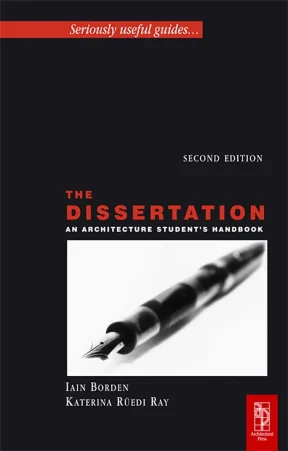
Viết luận văn kiến trúc: Hướng dẫn chi tiết của Iain Borden & Katerina Rüedi Ray
Cẩm nang toàn diện hỗ trợ sinh viên kiến trúc hoàn thành luận văn và đồ án tốt nghiệp. Hướng dẫn từng bước từ nghiên cứu đến bảo vệ, đảm bảo thành công.
Năm xuất bản
Số trang
341
Thời gian đọc
52 phút
Lượt xem
1
Lượt tải
0
Phí lưu trữ
60 Point
Tổng quan nhanh
- Chủ đề:
- Bắt đầu Luận văn Kiến trúc: Lời khuyên thiết yếu
- Số trang:
- 341 trang
- Chuyên ngành:
- Kiến trúc
- Tác giả:
- Iain Borden
- Năm:
- 2006
Tóm tắt nội dung luận án
I.Bắt đầu Luận văn Kiến trúc Lời khuyên thiết yếu
Luận văn kiến trúc đánh dấu một cột mốc quan trọng. Nó thể hiện khả năng nghiên cứu độc lập. Sinh viên cần tiếp cận dự án này một cách chiến lược. Cẩm nang này cung cấp hướng dẫn toàn diện. Nó giúp sinh viên kiến trúc điều hướng quá trình. Từ lựa chọn đề tài đến bảo vệ thành công. Luận văn kiến trúc đòi hỏi sự cống hiến. Nó yêu cầu kỹ năng tư duy phản biện. Luận văn là cơ hội để khám phá sâu một lĩnh vực kiến trúc. Nó xây dựng kiến thức chuyên môn. Cuốn cẩm nang này sẽ là người bạn đồng hành tin cậy.
1.1. Hiểu bản chất luận văn kiến trúc.
Luận văn kiến trúc không chỉ là một bài báo cáo. Nó là một công trình nghiên cứu học thuật sâu sắc. Luận văn đòi hỏi tư duy phân tích. Nó cần khả năng tổng hợp thông tin. Mục tiêu là đóng góp vào kiến thức ngành. Luận văn chứng minh năng lực học thuật của sinh viên. Nó thể hiện kỹ năng nghiên cứu độc lập. Luận văn là kết quả của quá trình học tập. Nó phản ánh sự trưởng thành trong tư duy kiến trúc.
1.2. Chọn đề tài luận văn kiến trúc phù hợp.
Chọn đề tài luận văn là bước đầu tiên. Đề tài cần có sự quan tâm cá nhân. Nó phải phù hợp với kiến thức chuyên ngành. Đề tài cũng cần tính khả thi cao. Sinh viên nên đánh giá phạm vi đề tài. Xác định nguồn tài liệu có sẵn. Thảo luận với giảng viên hướng dẫn. Đảm bảo đề tài đủ sâu sắc. Nó cần đủ rộng để phát triển. Chọn đề tài luận văn cẩn thận quyết định thành công.
1.3. Lập đề cương luận văn hiệu quả.
Đề cương luận văn là bản đồ hành trình. Nó phác thảo mục tiêu nghiên cứu. Đề cương xác định câu hỏi chính. Nó liệt kê các chương và tiểu mục. Đề cương giúp cấu trúc ý tưởng. Nó đảm bảo sự mạch lạc. Đề cương là cơ sở để nhận phản hồi. Giảng viên sẽ góp ý về hướng đi. Một đề cương chi tiết giúp giữ vững trọng tâm. Nó ngăn chặn sự lan man trong quá trình viết. Đây là bước quan trọng trong hướng dẫn viết luận văn.
II.Phương pháp Nghiên cứu Kiến trúc Hướng dẫn chuyên sâu
Nghiên cứu là xương sống của mọi luận văn kiến trúc. Nó đòi hỏi sự chính xác và logic. Sinh viên cần áp dụng các phương pháp phù hợp. Hiểu rõ từng phương pháp là cần thiết. Cẩm nang này đi sâu vào các kỹ thuật nghiên cứu. Nó bao gồm cách tiếp cận lịch sử và phê bình. Tìm kiếm thông tin hiệu quả là kỹ năng cốt lõi. Sử dụng thư viện và internet một cách thông minh. Phát triển kỹ năng nghiên cứu là yếu tố thành công. Luận văn sẽ vững chắc hơn nhờ nghiên cứu kỹ lưỡng.
2.1. Xác định khái niệm nghiên cứu.
Nghiên cứu không chỉ là thu thập dữ liệu. Nó là quá trình phân tích và tổng hợp. Mục tiêu là tạo ra tri thức mới. Nghiên cứu trong kiến trúc có thể đa dạng. Nó bao gồm lịch sử, lý thuyết, công nghệ, xã hội. Xác định rõ mục tiêu nghiên cứu. Đặt ra các câu hỏi cụ thể. Điều này giúp định hình hướng đi. Nghiên cứu cần có tính hệ thống. Nó phải dựa trên các bằng chứng rõ ràng. Đây là nền tảng cho mọi phương pháp nghiên cứu kiến trúc.
2.2. Khám phá các phương pháp nghiên cứu.
Có nhiều phương pháp nghiên cứu kiến trúc. Phương pháp lịch sử phân tích quá khứ. Nó tìm hiểu sự phát triển kiến trúc. Phương pháp phê bình đánh giá hiện trạng. Nó xem xét các vấn đề đương đại. Kỹ thuật nghiên cứu định tính thu thập quan điểm. Kỹ thuật định lượng phân tích số liệu. Mỗi phương pháp có ưu và nhược điểm. Chọn phương pháp phù hợp với đề tài. Áp dụng chúng một cách linh hoạt. Luận văn sẽ có chiều sâu hơn.
2.3. Sử dụng thư viện và tài nguyên số.
Thư viện là kho tàng kiến thức. Sinh viên tìm sách, tạp chí, luận án. Học cách sử dụng danh mục thư viện. Nắm vững kỹ năng tra cứu. Internet là nguồn tài nguyên khổng lồ. Nó cung cấp thông tin nhanh chóng. Tuy nhiên, cần đánh giá độ tin cậy. Chỉ sử dụng nguồn học thuật uy tín. Kho lưu trữ cũng là nguồn quan trọng. Nó chứa tài liệu gốc, bản vẽ. Kết hợp các nguồn này một cách hiệu quả. Đây là bước then chốt trong cẩm nang sinh viên kiến trúc.
III.Cấu trúc Luận văn Kiến trúc Sắp xếp khoa học
Cấu trúc luận văn kiến trúc rõ ràng là điều cần thiết. Nó giúp người đọc dễ dàng theo dõi. Bố cục luận văn khoa học tạo ấn tượng tốt. Chuẩn bị tốt là chìa khóa thành công. Cẩm nang này hướng dẫn chi tiết cách tổ chức. Nó bao gồm từ việc sắp xếp chương mục. Đến việc trình bày hình ảnh minh họa. Quy tắc trích dẫn tài liệu là bắt buộc. Tránh đạo văn là trách nhiệm đạo đức. Một cấu trúc hợp lý thể hiện sự chuyên nghiệp. Nó phản ánh tư duy logic của sinh viên.
3.1. Thiết lập bố cục luận văn mạch lạc.
Bố cục luận văn kiến trúc gồm nhiều phần. Lời mở đầu giới thiệu đề tài. Các chương nội dung phát triển ý tưởng. Kết luận tổng hợp các phát hiện. Mỗi chương có các tiểu mục rõ ràng. Trình tự logic là rất quan trọng. Ý tưởng phải được trình bày tuần tự. Chuyển tiếp giữa các phần phải mượt mà. Sơ đồ hóa bố cục trước khi viết. Điều này giúp duy trì sự nhất quán. Một bố cục chặt chẽ là nền tảng. Nó giúp luận văn dễ đọc và dễ hiểu.
3.2. Đảm bảo trích dẫn tài liệu chuẩn xác.
Trích dẫn tài liệu là yếu tố học thuật. Nó công nhận công lao của tác giả khác. Sử dụng các phong cách trích dẫn tiêu chuẩn. Ví dụ: APA, MLA, Chicago. Mỗi trích dẫn phải chính xác. Danh mục tài liệu tham khảo là bắt buộc. Nó cung cấp thông tin chi tiết. Đảm bảo tất cả các nguồn đều được liệt kê. Trích dẫn tài liệu luận văn đúng cách. Điều này thể hiện tính trung thực. Nó củng cố độ tin cậy của nghiên cứu.
3.3. Tránh đạo văn luận văn bằng mọi giá.
Đạo văn là hành vi sai trái nghiêm trọng. Nó là việc sao chép ý tưởng hoặc văn bản. Không ghi nguồn của tác giả gốc. Điều này vi phạm đạo đức học thuật. Sinh viên cần hiểu rõ quy tắc. Luôn trích dẫn khi sử dụng thông tin từ nguồn khác. Diễn giải lại bằng lời của mình. Sử dụng phần mềm kiểm tra đạo văn. Đạo văn luận văn có thể dẫn đến hậu quả nặng nề. Nó làm mất uy tín của sinh viên. Luôn giữ thái độ trung thực trong nghiên cứu.
IV.Hoàn thiện Luận văn Kiến trúc Trình bày chuyên nghiệp
Quá trình viết luận văn kết thúc bằng việc trình bày. Trình bày chuyên nghiệp là yếu tố quyết định. Nó ảnh hưởng đến điểm số đánh giá. Cẩm nang này cung cấp hướng dẫn chi tiết. Nó chỉ ra cách tạo ấn tượng mạnh. Từ định dạng văn bản đến hình ảnh minh họa. Chuẩn bị kỹ lưỡng cho buổi bảo vệ luận văn. Hiểu rõ tiêu chí đánh giá là cần thiết. Luận văn tốt không chỉ có nội dung hay. Nó còn phải được trình bày một cách hoàn hảo.
4.1. Quy trình trình bày chung luận văn.
Trình bày luận văn cần sự tỉ mỉ. Định dạng văn bản phải thống nhất. Phông chữ, cỡ chữ, lề trang. Số trang cần đúng quy cách. Hình ảnh, biểu đồ phải rõ ràng. Chú thích đầy đủ và chính xác. Tránh lỗi chính tả và ngữ pháp. Kiểm tra kỹ lưỡng trước khi nộp. Sử dụng phần mềm máy tính hiệu quả. Nó hỗ trợ định dạng và chỉnh sửa. Trình bày khoa học tăng tính chuyên nghiệp. Nó giúp người đọc tập trung vào nội dung.
4.2. Chuẩn bị cho buổi bảo vệ luận văn.
Buổi bảo vệ luận văn là cơ hội cuối cùng. Sinh viên cần trình bày nghiên cứu. Tóm tắt các điểm chính. Nêu bật đóng góp của luận văn. Chuẩn bị các slide trình bày. Tập luyện kỹ năng nói trước công chúng. Dự đoán các câu hỏi có thể. Chuẩn bị câu trả lời rõ ràng. Tự tin và chuyên nghiệp là chìa khóa. Buổi bảo vệ là dịp để bảo vệ ý tưởng. Nó là minh chứng cho sự nỗ lực.
4.3. Đánh giá chất lượng luận văn kiến trúc.
Luận văn kiến trúc được đánh giá theo nhiều tiêu chí. Tính độc đáo của đề tài. Chiều sâu của nghiên cứu. Tính logic của lập luận. Độ chính xác của trích dẫn. Khả năng giải quyết vấn đề. Cách trình bày tổng thể. Các tiêu chí này đảm bảo công bằng. Sinh viên cần hiểu rõ chúng. Nắm bắt các yếu tố đánh giá. Điều này giúp tối ưu hóa luận văn. Đạt được kết quả cao nhất.
Mục lục chi tiết luận án
Tải xuống file đầy đủ để xem toàn bộ nội dung
Tải đầy đủ (341 trang)Nội dung chính
Tổng quan về giáo trình
Viết luận văn kiến trúc: Cẩm nang toàn diện cho sinh viên (The Dissertation: An Architecture Student’s Handbook, ấn bản của Nhà xuất bản Elsevier / Architectural Press, do hai học giả danh tiếng Iain Borden và Katerina Rüedi Ray biên soạn) là giáo trình chuẩn mực hàng đầu trong chương trình đào tạo Cử nhân, Thạc sĩ và Tiến sĩ Kiến trúc trên thế giới. Trong cấu trúc chương trình đào tạo kiến trúc, đồ án thiết kế tại xưởng (design studio) thường chiếm vị trí trung tâm, nhưng học phần Luận văn Tốt nghiệp và Phương pháp Nghiên cứu Kiến trúc đóng vai trò là "chiếc cầu nối" mang tính quyết định, giúp sinh viên phát triển tư duy phản biện, khả năng lý luận và định hình bản sắc tư tưởng nghề nghiệp.
Mục tiêu học tập cốt lõi của giáo trình là xóa bỏ rào cản tâm lý e ngại viết lách của sinh viên kiến trúc. Giáo trình trang bị cho người học năng lực chuyển hóa ý niệm thị giác và không gian thành các lập luận văn bản chặt chẽ, có giá trị học thuật. Sinh viên sẽ nắm vững quy trình từ khâu thai nghén đề tài, lập đề cương nghiên cứu (research proposal), thu thập và xử lý tài liệu lưu trữ, cho đến kỹ thuật trích dẫn khoa học, trình bày đồ họa và bảo vệ trước hội đồng phản biện.
Điểm đặc sắc của cuốn giáo trình nằm ở cách tiếp cận: kiến trúc không chỉ được tạo nên từ gạch đá, bản vẽ hay mô hình 3D, mà còn được kiến tạo thông qua ngôn từ (textual architecture). Bằng cách định vị luận văn như một công trình kiến trúc được xây dựng từ câu từ, giáo trình giúp sinh viên kết nối tự nhiên giữa tư duy thiết kế tại studio và nghiên cứu lý thuyết hàn lâm.
Nội dung kiến thức cốt lõi
                    ┌──────────────────────────────────────────────┐
                    │ 1. KHỞI TẠO & ĐỀ CƯƠNG (Starting & Proposal) │
                    │ Xác định chủ đề • Đánh giá tính khả thi     │
                    └──────────────────────┬───────────────────────┘
                                           │
                                           ▼
                    ┌──────────────────────────────────────────────┐
                    │ 2. PHƯƠNG PHÁP LUẬN (Research Methodologies) │
                    │ Lịch sử Xã hội • Hiện tượng học • Ký hiệu học│
                    └──────────────────────┬───────────────────────┘
                                           │
                                           ▼
                    ┌──────────────────────────────────────────────┐
                    │ 3. THU THẬP DỮ LIỆU (Research Techniques)    │
                    │ Lưu trữ API/Avery • Điền dã • Phỏng vấn      │
                    └──────────────────────┬───────────────────────┘
                                           │
                                           ▼
                    ┌──────────────────────────────────────────────┐
                    │ 4. SOẠN THẢO & TRÌNH BÀY (Writing & Defense) │
                    │ Cấu trúc chương • Chuẩn trích dẫn • Bảo vệ   │
                    └──────────────────────────────────────────────┘
Các chương và chủ đề chính
Giáo trình được cấu trúc theo tiến trình thời gian thực tế của một dự án nghiên cứu học thuật hoàn chỉnh:
- Khởi đầu (Starting): Hướng dẫn sinh viên nhận diện bản chất của một bản luận văn kiến trúc; phương pháp đào sâu các mối quan tâm cá nhân từ đồ án xưởng; kỹ năng thẩm định tính khả thi của đề tài (phạm vi, nguồn tư liệu, chi phí, thời gian) và cách xây dựng một bản Đề cương nghiên cứu (Proposal) chuẩn mực.
- Nghiên cứu & Phương pháp luận (Researching - Methodologies): Giới thiệu hệ thống các trường phái lý luận và phương pháp nghiên cứu lịch sử - phê bình kiến trúc: Chủ nghĩa kinh nghiệm (Empiricism), Ký hiệu học và Biểu tượng học (Iconography & Semiology), Lịch sử kiến trúc theo quan điểm Hegel (Zeitgeist), Lịch sử xã hội (Social History), Phê bình mác-xít và nữ quyền (Politicised History), Lý thuyết liên ngành (Interdisciplinary Studies) và Hiện tượng học (Phenomenology).
- Kỹ thuật và Công cụ nghiên cứu (Research Techniques & Resources): Cung cấp các chỉ dẫn thực tế về kỹ thuật ghi chép, quản lý trích dẫn; phương pháp tra cứu cơ sở dữ liệu học thuật quốc tế (Avery Index, RIBA Architectural Periodicals Index); kỹ năng điền dã công trình, phỏng vấn chuyên gia và khảo sát xã hội học.
- Chuẩn bị và Soạn thảo (Preparing): Hướng dẫn chiến lược xây dựng dàn ý, liên kết giữa phần Mở đầu (Introduction) và Kết luận (Conclusion); xử lý hình ảnh minh họa; quy tắc trích dẫn và thư mục; phòng chống đạo văn (Plagiarism) và phương pháp phát triển các dạng thức luận văn phi truyền thống (Design-led/Multimedia dissertations).
- Trình bày và Đánh giá (Presenting): Kỹ thuật định dạng đồ họa văn bản, tiêu chuẩn in ấn, đóng quyển chuyên nghiệp; phân tích ma trận tiêu chí chấm điểm của hội đồng và chiến thuật trả lời chất vấn trong kỳ thi vấn đáp/bảo vệ luận văn (Oral Examination).
- Lộ trình sau luận văn (Afterwards): Định hướng phát triển đề tài lên bậc học cao hơn (MPhil, PhD) và kỹ năng biên tập luận văn để công bố trên các tạp chí khoa học hoặc sách chuyên khảo.
- Tuyển tập luận văn mẫu (Dissertation Excerpts): Tuyển chọn các trích đoạn luận văn xuất sắc từng đoạt các giải thưởng danh giá (như Giải thưởng Chủ tịch Hội Kiến trúc sư Hoàng gia Anh - RIBA President's Medals) để làm hình mẫu trực quan.
Kiến thức nền tảng được xây dựng
- Hệ thống lý thuyết lịch sử và lý luận kiến trúc: Sinh viên được tiếp cận các khung lý thuyết từ cổ điển (Vitruvius) đến hiện đại và hậu hiện đại (Robert Venturi, Manfredo Tafuri, Michel Foucault, Henri Lefebvre, Juhani Pallasmaa).
- Bản chất tri thức luận trong kiến trúc: Giúp người học hiểu rằng một công trình không chỉ là hình khối vật lý mà còn là sản phẩm của các điều kiện kinh tế, chính trị, văn hóa và giới tính.
- Nguyên tắc liêm chính học thuật: Thiết lập nền tảng vững chắc về quy chuẩn trích dẫn, tính xác thực của tư liệu lưu trữ và đạo đức nghiên cứu khi làm việc với đối tượng khảo sát thực địa.
Kỹ năng phát triển
- Kỹ năng phân tích phản biện (Critical & Analytical Skills): Năng lực "đọc" công trình kiến trúc như một văn bản văn hóa; phát hiện vấn đề nghiên cứu từ những khoảng trống của tri thức hiện có.
- Kỹ năng nghiên cứu lưu trữ và điền dã (Technical & Archival Skills): Thành thạo khai thác các hệ thống mục lục thư viện chuyên ngành kiến trúc, xử lý bản vẽ lưu trữ, chụp ảnh hiện trạng và ghi chép điền dã chuẩn xác.
- Kỹ năng tổng hợp văn bản - thị giác (Visual-Textual Synthesis): Khả năng kết hợp nhuần nhuyễn giữa lập luận câu từ và hệ thống bản vẽ, sơ đồ phân tích, ảnh tư liệu.
Phương pháp giảng dạy và học tập
Giáo trình áp dụng phương pháp sư phạm định hướng tiến trình (Process-oriented Pedagogical Approach) kết hợp phương pháp học tập qua dự án (Project-based Learning). Thay vì truyền thụ lý thuyết thuần túy, cuốn sách đóng vai trò như một người hướng dẫn trực tiếp (mentor) đồng hành cùng sinh viên qua từng giai đoạn thực hiện.
┌────────────────────────────────────────────────────────────────────────┐
│                        QUY TRÌNH HỌC TẬP TƯƠNG TÁC                     │
│                                                                        │
│  [Ý niệm / Sở thích] ──► [Đề cương Proposal] ──► [Khảo sát / Lưu trữ]   │
│                                                          │             │
│                                                          ▼             │
│  [Bảo vệ Hội đồng]   ◄── [Bản thảo & Đồ họa]  ◄── [Lập luận / Viết]    │
└────────────────────────────────────────────────────────────────────────┘
- Phương pháp Case Studies đối sánh: Giáo trình phân tích cụ thể các bài nghiên cứu kinh điển và trích dẫn trực tiếp các luận văn đạt giải thưởng quốc tế. Sinh viên được "mổ xẻ" cấu trúc, phương pháp lập luận và cách dùng từ của những bài viết mẫu để áp dụng vào đề tài của mình.
- Bài tập định hướng thực hành (Actionable Tasks): Mỗi phần đều đi kèm các câu hỏi tự vấn, biểu mẫu lập kế hoạch (Timeline planning), và kỹ thuật ghi chép ba cột (phân biệt giữa trích dẫn nguyên văn, diễn giải lại và suy nghĩ cá nhân).
- Tối ưu hóa tương tác Thầy - Trò (Supervisor Tutorials): Hướng dẫn chi tiết cách chuẩn bị nội dung trước mỗi buổi gặp giảng viên hướng dẫn, cách tiếp nhận phản hồi học thuật và cách giải quyết bất đồng quan điểm chuyên môn một cách chuyên nghiệp.
Điểm nổi bật và cập nhật
- Tích hợp tài nguyên số và kỷ nguyên Internet: Giáo trình hướng dẫn chi tiết cách khai thác các cơ sở dữ liệu trực tuyến toàn cầu (Avery Index, RIBA Library Online Catalogue), cách thẩm định độ tin cậy của tài liệu mạng và kỹ thuật quản lý tư liệu số bằng các phần mềm chuyên dụng (EndNote, Reference Managers).
- Mở rộng định dạng luận văn đương đại (Design-led & Alternative Dissertations): Nắm bắt xu hướng phát triển mới nhất của các trường kiến trúc quốc tế, giáo trình phân tích sâu về mô hình "Luận văn kết hợp thiết kế" (PhD by Architectural Design) và các dạng thức trình bày phi văn bản truyền thống (multimedia, phim tài liệu, portfolio lý luận).
- Gắn kết chặt chẽ với tiêu chuẩn hành nghề quốc tế: Nội dung cuốn sách được thiết kế bám sát yêu cầu chuẩn đầu ra của các tổ chức kiểm định kiến trúc hàng đầu thế giới như RIBA và ARB (Anh), AIA và NCARB (Mỹ), RAIA (Úc), đảm bảo luận văn vừa có chiều sâu học thuật vừa đáp ứng tiêu chuẩn nghề nghiệp.
Đối tượng sử dụng giáo trình
┌─────────────────────────────────────────────────────────────────────────┐
│                          ĐỐI TƯỢNG PHÙ HỢP                              │
├──────────────────────────┬──────────────────────────────────────────────┤
│ Sinh viên B.Arch         │ Năm 4 - Năm 5 chuẩn bị làm khóa luận tốt     │
│                          │ nghiệp hoặc tiểu luận lịch sử - lý thuyết.   │
├──────────────────────────┼──────────────────────────────────────────────┤
│ Học viên M.Arch / PhD    │ Cần khung phương pháp luận nghiên cứu sâu    │
│                          │ và quy chuẩn xuất bản bài báo khoa học.      │
├──────────────────────────┼──────────────────────────────────────────────┤
│ Giảng viên & Hướng dẫn   │ Sử dụng làm tài liệu giảng dạy học phần      │
│                          │ Phương pháp Nghiên cứu Kiến trúc.            │
└──────────────────────────┴──────────────────────────────────────────────┘
- Yêu cầu tiên quyết: Sinh viên đã hoàn thành các học phần cơ sở về Lịch sử Kiến trúc Thế giới, Lý thuyết Kiến trúc và có trải nghiệm tối thiểu 2-3 năm tại các xưởng thiết kế kiến trúc (Design Studios).
Câu hỏi thường gặp
1. Giáo trình này phù hợp nhất với ai?
Giáo trình được viết chuyên biệt cho sinh viên ngành Kiến trúc, Quy hoạch Đô thị, Thiết kế Nội thất và Kiến trúc Cảnh quan từ bậc đại học năm cuối đến học viên cao học và nghiên cứu sinh tiến sĩ.
2. Cần chuẩn bị kiến thức nền nào trước khi đọc cuốn sách này?
Người học chỉ cần nắm được các kiến thức cơ bản về lịch sử và thuật ngữ kiến trúc, cùng với tinh thần cởi mở để tiếp cận các lý thuyết văn hóa - xã hội liên ngành.
3. Điểm khác biệt lớn nhất giữa giáo trình này và các sách hướng dẫn viết luận văn chung là gì?
Sách hướng dẫn thông thường chỉ tập trung vào cấu trúc văn bản khoa học tự nhiên hoặc xã hội. Cuốn sách này được thiết kế đặc thù cho tư duy không gian và thị giác của người làm kiến trúc, kết hợp hài hòa giữa ngôn từ (text) và bản vẽ/hình ảnh (visual representation).
4. Làm thế nào để tự học và ứng dụng giáo trình hiệu quả nhất?
Bạn nên đọc tuần tự Chương 1 và 2 khi bắt đầu hình thành ý tưởng, sau đó sử dụng Chương 3 và 4 như một cuốn cẩm nang tra cứu thường trực trong suốt quá trình điền dã và viết bản thảo. Hãy kết hợp thực hành ngay bằng cách lập đề cương và thời gian biểu theo các biểu mẫu hướng dẫn.
5. Có tài liệu mẫu hoặc tài liệu tham khảo kèm theo trong sách không?
Có. Toàn bộ Chương 7 của giáo trình cung cấp các bài trích đoạn luận văn thực tế xuất sắc từng đoạt giải thưởng RIBA President's Medals, kèm theo danh mục các nguồn cơ sở dữ liệu tra cứu uy tín nhất trong ngành kiến trúc toàn cầu.
Kết luận
Viết luận văn kiến trúc: Cẩm nang toàn diện cho sinh viên của Iain Borden và Katerina Rüedi Ray không chỉ đơn thuần là một cuốn sách dạy kỹ thuật viết, mà là kim chỉ nam giúp mỗi sinh viên kiến trúc khai phóng tư duy lý luận và khẳng định tiếng nói chuyên môn độc lập. Việc làm chủ kỹ năng nghiên cứu và lập luận theo hướng dẫn của giáo trình sẽ là nền tảng vững chắc giúp sinh viên tự tin bước vào con đường hành nghề chuyên nghiệp cũng như theo đuổi các bậc học cao hơn trên trường quốc tế.
Trích đoạn nội dung luận án
Tải xuống để đọc toàn bộThe Dissertation i This page intentionally left blank ii The Dissertation An Architecture Student’s Handbook Iain Borden and Katerina Rüedi Ray AMSTERDAM BOSTON HEIDELBERG LONDON NEW YORK OXFORD PARIS SAN DIEGO SAN FRANCISCO SINGAPORE SYDNEY TOKYO ELSEVIER Architectural Press is an imprint of Elsevier iii Architectural Press is an imprint of Elsevier Linacre House, Jordan Hill, Oxford OX2 8DP 30 Corporate Drive, Suite 400, Burlington, MA 01803 First published 2000 Reprinted 2001, 2003, 2004, 2005 Second edition 2006 Copyright © 2006, Iain Borden and Katerina Rüedi Ray. All rights reserved The right of Iain Borden and Katerina Rüedi Ray to be identified as the authors of this work has been asserted in accordance with the Copyright, Designs and Patents Act 1988 No part of this publication may be reproduced in any material form (including photocopying or storing in any medium by electronic means and whether or not transiently or incidentally to some other use of this publication) without the written permission of the copyright holder except in accordance with the provisions of the Copyright, Designs and Patents Act 1988 or under the terms of a licence issued by the Copyright Licensing Agency Ltd, 90 Tottenham Court Road, London, England W1T 4LP. Applications for the copyright holder’s written permission to reproduce any part of this publication should be addressed to the publisher. Permissions may be sought directly from Elsevier’s Science and Technology Rights Department in Oxford, UK: phone: (+44) (0) 1865 843830; fax: (+44) (0) 1865 853333; e-mail: permissions@elsevier.
You may also complete your request on-line via the Elsevier homepage (http://www.com), by selecting ‘Customer Support’ and then ‘Obtaining Permissions’. British Library Cataloguing in Publication Data A catalogue record for this book is available from the British Library Library of Congress Cataloguing in Publication Data A catalogue record for this book is available from the Library of Congress ISBN-13: 978-0-7506-6825-5 ISBN-10: 0-7506-6825-3 For information on all Architectural Press publications visit our website at www.com Printed and bound in Great Britain 05 06 07 08 09 10 10 9 8 7 6 5 4 3 2 1 Working together to grow libraries in developing countries www.org iv Contents Acknowledgements ix 1 Introduction 1 Why Write a Dissertation? 1 The Handbook 2 2 Starting 4 What is a Dissertation? 4 Selecting a Dissertation Subject 5 Assessing a Dissertation Subject 8 Choosing and Working with a Supervisor 13 Writing a Proposal 15 3 Researching 17 What is Research? 17 Historical and Critical Methodology 18 Research Techniques 24 Libraries and Archives 33 The Internet 44 4 Preparing 49 Structuring a Dissertation 50 Working Methods 53 Illustrations 56 Referencing 57 vi Contents Bibliographies 59 Plagiarism 62 Submitting a Draft 64 Word-Processing 64 Alternative Dissertations 66 5 Presenting 70 General Presentation 70 Illustrations 74 Computer Software 76 Assessment Criteria 76 Oral Examinations 77 6 Afterwards 79 Further Research and Study 79 Publications 81 Troubleshooting 84 7 Dissertation Excerpts 88 Susannah Bach 89 The Barber-Surgeons’ Anatomy Theatre Megha Chand 105 Interrogating the Indian Condition: Some Problems with the Frameworks of Architect Charles Correa Nic Coetzer 121 The Production of the City as a White Space: Representing and Restructuring Identity and Architecture, Cape Town, 1892–1936 (PhD) Katherine Ewing 156 Investigation of a Traders’ Route: Analysis of the Street Edge, which Informs Public Space, with Reference to the Indian City of Jaipur, Isfahan in Iran and Harare, Zimbabwe. Alvin Foo Tze Yang 176 A Society in Transition: the Social and Spatial Production of the Aged Identity in the Changing Landscapes of Care Environments Alexander Franklin 191 The Architecture of Omniscience: Codes, Grafts and the Representation of the Work of Michael Sorkin Contents vii Paul Gardiner 206 The Museum of the Museum Olivia Gordon 213 Word-robe: an Investigation of the Cupboard (. as prompted by Lucy) Robert Holford 231 The Blooming D’Or Michael Levey 232 The Charterhouse of Parkminster Yeoryia Manolopoulou 254 Drawing on Chance: Indeterminacy, Perception and Design (PhD by Architectural Design) Anna Radcliffe 278 This Dream Upon the Water: the Representation of a City in Literature – Venice E.
Taylor 296 A Speculative Investigation into the Sacred and Aesthetic Principles of Alexander ‘Greek’ Thomson’s Architecture, with particular reference to St. Vincent Street Church Huw Williams 319 I’m Astounded By People Who Want To ‘Know’ The Universe When It’s Hard Enough To Find Your Way Around Chinatown: an Essay In Unsymbolisation Index 325 This page intentionally left blank viii CONTENTS ix original typesetting files. Page breaks are true to the original; line lengths, word breaks, heading styles, and other typesetting-specific formatting, however, cannot be About this PDF file: This new digital representation of the original work has been recomposed from XML files created from the original paper book, not from the retained, and some typographic errors may have been accidentally inserted. Please use the print version of this publication as the authoritative version for attribution.
CONTENTS EXECUTIVE SUMMARY 1 INTRODUCTION 12 1 FIRE DEATHS IN THE UNITED STATES 15 Scope of the Problem 15 Causes of Fire Death 16 The Contemporary Fire Environment 20 2 A PRIMER ON FIRE AND FIRE HAZARD 23 The Burning Process 23 A Typical Compartment Fire 25 Fire Hazard Assessment 28 Time Needed for Escape 34 Time Available for Escape 36 3 STATUS OF FIRE HAZARD MODELS AND 45 TEST METHODS Introduction 45 Detection Models 46 Models for Time Available for Escape 48 Models for Time Needed for Escape 54 Test Methods for Model Input Data 55 Summary 59 4 HAZARDS ASSOCIATED WITH FIRES 62 Heat 62 Oxygen Depletion 63 Smoke 63 Health Effects of Smoke Inhalation on Humans 73 Exposed to Fires Summary 77 About this PDF file: This new digital representation of the original work has been recomposed from XML files created from the original paper book, not from the original typesetting files. Page breaks are true to the original; line lengths, word breaks, heading styles, and other typesetting-specific formatting, however, cannot be retained, and some typographic errors may have been accidentally inserted. Please use the print version of this publication as the authoritative version for attribution. CONTENTS Case Study 2: Case Study 1: 6 5 Summary Summary REFERENCES CASE STUDIES Screen or Not to Screen Burning of an Upholstered Chair Concealed Combustible Material OF TOXIC POTENCY OF SMOKE Chemical Analysis vs.
Biologic Assay Test Methods That Use Nonlethal End Points GUIDELINES FOR HAZARD ASSESSMENT: Test Methods That Use Death as an End Point Use of Combustion-Product Toxicity Tests: To LABORATORY METHODS FOR EVALUATION 106 131 129 105 104 78 78 x 118 97 83 79 1 Introduction Why Write a Dissertation? As a student of architecture, the major part of your education is always going to be the design of buildings as executed through drawings, mod- els and other kinds of visual representation. Together with the work space of the architectural studio, the presentation of designs followed by a challenging crit or jury, and the submission of a carefully wrought port- folio – these are undoubtedly the main elements of an architectural education. Yet as anyone who has ever tried to explain architecture quickly realises, architecture is not only about images and models. Words, too, are an integrated part of what architecture is all about.
Architecture is tex- tual as well as visual and spatial. Most obviously, words are a necessary explanation of what kind of architecture is referred to in drawings and models, and if you don’t believe that words are essential, try explaining your designs at a crit without speaking at all. Words are also a way of exploring new territories, new ideas, new kinds of architecture – from the Roman architectural theorist Vitruvius to the modern Robert Venturi some of the most important and influential works of architecture have been books and other kinds of writing.1 Indeed, without these words there would be no buildings, no architects and no architectural study. A dissertation is (wordy) architecture made of words.
It is a way of conceiving and producing architecture through sentences, paragraphs and considered argument. It is an arena in which to alternatively explain, explore, challenge, theorise or imagine architecture. A dissertation can therefore be about many different kinds of subjects, from the study of the oeuvre of a single architect to tentative speculation about the relation, for 1 2 The Dissertation example, between shoe design and architectural culture. Most impor- tantly, though, it is a place where, just as in your architectural designs, you have the opportunity not only to learn about architecture but also make a contribution to what we all think about it; the architectural dis- sertation is your chance to explore what you believe and aspire to, and to present those thoughts to others.
One other thing. A dissertation is a common requirement of many architectural courses worldwide. In the United Kingdom, universities also often require you to pass your dissertation independently of your design and other architectural studies – no dissertation, no degree! The dissertation is also, therefore, often a part of the requirement for all those seeking accreditation or licensing from or membership of their appropri- ate professional body, such as the National Council of Architectural Registration Boards (NCARB) and the American Institute of Architects (AIA) in the USA, or the Architects Registration Board (ARB) and the Royal Institute of British Architects (RIBA) in the UK, or the Royal Australian Institute of Architects (RAIA) in Australia. If no dissertation means no degree, then it can also mean no professional qualification.
For those wanting to be professional architects, doing the dissertation is in many countries not a matter of choice. The Handbook This handbook provides a guide to the whole process of starting, writing, preparing and submitting a dissertation. It also offers some advice on what to do after the dissertation. It explains carefully what to do, how to do it, when to do it, and what the major pitfalls are to avoid.
Each uni- versity and architectural programme does, of course, have its own rules and requirements, and you are strongly advised to check everything said here with what your own institution expects. Nonetheless, if you follow the guidance in this book, and if you add to it your own intelligent and rigorous efforts, you should go on to produce a dissertation of the best possible standard. The book, following this introduction, is divided into six more chap- ters. These follow the general chronological procedure by which a dissertation is normally undertaken.
Chapter 2 (Starting) describes what to do when first beginning to work on a dissertation. It explains what kind of study a dissertation is, how to select and assess a potential dissertation subject and how to choose a supervisor to work with. It also explains the importance of writing a proposal. Chapter 3 (Researching) identifies what research is, and briefly outlines some of the main kinds of approach that architectural historians and the- orists have adopted in order to work within the discipline.
On a more practical note, this chapter also explains what you actually have to do in Introduction 3 order to research an architectural dissertation: research techniques, work- ing methods, libraries and archives are all covered. A special section, extended in this edition, deals with the internet, which offers particular opportunities and challenges for the architectural student. Chapter 4 (Preparing) deals with (the arcane mysteries of) writing a dis- sertation, and how to go from the blank sheet of paper or bare screen to a complete first draft. Advice on how to organise and structure a disser- tation (including what to include in an ‘Introduction’ and ‘Conclusion’) is complemented with tips on working methods, illustrations, referenc- ing, bibliographies, how to avoid plagiarism, submitting a draft, and the use of computers.
This chapter also suggests how you might change the format of a dissertation into a multimedia or other non-conventional form of submission – indeed, these are kinds of dissertation which have recently been the subject of much discussion, development and innovation.
Nội dung được bảo vệ bản quyền — Tải xuống đầy đủ
Trích dẫn luận án này
Iain Borden, Katerina Rüedi Ray (2006). Viết luận văn kiến trúc: Cẩm nang toàn diện cho sinh viên [Luận án tiến sĩ]. LuanAn.net. https://luanan.net/ky-thuat-xay-dung-kien-truc/kien-truc/viet-luan-van-kien-truc-cam-nang-sinh-vien
Câu hỏi thường gặp
Luận án "Viết luận văn kiến trúc: Cẩm nang toàn diện cho sinh viên" nghiên cứu về vấn đề gì?
Cẩm nang toàn diện hỗ trợ sinh viên kiến trúc hoàn thành luận văn và đồ án tốt nghiệp. Hướng dẫn từng bước từ nghiên cứu đến bảo vệ, đảm bảo thành công.
Luận án "Viết luận văn kiến trúc: Cẩm nang toàn diện cho sinh viên" thuộc chuyên ngành gì?
Luận án "Viết luận văn kiến trúc: Cẩm nang toàn diện cho sinh viên" thuộc chuyên ngành Kiến trúc. Danh mục: Kiến Trúc.
Luận án "Viết luận văn kiến trúc: Cẩm nang toàn diện cho sinh viên" có bao nhiêu trang?
Luận án "Viết luận văn kiến trúc: Cẩm nang toàn diện cho sinh viên" có 341 trang. Bạn có thể xem trước một phần tài liệu ngay trên trang web trước khi tải về.
Cách tải luận án "Viết luận văn kiến trúc: Cẩm nang toàn diện cho sinh viên" về máy như thế nào?
Để tải luận án về máy, bạn nhấn nút "Tải xuống ngay" trên trang này, sau đó hoàn tất thanh toán phí lưu trữ. File sẽ được tải xuống ngay sau khi thanh toán thành công. Hỗ trợ qua Zalo: 0559 297 239.