Luận án Tiến sĩ: Ảnh hưởng của Công nghệ Số đến Mô hình Kinh doanh Xuất bản Sách tại Úc
Luận án tiến sĩ phân tích ngành xuất bản sách tại Australia, đánh giá tác động của công nghệ số đến mô hình kinh doanh và chiến lược phát triển bền vững.
Năm xuất bản
Số trang
383
Thời gian đọc
58 phút
Lượt xem
0
Lượt tải
0
Phí lưu trữ
60 Point
Tổng quan nhanh
- Chủ đề:
- 1. Tác động công nghệ số ngành xuất bản sách Úc
- Số trang:
- 383 trang
- Trường:
- RMIT University
- Chuyên ngành:
- Book Publishing
- Tác giả:
- Xuemei Tian
- Năm:
- 2008
Tóm tắt nội dung luận án
I. Tác động công nghệ số ngành xuất bản sách Úc
Nghiên cứu ban đầu từ năm 2008 đã chỉ ra rằng công nghệ số mang lại những tác động sâu rộng cho ngành xuất bản sách Úc. Số hóa không chỉ là sự thay đổi về kỹ thuật. Đó là sự chuyển đổi toàn diện về mô hình kinh doanh và tổ chức. Các bên liên quan mới xuất hiện. Mối quan hệ trong ngành thay đổi. Sự cạnh tranh trở nên phức tạp hơn. Công nghệ số thách thức các quy trình tạo nội dung truyền thống. Đồng thời, nó mở ra cơ hội mới cho việc phân phối kiến thức. Ngành xuất bản Úc phải thích nghi nhanh chóng với làn sóng thay đổi này. Việc hiểu rõ tác động là bước đầu tiên để phát triển chiến lược bền vững. Thị trường xuất bản kỹ thuật số Úc đang dần hình thành. Các nhà xuất bản phải đánh giá lại giá trị cốt lõi. Họ cần tìm kiếm các đề xuất giá trị mới cho người đọc hiện đại. Điều này đặc biệt quan trọng để duy trì sự liên quan trong môi trường ngày càng số hóa.
1.1. Phân tích ban đầu số hóa ngành sách Úc
Công nghệ số tác động mạnh mẽ đến ngành xuất bản sách Úc. Nghiên cứu ban đầu tập trung vào khía cạnh kinh doanh và tổ chức. Các mô hình kinh doanh truyền thống cần được đánh giá lại. Số hóa mở ra nhiều thách thức mới. Đồng thời, nó tạo ra các cơ hội tăng trưởng. Các bên liên quan mới như tác giả tự xuất bản xuất hiện. Điều này thúc đẩy sự thay đổi trong cấu trúc ngành. Thị trường xuất bản kỹ thuật số Úc đang trong giai đoạn phát triển. Các nhà xuất bản phải linh hoạt để tồn tại.
1.2. Định hình lại thị trường xuất bản kỹ thuật số Úc
Thị trường xuất bản kỹ thuật số Úc đang được định hình lại. Công nghệ số cung cấp nhiều định dạng nội dung. Sách điện tử và sách nói trở nên phổ biến. Hạ tầng số cho phép phân phối nhanh chóng. Việc này giảm thời gian xử lý và chi phí. Các nhà xuất bản cần tối ưu hóa quy trình. Cập nhật nội dung trên máy chủ trở nên dễ dàng. Điều này tạo ra một thị trường năng động và cạnh tranh. Các đề xuất giá trị mới thu hút độc giả. Thị trường kỹ thuật số phát triển mạnh mẽ.
II. Chuyển đổi mô hình kinh doanh xuất bản Úc
Ngành xuất bản sách Úc đang trải qua quá trình chuyển đổi mô hình kinh doanh. Sự phát triển của công nghệ số và thương mại điện tử là động lực chính. Các mô hình kinh doanh sách mới Úc tập trung vào việc tạo ra giá trị số. Thay vì chỉ bán sách vật lý, nhà xuất bản cung cấp trải nghiệm. Họ khám phá các cách tương tác mới với độc giả. Điều này bao gồm mô hình đăng ký, gói nội dung. Phân phối sách trực tuyến Úc đóng vai trò trung tâm. Kênh này cho phép tiếp cận thị trường rộng lớn hơn. Đồng thời, nó giảm bớt rào cản gia nhập. Các nhà xuất bản cần đầu tư vào công nghệ. Họ phải thích nghi với hành vi mua hàng của độc giả số. Sự linh hoạt trong chiến lược kinh doanh là chìa khóa. Các đề xuất giá trị độc đáo là cần thiết để cạnh tranh. Mục tiêu là tạo ra doanh thu bền vững trong kỷ nguyên số.
2.1. Phát triển mô hình kinh doanh sách mới Úc
Mô hình kinh doanh sách mới Úc tập trung vào đổi mới. Thương mại điện tử cung cấp cơ hội chưa từng có. Nhà xuất bản tìm kiếm các đề xuất giá trị độc đáo. Họ chuyển từ bán sản phẩm sang cung cấp dịch vụ. Mô hình đăng ký cho sách điện tử và sách nói phổ biến. Tối ưu hóa chuỗi giá trị số là ưu tiên hàng đầu. Mục tiêu là tạo ra doanh thu ổn định. Việc này cũng duy trì sự tương tác với độc giả. Khả năng thích ứng là yếu tố then chốt cho sự thành công.
2.2. Phân phối sách trực tuyến và tăng trưởng thị trường
Phân phối sách trực tuyến Úc là động lực tăng trưởng chính. Các nền tảng số giúp sách tiếp cận độc giả toàn cầu. Giảm chi phí in ấn, vận chuyển và lưu kho. Tăng tốc độ đưa sách ra thị trường. Sách điện tử và sách nói được phân phối dễ dàng. Sự tiện lợi cho người đọc là một lợi thế lớn. Các nhà xuất bản cần tối ưu hóa kênh phân phối số. Họ phải xây dựng chiến lược tiếp thị trực tuyến hiệu quả. Điều này đảm bảo nội dung đến tay độc giả một cách nhanh chóng nhất.
III. Đổi mới định dạng phân phối sách điện tử Úc
Công nghệ số thúc đẩy đổi mới trong định dạng và phân phối sách. Sách điện tử Úc và sách nói Úc là những ví dụ điển hình. Các định dạng này mang lại sự linh hoạt cho độc giả. Họ có thể truy cập nội dung mọi lúc, mọi nơi. Các nhà xuất bản tập trung vào việc tối ưu hóa trải nghiệm đọc. Điều này bao gồm giao diện người dùng thân thiện. Nó cũng bao gồm các chế độ xem đa dạng phù hợp với thiết bị. Quy trình chỉnh sửa và cập nhật nội dung được thực hiện nhanh chóng trên máy chủ. Điều này đảm bảo độc giả luôn nhận được phiên bản mới nhất. Phân phối sách trực tuyến Úc trở nên hiệu quả hơn bao giờ hết. Công nghệ giúp truyền tải nội dung số tốc độ cao. Giảm đáng kể thời gian từ tác giả đến người đọc. Sự đổi mới này không chỉ nâng cao trải nghiệm. Nó còn mở rộng tiềm năng thị trường cho ngành xuất bản.
3.1. Xu hướng phát triển sách điện tử và sách nói Úc
Sách điện tử Úc đang thay đổi thói quen đọc. Định dạng này cung cấp sự tiện lợi tối đa. Sách nói Úc cũng phát triển mạnh mẽ. Người tiêu dùng Úc ngày càng yêu thích sách nói. Nhu cầu nghe sách trong khi di chuyển tăng cao. Các nhà xuất bản đầu tư vào sản xuất nội dung âm thanh chất lượng. Cả hai định dạng đều mở rộng thị trường độc giả. Chúng cung cấp các lựa chọn đa dạng cho các phong cách sống khác nhau.
3.2. Tối ưu hóa trải nghiệm đọc và phân phối số
Công nghệ số cho phép tối ưu hóa trải nghiệm đọc. Nhiều định dạng nội dung kỹ thuật số được hỗ trợ. Chế độ xem tùy chỉnh đáp ứng sở thích cá nhân. Quy trình chỉnh sửa và cập nhật thông tin diễn ra tức thì. Phân phối sách trực tuyến Úc diễn ra nhanh chóng, hiệu quả. Thời gian xử lý nội dung được giảm thiểu tối đa. Việc truyền tải nhanh chóng là lợi thế cạnh tranh. Các nhà xuất bản tập trung vào việc cung cấp giá trị cao nhất cho người đọc.
IV. Tương lai xuất bản Úc AI Blockchain quyền tác giả
Tương lai xuất bản Úc sẽ được định hình bởi các công nghệ đột phá. Trí tuệ nhân tạo trong xuất bản sách Úc là một ví dụ. AI không chỉ hỗ trợ quá trình sáng tạo. Nó còn tối ưu hóa phân tích dữ liệu độc giả. Công nghệ này giúp cá nhân hóa trải nghiệm và đề xuất sách. Ngoài ra, Công nghệ Blockchain ngành sách hứa hẹn sự minh bạch. Nó bảo vệ quyền tác giả kỹ thuật số Úc một cách hiệu quả. Blockchain ghi lại mọi giao dịch và quyền sở hữu. Điều này giảm thiểu nguy cơ vi phạm bản quyền. Đồng thời, nó tạo ra các mô hình thanh toán công bằng cho tác giả. Các công nghệ mới này không chỉ cải thiện hiệu quả hoạt động. Chúng còn xây dựng niềm tin trong toàn bộ hệ sinh thái xuất bản. Đây là bước tiến quan trọng cho sự phát triển bền vững của ngành.
4.1. Ứng dụng Trí tuệ nhân tạo trong xuất bản sách Úc
Trí tuệ nhân tạo (AI) đang cách mạng hóa xuất bản sách Úc. AI hỗ trợ quá trình sáng tạo nội dung và chỉnh sửa. Nó phân tích sở thích độc giả để cá nhân hóa gợi ý. AI giúp tối ưu hóa chiến lược tiếp thị. Các nhà xuất bản sử dụng AI để hiểu thị trường tốt hơn. Việc này tăng cường hiệu quả hoạt động. AI thúc đẩy đổi mới trong toàn bộ chuỗi giá trị xuất bản.
4.2. Công nghệ Blockchain và Quyền tác giả kỹ thuật số Úc
Công nghệ Blockchain ngành sách mang lại nhiều tiềm năng. Nó bảo vệ quyền tác giả kỹ thuật số Úc một cách minh bạch. Ghi lại quyền sở hữu và giao dịch không thể thay đổi. Điều này giúp giảm thiểu vi phạm bản quyền. Blockchain cũng tạo ra các mô hình thanh toán mới. Đảm bảo công bằng hơn cho tác giả. Tăng cường niềm tin trong hệ sinh thái xuất bản số. Đây là yếu tố quan trọng cho sự phát triển bền vững.
V. Thói quen đọc sách số Xuất bản tự thân tại Úc
Thói quen đọc sách kỹ thuật số Úc đang thay đổi đáng kể. Độc giả hiện nay sử dụng nhiều thiết bị để tiếp cận nội dung. Điện thoại thông minh, máy tính bảng và máy đọc sách chuyên dụng phổ biến. Sự tiện lợi khi đọc mọi lúc, mọi nơi là yếu tố then chốt. Nhu cầu về nội dung tức thời tăng cao. Điều này thúc đẩy các nhà xuất bản cung cấp đa dạng định dạng. Đồng thời, xu hướng Xuất bản tự thân Úc cũng phát triển mạnh. Nền tảng kỹ thuật số cho phép tác giả tiếp cận độc giả trực tiếp. Họ bỏ qua các khâu trung gian truyền thống. Việc này mang lại quyền kiểm soát cao hơn về nội dung và doanh thu. Xuất bản tự thân là một luồng đóng góp quan trọng cho sự đa dạng. Nó tạo ra một sân chơi bình đẳng hơn cho các nhà văn mới. Đây là những thay đổi lớn trong hành vi người tiêu dùng và sản xuất nội dung.
5.1. Thay đổi thói quen đọc sách kỹ thuật số Úc
Thói quen đọc sách kỹ thuật số Úc ngày càng phổ biến. Độc giả tiếp cận nội dung qua nhiều thiết bị. Sự tiện lợi và khả năng di động là yếu tố chính. Nhu cầu về nội dung tức thì tăng lên. Điều này thúc đẩy sự phát triển của sách điện tử và sách nói. Các nhà xuất bản cần hiểu rõ hành vi này. Họ phải điều chỉnh chiến lược sản xuất và phân phối. Mục tiêu là đáp ứng nhu cầu của độc giả số.
5.2. Tăng trưởng xu hướng Xuất bản tự thân Úc
Xuất bản tự thân Úc đang là một xu hướng mạnh mẽ. Nền tảng kỹ thuật số giúp tác giả tiếp cận độc giả trực tiếp. Bỏ qua các khâu trung gian truyền thống. Tác giả có quyền kiểm soát lớn hơn đối với tác phẩm. Đồng thời, họ nhận được phần lớn doanh thu. Đây là một luồng nội dung quan trọng. Nó làm phong phú thêm thị trường sách Úc. Nó cũng tạo ra cơ hội cho những tiếng nói mới.
Mục lục chi tiết luận án
Tải xuống file đầy đủ để xem toàn bộ nội dung
Tải đầy đủ (383 trang)Trích đoạn nội dung luận án
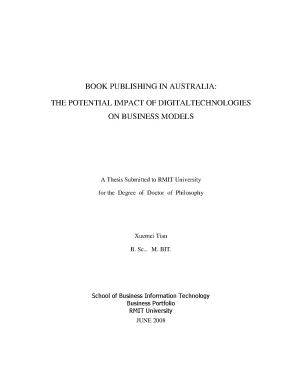
Tải xuống để đọc toàn bộBOOK PUBLISHING IN AUSTRALIA: THE POTENTIAL IMPACT OF DIGITALTECHNOLOGIES ON BUSINESS MODELS A Thesis Submitted to RMIT University for the Degree of Doctor of Philosophy Xuemei Tian B. JUNE 2008 Declaration I certify that this thesis contains no material, which has been accepted for the award of any other academic award in any institution, college or university, and that, to the best of my knowledge and belief, it contains no material previously published or written by another person, in whole or in part, except where due reference is made in the text of the thesis. The content of the thesis is the result of work which has been carried out since the official commencement date of the approved research program, and, any editorial work, carried out by a third party is acknowledged. Xuemei Tian ______________________ ______________________ Sign Date Declaration i Acknowledgement The person who coined the phrase “no pain, no gain” was obviously in the midst of a PhD research project when he made the observation.
Although the pursuit of a PhD is based on an individuals’ performance, the demands of the project ensure that there will always be a support team providing essential support and encouragement. During my time there have been many who fell into this category, giving both tangible and intangible assistance. Special thanks to my senior supervisor Professor Bill Martin. It is hard to find the words that can adequately describe the level of support, guidance and encouragement that he has provided.
His enthusiasm to see me succeed has been a constant source of inspiration. He provided the academic impetus which enabled my research to reach its conclusion. Amidst the challenges of supervising numerous students and semi-retirement status, he never failed to ensure that a constant stream of advice and guidance was never far away. Thanks are due also to my second supervisor, Associate Professor Hepu Deng for his support and input.
It would be remiss of me if I failed to give a special thank you to Peter Grof, the RMIT University School Liaison Librarian who provided outstanding support and advice to me in technical areas of the research. There were also many stakeholders within the Australian publishing industry who graciously allowed me access to their valuable time, providing me with invaluable insights into their industry. Their willingness to participate in the research was greatly appreciated. There are many others, both friends and family who have contributed, but to name them all is impossible - you know who you are.
I cannot thank you enough for your thoughts and support. Acknowledgement ii There have been many occasions of sacrifice where leisure pursuits have taken a back seat. My partner Geoff has borne the brunt of these, but has never wavered in his encouragement to see me complete the project. He was there when the tears flowed, when frustration boiled over and threats to quit loomed on the horizon.
He laughed with me in the good times and consoled me in the bad times. Surely this is what love is. Finally, I believe that above all else, you must have faith in your God as it is He that controls your destiny. I know that in the difficult times God never left my side and when necessary, carried me.
Psalms 121:1-2 says: I lift up my eyes to the hills Where does my help come from My help comes from the Lord The maker of heaven and earth. Acknowledgement iii Abstract This research presents findings from an Australian government-funded research project looking at the implications of digitisation for the book publishing industry in Australia. Although digitisation is to some extent synonymous with digital technologies and in fact, the impact of current and emerging digital technologies is clearly central to any such study, the major focus was on business and organisational dimensions, with particular emphasis on current and emerging stakeholders, competition, value propositions and business models, both current and potential. The publishing industry has always been linked inexorably to the dissemination of knowledge.
Publishing and associated printing activities relied on long-standing and proven old technologies to provide a definitive linear progression for the creation of content in print form, providing clear implications for business processes and relationships for the various stakeholders. The emergence and development of digital technology has the potential to provide significant opportunities for publishing in both print and electronic formats, and with advances in electronic commerce, offers the prospect of new value propositions and business models. New digital publishing formats encapsulate a range of characteristics including multiple option infrastructures, various content formats and viewing modes designed to suit customer requirements, editing processes and information updates on the server. These innovations all contribute to reductions in processing time with the speedy, efficient transmission of content resulting in economic benefits to relevant stakeholders.
However, it must be remembered that even the latest digital tools and applications can only be viewed as enabling mechanisms whose acceptance and implementation must align directly with the business strategy and objectives of organisations. Abstract iv This thesis employed both an interpretive research paradigm, using a mixed methodology design, and elements of the design science paradigm. The aim was not to develop theories, but to build business models. The reporting and analysis of results is based on data gathered from two online surveys, one of publishers and one of end users, and from 14 case studies of Australian book publishers.
The results indicate that Australian book publishers continue to take a pragmatic approach to technology adoption, governed by both current market conditions and the failure of earlier technologies to deliver the anticipated results. Although content management and CRM technologies are by now ubiquitous, the most influential technologies currently in use in publishing continue to be the Internet and the World Wide Web. Little explicit interest is currently being shown in such potentially disruptive technologies as for example, the Semantic Web, although evidence for its influence can already be detected, however, there is widespread appreciation of the wider dimension to digitisation and of its potential impacts on organisational structures and strategies. This includes renewed attention to issues of value, and of the potential benefits of providing enhanced customer value through digital content and delivery channels, their consequent implications for changes to value chains, and the emergence of new and transitional business models.
As regards the case studies, it is important to emphasise that what has been reported here are five detailed examples drawn from different categories of publishers. Although the resultant business models depicted can hardly be described as being representative of the Australian book publishing sector as a whole, the five categories covered represent a significant portion of the book publishing sector. Furthermore, whatever the category of publishing, or the target Abstract v markets, products and services concerned, it is clear that all book publishers must adhere to similar stages and processes in building supply and value chains, and in the design of business models. Moreover, as the influence of customers continues to gain momentum, this will undoubtedly impact upon choices in all these areas – from partnerships and delivery channels to formats and value propositions.
As an analysis of the case study data has shown, all 14 companies participating in this research project recognised the potential as well as the inevitability of digitisation, and had embraced the need for new value and supply chains. This research contributes to the literature both by reinforcing many of the arguments for trends in book publishing emerging from around the world, and by its uncovering of specific data on trends in book publishing in Australia and of the implications for value chains and business models. Abstract vi Table of Contents DECLARATION. iv TABLE OF CONTENTS.
vii LIST OF FIGURES. xiv LIST OF TABLES. xvi LIST OF ABBREVIATIONS. vxiii LIST OF PUBLICATIONS – BASED ON THIS THESIS.
xx CHAPTER 1 INTRODUCTION 1.6 Limitations of the study .7 Structure of the thesis. 7 CHAPTER 2 DEVELOPMENT OF THE PUBLISHING INDUSTRY 2.2 An overview of the publishing industry .3 A brief history of book publishing .4 The book publishing industry .2 Key stakeholders in the book publishing industry.5 Emerging changes in the book publishing industry .1 The globalisation of markets and publishing firms .2 Mergers and acquisitions .4 Consumer- demand shifts. 37 Table of Contents vii 2.2 Internal Forces - Actions of top management.7 Book publishing supply and value chains, and value networks.1 Book publishing supply chains .2 Supply chains in digital publishing .3 Value networks in the digital age. 79 CHAPTER 3 BUSINESS MODELS 3.2 Overview of business models and e-Business models .3 Key components of business models .1 Product-Actor and Network-Centric business model frameworks.2 Marketing-specific business model frameworks.4 Business models, business modelling and strategy.3 The importance of business models .1 Use of business models .2 Business models and change .3 Testing and evaluating business models .4 Business models in the publishing industry.5 Business model in digital publishing.112 CHAPTER 4 RESEARCH METHODOLOGY 4.2 Overview of methodology and its selection processes.3 The philosophical perspectives of the research.1 Nature of the research.117 Table of Contents viii 4.1 The positivist paradigm.2 The interpretive paradigm .3 The critical realism paradigm.4 The design science paradigm .4 Rationale for selecting the research methodology .1 The core research methodologies.2 The use of quantitative and qualitative methodologies in interpretive research.5 The methodological approach of this thesis.1 Purpose of research – descriptive and exploratory .2 Philosophical orientation – interpretive and design science.3 Methodology – A mixed approach.4 Research strategy model – Concurrent nested strategy.142 CHAPTER 5 RESEARCH DESIGN 5.2 Overview of data collection methods .2 Data collection methods for quantitative research.3 Data collection methods for qualitative research.2 Ethnographic and phenomenological studies.3 Data collection, management and analysis methods in this thesis.3 Data collection methods – Surveys .1 Survey design and data collection .3 Data encoding for the results of both surveys .4 Descriptive analysis of responses to the end user survey .5 Statistical analysis for the end user survey .4 Data collection methods – Case study.1 Case study design .2 Selection and description of cases and participants .3 Selection and description of survey populations .5 Reliability and validity .165 Table of Contents ix 5.6 Case study quality control .168 CHAPTER 6 KEY FINDINGS FROM TWO ONLINE SURVEYS 6.2 Surveys responses, reliability and validity .1 Responses from the survey of publishers .2 Responses from the survey of end users .3 Survey Reliability and Validity .3 General book publishing trends .4 Current possession of critical success factors.4 Markets, supply chains and value chains.2 Supply chain issues .3 Value chain changes.5 Digitisation and business models .1 Anticipated benefits of digitisation .2 Critical success factors for digital business models.3 Current business models.6 Expectations of the Future .1 Areas where digitisation was expected to have most impact .2 Organisational changes anticipated.7 End user behaviour .1 Access to and use of digital technologies and electronic resources.2 Factors influencing use of digital technologies and online resources183 6.3 Expectations for the future .8 Summary of the findings .207 CHAPTER 7 CASE STUDIES: BOOK PUBLISHERS IN AUSTRALIA 7.2 The case study companies and quality control in case studies .3 Background, general position and trends.1 Current position of the Australian book publishing sector.2 Key trends in the Australian book publishing sector .4 Position of general trade publishers .2 Products, services and value propositions .4 Corporate information technology management .225 Table of Contents x 7.8 Value chains and business models .9 Risks, opportunities and the future.5 Position of educational publishers.2 Products, services and value propositions .4 Corporate information technology management .8 Value chains and business models .9 Risks, opportunities and the future.6 Position of professional publishers.2 Products, services and value propositions .4 Corporate information technology management .8 Value chains and business models .9 Risks, opportunities and the future.7 Position of specialist publishers .2 Products, services and value propositions .4 Corporate information technology management .8 Value chains and business models .9 Risks, opportunities and the future.8 Position of university presses.2 Products, services and value propositions .4 Corporate information technology management .
Nội dung được bảo vệ bản quyền — Tải xuống đầy đủ
Trích dẫn luận án này
Xuemei Tian (2008). Công nghệ số và tương lai xuất bản sách tại Úc [Luận án tiến sĩ, RMIT University]. LuanAn.net. https://luanan.net/quan-tri-kinh-doanh/cong-nghe-so-xuat-ban-sach-uc
Câu hỏi thường gặp
Luận án "Công nghệ số và tương lai xuất bản sách tại Úc" nghiên cứu về vấn đề gì?
Luận án tiến sĩ phân tích ngành xuất bản sách tại Australia, đánh giá tác động của công nghệ số đến mô hình kinh doanh và chiến lược phát triển bền vững.
Luận án "Công nghệ số và tương lai xuất bản sách tại Úc" được bảo vệ tại trường nào?
Luận án này được bảo vệ tại RMIT University. Năm bảo vệ: 2008.
Luận án "Công nghệ số và tương lai xuất bản sách tại Úc" thuộc chuyên ngành gì?
Luận án "Công nghệ số và tương lai xuất bản sách tại Úc" thuộc chuyên ngành Book Publishing. Danh mục: Quản Trị Kinh Doanh.
Luận án "Công nghệ số và tương lai xuất bản sách tại Úc" có bao nhiêu trang?
Luận án "Công nghệ số và tương lai xuất bản sách tại Úc" có 383 trang. Bạn có thể xem trước một phần tài liệu ngay trên trang web trước khi tải về.
Cách tải luận án "Công nghệ số và tương lai xuất bản sách tại Úc" về máy như thế nào?
Để tải luận án về máy, bạn nhấn nút "Tải xuống ngay" trên trang này, sau đó hoàn tất thanh toán phí lưu trữ. File sẽ được tải xuống ngay sau khi thanh toán thành công. Hỗ trợ qua Zalo: 0559 297 239.