Jajesniak pawel redacted phd thesis
Luận án Tiến sĩ của Pawel Jajesniak đã được biên tập lại.
University of Sheffield
Chemical and Biological Engineering
Luan An
Luận án
Năm xuất bản
Số trang
247
Thời gian đọc
38 phút
Lượt xem
0
Lượt tải
0
Phí lưu trữ
50 Point
Tổng quan nhanh
- Chủ đề:
- 1. Đảm bảo Quyền riêng tư Dữ liệu trong Luận án Tiến sĩ
- Số trang:
- 247 trang
- Trường:
- University of Sheffield
- Chuyên ngành:
- Chemical and Biological Engineering
- Tác giả:
- Pawel Jajesniak
- Năm:
- 2017
Tóm tắt nội dung luận án
I. Đảm bảo Quyền riêng tư Dữ liệu trong Luận án Tiến sĩ
Việc bảo vệ quyền riêng tư dữ liệu là yếu tố then chốt trong xuất bản học thuật. Luận án tiến sĩ, như tài liệu "Jajesniak Pawel redacted phd thesis", thường chứa thông tin nhạy cảm. Việc xử lý cẩn thận những dữ liệu này là bắt buộc. Mục tiêu là duy trì tính bảo mật đồng thời cho phép phổ biến kiến thức. Việc không tuân thủ có thể dẫn đến hậu quả nghiêm trọng. Đảm bảo quyền riêng tư dữ liệu củng cố niềm tin trong nghiên cứu học thuật. Nó cũng bảo vệ các cá nhân và tổ chức liên quan đến nghiên cứu. Các quy trình nghiêm ngặt cho việc xử lý dữ liệu nhạy cảm là cần thiết. Đây là một phần thiết yếu của đạo đức nghiên cứu.
1.1. Xác định Dữ liệu Nhạy cảm
Việc xác định dữ liệu nhạy cảm đòi hỏi sự xem xét kỹ lưỡng. Dữ liệu này có thể bao gồm thông tin cá nhân của người tham gia nghiên cứu. Nó cũng bao gồm thông tin độc quyền hoặc kết quả chưa công bố. Ví dụ là thuật toán độc quyền hoặc dữ liệu kinh doanh bí mật. Việc đánh giá kỹ lưỡng toàn bộ luận án là bắt buộc. Điều này giúp phát hiện tất cả các khu vực cần giảm nhẹ. Ghi nhận rõ ràng các loại dữ liệu này là bước đầu tiên để bảo vệ hiệu quả. Việc phân loại dữ liệu chính xác hỗ trợ các chiến lược xử lý dữ liệu nhạy cảm. Nó đảm bảo mọi khía cạnh của dữ liệu đều được bảo vệ đầy đủ.
1.2. Hậu quả của Việc Tiết lộ
Việc tiết lộ dữ liệu nhạy cảm có nhiều hậu quả nghiêm trọng. Các vấn đề pháp lý, chẳng hạn như vi phạm quy định bảo vệ dữ liệu, có thể phát sinh. Có thể xảy ra tổn hại về danh tiếng cho tác giả và tổ chức. Mất quyền sở hữu trí tuệ cũng là một rủi ro đáng kể. Vi phạm đạo đức nghiên cứu làm suy yếu sự tin cậy của cộng đồng học thuật. Những hậu quả này nhấn mạnh tầm quan trọng của việc giảm nhẹ dữ liệu. Việc xử lý dữ liệu một cách cẩu thả gây nguy hiểm cho các cá nhân. Nó cũng gây nguy hiểm cho tính toàn vẹn của dự án nghiên cứu. Việc ngăn chặn các sự cố tiết lộ dữ liệu là trách nhiệm chính.
II. Kỹ thuật Giảm nhẹ Dữ liệu Nhạy cảm Học thuật
Việc áp dụng các kỹ thuật giảm nhẹ dữ liệu là thiết yếu. Chúng đảm bảo an ninh thông tin trong các tài liệu học thuật. Một luận án tiến sĩ được biên tập lại, như tài liệu của Jajesniak Pawel, cần các phương pháp phù hợp. Các phương pháp này bảo vệ tính bảo mật mà không làm suy yếu giá trị học thuật. Việc lựa chọn kỹ thuật phù hợp phụ thuộc vào loại dữ liệu. Nó cũng phụ thuộc vào bối cảnh cụ thể của nghiên cứu. Việc triển khai chính xác các kỹ thuật giảm nhẹ là quan trọng để tuân thủ. Nó cũng giúp duy trì sự tin cậy trong các công bố.
2.1. Phương pháp Giảm nhẹ Thực tiễn
Nhiều phương pháp thực tiễn tồn tại để giảm nhẹ dữ liệu. Các phương pháp phổ biến bao gồm che đen, ẩn danh hóa và giả danh hóa. Che đen loại bỏ hoàn toàn thông tin. Ẩn danh hóa làm cho dữ liệu không thể liên kết với cá nhân. Giả danh hóa thay thế các định danh bằng bí danh. Việc tổng quát hóa dữ liệu cũng có thể được sử dụng. Mỗi kỹ thuật có những ưu điểm và hạn chế riêng. Việc áp dụng đúng đòi hỏi sự hiểu biết sâu sắc về dữ liệu. Hướng dẫn chi tiết là cần thiết để đảm bảo tính nhất quán. Nó cũng đảm bảo tính hiệu quả trong tất cả các ứng dụng.
2.2. Công cụ và Quy trình Tự động
Công cụ tự động có thể hỗ trợ quá trình giảm nhẹ dữ liệu. Phần mềm chuyên dụng có thể quét tài liệu để tìm từ khóa hoặc mẫu. Các công cụ này giúp tăng tốc quá trình và cải thiện tính nhất quán. Tuy nhiên, sự giám sát của con người vẫn rất quan trọng. Công cụ tự động có thể tạo ra lỗi hoặc bỏ sót thông tin nhạy cảm. Việc xác minh thủ công là cần thiết để đảm bảo độ chính xác hoàn toàn. Việc kết hợp công nghệ với quy trình thủ công là cách tiếp cận tốt nhất. Điều này tăng cường an ninh thông tin tổng thể. Nó cũng giảm thiểu rủi ro tiết lộ dữ liệu.
2.3. Đảm bảo Tính toàn vẹn của Dữ liệu
Việc giảm nhẹ dữ liệu không được làm mất đi tính toàn vẹn của nghiên cứu. Thông tin còn lại phải vẫn có ý nghĩa và giá trị học thuật. Mục tiêu là loại bỏ dữ liệu nhạy cảm mà không làm thay đổi ngữ cảnh cốt lõi. Việc này đòi hỏi sự cân bằng tinh tế. Việc biên tập không nên gây hiểu lầm hoặc thay đổi kết luận. Đảm bảo rằng bản đã chỉnh sửa vẫn phản ánh chính xác công trình nghiên cứu là rất quan trọng. Tính toàn vẹn của dữ liệu là nền tảng cho sự tin cậy trong mọi công bố học thuật.
III. Bảo vệ Sở hữu Trí tuệ và Tính bảo mật Nghiên cứu
Bảo vệ sở hữu trí tuệ là một khía cạnh quan trọng của nghiên cứu học thuật. Luận án tiến sĩ thường chứa những phát hiện đổi mới. Những phát hiện này có thể có giá trị thương mại đáng kể. Việc đảm bảo tính bảo mật nghiên cứu là rất quan trọng. Điều này áp dụng cho các dự án đang diễn ra và dữ liệu độc quyền. Các kỹ thuật giảm nhẹ dữ liệu đóng một vai trò trung tâm. Chúng cho phép công bố công khai đồng thời bảo vệ lợi ích của tác giả và tổ chức. Việc cân bằng việc phổ biến kiến thức và bảo vệ IP là một thách thức thường xuyên. Các chính sách rõ ràng về bảo vệ tài sản trí tuệ cần được thiết lập.
3.1. Bảo vệ Công trình Độc quyền
Luận án có thể chứa thông tin được cấp bằng sáng chế hoặc bí mật thương mại. Việc tiết lộ sớm có thể làm mất đi tính mới của bằng sáng chế. Nó cũng có thể làm lộ bí mật thương mại cho đối thủ cạnh tranh. Kỹ thuật giảm nhẹ bảo vệ những thành phần này. Nó trì hoãn việc công khai thông tin nhạy cảm cho đến khi được bảo vệ đầy đủ. Điều này bao gồm việc tạm thời giữ lại các phương pháp hoặc kết quả cụ thể. Mục tiêu là cho phép tác giả đảm bảo các quyền độc quyền. Việc bảo vệ hiệu quả thúc đẩy sự đổi mới. Nó cũng khuyến khích đầu tư vào nghiên cứu và phát triển.
3.2. Cân bằng Minh bạch và Bảo mật
Nguyên tắc học thuật ủng hộ sự cởi mở và chia sẻ dữ liệu. Tuy nhiên, nhu cầu thương mại và đạo đức đòi hỏi sự bảo mật. Việc giảm nhẹ cung cấp một giải pháp khả thi cho thách thức này. Nó cho phép công chúng tiếp cận những phần lớn của luận án. Đồng thời, nó bảo vệ những phần nhạy cảm về mặt thương mại hoặc đạo đức. Cách tiếp cận cân bằng này duy trì tính liêm chính của khoa học. Nó cũng bảo vệ các quyền và lợi ích của các bên liên quan. Quyết định về những gì cần giảm nhẹ đòi hỏi sự xem xét cẩn thận. Việc này liên quan đến các chuyên gia pháp lý và đạo đức.
IV. Tuân thủ Quy định và Đạo đức Nghiên cứu trong Xuất bản
Việc xuất bản luận án tiến sĩ phải tuân thủ các quy định nghiêm ngặt. Điều này bao gồm các yêu cầu về đạo đức nghiên cứu và quản trị thông tin. Các trường đại học và cơ quan tài trợ có các chính sách riêng. Các chính sách này hướng dẫn việc xử lý dữ liệu và công bố. Việc tuân thủ pháp luật là bắt buộc để tránh các hình phạt. Nó cũng bảo vệ danh tiếng của học giả và tổ chức. Sự hiểu biết về khung pháp lý là rất quan trọng. Điều này đảm bảo rằng các tài liệu học thuật được xử lý đúng cách. Việc tạo ra một bản "Jajesniak Pawel redacted phd thesis" thể hiện sự tuân thủ này.
4.1. Khung pháp lý và Chính sách
Các luật bảo vệ dữ liệu, như GDPR, đặt ra các yêu cầu nghiêm ngặt. Chúng chi phối việc xử lý và xuất bản thông tin cá nhân. Các trường đại học có các quy tắc ứng xử nghiên cứu nội bộ. Các quy tắc này thường quy định việc chia sẻ và bảo mật dữ liệu. Việc tuân thủ các chính sách này là bắt buộc. Điều này đảm bảo rằng các ấn phẩm được thực hiện một cách có trách nhiệm. Nó cũng tránh được các rắc rối pháp lý tiềm ẩn. Việc xem xét các tài liệu quy định một cách nhất quán là rất quan trọng. Điều này giúp đảm bảo tuân thủ liên tục.
4.2. Trách nhiệm Đạo đức
Trách nhiệm đạo đức vượt ra ngoài các yêu cầu pháp lý. Các nhà nghiên cứu có nghĩa vụ đạo đức là không gây hại. Điều này bao gồm việc bảo vệ sự riêng tư của người tham gia. Nó cũng bao gồm việc đảm bảo tính bảo mật của dữ liệu độc quyền. Việc giảm nhẹ là một hành động đạo đức. Nó cho phép công bố trong khi bảo vệ các bên dễ bị tổn thương. Sự minh bạch trong các quy trình giảm nhẹ là rất quan trọng. Điều này xây dựng niềm tin với công chúng và cộng đồng khoa học. Việc hành động có đạo đức củng cố uy tín học thuật.
V. Quản trị Thông tin Hiệu quả cho Tài liệu Học thuật
Quản trị thông tin hiệu quả là nền tảng cho an ninh dữ liệu. Điều này đặc biệt đúng với các tài liệu học thuật như luận án tiến sĩ. Nó bao gồm một cách tiếp cận có hệ thống để quản lý thông tin. Điều này đảm bảo tính bảo mật, tính toàn vẹn và khả năng sẵn có. Các chính sách quản trị rõ ràng là rất quan trọng để hướng dẫn quy trình. Chúng giảm thiểu rủi ro liên quan đến việc xử lý dữ liệu nhạy cảm. Một khuôn khổ quản trị thông tin mạnh mẽ là cần thiết. Điều này bảo vệ tài liệu nghiên cứu trong suốt vòng đời của chúng. Nó cũng hỗ trợ việc tuân thủ các tiêu chuẩn ngành và quy định pháp lý.
5.1. Xây dựng Chính sách Toàn diện
Các chính sách quản trị thông tin toàn diện là nền tảng. Chúng phác thảo các quy tắc để thu thập, lưu trữ, xử lý và công bố dữ liệu. Các chính sách này nên bao gồm các hướng dẫn cụ thể về giảm nhẹ dữ liệu. Chúng cũng cần đề cập đến việc bảo vệ sở hữu trí tuệ. Việc truyền đạt các chính sách này cho tất cả các nhà nghiên cứu là rất quan trọng. Điều này đảm bảo sự hiểu biết và tuân thủ nhất quán. Các chính sách mạnh mẽ giảm thiểu khả năng xảy ra lỗi của con người. Chúng cũng tạo ra một nền văn hóa trách nhiệm về dữ liệu.
5.2. Đào tạo và Nâng cao Nhận thức
Việc đào tạo thường xuyên là cần thiết để nâng cao nhận thức. Các nhà nghiên cứu và nhân viên phải hiểu tầm quan trọng của an ninh dữ liệu. Họ cần được đào tạo về các kỹ thuật giảm nhẹ thích hợp. Họ cũng cần nhận biết các rủi ro tiềm ẩn. Các chương trình đào tạo nên được cập nhật thường xuyên. Điều này phản ánh những phát triển mới về công nghệ và quy định. Một lực lượng lao động được đào tạo tốt là tuyến phòng thủ đầu tiên. Nó ngăn chặn việc tiết lộ dữ liệu nhạy cảm một cách vô tình. Giáo dục thúc đẩy thực hành tốt nhất trong xử lý dữ liệu.
5.3. Kiểm toán và Đánh giá Liên tục
Các quy trình quản trị thông tin cần được kiểm toán và đánh giá thường xuyên. Điều này đảm bảo rằng các chính sách vẫn có liên quan và hiệu quả. Việc kiểm tra định kỳ có thể xác định các lỗ hổng hoặc khu vực cần cải thiện. Chúng cũng đảm bảo tuân thủ các tiêu chuẩn đang phát triển. Việc liên tục theo dõi các thực hành xử lý dữ liệu là rất quan trọng. Điều này duy trì một mức độ bảo vệ cao. Nó cũng thích ứng với các mối đe dọa an ninh thông tin mới. Việc đánh giá thường xuyên củng cố khuôn khổ quản trị.
Tải xuống file đầy đủ để xem toàn bộ nội dung
Tải đầy đủ (247 trang)Trích đoạn nội dung luận án
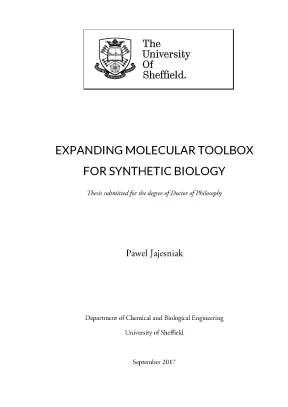
Tải xuống để đọc toàn bộEXPANDING MOLECULAR TOOLBOX FOR SYNTHETIC BIOLOGY Thesis submitted for the degree of Doctor of Philosophy Pawel Jajesniak Department of Chemical and Biological Engineering University of Sheffield September 2017 DECLARATION This thesis and the work presented in it are my own and has been generated by me as the result of my own original research. Where other sources of information have been used, they have been duly acknowledged. No part of this thesis has previously been submitted for a degree or any other qualification at this University or any other institution. Parts of this work have been, or will be, presented elsewhere - e., in the form of scientific publications.
This dissertation conforms to the rules of Alternative Format Thesis, as described by the Code Of Practice For Research Degree Programmes 2017–18 of the University of Sheffield. In accordance with the underlined guidelines, this thesis contains sections that are written in the form of scientific publications, some of which have already been published in peer-reviewed journals and other outlets for academic research. Whenever such materials are used, their sources are clearly acknowledged. | ii | ASSOCIATED PUBLICATIONS (1) Jajesniak P, Wong TS.
(2015) Tapping into biodiversity: From metagenomics to industrial enzymes. In: Biodiversity and Conservation (Vol. USA: Studium Press LLC. (2) Jajesniak P, Wong TS.
(2015) From genetic circuits to industrial-scale biomanufacturing: bacterial promoters as a cornerstone of biotechnology. (3) Jajesniak P, Wong TS. (2015) QuickStep-Cloning: a sequence-independent, ligation-free method for rapid construction of recombinant plasmids. Journal of Biological Engineering, 9, 15.
(4) Jajesniak P, Wong TS. (2017) Rapid Construction of Recombinant Plasmids by QuickStep-Cloning. In: Synthetic DNA. Methods in Molecular Biology (Vol.
USA: Humana Press, New York, NY; 205-214. | iii | ACKNOWLEDGEMENTS A pursuit of PhD degree, while seemingly a solitary endeavour, is never conducted in isolation. Its successful completion depends heavily upon the goodwill and all- encompassing support – academic, technical, financial, emotional - of many people whose role and generosity simply cannot be overstated. I would like to sincerely thank my supervisor, Dr Tuck Seng Wong, for his invaluable guidance during the course of my degree, in particular, for always keeping his door open and being willing to help.
I am grateful to the Department of Chemical and Biological Engineering, the funder of my project, for providing me with an opportunity of pursuing the PhD degree at the University of Sheffield. I would like to express my gratitude to Dr Kang Lan Tee for her technical support, fruitful scientific discussions and invaluable help in refining my experimental techniques. I wish to give special thanks to my friends, and fellow PhD students - Hossam, Yomi, Miriam, Zaki, Abdul, Inas and José - for making the past four years, including even the most daunting laboratory sessions, truly enjoyable. Last but certainly not least, I am extremely grateful to my whole family for their unceasing and unconditional support.
| iv | SUMMARY Synthetic biology can broadly be defined as a construction of new biological systems and modification of the existing ones. In recent years, synthetic biology has presented itself as a potential solution to many global challenges - e., climate change and scarcity of natural resources. The progress of synthetic biology is, however, largely reliant on the availability of a large repertoire of functional genetic parts. As a result, there exists an urgent need for enhancing and expediting the process of tapping into genetic diversity - both natural and laboratory-induced.
Analysing the current landscape of synthetic biology and various approaches of accessing biological diversity, two high-impact areas, namely the basic molecular cloning and identification of genes encoding for complex microbial phenotypes, have been identified as particularly lacking and, as such, constitute the focal point of my PhD project. The culmination of the work presented in this dissertation are two molecular methods, QuickStep-Cloning and Multi-Genius, that aim to accelerate the development of synthetic biology. QuickStep-Cloning is a new molecular cloning technique that builds upon recent advances in megaprimer-based cloning to allow for seamless integration of a DNA fragment of interest into a plasmid in less than 6 hours – the result that could not be reproduced using state-of-the-art methods. The new improved version of the method, QuickStepS-Cloning, utilises phosphorothioate oligonucleotides to not only simplify the overall procedure but also significantly increase its cloning efficiency.
It also shown that |v| incorporating random mutagenesis into the method allows for streamlining directed evolution experiments. Whereas the potential applications of QuickStep-Cloning revolve around artificially- induced diversity, Multi-Genius builds upon the concept of genomic libraries to tap into naturally-existing diversity and expedite identification of genes encoding for useful phenotypes. The usefulness of the method has been proven by isolating thermotolerant variants of Escherichia coli DH5α and indentifying the gene responsible for the observed phenotype. | vi | TABLE OF CONTENTS DECLARATION.
ii ASSOCIATED PUBLICATIONS. v TABLE OF CONTENTS. vii LIST OF FIGURES. xii LIST OF TABLES.
xx Chapter 1 General introduction .1 Brief introduction to synthetic biology .2 Traditional approaches to accessing and investigating biodiversity .3 What is metagenomics? .4 Environmental sample extraction .5 Sample enrichment and DNA extraction.6 Function-based metagenomics .7 Sequence-based metagenomics .9 Future prospects and conclusions .4 Diversity of non-coding DNA sequences .4 Protein expression and promoter selection .5 Synthetic biology and metabolic engineering .6 Databases and bioinformatics tools .7 Standardization and quantification of promoter strength .8 Complementary technologies and future prospects .5 Genetic diversity and interactions between multiple genes .6 Scope and objectives. 88 Chapter 2 QuickStep-Cloning .3 Results and Discussion .1 QuickStep-Cloning: Principle and molecular mechanism .2 Primer design for QuickStep-Cloning.3 Demonstration of QuickStep-Cloning.4 Optimizing QuickStep-Cloning .5 Comparison to restriction-free (RF) cloning .6 General applicability of QuickStep-Cloning .7 Comparison to other cloning methods.4 Restriction-free (RF) cloning .5 DNA gel electrophoresis.6 Transformation and clone analysis .7 Estimated cloning times reported in Table 2.122 Chapter 3 QuickStepS-Cloning .2 Results and Discussion .4 Application to directed evolution .4 Restriction-free (RF) cloning .6 DNA gel electrophoresis.7 Chemical transformation and clone analysis .8 Error-prone PCR .10 Transformation of rfp library .11 Protein expression purification .148 Chapter 4 Multi-Genius: method development .2 Genomic DNA extraction .5 Vector design and construction.3 Genomic DNA extraction .4 Genomic DNA amplification .8 DNA gel electrophoresis. 173 Chapter 5 Multi-Genius: validation and application .1 Thermotolerance and halotolerance of E.2 Primers and genomic DNA .3 Initial expression studies .4 Further expression studies .5 Investigation of halotolerance of E.6 Investigation of thermotolerance of E.7 Multi-Genius - application .204 Chapter 6 Conclusions and future work .213 | xi | LIST OF FIGURES Figure 1.1 Factors affecting microbial growth.2 General scheme of the metagenomic approach to finding 39 new functional biomolecules.4 Important characteristics of a biocatalyst; adapted from 55 (Lorenz and Eck, 2005).5 Typical steps involved in a directed protein evolution 56 experiment.6 Outline of prokaryotic promoter structure - simplified 62 structure and consensus sequence of E.7 Main factors affecting protein expression levels during 67 heterologous protein production.8 Proposed flowchart for a quick selection of an appropriate 71 inducible promoter (based on the list of 13 most common inducible E. coli expression systems listed in Table 1.1 Overview of QuickStep-Cloning 96 Figure 2.2 Outline of primer design for QuickStep-Cloning.3 Plasmid map of pEGFP vector used in egfp cloning 100 experiment (created with SnapGene).4 Outline of egfp gene cloning experiment.6 Cell pellets from cell cultures grown as part of egfp cloning 102 experiment.7 Investigation and optimization of asymmetric PCR stage of 103 QuickStep-Cloning.8 Yield of whole plasmid amplification for different primer 104 ratios used during asymmetric PCRs Figure 2.9 Optimization of megaprimer PCR stage of QuickStep- 105 Cloning.10 Plasmid map of pBbA8k-RFP vector used in rfp cloning 107 experiment (created with SnapGene).12 Cell pellets from cell cultures grown as part of rfp cloning 109 experiment.13 Cell pellets from cell cultures grown as part of rfp cloning 110 experiment.1 Chemical structure of (A) DNA, containing standard 129 phosphodiester bond between two neighbouring nucleosides, and (B) DNA containing phosphorothioate bond.2 Comparison of the megaprimer synthesis stage between (A) 130 original QuickStep-Cloning and (B) improved version of the method, utilising phosphorothioate oligonucleotides.3 Optimisation of QuickStepS-Cloning.4 Yield of RF cloning, QuickStep-Cloning and QuickStepS- 135 Cloning (25 cycles of megaprimer PCR) ), as determined for rfp cloning experiment.5 Outline of P450 BM3 reductase gene cloning experiment.6 Yield of RF cloning and QuickStepS-Cloning, as determined 136 for P450 BM3 reductase gene cloning experiment.7 Comparison of the wild-type RFP and three isolated mutants 139 Figure 3.8 Absorbance spectra of the wild-type RFP and three isolated 139 mutants.1 Overview of Multi-Genius.2 Design of expression vector for Multi-Genius 151 Figure 4.3 Product of genomic DNA amplification.4 Yield of genomic DNA amplification carried out at different 155 concentrations of MnCl2.5 Amplified genomic DNA (1a) before and (1b) after 156 purification with QIAquick PCR Purification Kit.6 Optimisation of DNA fragmentation.7 Outline of pD441-SR, used as a first building block for the 161 assembly of Multi-Genius expression vector.8 530 bp DNA fragment containing the cloning site under a 162 control of rhamnose-inducible promoter, used as the second building block for the assembly of Multi-Genius expression vector.9 Outline of the Multi-Genius expression vector, containing 162 two cloning sites under the control of T5 and rhamnose- inducible promoter.10 Outline of the cloning strategy for Multi-Genius.11 The result of applying optimised cloning protocol for 166 incorporating two genomic libraries into Multi-Genius vector via blunt-end ligation; the integration of the first fragment.12 Plasmids extracted from four different population cells 167 resulting from applying the optimised cloning protocol to integrate: (1) EGFP into cloning site 1, (2) RFP into cloning site 1, (3) EGFP into cloning site 1, and (4) RFP into cloning site 2.13 The result of applying optimised cloning protocol for 168 incorporating two genomic libraries into Multi-Genius vector via blunt-end ligation; the integration of the second fragment.1 Cell pellets of CS1:EGFP/CS2:RFP-transformed cells after 176 incubation for 12 h (at 37°C and 500 rpm) in LB media supplemented with: (1) kanamycin only, (2) Kan + 2% glucose, (3) Kan + 1mM IPTG, (4) Kan + 0.2% L- rhamnose, and (5) Kan + 1 mM IPTG + 0.2 Cell pellets of CS1:RFP/CS2:EGFP-transformed cells after 177 incubation for 12 h at (37°C and 500 rpm) in LB media supplemented with: (1) kanamycin only, (2) Kan + 2% glucose, (3) Kan + 1 mM IPTG, (4) Kan + 0.2% L- rhamnose, and (5) Kan + 1 mM IPTG + 0.3 Fluorescence of CS1:EGFP/CS2:RFP-transformed cells after 179 12 h incubation with different concentration of IPTG.4 Fluorescence of CS1:EGFP/CS2:RFP-transformed cells after 180 12 h incubation with different concentration of L-rhamnose.5 Fluorescence of CS1:RFP/CS2:EGFP-transformed cells after 181 12 h incubation with different concentration of IPTG.6 Fluorescence of CS1:RFP/CS2:EGFP-transformed cells after 182 12 h incubation with different concentration of L-rhamnose.7 Natural thermotolerance of E.8 Natural halotolerance of E.
184 | xvi | LIST OF TABLES Table 1.1 Examples of important biocatalysts identified through 38 metagenomic analysis (Lorenz and Eck, 2005; Mocali and Benedetti, 2010; Riesenfeld et al., 2004; Xing et al.2 Comparison of the three main second-generation sequencing 49 platforms (Liu et al., 2012; van Dijk et al.3 Comparison between two main strategies of promoter 65 engineering - saturation mutagenesis of spacer regions and error-prone PCR (based on the information provided in (Alper et al., 2005; Hammer et al., 2006; Jensen and Hammer, 1998)).4 Most commonly-used inducible E. coli expression systems 69 and their important properties (adapted from (Terpe, 2006) and (Weickert et al., 1996)); inducer prices are based on the information provided by Sigma-Aldrich Corporation, http://sigmaaldrich.5 Novel expression systems developed for Escherichia coli, 73 Bacillus spp. and Pseudomonas spp. over the last decade.1 Results of egfp cloning experiment.2 Results of rfp cloning experiment.3 A comparison of QuickStep-Cloning to other recently 111 reported megaprimer-based cloning methods.1 Comparison of QuickStepS-Cloning, using 25 or 30 cycles 134 of megaprimer PCR, with RF cloning and QuickStep- Cloning, as determined by rfp cloning experiment.2 Results of P450 BM3 reductase gene cloning experiment.3 Comparison of the library size when performing an 138 experiment involving rfp mutagenesis via QuickStepS- Cloning and MEGAWHOP.
Nội dung được bảo vệ bản quyền — Tải xuống đầy đủ
Trích dẫn luận án này
Pawel Jajesniak (2017). Jajesniak pawel redacted phd thesis [Luận án tiến sĩ, University of Sheffield]. LuanAn.net. https://luanan.net/ly-luan-va-lich-su-giao-duc/triet-hoc-giao-duc/jajesniak-pawel-redacted-phd-thesis
Câu hỏi thường gặp
Luận án "Jajesniak pawel redacted phd thesis" nghiên cứu về vấn đề gì?
Luận án Tiến sĩ của Pawel Jajesniak đã được biên tập lại.
Luận án "Jajesniak pawel redacted phd thesis" được bảo vệ tại trường nào?
Luận án này được bảo vệ tại University of Sheffield. Năm bảo vệ: 2017.
Luận án "Jajesniak pawel redacted phd thesis" thuộc chuyên ngành gì?
Luận án "Jajesniak pawel redacted phd thesis" thuộc chuyên ngành Chemical and Biological Engineering. Danh mục: Triết Học Giáo Dục.
Luận án "Jajesniak pawel redacted phd thesis" có bao nhiêu trang?
Luận án "Jajesniak pawel redacted phd thesis" có 247 trang. Bạn có thể xem trước một phần tài liệu ngay trên trang web trước khi tải về.
Cách tải luận án "Jajesniak pawel redacted phd thesis" về máy như thế nào?
Để tải luận án về máy, bạn nhấn nút "Tải xuống ngay" trên trang này, sau đó hoàn tất thanh toán phí lưu trữ. File sẽ được tải xuống ngay sau khi thanh toán thành công. Hỗ trợ qua Zalo: 0559 297 239.