Luận án: Quá trình chính trị dẫn đến thành lập Trung tâm Nghệ thuật Giáo dục Minnesota
10 1 1 462 3574: Thông tin chi tiết về mã số này. Tìm hiểu ý nghĩa và nguồn gốc của dãy số.
Educational Policy and Administration
Luan An
Luận án tiến sĩ
Năm xuất bản
Số trang
395
Thời gian đọc
1 giờ
Lượt xem
0
Lượt tải
0
Phí lưu trữ
60 Point
Tổng quan nhanh
- Chủ đề:
- 1. Dãy số 10 1 1 462 3574 - Mã định danh tài liệu học thuật
- Số trang:
- 395 trang
- Trường:
- University of Minnesota
- Chuyên ngành:
- Educational Policy and Administration
- Tác giả:
- James Douglas Hainlen
- Năm:
- 2009
Tóm tắt nội dung luận án
I. Dãy số 10 1 1 462 3574 Mã định danh tài liệu học thuật
Dãy số 10 1 1 462 3574 là mã định danh số của một tài liệu học thuật quan trọng. Chuỗi số này gắn với luận án tiến sĩ tại Đại học Minnesota. Tài liệu gốc nghiên cứu quy trình chính trị thành lập Trung tâm Giáo dục Nghệ thuật Minnesota. Mã định danh số giúp phân biệt tài liệu trong kho dữ liệu luận án.
1.1. Giới thiệu về mã định danh số
Mã định danh số là chuỗi ký tự dùng để nhận diện một đối tượng duy nhất. Dãy số 10 1 1 462 3574 đóng vai trò này trong hệ thống lưu trữ. Mỗi luận án trong kho đều có một mã riêng. Mã giúp hệ thống quản lý hoạt động chính xác. Ý nghĩa chuỗi số nằm ở khả năng định danh không trùng lặp.
1.2. Nguồn gốc của tài liệu
Tài liệu có tiêu đề The Process of Politics. Tác giả là James Douglas Hainlen. Luận án hoàn thành năm 2009. Người hướng dẫn là giáo sư Neal Nickerson. Nghiên cứu tập trung vào chính sách giáo dục nghệ thuật. Dữ liệu thu thập từ 27 nhân vật quan trọng. Chuỗi số 10 1 1 462 3574 xuất hiện như mã phân loại thư viện.
1.3. Vai trò trong hệ thống lưu trữ
Mã định danh số đóng vai trò then chốt trong quản lý tài liệu. Dãy số giúp truy cập nhanh và chính xác. Tra cứu mã số trả về thông tin đầy đủ về luận án. Tọa độ số xác định vị trí vật lý hoặc số hóa. Hệ thống lưu trữ đại học sử dụng mã này hằng ngày.
II. Giải mã dãy số 10 1 1 462 3574 Ý nghĩa của chuỗi số
Giải mã dãy số 10 1 1 462 3574 đòi hỏi hiểu cấu trúc hệ thống. Chuỗi số có năm khối riêng biệt. Mỗi khối có thể mang một ý nghĩa khác nhau. Ý nghĩa chuỗi số phụ thuộc vào quy ước lưu trữ.
2.1. Cấu trúc chuỗi số
Dãy số gồm các thành phần 10, 1, 1, 462, 3574. Các khối ngăn cách bằng khoảng trắng. Cấu trúc này gợi ý mô hình phân cấp thông tin. Khối đầu thường là mã chủ đề hoặc bộ môn. Khối cuối thường là số thứ tự duy nhất. Giải mã dãy số cần phân tích từng khối.
2.2. Các phương pháp giải mã
Có nhiều cách tiếp cận để giải mã dãy số. Phương pháp thứ nhất dựa trên hệ thống phân loại thư viện. Phương pháp thứ hai dựa trên mã nội bộ của trường. Phương pháp thứ ba dựa trên chuẩn quốc tế. Mã định danh số có thể tuân theo nhiều quy ước. Người tra cứu cần xác định đúng hệ quy chiếu.
2.3. Ý nghĩa của từng khối
Khối 10 có thể đại diện cho mã ngành hoặc khoa. Hai khối 1 và 1 có thể là mã nhóm phụ. Khối 462 có thể là mã chủ đề nghệ thuật. Khối 3574 là mã duy nhất của luận án. Tổng hợp các khối tạo thành mã hoàn chỉnh. Ý nghĩa chuỗi số trở nên rõ ràng khi ghép nối.
III. Tọa độ số 10 1 1 462 3574 Phân tích dữ liệu số học
Phân tích dữ liệu số của chuỗi 10 1 1 462 3574 cho thấy tính có chủ đích. Các giá trị không xuất hiện ngẫu nhiên. Tọa độ số phản ánh vị trí của tài liệu. Việc phân tích giúp hiểu cách hệ thống hoạt động.
3.1. Phân tích dữ liệu số
Phân tích dữ liệu số bắt đầu bằng việc tách chuỗi thành khối. Giá trị tăng dần từ 10 đến 3574. Cấu trúc này phổ biến trong mã định danh. Mã thường bắt đầu bằng nhóm rộng. Sau đó thu hẹp dần đến mã cụ thể. Dãy số 10 1 1 462 3574 tuân theo logic này.
3.2. Đặc điểm toán học của chuỗi
Tổng các khối số là 10 + 1 + 1 + 462 + 3574 = 4048. Số 462 nằm ở vị trí giữa. Số 3574 có giá trị lớn nhất. Chuỗi không phải cấp số cộng hay cấp số nhân. Chuỗi số học ở đây mang tính định danh. Phân tích dữ liệu số cần bối cảnh hệ thống.
3.3. So sánh với các mã định danh khác
Mã này khác với ISBN của sách xuất bản. ISBN có 10 hoặc 13 chữ số liên tục. Dãy số này có cấu trúc năm khối rõ ràng. Tọa độ số trong kho số thường dài hơn. Ý nghĩa chuỗi số phụ thuộc chuẩn của từng kho.
IV. Chuỗi số học 10 1 1 462 3574 Cách tra cứu mã số chuẩn
Tra cứu mã số là thao tác phổ biến với tài liệu lưu trữ. Dãy số 10 1 1 462 3574 cần nhập chính xác. Quy trình tra cứu đơn giản nếu tuân thủ hướng dẫn. Chuỗi số học hỗ trợ truy cập nhanh tài liệu gốc.
4.1. Quy trình tra cứu chuẩn
Bước đầu tiên là mở hệ thống tìm kiếm tài liệu. Bước thứ hai là nhập toàn bộ dãy số. Bước thứ ba là chạy lệnh tìm kiếm. Hệ thống khớp mã với bản ghi tương ứng. Kết quả hiển thị thông tin luận án. Tra cứu mã số thành công khi nhập đúng định dạng.
4.2. Sử dụng mã trong cơ sở dữ liệu
Cơ sở dữ liệu dùng chuỗi số làm khóa chính. Mã định danh số giúp truy vấn hiệu quả. Hệ thống Đại học Minnesota quản lý hàng nghìn luận án. Dãy số giúp tránh trùng lặp dữ liệu. Tọa độ số tối ưu hóa thời gian tìm kiếm.
4.3. Lưu ý khi tra cứu mã
Giữ đúng khoảng trắng giữa các khối số. Không thêm ký tự đặc biệt vào chuỗi. Không đổi thứ tự các thành phần. Kiểm tra nguồn dữ liệu chính thức trước khi tra cứu. Giải mã dãy số sai có thể dẫn đến kết quả sai.
V. Ứng dụng của dãy số 10 1 1 462 3574 trong nghiên cứu
Dãy số 10 1 1 462 3574 có nhiều ứng dụng thực tế. Mã hỗ trợ nghiên cứu học thuật và chính sách. Ý nghĩa chuỗi số vượt ra ngoài phạm vi lưu trữ. Nghiên cứu khoa học hưởng lợi từ mã định danh chuẩn.
5.1. Ứng dụng trong lưu trữ học thuật
Luận án nghiên cứu quy trình chính trị giáo dục. Mã định danh số giúp trích dẫn chính xác. Nhà nghiên cứu có thể truy cập tài liệu gốc. Tra cứu mã số rút ngắn thời gian tìm kiếm. Dãy số hỗ trợ xây dựng thư mục tham khảo chuẩn.
5.2. Ứng dụng trong phân tích chính sách
Nghiên cứu dùng phương pháp tình huống đơn lẻ. Dữ liệu từ 27 nhân vật liên quan trực tiếp. Quy trình chính trị kéo dài từ 1976 đến 1989. Thống đốc Perpich đóng vai trò trung tâm. Phân tích dữ liệu số hỗ trợ quản lý nguồn tài liệu.
5.3. Ứng dụng trong giáo dục và đào tạo
Sinh viên chính sách công có thể tham khảo luận án. Luận án cung cấp khung phân tích quyền lực. Tọa độ số giúp định vị tài liệu tham khảo. Chuỗi số học là ví dụ về chuẩn hóa mã. Dãy số giúp giảng dạy kỹ năng tra cứu tài liệu.
VI. Kết luận tổng quan về ý nghĩa dãy số 10 1 1 462 3574
Dãy số 10 1 1 462 3574 là mã định danh quan trọng. Chuỗi số gắn liền với luận án giáo dục nghệ thuật. Ý nghĩa chuỗi số được làm rõ qua phân tích. Mã định danh số đóng vai trò lớn trong học thuật.
6.1. Tóm tắt ý nghĩa chuỗi số
Dãy số xác định duy nhất một luận án tiến sĩ. Tài liệu nghiên cứu quy trình chính trị giáo dục. Mã giúp phân biệt tài liệu trong kho dữ liệu. Giải mã dãy số cần bối cảnh hệ thống. Ý nghĩa chuỗi số nằm ở tính ứng dụng.
6.2. Giá trị lâu dài của mã định danh
Mã định danh số đảm bảo tính toàn vẹn dữ liệu. Hệ thống tra cứu hoạt động nhờ mã chuẩn. Phân tích dữ liệu số giúp cải tiến quản lý. Chuỗi số học hỗ trợ tự động hóa thư viện. Dãy số 10 1 1 462 3574 là ví dụ tiêu biểu.
6.3. Định hướng nghiên cứu tiếp theo
Nghiên cứu sau có thể so sánh các hệ thống mã. Có thể phân tích sâu cấu trúc chuỗi số. Tra cứu mã số có thể tích hợp trí tuệ nhân tạo. Mã định danh số sẽ tiếp tục phát triển. Ý nghĩa chuỗi số cần được chuẩn hóa toàn cầu.
Tải xuống file đầy đủ để xem toàn bộ nội dung
Tải đầy đủ (395 trang)Trích đoạn nội dung luận án
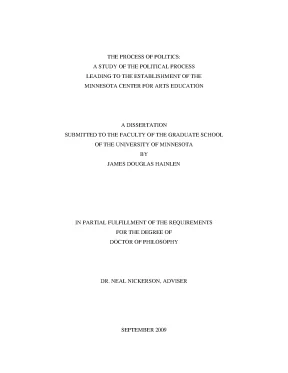
Tải xuống để đọc toàn bộTHE PROCESS OF POLITICS: A STUDY OF THE POLITICAL PROCESS LEADING TO THE ESTABLISHMENT OF THE MINNESOTA CENTER FOR ARTS EDUCATION A DISSERTATION SUBMITTED TO THE FACULTY OF THE GRADUATE SCHOOL OF THE UNIVERSITY OF MINNESOTA BY JAMES DOUGLAS HAINLEN IN PARTIAL FULFILLMENT OF THE REQUIREMENTS FOR THE DEGREE OF DOCTOR OF PHILOSOPHY DR. NEAL NICKERSON, ADVISER SEPTEMBER 2009 2009 JAMES DOUGLAS HAINLEN ALL RIGHTS RESERVED ACKNOWLEDGEMENTS The author wishes to thank people who generously contributed to the research design, writing, and completion of this thesis: Professor Neal Nickerson, my advisor for the completion of this thesis, was unfailing kind and supportive in bringing this project to a conclusion. I would particularly like to thank him for supporting my request to re-enter the Department of Educational Policy and Administration; Professors Arthur Harkins, Byron Schneider, and Darwin Hendel, for reading and offering helpful suggestions; The 27 informants who willingly shared their first-hand knowledge of the details of this investigation; My wife, Linda, and sons, Jeffrey and Steven, for allowing me to work on doctoral studies while also being husband and father. The research and writing of this thesis was divided into two time periods with an intervening period of personal medical issues, and I would like to thank Dr.
Charles Sederberg and Dr. Tim Mazzoni for guiding the initial conceptual design, research, and writing. i ABSTRACT THE PROCESS OF POLITICS: A STUDY OF THE POLITICAL PROCESS LEADING TO THE ESTABLISHMENT OF THE MINNESOTA CENTER FOR ARTS EDUCATION The purpose of this study was to investigate the political process that resulted in the establishment of the Minnesota Center for Arts Education as a state funded educational policy option. This research identified the interest group actors who initiated the idea and the key actors who guided it through the policy arena, and analyzed the interactions of the participants from the political perspective of actors, goals, motivations, resources, strategies, arenas, critical interactions, and outcomes.
This study focused on the executive and legislative arenas in Minnesota government. The study was bounded in time by the initial policy proposal set forth to the members of the Minnesota Alliance for the Arts in Education in 1976, and the final enabling legislation passed in 1989. The research methodology was a single case study with qualitative data gathered from interviews of 27 significant informants, archival sources, and the public record. The research found that human agency and personalization of policy were key elements in the policy making process and a constant factor in the dynamic interaction between Governor Perpich and state legislators.
The concept of a state financed arts high school originated outside the K-12 policy subsystems and gained crucial support when the Governor attached himself and the resources of his position to the idea in 1984. The findings are significant for proponents of educational reform who believe that education policy options ought to be enacted on the merits of the idea and underestimate the importance of the complex interplay of human behavior: power, motivation, advocacy, executive leadership, and political strategy. This research concluded that the legislation for the Minnesota Center for Arts Education was enacted because of the effective use of resources controlled by the Governor and his staff, and a pragmatic understanding and implementation of political strategies during critical interactions in the legislative arena. ii TABLE OF CONTENTS ACKNOWLEDGEMENTS.
ii TABLE OF CONTENTS. iii LIST OF FIGURES. vi CHAPTER 1 INTRODUCTION. 1 Background of the Study.
2 Statement of the Problem and Initial Research Questions. 6 Overview of Study Design. 8 Definition of Terms. 10 Limitations of Study.
12 CHAPTER 2 REVIEW OF THE LITERATURE. 14 Review of Literature on Policy Making. 15 Rational Perspective on Policy Making. 16 Organizational Perspective on Policy Making.
18 Political Perspective on Policy Making. 18 Advocacy Coalition Perspective on Policy Making. 19 Formal and Informal Policies. 20 Systems Perspective on Policy Making.
21 Review of the Literature on Political Analysis. 25 Power and Influence. 28 Sources of power. 30 A Conceptual Framework for Political Analysis of Education Issue Conflicts.
35 Blended Frameworks – a working model for this investigation. 40 Review of the Literature on Fine Arts Education. 42 Review of Literature on Case Study. 50 Setting and Data Sources.
56 Human Subjects Review and Approval. 62 Role of the Interviewer. 63 Coding of Data. 64 Triangulation of Data.
68 Analysis of Data. 73 CHAPTER 4 CONTEXT AND ORIGIN OF THE ARTS HIGH SCHOOL. 75 Multiple Policy Initiatives for Educational Reform 1976-1989. 80 iii Gifted and Talented Education Movement in Minnesota 1978-1984.
83 Arts Education Advocacy 1972-1985. 88 Origin of the Minnesota Arts High School Concept. 92 Feasibility and Planning Committee Proposal 1978-1980. 95 Gubernatorial Leadership in the Policy Arena.
99 Policy Influenced by Perpich’s Time in Europe. 102 Political and Leadership Values of Rudy Perpich. 103 CHAPTER 5 THE POLICY MAKING PROCESS THAT RESULTED IN THE MINNESOTA CENTER FOR ARTS EDUCATION. 110 Idea Initiation and Placement on the Official Policy Agenda 1976-1984.
111 Initial Authoritative Action 1984-1985. 114 Selection of Director, Site, Architect, and Site Acquisition 1986-1988. 119 Final Legislative and Executive Action 1989. 131 CHAPTER 6 FINDINGS ON THE POLITICAL PROCESS THAT LEAD TO THE MINNESOTA CENTER FOR ARTS EDUCATION.
135 Actors in the Policy Issue. 135 Interest group actors. 135 Key actors in the political arena. 141 Key actors: advocates.
144 Key actors: the governor’s able staff. 147 Key actors: state legislators. 148 Key actors: state agency staff. 153 Minor actors: advocates.
155 Actors with limited roles. 157 Key actors: opponents. 160 Goals of the Participants. 171 Stated goals of advocates and opponents.
173 Motivations of the Participants. 176 Motivations for Governor Perpich. 177 Motivations for opponents. 206 Six positional resources available to Governor Perpich.
223 The typological resource of antecedent legislative norms. 224 The typological resource of legislative maneuvering. 227 The typological resources of time, timelines, and timing. 231 The typological resources of rhetoric and narrative.
237 Strategies of agenda setting and coalition formation. 239 Planning as strategy. 243 Compromise as strategy. 249 Executive leadership arena.
251 Expanded leadership arena. 254 Arena of political patronage. 260 iv Legislative arena. 274 Impromptu arenas of negotiation.
304 Human agency: A win/win for Governor Perpich. 306 Ideas matter: Alternate formulations to conform to political reality. 307 No one knew how it was going to turn out: All those “little things”. 314 Lessons for Politics of Education.
321 Archives at the Minnesota History Center. 321 Archives at the Minnesota Center for Arts Education. 322 Archives at the Minnesota Legislative Library. 324 Archives at the Greater Twin Cities Youth Symphonies.
329 Newspapers and Newsletters. 346 Appendix A Comprehensive Chronology of the Minnesota Center for Arts Education 1976-1989. 346 Appendix B Profile of Key Informants. 367 Appendix C Key Informant Packet Initial Letter.
368 Appendix D Consent Form. 370 Appendix E Interview Guide. 371 Appendix F Interview Assessment Guide. 373 Appendix G Key Participants and Organizations Involved in the Issue Conflict 1976- 1989.
374 Appendix H Legislative Committees with Education Oversight during the Issue Conflict. 377 Appendix I Path of Education Bill in the Minnesota Legislature. 379 Appendix J Minnesota Center for Arts Education Funding History 1985 to 1990. 380 Appendix K Contact Summary Form.
381 Appendix L Committees to plan for Minnesota School for the Arts, 1979 Feasibility Conference. 382 Appendix M Feasibility Conference, Participants 1979. 384 Appendix N The Commission on the Economic Vitality of the Arts – Members, January 1984. 386 Appendix O Minnesota Arts Education Task Force Members – February, 1984.
387 v LIST OF FIGURES Figure 1: Political Systems Model. 24 Figure 2: Conceptual Framework for Political Analysis of Education Issue Conflicts. 39 Figure 3: Blended Frameworks. 41 Figure 4: Framework for data gathering, analysis, and outcomes of the political process 55 Figure 5: Continuum of interviews with increasing amounts of structure.
59 Figure 6: Analysis Codes. 65 Figure 7: Matrix of Key Informants and Research Data. 67 Figure 8: Comprehensive Coding Categories. 69 Figure 9: Policy Initiatives for Minnesota K-12 Educational Policy 1976-1989.
79 Figure 10: Minnesota Department of Education Survey of Reductions in Music. 82 Figure 11: Four Models of Arts High School Organization and Funding. 97 Figure 12: Major Events Leading to the MCAE 1976-1989. 107 Figure 13: Timeline of Participant Involvement for Key Actors and Minor Actors.
143 Figure 14: Perpich's Motivations to Exert Influence on the Policy Issue. 179 Figure 15: Summary of Political Actions Used to Influence the Policy Issue. 310 vi CHAPTER 1 INTRODUCTION The purpose of this study was to investigate and analyze the political process that resulted in the establishment of the Minnesota Center for Arts Education as an alternative in Minnesota public educational options (Minnesota Statutes: 129C.10 Center for Arts Education, 1985, June 21). This research examined how the educational idea was initiated, evolved over time, gained attention in the executive and legislative arenas, was influenced by political negotiations, and officially implemented with fiscal resources.
This investigation provided a view of a complex process that changed an established reality by the use of power, personal influence, legislative strategy, and maneuvering in the political arena. The policy alternative of a state-supported residential high school for students in the fine arts was a multifaceted issue with great uncertainty about the positive and negative outcomes. There were multiple perspectives about the need for an arts high school in Minnesota that arose in the public, educational, and legislative arenas. Strident positions were articulated about a separate school to serve artistic students in contrast to increased resources directed to arts programs in all schools.
Public pronouncements made by some legislators were highly partisan, even surprisingly immature at times. Other legislators remained more detached and astutely used the issue for political gain and patronage in their legislative districts. Some opponents of the issue acknowledged that the idea of a state sponsored arts high school had educational merit but held that it was not an appropriate institutional response. Other opponents articulated deeply held family and community values that resonated statewide with many people who opposed building an arts high school.
A diverse group of arts advocates enthusiastically embraced the arts high school alternative and developed the concept through public hearings, foundation support and interest group 1 promotion that drove the policy debate for several years in the interest group arena before it emerged in the state policy arena. The policy option of a state supported arts high school first developed in the unofficial policy arena in 1976. It was elevated to the official policy arena in 1984 by Governor Perpich and remained on the legislative agenda for six years. The policy conflict resulted in continued focused actions by the Governor, key legislators, lobbyists, aides, state agency staff, arts advocates, teacher’s unions, and the media.
People who find the development of policy making interesting will find the study of the Minnesota Center for Arts Education a compelling story of the circuitous route a simply stated, but contentious educational policy initiative can take on its way to becoming law. Background of the Study Many students who excelled in the fine arts (music, dance, literary arts, visual arts, and theater), did not have the opportunity to refine their artistic skills and achieve their career goals within the public schools, according to the Minnesota Department of Education Task Force Report (1984, p.
Nội dung được bảo vệ bản quyền — Tải xuống đầy đủ
Trích dẫn luận án này
James Douglas Hainlen (2009). Quá trình chính trị thành lập Trung tâm Nghệ thuật Minnesota [Luận án tiến sĩ, University of Minnesota]. LuanAn.net. https://luanan.net/ly-luan-va-lich-su-giao-duc/triet-hoc-giao-duc/10-1-1-462-3574
Câu hỏi thường gặp
Luận án "Quá trình chính trị thành lập Trung tâm Nghệ thuật Minnesota" nghiên cứu về vấn đề gì?
10 1 1 462 3574: Thông tin chi tiết về mã số này. Tìm hiểu ý nghĩa và nguồn gốc của dãy số.
Luận án "Quá trình chính trị thành lập Trung tâm Nghệ thuật Minnesota" được bảo vệ tại trường nào?
Luận án này được bảo vệ tại University of Minnesota. Năm bảo vệ: 2009.
Luận án "Quá trình chính trị thành lập Trung tâm Nghệ thuật Minnesota" thuộc chuyên ngành gì?
Luận án "Quá trình chính trị thành lập Trung tâm Nghệ thuật Minnesota" thuộc chuyên ngành Educational Policy and Administration. Danh mục: Triết Học Giáo Dục.
Luận án "Quá trình chính trị thành lập Trung tâm Nghệ thuật Minnesota" có bao nhiêu trang?
Luận án "Quá trình chính trị thành lập Trung tâm Nghệ thuật Minnesota" có 395 trang. Bạn có thể xem trước một phần tài liệu ngay trên trang web trước khi tải về.
Cách tải luận án "Quá trình chính trị thành lập Trung tâm Nghệ thuật Minnesota" về máy như thế nào?
Để tải luận án về máy, bạn nhấn nút "Tải xuống ngay" trên trang này, sau đó hoàn tất thanh toán phí lưu trữ. File sẽ được tải xuống ngay sau khi thanh toán thành công. Hỗ trợ qua Zalo: 0559 297 239.