Luận án Tiến sĩ: Thần học Victorine, Suy ngẫm và Nhận thức về Chúa của Csaba Németh
Mphnec01: Khám phá giải pháp công nghệ đột phá, tối ưu hóa hiệu suất hoạt động và nâng cao trải nghiệm người dùng. Cập nhật tin tức mới nhất.
Central European University
Medieval Studies
Luan An
Doctoral Dissertation
Năm xuất bản
Số trang
361
Thời gian đọc
55 phút
Lượt xem
0
Lượt tải
0
Phí lưu trữ
60 Point
Tổng quan nhanh
- Chủ đề:
- Mphnec01: Giới thiệu Tổng quan về Vi điều khiển
- Số trang:
- 361 trang
- Trường:
- Central European University
- Chuyên ngành:
- Medieval Studies
- Tác giả:
- Csaba Németh
- Năm:
- 2013
Tóm tắt nội dung luận án
I.Mphnec01 Giới thiệu Tổng quan về Vi điều khiển
Mphnec01 là một bộ vi điều khiển mạnh mẽ, hiệu quả. Thiết bị này được thiết kế cho các ứng dụng nhúng đa dạng. Mphnec01 cung cấp hiệu suất cao trong một gói nhỏ gọn. Nó tích hợp nhiều tính năng thiết yếu. Kiến trúc của Mphnec01 đảm bảo tiêu thụ điện năng thấp. Điều này phù hợp với các thiết bị chạy bằng pin. Khả năng xử lý mạnh mẽ hỗ trợ các tác vụ phức tạp. Mphnec01 lý tưởng cho các hệ thống IoT hiện đại. Nó đơn giản hóa quá trình phát triển sản phẩm. Các nhà thiết kế nhận được một nền tảng đáng tin cậy. Mphnec01 là lựa chọn kinh tế cho nhiều dự án.
1.1. Mphnec01 Overview Giải pháp Hệ thống Nhúng
Mphnec01 mang lại hiệu quả vượt trội. Nó tối ưu hóa các giải pháp hệ thống nhúng. Thiết bị này xử lý dữ liệu nhanh chóng. Mphnec01 giảm tổng chi phí hệ thống. Nó tích hợp bộ nhớ flash dung lượng cao. Bộ nhớ RAM cũng được tối ưu. Các giao diện ngoại vi đa dạng được hỗ trợ. Điều này bao gồm SPI, I2C, UART. Mphnec01 đáp ứng nhu cầu của các ứng dụng đòi hỏi. Thiết bị này cung cấp nền tảng vững chắc. Nó hỗ trợ các thiết kế thông minh, kết nối.
1.2. Microcontroller Mphnec01 Đổi mới Trong Chip
Mphnec01 đại diện cho sự đổi mới trong công nghệ vi điều khiển. Nó tích hợp một nhân xử lý tiên tiến. Nhân này đảm bảo hiệu suất xử lý tối ưu. Các module phần cứng chuyên dụng tăng cường khả năng. Mphnec01 giảm tải cho CPU chính. Tính năng bảo mật nâng cao được xây dựng sẵn. Điều này bảo vệ dữ liệu và mã nguồn. Mphnec01 thúc đẩy sự phát triển của các thiết bị thông minh. Nó mang lại khả năng kết nối không ngừng. Sự ổn định và độ tin cậy của Mphnec01 rất cao. Nó là xương sống cho các hệ thống quan trọng.
II.Mphnec01 Datasheet Chi tiết Kỹ thuật Toàn diện
Mphnec01 datasheet cung cấp tất cả thông tin kỹ thuật cần thiết. Nó bao gồm đặc điểm điện, thông số hoạt động. Sơ đồ khối chi tiết cũng được trình bày. Các nhà phát triển có thể tìm thấy thông tin về bộ nhớ. Chi tiết về các thanh ghi, các chế độ năng lượng được liệt kê. Datasheet là tài liệu tham khảo chính. Nó hỗ trợ tích hợp Mphnec01 vào thiết kế. Các hướng dẫn về bố trí mạch in cũng có sẵn. Mphnec01 datasheet đảm bảo kỹ sư có đủ dữ liệu. Việc này giúp tối ưu hóa hiệu suất, độ tin cậy. Luôn tham khảo phiên bản datasheet mới nhất.
2.1. Mphnec01 Specifications Đặc tính Điện tử Đáng tin cậy
Mphnec01 specifications đảm bảo hoạt động ổn định. Nó bao gồm điện áp hoạt động rộng. Dòng điện tiêu thụ ở các chế độ khác nhau được xác định. Các thông số nhiệt độ hoạt động cũng rất quan trọng. Mphnec01 hoạt động hiệu quả trong môi trường khắc nghiệt. Tần số hoạt động tối đa được chỉ rõ. Nó mang lại sức mạnh xử lý mong muốn. Các đặc tính này giúp lựa chọn linh kiện phù hợp. Mphnec01 đảm bảo tuân thủ các tiêu chuẩn công nghiệp.
2.2. Mphnec01 Memory Architecture Lưu trữ Dữ liệu Hiệu quả
Kiến trúc bộ nhớ của Mphnec01 được thiết kế thông minh. Nó bao gồm bộ nhớ Flash để lưu trữ chương trình. Dung lượng Flash đủ lớn cho nhiều ứng dụng. Bộ nhớ RAM cung cấp không gian làm việc nhanh. RAM hỗ trợ các biến và stack. Mphnec01 cũng có bộ nhớ EEPROM tích hợp. EEPROM dùng để lưu trữ dữ liệu cấu hình. Kiến trúc này tối ưu hóa việc truy cập dữ liệu. Nó cải thiện hiệu suất tổng thể của hệ thống.
III.Mphnec01 Features Nâng cao Hiệu suất Hệ thống Nhúng
Mphnec01 features nổi bật bao gồm nhiều module tích hợp. Nó có bộ chuyển đổi ADC độ phân giải cao. Điều này cho phép thu thập dữ liệu analog chính xác. Các bộ định thời (timers) và PWM linh hoạt. Chúng hỗ trợ điều khiển động cơ, tạo tín hiệu. Mạch so sánh analog cung cấp phản ứng nhanh. Mphnec01 tích hợp các bộ điều khiển DMA. DMA giảm tải cho CPU trong việc truyền dữ liệu. Các cổng I/O đa chức năng được cung cấp. Mphnec01 hỗ trợ cả chế độ tiêu thụ năng lượng thấp. Điều này kéo dài tuổi thọ pin cho thiết bị. Tính năng ngắt ngoài linh hoạt cải thiện khả năng phản hồi.
3.1. Advanced Peripherals Tích hợp Toàn diện
Mphnec01 sở hữu các thiết bị ngoại vi tiên tiến. Nó có bộ điều khiển USB tích hợp. Điều này cho phép kết nối máy tính dễ dàng. Bộ điều khiển Ethernet cũng là một lựa chọn. Ethernet hỗ trợ kết nối mạng có dây ổn định. Các module không dây như Bluetooth/Wi-Fi được hỗ trợ. Mphnec01 cung cấp một nền tảng kết nối toàn diện. Các giao thức truyền thông như CAN, LIN cũng được tích hợp. Điều này mở rộng phạm vi ứng dụng của thiết bị. Mphnec01 là một lựa chọn linh hoạt.
3.2. Power Management Tiết kiệm Năng lượng Hiệu quả
Tính năng quản lý năng lượng của Mphnec01 rất tinh vi. Nó có nhiều chế độ ngủ (sleep modes). Các chế độ này giảm thiểu tiêu thụ điện. Mphnec01 có thể thức dậy từ các sự kiện ngắt. Điều này đảm bảo hoạt động hiệu quả. Chức năng điều chỉnh điện áp tích hợp. Nó giúp tối ưu hóa nguồn điện. Mphnec01 lý tưởng cho các thiết bị di động. Nó kéo dài thời gian hoạt động của pin.
IV.Mphnec01 Pinout Sơ đồ Chân và Giao diện Kết nối
Mphnec01 pinout là bản đồ các chân của chip. Mỗi chân có chức năng riêng. Chức năng có thể là cấp nguồn, tín hiệu số, analog. Một số chân có thể được cấu hình lại. Mphnec01 hỗ trợ nhiều gói khác nhau. Gói LQFP, QFN, BGA thường được sử dụng. Sơ đồ chân chi tiết được cung cấp trong datasheet. Việc hiểu rõ pinout là rất quan trọng. Nó đảm bảo thiết kế mạch chính xác. Kết nối ngoại vi đúng cách là điều cần thiết. Các chân I/O được nhóm thành các cổng. Điều này giúp quản lý dễ dàng hơn. Mphnec01 pinout đơn giản hóa quá trình gỡ lỗi.
4.1. Pin Configurations Cấu hình Chân Linh hoạt
Mphnec01 cung cấp cấu hình chân linh hoạt. Nhiều chân có thể đảm nhận nhiều chức năng. Điều này tối ưu hóa việc sử dụng tài nguyên. Kỹ sư có thể lựa chọn chức năng mong muốn. Các chân được cấu hình thông qua thanh ghi. Mphnec01 hỗ trợ lập trình lại các chân. Điều này cho phép tùy chỉnh cao. Sự linh hoạt này giảm thiểu số lượng chân cần thiết. Nó giảm kích thước bảng mạch.
4.2. Peripheral Interfacing Kết nối Ngoại vi Đơn giản
Mphnec01 đơn giản hóa kết nối với các thiết bị ngoại vi. Các giao diện chuẩn như SPI, I2C, UART có chân riêng. Chân này được gán một cách rõ ràng. Điều này giúp kết nối cảm biến, màn hình, module khác. Mphnec01 hỗ trợ giao tiếp tốc độ cao. Nó đảm bảo truyền dữ liệu hiệu quả. Các mạch bảo vệ ESD tích hợp. Điều này bảo vệ các chân khỏi hư hỏng. Mphnec01 là lựa chọn tin cậy cho các hệ thống phức tạp.
V.Mphnec01 Ứng dụng Giải pháp Thiết bị IoT Tiên tiến
Mphnec01 được thiết kế cho một loạt các ứng dụng. Đặc biệt là trong lĩnh vực IoT device và hệ thống nhúng. Mphnec01 là lựa chọn lý tưởng cho nhà thông minh. Nó điều khiển ánh sáng, nhiệt độ, an ninh. Trong thiết bị đeo tay, Mphnec01 mang lại hiệu suất cao. Nó quản lý cảm biến, kết nối không dây. Mphnec01 cũng phù hợp cho tự động hóa công nghiệp. Nó giám sát máy móc, thu thập dữ liệu. Các thiết bị y tế cầm tay cũng hưởng lợi từ Mphnec01. Nó cung cấp xử lý dữ liệu chính xác. Mphnec01 giúp phát triển các sản phẩm thông minh. Nó tạo ra kết nối liền mạch.
5.1. Embedded System Design Nền tảng Đáng tin cậy
Mphnec01 là nền tảng đáng tin cậy cho thiết kế hệ thống nhúng. Nó cung cấp sự ổn định, hiệu suất cao. Kỹ sư có thể tạo ra các sản phẩm bền bỉ. Mphnec01 giảm thời gian đưa sản phẩm ra thị trường. Nó hỗ trợ một hệ sinh thái công cụ phát triển. Các thư viện phần mềm phong phú có sẵn. Mphnec01 là một lựa chọn mạnh mẽ. Nó đáp ứng mọi yêu cầu của các dự án nhúng.
5.2. Mphnec01 in IoT Devices Kết nối Thông minh Mọi nơi
Mphnec01 đóng vai trò trung tâm trong các thiết bị IoT. Nó cung cấp khả năng xử lý tại biên (edge processing). Điều này giảm độ trễ, tăng cường bảo mật. Mphnec01 hỗ trợ nhiều giao thức không dây. Nó cho phép kết nối linh hoạt. Các thiết bị IoT sử dụng Mphnec01 có thể giao tiếp dễ dàng. Nó thu thập, phân tích dữ liệu hiệu quả. Mphnec01 là chìa khóa cho thế giới kết nối.
VI.Mphnec01 Development Kit Khởi động Dự án Dễ dàng
Mphnec01 development kit cung cấp mọi thứ cần thiết để bắt đầu. Nó bao gồm một bảng phát triển. Bảng này tích hợp Mphnec01 và các ngoại vi cơ bản. Mphnec01 development kit có trình gỡ lỗi tích hợp. Công cụ lập trình cũng được cung cấp. Các ví dụ mã nguồn giúp người dùng nhanh chóng làm quen. Tài liệu hướng dẫn chi tiết đi kèm bộ kit. Bộ kit giúp giảm thiểu thời gian phát triển. Nó cho phép thử nghiệm nhanh các ý tưởng. Mphnec01 development kit là công cụ học tập tuyệt vời. Nó hỗ trợ cả người mới bắt đầu và chuyên gia.
6.1. Getting Started with Mphnec01 Lập trình Đơn giản
Bắt đầu với Mphnec01 thật dễ dàng. Bộ kit phát triển cung cấp một môi trường làm việc hoàn chỉnh. Các trình biên dịch và IDE được hỗ trợ. Kỹ sư có thể viết, biên dịch, gỡ lỗi mã. Các tài liệu hướng dẫn từng bước có sẵn. Cộng đồng hỗ trợ lớn cũng giúp ích. Mphnec01 giảm bớt rào cản gia nhập. Nó cho phép tạo ra các ứng dụng nhanh chóng.
6.2. Mphnec01 Price Availability Giá cả Hợp lý Sẵn có
Mphnec01 price cạnh tranh trên thị trường. Nó cung cấp hiệu suất cao với chi phí hợp lý. Mphnec01 có sẵn từ nhiều nhà phân phối. Điều này đảm bảo nguồn cung ổn định. Các tùy chọn số lượng lớn có giá ưu đãi. Thông tin chi tiết về giá cả được cung cấp. Mphnec01 là lựa chọn kinh tế. Nó không ảnh hưởng đến chất lượng dự án.
Tải xuống file đầy đủ để xem toàn bộ nội dung
Tải đầy đủ (361 trang)Trích đoạn nội dung luận án
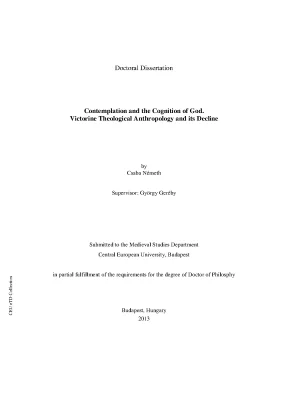
Tải xuống để đọc toàn bộDoctoral Dissertation Contemplation and the Cognition of God. Victorine Theological Anthropology and its Decline by Csaba Németh Supervisor: György Geréby Submitted to the Medieval Studies Department Central European University, Budapest in partial fulfillment of the requirements for the degree of Doctor of Philosphy CEU eTD Collection Budapest, Hungary 2013 Table of Contents Abbreviations 6 Acknowledgements 7 Introduction 8 PART I. BACKGROUNDS TO THE VICTORINES 13 Chapter I. The Patristic heritage 14 Augustine: five great themes 14 Gregory the Great 27 Chapter II.
Twelfth-century problems 32 Conclusion 37 PART II. VICTORINES AND VICTORINE THEOLOGICAL ANTHROPOLOGY IN THE TWELFTH CENTURY 39 Introduction 40 Chapter I. Hugh of Saint-Victor 41 Introduction 41 I. Doctrinal background: selected and edited influences 44 II.
Doctrinal background: the Hugonian framework 60 III. Contemplation in contexts. From eschatology to ecstasy 70 IV. Hidden things in God, the limits of cognition and Seraphic love 77 Conclusion 86 Chapter II.
Richard of Saint-Victor 89 Introduction 89 I. Background to contemplation 98 II. Richard on contemplation: four investigations 110 III. Contemplation as face-to-face vision? A case study 138 Conclusion 148 Chapter III.
Achard and Walther of Saint-Victor 151 Achard of St. Victor 152 CEU eTD Collection Walther of Saint-Victor 156 Conclusion: Achard and Walther, representatives of a Victorine model 161 Chapter IV. The question of a twelfth-century Victorine spirituality 163 Victorines as a doctrinal community? 164 The community aspect 166 Victorine spirituality versus Cistercian spirituality? Attempt at a comparison 169 Conclusion 176 Chapter V. The early Scholastic theories on prelapsarian cognition of God (c.
Adaptations: the Summa sententiarum and the Sentences of the Lombard 178 II. Alternatives and interpretations. The prelapsarian Adam in the schools of Paris 185 Conclusion 194 2 PART III. THE THIRTEENTH-CENTURY RECEPTION OF THE VICTORINE THEOLOGICAL ANTHROPOLOGY: REJECTION, TRANSFORMATION, OBLIVION 195 Introduction: the thirteenth-century milieu 196 Chapter I.
Paul’s rapture and the visio mediastina 206 Introduction 206 I. Peter Lombard’s Collectanea (and its limits) 209 II. The emergence of the visio mediastina (c. Five witnesses 211 III.
The creation of raptus and the elimination of visio mediastina (the 1210s to the 1230s) 217 Conclusion 228 Chapter II. The prelapsarian cognition in the thirteenth-century university theology 231 Introduction: the limits of interpretation 231 I. Glosses on the Sentences 233 II. The first commentaries on the Sentences 237 III.
The Summa Halensis 245 IIII. After the Summa Halensis: a dozen variants of the same 252 Conclusion 263 Chapter III. Reinterpretations of the Victorine theological anthropology in the spiritual literature 267 Introduction 267 1. The sermons of Anthony of Padua OFM 287 3.
Saint Bonaventure OFM 289 4. Thomas Aquinas OP 299 5. Hugh of Balma OCart 302 6. Rudolph of Biberach OFM 305 Conclusion 309 PART IV.
THE VICTORINE THEOLOGICAL ANTHROPOLOGY AND ITS DECLINE 312 APPENDICES 321 Appendix 1. Hugh of Saint-Victor, De sacramentis: corrected passages 322 CEU eTD Collection Appendix 2. The reception of the Odonian-Lombardian Adam: a dozen marginal witnesses (c. Compiling from the Summa sententiarum: the Sententiae divinitatis and the Sententiae Sidonis 325 2.
Compiling from the Sentences of Peter Lombard: ten witnesses 326 Appendix 3. Anonymous glosses on the Sentences 329 Appendix 4. Richard Fishacre, Richard Rufus and Odo Rigaldi on the prelapsarian cognition 331 Richard Fishacre, In IV Sent. 1 331 Richard Rufus, Lectura Oxoniensis, In II Sent.
23 331 Odo Rigaldi OFM, In II Sent. Census of the manuscripts consulted 338 2. Bibliography of printed sources 341 3. Selected list of secondary literature 347 A detailed table of contents 356 CEU eTD Collection 4 Desiderium cognoscendae veritatis intantum naturale animae est, ut, quantumlibet sit perversa, illo omnino carere non possit.
Quotidianae quaestiones indicant quod scire verum omnes cupimus. Tota vita hominis in quaestione est. Quandiu vivitur, quaeritur. Miscellanea I, lxxii magistrum Hugonem de sancto Victore, quem et ignotum diligis et absentem ueneraris, inter ceteros immo pre ceteris frequentarem Laurentius Croyez-vous donc que je me serai levé toute ma vie à quatre heures du matin, pour ne dire que ce que d’autres avaient dit avant moi? Jean Hardouin SJ It may be, Heaven forgive me, that I did try to be original; but I only succeeded in inventing all by myself an inferior copy of the existing traditions of civilized religion.… I did try to found a heresy of my own; and when I had put the last touches to it, I discovered that it was orthodoxy.
Chesterton CEU eTD Collection 5 Abbreviations AHDLMA Archives d’histoire doctrinale et littéraire du moyen âge BGPTM Beiträge zur Geschichte der Philosophie [und Theologie] des Mittelalters (Munster: Aschendorff) CCSL Corpus Christianorum, Series Latina (Turnhout: Brepols, 1953-) CCCM Corpus Christianorum, Series Latina, Continuatio Mediaevalis (Turnhout: Brepols, 1966-) CSEL Corpus Scriptorum Ecclesiasticorum Latinorum (Vienna: Hölder / Pichler / Tempsky,1866-) DS Dictionnaire de spiritualité ascétique et mystique (Paris: Beauchesne, 1937-) DTC Dictionnaire de Théologie Catholique (Paris: Letouzey et Ané) LMA Lexikon des Mittelalters (Zürich: Artemis) PL Patrologiae cursus completus series Latina, ed. Jacques Paul Migne (Paris, 1841-1864) Quar. Bonaventurae opera omnia, edita studio et cura pp. Bonaventura (Quaracchi: Editiones Collegii S.
Bonaventurae ad Claras Aquas, 1882-1902) RMAL Revue du moyen âge latin RSPT Revue des sciences philosophiques et théologiques RTAM Recherches de Théologie ancienne et médiévale RTPM Recherches de Théologie et Philosophie médiévales SC Sources Chrétiennes (Paris: Cerf) TRE Theologische Realenzyklopädie (Berlin and New York: Walter de Gruyter, 1977-) Sent The Sentences of Peter Lombard qu. articulus co corpus sc [argumentum] sed contra CEU eTD Collection 6 Acknowledgements First and foremost I would like to thank the Department of Medieval Studies at the Central European University and my supervisor György Geréby; it was their support, trust and patience that made this work first possible and then finished. I am grateful to those institutions that, in one way or another, made the necessary research possible. Research grants received from the Department and the Central European University helped to start my investigations and permitted me to spend a semester in Paris at the École des hautes études en sciences sociales and in the Bibliothèque Nationale.
The Mellon Fellowship granted me access to the Pius XII Memorial Library at the Saint Louis University (Saint Louis, Missouri), housing the Vatican Film Library; my thanks go to Susan L’Engle and Gregory Pass. Research in two institutes helped me to devise this project nearly a decade ago, the Martin-Grabmann-Forschungsinstitut (Munich) and the Hugo von Sankt Viktor- Institut (Frankfurt am Main): I am thankful for their then leaders, Professors Marianne Schlosser (then Munich) and Rainer Berndt (Frankfurt). I am grateful to Ineke van’T Spijker and Sylvain Piron for their remarks on the earlier variants of the present work, to Patrice Sicard and Dominique Poirel for our encouraging discussions, and to Piroska Nagy for her inspirational questions. I am especially indebted to three scholars, György Heidl, István Perczel and Sylvain Piron, who taught me most about reading and understanding texts, asking questions and seeing (even our own) positions critically.
I dedicate this work to my parents and friends and to the memory of whose who saw its beginning but not the end. CEU eTD Collection 7 Introduction The main motivation behind the present work was unsatisfied curiosity. It started first as a exegetical attempt to clarify certain passages in Benjamin major III, ix, where, in allegorical form, theories on epistemology and contemplation were discussed by Richard of Saint-Victor. Contemplation, conceived as the ultimate form of the cognition of God possible in this life, seemed to me then the crucial subject in the study of Richard.
But after having witnessed the undeniable doctrinal similarities among Victorine authors, and the relentless efforts of thirteenth-century theologians to reinterpret Victorine doctrines (even against their original meaning), the investigation turned into a hermeneutical and historical inquiry, guided by two questions: What is Victorine theology? and What happened to it after the end of the twelfth century? The bulk of the literature that I consulted offered no sufficient answer to these questions; therefore I looked for an answer myself: the present volume is that answer. One of the many insights gained in the course of the research was that such questions also demand hermeneutical reflection. The historical and doctrinal position of the readers substantially defines what can be understood from earlier texts (in other words, what the meaning attributed to the texts is) – and this is true for both medieval readers and modern scholars. The present work attempts to (re)construct, on the one hand, a particular model of theological anthropology that was conceived nearly 900 years ago by Victorine authors; on the other hand, it also tries to describe the history of its reception, taking into consideration the position of medieval readers, too.
In the literature, the term “Victorines” commonly refers to a twelfth-century group of nearly a dozen theologians who were Augustinian canons and belonged to the abbey dedicated to Saint Victor. Their community, located outside the city walls of Paris, was founded in 1109 by the renowned teacher William of Champeaux, and was soon promoted to the rank of royal abbey. From the 1120s to the end of the twelfth century an unparalleled period can be observed, when theologians belonging to that same community of Saint-Victor created a remarkable corpus involving doctrinal theology and didactic works (Hugh), spiritual works (Hugh, Achard and Richard), Biblical exegesis (Hugh, Andrew and Garnier), liturgical poetry (Adam), philosophy (Godfrey), and theological polemics (Walther). Their works have long been an important subject of intellectual history.1 The present study focuses on those few of them whose spiritual writings addressed issues of theological anthropology: Hugh (d.
Hugh and Richard were considered as major authors on contemplation even in the Middle Ages. With the nineteenth-century emergence of the concept of “mysticism” (Mystik), issues that earlier belonged to Christian spirituality became subjects of mysticism: this happened to theories about contemplation as well. Medieval mysticism is a natural subject of the historiography of mysticism: the most significant, large-scale and comprehensive CEU eTD Collection histories of mysticism, most notably by Bernard McGinn and Kurt Ruh, treat the Victorines as 1 On the history of the monastery, see L’abbaye parisienne de Saint-Victor au moyen âge. Communications présentées au XIIIe colloque d’humanisme médiéval de Paris (1986-1988) et réunies par Jean Longère (Bibliotheca Victorina 1) (Turnhout: Brepols, 1991); for the single authors, see Jean Châtillon, “Chronique de Guillaume de Champeaux à Thomas Gallus.
Chronique d’histoire littéraire et doctrinale de l’école de Saint-Victor,” RMAL 8 (1952): 139-162 and 247-272; Dominique Poirel, “L’école de Saint-Victor au Moyen Âge: Bilan d’un demi-siècle historiographique,” Bibliothèque de l’école des chartes 15 (1998):187-207; for the recent status of scholarship, see Dominique Poirel, ed., L’école de Saint-Victor de Paris. Influence et rayonnement du Moyen Âge à l’époque moderne. Actes du Colloque international du C. pour le neuvième centenaire de la fondation (1108-2008) (Turnhout: Brepols, 2010).
See also Dave Coulter’s “Annotated Chronology of the Twelfth-Century School of St. Victor,” in his Per visibilia ad invisibilia. Theological Method in Richard of St. 1173) (Turnhout: Brepols, 2006), 232-256, and Rainer Berndt’s articles, “The School of St.
Victor in Paris” In Hebrew Bible/Old Testament. The History of Its Interpretation, ed. Magne Sebo, vol. 1 part 2 (Göttingen: Vandenhoek & Ruprecht, 2000), 467-495 and “Sankt Viktor, Schule von.
8 representatives of twelfth-century mysticism. 2 The period is regarded as a sudden flowering of mysticism after the Patristic and early medieval times, when only a handful of Latin authors (such as Augustine, Cassian, Gregory the Great and Eriugena) could be qualified as “mystic.” In the twelfth century, dozens of “mystics” can be found: they write in Latin, and mostly belong to the “new” orders of Cistercians, Augustinian canons, Carthusians or Premonstratensians. In importance, Hugh and Richard can be compared only to the greatest authors of the Cistercians, Saint Bernard or William of Saint-Thierry. The next century brings different, sometimes overlapping manifestations of mysticism: the emergence of vernacular mysticism, female mysticism (Frauenmystik), Franciscan mysticism, Areopagitic mysticism and affective mysticism.
But however detailed this kind of presentation can be, it does not suit a study of twelfth-century Victorine authors, for multiple reasons.
Nội dung được bảo vệ bản quyền — Tải xuống đầy đủ
Trích dẫn luận án này
Csaba Németh (2013). Thần học Victorine: Suy ngẫm và Nhận thức về Chúa [Luận án tiến sĩ, Central European University]. LuanAn.net. https://luanan.net/giao-duc-hoc/phuong-phap-giang-day/mphnec01
Câu hỏi thường gặp
Luận án "Thần học Victorine: Suy ngẫm và Nhận thức về Chúa" nghiên cứu về vấn đề gì?
Mphnec01: Khám phá giải pháp công nghệ đột phá, tối ưu hóa hiệu suất hoạt động và nâng cao trải nghiệm người dùng. Cập nhật tin tức mới nhất.
Luận án "Thần học Victorine: Suy ngẫm và Nhận thức về Chúa" được bảo vệ tại trường nào?
Luận án này được bảo vệ tại Central European University. Năm bảo vệ: 2013.
Luận án "Thần học Victorine: Suy ngẫm và Nhận thức về Chúa" thuộc chuyên ngành gì?
Luận án "Thần học Victorine: Suy ngẫm và Nhận thức về Chúa" thuộc chuyên ngành Medieval Studies. Danh mục: Phương Pháp Giảng Dạy.
Luận án "Thần học Victorine: Suy ngẫm và Nhận thức về Chúa" có bao nhiêu trang?
Luận án "Thần học Victorine: Suy ngẫm và Nhận thức về Chúa" có 361 trang. Bạn có thể xem trước một phần tài liệu ngay trên trang web trước khi tải về.
Cách tải luận án "Thần học Victorine: Suy ngẫm và Nhận thức về Chúa" về máy như thế nào?
Để tải luận án về máy, bạn nhấn nút "Tải xuống ngay" trên trang này, sau đó hoàn tất thanh toán phí lưu trữ. File sẽ được tải xuống ngay sau khi thanh toán thành công. Hỗ trợ qua Zalo: 0559 297 239.