Accounting imformation individua diffrentces and attributions in the performance
Luận án: Accounting imformation individua diffrentces and attributions in the performance evalution process. Xem tóm tắt và tải về tại LuanAn.net
Năm xuất bản
Số trang
298
Thời gian đọc
45 phút
Lượt xem
0
Lượt tải
0
Phí lưu trữ
50 Point
Tổng quan nhanh
- Chủ đề:
- 1. Accounting Information & Performance Evaluation Study
- Số trang:
- 298 trang
- Trường:
- Arizona State University
- Chuyên ngành:
- Accounting
- Tác giả:
- Michael P. Bradley
- Năm:
- 1986
Tóm tắt nội dung luận án
I. Accounting Information Performance Evaluation Study
This research explored how accounting information, individual differences, and causal attributions influence the managerial performance evaluation process. The study involved experienced managers as subjects. They evaluated operational managers in a controlled laboratory setting. The core objective was to understand the underlying mechanisms that shape evaluative judgments. It considered how distinct cognitive styles and an individual's locus of control modify how performance data is interpreted. The investigation highlights the complexity of human judgment in management control systems. It provides insights into potential biases and variations in performance measurement. The findings contribute to a deeper understanding of organizational behavior and effective decision-making within firms. Managers often rely on objective accounting data. However, subjective interpretations play a significant role. This dissertation unravels some of these critical subjective influences on employee performance assessments.
1.1. Research Focus Managerial Performance Assessment
The central inquiry examined the variability in how managers assess the performance of their subordinates. It underscored accounting information as a primary input in this assessment. This information included current period data and past year's performance metrics. It also incorporated details about activities not directly tied to current responsibilities. The study recognized that even standardized accounting data can lead to diverse evaluations. This diversity stems from individual cognitive processing and attributional tendencies. Understanding these factors is crucial for fair and effective performance measurement systems.
1.2. Dissertation Methodology Overview An Experiment
A laboratory experiment served as the primary research method. Experienced managers participated as subjects. They were tasked with evaluating hypothetical operational managers. The experiment provided subjects with detailed accounting information. This data was specifically structured to test hypotheses related to attribution theory. The design aimed to isolate the effects of cognitive style and locus of control on performance ratings. This controlled environment allowed for precise measurement of how different individual characteristics influence the interpretation and use of performance data for managerial accounting.
II. Individual Differences Impact Manager Ratings
Individual differences represent critical factors in the performance evaluation process. This study specifically investigated two key dimensions: cognitive style, particularly field dependence-independence, and locus of control. These differences significantly influence how managers perceive, process, and react to accounting and performance information. An evaluator's cognitive makeup dictates their approach to problem-solving and information integration. Similarly, their locus of control shapes their beliefs about the causes of events. Understanding these psychological constructs offers a powerful lens for explaining variability in performance measurement. They reveal why two managers might evaluate the same objective performance data differently. Such insights are invaluable for developing more robust management control systems and training programs. Recognizing these inherent variations can improve the fairness and accuracy of employee performance appraisals.
2.1. Cognitive Style Field Dependence Theory
Cognitive style refers to an individual's preferred and habitual modes of perceiving, remembering, and thinking. Field dependence-independence is a prominent dimension of cognitive style from cognitive psychology. Field Independent (FI) individuals tend to perceive items as discrete from their background. They can "disembed" information. Field Dependent (FD) individuals perceive items as fused with their background. They struggle to separate individual elements from the overall context. This distinction is crucial for understanding how evaluators use comparative performance information. It impacts their ability to isolate an individual's performance from peer group results or broader organizational performance.
2.2. Locus of Control and Evaluator Bias
Locus of control describes the extent to which individuals believe they can control events affecting them. An internal locus of control means individuals believe they control their own destiny. They attribute outcomes to personal effort or ability. An external locus of control means individuals believe external forces determine outcomes. They attribute events to luck, fate, or powerful others. This orientation heavily influences how managers assign responsibility for performance successes or failures. It can introduce a systematic bias into performance assessments, affecting both rewards for good performance and sanctions for poor performance in organizational behavior.
III. Attribution Theory Shapes Evaluation Process
Attribution theory provides a fundamental framework for understanding performance evaluations. It explains how individuals infer the causes of events and behaviors. In a management context, evaluators constantly try to determine why an employee performed in a certain way. Was it due to effort, ability, task difficulty, or luck? The information cues available significantly guide these attributions. The dissertation specifically operationalized accounting and performance data using the consistency, consensus, and distinctiveness framework of attribution theory. This approach allowed for a systematic investigation into how different types of information influence causal judgments. These judgments, in turn, directly impact the final performance rating. Understanding these attributional processes is key to improving organizational behavior and decision-making fairness in employee performance.
3.1. Consistency Consensus Distinctiveness Cues Defined
Attribution theory identifies three primary informational cues. Consistency refers to whether the actor performs the same way across different occasions. High consistency suggests an internal cause. Consensus refers to whether other people behave similarly in the same situation. High consensus suggests an external cause. Distinctiveness refers to whether the actor behaves similarly in other situations. High distinctiveness suggests an external cause. The experiment manipulated these cues through provided accounting information. For example, consensus information showed peer performance, while consistency showed past performance. These cues help evaluators determine if an outcome is unique to the individual or common across situations.
3.2. Applying Attribution Cues to Accounting Data
The study carefully structured the accounting information presented to subjects. It operationalized this data in the consistency, consensus, and distinctiveness format. This ensured direct relevance to attribution theory. For instance, information on an individual manager's past performance provided consistency cues. Data on peer performance offered consensus cues. Performance in unrelated activities could provide distinctiveness cues. This meticulous design allowed researchers to observe how managers utilized these specific types of information to form their causal attributions and subsequent performance ratings. It directly linked objective financial data to subjective managerial judgments and performance measurement.
IV. Cognitive Styles Affect Accounting Data Use
The experiment revealed significant differences in how cognitive styles influenced the use of accounting information, particularly consensus data. This finding underscores the profound impact of an evaluator's inherent processing style on performance measurement. Field Independent (FI) subjects and Field Dependent (FD) subjects interpreted and applied comparative performance information in distinctly opposite ways. These findings offer critical insights for organizational behavior and the design of management control systems. They suggest that simply providing more information is insufficient. The manner in which individuals process that information, shaped by their cognitive style, dictates its ultimate impact on performance evaluations. This can lead to divergent appraisals even when all evaluators receive identical objective data. Understanding these dynamics helps explain variations in employee performance feedback and decision-making.
4.1. Field Independent Judgments Explained
Field Independent subjects demonstrated a unique pattern. They rated an unfavorable current performance manager higher when all comparative peers also exhibited unfavorable performances. This outcome suggests FI managers successfully "disembedded" the individual's performance from the broader, negative field. They likely attributed the poor performance to an external, shared factor when all peers performed poorly. This indicates a nuanced understanding of contextual influences. FI managers distinguished between individual accountability and systemic issues affecting a group. Their judgments reflected an ability to see the individual within the context, but also separate their performance from it when appropriate.
4.2. Field Dependent Managers Evaluation Patterns
Conversely, Field Dependent subjects utilized consensus information in the opposite direction. They did not disembed the unfavorable manager from a totally unfavorable field. Instead, they rated all managers in that unfavorable field lower. This suggests FD managers struggled to separate individual performance from the pervasive negative environment. They perceived the individual as fused with the overall poor group performance. Their evaluations were more influenced by the general context rather than individual distinctions. This pattern highlights a challenge in objective performance assessment for FD individuals when group performance is uniformly poor, potentially leading to lower overall organizational performance ratings.
V. Locus of Control Impacts Managerial Judgments
The study identified a significant relationship between an evaluator's locus of control and their performance evaluations. This individual difference profoundly influenced the severity and direction of ratings for both favorable and unfavorable performance outcomes. Internal and external locus of control led to distinct patterns of reward and punishment in the performance evaluation process. These findings have direct implications for understanding managerial accounting and decision-making within organizations. They suggest that personal beliefs about control over events can introduce a systematic bias into performance measurement. This bias affects how individuals are recognized for success or held accountable for failure. Therefore, understanding an evaluator's locus of control becomes crucial for interpreting their performance judgments accurately. It influences overall employee motivation and organizational behavior.
5.1. Internal Locus Performance Assessment Outcomes
An internal locus of control was associated with significantly lower ratings for unfavorable performance managers. Conversely, it correlated with significantly higher ratings for favorable performance managers. This pattern suggests internals assign greater personal responsibility for outcomes. They reward success more strongly and punish failure more severely. Their evaluations reflected a clear distinction between high and low performers, with less moderation. This aligns with the interpretation that internals believe in personal accountability. They view performance as a direct result of an individual's effort or ability, leading to more extreme judgments in performance measurement.
5.2. External Locus Moderated Evaluations
In contrast, an external locus of control was linked to more moderated performance evaluations. Externals tended to give less extreme ratings for both favorable and unfavorable performance managers. This suggests externals are less inclined to attribute outcomes solely to an individual's internal factors. They might consider external circumstances, luck, or other uncontrollable variables more readily. This perspective leads to a tempering of judgment, reducing the magnitude of both praise and criticism. Their evaluations reflect a broader consideration of contextual factors, resulting in less polarized performance assessments across the board for employee performance.
Tải xuống file đầy đủ để xem toàn bộ nội dung
Tải đầy đủ (298 trang)Trích đoạn nội dung luận án
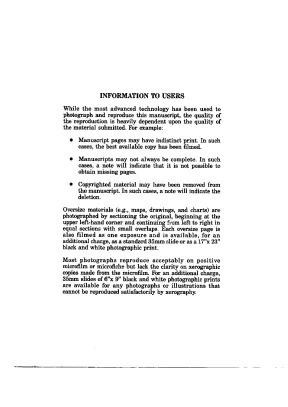
Tải xuống để đọc toàn bộINFORMATION TO USERS While the most advanced technology has been used to photograph and reproduce this manuscript, the quality of the reproduction is heavily dependent upon the quality of the material submitted. For example: e Manuscript pages may have indistinct print. In such cases, the best available copy has been filmed. ® Manuscripts may not always be complete.
In such cases, a note will indicate that it is not possible to obtain missing pages. @ Copyrighted material may have been removed from the manuscript. In such cases, a note will indicate the deletion., maps, drawings, and charts) are photographed by sectioning the original, beginning at the upper left-hand corner and continuing from left to right in equal sections with small overlaps. Each oversize page is also filmed as one exposure and is available, for an additional charge, as a standard 35mm slide or as a 17”x 23” black and white photographic print.
Most photographs reproduce acceptably on positive microfilm or microfiche but lack the clarity on xerographic copies made from the microfilm. For an additional charge, 35mm slides of 6”x 9” black and white photographic prints are available for any photographs or illustrations that cannot be reproduced satisfactorily by xerography. ACCOUNTING INFORMATION, INDIVIDUAL DIFFERENCES, AND ATTRIBUTIONS IN THE PERFORMANCE EVALUATION PROCESS Arizona State University Pn. 1986 University Microfilms International soon.
zeeb Road, Ann Arbor, Mi 48108 Copyright 1987 by Bradley, Michael P. All Rights Reserved PLEASE NOTE: In all cases this material has been filmed in the best possible way from the available copy. Problems encountered with this document have been identified here with a check mark v_. Glossy photographs orpages —_ Colored illustrations, paper or print PD Photographs with dark background YO uo Ilustrations are poor copy.
F Pages with black marks, not original copy 0p Print shows through as there is textonbothsidesofpage ss indistinct, broken or smail print on severa! pages / Print exceeds margin requirements @ Tightly bound copy with print lost in spine Ð 10, Computer printout pages with indistinct print. Page(s) lacking when material received, and not available from school or author. Page(s) _ seem to be missing in numbering only as text follows. Two pagesnumbered si.
Curling and wrinkled pages_ __ 15. Dissertation contains pages with print at a slant, filmed as received YS 18. Other University Microfilms International abe ee ACCOUNTING INFORMATION, INDIVIDUAL DIFFERENCES, AND ATTRIBUTIONS IN THE PERFORMANCE EVALUATION PROCESS by Michael P. Bradley A Dissertation Presented in Partial Fulfillment of the Requirements for the Degree Doctor of Philosophy ARIZONA STATE UNIVERSITY December 1986 ACCOUNTING INFORMATION, INDIVIDUAL DIFFERENCES, AND ATTRIBUTIONS IN THE PERFORMANCE EVALUATION PROCESS by Michael P.
Bradley has been approved September 1986 APPROVED: ⁄⁄ + 2 ¢H———— Chairperson. WL Coco Lf geDy2 Sk uw K cả = TA Khe A Supervisory Committee ACCEPTED: Dean, Stam Dll College of Bubiness ‘Dean, Graduate College ©1987 MICHAEL P, BRADLEY Alt Rights Reserved ABSTRACT This experiment investigated the effects of cognitive differences and locus of control in the performance evaluation process. Experienced managers were used as subjects in a laboratory experiment that required them to evaluate operational managers. The subjects were given accounting information relative to the performance of each manager for the current period, and the past year.
The subjects were also given information concerning the managers performance in an activity not directly related to the current responsibility. The information used by the subjects was operationalized in the consistency, consensus, and distinctive format of attribution theory. The use of consensus information was the most significant difference related to cognitive style. Field Independent subjects rated an unfavorable current performance manager higher when the performance of all peers were also unfavorable than when the comparative peers had favorable performances.
Field Dependent subjects used consensus in the opposite direction, indicating that they did not disembed the unfavorable manager from the totally unfavorable field and rated all managers in the field lower than the unfavorable manager who was compared to managers with favorable current performances. An internal locus of control was associated with a significantly lower rating for unfavorable performance managers, but a significantly higher rating for favorable iii performance managers than an external locus of control. This was interpreted as a responsibility difference as Internals rewarded successful performance and punished failure, while Externals moderated all performance evaluations. iv DEDICATION This experiment in performance evaluation is dedicated to my Father, a successful corporate manager, a civic leader, and an innovative entrepreneur, who believed that personal and business ethics were inseparable.
His life and management style were simple: treat people fairly. ACKNOWLEDGEMENTS I wish to thank the chairperson of my committee, Doug Johnson, and the other members of the committee: Gerry Bassford, Steve Kaplan, Diane Pattison, and Bob St. Louis for their guidance, encouragement, and patience during this project. vi TABLE OF CONTENTS Page LIST OF TABLES nh.
x LIST OF FIGURES ce caceecccs cece cece cscnveserscesccercee Xi CHAPTER I INTRODUCTION .ccccenccusecscescrucrasens 1 Significance of the Problem .-s++eeee- 2 Statement of the Problem .censessceecuae 5 CHAPTER if REVIEW OF THE LITERATURE .eeneeeeeeee Ll Background of Psychological Differentiation wessncncceceecucererese Al Background of Locus of Control .-- 26 Background of Attribution Theory .--- 34 Summary of the Background Research. 40 CHAPTER III HYPOTHESES co «{ {c1 1 { 1° { Ÿ 6 1 1Ÿ 11 °°.esee= 44 Research Question 1: Main Effects of Cognitive Style .cccee ew e ee cecceerac 46 Hypothesis la seenecncsesececenerees 48 Hypothesis 1b .e« 50 Research Question 2: Main Effects of Locus Of Control «.«ss «1< se=se. St Hypothesisg 2b se. SL Research Question 3: Tnteraction Effects of Cognitive Style and Locus OF Control.
2Ÿ 1Ÿ 1n 1 1 1 1 1 1 Km 53 CHAPTER IV DESIGN OF THE STUDY .eccecccesnvccceces OF Exoerimental RealiSImM 4. «k1 1k BS n 1S 58 Operationalizations of the Variables .sseseeeeeee 59 Dependent Variables .ceeseeeaenes 60 MeasurementS so.««« «c1 {61 1Ÿ 61111 ==se=es G1 Organismic VariableS ,.« 61 Dependent VariablesS so. se «s1 1 1 1n 1S 62 Development of the Research Instrument. IL Operations Manual and Variance ;s2 0 .-- - -na 75 Distinctive Information ,.
“2° 77 vii TABLE OF CONTENTS (Continued) Page Control of the Extraneous Variables. 78 Form of the Criterion eeoaeensreveoneneene 79 Order of Administration .ccceceece 81 CHAPTER V PTILOT STUDY co. «e2 {n1 1 1Ÿ 11+ eouveowm nen enr aoe 88 Effect of Different Functions V.“ 89 Operationalization of the Independent Variable ————— ecrneene 91 interpretation of the Results. 96 Changes to the Final Research Instrument ————_ —— — MA nh.
97 CHAPTER VI THE EXPERIMENTAL PROCESS —.——_— — 99 Collection of the Data “. 4101 SUDJECTS cece eer ere cnc ee nares canencesee 104 Experimental Task .acvcencsccncesevens 106 Measurements of the Organismic Variables —— — — 107 GEFT —-— xa 107 Rotter I-E Scale eoeemeevneowneneaetevunnse 109 CHAPTER VII EXPERIMENTAL RESULTS so. 112 Analysis Of the Data ,«‹e se 11 {1 1 1 {1 S1 1S. 112 Performance Evaluation Ratings.
113 Hypothesis la ——-—— — nea 117 Hypothesis 2a ————_—————_ =— — — seene 129 Hypothesis 3a —=— — —_— ——. 129 Hypothesis 2b —=——_——_———— — — a2 133 Hypothesis 3c ¬——— 137 Hypothesis lb TT — em eeeve eres aneonr 143 Hypothesis 3b ——_—_—— ` 143 Hypothesis le ——-——— eaeeneorvranosne 147 Hypothesis 3d ST ——-—— ——.Ò 147 TnternalitV SCOVGS so. se k6 k1 Ăn 1 BỊ 1 11m 148 Hypothesis la Ắ—==—— — _——__— —— “^^ 156 Hypothesis 2a. ——_————— — ằ ——_— ——_ 159 Hypothesis lb TT =——— eaeeavnnuve 162 Hypothesis le Sa —=—=——— ————_— —— ——— 162 Summary Of ReSUÌES se «s1 1n S1 k1 B Ằ S1 S1 6 166 CHAPTER VIII DISCUSSION OF THE RESULTS + 0 ®e.e e6 e9 167 Main Effect of Cognitive Style.
167 Main Effect of Locus of Control. 169 Interaction of Cognitive Style and Locus of Control ——-— — — ———— 170 viii TABLE OF CONTENTS (Continued) Page Internality Scores Variances. 171 Implications for Management Accounting. v1 k1 1 1Ÿ k1 Y1 Y se eeeeeseeee 182 Future Research Directions ,.
184 REFERENCES *Đ 99909004” e¿ 0 9 6 066 (Ga đe 0 0 900 an 6e em e đe 6 m6 en 6e đun 00 e6 G6 188 APPENDICES aeeeeeraeane %1 e0 069 vdó 9a. 198 APPENDIX À: PART ONE OF THE RESEARCH +TNSTRUMPNT. 199 APPENDIX B: PART TWO OF THE RESEARCH TNSTRUMENT .e 209 APPENDIX C: SUPPLEMENTAL TABLES FOR ANALYSIS OF THE DATA .cceecenseasncee 269 ix LIST OF TABLES Table Page l. Information Sources in Accounting and Attribution Terminology.
Organizational Functions Used to Operationalize Independent Variables. Counterbalancing the Effect of Organizational Function and Past Assignment. Three-step Cyclic Permutation of Responsibility Categories su. Summary of the Counterbalancing and Permutations of the Three Extraneous Variables seaeewesversnreoereeeenreeeneoeenweoeneeneeerteoetmeaneoenese 83 6.
Counterbalanced Design for Order and Sequence of Administration of TreatmentS. 85 7« Internal Order Permutations of Treatments and Other Variables eo %8 @œ $ t# Ò® 0 4Ó #® mm Ằ© ở ® Ó@ g Ó@ n8 9 ứ 0 Ó t0 9 @ @ 87 8. Pilot Study Subjects Divided by Organismic 'C ah ,,,,PPeeẽY. 90 9, ANOVA for Organization Punction EffeCts.
ANOVA for EValuatiOnS «so. ANOVA for Use of Information «se. «cv {se eee-. Subjects Divided by Organismic Variable.
GEEFT DesCriptive StatisStiCS. se se «se see=eee=e 110 14, TJ-E Descriptive StatistiCS so. se «{ se S s{ se seeseexe Lil 45. Repeated Measures FaCEtOYS du.
se se «se sseseseeaeee 114 16. Cognitive Style x Locus of Control/ Information ANOVA eae erteweereernrenpodetrnne @ 9 6 9 h6 erwxweenweveeernreaee 116 17. Cognitive Style/Cs x Cy x D ANOVA. Variance Accounted For by Significant EffecCts Of TnfOrmatiON .ee 125 LIST OF TABLES (Continued) Table Page 19.
Freguencies o£ Tnformation Use by Cognitive Style #eeeoenreeneeseevrenenweevnaerereneneenreeeaneseeeae 127 20. Frequencies of Information Use by Locus of Control #®eœ® #90 2w eẰG“8 9 9 6 ©€ 5 9 6 Q9 b t ộ tê 996 t ð s6 9 130 21. Frequencies of Information Use by Combinations of Cognitive Style and Locus o£ Control ee @eoenremseeveaenvn ene en ec $© n @ 0 sen eenre 132 22. Congruent Groups/Tnformation ANOVA.
Variance in Ratings for Each Manager (Treatment) su. «« s« k1 k {k1 ky 6B 1 1k em eseeeeae. Kendall's Coefficient of Concordance (W). Spearman Rank Correlation of Groups to Kelley PrediCtiOn.
Variance Accounted For by Significant Effects of lInfOrmaCiOn se. s se {s{ 1 se eseeeesesee T5] 27. Frequency of Significant Effects of Information Sources for Individuals Consistent and Inconsistent with Experimental Hypotheses. Correlations of Performance Evaluations and Internality SCOreS.
Prequencies of Information Use by Cognitive Style and Locus of Control ,. Locus of Control/Cs x Cy x D ANOVA. 160 xi LIST OF FIGURES Figure Page +. Landy and Farr Process Model of Performance Rating se.
«s s« s k Ă k6 BS 1 H1 SỰ BH V6 1 6 me 2s Cognitive Component of Landy-Farr Model. Meglino et al. Performance Appraisal Model. Landy and Farr Cognitive Processes Model.
De Witkin et al. Witkin and Goodenough Autonomy of External Referents Model ee pesetevseevoeoeeeetuneaneateeeeeernraenrean se 17 7. MAS Model of Performance Evaluation. Interaction of Cognitive Style and Locus of Control on Performance Evaluations.
Organizational Structure Used to Achieve Experimental Realism @enmreeneereeaeeaesepeeren#ervweereneeeeone 74 10. Cognitive Style and Information Simple Effects om euezpunoeeneeeeeanneaegdvseeeseseeoaeceevpeae wee see vp eeeane 119 ii. Cognitive Style x Consensus Interaction. Cognitive Style and Consensus Simple Effects ® 4+ 3” #ø @ 0® $ ® $6 0.
Locus of Control and Information Simple Effects eoeetnmweetethteeseesoweteeeevwese ® ® 92 6 @ t2 ng 2e he eaeseeeo ea 134 1â. Locus of Control Simple Effects over Unfavorable/Favorable Outcomes. FI-I/FD-E and Information Simple Effects. FI-I/FD-E and Consensus Simple Effects.
FI-I/FD-E Simple Effects over Unfavorable/Favorable Outcomes ,. Internality Scores by Locus of Control. 161 w1d LIST OF FIGURES (Continued) Figure Page 19. Consistency x Consensus Interaction opmpeentesee see # @ 163 20.
Nội dung được bảo vệ bản quyền — Tải xuống đầy đủ
Trích dẫn luận án này
Michael P. Bradley (1986). Accounting imformation individua diffrentces and attribution [Luận án tiến sĩ, Arizona State University]. LuanAn.net. https://luanan.net/tai-lieu-khac/accounting-imformation-individua-diffrentces-and-attributions-in-the
Câu hỏi thường gặp
Luận án "Accounting imformation individua diffrentces and attribution" nghiên cứu về vấn đề gì?
Luận án: Accounting imformation individua diffrentces and attributions in the performance evalution process. Xem tóm tắt và tải về tại LuanAn.net
Luận án "Accounting imformation individua diffrentces and attribution" được bảo vệ tại trường nào?
Luận án này được bảo vệ tại Arizona State University. Năm bảo vệ: 1986.
Luận án "Accounting imformation individua diffrentces and attribution" thuộc chuyên ngành gì?
Luận án "Accounting imformation individua diffrentces and attribution" thuộc chuyên ngành Accounting. Danh mục: Tài liệu khác.
Luận án "Accounting imformation individua diffrentces and attribution" có bao nhiêu trang?
Luận án "Accounting imformation individua diffrentces and attribution" có 298 trang. Bạn có thể xem trước một phần tài liệu ngay trên trang web trước khi tải về.
Cách tải luận án "Accounting imformation individua diffrentces and attribution" về máy như thế nào?
Để tải luận án về máy, bạn nhấn nút "Tải xuống ngay" trên trang này, sau đó hoàn tất thanh toán phí lưu trữ. File sẽ được tải xuống ngay sau khi thanh toán thành công. Hỗ trợ qua Zalo: 0559 297 239.