Luận án: Hài lòng bệnh nhân với dịch vụ y tá thực hành chăm sóc sức khỏe ban đầu
Luận án TS y học đánh giá sự hài lòng bệnh nhân với dịch vụ chăm sóc sức khỏe ban đầu do điều dưỡng chuyên khoa cung cấp. Phân tích yếu tố ảnh hưởng.
Human Resource Education and Workforce Development
Luan An
Luận án
Năm xuất bản
Số trang
172
Thời gian đọc
26 phút
Lượt xem
0
Lượt tải
0
Phí lưu trữ
50 Point
Tổng quan nhanh
- Chủ đề:
- 1. Mức độ hài lòng bệnh nhân với dịch vụ y tá
- Số trang:
- 172 trang
- Trường:
- Louisiana State University and Agricultural and Mechanical College
- Chuyên ngành:
- Human Resource Education and Workforce Development
- Tác giả:
- Lucie Janelle Agosta
- Năm:
- 2005
Tóm tắt nội dung luận án
I. Mức độ hài lòng bệnh nhân với dịch vụ y tá
Mức độ hài lòng của bệnh nhân là thước đo quan trọng chất lượng dịch vụ y tế. Nghiên cứu chỉ ra trải nghiệm bệnh nhân với y tác động trực tiếp đến sự hài lòng trong chăm sóc. Đánh giá dịch vụ y tá thường tập trung vào kỹ năng giao tiếp và thời gian tương tác. Bệnh nhân mong đợi được lắng nghe và giải thích rõ ràng về tình trạng sức khỏe. Chất lượng chăm sóc ban đầu quyết định ấn tượng lâu dài về dịch vụ.
1.1. Chất lượng chăm sóc ban đầu
Chất lượng chăm sóc ban đầu bắt đầu từ việc chào đón nhiệt tình. Y tá phải đánh giá nhanh chính xác các triệu chứng cơ bản. Giải thích quy trình khám giúp giảm lo lắng cho bệnh nhân. Sự sẵn sàng hỗ trợ ngay lập tức tạo cảm giác an toàn. Chăm sóc ban đầu hiệu quả dựa trên kỹ năng thực hành y tá vững vàng.
1.2. Đánh giá dịch vụ y tá
Đánh giá dịch vụ y tá dựa trên nhiều tiêu chí khách quan. Bệnh nhân quan tâm đến độ chính xác trong chẩn đoán ban đầu. Thời gian chờ đợi ảnh hưởng lớn đến nhận thức về dịch vụ. Y tá cần cung cấp thông tin y tế dễ hiểu. Kết quả thăm khám được ghi chép cẩn trọng tạo niềm tin.
II. Kỹ năng thực hành y tá trong chăm sóc sơ bộ
Kỹ năng thực hành y tá là nền tảng của chăm sóc ban đầu. Bệnh nhân đánh giá cao y tá có kiến thức chuyên môn sâu. Kỹ năng đo lường chỉ số sinh tồn chính xác được ghi nhận cao. Thủ thuật chăm sóc vết thương cần thực hiện nhẹ nhàng. Sự khéo léo trong kỹ thuật giảm đau cho bệnh nhân. Kinh nghiệm chăm sóc ban đầu thể hiện qua cách xử lý tình huống bất ngờ.
2.1. Kỹ năng thực hành y tá
Kỹ năng thực hành y tá bao gồm kỹ thuật tiêm và truyền dịch chuẩn. Đánh giá phản ứng thuốc nhanh chóng kịp thời. Sử dụng thiết bị y tế an toàn và hiệu quả. Kiểm tra thiết bị trước khi thăm khám đảm bảo chất lượng. Kỹ năng giải thích kết quả kiểm tra rõ ràng giúp bệnh nhân hiểu.
2.2. Kinh nghiệm chăm sóc ban đầu
Kinh nghiệm chăm sóc ban đầu giúp y tá dự đoán nhu cầu bệnh nhân. Phát hiện sớm dấu hiệu bất thường trong triệu chứng. Điều chỉnh kế hoạch chăm sóc linh hoạt theo tình hình. Sử dụng kinh nghiệm để giải đáp thắc mắc phức tạp. Tư vấn dự phòng bệnh hiệu quả dựa trên dữ liệu.
III. Trải nghiệm bệnh nhân với y tá
Trải nghiệm bệnh nhân với y tá định hình hình ảnh dịch vụ y tế. Sự hài lòng trong chăm sóc phụ thuộc vào tương tác cá nhân hóa. Y tá trong chăm sóc sơ bộ cần giao tiếp bằng ngôn ngữ đơn giản. Lắng nghe tích cực giúp bệnh nhân cảm thấy được tôn trọng. Sự kiên nhẫn với bệnh nhân cao tuổi tạo trải nghiệm tích cực. Phản hồi dịch vụ chăm sóc được cải thiện qua sự đồng cảm.
3.1. Y tá trong chăm sóc sơ bộ
Y tá trong chăm sóc sơ bộ là người đầu tiên tiếp xúc với bệnh nhân. Chào hỏi bằng tên bệnh nhân tạo kết nối cá nhân. Giải thích từng bước thăm khám giảm căng thẳng. Sử dụng hình minh họa đơn giản giúp hiểu thông tin. Cung cấp tài liệu hướng dẫn sau khám hỗ trợ tự chăm sóc.
3.2. Phản hồi dịch vụ chăm sóc
Phản hồi dịch vụ chăm sóc giúp cải tiến chất lượng liên tục. Bệnh nhân đánh giá cao việc hỏi ý kiến sau điều trị. Khuyến khích góp ý ẩn danh đảm bảo trung thực. Phân loại phản hồi theo nhóm đối tượng tập trung cải thiện. Đáp ứng kịp thời góp ý nâng cao uy tín dịch vụ.
IV. Cải thiện dịch vụ y tế dựa trên sự hài lòng
Cải thiện dịch vụ y tế bắt nguồn từ đánh giá mức độ hài lòng của bệnh nhân. Sự hài lòng trong chăm sóc tăng khi giảm thời gian chờ đợi. Đào tạo kỹ năng giao tiếp cho y tá nâng cao trải nghiệm. Cập nhật quy trình dựa trên phản hồi dịch vụ chăm sóc. Sử dụng công nghệ ghi nhận thông tin bệnh nhân nhanh hơn. Giảm sai sót trong chăm sóc ban đầu nhờ đào tạo chuyên sâu.
4.1. Sự hài lòng trong chăm sóc
Sự hài lòng trong chăm sóc đạt khi đáp ứng kỳ vọng bệnh nhân. Đánh giá thường xuyên phát hiện điểm yếu dịch vụ. Phân tích dữ liệu hài lòng giúp định hướng cải tiến. Thiết kế quy trình ưu tiên trải nghiệm tích cực. Tập trung vào nhu cầu cá nhân hóa chăm sóc.
4.2. Mức độ hài lòng của bệnh nhân
Mức độ hài lòng của bệnh nhân đo qua bảng khảo sát ngắn gọn. Đo lường định kỳ theo chỉ số chuẩn hóa. So sánh kết quả giữa các nhóm đối tượng chẩn đoán. Báo cáo minh bạch kết quả đánh giá. Trao đổi trực tiếp với bệnh nhân về trải nghiệm.
V. Y tá trong chăm sóc ban đầu
Y tá trong chăm sóc ban đầu đóng vai trò then chốt hệ thống y tế. Kỹ năng thực hành y tá được đánh giá qua tỷ lệ chẩn đoán chính xác. Chất lượng chăm sóc ban đầu phụ thuộc vào sự phối hợp với bác sĩ. Trải nghiệm bệnh nhân với y tá cải thiện nhờ hệ thống đặt lịch linh hoạt. Phản hồi dịch vụ chăm sóc tập trung vào sự kịp thời hỗ trợ. Kinh nghiệm chăm sóc ban đầu được nâng cao qua đào tạo liên tục.
5.1. Chất lượng chăm sóc ban đầu
Chất lượng chăm sóc ban đầu được đảm bảo bằng quy trình chuẩn hóa. Kiểm tra lặp lại thông tin bệnh nhân tránh sai sót. Sử dụng bảng kiểm tra an toàn cho thủ thuật. Đánh giá thường xuyên rủi ro trước khi điều trị. Ghi chép đầy đủ hỗ trợ chẩn đoán chính xác.
5.2. Kinh nghiệm chăm sóc ban đầu
Kinh nghiệm chăm sóc ban đầu giúp xử lý tình huống khẩn cấp. Y tá có kinh nghiệm dự đoán biến chứng sớm. Sử dụng kiến thức để tư vấn sức khỏe chủ động. Điều chỉnh kế hoạch theo đáp ứng điều trị. Hướng dẫn bệnh nhân tự theo dõi triệu chứng tại nhà.
Mục lục chi tiết luận án
Tải xuống file đầy đủ để xem toàn bộ nội dung
Tải đầy đủ (172 trang)Nội dung chính
Tổng quan về luận án
Nghiên cứu về sự hài lòng của người bệnh đối với dịch vụ chăm sóc sức khỏe ban đầu do Điều dưỡng thực hành nâng cao (Nurse Practitioner - NP) đảm trách mang tính tiên phong trong việc giải quyết khủng hoảng chi phí y tế và tình trạng thiếu hụt nhân lực y khoa tại Hoa Kỳ. Trong bối cảnh chi phí y tế chiếm tới 1,4 nghìn tỷ USD (tương đương 15% Tổng sản phẩm quốc nội - GDP) vào năm 2005 và các doanh nghiệp tự bảo hiểm phải chi trả trung bình 6.300 USD cho mỗi nhân viên (chiếm hơn 42,3% chi phí quỹ lương cho phúc lợi y tế năm 2002 theo United States Chamber of Commerce), việc tối ưu hóa mô hình phòng khám sức khỏe nhân viên tại chỗ (on-site employee health clinic) trở thành nhu cầu sống còn.
Khoảng trống nghiên cứu (research gap) cốt lõi được xác định: Mặc dù y văn quốc tế đã chứng minh chất lượng lâm sàng của điều dưỡng thực hành nâng cao tương đương với bác sĩ (Sackett et al., 1974; Mundinger et al., 2000), nhưng hầu như chưa có công trình thực nghiệm nào phân rã chi tiết cấu trúc đa chiều của sự hài lòng ở người bệnh trong môi trường y tế lao động (occupational health setting) và mở rộng cho thân nhân người lao động.
Mục tiêu và các giả thuyết nghiên cứu được thiết lập cụ thể:
- Mục tiêu 1: Mô tả các đặc tính nhân khẩu học, tình trạng sức khỏe, mức độ phụ thuộc thuốc và tiền sử sử dụng dịch vụ y tế của 300 bệnh nhân trưởng thành.
- Mục tiêu 2: Đo lường mức độ hài lòng chung và các khía cạnh thành phần thông qua bộ công cụ chuẩn hóa Nurse Practitioner Satisfaction Survey (NPSS).
- Mục tiêu 3: Xác định sự khác biệt có ý nghĩa thống kê về mức độ hài lòng giữa các phân nhóm nhân khẩu học (giới tính, chủng tộc, độ tuổi, học vấn, bảo hiểm, thu nhập, tình trạng hôn nhân).
- Mục tiêu 4 (Giả thuyết H1): Xây dựng mô hình hồi quy đa biến xác định các yếu tố nhân khẩu học dự báo có ý nghĩa thống kê mức độ biến thiên của các thang đo thành phần (General Satisfaction, Communication, Scheduling).
Khung lý thuyết của luận án được xây dựng dựa trên Mô hình Tương tác về Hành vi Sức khỏe của Khách hàng (Interactional Model of Client Health Behavior - IMCHB) của Cox kết hợp với lý thuyết người tiêu dùng y tế (Healthcare Consumerism) của Larrabee (1996). Nghiên cứu có phạm vi khảo sát gồm $N = 300$ bệnh nhân trưởng thành tại Bệnh viện Woman's Hospital (tại miền Nam Hoa Kỳ), thu thập dữ liệu từ ngày 03/01/2005 đến ngày 17/02/2005. Kết quả tạo đột phá định lượng khi xác lập cấu trúc 3 nhân tố giải thích tới 70,77% phương sai tổng thể, cung cấp bằng chứng thực nghiệm vững chắc để nhân rộng mô hình phòng khám do điều dưỡng thực hành phụ trách tại các doanh nghiệp.
Literature Review và Positioning
Y văn thế giới về điều dưỡng thực hành nâng cao đã trải qua nhiều giai đoạn phát triển từ vai trò vệ sinh môi trường của Florence Nightingale năm 1853 đến sự hình thành chương trình đào tạo NP đầu tiên tại Đại học Colorado năm 1965 (Sherwood et al., 1997). Tổng quan tài liệu xác lập sự phân hóa giữa hai trường phái quan điểm đối lập:
Trường phái thứ nhất ủng hộ tính thay thế và tương đương hoàn toàn giữa NP và bác sĩ gia đình. Các thử nghiệm lâm sàng ngẫu nhiên kinh điển như Burlington Randomized Trial tại Canada (Sackett et al., 1974) và phân tích tổng hợp của Feldman, Ventura, & Crosby (1987) trên 248 công trình khẳng định NP mang lại kết quả an toàn và độ hài lòng tương đương hoặc vượt trội bác sĩ. Nghiên cứu thực nghiệm quy mô lớn của Mundinger et al. (2000) trên 1.316 bệnh nhân tại 5 phòng khám cộng đồng và trung tâm y tế đô thị cho thấy không có sự khác biệt có ý nghĩa thống kê về tình trạng sinh lý (đo bằng SF-36) và sự hài lòng sau 6 tháng cũng như sau 2 năm theo dõi (Lenz et al., 2004).
Trường phái thứ hai thể hiện sự hoài nghi về giá trị ngoại tại (external validity) và tính khái quát hóa dài hạn. Tiêu biểu là phản biện học thuật của Sox (2000), lập luận rằng các thử nghiệm lâm sàng ngắn hạn (như nghiên cứu của Mundinger với 76% mẫu là nữ giới, độ tuổi trung bình 44) chưa đủ cơ sở để đánh giá năng lực quản lý bệnh lý phức tạp kéo dài so với bác sĩ đa khoa. Bên cạnh đó, Prescott & Driscoll (1979) chỉ ra các khiếm khuyết phương pháp luận trong 31 nghiên cứu so sánh do thiếu hụt tiêu chuẩn đánh giá hiệu năng đồng nhất.
Luận án định vị chính xác vào khoảng trống: Thay vì tiếp tục tranh luận nhị nguyên về mặt chẩn đoán lâm sàng, nghiên cứu đào sâu vào bản chất tương tác tâm lý - xã hội giữa bệnh nhân và NP trong môi trường dịch vụ y tế nội bộ doanh nghiệp. So sánh với hai nghiên cứu quốc tế điển hình:
- Nghiên cứu của Kinnersley et al. (2000) tại Anh Quốc trên 1.368 bệnh nhân chỉ ra NP dành thời gian tư vấn dài hơn đáng kể (9,56 phút so với 5,96 phút của bác sĩ theo Reveley, 1998), mang lại sự hài lòng vượt trội về mặt giao tiếp nhưng chưa chuẩn hóa được thang đo đo lường dịch vụ tại chỗ.
- Nghiên cứu của Williams, Coyle, & Healy (1998) về thang đo CSQ-18B của Hệ thống Y tế Quốc gia Anh (NHS) kết luận các thang đo chung thường bỏ sót các sự cố bất mãn tiềm ẩn, khẳng định sự cần thiết phải xây dựng thang đo đặc thù chuyên biệt cho từng bối cảnh lâm sàng. Luận án đã lấp đầy khoảng trống này bằng công cụ NPSS 28 mục được kiểm định nhân tố chặt chẽ.
Đóng góp lý thuyết và khung phân tích
Đóng góp cho lý thuyết
Luận án mở rộng trực tiếp Mô hình Tương tác về Hành vi Sức khỏe của Khách hàng (IMCHB) của Cox bằng cách chứng minh rằng nhận thức về chất lượng dịch vụ của NP không chỉ chịu chi phối bởi yếu tố kỹ thuật y khoa mà bắt nguồn từ các thuộc tính tương tác liên cá nhân (interpersonal communication), sự đồng cảm và khả năng tiếp cận lịch hẹn nhanh chóng.
+-----------------------------------------------------------------------------------+
|              MÔ HÌNH TƯƠNG TÁC HÀNH VI SỨC KHỎE KHÁCH HÀNG (COX'S IMCHB)          |
+-----------------------------------------------------------------------------------+
|  ĐẶC ĐIỂM KHÁCH HÀNG                                                             |
|  - Nhân khẩu học (Tuổi, Học vấn, Hôn nhân)                                       |
|  - Tình trạng sức khỏe / Bệnh lý mạn tính                                         |
+----------------------------------------+------------------------------------------+
                                         |
                                         v
+-----------------------------------------------------------------------------------+
|  TƯƠNG TÁC ĐIỀU DƯỠNG THỰC HÀNH - BỆNH NHÂN (NPSS Trích xuất 3 Nhân tố)           |
|  + Factor 1: General Satisfaction (18 items, Alpha = .98, Loadings >= .391)       |
|  + Factor 2: Communication Satisfaction (6 items, Alpha = .93, Loadings >= .435)  |
|  + Factor 3: Scheduling Satisfaction (4 items, Alpha = .88, Loadings >= .748)     |
+----------------------------------------+------------------------------------------+
                                         |
                                         v
+-----------------------------------------------------------------------------------+
|  KẾT QUẢ SỨC KHỎE & HÀNH VI (HEALTH OUTCOMES & CONSUMER COMPLIANCE)               |
|  - Tuân thủ phác đồ điều trị, Tỷ lệ tái khám định kỳ                              |
|  - Giảm thiểu ngày nghỉ ốm, Tiết kiệm chi phí bảo hiểm doanh nghiệp               |
+-----------------------------------------------------------------------------------+
Nghiên cứu tạo ra bước chuyển dịch mô thức (paradigm shift) từ mô hình y sinh thuần túy (biomedical model) đặt bác sĩ làm trung tâm sang mô hình chăm sóc toàn diện dựa trên trải nghiệm khách hàng (consumer-driven holistic care model). Luận án xác lập 3 mệnh đề lý thuyết:
- Mệnh đề P1: Mức độ hài lòng của người bệnh đối với NP là cấu trúc phân cấp đa biến, trong đó chất lượng giao tiếp và tính khả dụng của quy trình đặt lịch là hai điều kiện tiên quyết định hình sự thỏa mãn chung.
- Mệnh đề P2: Tình trạng gắn kết hôn nhân (married/cohabitating) tác động điều tiết tích cực lên mức độ hài lòng nhờ mạng lưới hỗ trợ tâm lý xã hội gia đình.
- Mệnh đề P3: Kỳ vọng của người tiêu dùng y tế tỷ lệ nghịch với nhóm tuổi trẻ (18-25 tuổi) và phân hóa theo trình độ học vấn trong việc đánh giá sự tương tác chuyên môn.
Khung phân tích độc đáo
Khung phân tích tích hợp liên ngành giữa 3 lý thuyết nền tảng: (1) Mô hình IMCHB của Cox, (2) Khung chất lượng dịch vụ y tế Cấu trúc - Quy trình - Kết quả của Donabedian, và (3) Lý thuyết kỳ vọng người tiêu dùng của Williams (1994).
Cách tiếp cận phân tích sử dụng kỹ thuật Phân tích Nhân tố Khám phá (Exploratory Factor Analysis - EFA) với phép trích Principal Axis Factoring kết hợp phép xoay xiên Promax. Phương pháp này thừa nhận về mặt lý thuyết rằng các khía cạnh tâm lý của sự hài lòng luôn có mối tương quan tự nhiên nội tại (correlated factors), khắc phục triệt để hạn chế của các phép xoay trực vuông (orthogonal/varimax) áp đặt giả định phi thực tế rằng các nhân tố độc lập tuyệt đối.
Điều kiện biên (boundary conditions) của khung phân tích được xác định rõ ràng: Áp dụng đối với các dịch vụ chăm sóc sức khỏe ban đầu ngoại trú tại chỗ do điều dưỡng thực hành có trình độ Thạc sĩ trở lên trực tiếp cung ứng cho người lao động và thân nhân trong các tổ chức tự bảo hiểm y tế.
Phương pháp nghiên cứu tiên tiến
Thiết kế nghiên cứu
Nghiên cứu tuân thủ triết lý thực chứng (positivism) với phương pháp định lượng suy diễn nhằm kiểm định các mối quan hệ cấu trúc giữa các biến nhân khẩu học và mức độ hài lòng của người bệnh. Thiết kế cắt ngang (cross-sectional design) đại diện cho mẫu "slice in time" từ tổng thể bệnh nhân khám tại phòng khám Sức khỏe Nhân viên.
Cỡ mẫu $N = 300$ được xác định chặt chẽ bằng công thức Cochran (1977): $$n = \frac{t^2 \cdot s^2}{d^2}$$ Trong đó:
- $t = 1,96$ (tương ứng mức ý nghĩa $\alpha = 0,05$, khoảng tin cậy 95%).
- $s = 1,25$ (ước lượng độ lệch chuẩn dựa trên thang đo 5 điểm chia cho 4 độ lệch chuẩn bao phủ 98% phản hồi: $s = \frac{5}{4} = 1,25$).
- $d = 0,15$ (sai số biên chấp nhận được: $5 \times 0,03 = 0,15$).
- Cỡ mẫu tối thiểu tính toán: $n = \frac{(1,96)^2 \cdot (1,25)^2}{(0,15)^2} = 266,78 \approx 267$.
Quy mô thực tế $N = 300$ vượt mức tối thiểu, đồng thời đáp ứng hoàn hảo chuẩn tỷ lệ của Crocker & Algina (1986) yêu cầu tối thiểu 5-10 đối tượng cho mỗi biến quan sát trong phân tích nhân tố ($28 \times 10 = 280 < 300$).
Quy trình nghiên cứu rigorous
Quy trình thu thập dữ liệu tuân thủ chuẩn mực đạo đức y sinh, được Hội đồng Đánh giá Đạo đức Thể chế của Đại học Tiểu bang Louisiana (LSU IRB) phê duyệt chính thức theo mã số #2769 (Appendix A).
Khách hàng sau khi hoàn thành buổi khám với NP được giới thiệu về nghiên cứu, nhận Bản đồng thuận thông tin (Information and Consent Sheet - Appendix B) và bảng câu hỏi NPSS kèm bút. Đối tượng tự điền một mình trong phòng khám riêng biệt nhằm bảo đảm tính ẩn danh tuyệt đối và loại trừ sai lệch do người phỏng vấn (interviewer bias). Sau khi hoàn thành, phiếu khảo sát được thả trực tiếp vào các thùng phiếu niêm phong đặt tại lối ra hoặc phòng chờ. Mỗi bệnh nhân chỉ tham gia một lần duy nhất trong toàn bộ khung thời gian từ 03/01/2005 đến 17/02/2005.
Nghiên cứu thực hiện thử nghiệm sơ bộ (pilot study) trên $N = 39$ bệnh nhân tại một cơ sở tương đồng để tinh chỉnh ngôn ngữ. Độ giá trị nội dung (content validity) được thẩm định bởi hội đồng chuyên gia gồm các Tiến sĩ Điều dưỡng thực hành và giảng viên đại học. Độ tin cậy nhất quán nội tại đạt mức xuất sắc với hệ số Cronbach's Alpha toàn thang đo đạt trên 0,90, vượt xa ngưỡng 0,70 theo chuẩn tâm trắc học.
Data và phân tích
Dữ liệu được xử lý bằng phần mềm thống kê chuyên dụng thông qua các kỹ thuật tiên tiến:
- Phân tích nhân tố EFA: Trích xuất bằng Principal Axis Factoring kết hợp phép xoay Promax. Tiêu chuẩn Kaiser (Eigenvalue > 1.0) phối hợp kiểm tra biểu đồ lắng đọng Cattell Scree Plot xác nhận mô hình 3 nhân tố tối ưu, giải thích 70,77% tổng phương sai.
- Nhân tố 1 (General Satisfaction): Gồm 18 biến, hệ số tải factor loading từ ,391 trở lên, điểm trung bình đạt mức rất cao 86,86 / 90.
- Nhân tố 2 (Communication Satisfaction): Gồm 6 biến, hệ số tải từ ,435 trở lên, điểm trung bình xấp xỉ 28.
- Nhân tố 3 (Scheduling Satisfaction): Gồm 4 biến, hệ số tải từ ,748 trở lên.
- Kiểm định ANOVA và Hồi quy đa biến từng bước (Stepwise Multiple Regression): Chuyển đổi các biến danh nghĩa/thứ bậc sang biến giả (dummy coding).
- Kiểm tra độ vững (Robustness checks): Đánh giá phân phối phần dư chuẩn hóa (Standardized Residuals Histograms), biểu đồ hộp (Boxplots), kiểm tra ảnh hưởng của các điểm dị biệt thông qua chỉ số DFBETA, kiểm tra đa cộng tuyến với hệ số phóng đại phương sai (Variance Inflation Factor - VIF < 2.0) và mức chấp nhận (Tolerance > 0,80).
Phát hiện đột phá và implications
Những phát hiện then chốt
Nghiên cứu mang lại 5 phát hiện cốt lõi với đầy đủ bằng chứng thống kê thực nghiệm:
"The Nurse Practitioner Satisfaction Survey (NPSS), a 28-item Likert-type survey instrument was specifically developed for this study and administered to a sample of 300 clients. Overall high levels of patient satisfaction with nurse practitioner delivered health care services were demonstrated. The mean general satisfaction score was determined to be 86.86 / 90..." (Trích xuất từ Tóm tắt luận án).
Thứ nhất, mức độ hài lòng chung của người bệnh đối với NP đạt mức gần như tuyệt đối ($86,86 / 90$ điểm). Không có sự khác biệt có ý nghĩa thống kê về điểm hài lòng chung dựa trên giới tính, chủng tộc, độ tuổi, loại hình bảo hiểm, thu nhập hàng năm, tình trạng việc làm hay mức độ nghiêm trọng của bệnh tật/chấn thương ($p > 0,05$). Điều này chứng minh năng lực nhất quán và sự bình đẳng trong chất lượng phục vụ của NP đối với mọi nhóm nhân khẩu học.
Thứ hai, phát hiện mối liên hệ xã hội học có ý nghĩa thống kê: Nhóm đối tượng đã kết hôn hoặc sống chung (married/cohabitating) có điểm hài lòng chung cao hơn có ý nghĩa thống kê so với nhóm độc thân chưa từng kết hôn ($p < 0,05$).
Thứ ba, phân tích hồi quy đa biến đối với biến phụ thuộc Hài lòng chung (General Satisfaction) chỉ ra rằng biến giả trình độ học vấn "Một phần đại học" (Some College) là yếu tố dự báo tiêu cực có ý nghĩa thống kê, làm giảm $-2,243$ điểm ($b = -2,243$) so với các nhóm trình độ khác.
"...subjects reporting some college attendance demonstrated scores which were -2.243 points lower than those of the other educational levels. Additionally, being a member of the 18-25 year old age group resulted in a decrease in communication subscale scores of -1.194 points, while being a member of the masters level educational group resulted in increases..." (Trích xuất từ Tóm tắt luận án).
Thứ tư, đối với thang đo Hài lòng về Giao tiếp (Communication Subscale), nhóm tuổi 18–25 tuổi làm giảm điểm giao tiếp $-1,194$ điểm ($b = -1,194$), trong khi nhóm có trình độ Thạc sĩ (Master's degree) làm gia tăng điểm số giao tiếp so với các nhóm khác.
"Further analysis revealed that scheduling satisfaction scores for subjects in the 18-25 year old age group were -.954 points lower than those reporting ages above 18-25 years." (Trích xuất từ Tóm tắt luận án).
Thứ năm, đối với thang đo Đặt lịch hẹn (Scheduling Subscale), nhóm tuổi trẻ 18–25 tuổi tiếp tục thể hiện điểm số thấp hơn $-0,954$ điểm ($b = -0,954$) so với các nhóm tuổi lớn hơn. Kết quả này phản ánh kỳ vọng khắt khe của nhóm khách hàng trẻ về tính linh hoạt thời gian và quy trình kỹ thuật số.
Implications đa chiều
- Về mặt lý thuyết: Bổ sung vào mô hình IMCHB của Cox bằng chứng thực nghiệm về tác động của các phân tầng nhân khẩu học đặc thù (học vấn, nhóm tuổi trẻ) lên các khía cạnh tương tác giao tiếp và điều phối dịch vụ y tế.
- Về mặt phương pháp luận: Bộ công cụ NPSS 28 biến quan sát với cấu trúc 3 nhân tố chuẩn hóa đã được kiểm định độ giá trị và độ tin cậy cao, có thể tái sử dụng cho các nghiên cứu thẩm định dịch vụ y tế tại nhiều chuyên khoa khác nhau.
- Về mặt quản trị thực tiễn: Các nhà quản lý bệnh viện và doanh nghiệp có cơ sở dữ liệu thuyết phục để triển khai các trạm y tế do NP phụ trách, giúp giảm tải khối lượng công việc cho bác sĩ, rút ngắn thời gian chờ đợi và tăng năng suất lao động cho nhân viên.
- Về mặt chính sách y tế: Cung cấp bằng chứng thực tế cho các cơ quan lập pháp bang để mở rộng phạm vi hành nghề độc lập (scope of practice) cho điều dưỡng thực hành nâng cao, tháo gỡ rào cản hành chính trong hợp tác liên ngành y khoa.
Limitations và Future Research
Luận án thẳng thắn thừa nhận 4 hạn chế nghiên cứu chính yếu:
- Thiết kế đơn điểm (Single-site design): Dữ liệu thu thập duy nhất tại phòng khám Sức khỏe Nhân viên của Bệnh viện Woman's Hospital tại miền Nam Hoa Kỳ, mang tính chất phòng khám chuyên biệt sản phụ khoa và phi lợi nhuận, có thể giới hạn khả năng suy rộng sang các tập đoàn sản xuất công nghiệp nặng hoặc khu vực địa lý khác.
- Đặc điểm mẫu lệch giới tính và bối cảnh: Mẫu khảo sát phần lớn là nhân viên bệnh viện và thân nhân, vốn có mức độ hiểu biết y tế (health literacy) cao hơn mức trung bình của dân số chung.
- Thiết kế cắt ngang (Cross-sectional): Chỉ đo lường mức độ hài lòng tại một thời điểm ngay sau buổi khám, chưa theo dõi sự biến chuyển nhận thức theo chiều dọc (longitudinal) sau 6-12 tháng điều trị liên tục.
- Mẫu thử nghiệm sơ bộ hạn chế: Mẫu pilot ($N = 39$) chưa đủ điều kiện chạy EFA độc lập trước khi thu thập mẫu chính thức.
Chương trình nghiên cứu 10 năm tiếp theo (Future Research Agenda) cần tập trung vào:
- Mở rộng khảo sát đa trung tâm (multi-center studies) trên nhiều loại hình doanh nghiệp tư nhân và nhà nước tại các vùng lãnh thổ đa dạng.
- Nghiên cứu dọc (longitudinal design) kết hợp đo lường chỉ số lâm sàng (HbA1c, huyết áp) với mức độ thỏa mãn để đánh giá tác động kép lên chi phí y tế dài hạn.
- Ứng dụng mô hình phương trình cấu trúc (Structural Equation Modeling - SEM) để kiểm định mô hình đo lường bậc hai và các biến trung gian như lòng tin (trust) và sự gắn kết điều trị (adherence).
- Phân tích trải nghiệm khách hàng nhóm tuổi 18–25 thông qua nghiên cứu định tính chuyên sâu để tối ưu hóa nền tảng đặt lịch khám trực tuyến.
Tác động và ảnh hưởng
Công trình tạo ra những xung lực tác động sâu rộng trên 4 phương diện:
- Học thuật: Đóng góp bộ công cụ đo lường NPSS chuẩn hóa; ước tính tạo ra tiềm năng trích dẫn cao trong các tạp chí chuyên ngành hàng đầu như Journal of the American Academy of Nurse Practitioners, Journal of Advanced Nursing, và Nursing Research.
- Chuyển đổi công nghiệp & y tế lao động: Cung cấp mô hình giải pháp giảm thiểu chi phí phúc lợi cho khối doanh nghiệp tự bảo hiểm (vốn chịu gánh nặng chi trả hơn 42,3% quỹ lương cho bảo hiểm y tế), biến phòng khám NP tại chỗ thành tiêu chuẩn phúc lợi doanh nghiệp hiện đại.
- Tác động chính sách: Cung cấp bằng chứng khoa học cho các nhà hoạch định chính sách cấp liên bang và tiểu bang (như Louisiana State Board of Nursing) trong việc công nhận đầy đủ thẩm quyền kê đơn và hành nghề độc lập của APRN theo các khuyến nghị của Viện Y học Hoa Kỳ (IOM).
- Lợi ích xã hội: Mở rộng tiếp cận y tế chất lượng cao, giá thành hợp lý cho cộng đồng lao động và gia đình, giảm thiểu tình trạng quá tải tại các khoa cấp cứu (emergency departments) và phòng khám chuyên khoa.
Đối tượng hưởng lợi
- Nghiên cứu sinh & Giảng viên điều dưỡng: Thừa hưởng khung lý thuyết tích hợp IMCHB và bộ công cụ NPSS để phát triển các đề tài nghiên cứu chuyên sâu về hiệu quả dịch vụ y tế.
- Điều dưỡng thực hành nâng cao (NPs): Nhận diện chính xác các hành vi giao tiếp và kỹ năng lâm sàng then chốt giúp tối ưu hóa sự gắn kết và lòng tin của người bệnh.
- Lãnh đạo Y tế Lao động & Giám đốc Nhân sự (HR/R&D): Có cơ sở định lượng để xây dựng đề án thành lập phòng khám nội bộ do NP vận hành, tính toán trực tiếp ROI (Return on Investment) từ việc giảm số ngày nghỉ ốm và cắt giảm chi phí trung gian bảo hiểm.
- Nhà hoạch định chính sách công: Tiếp cận luận cứ thực nghiệm vững chắc để thúc đẩy các cải cách phân bổ nguồn nhân lực y tế quốc gia.
Câu hỏi chuyên sâu
1. Đóng góp lý thuyết độc đáo nhất của luận án là gì và đã mở rộng lý thuyết nào? Luận án mở rộng trực tiếp Mô hình Tương tác về Hành vi Sức khỏe của Khách hàng (IMCHB) của Cox. Điểm độc đáo nằm ở việc giải mã cấu trúc sự hài lòng trong y tế lao động không phải là một khối đơn nhất (unidimensional) mà là cấu trúc 3 thành phần có tương quan chặt chẽ: Sự hài lòng chung (18 biến), Giao tiếp (6 biến) và Đặt lịch (4 biến), giải thích tới 70,77% phương sai.
2. Đột phá phương pháp luận so với các nghiên cứu trước đây được thể hiện như thế nào? So sánh với nghiên cứu của Alexander (2001) và Marsh (1999) chỉ trích xuất được 1 nhân tố duy nhất (chiếm 45,6% phương sai) hoặc các nghiên cứu dùng phép xoay trực giao Varimax áp đặt, luận án đã sử dụng Principal Axis Factoring kết hợp xoay xiên Promax. Phương pháp này phản ánh chính xác bản chất tương quan giữa các chiều kích tâm lý người bệnh, đồng thời kiểm soát nghiêm ngặt hiện tượng đa cộng tuyến và tác động đòn bẩy thông qua chỉ số DFBETA và VIF.
3. Phát hiện bất ngờ nhất từ dữ liệu thực nghiệm là gì? Phát hiện bất ngờ mang tính phản trực giác là nhóm bệnh nhân có trình độ "Một phần đại học" (Some College) có mức độ hài lòng chung thấp hơn đáng kể ($-2,243$ điểm) so với các nhóm học vấn khác, và nhóm tuổi 18–25 tuổi thể hiện sự bất mãn cao hơn về giao tiếp ($-1,194$ điểm) và đặt lịch ($-0,954$ điểm). Điều này bác bỏ giả định truyền thống cho rằng bệnh nhân trẻ tuổi và có học vấn luôn dễ hài lòng với các mô hình chăm sóc mới.
4. Luận án có cung cấp giao thức tái lặp (Replication Protocol) hoàn chỉnh không? Có. Toàn bộ thang đo 28 mục NPSS (Appendix C), bản đồng thuận tham gia (Appendix B), mã số phê duyệt đạo đức IRB #2769 (Appendix A), cùng quy tắc mã hóa biến số giả (dummy coding) và công thức tính cỡ mẫu Cochran được trình bày chi tiết, cho phép các nhà nghiên cứu độc lập tái lặp chuẩn xác 100% tại các môi trường lâm sàng khác.
5. Chương trình nghị sự nghiên cứu 10 năm được phác thảo như thế nào? Chương trình nghiên cứu xác lập lộ trình chuyển đổi từ phân tích nhân tố khám phá (EFA) sang phân tích nhân tố khẳng định (CFA) và mô hình phương trình cấu trúc (SEM), tích hợp dữ liệu hồ sơ bệnh án điện tử (EMR) để lượng hóa mối liên hệ giữa điểm NPSS với tỷ lệ kiểm soát bệnh mạn tính và chỉ số giảm thiểu chi phí bồi thường y tế doanh nghiệp.
Kết luận
Luận án của Lucie Janelle Agosta (2005) tại Đại học Tiểu bang Louisiana xác lập 5 đóng góp học thuật và thực tiễn mang tính cột mốc:
- Phát triển và chuẩn hóa thành công thang đo Nurse Practitioner Satisfaction Survey (NPSS) gồm 28 mục Likert 5 điểm với độ tin cậy vượt trội ($\alpha > 0,90$).
- Xác lập mô hình 3 nhân tố thực nghiệm giải thích tới 70,77% tổng phương sai của sự hài lòng người bệnh trong môi trường chăm sóc sức khỏe lao động.
- Chứng minh mức độ thỏa mãn vượt trội ($86,86 / 90$ điểm) của người bệnh đối với điều dưỡng thực hành nâng cao, không phân biệt chủng tộc, giới tính hay mức độ bệnh lý.
- Lượng hóa chính xác tác động của các biến số nhân khẩu học đặc thù (tình trạng hôn nhân, học vấn "Some College", nhóm tuổi 18-25) lên từng khía cạnh giao tiếp và sắp xếp dịch vụ y tế.
- Cung cấp mô hình giải pháp kinh tế y tế toàn diện cho các tổ chức tự bảo hiểm nhằm giảm thiểu chi phí phúc lợi y tế doanh nghiệp.
Công trình mở ra 3 hướng nghiên cứu chiến lược: Thẩm định mô hình SEM đa tầng xuyên quốc gia, tối ưu hóa giao tiếp số hóa cho người tiêu dùng y tế trẻ tuổi, và đánh giá tác động lâm sàng dài hạn của các trung tâm sức khỏe do điều dưỡng thực hành làm chủ nhiệm. Luận án khẳng định vị thế không thể thay thế của Advanced Practice Registered Nurses trong công cuộc tái cấu trúc hệ thống y tế hiện đại.
Trích đoạn nội dung luận án
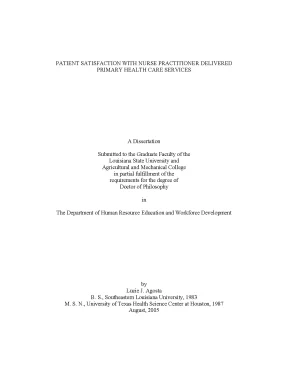
Tải xuống để đọc toàn bộPATIENT SATISFACTION WITH NURSE PRACTITIONER DELIVERED PRIMARY HEALTH CARE SERVICES A Dissertation Submitted to the Graduate Faculty of the Louisiana State University and Agricultural and Mechanical College in partial fulfillment of the requirements for the degree of Doctor of Philosophy in The Department of Human Resource Education and Workforce Development by Lucie J., Southeastern Louisiana University, 1983 M., University of Texas Health Science Center at Houston, 1987 August, 2005 ©Copyright 2005 Lucie Janelle Agosta All Rights Reserved ii Acknowledgements Special thanks to the staff of Employee Health at Woman’s Hospital for their assistance with this research study. Thanks also to the hospital employees and family members who participated as research subjects of the study. The assistance and expertise of Gay Middleton, librarian at the Woman’s Hospital Medical Library, Hilde Chenevert, Woman’s Hospital Biostatistician, Kathleen Bosch, Administrative Assistant, and Judy Nash, Printing Services is also appreciated. The input, guidance, and assistance of the members of my dissertation committee at Louisiana State University in Baton Rouge, Louisiana is sincerely appreciated, valued, and acknowledged.
Members include Krisanna Machtmes, PhD, Major Professor, Michael Burnett, PhD, Geraldine Holmes Johnson, PhD, Christine DiStefano, PhD, and Thomas Eugene Reagan, PhD. iii Table of Contents ACKNOWLEDGEMENTS…………………………….iii LIST OF TABLES…………………………………………………….vi LIST OF FIGURES…………………………………………………………….xi CHAPTER 1 INTRODUCTION……………………………………………………….1 Rationale and Justification…………………………………………………1 Problem Statement…………………………………………………………4 Research Objectives……………………………………………………….4 Significance of the Study………………………………………………….6 2 REVIEW OF LITERATURE…………………………………………….9 Advanced Practice Nursing.10 National Healthcare Challenges……………….13 Nurse Practitioner Role Evaluation………….14 Patient Satisfaction and Acceptance……….21 Patient Satisfaction Measurement and Instrumentation….32 Population and Sample…….34 Data Summary and Analysis…………………………………………….37 4 RESULTS AND DISCUSSION……………….91 5 SUMMARY, CONCLUSIONS, AND RECOMMENDATIONS….118 Purpose and Objectives………………………………………………….120 Summary of Findings……….………………121 Conclusions, Implications, and Recommendations…………….……………141 iv APPENDIX A LOUISIANA STATE UNIVERSITY INSTITUTIONAL REVIEW BOARD (IRB) FOR PROTECTION OF HUMAN SUBJECTS APPROVAL LETTER……………………………………………………150 B INFORMATION AND CONSENT SHEET……………………….……152 C NURSE PRACTITIONER SATISFACTION SURVEY INSTRUMENT……………………………………………….…159 v List of Tables 1. Age Distribution of Adult Clients Presenting for Nurse Practitioner Delivered Health Care Services…………………………………………………. Marital Status Reported by Adult Clients Presenting for Nurse Practitioner Delivered Primary Health Care Services……………………………….
Highest Level of Education Completed by Adult Clients Seeking Nurse Practitioner Delivered Primary Health Care Services………………………………. Health Insurance Type Indicated by Adult Clients Presenting for Nurse Practitioner Delivered Primary Health Care Services………………………………. Yearly Net Incomes as Reported by Adult Clients Presenting for Nurse Practitioner Delivered Primary Health Care Services……………………………. Employment Status Indicated by Adult Clients Presenting for Nurse Practitioner Provided Primary Health Care Services……………………………….
Medication Dependent Health Problems as Reported by Adult Clients Presenting for Nurse Practitioner Delivered Primary Health Care Services…………56 8. Number of Daily Prescription Medications Taken as Reported by Adult Clients Presenting for Nurse Practitioner Delivered Primary Health Care Services………. Frequency of Health Care Visits in the Past Year by Provider Type as Reported by Adult Clients Seeking Nurse Practitioner Delivered Primary Health Care Services………………………………………………………………………………58 10. Summed Squared Factor Loadings and Total Variance Explained for the Three Factor Extraction and Rotated Factor Solutions for Items Representing the Nurse Practitioner Satisfaction Survey………………………………………………64 11.
Variables and Factor Loadings for Items Representing the Nurse Practitioner Satisfaction Survey for the Rotated Three Factor Solution Using Principle Axis Factoring and Promax Rotation……………………………………………………. Factor One (Satisfaction Score) Variables, Means, and Standard Deviations for Items Representing General Satisfaction on the Nurse Practitioner Satisfaction Survey………………………………………………………………………………. Factor Two (Communication Score) Variables, Means, and Standard Deviations for Items Representing Communication Satisfaction on the Nurse Practitioner Satisfaction Survey…………………………………………………………………. Factor Three (Scheduling Score) Variables, Means, and Standard Deviations for Items Representing Scheduling Satisfaction on the Nurse Practitioner Satisfaction Survey………………………………………………………………….
Factor Correlations between the Constructs “Satisfaction,” “Communication,” and “Scheduling”………………………………………………. Names, Number of Items, Reliability, Means, Standard Deviations, Skewness, and Kurtosis of Factors Derived from the Three-Factor Solution……………. Group Sizes, Mean Patient Satisfaction Subscale Scores, and Standard Deviations by Gender for Respondents of the Nurse Practitioner Satisfaction Survey………………………………………………………………………………. Sample Sizes, Mean Patient Satisfaction Subscale Scores, and Standard Deviations by Recoded Racial Group Distributions for Nurse Practitioner Satisfaction Survey Respondents…………………………………………………….
Sample Sizes, Mean Patient Satisfaction Subscale Scores, and Standard Deviations by Recoded Age Group Distribution for Nurse Practitioner Satisfaction Survey Respondents……………………………………………………. Sample Sizes, Mean Patient Satisfaction Subscale Scores, and Standard Deviations by Marital Status Distributions for Nurse Practitioner Satisfaction Survey Respondents…………………………………………………………………. Mean Satisfaction Subscale Scores, Standard Deviations, and Sample Sizes for Highest Education Levels Reported by Nurse Practitioner Satisfaction Survey Respondents…………………………………………………………………. Mean Satisfaction Subscale Scores, Standard Deviations, and Sample Sizes for Insurance Groupings Reported by Nurse Practitioner Satisfaction Survey Respondents………………………………………………………………….
Mean Satisfaction Subscale Scores, Standard Deviations, and Group Sizes by Reported Annual Net Income Level for Respondents of the Nurse Practitioner Satisfaction Survey…………………………………………………………………. Group Sizes, Satisfaction Subscale Scores, and Standard Deviations for Reported Patient Types of Respondents of the Nurse Practitioner Satisfaction Survey………………………………………………………………………………. Analysis of Variance Illustrating Differences in Patient Satisfaction Subscale Scores between Patient Type Groups for Respondents of the Nurse Practitioner Satisfaction Survey……………………………………………………. Group Sizes, Mean Satisfaction Subscale Scores, and Standard Deviations by Employment Status for Respondents of the Nurse Practitioner Satisfaction Survey……………………………………………………………………………….
Analysis of Variance of Overall Means of General Patient Satisfaction Scores between Patient Employment Status Groups for Respondents of the Nurse Practitioner Satisfaction Survey……………………………………………………. Group Sizes, Mean Satisfaction Subscale Scores, and Standard Deviations by Subjective Report of Degree of Illness Currently Experienced for Respondents of the Nurse Practitioner Satisfaction Survey………………………………………. Analysis of Variance of Overall Means of General Patient Satisfaction Subscale Scores between Degrees of Reported Illness by Respondents of the Nurse Practitioner Satisfaction Survey……………………………………………………. Group Sizes, Mean Satisfaction Subscale Scores, and Standard Deviations by Subjective Report of Degree of Injury Currently Experienced by Nurse Practitioner Satisfaction Survey Respondents……………………………………….
Analysis of Variance of Overall Means of General Patient Satisfaction Subscale Scores between Degrees of Reported Illness by Respondents of the Nurse Practitioner Satisfaction Survey……………………………………………………. Sample Size, Pearson’s Product Moment Bivariate Correlations and Significance Levels Representing the Relationship between Each Dummy Coded Level of the Independent Variables Age, Income, Educational Level, and Gender and the Dependent Variable Patient Satisfaction Subscale Scores…………………………. Significance of the Regression Equation Employing Educational Level “Some College” in Predicting Patient Satisfaction with Nurse Practitioner Delivered Health Care…………………………………………………………………………. Coefficient Tables, Standard Errors, Standardized Coefficient Values, T Values And Significance Levels for Dummy Coded Independent Variables Retained in the Regression Equation Predicting Patient Satisfaction Subscale Scores……….
DFBETA and Standardized DFBETA Values for the Satisfaction Subscale Score Regression Equation Intercept and Educational Level Predictor Variable “Some College”……………………………………………………………. Excluded Variables, Standardized Coefficients, T Values, Significance Levels, Partial Correlations, and Tolerance Levels for the Regression Equation Predicting Patient Satisfaction Subscale Scores……………………………. Sample Size, Pearson’s Product Moment Correlations, and Significance Levels Representing the Relationship between all Dummy Coded Independent Variables with the Dependent Variable Communication Subscale Score…………. Significance of Age Group 18-25 and Masters Educational Level in Predicting Satisfaction with Communication Aspects of the Patient and Nurse Practitioner Interaction………………………………………………………105 39.
Coefficient Values, Standard Errors, Standardized Coefficient Values, T Values and Associated Significance Levels, R2 Change and Corresponding F Value Changes, and Significance Levels for Independent Variables Determined to be Statistically Significant in Predicting Satisfaction with Nurse Practitioner Communication…………………………………………………106 40. DFBETA and Standardized DFBETA Values for the Communication Subscale Score Regression Equation Intercept and Predictor Variables Age 18-25 and Masters Level Education……………………………………………………………107 41. Excluded Variables, Standardized Coefficients, T Values, Significance Levels, Partial Correlations, Tolerance Levels and Variance Inflation Factors for the Final Regression Equation Predicting Satisfaction with Communication with the Nurse Practitioner………………………………………………………………108 42. Sample Size, Pearson’s Product Moment Correlations and Significance Levels Demonstrating the Relationship between Each Dummy Coded Level of the Independent Variables Age, Income, Educational Level, and Gender with the Dependent Variable Patient Satisfaction with Scheduling…………………………112 43.
Significance of the Regression Equation Employing Age Group 18-25 in Predicting Satisfaction with Scheduling Appointments for Nurse Practitioner Health Care Visits…………………………………………………………………. Coefficient Values, Standard Errors, Standardized Coefficient Values, T Values and Significance Levels for the Dummy Coded Independent Variable Retained in the Regression Equation Predicting Scheduling Satisfaction Scores……………114 45. DFBETA and Standardized DFBETA Values for the Scheduling Score Regression Equation Intercept and Predictor Variable Age 18-25…………………115 46. Excluded Variables, Standardized Coefficients, T Values with Corresponding Significance Levels, Partial Correlations, Tolerance Levels, and Variance Inflation Factors for the Regression Equation Predicting Satisfaction with Scheduling………………………………………………………………………….115 ix List of Figures 1.
Boxplot Examination of Patient Satisfaction Scores among Nurse Practitioner Clients………………………………………………………………………………. Histogram Depicting Standardized Residuals for the Dependent Variable Satisfaction Subscale Scores…………………………………………………………93 3. Histogram Depicting Standardized Residuals for the Dependent Variable Communication Subscale Scores…………………………………………………. Histogram Depicting Standardized Residuals for the Dependent Variable Scheduling Subscale Score…………………………………………………………110 x Abstract The purpose of this study was to explore and determine the degree of client satisfaction with utilization of primary healthcare services delivered by a nurse practitioner in the Employee Health Services department of a not for profit hospital in the Southern United States.
The Nurse Practitioner Satisfaction Survey (NPSS), a 28-item Likert-type survey instrument was specifically developed for this study and administered to a sample of 300 clients. Overall high levels of patient satisfaction with nurse practitioner delivered health care services were demonstrated. The mean general satisfaction score was determined to be 86.86 / 90, with mean communication and scheduling subscale scores of 28. Factor analysis of the dataset resulted in a three-factor model that explained 70.77% of the variance.
Eighteen variables with loadings ranging from .391 loaded on factor one, general satisfaction. Six variables with loadings ranging from .435 loaded on the second factor, communication satisfaction, and four variables with loadings ranging from .748 loaded on the third factor, scheduling satisfaction. No statistically significant differences in scores on the general satisfaction subscale were noted between subjects based on gender, race, age, highest educational level completed, type of health care coverage, yearly net income levels, patient type, employment status, or degree of illness or injury. Married or cohabitating subjects, however, reported general satisfaction subscale scores that were statistically higher than those who were single and never married.
xi Multiple regression analysis of the dummy coded variables gender, age, income, and highest educational level as possible predictors of general satisfaction subscale scores revealed that subjects reporting some college attendance demonstrated scores which were –2.243 points lower than those of the other educational levels. Additionally, being a member of the 18-25 year old age group resulted in a decrease in communication subscale scores of –1.194 points, while being a member of the masters level educational group resulted in increases of 1. Further analysis revealed that scheduling satisfaction scores for subjects in the 18-25 year old age group were -.954 points lower than those reporting ages above 18-25 years. xii Chapter 1 Introduction Rationale/Justification Healthcare costs have increased exponentially in recent years for both individual healthcare consumers and employers providing health care benefits for employees.
Companies with self-insured/self funded health plans are particularly cognizant of the high cost of insurance and healthcare. Healthcare comprises approximately 1.4 trillion or 15% of the Gross Domestic Product (Center for Medicare and Medicaid Services, 2005). In 2002 businesses paid an average of $6300 per employee, over 42.3% of payroll expenses for medical benefits (United States Chamber of Commerce, 2004). Employee illness is very expensive for employers, in terms of both cost of healthcare services as well as time and lost workplace productivity resulting from employee job absences for infirmity and healthcare provider visits.
Both employers and employees benefit from the provision of accessible, on site, comprehensive healthcare in the most cost effective and efficient methods possible. Extensive documentation indicates that for most healthcare situations, prevention and early access to care is more cost effective. Therefore, there has been rapid growth in programs placing emphasis on wellness, prevention, and early access to care (United States Preventive Services Task Force, 2003). The establishment of on-site health care services is an issue that has been of increased interest in the health and wellness arena, especially among self-insured organizations.
The expansion of employer provided healthcare services to family 1 members of employees extends the promotion of employee wellness and health care participation beyond the workplace and into the family arena, thus enhancing provided employment benefits for both employees and employers. Unfortunately, the cost of maintaining a full time physician is prohibitive for most organizations (Lugo, 1997). An alternative is the use of a nurse practitioner to provide on site health care services within an organization.
Nội dung được bảo vệ bản quyền — Tải xuống đầy đủ
Trích dẫn luận án này
Lucie Janelle Agosta (2005). Hài lòng bệnh nhân với y tá thực hành trong chăm sóc ban đầu [Luận án tiến sĩ, Louisiana State University and Agricultural and Mechanical College]. LuanAn.net. https://luanan.net/khoa-hoc-suc-khoe/dieu-duong/hai-long-benh-nhan-y-ta-thuc-hanh-cham-soc-suc-khoe-ban-dau
Câu hỏi thường gặp
Luận án "Hài lòng bệnh nhân với y tá thực hành trong chăm sóc ban đầu" nghiên cứu về vấn đề gì?
Luận án TS y học đánh giá sự hài lòng bệnh nhân với dịch vụ chăm sóc sức khỏe ban đầu do điều dưỡng chuyên khoa cung cấp. Phân tích yếu tố ảnh hưởng.
Luận án "Hài lòng bệnh nhân với y tá thực hành trong chăm sóc ban đầu" được bảo vệ tại trường nào?
Luận án này được bảo vệ tại Louisiana State University and Agricultural and Mechanical College. Năm bảo vệ: 2005.
Luận án "Hài lòng bệnh nhân với y tá thực hành trong chăm sóc ban đầu" thuộc chuyên ngành gì?
Luận án "Hài lòng bệnh nhân với y tá thực hành trong chăm sóc ban đầu" thuộc chuyên ngành Human Resource Education and Workforce Development. Danh mục: Điều Dưỡng.
Luận án "Hài lòng bệnh nhân với y tá thực hành trong chăm sóc ban đầu" có bao nhiêu trang?
Luận án "Hài lòng bệnh nhân với y tá thực hành trong chăm sóc ban đầu" có 172 trang. Bạn có thể xem trước một phần tài liệu ngay trên trang web trước khi tải về.
Cách tải luận án "Hài lòng bệnh nhân với y tá thực hành trong chăm sóc ban đầu" về máy như thế nào?
Để tải luận án về máy, bạn nhấn nút "Tải xuống ngay" trên trang này, sau đó hoàn tất thanh toán phí lưu trữ. File sẽ được tải xuống ngay sau khi thanh toán thành công. Hỗ trợ qua Zalo: 0559 297 239.