Dissertation national symbols and social change
Luận văn khám phá biểu tượng quốc gia và tác động của chúng đến biến đổi xã hội, phân tích vai trò trong định hình bản sắc và thúc đẩy thay đổi.
Luan An
Luận án tiến sĩ
Năm xuất bản
Số trang
126
Thời gian đọc
19 phút
Lượt xem
0
Lượt tải
0
Phí lưu trữ
40 Point
Tổng quan nhanh
- Chủ đề:
- 1. Biểu tượng Quốc gia & Chuyển đổi Xã hội tại Ba Lan
- Số trang:
- 126 trang
- Trường:
- University of Oklahoma
- Chuyên ngành:
- Communication
- Tác giả:
- Magdalena Igiel
- Năm:
- 2014
Tóm tắt nội dung luận án
I. Biểu tượng Quốc gia Chuyển đổi Xã hội tại Ba Lan
Nghiên cứu này tập trung vào các biểu tượng quốc gia. Nó phân tích vai trò giao tiếp của chúng. Mục tiêu là làm rõ sự thay đổi xã hội. Các phong trào xã hội và các cuộc cách mạng là bối cảnh chính. Biểu tượng có vai trò then chốt. Chúng giúp gắn kết con người và các nhóm. Chúng tạo ra một ý thức tập thể. Nghiên cứu này sử dụng Ba Lan làm trường hợp điển hình. Cách tiếp cận này giúp đặt các biểu tượng vào cộng đồng quốc gia cụ thể. Nó cung cấp các ví dụ rõ ràng. Các biểu tượng quốc gia của Ba Lan được chọn bao gồm thập giá, Đức Mẹ Đen Częstochowa, và cảnh quan tranh chấp của Sân vận động Quốc gia ở Warsaw. Chúng phản ánh collective memory. Chúng thể hiện cultural heritage phong phú. Sự tiến hóa của chúng minh họa political transition. Nghiên cứu này khám phá cách các biểu tượng này định hình national identity và thúc đẩy social change.
1.1. Giới thiệu vai trò của biểu tượng
Biểu tượng hiện diện khắp nơi trong giao tiếp của con người. Chúng truyền tải ý nghĩa qua ngôn ngữ, giao tiếp phi ngôn ngữ và các tạo tác. Nhiều ngành học nghiên cứu biểu tượng. Các ngành đó bao gồm nhân học văn hóa, ngôn ngữ học, văn học và nghiên cứu truyền thông. Những nghiên cứu này đã định nghĩa nhiều lý thuyết đáng chú ý về biểu tượng. Trong các phong trào xã hội và cách mạng, biểu tượng có vai trò quan trọng. Chúng giúp gắn kết mọi người. Chúng cho phép họ tập trung. Chúng hình thành một collective consciousness mạnh mẽ. Nghiên cứu này khám phá cách các biểu tượng này kiến tạo sự thống nhất. Chúng thúc đẩy hành động tập thể. Chúng tác động đến quá trình social change.
1.2. Bối cảnh lịch sử và văn hóa Ba Lan
Ba Lan được chọn làm trường hợp nghiên cứu. Lịch sử của Ba Lan đầy rẫy các biến động xã hội. Các cuộc cách mạng và phong trào đã định hình đất nước này. Bản sắc dân tộc của Ba Lan rất đặc biệt. Nó gắn liền với các cuộc đấu tranh kéo dài. Di sản văn hóa phong phú là trung tâm. Các biểu tượng quốc gia đã đóng vai trò quan trọng. Chúng định hình patriotism và nationalism. Nghiên cứu này phân tích cách các biểu tượng này hoạt động. Chúng phản ánh và tác động đến social change. Điều này cung cấp cái nhìn sâu sắc. Nó giúp hiểu được sự phức tạp của nation-building trong một bối cảnh văn hóa và chính trị độc đáo.
II. Khung Lý thuyết Semiotics Kích thước Biểu tượng
Để phân tích các biểu tượng quốc gia, một khung lý thuyết là cần thiết. Nghiên cứu này sử dụng lý thuyết của Kramer. Đó là lý thuyết tích lũy và phân ly kích thước. Phương pháp luận chính là phân tích ký hiệu học. Ký hiệu học khám phá cách ý nghĩa được tạo ra. Nó phân tích cách các dấu hiệu và biểu tượng hoạt động trong giao tiếp. Lý thuyết của Kramer cung cấp một lăng kính độc đáo. Nó giúp hiểu sự phát triển ý nghĩa của biểu tượng. Nó cũng giải thích cách ý nghĩa có thể bị tách rời khỏi biểu tượng. Khung này giúp giải mã các biểu tượng quốc gia Ba Lan. Nó làm rõ vai trò của chúng trong political transition. Sự hiểu biết này là cần thiết cho quá trình nation-building. Nó cũng làm sáng tỏ cultural change.
2.1. Phân tích ký hiệu học
Ký hiệu học là nghiên cứu về dấu hiệu và biểu tượng. Nó giải thích cách chúng tạo ra và truyền tải ý nghĩa. Trong nghiên cứu này, phân tích ký hiệu học là phương pháp chính. Nó được áp dụng để giải mã các biểu tượng của Ba Lan. Các biểu tượng này bao gồm thập giá, Đức Mẹ Đen Częstochowa, và Sân vận động Quốc gia. Phân tích này tiết lộ các lớp ý nghĩa. Nó cho thấy cách các biểu tượng được diễn giải. Nó làm rõ cách chúng được sử dụng. Chúng ảnh hưởng đến nhận thức tập thể. Chúng định hình national identity và collective memory. Ký hiệu học cung cấp công cụ để hiểu political symbolism.
2.2. Lý thuyết Tích lũy Kích thước
Lý thuyết Tích lũy và Phân ly Kích thước của Kramer là khung phân tích trung tâm. Lý thuyết này giải thích sự phát triển của ý nghĩa biểu tượng. Nó mô tả cách các kích thước ý nghĩa tích lũy. Chúng gắn liền với một biểu tượng theo thời gian. Ngược lại, ý nghĩa cũng có thể phân ly. Điều này xảy ra khi bối cảnh lịch sử hoặc xã hội thay đổi. Lý thuyết này đặc biệt hữu ích. Nó giúp hiểu các biểu tượng quốc gia Ba Lan. Nó làm rõ cách chúng duy trì sự liên quan. Nó giải thích cách chúng thay đổi ý nghĩa trong các giai đoạn biến động xã hội. Nó hỗ trợ phân tích cultural change và political transition.
III. Di sản Văn hóa Biểu tượng Tôn giáo Bản Sắc
Tôn giáo đóng vai trò trung tâm. Nó định hình bản sắc dân tộc của Ba Lan. Nhà thờ Công giáo là một thế lực mạnh mẽ. Nó duy trì di sản văn hóa. Nhiều biểu tượng tôn giáo đã trở thành biểu tượng quốc gia. Chúng phản ánh patriotism sâu sắc. Chúng gắn kết cộng đồng. Chúng thúc đẩy tinh thần đoàn kết trong thời kỳ khó khăn. Thập giá và Đức Mẹ Đen Częstochowa là những ví dụ điển hình. Chúng không chỉ là đối tượng tín ngưỡng. Chúng còn là biểu tượng của sự kháng cự. Chúng đại diện cho hy vọng. Chúng là một phần không thể thiếu của collective memory. Sự giao thoa giữa tôn giáo và quốc gia là một yếu tố then chốt trong nation-building của Ba Lan.
3.1. Thập giá Tôn giáo và Quốc gia
Thập giá là một biểu tượng mạnh mẽ ở Ba Lan. Nó đại diện cho đức tin Công giáo kiên định. Nó cũng là một biểu tượng của quốc gia. Thập giá được sử dụng rộng rãi trong các phong trào xã hội. Nó liên kết tôn giáo với các cuộc đấu tranh dân tộc. Sự hiện diện của thập giá thể hiện sự đoàn kết. Nó chống lại áp bức chính trị. Nó là một dấu hiệu của cultural heritage lâu đời. Nó củng cố national identity. Việc xuất hiện của thập giá trong không gian công cộng biểu thị political symbolism mạnh mẽ. Nó đã huy động hàng triệu người trong các sự kiện lịch sử quan trọng.
3.2. Đức Mẹ Đen Częstochowa Di sản Văn hóa
Đức Mẹ Đen Częstochowa là một biểu tượng quan trọng. Bà là biểu tượng của quốc gia và tôn giáo. Hình tượng này là trung tâm của lòng yêu nước Ba Lan. Bà tượng trưng cho sự bảo vệ và hy vọng. Di sản văn hóa này được trân trọng qua nhiều thế hệ. Các cuộc rước kiệu và hành hương củng cố vai trò của bà. Bà đại diện cho collective memory của một dân tộc kiên cường. Bà là một nguồn sức mạnh trong thời kỳ khó khăn. Biểu tượng này thúc đẩy national identity mạnh mẽ. Nó góp phần vào sự ổn định trong bối cảnh social change nhanh chóng.
IV. Biểu tượng Chính trị Kiến tạo Quốc gia Hậu Cộng sản
Ba Lan đã trải qua political transition đáng kể. Sự sụp đổ của chủ nghĩa cộng sản là một bước ngoặt. Thời kỳ này chứng kiến sự định hình lại các biểu tượng. Các biểu tượng cũ được diễn giải lại theo cách mới. Các biểu tượng mới cũng xuất hiện. Quá trình nation-building rất phức tạp. Nó liên quan đến việc đàm phán ý nghĩa. Điều này áp dụng cho cả các không gian công cộng. Sân vận động Quốc gia ở Warsaw là một ví dụ nổi bật. Nó trở thành một biểu tượng tranh chấp. Nó phản ánh những căng thẳng xã hội. Nó thể hiện những thay đổi trong collective memory. Biểu tượng này minh họa sự năng động của political symbolism và cultural change trong một xã hội hậu cộng sản.
4.1. Chủ nghĩa dân tộc và chuyển đổi chính trị
Chủ nghĩa dân tộc đóng vai trò trung tâm. Nó thúc đẩy các phong trào xã hội lớn. Nó cũng là động lực cho political transition. Các biểu tượng quốc gia được huy động. Chúng hỗ trợ cho các ý thức hệ khác nhau. Sự thay đổi trong cấu trúc quyền lực làm thay đổi cách biểu tượng được cảm nhận. Điều này ảnh hưởng đến national identity. Nó định hình lại patriotism trong lòng công chúng. Quá trình này rất năng động. Nó liên tục diễn ra trong xã hội Ba Lan. Sự hiểu biết về chủ nghĩa dân tộc giúp giải thích nhiều hiện tượng xã hội.
4.2. Sân vận động Quốc gia Biểu tượng tranh chấp
Sân vận động Quốc gia ở Warsaw là một biểu tượng phức tạp. Nó đại diện cho quá khứ và hiện tại của Ba Lan. Ban đầu là Sân vận động kỷ niệm 10 năm của thời kỳ cộng sản. Sau đó, nó trở thành một khu chợ trời khổng lồ. Cuối cùng, nó được xây dựng lại thành Sân vận động Quốc gia hiện đại. Cảnh quan này là nơi tranh chấp về ý nghĩa. Nó phản ánh những căng thẳng xã hội đang diễn ra. Nó cho thấy những cuộc đấu tranh về collective memory. Nó tượng trưng cho cultural change. Nó là một ví dụ rõ ràng về political symbolism. Biểu tượng này thể hiện sự thay đổi trong national identity của quốc gia.
V. Tác động của Biểu tượng đến Phong trào Xã hội
Biểu tượng có sức mạnh to lớn. Chúng tác động mạnh mẽ đến các phong trào xã hội. Chúng thúc đẩy social change. Khả năng liên kết mọi người là cốt lõi của chúng. Chúng tạo ra một ý thức chung. Nghiên cứu này cung cấp các hướng dẫn. Hướng dẫn này giúp nhận diện các biểu tượng quốc gia. Nó giúp hiểu cách chúng hoạt động. Nó làm rõ tác động của chúng đến xã hội. Sự hiểu biết này quan trọng. Nó cần thiết cho các nhà lãnh đạo và nhà hoạt động. Nó cũng cần thiết cho công chúng. Nó làm sâu sắc thêm hiểu biết về national identity và cultural heritage. Nó cũng cung cấp một cái nhìn tổng quan về political symbolism.
5.1. Liên kết cộng đồng và Ý thức tập thể
Biểu tượng đóng vai trò then chốt. Chúng liên kết các cá nhân và nhóm lại với nhau. Chúng giúp định hướng nỗ lực chung. Chúng tạo ra một ý thức tập thể mạnh mẽ. Ý thức này là nền tảng cho hành động tập thể. Nó là động lực chính cho các phong trào xã hội. Nó thúc đẩy sự thay đổi xã hội sâu rộng. Sự hiểu biết về cơ chế này là rất quan trọng. Nó cho thấy sức mạnh của political symbolism. Nó cũng làm rõ cách collective memory được hình thành và duy trì.
5.2. Nhận diện và Hiểu Biểu tượng Quốc gia
Nghiên cứu này cung cấp cái nhìn sâu sắc. Nó giúp nhận diện các biểu tượng quốc gia. Nó giải thích cách chúng tác động đến xã hội. Các biểu tượng này không tĩnh. Chúng thay đổi theo thời gian và bối cảnh. Bối cảnh lịch sử và văn hóa ảnh hưởng đến ý nghĩa của chúng. Việc hiểu các biến đổi này là cần thiết. Nó giúp phân tích cultural change. Nó hỗ trợ hiểu quá trình nation-building. Khả năng này hỗ trợ cho việc phân tích các sự kiện trong tương lai. Nó cũng giúp dự đoán tác động của các biểu tượng mới nổi.
Tải xuống file đầy đủ để xem toàn bộ nội dung
Tải đầy đủ (126 trang)Trích đoạn nội dung luận án
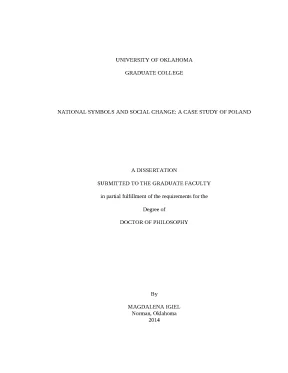
Tải xuống để đọc toàn bộUNIVERSITY OF OKLAHOMA GRADUATE COLLEGE NATIONAL SYMBOLS AND SOCIAL CHANGE: A CASE STUDY OF POLAND A DISSERTATION SUBMITTED TO THE GRADUATE FACULTY in partial fulfillment of the requirements for the Degree of DOCTOR OF PHILOSOPHY By MAGDALENA IGIEL Norman, Oklahoma 2014 NATIONAL SYMBOLS AND SOCIAL CHANGE: A CASE STUDY OF POLAND A DISSERTATION APPROVED FOR THE DEPARTMENT OF COMMUNICATION BY ______________________________ Dr. Eric Kramer, Chair ______________________________ Dr. Ioana Cionea ______________________________ Dr. Lisa Foster ______________________________ Dr.
Patrick Meirick ______________________________ Dr. Ralph Beliveau © Copyright by MAGDALENA IGIEL 2014 All Rights Reserved. To my mother, Alicja Igiel ACKNOWLEDGMENTS In this long journey of mine, I had some good company. I would like to acknowledge and thank my committee members.
Special thanks go to my advisor, Dr. Eric Kramer, who has been accompanying me throughout my entire graduate school career. I am thankful for the many conversations we had over the years, some of which have inspired parts of this dissertation. Without family and friends none of this would have happened, so I want to thank everyone who helped along the way.
The love and support of my parents and my sister Agnieszka needs special mention. You mean the world to me. I am also thankful for rediscovering the practice of yoga during my time in Norman, which has been keeping me sane and has brought lasting friendships along the way. Now that this long chapter is over, I am excited to see what the next one will bring.
iv TABLE OF CONTENTS List of Figures…….1 Selecting Poland as a Case Study……………………………………………….2 Semiotics: An Overview.12 Dimensional Accrual and Dissociation Theory……………………………………….29 Nationalism: An Overview …………………………………………………………….33 Theories and Theorists of Nationalism…………………………………………37 Symbolic Representations of Nationalism and Communism………………….50 The Polish Revolution………………………………………………………………….55 National Symbols………………………………………………………………………57 Methodology……………………………………………………………………………61 Discussion………………………………………………………………………………65 The Catholic Church and the Nation under the Cross………………………….65 The Black Madonna of Częstochowa………………………………………….87 The Contested Landscape of the National Stadium…………………….112 v LIST OF FIGURES 1. Mass celebrated outside of gravel pit in September 1998. Photo: PAP/Roman Koszowski……………………………………………………………………. Papal cross in Auschwitz.
Memorial service after plane crash in Smolensk. Photo: Grzegorz Jakublowski/European Pressphoto Agency……………………………………………. Cross and memorabilia in front of Presidential Palace in Warsaw. Photo: Tomasz Gzell/European Pressphoto Agency………………………………………………….
Our Lady of Częstochowa, Jasna Góra, Poland. Icon dating from sixth-ninth century A. Our Lady of Częstochowa, Jasna Góra, Poland. Icon with crown and cover inside sanctuary.
Photo: EAST NEWS……………………………………………………. Procession for the Black Madonna of Częstochowa in the southern town of Poronin, Poland, 1991. Copies of sacred icons travel across the country visiting different locations. Photo: Małgorzata Oleszkiewicz-Peralba………………………………….100 8: Aerial view of the 10th Anniversary Stadium in the panorama of Warsaw.
Photo: Marek Ostrowski/semper. Photo: Wojciech Traczyk…………………105 10. National Stadium in Warsaw. Photo: Krystian Trela…………………………….108 vi ABSTRACT This study focuses on national symbols and the communicative role they play in social change as it manifests itself in social movements and revolutions.
Symbols in social movements and revolutions play a crucial role in binding people and groups together, allowing them to focus and form a collective consciousness. In order to contextualize such symbols within a specific national community and provide examples, the author chose her native Poland as a case study. The Polish national symbols included in this study are the cross, the Black Madonna of Częstochowa, and the contested landscape of the National Stadium in Warsaw. The framework used in this study to analyze the selected national symbols is Kramer’s theory of dimensional accrual of disassociation and the method is a semiotic analysis.
Based on the discussion of national symbols in Poland, the study offers guidelines for how to recognize what national symbols are and to understand how they can affect social change. vii Introduction Symbols are ubiquitous in human communication since they are communication. Whether it is the utterance of words and usage of language, nonverbal communication, or the presence of artifacts, we witness the conveying of meaning through symbolic expressions all the time. Symbols fall into different categories and are studied by different disciplines, such as cultural anthropology, linguistics, literature, and media studies, to name a few, which have all informed and defined some of the more notable theories of symbols and the study thereof.
Symbols in social movements and revolutions play a crucial role in binding people and groups together, allowing them to focus and form a collective consciousness. Symbols bind people at an emotional level by evoking passion; they go to the roots of identity. Another attribute of symbols is their potential resilience, especially when they emerge from the underground, progressing to victorious and potentially monumental symbols over time. Some monumental symbols are associated with nations, thus becoming national symbols; some are remnants of ancient civilizations that have not necessarily morphed into nations.
The use of symbolism has played a part in mobilizing forces of social movements on an international scale, but this study will mainly focus on symbols that have a national character, providing examples of the communicative nature of national symbols. Although there is some literature that mentions national symbols, primarily nationalism literature, only a few studies have investigated the nature and influence of national symbols (Geisler, 2005; McCrone & McPherson, 2009; Mock, Elgenius, 2011; Mock, 2012). There are a variety of studies that revolve around different kinds of symbols and symbolism, but 1 “national symbolism is set apart from other types of symbolism by its reference to the nation, its claims to a specific history, sovereignty and distinctiveness” (Elgenius, 2011, p. Also, the studies referenced above had different goals than the one proposed here.
Two of the four studies referenced above discuss the role national symbols have in the construction of national identity (Geisler, 2005; Mock, 2012), one discusses national symbols as constructing and mobilizing national identity (McCrone & McPherson, 2009), and another one focuses on nation building qualities of national symbols (Elgenius, 2011). Studies of national symbols usually focus on national flags, national days, and national anthems. This study focuses on symbols that are not directly tied to the nation as a state, but more to the nation as an ethno-cultural community. In order to contextualize such symbols within a specific national community and provide examples of their communicative role, the author chose her native Poland as a case study.
The reason for choosing ethno-cultural aspects of nationhood in this case study is justified by Poland’s continuous existence as a nation even when its geopolitical existence as nation-state was disrupted several times. Selecting Poland as a Case Study The rationale for choosing Poland as a case study is its culture of resistance throughout history, a mechanism that seems to have been holding this European country together in a long string of events that aimed for the opposite. Poland has been subjected to three partitions, with the longest one taking it off the political map for 123 years, as well as attacks and occupation during the two World Wars which culminated in an oppressive rule by the communist regime. That is not to say that Poland has always been in the victim’s role, characterized as a “crucified nation” (Davies, 2008, p.
2 11), an image that is also used at times by some Poles who do not accept Poland’s role in the massacres in Jedwabne during World War II, for instance (Polonsky & Michlic, 2004). However, Poland lends itself as a case study to this particular research on national symbols and social change since it is a country and a culture that despite its differences at times, seems to have a curious sense of patriotic solidarity that allowed it to fight its oppressors and recover from its wounds. That sense of patriotism, national consciousness, pride, and solidarity is at the core of Poland’s culture and identity. Poland’s triple disappearance and return to the political map is speaking to its cultural resistance and memory as a nation without a state throughout history, as does the peaceful Solidarity movement to the nature of revolutions.
Zubrzycki (2006) notes the lack of studies of Polish nationalism in sociology, which is of importance here as the author of this study focuses on social processes and consequences as well. Polish nationalism, despite its richness and complexity, has received relatively little attention in the field [of sociology]. Few studies are devoted to the Polish case, and even fewer focus on the post-Communist period, despite the massive geopolitical import of this transition…the great majority of works on Polish nationalism focus on political philosophy and Polish nationalism’s ideological roots…To date, there exists no book-length study of nationalism and religion in Poland, or of nationalism in post-Communist Poland. 28-29) Furthermore, what makes Poland interesting as a case study for nationalism has been aptly observed by Ash (2002), when referring to the “Partitions” in 1772, 1793 and 1795: “Poland disappeared from the map of Europe as an independent state for the next one hundred and twenty-three years.
But it refused to disappear as a nation” (p. Poland’s continuous fight for independence throughout history is quite remarkable, leading to “one of the basic components of Polish culture and helped to create a national mythology that glorified struggle, self-sacrifice, and death in the cause of the 3 homeland” (Paczkowski, 2003, p. The national sentiment that did not erupt in violence during the last social movement was significant in leading up to the demise of communism. Poland has been often times described as an anomaly among the former Soviet satellite states.
The Polish situation had its own peculiar features. In the 1970s the Polish opposition shared with other Eastern European oppositional movements a common disability—it could not express itself through open political channels (political parties, clubs, or trade unions). Yet the intensity of social activism in Poland, including underground political debates, clandestine publications, and independent ceremonies and demonstrations far surpassed anything created in other Eastern European countries. Having been unable to practice politics, Polish oppositionists often chose to express themselves through the “cultural” medium of symbolic public actions.
6) In addition to the historical and socio-political factors that demonstrate the unique nature of this case study, the author of this study is a native of Poland who speaks the language, thus having access to materials that have not been translated from Polish. The author has also been living in Poland during the latter part of Solidarity’s activism (1980-1989) as well as visited her native country following the events of 1989. Based on this case study, the author discusses directions and implications for the study of national symbols and social change that can be applied to other contexts. To understand the significance of national symbols in any given nation, the identity of that nation has to be examined.
The identity of a collective, such as that of a nation, is shaped by symbols, sometimes referred to as cultural artifacts, which fundamentally contribute to the narratives of a nation’s memory. The word monument has its origin in the Latin form of monere, which means “to remind” or “to warn.” Hence the resilience of monumental symbols, amongst others, the meaning of which is stored in the memory of a collective. This idea of a symbol system, and the meaning of 4 those symbols being stored in memory have been interpreted in various ways. The interpretive lens used in this study to discern some of the logic behind the patterns of national symbolism and to unveil the structures that contribute to the occurrence and meaning thereof is the field of semiotics, which is discussed in more detail in the next section as well as in the methodology section.
Semiotics: An Overview This study is a semiotic analysis conjoined with a hermeneutics of national symbols in Poland. This section serves as an overview of why semiotics is a fitting methodology for the present study, and to introduce several semiotic concepts that are pertinent to this study. Although semiotics has been described as mostly theoretical, semioticians have tried to establish and designate codes and conventions that would classify and organize signs in a more systematic manner.
Nội dung được bảo vệ bản quyền — Tải xuống đầy đủ
Trích dẫn luận án này
Magdalena Igiel (2014). Dissertation national symbols and social change [Luận án tiến sĩ, University of Oklahoma]. LuanAn.net. https://luanan.net/nghien-cuu-van-hoa/dissertation-national-symbols-and-social-change
Câu hỏi thường gặp
Luận án "Dissertation national symbols and social change" nghiên cứu về vấn đề gì?
Luận văn khám phá biểu tượng quốc gia và tác động của chúng đến biến đổi xã hội, phân tích vai trò trong định hình bản sắc và thúc đẩy thay đổi.
Luận án "Dissertation national symbols and social change" được bảo vệ tại trường nào?
Luận án này được bảo vệ tại University of Oklahoma. Năm bảo vệ: 2014.
Luận án "Dissertation national symbols and social change" thuộc chuyên ngành gì?
Luận án "Dissertation national symbols and social change" thuộc chuyên ngành Communication. Danh mục: Nghiên Cứu Văn Hóa.
Luận án "Dissertation national symbols and social change" có bao nhiêu trang?
Luận án "Dissertation national symbols and social change" có 126 trang. Bạn có thể xem trước một phần tài liệu ngay trên trang web trước khi tải về.
Cách tải luận án "Dissertation national symbols and social change" về máy như thế nào?
Để tải luận án về máy, bạn nhấn nút "Tải xuống ngay" trên trang này, sau đó hoàn tất thanh toán phí lưu trữ. File sẽ được tải xuống ngay sau khi thanh toán thành công. Hỗ trợ qua Zalo: 0559 297 239.