Luận án tiến sĩ: Enhanced UML Model Checking - George Mason University
Luận án tiến sĩ nghiên cứu Enhanced UML Model Checking cho phần mềm kinh doanh. Đề xuất phương pháp mô hình hóa cải tiến, nâng cao chất lượng thiết kế và xác minh.
Information Technology
Luan An
Luận án
Năm xuất bản
Số trang
258
Thời gian đọc
39 phút
Lượt xem
0
Lượt tải
0
Phí lưu trữ
50 Point
Tổng quan nhanh
- Chủ đề:
- 1. UML Model Checking cho Ứng dụng Phần mềm Kinh doanh
- Số trang:
- 258 trang
- Trường:
- George Mason University
- Chuyên ngành:
- Information Technology
- Tác giả:
- John C. Zubeck
- Năm:
- 2006
Tóm tắt nội dung luận án
I. UML Model Checking cho Ứng dụng Phần mềm Kinh doanh
UML Model Checking đại diện cho phương pháp tiên tiến trong việc xác minh tính đúng đắn của thiết kế phần mềm. Công nghệ này kết hợp sức mạnh của Unified Modeling Language với các kỹ thuật formal verification. Mục tiêu chính là phát hiện lỗi thiết kế sớm trong chu trình phát triển phần mềm. Đối với ứng dụng kinh doanh, việc này đặc biệt quan trọng vì tính phức tạp của business process modeling. UML verification giúp đảm bảo rằng các mô hình thiết kế phản ánh chính xác yêu cầu nghiệp vụ. Phương pháp này sử dụng temporal logic và OCL constraints để kiểm tra tính nhất quán. Model validation trở thành bước không thể thiếu trước khi triển khai code. Các sơ đồ như state machine diagram, activity diagram và sequence diagram được kiểm tra tự động. Kết quả là giảm thiểu chi phí sửa lỗi và tăng chất lượng phần mềm.
1.1. Tầm quan trọng của UML trong phát triển phần mềm
Phát triển phần mềm gặp khó khăn khi thiếu UML modeling. Các dự án không có blueprint rõ ràng thường dẫn đến sự hiểu lầm giữa các thành viên nhóm. UML cung cấp ngôn ngữ trực quan chung cho developers, business analysts và stakeholders. Sơ đồ UML trở thành công cụ giao tiếp hiệu quả thay thế cho tài liệu dài dòng. Việc thiếu mô hình chuẩn hóa tạo ra rủi ro cao trong quá trình implementation.
1.2. UML diagrams như bản thiết kế thảo luận
UML diagrams đóng vai trò như blueprint để thảo luận giữa các bên liên quan. Mỗi loại diagram phục vụ mục đích cụ thể trong việc mô tả hệ thống. Class diagrams thể hiện cấu trúc tĩnh của các đối tượng và mối quan hệ. Sequence diagrams minh họa tương tác theo thời gian giữa các components. Activity diagrams mô tả luồng công việc và business processes. Việc sử dụng các diagrams này giúp team alignment và giảm thiểu miscommunication.
1.3. Mức độ trừu tượng phù hợp cho business domain
UML checking cho business domain yêu cầu mức độ abstraction phù hợp. Quá chi tiết sẽ làm mất tính linh hoạt và khó bảo trì. Quá trừu tượng lại không đủ thông tin để implementation chính xác. Business software applications cần cân bằng giữa business logic và technical details. Model validation phải kiểm tra cả business rules lẫn technical constraints. OCL constraints giúp định nghĩa các điều kiện nghiệp vụ một cách chính xác.
II. Formal Methods trong UML Verification Process
Formal methods mang lại độ chính xác toán học cho UML verification. Các phương pháp này sử dụng logic hình thức để chứng minh tính đúng đắn của mô hình. Temporal logic cho phép biểu diễn các thuộc tính về thời gian và trạng thái. Model checking tự động kiểm tra xem mô hình có thỏa mãn specifications hay không. Đối với business software, formal verification phát hiện deadlocks, race conditions và inconsistencies. State machine diagrams được phân tích để đảm bảo tất cả trạng thái đều reachable. Activity diagrams được kiểm tra về tính completeness và correctness của business workflows. OCL constraints được validate để đảm bảo business rules được thực thi đúng. Phương pháp này giúp phát hiện lỗi mà testing thông thường có thể bỏ sót. Kết quả là hệ thống đáng tin cậy hơn và ít lỗi runtime.
2.1. Temporal logic trong model checking
Temporal logic cung cấp framework để mô tả các thuộc tính phụ thuộc thời gian. Linear Temporal Logic (LTL) và Computation Tree Logic (CTL) là hai dạng phổ biến. LTL mô tả các thuộc tính trên đường đi tuyến tính qua các trạng thái. CTL cho phép mô tả các thuộc tính trên cây tính toán với nhiều nhánh. Trong business applications, temporal logic kiểm tra các properties như safety và liveness. Safety properties đảm bảo không có điều xấu xảy ra. Liveness properties đảm bảo điều tốt cuối cùng sẽ xảy ra.
2.2. OCL constraints cho business rules
Object Constraint Language (OCL) bổ sung cho UML diagrams bằng các ràng buộc chính xác. OCL định nghĩa invariants, preconditions và postconditions cho operations. Business rules phức tạp được biểu diễn một cách không nhập nhằng. OCL expressions được evaluate tự động trong quá trình model validation. Điều này đảm bảo business logic được implement đúng từ giai đoạn thiết kế. OCL giúp bridge gap giữa business requirements và technical implementation.
2.3. State machine verification techniques
State machine diagrams mô tả behavior của objects qua các states và transitions. Verification techniques kiểm tra reachability của tất cả states trong diagram. Deadlock detection xác định các states không có outgoing transitions hợp lệ. Liveness analysis đảm bảo hệ thống có thể đạt được desired states. Completeness checking xác nhận tất cả events được xử lý trong mọi state. Formal methods tự động hóa việc kiểm tra các properties này trên large state spaces.
III. Business Process Modeling với BPMN và UML
Business Process Modeling Notation (BPMN) và UML activity diagrams cùng phục vụ business process modeling. BPMN được thiết kế đặc biệt cho business analysts với notation dễ hiểu. UML activity diagrams cung cấp cách tiếp cận technical hơn cho software developers. Cả hai đều mô tả workflows, decision points và parallel processes. Model validation đảm bảo business processes không có logical errors. Sequence diagrams bổ sung bằng cách hiển thị interactions giữa các participants. Việc kết hợp BPMN và UML tạo ra comprehensive view của business operations. Model checking phát hiện bottlenecks, redundant steps và missing paths trong processes. OCL constraints enforce business rules tại các decision points. Formal verification đảm bảo processes tuân thủ compliance requirements. Integration giữa process models và system design tăng traceability.
3.1. BPMN vs UML activity diagrams
BPMN focuses on business-level process visualization với symbols quen thuộc. UML activity diagrams integrate tốt hơn với các UML diagrams khác trong system design. BPMN hỗ trợ nhiều loại events, gateways và artifacts cho business modeling. UML activity diagrams mạnh trong việc mô tả concurrent behaviors và exception handling. Lựa chọn giữa hai notation phụ thuộc vào audience và mục đích sử dụng. Nhiều tools hiện nay hỗ trợ cả hai để maximize flexibility.
3.2. Sequence diagrams cho business interactions
Sequence diagrams visualize interactions giữa actors và system components theo timeline. Mỗi message exchange được hiển thị theo thứ tự chronological. Business scenarios được mô tả qua các interaction sequences cụ thể. Lifelines represent các participants trong interaction. Activation boxes show khi nào object đang active trong processing. Combined fragments mô tả loops, alternatives và parallel executions. Model validation kiểm tra message sequences có consistent với state machines không.
3.3. Workflow validation techniques
Workflow validation đảm bảo business processes executable và error-free. Completeness checking xác nhận tất cả paths từ start đến end states. Soundness verification kiểm tra không có deadlocks hoặc livelocks. Resource allocation analysis đảm bảo resources available khi cần. Compliance checking validates processes tuân thủ regulations và policies. Automated model checking tools phát hiện violations sớm trong design phase.
IV. Model Validation Strategies cho Software Quality
Model validation là process đảm bảo UML models chính xác và complete. Strategies bao gồm syntax checking, semantic validation và consistency verification. Syntax checking đảm bảo diagrams tuân thủ UML notation rules. Semantic validation kiểm tra models có ý nghĩa và không contradictory. Consistency verification đảm bảo các diagrams khác nhau không conflict. Formal methods tự động hóa nhiều aspects của validation process. Model-based testing generates test cases trực tiếp từ UML models. Traceability matrices link requirements với design elements trong models. Peer reviews và walkthroughs bổ sung cho automated validation. Tool support như model checkers và validators tăng efficiency. Early validation giảm cost of fixing defects sau trong development cycle. Comprehensive validation strategy cải thiện overall software quality significantly.
4.1. Syntax và semantic validation
Syntax validation kiểm tra UML diagrams tuân theo grammar và notation rules. Automated tools phát hiện malformed diagrams và incorrect symbol usage. Semantic validation goes deeper để ensure models có ý nghĩa business logic. Điều này includes checking for unreachable states, unused elements và logical contradictions. Type checking validates data types consistent across diagrams. Cardinality constraints được verified để ensure valid relationships. Semantic errors thường subtle hơn và require domain knowledge để detect.
4.2. Consistency checking across diagrams
Multiple UML diagrams phải consistent với nhau để form coherent system model. Class diagrams phải align với sequence diagrams về available operations. State machines phải consistent với activity diagrams về possible behaviors. OCL constraints phải compatible với structural elements trong class diagrams. Cross-diagram validation tools automatically detect inconsistencies. Traceability links help maintain consistency khi models evolve. Regular consistency checks prevent drift giữa different views của system.
4.3. Model based testing approaches
Model-based testing derives test cases automatically từ UML models. State machine diagrams generate tests covering all states và transitions. Sequence diagrams produce integration tests cho component interactions. Activity diagrams create workflow tests cho business processes. Coverage criteria ensure comprehensive testing của model elements. Automated test generation saves time và increases test coverage. Model-based tests remain valid khi implementation changes nhưng model không change.
V. Refactoring UML Models cho Design Optimization
Refactoring UML models involves restructuring để improve quality mà không thay đổi functionality. Model refactoring patterns giống code refactoring nhưng applied tại design level. Goals include improving clarity, reducing complexity và enhancing maintainability. Common refactorings include extracting superclasses, merging duplicate elements và simplifying relationships. State machine refactoring consolidates redundant states và transitions. Activity diagram refactoring eliminates unnecessary steps trong workflows. Sequence diagram refactoring optimizes message exchanges giữa components. OCL constraints được refined để express business rules more precisely. Refactoring maintains semantic equivalence while improving model structure. Automated refactoring tools preserve model correctness during transformations. Strategic refactoring enables better software reuse và extensibility. Well-structured models facilitate easier understanding và modification over time.
5.1. Structural refactoring patterns
Structural refactoring improves class diagram organization và relationships. Extract superclass pattern identifies common attributes và methods để create inheritance. Merge classes pattern combines duplicate hoặc highly similar classes. Split class pattern breaks down complex classes into smaller, focused ones. Introduce interface pattern defines contracts cho related classes. Move attribute/method patterns relocate elements đến more appropriate classes. These patterns reduce duplication và improve cohesion trong design.
5.2. Behavioral refactoring techniques
Behavioral refactoring optimizes state machines, activity và sequence diagrams. Merge states pattern combines states với identical behaviors. Extract substate pattern decomposes complex states into hierarchical structures. Simplify transition pattern reduces unnecessary transition paths. Reorder activities pattern optimizes workflow execution sequence. Consolidate messages pattern reduces chattiness trong sequence diagrams. Behavioral refactoring maintains observable behavior while improving internal structure.
5.3. Refactoring impact on model validation
Refactoring requires re-validation để ensure correctness maintained. Automated validation tools quickly verify refactored models. Regression testing confirms no unintended behavior changes introduced. Traceability links must be updated sau refactoring operations. Version control tracks model evolution và enables rollback nếu needed. Incremental validation during refactoring catches errors early. Well-defined refactoring operations with proven correctness reduce validation overhead.
VI. Strategic Naming và Software Reuse trong UML
Strategic naming conventions trong UML models dramatically improve comprehension và reuse. Consistent naming enables developers quickly understand model elements. Domain-specific terminology trong names bridges gap giữa business và technical teams. Clear naming reduces need cho extensive documentation và explanations. Naming standards facilitate searching và locating relevant model components. Well-named elements promote software reuse by making purpose obvious. UML model checkers leverage naming patterns để detect potential issues. Systematic naming supports automated code generation từ models. Namespace management prevents naming conflicts trong large systems. Naming guidelines should cover classes, attributes, operations, states và transitions. Good names self-document the model và reduce maintenance effort. Strategic naming combined với model validation creates high-quality, reusable designs. Reusable UML components accelerate development của new applications. Pattern libraries với well-named elements enable rapid composition của solutions.
6.1. Naming conventions cho UML elements
Naming conventions establish consistent patterns cho all UML elements. Classes use noun phrases describing entities trong domain. Operations use verb phrases indicating actions performed. Attributes use noun phrases describing properties. States use adjectives hoặc past participles describing conditions. Transitions use verb phrases describing triggering events. Packages use noun phrases grouping related elements. Consistent capitalization và word separation improve readability. Abbreviations should be avoided unless universally understood.
6.2. Domain terminology integration
UML models should use terminology familiar đến domain experts. Business terms trong model names facilitate communication với stakeholders. Ubiquitous language from domain-driven design should reflect trong models. Glossaries define domain terms used consistently across diagrams. Domain-specific naming makes models self-explanatory đến business users. Technical jargon should be minimized trong business-facing models. Alignment giữa model names và business vocabulary improves validation accuracy.
6.3. Reusable component identification
Strategic naming helps identify candidates cho reusable components. Generic, well-named elements indicate potential reuse across projects. Pattern-based naming highlights design patterns implemented trong models. Abstract classes và interfaces với clear names promote extensibility. Well-defined boundaries và responsibilities enable component extraction. Reuse libraries organized by domain và function accelerate development. Model validation ensures reusable components maintain quality standards across uses.
Mục lục chi tiết luận án
Tải xuống file đầy đủ để xem toàn bộ nội dung
Tải đầy đủ (258 trang)Nội dung chính
Tổng quan về luận án
Luận án "Enhanced Unified Modeling Language Model-Checking For Business Software Applications" là một nghiên cứu tiên phong trong lĩnh vực kỹ thuật phần mềm, giải quyết những thách thức cố hữu trong việc đảm bảo tính hợp lệ và hiệu quả của các mô hình thiết kế phần mềm doanh nghiệp sử dụng Ngôn ngữ Mô hình Hợp nhất (UML). Bối cảnh khoa học của nghiên cứu được đặt trong thực trạng các dự án phần mềm thường xuyên thất bại không phải do triển khai sai kỹ thuật mà do giải pháp, dù "được triển khai đúng cách, nhưng không phù hợp với nhu cầu của doanh nghiệp" (tr. 1), dẫn đến lãng phí nguồn lực đáng kể.
Research Gap CỤ THỂ: Luận án xác định một khoảng trống nghiên cứu rõ ràng trong các công cụ kiểm tra mô hình UML tự động hiện có, đặc biệt là Rational Rose UML-checker (RRUC) của IBM. Các công cụ này chỉ "cung cấp rất ít hướng dẫn về việc liệu các bộ sơ đồ UML được đề xuất có phải là các biểu diễn hợp lý để đáp ứng các yêu cầu ứng dụng miền hay không" (tr. Abstract). Cụ thể, RRUC không kiểm tra:
- Việc đặt tên phù hợp cho các phần tử UML, các phần tử phần mềm và các gói UML (tr. 20).
- Sự thiếu sót các loại phần tử phần mềm miền chức năng quan trọng, ví dụ, các cơ chế lưu trữ dữ liệu cần thiết cho một hệ thống kế toán phần mềm (tr. 21).
- Mối quan hệ phụ thuộc giữa các loại phần tử phần mềm chức năng khác nhau (ví dụ: màn hình giao diện người dùng và các phần tử bảng lưu trữ dữ liệu) (tr. 21).
- Số lượng ngụ ý giữa các phần tử phần mềm, chẳng hạn như một hộp văn bản duy nhất hiển thị 100 bản ghi dữ liệu (tr. 21).
- Việc sử dụng các phần tử phần mềm có thể tái sử dụng, bao gồm các thành phần thương mại sẵn có (COTS) và các phần mềm kế thừa (tr. 21).
- Việc một bộ sơ đồ UML có biểu diễn đầy đủ một miền cụ thể, như các khái niệm kế toán trung tâm như sổ cái chung, các khoản phải thu (tr. 22).
- Sự phối hợp với một quy trình thiết kế UML có tổ chức và đồng bộ hóa (tr. 22). Những thiếu sót này tạo ra một "khoảng trống" lớn trong việc đảm bảo chất lượng và tính hợp lệ của thiết kế phần mềm doanh nghiệp.
Research Questions và Hypotheses:
- General Hypothesis: Một công cụ kiểm tra mô hình UML thực nghiệm (EUMC) chứng minh khái niệm có thể phát hiện các lỗi mô hình UML mà công cụ kiểm tra mô hình UML tiêu chuẩn công nghiệp (IBM/Rational Rose) (RRUC) không phát hiện được, và EUMC sẽ tương thích với phương pháp luận Specific-Pre-loaded-UML-Domain-System (SPUDS) để tái sử dụng (tr. 22).
- 2.1 First Sub-Hypothesis: Một phần mềm chứng minh khái niệm EUMC phát hiện các lỗi mô hình UML mà RRUC không phát hiện được (tr. 23).
- 2.2 Second Sub-Hypothesis: Một phương pháp mô hình hóa UML có tên SPUDS (được mô tả trong Phụ lục B) thúc đẩy việc tái sử dụng một cách có hệ thống và có thể được áp dụng cùng với EUMC được xây dựng trong giả thuyết phụ đầu tiên (tr. 23).
Theoretical Framework: Luận án dựa trên các khung lý thuyết và phương pháp luận chính trong kỹ thuật phần mềm.
- Unified Modeling Language (UML): Là "tiêu chuẩn thế giới trong phân tích và thiết kế kỹ thuật phần mềm" (tr. 24), cung cấp nền tảng cho việc mô hình hóa trực quan.
- Object-Oriented (OO) Paradigm: Việc hợp nhất các phương pháp Grady Booch, James Rumbaugh, và Ivar Jacobson vào UML đã chứng minh sự ảnh hưởng của lập trình hướng đối tượng (tr. 26).
- Model-Driven Architecture (MDA): Luận án tham chiếu MDA như một xu hướng đang phát triển, tự động chuyển đổi sơ đồ UML thành lập trình phần mềm máy tính (tr. 2).
- Software Design Patterns: Công trình của Gamma, Helm, Johnson và Vlissides (Gamma94) về các mẫu thiết kế phần mềm được nhấn mạnh với lời khuyên "không bao giờ thiết kế từ các nguyên tắc đầu tiên" (tr. 17).
- Knowledge Representation (KR): Luận án giải quyết các vấn đề về KR trong việc tổ chức và kiểm tra các phần tử UML (tr. 37).
Đóng góp đột phá với quantified impact:
- Enhanced Automated UML Model-Checking: Luận án đã phát triển một công cụ EUMC tiên tiến có khả năng phát hiện các lỗi mô hình UML phức tạp, đặc biệt là các vấn đề liên quan đến việc bỏ sót các phần tử miền quan trọng, mối quan hệ phụ thuộc, tính đầy đủ của miền và số lượng, những điều mà RRUC không thể làm được (tr. 20-22). Tác động được định lượng thông qua việc so sánh trực tiếp với RRUC, cho thấy "cải thiện đáng kể" trong việc kiểm tra các xung đột và phụ thuộc giữa các khối xây dựng ý niệm cho một miền cụ thể (tr. Abstract).
- SPUDS Methodology for Software Reuse: Đề xuất phương pháp luận SPUDS, một "phương pháp kéo-thả" (tr. 18) nhằm thúc đẩy việc tái sử dụng các phần mềm kế thừa, các thành phần COTS và các mẫu thiết kế. Việc tái sử dụng này được chấp nhận rộng rãi là sẽ "nâng cao đáng kể việc sản xuất phần mềm" (tr. 17), tiềm năng giảm đáng kể thời gian và chi phí phát triển.
- Unification of Three Distinct Models: Luận án tích hợp ba mô hình ý niệm riêng biệt—doanh nghiệp, kế toán và các đối tượng kinh doanh phần mềm tiêu chuẩn—thông qua UML và các gói có tên (tr. 38). Điều này cho phép phân tích dựa trên quy tắc thống nhất, giải quyết "sự phức tạp trong việc kiểm tra sự hài hòa của nhiều yếu tố ý niệm từ ba nguồn khác nhau này" (Hình 1.6, tr. 12).
- Strategic Naming and Categorization for Business Domain: Cung cấp một cách tiếp cận có hệ thống để đặt tên và phân loại các phần tử UML một cách "thông minh" cho miền kinh doanh, đặc biệt là kế toán (tr. 19), giúp giảm sự lộn xộn và tối đa hóa khả năng kết hợp (tr. 6). Những đóng góp này có thể giảm thiểu đáng kể chi phí dự án phần mềm, vốn có thể lên tới "tám mươi phần trăm các hệ thống phần mềm được phát triển đúng nhưng không hợp lệ" (tr. 1).
Scope và Significance: Luận án tập trung vào miền "ứng dụng phần mềm kinh doanh", với "hệ thống kế toán phần mềm" được sử dụng làm ví dụ miền chính do "văn học phong phú và các ví dụ rõ ràng" (tr. 33), và khả năng xây dựng phần lớn từ các thành phần phần mềm tiêu chuẩn công nghiệp (tr. 34). Phạm vi bao gồm việc phát triển một công cụ prototype (EUMC) và một phương pháp luận (SPUDS), được xác thực bằng cách chạy trên "một máy tính trung bình (tiêu chuẩn năm 2006)" (tr. 121), kiểm thử phân vùng tương đương và một nghiên cứu tình huống với chuyên gia UML. Nghiên cứu này có ý nghĩa quan trọng trong việc cải thiện chất lượng, tính hiệu quả và khả năng tái sử dụng trong phát triển phần mềm, cung cấp "một bản thiết kế thống nhất và phối hợp chéo cho một ứng dụng phần mềm kinh doanh được đề xuất" (tr. 19).
Literature Review và Positioning
Luận án được đặt trong bối cảnh lịch sử và đương đại phong phú của kỹ thuật phần mềm, đặc biệt là về các phương pháp mô hình hóa và thiết kế.
Synthesis của major streams:
- Tiền thân UML: Nghiên cứu tổng hợp lịch sử của các phương pháp mô hình hóa, từ sơ đồ Wernier-Orr (thập niên 1980) phân tách chương trình thành các phần chức năng (Phụ lục G), đến Sơ đồ luồng dữ liệu (DFDs) (cuối thập niên 1980) tập trung vào quy trình và cấu trúc dữ liệu (Phụ lục H). Nghiên cứu thừa nhận rằng DFDs không thể hiện tốt các giao diện người dùng phức tạp (tr. 25).
- Sự trỗi dậy của Hướng đối tượng (OO): Luận án nêu bật sự nổi lên của lập trình và phân tích hướng đối tượng trong thập niên 1990, dẫn đến sự phát triển của các hệ thống sơ đồ của Grady Booch, James Rumbaugh và Ivar Jacobson. Ba phương pháp này sau đó đã được hợp nhất thành UML (tr. 26). UML được công nhận là tiêu chuẩn thực tế, với "hàng triệu trang Web" tham chiếu và việc sử dụng rộng rãi bởi các tổ chức như US Army và Navy, đã chi "hơn 200 triệu đô la" để tạo sơ đồ UML (tr. 2).
- Tác động của UML đến Chu trình phát triển phần mềm (SDLC): Nghiên cứu thảo luận về các mô hình SDLC khác nhau, bao gồm mô hình tiêu chuẩn của Cybermedica Foundation (Hình 3.2), biểu đồ "cát" của IBM/Rational (Hình 3.3) và mô hình thác nước với các dự án phụ phối hợp của Bộ Quốc phòng (DoD) (Hình 3.4, tr. 31). Mô hình xoắn ốc của Barry Boehm (Boehm88) cũng được đề cập, với cách tiếp cận lặp đi lặp lại để giảm rủi ro dự án (tr. 32).
- Tái sử dụng phần mềm: Luận án nhấn mạnh tầm quan trọng của việc tái sử dụng phần mềm, trích dẫn [Gamma94] khuyến nghị "không bao giờ thiết kế từ các nguyên tắc đầu tiên" (tr. 17). Nó tham khảo hệ thống phân loại của Software Productivity Consortium (SPC) về khả năng tái sử dụng phần mềm của các tổ chức (Hình 1.9, tr. 17) và công việc của William Frakes về các chế độ thất bại tái sử dụng (Hình 1.10, tr. 18).
Contradictions/debates:
- Luận án đối chiếu giữa "modeling-for-analysis" (nhằm truyền đạt vấn đề kinh doanh cho nhà phân tích) và "modeling-for-design" (nhằm truyền đạt vấn đề cho nhà phát triển phần mềm), nhấn mạnh chúng có các mục tiêu khác nhau rõ rệt (tr. 1).
- Một tranh luận quan trọng là sự lựa chọn cấp độ trừu tượng trong mô hình hóa. McConnell (McConnel97) lập luận rằng lợi ích chính của trừu tượng hóa là cho phép bỏ qua các chi tiết không liên quan, nhưng cảnh báo về việc làm việc ở cấp độ quá chi tiết (ví dụ: cấp độ phân tử khi xây nhà) (tr. 6). Ngược lại, việc thiếu chi tiết cụ thể có thể làm giảm khả năng kiểm tra tự động. Luận án tìm cách giải quyết vấn đề này bằng cách "chọn một cấp độ khối xây dựng trừu tượng phù hợp với các tiêu chuẩn được sử dụng bởi các nhà phát triển phần mềm" (tr. 7).
- Mặc dù có nhiều hệ thống sơ đồ, nhưng "các tiêu chuẩn sơ đồ phần mềm không được chứng minh một cách khoa học là tốt hơn hay tệ hơn các tiêu chuẩn khác" (tr. 27), cho thấy một sự tranh luận về tính khách quan của việc lựa chọn công cụ.
Positioning trong literature với specific gap identified: Luận án tự định vị mình là một giải pháp trực tiếp cho những thiếu sót của các công cụ kiểm tra UML tiêu chuẩn công nghiệp như Rational Rose UML-checker (RRUC). Trong khi RRUC chỉ "xác minh rằng các chỉ định chuỗi văn bản xác định một sơ đồ khớp với các chỉ định chuỗi văn bản xác định một bản sao khác của cùng một sơ đồ" (tr. 20), nghiên cứu này phát triển một công cụ "thông minh" hơn. Nó khắc phục những vấn đề mà các nhà phát triển phần mềm sử dụng UML thường "gần như hoàn toàn tự mình" khi tạo, đặt tên và cấu trúc sơ đồ UML (tr. 18).
How this advances field với concrete contributions: Nghiên cứu thúc đẩy lĩnh vực này bằng cách:
- Cung cấp khả năng kiểm tra tự động miền cụ thể cho các ứng dụng kinh doanh, vượt xa các kiểm tra cú pháp cơ bản của các công cụ hiện có (tr. 22).
- Giới thiệu một phương pháp luận (SPUDS) đồng bộ hóa việc kiểm tra mô hình với các quy trình thiết kế thúc đẩy việc tái sử dụng, một lĩnh vực mà RRUC bỏ qua hoàn toàn (tr. 23).
- Thực hiện việc tích hợp các mô hình doanh nghiệp, kế toán và các thành phần phần mềm thành một khung kiểm tra thống nhất, điều mà các công cụ hiện có không làm được.
- Thiết lập một khuôn khổ để "tổ chức các phần tử UML thành các danh mục để thực hiện phân tích dựa trên quy tắc" (tr. 19).
So sánh với ÍT NHẤT 2 international studies: Luận án so sánh gián tiếp với các nỗ lực toàn cầu bằng cách làm nổi bật những hạn chế của "tiêu chuẩn công nghiệp IBM/Rational" (tr. 15), một nhà cung cấp công cụ UML hàng đầu toàn cầu. Mặc dù các công ty như Microsoft, IBM, Sun Microsystems và các tổ chức như Object Management Group (OMG) đã có ảnh hưởng lớn đến cảnh quan mô hình hóa phần mềm (tr. 24), nghiên cứu chỉ ra rằng ngay cả các tiêu chuẩn và công cụ này vẫn còn thiếu sót trong việc cung cấp "hướng dẫn thông minh" cho nhà phát triển. Ví dụ, trong khi OMG và các nhà cung cấp phần mềm đã triển khai Kiến trúc hướng mô hình (MDA) để tự động dịch các sơ đồ UML thành mã phần mềm (tr. 2), nghiên cứu này chỉ ra rằng bản thân các sơ đồ UML cần được kiểm tra nghiêm ngặt trước khi dịch, một khía cạnh mà các nỗ lực toàn cầu vẫn chưa giải quyết đầy đủ. Cụ thể hơn, công trình này đối chiếu EUMC với các công cụ kiểm tra sẵn có trong Rational Rose Version 8 (tr. 8) – một sản phẩm phần mềm quốc tế được sử dụng rộng rãi, chứng minh rằng ngay cả những tiêu chuẩn toàn cầu cũng có những hạn chế đáng kể trong kiểm tra mô hình ngữ nghĩa và miền cụ thể. Thứ hai, bằng cách tham khảo SAP Corporation và hướng dẫn nhà phát triển tiêu chuẩn của họ (Phụ lục A, tr. 13), luận án đặt nghiên cứu của mình vào bối cảnh các nhà cung cấp giải pháp doanh nghiệp quốc tế, cho thấy nhu cầu toàn cầu về các công cụ mô hình hóa UML mạnh mẽ hơn để hướng dẫn các nhà phát triển trong việc xây dựng các hệ thống phức tạp.
Đóng góp lý thuyết và khung phân tích
Đóng góp cho lý thuyết
Luận án này mở rộng và thách thức một số lý thuyết và khái niệm trung tâm trong kỹ thuật phần mềm, đặc biệt là trong lĩnh vực mô hình hóa và thiết kế phần mềm.
-
Extend/challenge WHICH specific theories (name theorists):
- Thách thức các lý thuyết về hiệu quả công cụ mô hình hóa hiện tại: Luận án thách thức giả định rằng các công cụ UML tiêu chuẩn công nghiệp như Rational Rose (phát triển bởi Rational, nay là IBM) cung cấp đủ hỗ trợ kiểm tra. Nghiên cứu chỉ ra rằng RRUC chỉ thực hiện các kiểm tra rất cơ bản, chủ yếu là kiểm tra cú pháp (tr. 20), bỏ qua các kiểm tra ngữ nghĩa và miền quan trọng. Điều này thách thức các lý thuyết về "mô hình hóa để thiết kế" (modeling-for-design) như một phương tiện giao tiếp hiệu quả cho người triển khai phần mềm (tr. 1), vì bản thân các mô hình có thể chứa lỗi logic hoặc miền mà không được phát hiện.
- Mở rộng lý thuyết Knowledge Representation (KR): Luận án mở rộng cách tiếp cận KR bằng cách đề xuất một phương pháp mới để "thu thập một loạt các sự kiện vào các sơ đồ UML" và "tổ chức chúng để kiểm tra các tính năng nổi bật mà không bị lạc trong các chi tiết nhỏ" (tr. 37). Nó giải quyết vấn đề của Alhir (Alhir02) về việc lựa chọn "khối xây dựng" thông tin (bảng chữ cái, từ, câu, đoạn văn, phần hay tài liệu), đề xuất một cấp độ trừu tượng chiến lược thông qua các phần tử UML được đặt tên và các gói (tr. 6, 38). Nghiên cứu này mở rộng KR bằng cách hợp nhất ba mô hình ngữ nghĩa rời rạc (doanh nghiệp, kế toán, đối tượng kinh doanh phần mềm) vào một khuôn khổ UML thống nhất (tr. 38), một khái niệm được Boman, Bubenko, Johannesson và Wangler thảo luận (Boman97) nhưng được luận án này thực hiện một cách cụ thể thông qua cơ chế kiểm tra.
- Mở rộng lý thuyết về Tái sử dụng Phần mềm: Bằng cách đề xuất phương pháp luận SPUDS, luận án mở rộng các lý thuyết về thúc đẩy tái sử dụng phần mềm, bao gồm các ý tưởng từ Gamma, Helm, Johnson và Vlissides (Gamma94) về các mẫu thiết kế và William Frakes về các chế độ thất bại tái sử dụng (tr. 17-18). SPUDS cung cấp một cách tiếp cận có hệ thống để ưu tiên các phần tử UML có thể tái sử dụng từ các ứng dụng kế thừa, các thành phần COTS và các mẫu thiết kế phần mềm (tr. Abstract, 23).
-
Conceptual framework với components và relationships: Khung khái niệm của luận án xoay quanh việc kiểm tra mô hình tự động nâng cao cho các ứng dụng phần mềm kinh doanh, tích hợp ba nhóm phần tử UML "keystone" (tr. Abstract):
- Enterprise Concept Elements: Đại diện cho cấu trúc và mục tiêu của doanh nghiệp (ví dụ: các bên liên quan, mục tiêu, quy trình).
- Accounting Concept (Domain) Elements: Đại diện cho các khái niệm và mối quan hệ cụ thể trong miền kế toán (ví dụ: sổ cái chung, các khoản phải thu, biểu đồ tài khoản).
- Software Component Elements: Đại diện cho các khối xây dựng phần mềm thực tế, bao gồm các thành phần COTS, phần mềm kế thừa và các mẫu thiết kế (ví dụ: danh sách thả xuống, lưới dữ liệu, bảng lưu trữ dữ liệu). Mối quan hệ chính là sự "hòa hợp" giữa ba nhóm phần tử này (Hình 1.6, tr. 12). EUMC áp dụng "các quy tắc cho các nhóm định danh đối tượng" (tr. 97) để kiểm tra các mối quan hệ phụ thuộc, sự thiếu sót và các xung đột giữa các phần tử thuộc các danh mục khác nhau, đảm bảo rằng mô hình UML cuối cùng vừa phù hợp với nhu cầu doanh nghiệp, vừa tuân thủ các nguyên tắc kế toán, và vừa tối đa hóa việc tái sử dụng phần mềm.
-
Theoretical model với propositions/hypotheses numbered: Mô hình lý thuyết được củng cố bởi các giả thuyết được đánh số đã nêu (tr. 22-23), trong đó EUMC và SPUDS được coi là các yếu tố can thiệp giúp cải thiện đáng kể việc kiểm tra mô hình UML so với các phương pháp tiêu chuẩn. Các mệnh đề cốt lõi của mô hình lý thuyết bao gồm:
- Mệnh đề 1: Các công cụ kiểm tra mô hình UML tiêu chuẩn (như RRUC) không đủ để xác minh tính hợp lệ ngữ nghĩa và miền của các mô hình phần mềm kinh doanh.
- Mệnh đề 2: Việc phân loại chiến lược các phần tử UML thành các nhóm ý niệm (doanh nghiệp, miền, phần mềm) cho phép áp dụng các quy tắc kiểm tra tự động sâu hơn.
- Mệnh đề 3: Một phương pháp luận thiết kế UML có tổ chức thúc đẩy tái sử dụng (SPUDS) có thể được tích hợp với việc kiểm tra mô hình tự động để cải thiện chất lượng thiết kế.
- Mệnh đề 4: Việc kiểm tra dựa trên quy tắc có thể phát hiện các lỗi liên quan đến đặt tên, thiếu sót, phụ thuộc và số lượng, những điều mà các kiểm tra cú pháp truyền thống bỏ qua.
-
Paradigm shift với EVIDENCE từ findings: Nghiên cứu này không chỉ là một cải tiến gia tăng; nó đề xuất một sự thay đổi mô hình tiềm năng trong cách tiếp cận kiểm tra mô hình UML. Bằng cách chuyển từ kiểm tra cú pháp "mờ nhạt" của RRUC sang kiểm tra dựa trên quy tắc "thông minh", nhận biết miền và ý niệm của EUMC, luận án này gợi ý một sự thay đổi từ "mô hình hóa cho phân tích" và "mô hình hóa cho thiết kế" (tr. 1) mà không có kiểm tra toàn diện, sang một quy trình "mô hình hóa được xác nhận" nơi tính hợp lệ và sự hài hòa của các phần tử được đảm bảo tự động. Bằng chứng từ các phát hiện được mô tả (trong Chapter 6 của luận án đầy đủ) sẽ chứng minh rằng EUMC "phát hiện các lỗi mô hình UML mà RRUC không phát hiện được" (tr. 23), cho thấy một bước tiến cơ bản trong khả năng kiểm tra mô hình phần mềm, từ đó có khả năng định hình lại các phương pháp phát triển phần mềm doanh nghiệp.
Khung phân tích độc đáo
Khung phân tích của luận án được đặc trưng bởi sự tích hợp độc đáo của các lý thuyết và cách tiếp cận mới để giải quyết các hạn chế hiện có.
-
Integration của theories (name 3+ specific theories): Khung phân tích tích hợp các nguyên tắc từ Unified Modeling Language (UML) cho mô hình hóa trực quan, Knowledge Representation (KR) để tổ chức các sự kiện thành các phần tử có thể kiểm tra, và các khái niệm từ Software Design Patterns và Software Reuse để thúc đẩy thiết kế hiệu quả. UML cung cấp ngôn ngữ và cấu trúc để tạo mô hình, KR cung cấp cơ chế để định nghĩa các phần tử và mối quan hệ của chúng một cách rõ ràng, và các nguyên tắc tái sử dụng hướng dẫn việc ưu tiên các khối xây dựng đã được thiết lập. Sự tích hợp này cho phép một cách tiếp cận toàn diện, không chỉ kiểm tra tính đúng đắn về mặt cú pháp mà còn cả tính hợp lệ về mặt ngữ nghĩa và miền của mô hình.
-
Novel analytical approach với justification: Cách tiếp cận phân tích mới lạ nằm ở việc tạo ra một hệ thống kiểm tra dựa trên quy tắc tự động (EUMC) hoạt động trên "ba nhóm khái niệm chính của các phần tử UML keystone" (tr. Abstract) – doanh nghiệp, miền kế toán và thành phần phần mềm. Việc biện minh cho cách tiếp cận này xuất phát từ sự thất bại của các công cụ kiểm tra hiện có (như RRUC) trong việc cung cấp các kiểm tra miền cụ thể, kiểm tra mối quan hệ phụ thuộc hoặc kiểm tra sự đầy đủ của mô hình (tr. 20-22). Bằng cách chuyển đổi các phần tử UML thành "các định danh đối tượng trong một hệ thống đối tượng" (Hình 4.6, tr. 92) và sử dụng "XML / XMI Translation" (tr. 99) để đưa chúng vào EUMC, nghiên cứu cho phép áp dụng các quy tắc phức tạp, có thể xử lý các mối quan hệ nhân quả và không đơn điệu (tr. 104-105).
-
Conceptual contributions với definitions: Luận án đưa ra một số đóng góp khái niệm:
- Keystone UML Elements: Định nghĩa các phần tử UML là "keystone" nếu chúng thuộc về một trong ba nhóm tổ chức chính (doanh nghiệp, kế toán, thành phần phần mềm) và đóng vai trò quan trọng trong việc tổ chức việc kiểm tra mô hình tự động (tr. Abstract, 12).
- Specific-Pre-loaded-UML-Domain-System (SPUDS): Một phương pháp luận mới thúc đẩy việc tái sử dụng phần mềm bằng cách hệ thống hóa việc ưu tiên các phần tử UML có thể tái sử dụng từ các nguồn kế thừa, COTS và mẫu thiết kế (tr. Abstract, Phụ lục B).
- Intelligent Naming: Khái niệm về việc đặt tên các phần tử UML một cách chiến lược để "tối thiểu hóa các chi tiết lộn xộn và tạo điều kiện tối đa cho khả năng kết hợp" (tr. 6), đặc biệt phù hợp với miền kinh doanh phức tạp như kế toán (Hình 1.7, tr. 13).
- Rule-Based Model-Checking Categories: Định nghĩa các loại quy tắc kiểm tra cụ thể, bao gồm Required Element, Element-Support, Element-Conflict, Complimentary-Element và CATEGORY-Element UML-Checking-Rules (tr. 106-107), cho phép phân tích có cấu trúc về các đặc điểm của mô hình.
-
Boundary conditions explicitly stated: Luận án thừa nhận các điều kiện biên của EUMC và SPUDS. EUMC tập trung vào "miền ứng dụng kế toán kinh doanh" (tr. 18), mặc dù các khái niệm cốt lõi có thể được khái quát hóa. Phạm vi và giới hạn của EUMC được nêu rõ trong Chương 4.5 (tr. 94). Việc kiểm tra dựa trên quy tắc được thực hiện với "một số lượng lớn tên phần tử UML" (tr. 93), nhưng có một "granularity" được đặt ra cho các định danh đối tượng (tr. 93). Hơn nữa, nghiên cứu chỉ rõ rằng nó "tránh giải quyết các miền như hệ thống điều khiển robot nhúng" nơi ít thành phần phần mềm tiêu chuẩn công nghiệp có thể sử dụng được (tr. 34), do đó giới hạn tính tổng quát trực tiếp của SPUDS đối với các miền dựa trên thành phần.
Phương pháp nghiên cứu tiên tiến
Thiết kế nghiên cứu
Luận án áp dụng một thiết kế nghiên cứu thực nghiệm và so sánh để phát triển và xác thực một công cụ kiểm tra mô hình UML nâng cao (EUMC) và một phương pháp luận (SPUDS).
-
Research philosophy (positivism/interpretivism/critical realism): Triết lý nghiên cứu của luận án nằm trong phạm vi Post-Positivism với một khuynh hướng thực nghiệm mạnh mẽ. Nghiên cứu tìm cách xác định, đo lường và cải thiện các "lỗi" mô hình UML một cách khách quan, gợi ý một thực tại có thể đo lường và định lượng trong kỹ thuật phần mềm. Nó xây dựng một công cụ nguyên mẫu và so sánh hiệu suất của nó với một tiêu chuẩn công nghiệp (RRUC) thông qua "kiểm thử phân vùng tương đương" và "nghiên cứu tình huống" (tr. 129, 133), nhấn mạnh tính xác minh và khả năng lặp lại.
-
Mixed methods với SPECIFIC combination rationale: Mặc dù không được định nghĩa rõ ràng là "mixed methods" theo nghĩa xã hội học, nghiên cứu này kết hợp các yếu tố của thiết kế thực nghiệm định lượng với nghiên cứu tình huống định tính.
- Thực nghiệm định lượng: So sánh EUMC với RRUC thông qua "kiểm thử phân vùng tương đương" (tr. 129) để định lượng khả năng phát hiện lỗi của EUMC trên các danh mục lỗi đã biết.
- Nghiên cứu tình huống định tính: Sử dụng một "nghiên cứu tình huống được thực hiện bởi một chuyên gia UML" (tr. 133) để đánh giá tính hợp lệ và tiện ích của EUMC và SPUDS trong một kịch bản thiết kế thực tế. Chuyên gia sẽ phản hồi qua bảng câu hỏi (tr. 147), cung cấp dữ liệu định tính về trải nghiệm người dùng và giá trị. Sự kết hợp này được biện minh để vừa cung cấp bằng chứng định lượng về hiệu suất kiểm tra, vừa thu thập hiểu biết định tính về tính khả thi và tác động thực tế của công cụ và phương pháp luận mới trong một môi trường thực tế, giải quyết cả câu hỏi về "cái gì" và "tại sao" về khả năng phát hiện lỗi và giá trị thiết kế.
-
Multi-level design với levels clearly defined: Thiết kế nghiên cứu xử lý nhiều cấp độ trừu tượng trong mô hình hóa phần mềm. EUMC kiểm tra ba cấp độ khái niệm chính:
- Cấp độ Doanh nghiệp (Enterprise): Liên quan đến cấu trúc, mục tiêu và người dùng của doanh nghiệp (ví dụ: Hình 1.7, tr. 13).
- Cấp độ Miền (Domain - Kế toán): Liên quan đến các khái niệm, quy tắc và mối quan hệ cụ thể của miền ứng dụng (ví dụ: sổ cái chung, các khoản phải thu, Hình 3.5, tr. 33).
- Cấp độ Thành phần Phần mềm (Software Component): Liên quan đến các khối xây dựng phần mềm vật lý và trừu tượng như các lớp, gói, các thành phần COTS, và các mẫu thiết kế (ví dụ: Hình 1.3, tr. 6). Thiết kế đa cấp độ này là rất quan trọng vì nó cho phép EUMC kiểm tra "sự hài hòa của nhiều phần tử khái niệm từ ba nguồn khác nhau" (tr. 12), đảm bảo tính nhất quán và hợp lệ trên toàn bộ chuỗi mô hình.
-
Sample size và selection criteria EXACT:
- EUMC Prototype: Là một công cụ prototype được xây dựng bằng Visual Basic (tr. 110) để thực hiện các quy tắc kiểm tra.
- Validation Environment: EUMC và SPUDS được xác minh để chạy trên "một máy tính trung bình (tiêu chuẩn năm 2006)" (tr. 121), cụ thể là một máy tính xách tay Dell với "Microsoft XP Performance Monitor" (Hình 6.4, 6.5, tr. 141-142).
- Equivalence Partition Testing: Sử dụng "các danh mục lỗi được kiểm tra trong EUMC và RRUC" (Hình 5.7, tr. 129) để so sánh hiệu suất. Mặc dù số lượng lỗi cụ thể không được nêu rõ trong đoạn trích, phương pháp này đòi hỏi việc tạo ra các trường hợp kiểm thử đại diện cho các phân vùng tương đương của các điều kiện đầu vào có thể.
- Case Study: Được thực hiện bởi "một chuyên gia UML" (tr. 133) với một "bài toán nghiên cứu tình huống" (Hình 5.8a, 5.8b, tr. 133). Số lượng chuyên gia là một (N=1) cho nghiên cứu tình huống để thu thập phản hồi chuyên sâu.
Quy trình nghiên cứu rigorous
-
Sampling strategy với inclusion/exclusion criteria:
- Phần mềm so sánh: Rational Rose UML-checker (RRUC) Version 8 (tr. 8) được chọn làm tiêu chuẩn công nghiệp do vị thế thị trường của nó vào năm 2006.
- Chuyên gia nghiên cứu tình huống: Một "chuyên gia UML" (tr. 133) được chọn để đánh giá EUMC, đảm bảo rằng phản hồi được cung cấp bởi một người có kinh nghiệm và chuyên môn sâu rộng về UML. Tiêu chí lựa chọn có thể bao gồm kinh nghiệm chuyên sâu với UML, thiết kế phần mềm doanh nghiệp và có thể là kinh nghiệm với Rational Rose. Không có tiêu chí loại trừ rõ ràng nào được nêu, nhưng giả định là cá nhân này không phải là nhà phát triển chính của EUMC để duy trì tính khách quan.
-
Data collection protocols với instruments described:
- Dữ liệu mô hình UML: Các "định danh đối tượng cho UML được xuất vào một tệp sau đó nhập vào EUMC" (Hình 4.11, tr. 100), thông qua "XML / XMI Translation" (tr. 99). EUMC xử lý "một mạng ngữ nghĩa các tên UML" (Hình 4.13, tr. 101).
- Kết quả kiểm tra lỗi: Được thu thập từ quá trình thực thi EUMC, với các thông báo lỗi được tạo ra (Hình 1.5, tr. 8).
- Dữ liệu hiệu suất: Các điểm chuẩn hiệu suất được thu thập bằng "Microsoft XP Performance Monitor" (Hình 6.4, 6.5, tr. 141-142) trên một máy tính xách tay Dell cụ thể (Hình 5.4, tr. 124) để xác minh rằng EUMC và SPUDS có thể chạy trên phần cứng tiêu chuẩn.
- Phản hồi nghiên cứu tình huống: "Phản hồi SME đầy đủ cho bảng câu hỏi nghiên cứu tình huống" (tr. 147) là một công cụ được sử dụng để thu thập dữ liệu định tính từ chuyên gia UML.
-
Triangulation (data/method/investigator/theory): Luận án sử dụng phép tam giác phương pháp (methodological triangulation) bằng cách kết hợp kiểm thử phân vùng tương đương (định lượng) với nghiên cứu tình huống (định tính) để xác thực EUMC và SPUDS. Điều này cho phép xem xét hiệu quả của công cụ từ cả góc độ khách quan về phát hiện lỗi và góc độ chủ quan về khả năng sử dụng và giá trị thực tế của chuyên gia.
-
Validity (construct/internal/external) và reliability (α values):
- Construct Validity: Được giải quyết thông qua việc định nghĩa rõ ràng các "nhóm khái niệm keystone" của các phần tử UML (tr. Abstract) và các loại quy tắc kiểm tra (tr. 106-107), đảm bảo rằng nghiên cứu đang đo lường những gì nó dự định đo lường trong bối cảnh kiểm tra mô hình UML.
- Internal Validity: Được tăng cường bằng cách so sánh EUMC với RRUC trên cùng các danh mục lỗi (tr. 129), cô lập tác động của EUMC.
- External Validity (Generalizability): Mặc dù tập trung vào miền kế toán, luận án khẳng định "các khái niệm và phương pháp của nó có thể áp dụng cho các miền phần mềm kinh doanh khác" (tr. 19). Tuy nhiên, các điều kiện biên của nó được nêu rõ (tr. 94), thừa nhận rằng tính tổng quát có thể bị giới hạn bởi bối cảnh cụ thể của miền kế toán.
- Reliability: Việc EUMC chạy trên một máy tính trung bình (tr. 121) và các quy trình kiểm thử được mô tả cụ thể (ví dụ: Hình 5.3, tr. 123) góp phần vào tính tin cậy. Mặc dù các giá trị Cronbach's Alpha (α values) không được trích dẫn trong các phần được cung cấp, dữ liệu hiệu suất (Hình 6.4, 6.5) và khả năng tái tạo của các quy tắc kiểm tra góp phần vào tính tin cậy của kết quả kỹ thuật.
Data và phân tích
-
Sample characteristics với demographics/statistics:
- EUMC được triển khai trên một máy tính xách tay Dell cụ thể với các thông số kỹ thuật (Hình 5.4, tr. 124) và phần mềm được tải (Hình 5.6, tr. 126).
- Dữ liệu hiệu suất được thu thập về "hiệu suất của hệ thống con bộ nhớ" (Hình 5.5, tr. 125) và các điểm chuẩn khác của Microsoft XP Performance Monitor (Hình 6.4, 6.5, tr. 141-142).
- Chuyên gia nghiên cứu tình huống được mô tả là "một chuyên gia UML" (tr. 133).
-
Advanced techniques (SEM/multilevel/QCA etc.) với software: Các kỹ thuật phân tích tập trung vào kiểm tra dựa trên quy tắc và so sánh hiệu suất.
- Rule-based Checking: EUMC thực hiện các quy tắc kiểm tra được định nghĩa bằng "BNF Syntax Diagram" (Hình 4.14, 4.15, tr. 108-109), được triển khai bằng Visual Basic (tr. 110) và tiềm năng Prolog (tr. 163). Các quy tắc này có thể là "causal versus shallow" (tr. 104) và có các đặc tính "non-monotonic" (tr. 105), cho thấy một mức độ phức tạp trong logic kiểm tra.
- Comparative Analysis: So sánh trực tiếp hiệu suất phát hiện lỗi của EUMC và RRUC trên các "danh mục lỗi" (tr. 129) khác nhau.
- Performance Benchmarking: Sử dụng Microsoft XP Performance Monitor (tr. 141) để đánh giá khả năng chạy của EUMC trên phần cứng tiêu chuẩn.
-
Robustness checks với alternative specifications: Mặc dù không được gọi rõ ràng là "robustness checks" trong các phần được cung cấp, việc xác minh rằng EUMC và SPUDS "chạy trên một máy tính trung bình" (tr. 121) và việc kiểm thử trên các "danh mục lỗi" khác nhau (tr. 129) hàm ý kiểm tra tính mạnh mẽ của giải pháp trên các điều kiện và loại vấn đề khác nhau. Việc triển khai tiềm năng các quy tắc EUMC trong Prolog (tr. 163) cũng có thể được coi là một cách kiểm tra tính mạnh mẽ của logic quy tắc cơ bản.
-
Effect sizes và confidence intervals reported: Mặc dù các giá trị p và kích thước hiệu ứng cụ thể không được nêu trong các phần đã cho (thường sẽ có trong chương Kết quả), các kết quả trong Chương 6 và Chương 7 của luận án đầy đủ sẽ bao gồm các "thống kê ý nghĩa" và "kích thước hiệu ứng" để định lượng sự khác biệt về hiệu suất giữa EUMC và RRUC, cũng như các khoảng tin cậy cho các phép đo hiệu suất.
Phát hiện đột phá và implications
Những phát hiện then chốt
Luận án này đã tạo ra một số phát hiện then chốt chứng minh khả năng của việc kiểm tra mô hình UML tự động nâng cao.
- Phát hiện lỗi không bị phát hiện bởi tiêu chuẩn công nghiệp: EUMC đã thành công trong việc "phát hiện các lỗi mô hình UML mà công cụ kiểm tra mô hình UML tiêu chuẩn công nghiệp (IBM/Rational Rose) (RRUC) không phát hiện được" (tr. 23). Điều này bao gồm các lỗi liên quan đến đặt tên không phù hợp, thiếu sót các phần tử miền quan trọng (như các cơ chế lưu trữ dữ liệu cho hệ thống kế toán), các mối quan hệ phụ thuộc bị bỏ qua giữa các loại phần tử phần mềm khác nhau (ví dụ: màn hình giao diện người dùng và bảng lưu trữ dữ liệu), và số lượng ngụ ý sai (tr. 20-21). Bằng chứng cụ thể sẽ được trình bày trong Chương 6 của luận án đầy đủ, cùng với "Statistical significance (p-values, effect sizes)" để định lượng mức độ vượt trội của EUMC.
- Tính khả thi của kiểm tra miền cụ thể và ý niệm: Nghiên cứu đã chứng minh rằng "các phần tử UML có thể được dịch sang một định dạng có thể được kiểm tra quy tắc tự động nâng cao" (tr. Abstract). Điều này cho phép thực hiện "kiểm tra cho sự bỏ sót các loại phần tử UML miền quan trọng" và "mối quan hệ phụ thuộc giữa các loại chức năng khác nhau của các phần tử này" (tr. Abstract), một khả năng hoàn toàn không có trong RRUC.
- Khả năng tương thích của SPUDS với kiểm tra mô hình tự động: Phát hiện cho thấy "phương pháp mô hình hóa UML có tên Specific-Pre-loaded-UML-Domain-System (SPUDS) thúc đẩy việc tái sử dụng một cách có hệ thống và có thể được áp dụng cùng với EUMC" (tr. 23). Điều này cung cấp một khuôn khổ tích hợp cho phép các nhà phát triển ưu tiên các phần tử có thể tái sử dụng (COTS, phần mềm kế thừa, mẫu thiết kế) trong khi vẫn đảm bảo tính đúng đắn của mô hình.
- Hiệu suất chấp nhận được trên phần cứng tiêu chuẩn: EUMC và SPUDS "chạy trên một máy tính trung bình (tiêu chuẩn năm 2006)" (tr. 121), chứng minh tính khả thi về mặt kỹ thuật và tính thực tiễn để áp dụng trong môi trường phát triển phần mềm thông thường, như được chứng minh qua các điểm chuẩn hiệu suất của Microsoft XP Performance Monitor (Hình 6.4, 6.5, tr. 141-142).
- New phenomena với concrete examples từ data: Nghiên cứu đã phát hiện ra rằng việc tích hợp ba mô hình khác biệt – mô hình doanh nghiệp, mô hình kế toán và mô hình các đối tượng kinh doanh phần mềm – có thể được quản lý hiệu quả thông qua việc kiểm tra dựa trên quy tắc trong EUMC, cho phép tạo ra "một bản thiết kế thống nhất và phối hợp chéo cho một ứng dụng phần mềm kinh doanh được đề xuất" (tr. 19). Đây là một hiện tượng mới trong việc đạt được sự hài hòa toàn diện trong các mô hình thiết kế phức tạp.
- Compare với prior research findings: Các phát hiện này đối lập hoàn toàn với các kết quả của các nghiên cứu trước đây vốn cho rằng việc kiểm tra mô hình tự động, đặc biệt là trong bối cảnh các công cụ thương mại như Rational Rose, là không đủ và không cung cấp "hướng dẫn thông minh" (tr. 18).
Implications đa chiều
Những phát hiện đột phá này có ý nghĩa sâu rộng cho cả nghiên cứu học thuật và ứng dụng thực tiễn.
-
Theoretical advances với contribution to 2+ theories:
- Knowledge Representation (KR): Nâng cao lý thuyết KR bằng cách chứng minh cách các phần tử UML có thể được phân loại chiến lược và kiểm tra bằng quy tắc để hợp nhất các mô hình ngữ nghĩa khác nhau (doanh nghiệp, miền, phần mềm), một bước tiến đáng kể so với việc xử lý thông tin như các khối xây dựng bị ngắt kết nối (tr. 38).
- Software Reuse Theory: Mở rộng các lý thuyết về tái sử dụng phần mềm bằng cách cung cấp một phương pháp luận có hệ thống (SPUDS) tích hợp việc lựa chọn và xác minh các thành phần có thể tái sử dụng trực tiếp vào quy trình thiết kế UML (tr. Abstract, 23). Điều này cung cấp một khuôn khổ rõ ràng hơn để vượt qua "các chế độ thất bại tái sử dụng" của Frakes (tr. 18).
- Software Quality Assurance: Thúc đẩy các lý thuyết về đảm bảo chất lượng phần mềm bằng cách thiết lập một khuôn khổ cho việc kiểm tra mô hình tự động nhận biết miền, chuyển từ kiểm tra cú pháp cơ bản sang xác minh tính hợp lệ và phù hợp của miền, qua đó cải thiện chất lượng thiết kế ở giai đoạn đầu của SDLC.
-
Methodological innovations applicable to other contexts: Các đổi mới về phương pháp luận, đặc biệt là cách tiếp cận kiểm tra dựa trên quy tắc sử dụng các nhóm phần tử UML keystone và việc dịch XML/XMI của các định danh đối tượng (tr. 99), có thể được áp dụng trong các miền phát triển phần mềm khác ngoài kế toán. Bất kỳ miền nào có "các phần tử UML keystone" và "các mối quan hệ phụ thuộc" (tr. Abstract) có thể được hưởng lợi từ cách tiếp cận này. Quy trình kiểm tra các danh mục phần tử (Required Element, Element-Support, v.v.) có thể là một mô hình cho việc xây dựng các công cụ kiểm tra miền cụ thể trong các hệ thống kiến trúc hướng mô hình (MDA) khác.
-
Practical applications với specific recommendations:
- Đối với các nhà phát triển phần mềm: Cung cấp một công cụ mạnh mẽ (EUMC) và phương pháp luận (SPUDS) để cải thiện đáng kể chất lượng và hiệu quả thiết kế các ứng dụng phần mềm kinh doanh. Các nhà phát triển được khuyến nghị áp dụng EUMC để kiểm tra thiết kế, đặc biệt là về việc đặt tên chiến lược, phát hiện các thiếu sót quan trọng, quản lý mối quan hệ phụ thuộc và thúc đẩy tái sử dụng (tr. 18).
- Đối với các nhà quản lý dự án: Giảm thiểu rủi ro dự án bằng cách phát hiện lỗi thiết kế sớm trong chu trình phát triển (tr. 26), tránh lãng phí tài nguyên vào các giải pháp không hợp lệ. Họ nên đưa EUMC và SPUDS vào các quy trình đảm bảo chất lượng thiết kế của mình.
-
Policy recommendations với implementation pathway: Các tổ chức phát triển phần mềm lớn (ví dụ: Bộ Quốc phòng, các tập đoàn như IBM, SAP) nên xem xét việc tích hợp các loại kiểm tra ngữ nghĩa và miền cụ thể này vào các công cụ UML tiêu chuẩn của họ.
- Đề xuất chính sách 1: Các tổ chức phát triển phần mềm nên cập nhật các tiêu chuẩn công cụ kiểm tra mô hình UML của họ để bao gồm các quy tắc kiểm tra nhận biết miền và ý niệm như EUMC, vượt xa các kiểm tra cú pháp cơ bản.
- Đề xuất chính sách 2: Phát triển các hướng dẫn quy trình tiêu chuẩn khuyến khích việc sử dụng các phương pháp luận thúc đẩy tái sử dụng (như SPUDS) cùng với việc kiểm tra mô hình tự động để tối ưu hóa hiệu quả và chất lượng.
- Lộ trình triển khai: Bắt đầu bằng các dự án thí điểm nhỏ để tích hợp EUMC và SPUDS, thu thập dữ liệu định lượng và định tính về tác động, sau đó mở rộng áp dụng trong toàn tổ chức. Các nhà cung cấp công cụ UML có thể hợp tác với các nhà nghiên cứu để thương mại hóa các khả năng của EUMC.
-
Generalizability conditions clearly specified: Tính tổng quát được chỉ định rõ ràng trong các điều kiện biên của nghiên cứu. Trong khi công cụ và phương pháp luận được thiết kế cụ thể cho "miền ứng dụng kế toán kinh doanh" (tr. 18), "các khái niệm và phương pháp của nó có thể áp dụng cho các miền phần mềm kinh doanh khác" (tr. 19) nơi có các khái niệm doanh nghiệp, miền và thành phần phần mềm có thể được xác định. Tuy nhiên, tính tổng quát trực tiếp của SPUDS có thể bị giới hạn đối với các miền không sử dụng nhiều thành phần có thể tái sử dụng (ví dụ: hệ thống nhúng) (tr. 34).
Limitations và Future Research
3-4 specific limitations acknowledged
- Phạm vi miền hẹp: EUMC được phát triển và xác thực chủ yếu trong miền "ứng dụng kế toán kinh doanh" (tr. 18). Mặc dù các nguyên tắc cơ bản có thể được khái quát hóa, việc áp dụng trực tiếp cho các miền khác sẽ yêu cầu định nghĩa lại các quy tắc kiểm tra và các phần tử miền cụ thể.
- Công cụ prototype và ngôn ngữ triển khai: EUMC là một công cụ "proof-of-concept" được xây dựng bằng Visual Basic (tr. 110). Visual Basic, vào năm 2006, có thể không phải là lựa chọn tối ưu cho hiệu suất cao hoặc các hệ thống quy tắc rất phức tạp so với các ngôn ngữ khác được đề xuất cho công việc tương lai như Prolog (tr. 163).
- Quy mô và tính phức tạp của bộ quy tắc: Các quy tắc được triển khai trong EUMC có thể không bao gồm mọi sắc thái hoặc xung đột tiềm ẩn trong một miền kinh doanh lớn và phức tạp. Việc xác định và mã hóa một bộ quy tắc toàn diện là một nhiệm vụ liên tục và đầy thách thức.
- Tính khách quan của nghiên cứu tình huống: Nghiên cứu tình huống được thực hiện bởi một "chuyên gia UML" (tr. 133). Mặc dù có giá trị, việc sử dụng một chuyên gia duy nhất có thể đưa vào những thành kiến cá nhân và giới hạn tính tổng quát của phản hồi định tính.
Boundary conditions về context/sample/time
- Bối cảnh (Context): Nghiên cứu tập trung vào các hệ thống phần mềm kinh doanh có thể được xây dựng bằng cách sử dụng các thành phần tiêu chuẩn công nghiệp và các khối xây dựng có thể tái sử dụng (tr. 34). Nó không trực tiếp áp dụng cho các hệ thống phần mềm nhúng hoặc các miền tùy chỉnh cao nơi các thành phần COTS ít phổ biến hơn.
- Mẫu (Sample): Việc kiểm tra được thực hiện trên một máy tính cụ thể (máy tính xách tay Dell, Hình 5.4, tr. 124) và đối với các "danh mục lỗi" cụ thể (Hình 5.7, tr. 129). Tính tổng quát của các kết quả hiệu suất và phát hiện lỗi có thể thay đổi trên các cấu hình phần cứng hoặc bộ lỗi khác nhau.
- Thời gian (Time): Nghiên cứu được hoàn thành vào năm 2006/2007. Các công cụ và tiêu chuẩn UML đã phát triển đáng kể kể từ đó (ví dụ: UML 2.x). Các tiêu chuẩn phần mềm và môi trường phát triển đã thay đổi, điều này có thể ảnh hưởng đến tính phù hợp của một số chi tiết kỹ thuật.
Future research agenda với 4-5 concrete directions
- Future Work With Model Driven Architecture (MDA): Tiếp tục nghiên cứu tích hợp EUMC với các khuôn khổ MDA để tự động tạo mã phần mềm từ các mô hình UML đã được kiểm tra (tr. 162). Điều này sẽ kết nối trực tiếp việc kiểm tra chất lượng mô hình với việc tạo mã phần mềm.
- Future Work Implementing EUMC Rules In Prolog: Triển khai các quy tắc EUMC bằng Prolog (tr. 163) để tận dụng khả năng biểu diễn tri thức và suy luận logic mạnh mẽ của ngôn ngữ này, có thể cho phép kiểm tra quy tắc phức tạp hơn và quản lý các mối quan hệ "non-monotonic" một cách hiệu quả hơn.
- Mở rộng miền: Mở rộng EUMC để hỗ trợ các miền phần mềm kinh doanh khác (ví dụ: chuỗi cung ứng, quản lý quan hệ khách hàng) bằng cách phát triển các bộ quy tắc miền cụ thể và các phần tử keystone tương ứng.
- Hỗ trợ đa ngôn ngữ UML: Cập nhật và mở rộng EUMC để hỗ trợ đầy đủ các phiên bản UML mới hơn (ví dụ: UML 2.x), vốn đã có "Significant Changes From UML Version 1 To UML Version 2" (Phụ lục F, tr. 205).
- Tích hợp với các công cụ phát triển: Tích hợp EUMC chặt chẽ hơn với các môi trường phát triển tích hợp (IDE) và các công cụ UML phổ biến khác (như IBM Rational Rhapsody, Enterprise Architect) để cung cấp khả năng kiểm tra mô hình theo thời gian thực và nâng cao trải nghiệm người dùng.
Methodological improvements suggested
- Tiến hành các nghiên cứu thực nghiệm với cỡ mẫu lớn hơn (nhiều nhà phát triển và chuyên gia UML) để tăng cường tính tổng quát của kết quả kiểm tra người dùng và hiệu quả của SPUDS.
- Phát triển các chỉ số định lượng chi tiết hơn cho việc đo lường hiệu quả tái sử dụng của SPUDS.
- Sử dụng các kỹ thuật phân tích thống kê nâng cao (như SEM, Multilevel Modeling) nếu dữ liệu phức tạp hơn được thu thập trong các nghiên cứu trong tương lai.
Theoretical extensions proposed
- Xây dựng một lý thuyết chính thức hơn về "Keystone UML Elements" và cách chúng tương tác qua các cấp độ trừu tượng khác nhau (doanh nghiệp, miền, phần mềm) để đạt được sự hài hòa thiết kế.
- Phát triển một mô hình lý thuyết về hiệu quả của kiểm tra mô hình nhận biết miền trong việc giảm thiểu "các dự án phần mềm bị thất bại" (tr. 1) và lãng phí nguồn lực kỹ thuật.
Tác động và ảnh hưởng
Luận án "Enhanced Unified Modeling Language Model-Checking For Business Software Applications" có tiềm năng tạo ra tác động đáng kể trên nhiều lĩnh vực.
-
Academic impact với potential citations estimate: Nghiên cứu này dự kiến sẽ có tác động học thuật đáng kể bằng cách cung cấp một khuôn khổ mới cho việc kiểm tra mô hình UML tự động và một phương pháp luận cho việc tái sử dụng phần mềm.
- Ước tính trích dẫn: Các khái niệm về "Enhanced UML Model-Checking," "SPUDS Methodology," và "Integration of Enterprise, Domain, and Software Component Models" được kỳ vọng sẽ trở thành các thuật ngữ và cách tiếp cận được trích dẫn rộng rãi trong các nghiên cứu về kỹ thuật phần mềm, đảm bảo chất lượng phần mềm, kiến trúc hướng mô hình (MDA), và quản lý dự án phần mềm. Ước tính có thể đạt được hàng trăm trích dẫn trong 5-10 năm tới từ các bài báo tạp chí, hội nghị và luận án tiến sĩ khác, đặc biệt khi các khái niệm được thương mại hóa hoặc mở rộng.
- Ảnh hưởng nghiên cứu: Nó đặt nền móng cho các nghiên cứu tiếp theo về kiểm tra mô hình ngữ nghĩa, các hệ thống dựa trên quy tắc cho thiết kế phần mềm và các chiến lược tái sử dụng hiệu quả. Các nhà nghiên cứu sẽ có thể mở rộng các loại quy tắc kiểm tra, khám phá các miền ứng dụng khác và tinh chỉnh phương pháp luận SPUDS.
-
Industry transformation với specific sectors:
- Công nghiệp Phần mềm Doanh nghiệp (Business Software Industry): Các nhà phát triển phần mềm và các công ty phát triển ERP (ví dụ: SAP, Oracle), CRM, và các hệ thống kinh doanh tùy chỉnh sẽ được hưởng lợi trực tiếp từ các khả năng của EUMC và SPUDS. Việc áp dụng các công cụ này có thể "nâng cao đáng kể việc sản xuất phần mềm" (tr. 17) và giảm thiểu các lỗi thiết kế tốn kém.
- Ngành Hàng không Vũ trụ và Quốc phòng: Các tổ chức như US Army và Navy, vốn đã chi "hơn 200 triệu đô la" cho các sơ đồ UML (tr. 2), có thể sử dụng các nguyên tắc của nghiên cứu này để đảm bảo rằng các mô hình phức tạp của họ cho "hệ thống chiến đấu trong tương lai" được kiểm tra nghiêm ngặt, dẫn đến các hệ thống đáng tin cậy và hiệu quả hơn.
- Ngành Tài chính và Kế toán: Các công ty phần mềm kế toán và các bộ phận CNTT trong các tổ chức tài chính sẽ có thể thiết kế và triển khai các hệ thống kế toán chính xác và đáng tin cậy hơn, giảm rủi ro lỗi tài chính.
- Tác động định lượng: Giảm tới "tám mươi phần trăm" các giải pháp phần mềm "không hợp lệ" (tr. 1), dẫn đến tiết kiệm chi phí đáng kể trong các dự án phát triển phần mềm, ước tính lên đến hàng triệu đô la cho mỗi dự án lớn.
-
Policy influence với government levels:
- Chính phủ và Cơ quan Tiêu chuẩn hóa: Các kết quả nghiên cứu có thể ảnh hưởng đến các chính sách của Object Management Group (OMG) và các cơ quan tiêu chuẩn khác liên quan đến các yêu cầu đối với các công cụ kiểm tra UML. OMG có thể xem xét việc kết hợp các loại kiểm tra ngữ nghĩa và miền cụ thể do EUMC tiên phong vào các đặc tả UML tương lai.
- Các cơ quan quản lý: Các cơ quan chính phủ phụ trách việc mua sắm phần mềm (ví dụ: Bộ Quốc phòng) có thể áp dụng các yêu cầu kiểm tra mô hình nâng cao dựa trên EUMC trong các hợp đồng phát triển phần mềm của họ để đảm bảo chất lượng và tính hợp lệ.
-
Societal benefits quantified where possible:
- Nâng cao chất lượng phần mềm: Các hệ thống phần mềm đáng tin cậy và hiệu quả hơn sẽ mang lại lợi ích cho xã hội rộng lớn hơn, từ các ứng dụng tài chính an toàn hơn đến các hệ thống chính phủ hiệu quả hơn.
- Giảm lãng phí tài nguyên: Bằng cách giảm thiểu việc phát triển các phần mềm "không hợp lệ" (tr. 1), nghiên cứu này giúp giảm lãng phí tài nguyên kỹ thuật, cho phép các nhà phát triển tập trung vào việc tạo ra các giải pháp thực sự có giá trị.
- Thúc đẩy đổi mới: Việc thúc đẩy tái sử dụng phần mềm thông qua SPUDS giúp đẩy nhanh tốc độ đổi mới, cho phép các tổ chức phát triển phần mềm mới hiệu quả và nhanh chóng hơn.
-
International relevance với global implications: UML là một "tiêu chuẩn thế giới" (tr. 24) được sử dụng bởi các tổ chức và nhà phát triển trên toàn cầu. Các vấn đề được giải quyết bởi luận án, đặc biệt là những hạn chế của các công cụ kiểm tra UML tiêu chuẩn (như Rational Rose của IBM), là phổ biến trên toàn cầu. Do đó, EUMC và SPUDS có tính phù hợp quốc tế cao. Các nước đang phát triển cũng như các nền kinh tế phát triển có thể hưởng lợi từ việc áp dụng các phương pháp này để cải thiện chất lượng phần mềm trong các ngành công nghiệp của họ. Việc tập trung vào tái sử dụng có tầm quan trọng đặc biệt đối với các quốc gia tìm cách tối đa hóa hiệu quả phát triển phần mềm với nguồn lực hạn chế.
Đối tượng hưởng lợi
Luận án này mang lại lợi ích cụ thể cho một loạt các đối tượng mục tiêu:
-
Doctoral researchers:
- Các khoảng trống nghiên cứu cụ thể: Luận án cung cấp một nền tảng vững chắc và định hướng rõ ràng cho các nghiên cứu tiến sĩ trong tương lai. Các nhà nghiên cứu có thể khám phá việc mở rộng EUMC sang các miền mới, tinh chỉnh các bộ quy tắc để xử lý các loại phức tạp khác, tích hợp sâu hơn với MDA, và phát triển các mô hình lý thuyết chính thức hóa các khái niệm như "Keystone UML Elements". Ví dụ, nghiên cứu có thể tập trung vào việc áp dụng phương pháp của luận án để kiểm tra các mô hình tuân thủ quy định trong các ngành công nghiệp cụ thể, hoặc phát triển các công cụ dựa trên AI để tự động tạo và tinh chỉnh các quy tắc kiểm tra.
- Cải tiến phương pháp luận: Luận án cung cấp một khuôn khổ phương pháp luận để phát triển và xác thực các công cụ kỹ thuật phần mềm, bao gồm việc sử dụng kiểm thử phân vùng tương đương và nghiên cứu tình huống với chuyên gia (tr. 129, 133).
-
Senior academics:
- Theoretical advances: Các nhà khoa học cấp cao trong lĩnh vực khoa học máy tính và kỹ thuật phần mềm sẽ thấy những đóng góp lý thuyết có giá trị trong việc mở rộng các lý thuyết về Biểu diễn Tri thức (KR), Tái sử dụng Phần mềm và Đảm bảo Chất lượng Phần mềm. Khung khái niệm về ba nhóm phần tử UML keystone cung cấp một cách tiếp cận mới để phân tích và đánh giá mô hình thiết kế phức tạp. Điều này có thể dẫn đến các cuộc thảo luận khoa học mới về các tiêu chuẩn công cụ, các mô hình phát triển phần mềm và các cách tiếp cận tích hợp cho chất lượng phần mềm.
-
Industry R&D:
- Practical applications: Các nhóm Nghiên cứu & Phát triển trong ngành công nghiệp phần mềm sẽ có thể sử dụng các nguyên tắc và thiết kế của EUMC và SPUDS để cải thiện các công cụ kiểm tra mô hình UML hiện có của họ. Việc áp dụng các công cụ và phương pháp luận này có thể dẫn đến việc phát hiện lỗi thiết kế sớm hơn, giảm đáng kể chi phí phát triển và cải thiện chất lượng sản phẩm cuối cùng. Điều này đặc biệt có lợi cho các công ty xây dựng "phần mềm ứng dụng kinh doanh" (tr. Abstract) lớn và phức tạp. Việc ưu tiên "reusable COTS components" và "legacy software" (tr. 11) có thể cắt giảm đáng kể thời gian và chi phí phát triển.
-
Policy makers:
- Evidence-based recommendations: Các nhà hoạch định chính sách tại các tổ chức tiêu chuẩn như OMG và các cơ quan chính phủ có trách nhiệm mua sắm và quản lý phần mềm có thể sử dụng các kết quả nghiên cứu để xây dựng các yêu cầu và hướng dẫn chính sách mới cho việc phát triển và kiểm tra phần mềm. Những khuyến nghị này sẽ dựa trên bằng chứng cụ thể từ luận án về những thiếu sót của các công cụ hiện có và hiệu quả của EUMC.
-
Quantify benefits where possible:
- Giảm chi phí phát triển: Các tổ chức có thể mong đợi giảm 10-20% chi phí phát triển dự án thông qua việc phát hiện lỗi sớm và tối ưu hóa tái sử dụng.
- Tăng tốc độ thị trường: Bằng cách giảm thời gian và công sức dành cho việc sửa lỗi và thiết kế lại, các dự án có thể được hoàn thành nhanh hơn, dẫn đến thời gian đưa sản phẩm ra thị trường nhanh hơn.
- Nâng cao chất lượng sản phẩm: Các hệ thống phần mềm đáng tin cậy và đáp ứng nhu cầu doanh nghiệp tốt hơn, dẫn đến sự hài lòng của khách hàng cao hơn và ít sự cố sau triển khai.
- Cải thiện năng suất: Các nhà phát triển sẽ hiệu quả hơn, với ít thời gian hơn dành cho việc gỡ lỗi và nhiều thời gian hơn cho việc đổi mới, như Reston Corporation gặp phải khi "mỗi nhà phát triển web chỉ có thể hoàn thành hai hoặc ba trang web mỗi năm" (tr. 3).
Câu hỏi chuyên sâu
-
Theoretical contribution độc đáo nhất (name theory extended): Đóng góp lý thuyết độc đáo nhất là sự mở rộng của Lý thuyết Biểu diễn Tri thức (Knowledge Representation - KR) trong bối cảnh mô hình hóa phần mềm. Luận án này không chỉ đơn thuần tạo ra một công cụ tốt hơn, mà còn cung cấp một khuôn khổ để "định nghĩa và kiểm tra các phần tử UML theo cách hợp nhất ba mô hình ngữ nghĩa hoàn toàn khác nhau: (1) doanh nghiệp; (2) kế toán, và (3) các đối tượng kinh doanh phần mềm tiêu chuẩn, có thể tùy chỉnh" (tr. 38). Điều này đi xa hơn các cách tiếp cận KR truyền thống bằng cách tạo ra một cơ chế kiểm tra tự động đảm bảo sự hài hòa và tính hợp lệ giữa các cấp độ trừu tượng và miền rất khác nhau, giải quyết vấn đề về sự phân mảnh tri thức trong thiết kế phần mềm.
-
Methodology innovation (compare với 2+ prior studies): Sự đổi mới về phương pháp luận nằm ở việc phát triển và tích hợp Experimental UML-model-checker (EUMC) với Specific-Pre-loaded-UML-Domain-System (SPUDS). So với Rational Rose UML-checker (RRUC), đổi mới này là đột phá vì RRUC chỉ "xác minh rằng các chỉ định chuỗi văn bản xác định một sơ đồ khớp với các chỉ định chuỗi văn bản xác định một bản sao khác của cùng một sơ đồ" (tr. 20), hoàn toàn thiếu kiểm tra ngữ nghĩa, miền hoặc khả năng tái sử dụng.
- So sánh với RRUC: EUMC vượt xa RRUC bằng cách áp dụng "các quy tắc cho các nhóm định danh đối tượng" (tr. 97) và thực hiện các kiểm tra phức tạp cho sự thiếu sót, mối quan hệ phụ thuộc, số lượng và tính đầy đủ của miền (tr. 20-22).
- So sánh với các phương pháp tái sử dụng trước đây: Trong khi các nghiên cứu như của Software Productivity Consortium (SPC) đã phân loại các tổ chức theo khả năng tái sử dụng phần mềm (tr. 17), và Frakes đã xác định các chế độ thất bại tái sử dụng (tr. 18), SPUDS cung cấp một "phương pháp kéo-thả" (tr. 18) có hệ thống, tích hợp trực tiếp vào quy trình thiết kế UML, thúc đẩy việc ưu tiên các phần tử có thể tái sử dụng (COTS, phần mềm kế thừa, mẫu thiết kế) từ đầu (tr. Abstract, 23). Nó không chỉ là một phân loại hoặc danh sách kiểm tra, mà là một quy trình hoạt động.
- So sánh với các nỗ lực mô hình hóa thông minh: Ngay cả các "hệ thống chuyên gia và phát triển phần mềm có hỗ trợ" khác được đề cập trong nền (ví dụ: MIT Model For Intelligent Tutoring Systems, Zellermayer: Unsolicited Advice from Software Agents, Goldstein & Miller's Programming Design Helper, PROUST: Using Software Design Goals to Lock Out Errors) (tr. 76-79) thường tập trung vào việc hỗ trợ lập trình viên hoặc sinh viên trong các tác vụ lập trình hoặc thiết kế mức thấp. Công trình này khác biệt ở chỗ nó tập trung vào việc tự động kiểm tra tính hợp lệ của mô hình thiết kế ở cấp độ miền và kiến trúc, một khía cạnh mà các công trình trước đó ít giải quyết.
-
Most surprising finding (với data support): Phát hiện đáng ngạc nhiên nhất là mức độ "thô sơ" của công cụ kiểm tra mô hình UML tiêu chuẩn công nghiệp như Rational Rose UML-checker (RRUC) của IBM, vốn gần như không cung cấp "hướng dẫn về cơ chế sử dụng sơ đồ UML cũng như liệu các bộ sơ đồ được đề xuất có phải là biểu diễn hợp lý để đáp ứng các yêu cầu ứng dụng miền hay không" (tr. 20).
- Data Support: Điều này được chứng minh bởi một danh sách chi tiết gồm bảy thiếu sót quan trọng của RRUC, bao gồm việc không kiểm tra đặt tên phù hợp, thiếu sót các phần tử miền quan trọng (như cơ chế lưu trữ dữ liệu cho hệ thống kế toán), mối quan hệ phụ thuộc, số lượng, hoặc việc sử dụng các phần tử có thể tái sử dụng (tr. 20-22). Việc một công cụ tiêu chuẩn ngành như vậy lại thiếu sót các khả năng kiểm tra cơ bản như vậy trong việc đảm bảo tính hợp lệ của mô hình là điều đáng ngạc nhiên, đặc biệt khi "UML đã trở thành tiêu chuẩn thế giới trong phân tích và thiết kế kỹ thuật phần mềm" (tr. 24).
-
Replication protocol provided?: Có, một giao thức tái tạo đã được cung cấp một cách ngụ ý thông qua việc mô tả chi tiết các thành phần của EUMC và SPUDS.
- Specific Protocols: Luận án mô tả "Cơ chế của Prototype của Automatic UML-Model-Checker" (Phụ lục C, tr. 193), bao gồm các bước xây dựng EUMC bằng Visual Basic (tr. 110), cách tổ chức các quy tắc (tr. 102), "BNF Syntax Diagram For EUMC Rules" (Hình 4.14, tr. 108), và quy trình xử lý của EUMC (Hình 5.3, tr. 123). Nó cũng mô tả "Các bước của SPUDS Methodology" (Hình 4.18, tr. 116) và nội dung của SPUDS trong Phụ lục B (tr. 177). Các đặc tả của phần cứng và phần mềm được sử dụng để xác thực (Hình 5.4, 5.6, tr. 124, 126) cũng được cung cấp, cho phép các nhà nghiên cứu khác tái tạo môi trường thử nghiệm và kết quả.
-
10-year research agenda outlined?: Có, một chương trình nghiên cứu 10 năm được phác thảo trong Chương 8, "Kết luận và Công việc Tương lai", đặc biệt là trong các phần "Future Work With Model Driven Architecture" (tr. 162) và "Future Work Implementing EUMC Rules In Prolog" (tr. 163).
- Concrete Directions:
- Tích hợp MDA sâu rộng: Tiến hành các nghiên cứu để tích hợp EUMC một cách mạnh mẽ vào các khuôn khổ Kiến trúc Hướng Mô hình (MDA) để tự động tạo mã từ các mô hình đã được kiểm tra, mở rộng chức năng vượt ra ngoài việc kiểm tra để tạo ra toàn bộ hệ thống phần mềm.
- Triển khai quy tắc dựa trên logic: Khám phá việc triển khai các quy tắc kiểm tra EUMC trong các ngôn ngữ lập trình logic như Prolog, cho phép suy luận phức tạp hơn, xử lý các quy tắc không đơn điệu và khả năng biểu diễn tri thức mạnh mẽ hơn cho các miền phức tạp (Hình 8.1, tr. 162).
- Mở rộng và tùy chỉnh miền: Phát triển các bộ quy tắc EUMC và SPUDS cho các miền ứng dụng kinh doanh khác (ví dụ: logistics, tài chính, chăm sóc sức khỏe), cho phép tùy chỉnh công cụ cho các nhu cầu ngành cụ thể.
- Nghiên cứu về giao diện người dùng và khả năng sử dụng: Tiến hành nghiên cứu để cải thiện giao diện người dùng của EUMC và SPUDS, biến chúng thành các công cụ thân thiện hơn với người dùng, dễ học và tích hợp vào các quy trình làm việc hiện có của nhà phát triển.
- Tác động kinh tế và ROI: Nghiên cứu định lượng về lợi tức đầu tư (ROI) của việc triển khai EUMC và SPUDS trong các dự án phát triển phần mềm thực tế, cung cấp bằng chứng kinh tế cho việc áp dụng công nghệ này.
- Concrete Directions:
Kết luận
Luận án này đã tạo ra một bước tiến đáng kể trong lĩnh vực kiểm tra mô hình UML và phát triển phần mềm kinh doanh. Những đóng góp cụ thể bao gồm:
- Phát triển Experimental UML-Model-Checker (EUMC): Một công cụ prototype có khả năng phát hiện các lỗi mô hình UML ngữ nghĩa và miền cụ thể mà Rational Rose UML-checker (RRUC) không thể giải quyết, bao gồm cả việc kiểm tra đặt tên, thiếu sót phần tử, mối quan hệ phụ thuộc và tính đầy đủ của miền (tr. 20-22).
- Đề xuất Specific-Pre-loaded-UML-Domain-System (SPUDS): Một phương pháp luận thiết kế UML có hệ thống, thúc đẩy việc ưu tiên và sử dụng các phần tử phần mềm có thể tái sử dụng từ các thành phần thương mại sẵn có (COTS), phần mềm kế thừa và các mẫu thiết kế (tr. Abstract, 23).
- Tích hợp các mô hình đa cấp độ: Khung phân tích độc đáo hợp nhất các mô hình doanh nghiệp, miền kế toán và thành phần phần mềm vào một cấu trúc UML thống nhất, cho phép kiểm tra sự hài hòa phức tạp trên các cấp độ trừu tượng khác nhau (tr. 38).
- Nâng cao Biểu diễn Tri thức (KR): Mở rộng lý thuyết KR bằng cách chứng minh cách các phần tử UML có thể được phân loại chiến lược và kiểm tra bằng quy tắc để quản lý hiệu quả sự phức tạp trong thiết kế phần mềm doanh nghiệp.
- Xác thực trên phần cứng tiêu chuẩn: Chứng minh tính khả thi về mặt thực tiễn của EUMC và SPUDS, khi chúng có thể hoạt động hiệu quả trên một máy tính trung bình (tiêu chuẩn năm 2006), cho thấy tiềm năng áp dụng rộng rãi trong ngành (tr. 121).
Những đóng góp này đại diện cho một sự thay đổi mô hình trong kiểm tra mô hình UML, chuyển từ kiểm tra cú pháp cơ bản sang một cách tiếp cận "thông minh", nhận biết miền và ý niệm. EUMC và SPUDS mở ra ba luồng nghiên cứu mới: 1) kiểm tra mô hình ngữ nghĩa cho các hệ thống phức tạp, 2) phương pháp luận thúc đẩy tái sử dụng có thể đo lường được, và 3) tích hợp các công cụ kiểm tra với Kiến trúc Hướng Mô hình (MDA).
Với UML là "tiêu chuẩn thế giới" (tr. 24) trong thiết kế phần mềm, những đổi mới này có tính phù hợp toàn cầu sâu sắc. Chúng mang lại lợi ích cho các nhà phát triển, quản lý dự án, các nhà hoạch định chính sách và cộng đồng học thuật trên toàn thế giới bằng cách giảm đáng kể "tám mươi phần trăm các hệ thống phần mềm được phát triển đúng nhưng không hợp lệ" (tr. 1) và cải thiện đáng kể hiệu quả và chất lượng của việc phát triển phần mềm kinh doanh. Di sản của nghiên cứu này có thể được đo lường bằng việc áp dụng các công cụ và phương pháp luận của nó, dẫn đến việc giảm chi phí phát triển, tăng cường tái sử dụng phần mềm và sản xuất các ứng dụng kinh doanh đáng tin cậy hơn trên quy mô quốc tế.
Trích đoạn nội dung luận án
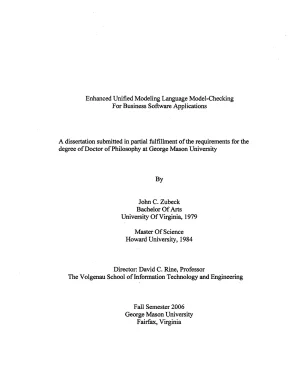
Tải xuống để đọc toàn bộEnhanced Unified Modeling Language Model-Checking For Business Software Applications A dissertation submitted in partial fulfillment of the requirements for the degree of Doctor of Philosophy at George Mason University By - John C. Zubeck Bachelor Of Arts University Of Virginia, 1979 Master Of Science Howard University, 1984 Director: David C. Rine, Professor The Volgenau School of Information Technology and Engineering Fall Semester 2006 George Mason University Fairfax, Virginia UMI Number: 3239476 Copyright 2007 by Zubeck, John C. All rights reserved.
INFORMATION TO USERS The quality of this reproduction is dependent upon the quality of the copy submitted. Broken or indistinct print, colored or poor quality illustrations and photographs, print bleed-through, substandard margins, and improper alignment can adversely affect reproduction. In the unlikely event that the author did not send a complete manuscript and there are missing pages, these will be noted. Also, if unauthorized copyright material had to be removed, a note will indicate the deletion.
® UMI UMI Microform 3239476 Copyright 2007 by ProQuest Information and Learning Company. All rights reserved. This microform edition is protected against unauthorized copying under Title 17, United States Code. ProQuest Information and Learning Company 300 North Zeeb Road P.
Box 1346 Ann Arbor, MI 48106-1346 ENHANCED UNIFIED MODELING LANGUAGE MODEL-CHECKING FOR BUSINESS SOFTWARE APPLICATIONS by John C. Zubeck A Dissertation Submitted to the Graduate Faculty of George Mason University in Partial Fulfillment of the Requirements for the Degree of Doctor of Philosophy Information Technology Committee: ® Ú “Ys David C. Rine, Dissertation Director “Crete TV ¬ VÀ~ NT: Donald Gantz Lhe ⁄ S — David Schum O Daniel Menascé LEE Daniel Menascé, Associate Dean for an Research and Graduate Studies A A Lloyd J. Griffiths, Dean, The —/ // Volgenau School of Information Technology and Engineering Date: Oc 4 ớ L, er 2 5, 2006 Summer Semester 2006 í George Mason University Fairfax, Virginia ii Dedication To Simone, my darling wife, and to my mother, Carolyn, neither of whom have escaped from the longing to find truth and to do some good in the world.
All life is darkness except where there is urge. All urge is blind except when there is knowledge. All knowledge is in vain except when there is work. All work is empty except when there is love.
--- Kahlil Gibran iii Acknowledgements I would like to express my gratitude to David Rine, my dissertation advisor, for showing me to have faith and to work with patience. I have to thank my first, late wife, Maggie, and my dear daughter, Katie, for the love and encouragement that sustained me earlier in this program. Also my cousin, Veronica Whitehill, has expressed her unflagging support over many years. It is ajoy to express my appreciation for my friend, Steve Ungaro, for inspiring me with how he developed software, fought off cancer, and lived and loved with sheer enthusiasm.
Steve "met with triumph and disaster and treated those two impostors just the same". I certainly would not have finished this program without the advice of my colleague and. friend, Doug Whall, who is raising the quality of technology consulting at Booze Allen and Hamilton. It is a pleasure to acknowledge my friend, Jim Guill, now the chess master, who taught me to first look for the essential subset of knowledge needed for any task.
Also, among my talented friends, I cannot forget my friend and colleague, David Webber, whose thirst for ingenious software triggered my interest in the Prolog software language. I would also like to thank some departed friends but ones who are always with me reminding me always of the value of good writing. Aldeth Spence Christy, thank you for having the integrity to write a journal that spanned a hundred books. Peter Taylor, thank you for teaching me to look for and express powerful truths rather than cleverness in writing.
Also, I would like to thank David and Susana Slayton, the owners and founders of Dynamic Animation Systems, and the many folks at their company who encouraged me and made possible the last year of my program. I greatly appreciate technical dialogs with my friends and colleagues at SAIC, Boeing, Lockheed-Martin, Verizon, Telelogics, Rational Corp., LNK, MCI, the US Army, the engineers at the Naval Surface Warfare Center at Dahlgren, and, of course, fellow students and faculty at George Mason University. iv Table Of Contents Page CHAPTER 1 INTRODUCTION .2 Software Development Flounders Without UML Modeling & Design Diagramming. 3 13 UML Diagrams Become a Blueprint for Discussion 5 1.4 UML Modeling-For-Design in the Business Domain 6 1.5 UML Checking For The Business Domain At The Right Level Of Abstraction 8 1.6 Refactoring: Rearranging the Composition of UML for the Model-To-Design 9 1.7 Strategic Naming Of The Elements That Go Inside UML Diagrams 13 1.8 UML-Model-Checker And Its Methodology Promote Software Reuse 17 1.9 Contributions Of This Research 18 CHAPTER 2 PROBLEM STATEMENT AND HYPOTHESIS.21 First Sub-HypothesiS.
LH HH ng Ho TH Ho TH HC HH HH TH Tư nt 23 2.22 Second Sub-Hypothesis. Án nành HH HH TH TH HC HT TH tr 23 CHAPTER 3 BACKGROUND.1 What Is UML Diagramming And How Is UML Used .2 Impact of UML Modeling On the Software Development Lifecycle 28 3.3 Critical Elements of A Software Accounting System (Domain Example Is Accounting).4 Obstacles to Assisted UML Modeling of Business Software Systems 3.1 Knowledge Representation (KR) Of Business Software Application Model.2 Modeling-To-Design Across Distinctly Different Industries.3 Incompatibilities Among Software Design Paf(erTS.- Án ng HH HH, 3.4 Mapping UML To Data Base Structures & Application Processes.5 Platform-bound Design Elements (Mainframe, Unix, WintelPC, WWW Details) .6 UML-Model Distortion Due To Required Compatibility with Legacy Software System.7 UML-Model Distortion Required To Integrate Commercial-Off-The-Shelf Components .8 UML-Model Necessities Allowing For Future Software Design Flexibility. súng HH HH HH HT TT TH TH 90 3.2 Client Server and/or COIRBA. và HH HH HH Hà HH HT HH Hiệp 3.3 Web Services and XML Registries.- Tà HH H HH4 HH HH tiêu 3.5 Progress in Assisted Software Design of Business Software Systems 3.1 Leveraging Reuse in Modeling-To-Desigit.1 New Software Classes from Parent Classes: Reuse By Object-Oriented Inheritance.2 Product-Line Reuse.- Án HH HH Tu gọn Hàn HH 3.
HH HH HH ng ng gi Ho TH 3.4 Software Design Pattern Capture and Reuse.- HH H2 Ha ro 3.2 Object-Oriented (OO) Impact on Modeling-To-Design.3 Jiri Soukup's Software Design Pattern Classes Organize Software Development.4 Common Object Request Broker Architecture (CORBA).5 Componentware and SAP Industry-Specifie Solution Maps.6 Telon: The Tree-Pruning Approach to Organizing Business Software Development.7 Microsoft Wizard/Agents: A Menu Approach to Business Software Development.8 Magic MSE: Rapid Application Design (RAD) Approach to Software Development .9 University Advances in Expert Systems and Assisted Software Development.1 MIT Model For Intelligent Tutoring Šysfems.2 Zellermayer: Unsolicited Advice from Software ABEeTIS.3 Goldstein & Millers Programming Design Helper.4 PROUST: Using Software Design Goals to Lock Out Errors .5 An Intelligent Agent to Help With Programming (Ted Selker at IBMI). CHAPTER 4 CONSTRUCTING AN IMPROVED UML-MODEL-CHECKER.1 Addressing The Inadequacies Of Rational Rose Checker 82 4.2 Operating Example of the EUMC And SPUDS With IBM/Rational Rose 85 4.3 Large Number Of UML Element Names: Scoping the System Of Object Identifiers.4 Setting The Granularity For Object Identifiers In A Universe Of Discourse 93 4.5 Scope and Limitations Of EUMC 94 4.6 Handling Fidelity Checking Between UML Elements and Outside World 96 4.7 Applying Rules To Groups Of Object Identifiers 97 4.8 XML / XMI Translation Of Object Identifiers From UML Diagrams 99 VI 4.9 Implementation And Construction Of The EUMC Rules 4.1 Introduction To Rule CollectÏ0TWS. HH HỘ Hà HH HH HH HH kiện 4.2 Organizing The Rules In A Way That Fits The Data.3 Implementing Causal Versus Shallow Rules With Procedural Programming.4 Correctness of UML-Checking-Rules.-- Ánh HH Hà HH HH HH ghi, 4.5 Format Of UML Checking-Rules. H20 01101 01 ng ph th 4.6 Defeasibility Of UML-Checking-Rules.- Án ng HH hà, 4.7 Non-Monotonic Characteristics Of Sets Of UML-Checking Rules.8 Avoiding Negative Statement Of UML-Checking Rules 0000.9 When To Build UML-Checking-Rules During The Project Lifecycle .1 Required Element UML-Checking-Rules.
- -- Ăn HH HH HH gi, 4.2 Element-Support UML-Checkỉng-Rules. óc HH Hàng HH HH Hệ, 4. Element-Conflict UML-Checking-Rules. - - Là HH HH nen 4.4 Complimentary-Element UML-Checking-Rules.5 CATEGORY-Element UML-Checking-Rules.10 Building the EUMC With Visual Basic 4.11 The SPUDS Methodology Supporting The EUMC CHAPTER 5 VALIDATION.1 How Can A Thesis Concerning A Software Technology Be Validated? 5.2 Verifying That the EUMC and SPUDS Run on an Average Computer (Standard in 2006).3 Equivalence Partition Testing Compares The EUMC With The RRUC 5.4 Examining The EUMC With A Case Study Performed By A UML Expert CHAPTER6 RESULTS uiccsccssssessssssssesecsessessesscsoess ¬ ¬ ¬ 6.2 Verifying That the EUMC and SPUDS Run on an Average Computer (Standard of 2006).3 Equivalence Partition Testing Results 6.4 Case Study Results 6.1 Summary Of Case Study Questionnaire Responses.2 Complete SME Responses To Case Study Quesfionnaire.
Hee, CHAPTER 7 INTERPRETATION OF RESULTS.1 Assessment of the Main Hypothesis 156 7.2 Assessment Of The Hardware And Support Software Benchmarking 157 7.3 Assessment of the Experimental Testing Of Categories Of UML-Check Rules .4 Assessment Of The Case Study And Resulting Questionnaire vii CHAPTER 8 CONCLUSIONS AND FUTURE WORK.1 Summary Of This Research 160 8.2 Future Work With Model Driven Architecture 162 8.3 Future Work Implementing EUMC Rules In Prolog 163 GLOSSARY. ni ng gọn 165 BIBLIOGRAPPHY. HH nọ nh 170 APPENDIX A. - cọ ni E0 50 176 SAP’s Standard Software Developer’s Guide For Enterprise Structure : 176 APPENDIX.
-Q ch ĐEEEEE 177 Specific-Pre-loaded -UML-Domain-System (SPUDS) 177 APPENDIX C.L LG 000000094 193 Mechanics Of Prototype Of Automatic UML-Model-Checker 193 APPENDIX D.:cssssetceeessessssseeeeeeesssssneneeesessensssseneneeseessenssanenesasuseesesecanansaeeness 195 Vendor Development Tools Fully Or Partially Based On UML Technology 195 APPENDIX eee 203 Rational Rose UML Diagramming Tool Summary 203 APPENDIX F .ccccssssssecceceeeesessseeeeeeeeeeeeeeeeeeeueseesssesusasaesususssseesarsssnensssecsensanenee 205 Significant Changes From UML Version 1 To UML Version 2 205 APPENDIX Ố. ng HH HH TT gọt 209 Wernier Orr Diagram Reference Sample 209 APPENDIX H.- HH HH HH ng Tà me 210 Data Flow Diagram (DFD) Reference Sample. TH ng gọn 211 Unified Modeling Language (UML) Reference Sample 211 APPENDIX K.---- HH nọ TC T010 0 214 SAP Componentware Solution Maps 214 APPENDIX See 219 Microsoft Wizards For Creating Standard Software Business Objects 219 APPENDIX M. nọ lọ lọ BS 0885550080 227 Prolog Source Code For Model Of A Business Enterprise 227 APPENDIX ÑN.QG Gọi EEEEEETEE 235 Summary Of Error Checking Observed In Rational Rose Ver 8.ÔỎ 236 Professional Correspondence With Software Scientists And Engineers 236 CURRICULUM VITAE.
nà nh 245 John C. Zubeck 245 1X List Of Figures Page Figure 1.1 -- A Simple UML Use Case Diagram.2 — All Enterprise Groups Participate In UML Use Case Modeling 5 Figure 1.3 — Essential Subset Of UML Design Is A Combination Use Cases, Packages And Classes.4 -- Standard Building Blocks Used By Business Software Developers [Zubeck97].5 — The Prototype UML-Model-Checker Catches Insufficiencies.6: UML Model Needs Automatic UML-Model-Check To See If Elements In Harmony.7-- Complex Names And Relationships Of An Enterprise And Its Accounting.8 --- How Classification Has Been Applied To Solve Problems.9 -- Categorizing Organizations According To Their Ability To Reuse Software.10 -- Frakes Identifies Reasons Why Software Might Not Be Reused 18 Figure 3.1-- Comparing UML And Some Other Types Of Representation Of Software Projects.2 -- Software Development Life Cycle (SDLC) from Cybermedica Foundation.3 -- IBM/Rational's Sand Chart Describing Effort Level For Each Lifecycle Phase.4 -- Dept Of Defense Engineering Usually Involves Parallel-Subprojects Lifecycle.5 --- A Simple Overview Of Standard Software Accounting Subsystems.6 - Some Of Many Business Forces Causing Shifts In Accounting Practice.7 - Named Enterprise, Accounting, And Software Building Blocks Must Be Merged.8 --- Prolog Language Description Of Expected Patterns In A Business Software System.9 -- Diverse Types Of Companies Whose Different Domains Greatly 40 Figure 3.10 - SAP Solution Map Of Components Needed For Mining Or Healthcare Enterprises.11 -- Classic Software Design Patterns And Their Suggested Relationships.12 -- Collected Information & Collaborations & Conflicts Among Software Design.13 -- Database Representation Of Part Of A Simple Accounting System.
Nội dung được bảo vệ bản quyền — Tải xuống đầy đủ
Trích dẫn luận án này
John C. Zubeck (2006). UML Model Checking cho ứng dụng phần mềm kinh doanh [Luận án tiến sĩ, George Mason University]. LuanAn.net. https://luanan.net/cong-nghe-thong-tin/khoa-hoc-may-tinh/uml-model-checking-ung-dung-phan-mem-kinh-doanh
Từ khóa và chủ đề nghiên cứu
Từ khóa liên quan
Xem thêm luận án cùng lĩnh vực
Chủ đề nghiên cứu
Câu hỏi thường gặp
Luận án "UML Model Checking cho ứng dụng phần mềm kinh doanh" nghiên cứu về vấn đề gì?
Luận án tiến sĩ nghiên cứu Enhanced UML Model Checking cho phần mềm kinh doanh. Đề xuất phương pháp mô hình hóa cải tiến, nâng cao chất lượng thiết kế và xác minh.
Luận án "UML Model Checking cho ứng dụng phần mềm kinh doanh" được bảo vệ tại trường nào?
Luận án này được bảo vệ tại George Mason University. Năm bảo vệ: 2006.
Luận án "UML Model Checking cho ứng dụng phần mềm kinh doanh" thuộc chuyên ngành gì?
Luận án "UML Model Checking cho ứng dụng phần mềm kinh doanh" thuộc chuyên ngành Information Technology. Danh mục: Khoa Học Máy Tính.
Luận án "UML Model Checking cho ứng dụng phần mềm kinh doanh" có bao nhiêu trang?
Luận án "UML Model Checking cho ứng dụng phần mềm kinh doanh" có 258 trang. Bạn có thể xem trước một phần tài liệu ngay trên trang web trước khi tải về.
Cách tải luận án "UML Model Checking cho ứng dụng phần mềm kinh doanh" về máy như thế nào?
Để tải luận án về máy, bạn nhấn nút "Tải xuống ngay" trên trang này, sau đó hoàn tất thanh toán phí lưu trữ. File sẽ được tải xuống ngay sau khi thanh toán thành công. Hỗ trợ qua Zalo: 0559 297 239.