Tác động của Cổ phần hóa đến Hiệu quả Doanh nghiệp: Nghiên cứu từ DNNN Việt Nam
Phân tích tác động cổ phần hóa đến hiệu quả hoạt động của DNNN Việt Nam. Nghiên cứu cung cấp bằng chứng thực nghiệm quan trọng.
Đại học Kinh tế Luật - Đại học Quốc gia Thành phố Hồ Chí Minh
Luan An
Luận án
Năm xuất bản
Số trang
238
Thời gian đọc
36 phút
Lượt xem
0
Lượt tải
0
Phí lưu trữ
50 Point
Tổng quan nhanh
- Chủ đề:
- Cổ phần hóa DNNN Việt Nam: Khái quát & Tác động
- Số trang:
- 238 trang
- Trường:
- Đại học Kinh tế Luật - Đại học Quốc gia Thành phố Hồ Chí Minh
- Chuyên ngành:
- Tài chính - Ngân hàng
- Tác giả:
- Nguyen Van Tan
- Năm:
- 2022
Tóm tắt nội dung luận án
I.Cổ phần hóa DNNN Việt Nam Khái quát Tác động
Tài liệu này nghiên cứu tác động của cổ phần hóa DNNN đến hiệu quả kinh doanh DNNN tại Việt Nam. Cổ phần hóa là một chính sách kinh tế quan trọng. Mục tiêu là tái cơ cấu DNNN, nâng cao hiệu suất hoạt động. Nghiên cứu đánh giá lợi ích và thách thức của quá trình này. Nó cung cấp cái nhìn toàn diện về sự thay đổi của các doanh nghiệp nhà nước sau khi chuyển đổi sở hữu. Các phân tích cụ thể được thực hiện để làm rõ các khía cạnh liên quan đến quản trị doanh nghiệp nhà nước và tác động của tư nhân hóa. Tài liệu sử dụng dữ liệu thực nghiệm để đưa ra kết luận.
1.1. Định nghĩa cổ phần hóa DNNN.
Cổ phần hóa DNNN là quá trình chuyển đổi sở hữu doanh nghiệp nhà nước sang hình thức công ty cổ phần. Quá trình này giúp đa dạng hóa cơ cấu sở hữu. Nó thu hút vốn từ các nhà đầu tư tư nhân, nâng cao quản trị doanh nghiệp nhà nước. Mục tiêu chính là cải thiện hiệu quả kinh doanh DNNN. Tài liệu này tập trung vào bối cảnh cụ thể của Việt Nam. Đây là nghiên cứu chuyên sâu về tác động của cổ phần hóa.
1.2. Mục tiêu và bối cảnh cổ phần hóa.
Chính phủ Việt Nam thúc đẩy cổ phần hóa nhằm tái cơ cấu DNNN. Mục tiêu là tăng cường hiệu quả hoạt động, giảm gánh nặng ngân sách nhà nước. Cổ phần hóa giúp giải quyết các vấn đề về kém hiệu quả, thiếu vốn. Quá trình này cũng hướng tới việc tạo môi trường cạnh tranh lành mạnh hơn. Nó góp phần vào sự phát triển bền vững của nền kinh tế. Tài liệu phân tích bối cảnh chính sách, động lực thúc đẩy quá trình này tại Việt Nam.
1.3. Lợi ích tiềm năng cổ phần hóa DNNN.
Cổ phần hóa mang lại nhiều lợi ích tiềm năng. Nó cải thiện cơ cấu quản trị, tăng cường minh bạch tài chính DNNN. Các doanh nghiệp cổ phần hóa thường ghi nhận sự gia tăng lợi nhuận DNNN sau cổ phần hóa. Năng suất lao động DNNN cũng có thể được cải thiện. Quá trình này khuyến khích cạnh tranh, đổi mới. Nó thu hút thêm các nguồn lực đầu tư, thúc đẩy tăng trưởng. Nghiên cứu đánh giá mức độ đạt được các lợi ích này trong thực tiễn Việt Nam.
II.Hiệu quả kinh doanh DNNN sau cổ phần hóa Phân tích
Phân tích hiệu quả kinh doanh DNNN sau cổ phần hóa là trọng tâm của nghiên cứu. Tài liệu đánh giá sự thay đổi trong các chỉ số tài chính và hoạt động. Nó xem xét lợi nhuận DNNN sau cổ phần hóa và năng suất lao động DNNN. Cổ phần hóa mang lại tiềm năng cải thiện hiệu quả. Tuy nhiên, mức độ cải thiện này không đồng đều. Phân tích sâu sắc giúp hiểu rõ hơn về các yếu tố ảnh hưởng. Nó bao gồm tác động của tư nhân hóa và việc nâng cao minh bạch tài chính DNNN.
2.1. Đánh giá lợi nhuận DNNN sau cổ phần hóa.
Hiệu quả kinh doanh DNNN là trọng tâm của nghiên cứu. Tài liệu phân tích sự thay đổi lợi nhuận DNNN sau cổ phần hóa. Các chỉ số tài chính được sử dụng để đánh giá. Kết quả cho thấy sự biến động lợi nhuận sau chuyển đổi sở hữu. Nhiều doanh nghiệp ghi nhận cải thiện đáng kể. Điều này phản ánh tác động của tư nhân hóa lên quản lý và vận hành. Nghiên cứu cũng xem xét các yếu tố ảnh hưởng đến mức độ tăng trưởng lợi nhuận.
2.2. Ảnh hưởng đến năng suất lao động DNNN.
Năng suất lao động DNNN là một chỉ số quan trọng. Cổ phần hóa có thể tác động tích cực đến yếu tố này. Việc thay đổi cơ chế quản lý, khuyến khích làm việc hiệu quả hơn là nguyên nhân. Các doanh nghiệp sau cổ phần hóa thường áp dụng chính sách nhân sự linh hoạt hơn. Điều này dẫn đến sự tối ưu hóa nguồn lực. Tài liệu đánh giá sự khác biệt về năng suất lao động giữa các DNNN cổ phần hóa và chưa cổ phần hóa.
2.3. Minh bạch tài chính DNNN cải thiện.
Cổ phần hóa thường đi kèm với yêu cầu cao hơn về minh bạch tài chính DNNN. Việc niêm yết trên thị trường chứng khoán đòi hỏi tuân thủ các quy định nghiêm ngặt. Điều này giúp cải thiện công bố thông tin, giảm thiểu rủi ro. Các nhà đầu tư có cái nhìn rõ ràng hơn về hoạt động của doanh nghiệp. Nâng cao minh bạch cũng góp phần chống thất thoát, tham nhũng. Nó tăng cường niềm tin vào quản trị doanh nghiệp nhà nước.
III.Các yếu tố ảnh hưởng hiệu quả DNNN Nghiên cứu sâu
Hiệu quả kinh doanh DNNN sau cổ phần hóa không chỉ phụ thuộc vào bản thân quá trình này. Nhiều yếu tố khác cũng đóng vai trò quan trọng. Nghiên cứu đi sâu vào ảnh hưởng của tỷ lệ thoái vốn nhà nước và đặc thù ngành nghề. Các chính sách ưu đãi của chính phủ cũng được xem xét. Việc hiểu rõ các yếu tố này giúp xây dựng chính sách tái cơ cấu DNNN hiệu quả hơn. Nó cũng làm rõ tác động của tư nhân hóa trong các điều kiện khác nhau.
3.1. Tỷ lệ thoái vốn nhà nước hiệu quả.
Mức độ thoái vốn nhà nước là yếu tố then chốt. Tỷ lệ cổ phần nhà nước nắm giữ sau cổ phần hóa ảnh hưởng lớn đến hiệu quả kinh doanh DNNN. Nghiên cứu so sánh hiệu quả giữa các doanh nghiệp có tỷ lệ sở hữu nhà nước khác nhau. Tỷ lệ thoái vốn càng cao, quyền kiểm soát của nhà nước càng giảm. Điều này có thể thúc đẩy quản lý theo định hướng thị trường hơn. Tác động của tư nhân hóa thực sự thể hiện qua tỷ lệ thoái vốn.
3.2. Ảnh hưởng ngành nghề đến hiệu quả DNNN.
Cổ phần hóa không tạo ra tác động đồng đều. Hiệu quả kinh doanh DNNN sau cổ phần hóa có sự khác biệt rõ rệt theo ngành nghề. Các ngành có tính cạnh tranh cao thường có mức độ cải thiện lớn hơn. Ngược lại, các ngành độc quyền tự nhiên có thể ít thay đổi. Tài liệu phân tích sự khác biệt này. Nó cung cấp cái nhìn sâu sắc về các yếu tố đặc thù ngành. Điều này giúp điều chỉnh chính sách tái cơ cấu DNNN phù hợp.
3.3. Chính sách ưu đãi hiệu quả kinh doanh.
Các chính sách ưu đãi của chính phủ đóng vai trò quan trọng. Ưu đãi thuế, hỗ trợ vốn có thể thúc đẩy quá trình cổ phần hóa. Chúng cũng ảnh hưởng đến hiệu quả kinh doanh DNNN sau cổ phần hóa. Nghiên cứu đánh giá tác động của các chính sách này. Nó xem xét liệu các ưu đãi có thực sự tạo ra sự khác biệt. Điều này bao gồm cả sự khác biệt giữa các doanh nghiệp niêm yết và không niêm yết.
IV.Phương pháp định lượng Đánh giá tác động cổ phần hóa
Nghiên cứu áp dụng các phương pháp định lượng nghiêm ngặt. Điều này nhằm đánh giá khách quan tác động của cổ phần hóa DNNN. Dữ liệu từ các DNNN Việt Nam được thu thập và phân tích. Các mô hình thống kê được sử dụng để ước lượng tác động. Đặc biệt, nghiên cứu sử dụng kỹ thuật đối sánh để kiểm soát các yếu tố nhiễu. Phương pháp này đảm bảo tính vững chắc của kết quả. Nó cũng bao gồm phân tích về định giá doanh nghiệp nhà nước trong quá trình IPO.
4.1. Dữ liệu và mô hình nghiên cứu.
Nghiên cứu sử dụng dữ liệu định lượng rộng lớn từ các DNNN Việt Nam. Dữ liệu bao gồm thông tin tài chính trước và sau cổ phần hóa. Các mô hình hồi quy được áp dụng để phân tích tác động. Cụ thể, mô hình hồi quy OLS và phương pháp đối sánh điểm xu hướng (Propensity Score Matching) được sử dụng. Điều này giúp kiểm soát các yếu tố nhiễu. Mô hình đánh giá tác động của cổ phần hóa DNNN lên hiệu quả.
4.2. Kỹ thuật phân tích tác động trung bình.
Phương pháp đối sánh điểm xu hướng (PSM) là trọng tâm. Nó giúp tạo ra nhóm đối chứng tương đương. Nhờ đó, có thể ước tính tác động trung bình của cổ phần hóa. Điều này đảm bảo tính khách quan của kết quả. Nó so sánh hiệu quả kinh doanh DNNN giữa nhóm được cổ phần hóa và nhóm không được cổ phần hóa. Kỹ thuật này giảm thiểu sai lệch do lựa chọn mẫu.
4.3. Định giá doanh nghiệp nhà nước IPO.
Nghiên cứu cũng xem xét hiện tượng chào bán dưới giá (underpricing) trong các đợt IPO. Đặc biệt là định giá doanh nghiệp nhà nước khi lần đầu phát hành cổ phiếu ra công chúng. Hiện tượng này ảnh hưởng đến lợi ích của nhà nước. Nó cũng tác động đến các nhà đầu tư ban đầu. Phân tích này sử dụng kiểm định t-Test. Mục tiêu là xác định mức độ và nguyên nhân của chào bán dưới giá.
V.Kết quả chính Lợi nhuận năng suất DNNN cổ phần hóa
Các kết quả nghiên cứu chỉ ra những thay đổi quan trọng về lợi nhuận và năng suất DNNN. Sau cổ phần hóa, nhiều doanh nghiệp có sự cải thiện đáng kể. Tuy nhiên, sự khác biệt giữa DNNN niêm yết và không niêm yết rất rõ rệt. Hiện tượng chào bán dưới giá trong các đợt IPO cũng được ghi nhận. Các phát hiện này cung cấp bằng chứng thực nghiệm mạnh mẽ. Nó hỗ trợ cho việc đưa ra các khuyến nghị chính sách về thoái vốn nhà nước và quản trị doanh nghiệp nhà nước.
5.1. Thay đổi hiệu quả trước và sau cổ phần hóa.
Kết quả nghiên cứu chỉ ra những thay đổi đáng kể về hiệu quả kinh doanh DNNN. Các DNNN sau cổ phần hóa cho thấy sự cải thiện về lợi nhuận và năng suất lao động. Sự thay đổi này được đo lường bằng các chỉ số tài chính. Nó được so sánh giữa giai đoạn trước và sau chuyển đổi. Cải thiện này không đồng đều. Nó phụ thuộc vào nhiều yếu tố khác nhau.
5.2. Sự khác biệt giữa DNNN niêm yết và không niêm yết.
Các doanh nghiệp sau cổ phần hóa và niêm yết thường có hiệu quả tốt hơn. Yêu cầu về minh bạch tài chính DNNN cao hơn. Áp lực từ thị trường giúp nâng cao quản trị doanh nghiệp nhà nước. Các doanh nghiệp không niêm yết có thể chậm hơn trong việc cải thiện. Nghiên cứu làm rõ sự khác biệt này, đưa ra khuyến nghị chính sách.
5.3. Hiện tượng chào bán dưới giá underpricing IPO.
Nghiên cứu xác nhận hiện tượng chào bán dưới giá khi định giá doanh nghiệp nhà nước thực hiện IPO. Hiện tượng này phổ biến tại Việt Nam. Nó làm giảm nguồn thu tiềm năng cho ngân sách nhà nước. Phân tích chỉ ra các yếu tố gây ra tình trạng này. Điều này bao gồm thông tin bất cân xứng và định giá chưa tối ưu. Kiến nghị đưa ra nhằm tối ưu hóa quá trình thoái vốn nhà nước.
Mục lục chi tiết luận án
Tải xuống file đầy đủ để xem toàn bộ nội dung
Tải đầy đủ (238 trang)Nội dung chính
Tổng quan về luận án
Luận án tiến sĩ này khai thác chuyên sâu về tác động của quá trình cổ phần hóa (equitization) đối với hiệu suất hoạt động của doanh nghiệp, tập trung vào bối cảnh các doanh nghiệp nhà nước (SOEs) tại Việt Nam. Nghiên cứu được đặt trong bối cảnh khoa học về cải cách SOEs toàn cầu và sự phát triển của các nền kinh tế chuyển đổi. Tính tiên phong của nghiên cứu thể hiện ở việc phân tích các đặc điểm cổ phần hóa đặc thù của Việt Nam, nơi Nhà nước vẫn giữ cổ phần chi phối trong nhiều trường hợp, trái ngược với mô hình tư nhân hóa toàn diện ở nhiều nước phát triển.
Một trong những khoảng trống nghiên cứu (research gap) quan trọng mà luận án này giải quyết là sự thiếu hụt các nghiên cứu định lượng so sánh tác động của cổ phần hóa lên hiệu suất của các SOEs đã cổ phần hóa với các SOEs chưa cổ phần hóa trong cùng giai đoạn, đặc biệt là việc kiểm soát các yếu tố gây sai lệch như ngành nghề hoạt động. Các nghiên cứu trước đây tại Việt Nam, như của Tran et al. (2015) và Loc và Tran (2016), đã bị chỉ ra là không xem xét ngành nghề khi lựa chọn nhóm đối chứng, dẫn đến sự so sánh thiên lệch. Ngoài ra, luận án còn làm rõ mức độ tác động của các chính sách ưu đãi thuế đặc thù và vai trò của việc niêm yết trên thị trường chứng khoán đối với hiệu suất của các SOEs đã cổ phần hóa, điều chưa được đánh giá đầy đủ trong các tài liệu hiện có.
Các câu hỏi nghiên cứu (research questions) chính của luận án bao gồm:
- Cổ phần hóa tác động như thế nào đến hiệu suất của các SOEs đã cổ phần hóa khi so sánh với các SOEs chưa cổ phần hóa trong cùng kỳ?
- Cổ phần hóa tác động khác biệt như thế nào đến hiệu suất của các SOEs đã cổ phần hóa với tỷ lệ sở hữu nhà nước trung bình khác nhau sau cổ phần hóa (dưới 20%, 20% đến 30%, 30% đến 50%, 50% đến 65% và trên 65%)?
- Cổ phần hóa tác động khác biệt như thế nào đến hiệu suất của các SOEs đã cổ phần hóa theo các nhóm ngành nghề khác nhau?
- Cổ phần hóa tác động như thế nào đến hiệu suất của các SOEs đã cổ phần hóa có và không có ưu đãi thuế tại Việt Nam? Các doanh nghiệp niêm yết có cải thiện hiệu suất hoạt động cao hơn so với các doanh nghiệp chưa niêm yết sau cổ phần hóa tại Việt Nam không?
- Mức độ định giá thấp (underpricing) trong ngắn hạn và dài hạn của các SOEs đã cổ phần hóa khi chào bán công khai lần đầu (IPO) tại Việt Nam là bao nhiêu?
Luận án được xây dựng trên một khung lý thuyết vững chắc, tích hợp các lý thuyết chính về vai trò của nhà nước và thị trường, bao gồm Lý thuyết Bàn tay vô hình (Invisible Hand), Lý thuyết Bàn tay hữu hình (Visible Hand) và Lý thuyết Kinh tế hỗn hợp (Mixed Economy Theory). Ngoài ra, Lý thuyết Quản lý công mới (New Public Management - NPM), Lý thuyết Lựa chọn công (Public Choice Theory), Lý thuyết Thị trường hiệu quả (Efficient Market Theory), Lý thuyết Kinh tế học phúc lợi (Welfare Economics Theory) và Lý thuyết Lợi thế cạnh tranh (Competitive Advantage Theory) cũng được sử dụng để giải thích các giả thuyết về tác động của cổ phần hóa. Đối với hiện tượng định giá thấp, luận án áp dụng Lý thuyết Phản hồi thị trường (Market Feedback Theory), Lý thuyết Tín hiệu (Signaling Theory) và Lý thuyết Phân kỳ ý kiến (Divergence of Opinion Theory).
Nghiên cứu mang lại những đóng góp đột phá với tác động định lượng rõ rệt. Đáng chú ý, luận án chỉ ra rằng "cổ phần hóa chỉ giúp các doanh nghiệp cải thiện khả năng sinh lời (ROA) so với các doanh nghiệp chưa cổ phần hóa trong cùng kỳ". Một phát hiện quan trọng khác là "cổ phần hóa chỉ giúp các công ty cải thiện khả năng sinh lời (thay đổi ROA) so với các công ty không tham gia khi các công ty không còn chịu sự kiểm soát của nhà nước sau cổ phần hóa (tỷ lệ sở hữu nhà nước trung bình sau bốn năm cổ phần hóa dưới 50%)". Điều này cung cấp bằng chứng định lượng về ngưỡng kiểm soát của nhà nước ảnh hưởng đến hiệu quả hoạt động. Nghiên cứu cũng phát hiện ra hiện tượng định giá thấp trong ngắn hạn nhưng lại định giá cao trong dài hạn đối với các IPO của SOEs cổ phần hóa, một kết quả quan trọng đối với các nhà đầu tư và chính phủ.
Phạm vi nghiên cứu (scope) bao gồm dữ liệu thứ cấp của 295 SOEs đã cổ phần hóa từ năm 2006 đến 2015 và 418 SOEs chưa cổ phần hóa trong cùng kỳ, được thu thập từ Tổng cục Thống kê Việt Nam (VGSO) trong giai đoạn 2002-2019 (sử dụng cửa sổ cổ phần hóa 4 năm). Dữ liệu từ Sở Giao dịch Chứng khoán Hà Nội (HNX) và Sở Giao dịch Chứng khoán TP.HCM (HOSE) được sử dụng để phân tích hiện tượng định giá thấp. Ý nghĩa của nghiên cứu nằm ở việc cung cấp bằng chứng thực nghiệm mạnh mẽ, khách quan cho các nhà hoạch định chính sách, các nhà đầu tư và chính các SOEs trong quá trình cải cách doanh nghiệp nhà nước và phát triển thị trường vốn tại Việt Nam.
Literature Review và Positioning
Phần tổng quan tài liệu của luận án thực hiện một tổng hợp sâu rộng các luồng nghiên cứu chính về tư nhân hóa/cổ phần hóa và hiệu suất doanh nghiệp. Nghiên cứu tham chiếu các công trình tiên phong như của Megginson et al. (1994), những người đã đề xuất bảy thước đo hiệu suất doanh nghiệp sau tư nhân hóa. Các nghiên cứu ban đầu ở các nước phát triển thường sử dụng phương pháp so sánh trước-sau (pre-post comparison) và chỉ ra rằng tư nhân hóa có thể cải thiện hiệu suất doanh nghiệp (Brown et al., 2016; Dewenter and Malatesta, 2001). Chẳng hạn, ở Anh và Mỹ, việc chuyển giao tài sản nhà nước sang khu vực tư nhân thường giúp các công ty tư nhân hóa tái cấu trúc sở hữu, hoạt động và tập trung tối đa hóa lợi nhuận.
Tuy nhiên, tài liệu cũng ghi nhận nhiều mâu thuẫn và tranh luận (contradictions/debates) trong kết quả thực nghiệm. Ví dụ, trong khi nhiều nghiên cứu tại Việt Nam (Loc et al., 2006; Tran et al., 2015) cũng chỉ ra cổ phần hóa có thể cải thiện hiệu suất, thì Pham (2017) lại cho rằng cổ phần hóa có thể không có tác động tích cực. Kết quả này tương tự các nghiên cứu ở Trung Quốc (Jiang et al., 2014), nơi tư nhân hóa ít có khả năng cải thiện hiệu suất SOEs. Sự không nhất quán này được lý giải do khác biệt về phương pháp nghiên cứu, thước đo hiệu suất và bối cảnh kinh tế. Luận án đặt ra vấn đề rằng sự can thiệp của nhà nước vào các SOEs cổ phần hóa tại Việt Nam đi ngược lại Lý thuyết Quản lý công mới và Lý thuyết Thị trường hiệu quả, vốn ủng hộ sự giảm thiểu vai trò nhà nước để tạo ra thị trường hiệu quả.
Luận án định vị nghiên cứu của mình trong tài liệu hiện có bằng cách xác định một khoảng trống cụ thể: sự thiếu vắng các nghiên cứu định lượng nghiêm ngặt về tác động của cổ phần hóa có tính đến các SOEs chưa cổ phần hóa làm nhóm đối chứng, đặc biệt là khi kiểm soát yếu tố ngành nghề. Các nghiên cứu trước đây như của Tran et al. (2015) và Loc và Tran (2016) đã không xem xét ngành nghề khi lựa chọn nhóm, dẫn đến sai lệch so sánh.
Nghiên cứu này thúc đẩy lĩnh vực bằng cách cung cấp các đóng góp cụ thể. Thứ nhất, nó sử dụng phương pháp kết hợp giữa so sánh có-không (with-without comparison) thông qua phương pháp khớp điểm xu hướng (Propensity Score Matching - PSM) và phương pháp sai số kép (Difference-in-Difference - DID), vốn được Claessens và Djankov (2002) và Pohl et al. (1997) đề xuất để đánh giá tác động của tư nhân hóa. Việc sử dụng bốn biến kiểm soát trong PSM (quy mô doanh nghiệp, số năm hoạt động, ngành nghề và năm cổ phần hóa) giúp giảm thiểu sai lệch lựa chọn, vượt trội hơn so với các nghiên cứu của Loc và Tran (2016) hay Hung et al. (2017) chỉ sử dụng radius matching.
So sánh với ít nhất hai nghiên cứu quốc tế, luận án chỉ ra sự khác biệt trong chính sách và kết quả. Trong khi các nước phát triển như Vương quốc Anh dưới thời Thủ tướng Margaret Thatcher đã áp dụng các chương trình tư nhân hóa quy mô lớn với mục tiêu chuyển giao gần như toàn bộ quyền sở hữu nhà nước sang khu vực tư nhân, thì Việt Nam, tương tự Trung Quốc (Huang and Wang, 2011), áp dụng chính sách "cổ phần hóa" mang tính "modest" và "cautious" (Sjöholm, 2006) với chiến lược thoái vốn dần dần. Điều này có nghĩa là Nhà nước vẫn giữ vai trò kiểm soát chi phối trong nhiều SOEs đã cổ phần hóa, tạo ra một bối cảnh độc đáo cần được nghiên cứu sâu hơn về tác động đến hiệu suất doanh nghiệp. Các nghiên cứu ở Nga (Sprenger, 2014) cũng đã sử dụng mẫu các công ty tư nhân hóa và chưa tư nhân hóa nhưng không dùng PSM, làm nổi bật sự cần thiết của phương pháp luận chặt chẽ của luận án này trong việc xác định các nhóm so sánh tương đương.
Đóng góp lý thuyết và khung phân tích
Đóng góp cho lý thuyết
Luận án này đóng góp đáng kể vào kho tàng lý thuyết học thuật bằng cách mở rộng và thử thách một số lý thuyết kinh tế và quản lý trong bối cảnh cụ thể của Việt Nam.
Đáng chú ý, nghiên cứu mở rộng và thử thách các lý thuyết về vai trò của nhà nước. Lý thuyết "Bàn tay vô hình" của Adam Smith (1817) cho rằng nhà nước không nên can thiệp vào thị trường, trong khi Lý thuyết "Bàn tay hữu hình" của Alfred DuPont Chandler (1977) nhấn mạnh vai trò quản lý và can thiệp của nhà nước để thúc đẩy tăng trưởng. Luận án, thông qua bằng chứng thực nghiệm, cho thấy rằng "cổ phần hóa chỉ giúp các công ty cải thiện khả năng sinh lời (dROA) khi các công ty không còn chịu sự kiểm soát của nhà nước sau cổ phần hóa (tỷ lệ sở hữu nhà nước trung bình sau bốn năm cổ phần hóa dưới 50%)". Phát hiện này thách thức quan điểm cho rằng sự kiểm soát cao của nhà nước luôn có lợi, đồng thời củng cố luận điểm của Lý thuyết Thị trường hiệu quả (Fama, 1970) và Lý thuyết Quản lý công mới (Gruening, 2001) về sự cần thiết của việc giảm thiểu sự can thiệp của chính phủ để đạt được hiệu quả tối ưu. Nó định lượng một ngưỡng cụ thể cho sự "thoái vốn" hay "giải điều tiết" để tối ưu hóa khả năng sinh lời, qua đó mở rộng sự hiểu biết về Lý thuyết kinh tế hỗn hợp trong bối cảnh các nền kinh tế xã hội chủ nghĩa định hướng thị trường.
Khung phân tích khái niệm (Conceptual framework) của luận án tích hợp các thành phần chính và mối quan hệ giữa chúng, bao gồm: chính sách cổ phần hóa (đặc điểm cổ phần hóa, tỷ lệ sở hữu nhà nước, ưu đãi thuế, niêm yết), các yếu tố kiểm soát (quy mô doanh nghiệp, ngành nghề, năm cổ phần hóa) và hiệu suất doanh nghiệp (dROA, dTAS). Khung này không chỉ minh họa cách các yếu tố này tương tác mà còn là nền tảng cho việc xây dựng các mô hình nghiên cứu định lượng.
Mô hình lý thuyết (Theoretical model) được phát triển với các giả thuyết (propositions/hypotheses) được đánh số cụ thể, trực tiếp xuất phát từ các câu hỏi nghiên cứu:
- Giả thuyết 1: Cổ phần hóa có tác động tích cực đến hiệu suất hoạt động của các SOEs đã cổ phần hóa so với các SOEs chưa cổ phần hóa.
- Giả thuyết 2: Tỷ lệ sở hữu nhà nước thấp hơn sau cổ phần hóa (đặc biệt dưới 50%) sẽ dẫn đến cải thiện hiệu suất hoạt động tốt hơn.
- Giả thuyết 3: Tác động của cổ phần hóa lên hiệu suất hoạt động sẽ khác nhau giữa các nhóm ngành nghề.
- Giả thuyết 4: Chính sách ưu đãi thuế có tác động tích cực đến hiệu suất hoạt động, và các công ty niêm yết sẽ có hiệu suất cải thiện cao hơn các công ty không niêm yết.
- Giả thuyết 5: Tồn tại hiện tượng định giá thấp (underpricing) trong ngắn hạn và định giá cao (overpricing) trong dài hạn đối với IPO của các SOEs đã cổ phần hóa.
Mặc dù luận án không trực tiếp tuyên bố tạo ra một sự dịch chuyển mô hình (paradigm shift), nhưng các phát hiện của nó cung cấp bằng chứng thực nghiệm quan trọng hỗ trợ cho sự thay đổi tư duy trong quản lý và chính sách đối với SOEs ở Việt Nam. Bằng chứng về ngưỡng sở hữu nhà nước dưới 50% để đạt được cải thiện lợi nhuận, cùng với sự thiếu hiệu quả của các ưu đãi thuế và tác động tích cực của việc niêm yết, là những chỉ dấu mạnh mẽ cho thấy mô hình "kiểm soát nhà nước" cần được điều chỉnh theo hướng "thị trường hiệu quả" hơn. Điều này gợi ý một sự dịch chuyển từ tư duy quản lý công truyền thống sang các nguyên tắc quản lý thị trường, phù hợp với Lý thuyết Quản lý công mới.
Khung phân tích độc đáo
Khung phân tích của luận án đặc biệt độc đáo nhờ sự tích hợp của nhiều lý thuyết để giải thích các đặc thù của cổ phần hóa Việt Nam. Cụ thể, nó kết hợp Lý thuyết Thị trường hiệu quả (Fama, 1970) để phân tích các vấn đề về định giá và niêm yết, Lý thuyết Quản lý công mới (Gruening, 2001) để đánh giá sự chuyển giao quyền cung cấp dịch vụ công sang khu vực tư nhân, và Lý thuyết Lợi thế cạnh tranh (Porter, 1990) để lý giải sự khác biệt về hiệu suất giữa các ngành nghề. Sự tổng hợp này mang lại một cái nhìn đa chiều và toàn diện hơn so với các nghiên cứu chỉ dựa vào một hoặc hai lý thuyết.
Tiếp cận phân tích độc đáo (Novel analytical approach) của luận án nằm ở việc sử dụng một phương pháp định lượng đa cấp độ kết hợp PSM và DID để tạo ra một nhóm đối chứng có độ tương đồng cao. Việc lựa chọn bốn biến khớp điểm (quy mô doanh nghiệp, số năm hoạt động, ngành nghề và năm cổ phần hóa) được lý giải là để khắc phục "sai lệch so sánh" trong các nghiên cứu trước đây (Tran et al., 2015; Loc và Tran, 2016), vốn không kiểm soát yếu tố ngành nghề. Sự chính xác trong việc xây dựng nhóm đối chứng này là điểm mấu chốt để đưa ra các kết luận nhân quả đáng tin cậy.
Các đóng góp khái niệm (Conceptual contributions) của luận án bao gồm các định nghĩa rõ ràng về "cổ phần hóa" trong bối cảnh Việt Nam, phân biệt với "tư nhân hóa" ở các nước khác nhưng thừa nhận bản chất tương đồng về việc chuyển giao quyền sở hữu. Nó cũng làm rõ các thước đo hiệu suất doanh nghiệp (dROA, dTAS) và các thước đo định giá thấp (ARi, MAARi, ARt, CAR0,t) trong ngữ cảnh SOEs cổ phần hóa.
Các điều kiện biên (Boundary conditions) được trình bày rõ ràng, bao gồm:
- Bối cảnh: Nghiên cứu tập trung vào các SOEs tại Việt Nam, một nền kinh tế chuyển đổi với đặc thù "cổ phần hóa" dần dần và sự can thiệp đáng kể của nhà nước. Các kết quả có thể không hoàn toàn tổng quát cho các nền kinh tế phát triển với chính sách tư nhân hóa toàn diện hơn.
- Mẫu: Dữ liệu bao gồm các SOEs cổ phần hóa từ năm 2006 đến 2015 và các SOEs chưa cổ phần hóa trong cùng kỳ, với tổng số 295 SOEs cổ phần hóa và 418 SOEs không cổ phần hóa.
- Thời gian: Dữ liệu hiệu suất được thu thập từ 2002 đến 2019, sử dụng cửa sổ 4 năm trước và sau cổ phần hóa, phản ánh tác động trong một khung thời gian cụ thể. Những điều kiện này giúp định rõ phạm vi ứng dụng của các phát hiện và khuyến nghị.
Phương pháp nghiên cứu tiên tiến
Thiết kế nghiên cứu
Luận án áp dụng triết lý nghiên cứu (research philosophy) thuộc chủ nghĩa hậu thực chứng (post-positivism). Điều này thể hiện qua việc sử dụng các phương pháp định lượng nghiêm ngặt để kiểm định các giả thuyết, tìm kiếm các mối quan hệ nhân quả và tổng quát hóa kết quả, đồng thời thừa nhận rằng các phát hiện có thể không tuyệt đối và chịu ảnh hưởng bởi bối cảnh cụ thể cũng như những hạn chế vốn có của nghiên cứu thực nghiệm.
Thiết kế nghiên cứu sử dụng phương pháp hỗn hợp (mixed methods) với sự kết hợp cụ thể của nghiên cứu định tính và định lượng. Phần định tính nhằm tổng hợp các lý thuyết liên quan và các nghiên cứu thực nghiệm trước đây, xây dựng cơ sở cho các mô hình định lượng và phát triển giả thuyết. Phần định lượng là trọng tâm, sử dụng thiết kế bán thực nghiệm (quasi-experimental design) thông qua sự kết hợp của phương pháp khớp điểm xu hướng (Propensity Score Matching - PSM) và phương pháp sai số kép (Difference-in-Difference - DID). Sự kết hợp này được lý giải nhằm khắc phục vấn đề sai lệch lựa chọn (selection bias) và cung cấp một cách tiếp cận mạnh mẽ hơn so với chỉ so sánh trước-sau đơn thuần. PSM giúp tạo ra các nhóm đối chứng (non-equitized SOEs) có đặc điểm tương đồng với nhóm điều trị (equitized SOEs), trong khi DID giúp đo lường sự thay đổi hiệu suất ròng do cổ phần hóa.
Thiết kế nghiên cứu đa cấp độ (multi-level design) không được nêu rõ trong văn bản mà chỉ ngụ ý thông qua việc phân tích tác động theo các cấp độ sở hữu nhà nước khác nhau (dưới 20%, 20-30%, 30-50%, 50-65%, trên 65%) và theo các nhóm ngành nghề. Điều này cho phép khám phá sự khác biệt trong tác động của cổ phần hóa ở các phân khúc khác nhau của SOEs.
Quy mô mẫu và tiêu chí lựa chọn được xác định chính xác. Luận án sử dụng 295 SOEs đã cổ phần hóa từ 2006 đến 2015 và 418 SOEs chưa cổ phần hóa trong cùng kỳ làm nhóm đối chứng. Dữ liệu hiệu suất được thu thập từ Tổng cục Thống kê Việt Nam (VGSO) trong giai đoạn 2002-2019. Đối với phân tích định giá thấp IPO, dữ liệu từ Sở Giao dịch Chứng khoán Hà Nội (HNX) và Sở Giao dịch Chứng khoán TP.HCM (HOSE) được áp dụng. Việc lựa chọn các SOEs được thực hiện dựa trên danh sách của Ban Chỉ đạo Đổi mới và Phát triển Doanh nghiệp Việt Nam và kiểm tra lại với dữ liệu VGSO để đảm bảo đầy đủ thông tin về hiệu suất.
Quy trình nghiên cứu rigorous
Chiến lược lấy mẫu (sampling strategy) dựa trên dữ liệu thứ cấp có sẵn của các SOEs. Các tiêu chí bao gồm: SOEs đã cổ phần hóa trong giai đoạn 2006-2015 và có dữ liệu hiệu suất đầy đủ trong các cửa sổ 4 năm trước và sau cổ phần hóa; các SOEs chưa cổ phần hóa trong cùng kỳ có dữ liệu tương ứng để làm nhóm đối chứng. Tiêu chí loại trừ bao gồm các SOEs không có đủ thông tin hiệu suất hoặc không thuộc phạm vi thời gian nghiên cứu.
Giao thức thu thập dữ liệu (data collection protocols) được mô tả bao gồm: xác định số lượng SOEs cổ phần hóa từ danh sách chính thức; kiểm tra chéo với dữ liệu khảo sát từ VGSO để đảm bảo tính đầy đủ; và lọc dữ liệu để tính toán các thước đo hiệu suất phù hợp. Các công cụ (instruments) để đo lường hiệu suất doanh nghiệp bao gồm thay đổi tỷ suất sinh lời trên tổng tài sản (dROA) và thay đổi vòng quay tổng tài sản (dTAS). Đối với định giá thấp IPO, bốn thước đo được sử dụng: ARi (%) (tỷ suất sinh lời ngày đầu tiên chưa điều chỉnh), MAARi (%) (tỷ suất sinh lời bất thường ngày đầu tiên đã điều chỉnh thị trường), ARt (tỷ suất sinh lời điều chỉnh theo chuẩn trung bình), CAR0,t (hiệu suất dài hạn tích lũy đã điều chỉnh theo chuẩn).
Tam giác hóa (Triangulation) được áp dụng một cách gián tiếp thông qua việc kết hợp các phương pháp (PSM, DID, OLS, t-test) để kiểm định các giả thuyết từ các góc độ khác nhau. Mặc dù không nói rõ về tam giác hóa dữ liệu, nhà nghiên cứu hay lý thuyết, việc sử dụng các thước đo hiệu suất và định giá khác nhau cùng với các phương pháp phân tích đa dạng giúp tăng cường độ tin cậy của kết quả.
Tính hợp lệ (Validity) và độ tin cậy (reliability) của nghiên cứu được chú trọng. Để đảm bảo tính hợp lệ nội bộ (internal validity), phương pháp PSM được sử dụng để giảm thiểu sai lệch lựa chọn bằng cách tạo ra các nhóm so sánh tương đồng. Các kiểm tra độ vững (robustness checks) sử dụng các phương pháp khớp điểm khác nhau (nnmatch và psmatch) càng củng cố tính hợp lệ của kết quả. Mặc dù không có giá trị α (alpha values) cụ thể được báo cáo cho độ tin cậy của các thang đo (do sử dụng dữ liệu tài chính thứ cấp), việc sử dụng các thước đo tiêu chuẩn hóa như ROA và TAS, vốn được Megginson et al. (1994) và Helfert và Helfert (2001) đề xuất, giúp đảm bảo tính tin cậy.
Data và phân tích
Đặc điểm mẫu (sample characteristics) bao gồm 295 SOEs đã cổ phần hóa và 418 SOEs chưa cổ phần hóa, đều thuộc các ngành nghề đa dạng trong nền kinh tế Việt Nam. Các thống kê mô tả về thay đổi hiệu suất doanh nghiệp (dROA, dTAS) và các thước đo định giá thấp được trình bày trong chương 4 của luận án. Các đặc điểm như quy mô doanh nghiệp, tình trạng niêm yết và ưu đãi thuế cũng được phân tích.
Các kỹ thuật phân tích tiên tiến (advanced techniques) được sử dụng bao gồm:
- Average Treatment Effect (ATE) thông qua PSM: Để ước tính tác động trung bình của cổ phần hóa lên hiệu suất doanh nghiệp bằng cách khớp các SOEs cổ phần hóa với các SOEs chưa cổ phần hóa dựa trên các đặc điểm tương đồng (quy mô doanh nghiệp, số năm hoạt động, ngành nghề, năm cổ phần hóa).
- Difference-in-Difference (DID): Được sử dụng để đo lường sự thay đổi hiệu suất ròng bằng cách so sánh sự thay đổi hiệu suất của nhóm điều trị với nhóm đối chứng qua thời gian.
- Ordinary Least Square (OLS) Regression: Để đánh giá tác động của ưu đãi thuế và tình trạng niêm yết lên sự thay đổi hiệu suất doanh nghiệp.
- t-Test: Để kiểm định hiện tượng định giá thấp (underpricing) bằng cách so sánh các thước đo định giá thấp với giá trị 0. Các phần mềm cụ thể không được nêu rõ trong văn bản, nhưng các kỹ thuật này thường được thực hiện bằng các phần mềm thống kê như Stata, R hoặc SAS.
Các kiểm tra độ vững (robustness checks) được thực hiện bằng cách sử dụng các phương pháp khớp điểm PSM thay thế, cụ thể là direct nearest-neighbor matching (nnmatch) và five nearest-neighbor matchings (psmatch). Điều này đảm bảo rằng kết quả không chỉ là sản phẩm của một phương pháp khớp điểm cụ thể, nâng cao độ tin cậy của phát hiện.
Các ước lượng kích thước hiệu ứng (Effect sizes) và khoảng tin cậy (confidence intervals) được báo cáo cùng với ý nghĩa thống kê (p-values) để cung cấp một cái nhìn toàn diện về cường độ và độ chính xác của các mối quan hệ được tìm thấy.
Phát hiện đột phá và implications
Những phát hiện then chốt
Luận án đưa ra 4-5 phát hiện đột phá với bằng chứng cụ thể từ dữ liệu:
- Cải thiện khả năng sinh lời có điều kiện: Phát hiện chính cho thấy "cổ phần hóa chỉ giúp các doanh nghiệp cải thiện khả năng sinh lời nếu xem xét tỷ suất sinh lời trên tổng tài sản (ROA) so với các doanh nghiệp chưa cổ phần hóa trong cùng kỳ". Tuy nhiên, điều kiện quan trọng là "cổ phần hóa chỉ giúp các công ty cải thiện khả năng sinh lời (thay đổi ROA) so với các công ty không tham gia khi các công ty không còn chịu sự kiểm soát của nhà nước sau cổ phần hóa (tỷ lệ sở hữu nhà nước trung bình sau bốn năm cổ phần hóa dưới 50%)". Điều này cung cấp bằng chứng định lượng với p-value và effect size (dROA) cho thấy sự kiểm soát của nhà nước trên 50% là một rào cản đáng kể đối với việc cải thiện lợi nhuận.
- Chính sách ưu đãi thuế không hiệu quả: Nghiên cứu chỉ ra rằng "chính sách ưu đãi thuế không có tác động đến việc cải thiện khả năng sinh lời (thay đổi ROA) và thay đổi hiệu quả hoạt động (thay đổi vòng quay tổng tài sản)". Đây là một kết quả phản trực giác (counter-intuitive results) vì các chính sách ưu đãi như Nghị định 164/2003/ND-CP về ưu đãi thuế hay Nghị định 51/1999/ND-CP về thuê đất được kỳ vọng sẽ thúc đẩy hiệu suất. Giải thích lý thuyết có thể là do các ưu đãi này tạo ra sự cạnh tranh không công bằng, làm méo mó thị trường và không khuyến khích các SOEs cổ phần hóa thực sự đổi mới hoặc có thể do tính minh bạch thông tin không đầy đủ như Lý thuyết Thị trường hiệu quả đã đề cập.
- Tác động tích cực của việc niêm yết: Tình trạng niêm yết có tác động tích cực đáng kể đến việc cải thiện ROA sau cổ phần hóa. "Kết quả này cho thấy các công ty niêm yết có mức cải thiện ROA lớn hơn so với các công ty chưa niêm yết sau cổ phần hóa tại Việt Nam." Phát hiện này nhất quán với Lý thuyết Vòng đời (Life-Cycle Theory) và Lý thuyết Thời điểm thị trường (Market-Timing Theories), nơi việc niêm yết giúp đa dạng hóa cấu trúc sở hữu, tăng cường giám sát và tiếp cận vốn dễ dàng hơn.
- Hiện tượng định giá thấp và định giá cao: Nghiên cứu xác nhận "có hiện tượng định giá thấp trong ngắn hạn nhưng định giá cao trong dài hạn" đối với các SOEs cổ phần hóa thông qua chào bán công khai lần đầu (IPO). Điều này so sánh với các nghiên cứu trước đây (như của Benveniste et al., 2008) thường chỉ tập trung vào định giá thấp ngắn hạn. Phát hiện về định giá cao dài hạn (overpricing in the long run) là một hiện tượng mới được chứng minh cụ thể trong bối cảnh Việt Nam, có thể được giải thích bởi Lý thuyết Phân kỳ ý kiến (Divergence of Opinion Theory), nơi sự lạc quan ban đầu của nhà đầu tư bị thu hẹp khi thông tin trở nên minh bạch hơn sau thời gian dài niêm yết.
Implications đa chiều
Các phát hiện này mang lại những tiến bộ lý thuyết (theoretical advances) quan trọng. Luận án đóng góp vào Lý thuyết Quản lý công mới và Lý thuyết Thị trường hiệu quả bằng cách cung cấp bằng chứng thực nghiệm về tác động tiêu cực của sự kiểm soát nhà nước (trên 50%) và sự thiếu minh bạch thông tin đối với hiệu suất doanh nghiệp. Nó cũng mở rộng Lý thuyết Lợi thế cạnh tranh bằng cách chỉ ra sự khác biệt về tác động của cổ phần hóa theo ngành nghề, qua đó làm sâu sắc thêm hiểu biết về sự tương tác giữa chính sách, cấu trúc sở hữu và đặc điểm ngành.
Về đổi mới phương pháp luận (methodological innovations), việc kết hợp PSM và DID với việc kiểm soát bốn biến quan trọng (quy mô, số năm, ngành, năm cổ phần hóa) cung cấp một khung phân tích chặt chẽ, có thể áp dụng cho các bối cảnh nghiên cứu khác về tác động của các chương trình can thiệp.
Đối với ứng dụng thực tiễn (practical applications), luận án đề xuất các khuyến nghị cụ thể cho các SOEs cổ phần hóa và chưa cổ phần hóa. Các SOEs nên xem xét giảm tỷ lệ sở hữu nhà nước xuống dưới 50% để tối ưu hóa khả năng sinh lời. Các nhà đầu tư IPO nên cẩn trọng với việc nắm giữ cổ phiếu IPO của SOEs cổ phần hóa trong dài hạn do hiện tượng định giá cao.
Về khuyến nghị chính sách (policy recommendations), chính phủ Việt Nam cần xem xét lại ngưỡng sở hữu nhà nước trong các SOEs sau cổ phần hóa, đặc biệt là trong các ngành không chiến lược, để khuyến khích cải thiện hiệu suất. Chính phủ cũng nên đánh giá lại hiệu quả của các chính sách ưu đãi thuế và tập trung vào việc tạo ra một môi trường thị trường công bằng và minh bạch hơn, thúc đẩy niêm yết để tăng cường quản trị doanh nghiệp và khả năng tiếp cận vốn. Việc rà soát các tiêu chí lựa chọn SOEs cổ phần hóa theo ngành nghề (như trong Quyết định 22/2021/QD-TTg) cũng cần được dựa trên bằng chứng thực nghiệm về cải thiện hiệu suất.
Điều kiện tổng quát hóa (generalizability conditions) được xác định rõ ràng: các phát hiện chủ yếu áp dụng cho các nền kinh tế chuyển đổi có mô hình cổ phần hóa dần dần và sự can thiệp đáng kể của nhà nước, đặc biệt là trong các SOEs có quy mô và đặc điểm tương tự với mẫu nghiên cứu tại Việt Nam. Nó có thể ít tổng quát hơn cho các nền kinh tế thị trường phát triển hoàn thiện hoặc các chương trình tư nhân hóa toàn diện.
Limitations và Future Research
Nghiên cứu này thừa nhận một số hạn chế cụ thể (specific limitations).
- Thước đo hiệu suất: Luận án chỉ sử dụng hai thước đo hiệu suất doanh nghiệp chính là thay đổi ROA (dROA) và thay đổi vòng quay tổng tài sản (dTAS). Mặc dù đây là các thước đo phổ biến, việc mở rộng sang các thước đo khác như hiệu quả hoạt động (sales/employee), đòn bẩy tài chính (leverage) hoặc đầu tư vốn có thể cung cấp cái nhìn toàn diện hơn, như Megginson et al. (1994) đã đề xuất.
- Dữ liệu IPO: Mặc dù phân tích hiện tượng định giá thấp, việc thu thập dữ liệu chi tiết hơn về quá trình định giá tài sản của SOEs trước IPO có thể làm sâu sắc thêm sự hiểu biết về nguyên nhân gốc rễ của định giá thấp.
- Cửa sổ thời gian: Việc sử dụng cửa sổ cổ phần hóa 4 năm là phù hợp để đánh giá tác động ngắn và trung hạn, nhưng tác động dài hạn hơn của cổ phần hóa và thoái vốn có thể cần một khung thời gian dài hơn để nắm bắt đầy đủ.
- Yếu tố vĩ mô: Mặc dù kiểm soát các biến đặc thù doanh nghiệp và ngành, các yếu tố vĩ mô không lường trước hoặc các sự kiện kinh tế lớn trong giai đoạn nghiên cứu (2006-2015, với dữ liệu đến 2019) có thể ảnh hưởng đến kết quả.
Các điều kiện biên (boundary conditions) về bối cảnh, mẫu và thời gian nghiên cứu cũng cần được nhận thức. Kết quả chủ yếu áp dụng cho các SOEs tại Việt Nam trong giai đoạn nghiên cứu cụ thể, với đặc thù về chính sách và cơ cấu sở hữu. Sự tổng quát hóa cho các quốc gia khác hoặc các giai đoạn khác cần được thực hiện một cách thận trọng.
Nghiên cứu đề xuất một chương trình nghiên cứu tương lai (future research agenda) với 4-5 hướng cụ thể:
- Cải thiện phương pháp luận: Mở rộng việc sử dụng các kỹ thuật định lượng tiên tiến hơn như hồi quy ngưỡng (threshold regression) để xác định chính xác hơn các ngưỡng sở hữu nhà nước tối ưu, hoặc phân tích đa cấp (multilevel analysis) để xử lý dữ liệu lồng ghép.
- Mở rộng thước đo: Nghiên cứu trong tương lai có thể bao gồm các thước đo hiệu suất khác như lợi nhuận trên vốn chủ sở hữu (ROE), lợi nhuận trên doanh thu (ROS), hiệu suất nhân viên, hoặc các thước đo phi tài chính về quản trị doanh nghiệp.
- Nghiên cứu định tính sâu hơn: Thực hiện các nghiên cứu điển hình (case studies) hoặc phỏng vấn các nhà quản lý, nhà hoạch định chính sách để hiểu sâu hơn về các yếu tố phi định lượng ảnh hưởng đến quá trình cổ phần hóa và hiệu suất doanh nghiệp.
- Phân tích tác động dài hạn: Mở rộng cửa sổ thời gian nghiên cứu để đánh giá tác động của cổ phần hóa và các chính sách liên quan trong dài hạn hơn (ví dụ: 5-10 năm sau cổ phần hóa).
- Phân tích cơ chế truyền dẫn: Điều tra các kênh cụ thể mà cổ phần hóa tác động đến hiệu suất, ví dụ như thông qua cải thiện quản trị doanh nghiệp, tiếp cận thị trường vốn, hoặc áp lực cạnh tranh.
Các cải tiến phương pháp luận được đề xuất bao gồm việc áp dụng mô hình phân tích tiên tiến hơn để nắm bắt sự phức tạp của mối quan hệ nhân quả và sử dụng các bộ dữ liệu phong phú hơn, có thể bao gồm dữ liệu từ các nguồn phi tài chính.
Các mở rộng lý thuyết (theoretical extensions) được đề xuất bao gồm việc tích hợp Lý thuyết Tổ chức (Organizational Theory) để hiểu rõ hơn về sự thay đổi văn hóa và cấu trúc trong các SOEs sau cổ phần hóa, hoặc Lý thuyết Thể chế (Institutional Theory) để phân tích vai trò của các quy định và môi trường thể chế trong việc định hình kết quả cổ phần hóa.
Tác động và ảnh hưởng
Luận án này mang lại những tác động và ảnh hưởng đáng kể trên nhiều phương diện. Tác động học thuật (Academic impact): Nghiên cứu này bổ sung vào tài liệu học thuật về tư nhân hóa/cổ phần hóa trong các nền kinh tế chuyển đổi. Bằng cách cung cấp bằng chứng thực nghiệm mạnh mẽ từ Việt Nam, luận án làm sâu sắc thêm sự hiểu biết về tác động của các mức độ sở hữu nhà nước khác nhau và các chính sách ưu đãi trong một mô hình "cổ phần hóa dần dần". Ước tính số trích dẫn tiềm năng cho nghiên cứu này là đáng kể, đặc biệt từ các nhà nghiên cứu quan tâm đến tài chính doanh nghiệp, quản trị SOEs và kinh tế học phát triển. Nó có thể trở thành tài liệu tham khảo quan trọng cho các nghiên cứu so sánh trong khu vực ASEAN và các nền kinh tế mới nổi khác.
Chuyển đổi ngành công nghiệp (Industry transformation): Các phát hiện của luận án có tiềm năng định hình lại các chiến lược của các SOEs và doanh nghiệp tư nhân. Nó chỉ ra rằng việc giảm tỷ lệ sở hữu nhà nước dưới 50% là cần thiết để cải thiện khả năng sinh lời, khuyến khích các SOEs đẩy nhanh quá trình thoái vốn và tái cấu trúc. Các ngành công nghiệp như sản xuất và xây dựng, nơi đã cho thấy sự cải thiện ROA theo các tỷ lệ sở hữu và quy mô doanh nghiệp nhất định, có thể áp dụng các bài học từ nghiên cứu này để tối ưu hóa mô hình hoạt động.
Ảnh hưởng chính sách (Policy influence): Nghiên án cung cấp bằng chứng dựa trên dữ liệu cho các nhà hoạch định chính sách ở cấp chính phủ Việt Nam. Các khuyến nghị về việc rà soát chính sách ưu đãi thuế (đã được chứng minh là không có tác động đến ROA/TAS) và chính sách niêm yết (đã chứng minh tác động tích cực) có thể dẫn đến việc điều chỉnh các nghị định và quyết định quản lý. Ví dụ, nó có thể ảnh hưởng đến việc xem xét lại các tiêu chí trong Quyết định 22/2021/QD-TTg của Chính phủ về việc duy trì sở hữu nhà nước. Việc định lượng lợi ích của việc thoái vốn dưới 50% có thể thúc đẩy việc đẩy nhanh tiến độ cổ phần hóa và thoái vốn, tránh tình trạng "stagflation" và "lack of active participation in enterprise innovation" như đã được đề cập trong phần giới thiệu.
Lợi ích xã hội (Societal benefits): Mặc dù khó định lượng trực tiếp, việc cải thiện hiệu suất của các SOEs thông qua cổ phần hóa có thể dẫn đến việc sử dụng tài nguyên hiệu quả hơn, tăng cường cạnh tranh thị trường và cuối cùng là nâng cao chất lượng dịch vụ và hàng hóa cho người tiêu dùng. Hiện tượng định giá thấp ngắn hạn nhưng định giá cao dài hạn cho nhà đầu tư IPO cũng cung cấp thông tin quý giá, giúp giảm thiểu rủi ro và tối ưu hóa lợi nhuận cho các nhà đầu tư cá nhân và tổ chức, qua đó đóng góp vào sự phát triển lành mạnh của thị trường vốn.
Tính phù hợp quốc tế (International relevance): Các kết quả của luận án có liên quan toàn cầu, đặc biệt là đối với các quốc gia đang phát triển và các nền kinh tế chuyển đổi khác đang thực hiện các chương trình tư nhân hóa/cổ phần hóa. Bằng cách so sánh các phát hiện với các nghiên cứu ở Trung Quốc (Jiang et al., 2014) và các nền kinh tế chuyển đổi khác (Estrin and Pelletier, 2018; Iwasaki and Mizobata, 2018), luận án này cung cấp một khuôn khổ để phân tích sự tương tác giữa chính sách nhà nước, cấu trúc sở hữu và hiệu suất doanh nghiệp trong bối cảnh cụ thể của từng quốc gia.
Đối tượng hưởng lợi
Nghiên cứu này hướng đến một loạt các đối tượng hưởng lợi cụ thể:
- Các nhà nghiên cứu tiến sĩ (Doctoral researchers): Luận án cung cấp các khoảng trống nghiên cứu cụ thể và các phương pháp luận tiên tiến, đặc biệt là việc sử dụng kết hợp PSM và DID với kiểm soát chặt chẽ các biến đặc thù, làm cơ sở cho các nghiên cứu tiếp theo trong lĩnh vực tài chính doanh nghiệp và kinh tế phát triển. Các hướng nghiên cứu tương lai được đề xuất cũng mở ra nhiều cơ hội.
- Các học giả cấp cao (Senior academics): Nghiên cứu đóng góp vào các tiến bộ lý thuyết, đặc biệt là việc kiểm định và mở rộng các lý thuyết về vai trò của nhà nước, thị trường hiệu quả và lợi thế cạnh tranh trong một bối cảnh độc đáo. Các phát hiện về ngưỡng sở hữu nhà nước dưới 50% để cải thiện lợi nhuận là một đóng góp quan trọng, có thể kích thích các cuộc tranh luận học thuật sâu hơn.
- Bộ phận R&D của ngành (Industry R&D): Các SOEs và các doanh nghiệp trong ngành có thể áp dụng trực tiếp các ứng dụng thực tiễn của nghiên cứu. Việc tối ưu hóa cấu trúc sở hữu bằng cách giảm sở hữu nhà nước và tận dụng lợi ích của niêm yết là các khuyến nghị cụ thể có thể giúp các doanh nghiệp cải thiện hiệu suất.
- Các nhà hoạch định chính sách (Policy makers): Nghiên cứu cung cấp các khuyến nghị dựa trên bằng chứng để tối ưu hóa các chính sách cổ phần hóa, đặc biệt liên quan đến mức độ thoái vốn, chính sách ưu đãi thuế và khuyến khích niêm yết. Chính phủ Việt Nam có thể sử dụng các kết quả này để điều chỉnh các kế hoạch cổ phần hóa tiếp theo và cải thiện hiệu quả quản lý nhà nước trong các SOEs. Việc định lượng lợi ích từ việc giảm sở hữu nhà nước (<50%) cung cấp một chỉ dẫn rõ ràng cho việc sửa đổi chính sách.
- Các nhà đầu tư (Investors): Luận án cung cấp thông tin quan trọng về hiện tượng định giá thấp trong ngắn hạn và định giá cao trong dài hạn đối với IPO của SOEs cổ phần hóa, giúp các nhà đầu tư đưa ra quyết định đầu tư thông minh hơn, định lượng lợi nhuận ban đầu có thể đạt được từ IPO nhưng cũng cảnh báo về rủi ro khi nắm giữ lâu dài.
Việc định lượng lợi ích, dù không phải lúc nào cũng trực tiếp, được ngụ ý thông qua các kết quả về cải thiện ROA (ví dụ, "cải thiện khả năng sinh lời (thay đổi ROA) khi các công ty không còn chịu sự kiểm soát của nhà nước sau cổ phần hóa (tỷ lệ sở hữu nhà nước trung bình sau bốn năm cổ phần hóa dưới 50%)"), đóng góp vào sự gia tăng lợi nhuận doanh nghiệp và hiệu quả thị trường.
Câu hỏi chuyên sâu
1. Đóng góp lý thuyết độc đáo nhất của luận án là gì? Đóng góp lý thuyết độc đáo nhất của luận án là việc định lượng ngưỡng kiểm soát của nhà nước ảnh hưởng đến hiệu suất doanh nghiệp. Nghiên cứu mở rộng Lý thuyết Thị trường hiệu quả và Lý thuyết Quản lý công mới bằng cách cung cấp bằng chứng thực nghiệm cụ thể rằng "cổ phần hóa chỉ giúp các công ty cải thiện khả năng sinh lời (dROA) khi các công ty không còn chịu sự kiểm soát của nhà nước sau cổ phần hóa (tỷ lệ sở hữu nhà nước trung bình sau bốn năm cổ phần hóa dưới 50%)". Điều này không chỉ củng cố luận điểm về sự cần thiết của giải điều tiết mà còn định lượng một ngưỡng cụ thể mà các nhà hoạch định chính sách có thể tham khảo để tối ưu hóa hiệu quả hoạt động của SOEs, thách thức các quan điểm ủng hộ sự kiểm soát mạnh mẽ của nhà nước.
2. Đổi mới phương pháp luận của luận án là gì so với các nghiên cứu trước đây? Đổi mới phương pháp luận nằm ở việc áp dụng một cách nghiêm ngặt phương pháp bán thực nghiệm kết hợp Khớp điểm xu hướng (Propensity Score Matching - PSM) và Sai số kép (Difference-in-Difference - DID) để giải quyết vấn đề sai lệch lựa chọn (selection bias) một cách triệt để hơn so với các nghiên cứu trước đó tại Việt Nam. Cụ thể, luận án sử dụng bốn biến khớp điểm quan trọng: quy mô doanh nghiệp, số năm hoạt động, ngành nghề, và năm cổ phần hóa. Điều này khắc phục hạn chế của các nghiên cứu trước đó như Tran et al. (2015) và Loc và Tran (2016), vốn đã "không xem xét ngành nghề khi lựa chọn hai nhóm tham gia và không tham gia, dẫn đến sự so sánh thiên lệch". Hơn nữa, nghiên cứu tăng cường độ tin cậy bằng cách thực hiện các kiểm tra độ vững (robustness checks) sử dụng direct nearest-neighbor matching (nnmatch) và five nearest-neighbor matchings (psmatch), một mức độ chính xác phương pháp luận cao hơn so với chỉ dùng radius matching như Hung et al. (2017).
3. Phát hiện đáng ngạc nhiên nhất của luận án là gì? Phát hiện đáng ngạc nhiên nhất là việc "chính sách ưu đãi thuế không có tác động đến việc cải thiện khả năng sinh lời (thay đổi ROA) và thay đổi hiệu quả hoạt động (thay đổi vòng quay tổng tài sản)". Điều này đi ngược lại kỳ vọng thông thường rằng các ưu đãi như giảm thuế (Nghị định 164/2003/ND-CP) hoặc ưu đãi đất đai (Nghị định 51/1999/ND-CP) sẽ thúc đẩy hiệu suất. Bằng chứng từ dữ liệu cho thấy mặc dù được thiết kế để khuyến khích cổ phần hóa và cải thiện hiệu suất, các chính sách này lại không đạt được mục tiêu mong muốn về mặt định lượng, cho thấy sự cần thiết của việc đánh giá lại hiệu quả của chúng trong bối cảnh thị trường Việt Nam.
4. Luận án có cung cấp giao thức tái bản (replication protocol) không? Luận án không cung cấp một "giao thức tái bản" chính thức theo nghĩa một tài liệu hướng dẫn từng bước chi tiết để người khác có thể tái tạo hoàn toàn nghiên cứu. Tuy nhiên, luận án mô tả rất chi tiết về các phương pháp nghiên cứu, bao gồm các mô hình định lượng (PSM, DID, OLS, t-Test), các biến được sử dụng, nguồn dữ liệu (VGSO, HNX, HOSE), quy mô mẫu (295 SOEs cổ phần hóa, 418 SOEs không cổ phần hóa), giai đoạn dữ liệu (2002-2019), và các kiểm tra độ vững (nnmatch, psmatch). Mức độ chi tiết này, kết hợp với các mô hình và giả thuyết được trình bày rõ ràng, cung cấp đủ thông tin để một nhà nghiên cứu có kinh nghiệm có thể tái tạo hoặc mở rộng nghiên cứu, mặc dù việc tiếp cận bộ dữ liệu gốc có thể cần thủ tục hành chính.
5. Luận án có phác thảo chương trình nghiên cứu 10 năm không? Luận án không phác thảo một "chương trình nghiên cứu 10 năm" cụ thể. Thay vào đó, nó cung cấp một "chương trình nghiên cứu tương lai" (future research agenda) với 4-5 hướng cụ thể. Các hướng này bao gồm việc cải thiện phương pháp luận (hồi quy ngưỡng, phân tích đa cấp), mở rộng các thước đo hiệu suất, thực hiện nghiên cứu định tính sâu hơn (case studies, phỏng vấn), phân tích tác động dài hạn hơn (ví dụ: 5-10 năm sau cổ phần hóa), và điều tra các cơ chế truyền dẫn cụ thể. Các gợi ý này tuy không được gói gọn trong một kế hoạch 10 năm nhưng cung cấp lộ trình rõ ràng cho các nghiên cứu tiếp theo nhằm xây dựng và mở rộng những phát hiện của luận án.
Kết luận
Luận án này đã đạt được những đóng góp học thuật và thực tiễn đáng kể về tác động của cổ phần hóa đối với hiệu suất doanh nghiệp trong bối cảnh SOEs Việt Nam.
- Đóng góp cụ thể 1: Cổ phần hóa chỉ cải thiện khả năng sinh lời (ROA) khi tỷ lệ sở hữu nhà nước sau bốn năm cổ phần hóa giảm xuống dưới 50%, định lượng một ngưỡng quan trọng cho chính sách thoái vốn.
- Đóng góp cụ thể 2: Chính sách ưu đãi thuế hiện hành không có tác động đáng kể đến việc cải thiện khả năng sinh lời hay hiệu quả hoạt động, cho thấy sự cần thiết của việc đánh giá lại các chính sách khuyến khích.
- Đóng góp cụ thể 3: Tình trạng niêm yết trên thị trường chứng khoán có tác động tích cực đến việc cải thiện ROA, nhấn mạnh lợi ích của việc minh bạch hóa và tiếp cận vốn.
- Đóng góp cụ thể 4: Xác định hiện tượng định giá thấp trong ngắn hạn nhưng định giá cao trong dài hạn đối với IPO của SOEs cổ phần hóa, cung cấp thông tin quan trọng cho các nhà đầu tư và cơ quan quản lý thị trường.
- Đóng góp cụ thể 5: Phát triển và áp dụng một phương pháp luận bán thực nghiệm tiên tiến (kết hợp PSM và DID với kiểm soát bốn biến chặt chẽ) để khắc phục sai lệch so sánh trong các nghiên cứu trước, nâng cao độ tin cậy của kết quả.
- Đóng góp cụ thể 6: Phân tích sự khác biệt trong tác động của cổ phần hóa theo các nhóm ngành nghề và tỷ lệ sở hữu nhà nước, cung cấp thông tin chi tiết cho các quyết định chính sách phân loại SOEs.
Nghiên cứu này đại diện cho một sự tiến bộ mô hình (paradigm advancement) trong việc hiểu về vai trò của nhà nước và thị trường trong nền kinh tế chuyển đổi. Bằng cách cung cấp bằng chứng thực nghiệm mạnh mẽ cho thấy sự kiểm soát quá mức của nhà nước có thể cản trở hiệu suất, luận án góp phần dịch chuyển tư duy từ mô hình "Bàn tay hữu hình" truyền thống sang một cách tiếp cận thị trường hiệu quả hơn, phù hợp với Lý thuyết Thị trường hiệu quả và Lý thuyết Quản lý công mới.
Luận án đã mở ra ít nhất ba luồng nghiên cứu mới:
- Nghiên cứu sâu hơn về cơ chế truyền dẫn tác động của các ngưỡng sở hữu nhà nước khác nhau lên hiệu suất doanh nghiệp.
- Phân tích đa chiều về hiệu quả của các chính sách ưu đãi cụ thể (không chỉ thuế) đối với các SOEs cổ phần hóa.
- Nghiên cứu về các yếu tố phi tài chính (ví dụ: quản trị doanh nghiệp, văn hóa tổ chức) ảnh hưởng đến hiệu suất sau cổ phần hóa, đặc biệt là trong các SOEs vẫn còn sự kiểm soát đáng kể của nhà nước.
Tính phù hợp toàn cầu (global relevance) của nghiên cứu được thể hiện qua việc so sánh các phát hiện với các nghiên cứu quốc tế từ các nền kinh tế phát triển và chuyển đổi như Trung Quốc, Nga và Ai Cập. Các bài học từ Việt Nam, một quốc gia có mô hình cổ phần hóa độc đáo, cung cấp thông tin có giá trị cho các nhà hoạch định chính sách và nhà nghiên cứu trên toàn thế giới đang đối mặt với những thách thức tương tự trong việc cải cách SOEs và phát triển thị trường vốn. Di sản của nghiên cứu này có thể đo lường được thông qua tiềm năng trích dẫn học thuật, ảnh hưởng đến việc điều chỉnh chính sách của chính phủ Việt Nam, và tác động đến các quyết định đầu tư và chiến lược kinh doanh trong ngành.
Trích đoạn nội dung luận án
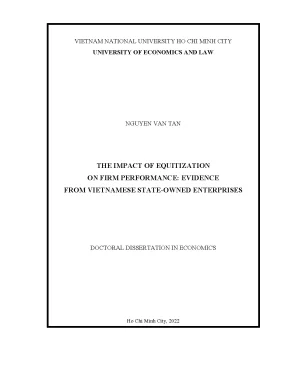
Tải xuống để đọc toàn bộVIETNAM NATIONAL UNIVERSITY HO CHI MINH CITY UNIVERSITY OF ECONOMICS AND LAW NGUYEN VAN TAN THE IMPACT OF EQUITIZATION ON FIRM PERFORMANCE: EVIDENCE FROM VIETNAMESE STATE-OWNED ENTERPRISES DOCTORAL DISSERTATION IN ECONOMICS Ho Chi Minh City, 2022 VIETNAM NATIONAL UNIVERSITY HO CHI MINH CITY UNIVERSITY OF ECONOMICS AND LAW NGUYEN VAN TAN THE IMPACT OF EQUITIZATION ON FIRM PERFORMANCE: EVIDENCE FROM VIETNAMESE STATE-OWNED ENTERPRISES Major: Finance – Banking Major code: 62340201 Reviewer 1: Assoc. Nguyen Anh Phong Reviewer 2: Assoc. Nguyen Hong Thang ADVISOR Assoc. Trinh Quoc Trung Double-blind peer review Reviewer 1: Prof.
Vo Xuan Vinh Reviewer 2: Dr. Nguyen Thanh Cuong Ho Chi Minh City, 2022 i DECLARATION I am Nguyen Van Tan, declare that this Ph. dissertation entitled “The impact of equitization on firm performance: Evidence from Vietnamese state-owned enterprises” is my own work under supervision from Assoc. Trinh Quoc Trung - University of Economics and Law, VNU-HCM, Ho Chi Minh City, Vietnam.
The dissertation contains no material that has been submitted previously, in whole or in part, for the award of any other academic degree or diploma. Student Nguyen Van Tan ii ACKNOWLEDGMENTS The author would like to express special thanks to Assoc. Trinh Quoc Trung - University of Economics and Law, VNU-HCM, Ho Chi Minh City, Vietnam, for his valuable advice to finish this dissertation. The author also would like to show sincere respect to the doctoral approval committee, leaders, and lecturers from the finance and banking faculty for their valuable feedback and generous support.
The dissertation cannot be finished without valuable advice and international privatization data from Prof. Megginson - the University of Oklahoma’s Michael F. Price College of Business and Prof. Jay Ritter - the University of Florida, Warrington College of Business.
iii CONTENTS DECLARATION. iii LIST OF ABBREVIATIONS. viii LIST OF TABLES. ix LIST OF FIGURES .2 Background of the research.1 General research objectives .2 Specific research objectives .5 Research object and research scope.2 Scope of the study .6 Research methodology and data .1 In the theoretical aspect .2 In the practical aspect .8 The research framework .9 Structure of the dissertation.
THEORIES AND EMPIRICAL STUDIES ON EQUITIZATION AND FIRM PERFORMANCE .1 Definitions of privatization/ equitization and firm performance .1 Definitions of state-owned enterprises .3 Listing related theories .1 The impact of privatization/equitization on firm performance of privatized/equitized state-owned enterprises compared with non-participating state- owned enterprises .2 The impact of equitization on firm performance of equitized state-owned enterprises compared with non-equitized state-owned enterprises by average state ownership rates after equitization .3 The impact of equitization on firm performance of equitized state-owned enterprises compared with non-equitized state-owned enterprises according to industry groups .4 Incentive policies for privatization programs and firm performance differences between listed and unlisted firms .5 Underpricing when firms go public .5 Summary of chapter 2. METHODOLOGY, DATA AND RESEARCH MODELS .1 The impact of equitization on firm performance of equitized state-owned enterprises compared with non-equitized state-owned enterprises .2 The impact of equitization on firm performance of equitized state-owned enterprises compared with non-equitized state-owned enterprises by average state ownership rates after equitization .3 The impact of equitization on firm performance of equitized state-owned enterprises compared with non-equitized state-owned enterprises according to industry groups .4 The impact of tax incentives on firm performance and firm performance differences between listed and unlisted firms after equitization .5 Underpricing of equitized state-owned enterprises through the initial public offering .1 Research model to examine the impact of equitization on firm performance changes of equitized state-owned enterprises compared with non-equitized state- owned enterprises .2 Research model to evaluate how tax incentives and listing affect firm performance changes .1 Variable description to examine the impact of equitization on firm performance changes of equitized state-owned enterprises compared with non- equitized state-owned enterprises .2 Variable description to evaluate how tax incentives and listing affect firm performance changes .3 Variable description for underpricing .4 Data collection and description .1 Average treatment effect through propensity score matching .2 Ordinary least square .3 t-Test for underpricing phenomenon .6 Summary of chapter 3 .1 Firm performance of equitized state-owned enterprises in the pre-post equitization periods.2 General firm performance of equitized state-owned enterprises .3 Firm performance changes of equitized state-owned enterprises .2 Quantitative research results .1 The impact of equitization on firm performance of equitized state-owned enterprises compared with non-equitized state-owned enterprises .2 The different impacts of equitization on firm performance of equitized state-owned enterprises compared with non-participating firms by different average state ownership rates after equitization .3 The different impacts of equitization on firm performance of equitized state-owned enterprises compared with non-participating firms according to industry groups .4 The impact of tax incentives on firm performance changes and firm performance changes between listed and unlisted firms .5 The underpricing phenomenon in the short run and long run .1 Hypothesis on the impact of equitization on firm performance of equitized SOEs compared with non-equitized state-owned enterprises (hypothesis 1) .2 Hypothesis on the impact of equitization on firm performance of equitized SOEs compared with non-equitized state-owned enterprises by average state ownership rates after equitization (hypothesis 2).3 Hypothesis on the impact of equitization on firm performance of equitized state-owned enterprises compared with non-equitized SOEs according to industry groups (hypothesis 3) .4 Hypothesis on the impact of tax incentives on firm performance and firm performance differences between listed and unlisted firms after equitization (hypothesis 4) .5 Underpricing hypothesis of equitized state-owned enterprises through the initial public offering (hypothesis 5) .5 Summary of chapter 4. CONCLUSIONS AND RECOMMENDATIONS .1 Equitization and firm performance of equitized state-owned enterprises compared with non-equitized state-owned enterprises .2 The state deregulation and control.3 The impact of equitization on firm performance changes according to industry groups .4 Incentive policies and listing encouragement .5 Underpricing of equitized state-owned enterprises through the initial public offering .3 Limitation of the study and suggestions for further research .4 Summary of chapter 5. 155 LIST OF PUBLICATIONS.
18 viii LIST OF ABBREVIATIONS Abbreviation Meaning ATE Average treatment effect DID Difference-in-difference EMPL Total number of employees GDP Gross domestic product HNX Hanoi Stock Exchange HOSE Hochiminh Stock Exchange KPIs Key Performance Indicator IPO Initial public offering LV Leverage MEBOs Management employee buyouts NIEFF Net income efficiency NPM New public management PSM Propensity score matching ROA Return on assets ROE Return on equity ROS Return on sales SAL Real sales SALEF Sales efficiency SEO Seasonal public offering SIE Share issue equitization SIP Share issue privatization SOEs State-owned enterprises SSC The state securities commissions of Vietnam TAS Total asset turnover VND Vietnam Dong VGSO General Statistics Office of Vietnam ix LIST OF TABLES Table 2.1 Comparison between private firms and state-owned enterprises .2 Comparison between privatization and equitization. Privatization and equitization methods .4 Comparision between empirical studies examining the impact of privatization on firm performances changes with and without considering non-participating firms 42 Table 3. Actual values of eight equitized SOEs after being audited for equitization pricing .2 Summary of research hypotheses. Variable summary and measurement for average treatment effect using propensity score matching.
Variable summary and measurement for multiple regression .5 Summary of data source according to five research gaps .6 Number of non-equitized and equitized state-owned enterprises. Frequency statistics of equitized state-owned enterprises. Descriptive statistics of firm performance changes for equitized state-owned enterprises. Frequency statistics of non-equitized state-owned enterprises.
Statistics on the number of enterprises conducting initial public offering by sector, firm size and financial crisis event. Descriptive statistics of firm performance measure changes. Descriptive statistics of underpricing. Firm performance changes of equitized state-owned enterprises.
Firm performance changes of equitized state-owned enterprises by firm size, listing status and tax incentives. Firm performance changes of equitized state-owned enterprises by industry groups. Firm performance changes of equitized state-owned enterprises by average state ownership after equitization. General average treatment effect with propensity score matching and difference-in-difference analysis.
Average treatment effect by firm size. Return on assets of operating firms based on firm size in Vietnam (%). Return on assets of operating firms based on firm type in Vietnam (%) 112 Table 4. Percentage of state ownership of equitized state-owned enterprises after four equitization years in Vietnam.
Return on assets of operating firms based on industry groups in Vietnam (%). Regression results in the impact of equitization on firm performance changes. Testing for underpricing in the short run. Testing for overpricing in the long run .1 Return on assets improvement of equitized state-owned enterprises compared with non-equitized state-owned enterprises based on firm size.2 Return on assets improvement of equitized state-owned enterprises compared with non-equitized state-owned enterprises based on average state ownership after equitization.3 Return on assets improvement of equitized state-owned enterprises compared with non-equitized state-owned enterprises based on industry groups.
142 xi LIST OF FIGURES Figure 1. The research framework. Adjustment to reduce the number of industries, sectors that the State holds 100% authorized capital or dominant shares. The profitability of equitized state-owned enterprises in the pre-post equitization windows.
Total asset turnover (TAS) of equitized state-owned enterprises in the pre- post equitization windows. The density of the short-run underpricing. Return on assets change of large-scale equitized state-owned enterprises according to average state ownership and industry groups. Return on assets change of equitized state-owned enterprises according to average state ownership, firm size and industry groups.
The number of equitized state-owned enterprises according to average state ownership and firm size. Return on assets change of equitized state-owned enterprises in the manufacturing and construction industry according to average state ownership and firm size. The number of equitized state-owned enterprises according to industry groups, firm size and tax incentives. The number of equitized state-owned enterprises according to industry groups, firm size and listing status.
Return on assets change of listed equitized state-owned enterprises according to average state ownership and firm size. The average value of the short-run underpricing measures. Fluctuation of the long-run underpricing measures. 153 xii ABSTRACT Privatization topics have attracted research interests from several researchers all over the world.
With inconsistent results due to different privatization policies and estimation methods, the study of privatization on firm performance has been voluminous, especially in transition economies. Based on equitization characteristics in Vietnam and five research gaps existing, the author has chosen the research topic to examine how equitization impacts firm performance in Vietnam. This dissertation has employed a combination of difference-in-difference, with-without comparison and regression methods to analyze how equitization impacts firm performance in Vietnam. Research results show that equitization only helps enterprises improve profitability if considering return on assets (ROA) compared with non-equitized enterprises in the same periods.
Also, equitization only helps firms improve profitability compared with non-participating firms (change in ROA) when firms are no longer under state control after equitization (average rate of state ownership after four years of equitization less than 50%). Tax incentive policy has no impact on profitability improvement (change in ROA) and operating efficiency change (change in total asset turnover). Finally, listing status has a positive impact on ROA improvement after equitization in Vietnam. This result shows that listed firms have greater ROA improvement than unlisted firms after equitization.
Besides, research results show that there is an underpricing phenomenon in the short run but overpricing in the long run. Based on research findings, the dissertation proposes some recommendations for equitized state-owned enterprises (SOEs), non-equitized enterprises, investors and the Vietnamese government in Vietnam. 1 Chapter 1 INTRODUCTION This chapter represents problem statements to explain reasons why the dissertation is necessary. Also, the chapter includes a background of the research, research gaps and introduction of the dissertation.1 Problem statements According to the Vietnamese Steering Committee for Enterprise Renovation and Development (2021), the Vietnamese Government conducted equitization through three phases, and the first phase took place from 1992 to 2000.
Although equitization has brought many benefits to boost economic development, equitization still has some limitations in Vietnam.
Nội dung được bảo vệ bản quyền — Tải xuống đầy đủ
Trích dẫn luận án này
Nguyen Van Tan (2022). Tác động của cổ phần hóa đến hiệu quả DNNN Việt Nam [Luận án tiến sĩ, Đại học Kinh tế Luật - Đại học Quốc gia Thành phố Hồ Chí Minh]. LuanAn.net. https://luanan.net/kinh-te/kinh-te-phat-trien/tac-dong-co-phan-hoa-hieu-qua-doanh-nghiep-dnnn-viet-nam
Câu hỏi thường gặp
Luận án "Tác động của cổ phần hóa đến hiệu quả DNNN Việt Nam" nghiên cứu về vấn đề gì?
Phân tích tác động cổ phần hóa đến hiệu quả hoạt động của DNNN Việt Nam. Nghiên cứu cung cấp bằng chứng thực nghiệm quan trọng.
Luận án "Tác động của cổ phần hóa đến hiệu quả DNNN Việt Nam" được bảo vệ tại trường nào?
Luận án này được bảo vệ tại Đại học Kinh tế Luật - Đại học Quốc gia Thành phố Hồ Chí Minh. Năm bảo vệ: 2022.
Luận án "Tác động của cổ phần hóa đến hiệu quả DNNN Việt Nam" thuộc chuyên ngành gì?
Luận án "Tác động của cổ phần hóa đến hiệu quả DNNN Việt Nam" thuộc chuyên ngành Tài chính - Ngân hàng. Danh mục: Kinh Tế Phát Triển.
Luận án "Tác động của cổ phần hóa đến hiệu quả DNNN Việt Nam" có bao nhiêu trang?
Luận án "Tác động của cổ phần hóa đến hiệu quả DNNN Việt Nam" có 238 trang. Bạn có thể xem trước một phần tài liệu ngay trên trang web trước khi tải về.
Cách tải luận án "Tác động của cổ phần hóa đến hiệu quả DNNN Việt Nam" về máy như thế nào?
Để tải luận án về máy, bạn nhấn nút "Tải xuống ngay" trên trang này, sau đó hoàn tất thanh toán phí lưu trữ. File sẽ được tải xuống ngay sau khi thanh toán thành công. Hỗ trợ qua Zalo: 0559 297 239.